At 2 a.m., a family member may be trying to help someone arrested in Denver while sitting hundreds of miles away. The detention center has limited visiting hours, flights won't solve the immediate problem, and a paper contract can't move from Arizona to Colorado quickly enough to support a release.
Electronic documentation changes that workflow. A qualified signer can receive bond paperwork on a laptop or phone, upload identification, review the terms, sign remotely, and return the completed documents without first traveling to the jail. The process still requires careful identity checks, clear consent, accurate records, and compliance with applicable law. It moves the paperwork into a controlled digital system.
A Late-Night Call That Changes How You Think About Paperwork
A sister in Arizona wakes to a call that her brother has been arrested in Denver. She doesn't know which forms are required, whether she must fly to Colorado, or how a detention center will receive the bond documents. Her first instinct is to drive to an office or wait until morning, but neither option addresses the immediate need.
If the arrest occurred in Denver or at an El Paso County facility, the family may need to coordinate with a Colorado bail agency while the signer remains out of state. Visiting hours may be limited, the jail may not accept documents through informal channels, and a paper contract requires physical handling. A family member who lives elsewhere can't sign a document, place it in the mail, and expect the process to finish during the same night.

With electronic documentation, the agency can send the required forms through a secure workflow. The sister can confirm her identity, upload a government-issued ID, read the indemnity agreement, sign from her laptop, and return the documents for review. A payment record and completed signature packet can travel electronically to the people handling the bond.
That doesn't mean technology guarantees immediate release. The jail must process the bond, the paperwork must be complete, and the defendant must satisfy any facility or court requirements. Electronic documentation removes the unnecessary trip and the wait for paper delivery, while the licensed professionals and detention facility still manage the legal and operational steps.
So, what is electronic documentation? It is a managed digital record process that creates, routes, stores, and retrieves information in electronic form. In a bail matter, it turns a stressful exchange of paper into a traceable workflow that can be completed remotely when the situation and facility allow it.
What Electronic Documentation Actually Means
Electronic documentation isn't merely a PDF attached to an email. The European Commission describes an electronic document as a document in electronic format that can contain structured data, and possibly unstructured data, for use in an administrative process. Its guidance identifies machine-processable structured data as an important difference because structured information can support automation instead of forcing someone to re-enter or interpret every field. European Commission guidance on e-Document engineering
A useful way to understand the system is to separate it into four connected functions:
- Creation: A bail agency prepares an application, indemnity agreement, disclosure, or authorization electronically. Some documents begin digitally, while others may be converted from paper.
- Routing: The system sends the right document to the right signer, such as an indemnitor or co-signer. It can record delivery, completion, and follow-up activity.
- Storage: The signed record, identification file, payment receipt, and related metadata go into a controlled repository rather than an unmanaged inbox.
- Retrieval: An authorized person can locate the record by case information and review the document later, including during a court-related question or internal review.
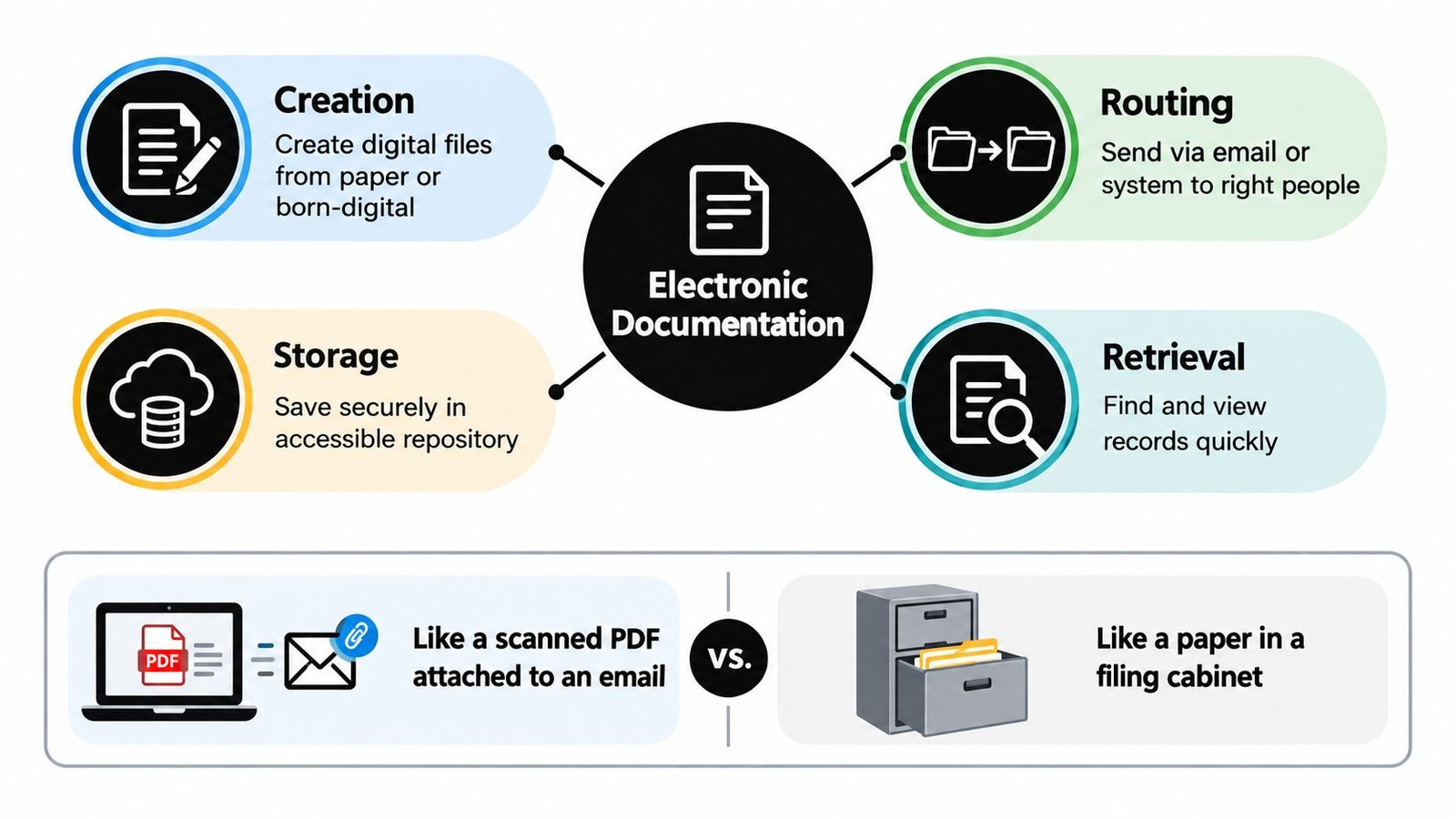
Consider the difference between a scanned contract stapled mentally to an email thread and a true electronic record. The scanned file may show a signature, but a managed record can also connect the signature to the signer, capture when the action occurred, preserve the document after signing, and retain the events that led to completion. Metadata and audit history give the file context.
A bail example makes the distinction practical. The agency creates the indemnity agreement, routes it to the co-signer, stores the completed packet in a secure repository, and retrieves it months later if a question arises. Anyone building a similar process should also review guidance on how to share documents securely, especially when identification and financial information are involved.
For a Colorado client who needs to complete a form remotely, the electronic waiver form illustrates how a digital document can fit into a larger signing process. The important point is that the file format is only the beginning. The system must also control access, preserve evidence, and make the record usable later.
How Electronic Documentation Compares to Paper Workflows
Paper workflows depend on physical presence and manual handling. A signer may need to travel to an office or detention center, write information by hand, and wait while staff scan or file the completed forms. That approach can create problems when a co-signer lives in another state or when a family is coordinating release outside normal office routines.
Electronic documentation changes the experience without removing the underlying obligations. The signer still needs to provide accurate information, understand the agreement, and complete identity and consent steps. The difference is that the exchange can occur through a controlled online workflow rather than a sequence of trips, envelopes, and photocopies.
Paper vs. Electronic Bail Bond Documentation
| Workflow Attribute | Paper Process | Electronic Documentation |
|---|---|---|
| Signing location | The signer usually travels to an office or another approved location. | The signer can complete the process remotely when the agency and facility permit it. |
| Speed | Staff must print, sign, scan, copy, or physically deliver documents. | Documents can be routed electronically for review and signature. |
| Accuracy | Handwritten fields may be difficult to read or may require manual transcription. | Typed fields and required fields can make missing information easier to identify. |
| Identity evidence | Staff rely on physical identification and paper copies. | The workflow can collect an uploaded ID and identity-verification information. |
| Recordkeeping | A manila folder or scanned copy may hold the file. | A managed repository can preserve the signed packet and related records. |
| Accessibility | Retrieval depends on office access and physical filing. | Authorized staff can search for the record through the agency's digital system. |
| Out-of-state co-signer | The co-signer may need to arrange travel or shipping. | The co-signer may receive and sign documents remotely. |
The benefit is most visible in the details. A typed address reduces uncertainty, a required field can prompt the signer before submission, and a digital receipt gives the family a record of what happened. These features don't replace professional review, but they reduce avoidable friction.
Practical distinction: Digitizing a paper form changes the file. Digitalizing the workflow changes how people create, approve, transmit, store, and retrieve the record.
Organizations comparing online form tools may find a Paperform competitor review useful when evaluating form design and workflow features. For bail documentation, however, the deciding question isn't just whether a form looks modern. It must support a defensible record, appropriate access controls, and a process that fits the bond transaction.
The Legal Mechanics Behind a Valid Electronic Record
A digital signature becomes useful in a bail transaction when the record can show who signed, what they signed, that they intended to sign, and that the completed record remains available. U.S. ESIGN and UETA frameworks generally recognize electronic records and signatures when the required conditions are satisfied, but the specific transaction and jurisdiction still matter.
Consent comes before the signature
The signer needs a clear disclosure that the transaction will occur electronically and an opportunity to consent. Consent isn't a hidden technical setting. The person should understand that the bond agreement, disclosures, receipts, and related records may be delivered and signed digitally.
A signer who clicks through without seeing the document or understanding the transaction creates a weaker record. A sound process presents the agreement, identifies the electronic method, and records the signer's affirmative action.
Attribution connects the signature to a person
Attribution answers the question, “Who took this action?” A managed workflow may connect the signature to an account, an identity check, an uploaded ID, a time, and other transaction details. The goal isn't to collect information for its own sake. The goal is to create evidence linking the signer to the specific bond documents.
The signature also needs a clear logical connection to the contract. A signature image copied into an unrelated file doesn't establish who agreed to which terms. For a plain-language overview of eSignature legal requirements, readers can review the discussion of intent, consent, association, and retention.
Integrity protects the completed record
Integrity means the stored document can be shown as the document that was signed, not an altered version. A tamper-evident record, controlled access, and an audit trail help show what happened after the document was delivered and signed. The audit history can record events such as document access, signature completion, and identity-verification activity.
An unverified screenshot of an email doesn't provide the same context. Neither does a verbal agreement without evidence of electronic intent, document association, and record preservation. The strength comes from the entire process, not from the appearance of a signature on a screen.
Retention makes the record useful later
A signed contract must remain accessible and reproducible for the applicable retention period. Legal summaries of ESIGN and UETA requirements emphasize that parties entitled to the record must be able to access it and reproduce it accurately later. The electronic signature requirements used in a bail workflow should therefore address more than the signing screen.
The National Archives describes electronic records management as a lifecycle that runs from creation through access and use to final disposition, including either permanent storage or controlled destruction. NARA records-management guidance supports the practical lesson: an agency needs policies for classification, access, retention, and disposal, not just a cloud folder.
Why Colorado Bail Bonds Rely on Digital Records
Colorado bail transactions require accurate documentation because the file must connect the bond amount, the premium, the parties, and the authority to act. Colorado law caps a commercial bail bond premium at the greater of $50 or 15% of the amount of bail furnished. Colorado bail premium information provides that specific rule.
That calculation needs to appear correctly in the transaction record. A defensible electronic file can bring together the bond amount, premium calculation, collateral disclosures, indemnitor signatures, and power of attorney assignments. If a question later arises during a forfeiture hearing or a surety review, the agency can locate the connected documents instead of searching through separate paper folders.
Colorado's adoption of UETA, together with ESIGN, supports the use of electronic contracts when the transaction meets the applicable requirements. That doesn't mean every digital file is automatically enforceable. Consent, signer attribution, document integrity, and later access remain essential.
Paper vs. Electronic Bail Workflow in Colorado
| Workflow Step | Paper Process | Electronic Process |
|---|---|---|
| Initial intake | Staff write or retype information from a phone call. | Staff enter intake information into the agency workflow. |
| Identity review | Staff inspect and copy physical identification. | The signer uploads identification through the designated process. |
| Contract completion | Parties sign printed agreements by hand. | Parties review and sign the assigned documents remotely. |
| Premium record | Staff issue or file a paper receipt. | The transaction can generate an electronic payment record or receipt. |
| Bond transmission | Staff scan, copy, or deliver documents manually. | Authorized staff transmit the completed bond information through the applicable channel. |
| Later review | Staff search physical files. | Staff retrieve the connected record from the secure archive. |
The Colorado Department of Insurance regulates insurance activity, including surety producers, so agencies need records that demonstrate how transactions were handled. Digital records don't remove regulatory responsibility. They make it easier to preserve the evidence needed to answer questions about a transaction.
For families deciding whether to begin remotely, purchasing a surety bond online can be part of a process that reduces travel and organizes the required information. The practical result is a cleaner workflow, not a shortcut around court or jail requirements.
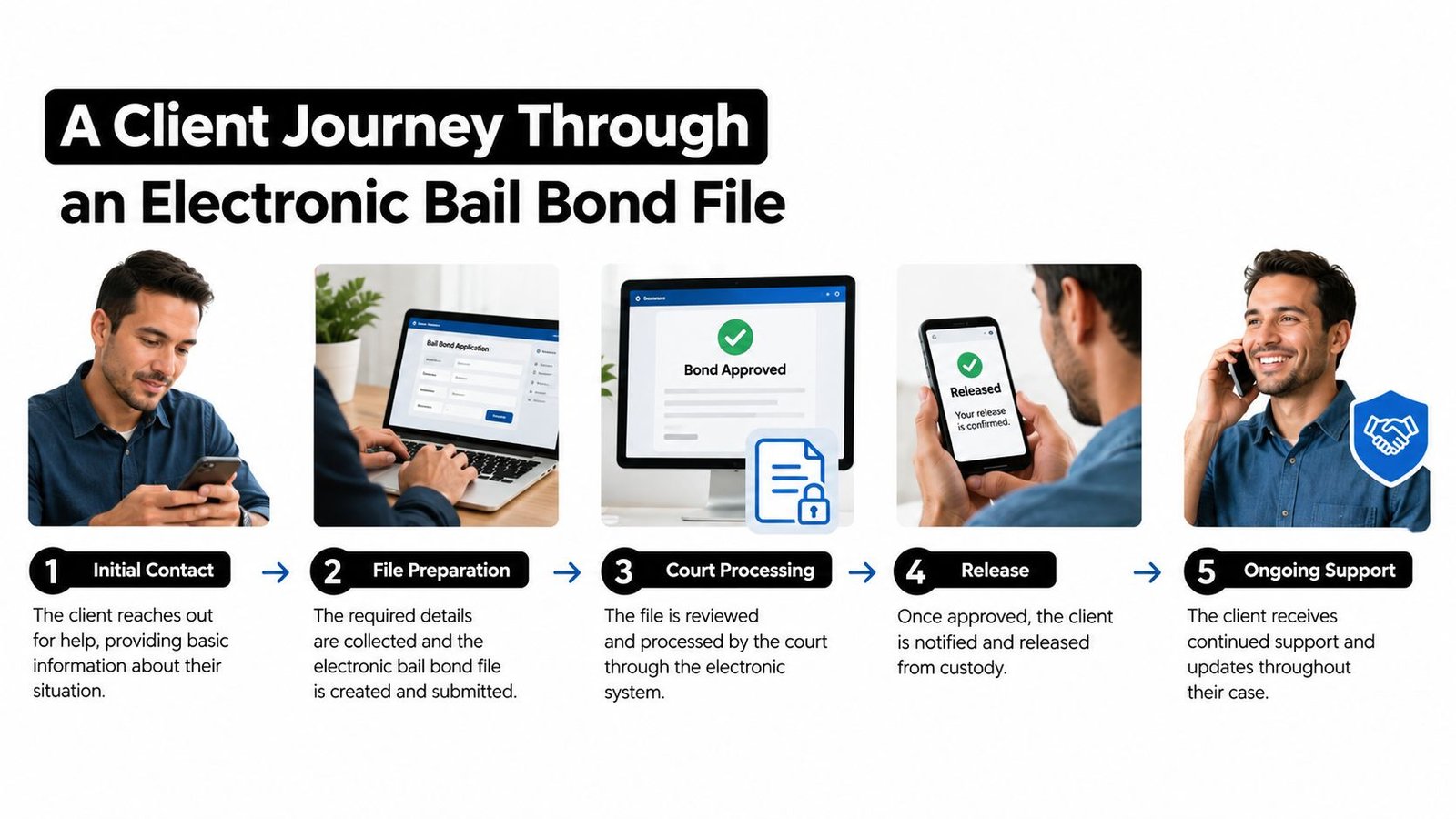
A Client Journey Through an Electronic Bail Bond File
A family member starts with a phone call. She provides the defendant's full legal name, date of birth, booking facility, and any known charge information. The agent records the intake details electronically, which gives the file an initial reference point and identifies what information still needs confirmation.
The next message contains a secure link. The co-signer reviews the instructions, completes an identity check, and uploads a valid government-issued ID. The system records the submission, while the agent checks whether the information matches the bond application.
From review to signature
The indemnity agreement and power of attorney are then delivered for review. The co-signer reads the obligations, confirms consent to electronic business, and signs from a phone or laptop. A complete electronic record can preserve the document version, signature action, and associated identity information.
The family member doesn't have to guess whether the documents went through. The workflow can show that the forms were delivered and completed, and the agency can identify missing items before sending the bond onward. If the signer needs a clearer explanation of a term, the agent can address the question before completion rather than discovering a problem after a paper packet has been transported.
The completed file has a trail
After the agreement is signed, the premium payment is processed and an electronic receipt is added to the file. The agency transmits the bond to the detention facility through the required process, then records confirmation when the facility accepts the submission or provides a release update.
A family may experience this as a series of text messages and email notifications, but the agency sees a connected record:
- Consent record: The signer agreed to the electronic transaction.
- Signed contract: The indemnity agreement and related documents were completed.
- Payment receipt: The transaction amount and payment event were recorded.
- Transmission confirmation: The bond was sent through the appropriate channel.
- Release notification: The family received an update about the facility's action.
The finished file goes into the agency's secure archive and can be retrieved by case information when a future court date or documentation question requires it. To start a remote document process, clients can review online contract signing before contacting the agency.
Practical Guidance for Clients Using Electronic Documentation
Preparation makes remote signing easier. Before the first call, gather the defendant's full legal name, date of birth, booking facility, known charges, and a valid government-issued ID for the person who may sign or indemnify the bond. If you don't have every detail, share what you know and tell the agent what remains uncertain.
Express Bail Bonds is one Colorado option that handles applications, payments, and contract documents electronically, allowing eligible co-signers to complete paperwork remotely. The agency's process still depends on the facility, bond type, document requirements, and information supplied by the family.
What to expect during the process
- Confirm the booking: Tell the agent whether the defendant is held in Denver, Jefferson County, Arapahoe County, El Paso County, or another Colorado facility. The location helps determine which facility procedures apply.
- Complete identity verification: Follow the secure instructions for a photo or short video check, then upload the requested identification. Use clear images and make sure the name matches the information provided.
- Review before signing: Read the bond agreement, indemnity language, disclosures, and any power of attorney assignment. Ask about an unfamiliar term before selecting the signature button.
- Complete payment: Use the approved payment method and save the electronic receipt. An electronic bank transfer may be available when it fits the agency's process.
- Keep your confirmation: Save the completed-document notice, receipt, and case reference. Request a copy later if you can't locate the original message.
Electronic storage doesn't mean every employee or outside person can view the file. A responsible process limits access, preserves the record, and keeps the documents available to authorized parties. If you change your email address or phone number during the transaction, tell the agent so important notices don't go to an old contact.
Frequently Asked Questions About Electronic Documentation
Are electronically signed bail contracts accepted by courts?
They can be legally meaningful when the transaction satisfies applicable ESIGN, UETA, agency, and court requirements. The record should show consent, intent, signer attribution, document association, integrity, and later accessibility. Electronic signing doesn't override a court's specific procedure or a detention facility's submission rules.
How long are the records stored?
The agency must follow its retention policy and applicable legal, regulatory, and business requirements. Electronic records management covers the full lifecycle, including access, retention, and controlled disposition, so storage isn't a matter of keeping a file forever in an inbox.
What happens if someone disputes a signature?
The agency can review the signature packet and its supporting audit information. Identity verification, consent records, timestamps, document association, and the unchanged stored record help establish what happened. A screenshot alone may not answer every question, which is why the complete transaction history matters.
Can a co-signer in another state sign remotely?
Often, yes, if the agency's workflow, the bond type, and the applicable requirements allow remote completion. The co-signer still needs to verify identity, review the agreement, provide accurate information, and complete each required step.
Does electronic processing work for after-hours releases?
It may allow families to begin documentation without traveling to a detention center, but release timing depends on the agency, jail, bond acceptance, booking status, and facility procedures. Contact the agency by call or text for current instructions rather than assuming an electronic signature alone completes the release.
Electronic documentation gives families a clearer record during a difficult event. If someone has been arrested in Colorado, call or text 720-984-2245 to discuss the facility, required information, and next steps. Local resources are also available for Jefferson County and Golden and Centennial.
Express Bail Bonds provides Colorado families with remote application, payment, identification, and contract-document support for eligible surety bond transactions. Visit Express Bail Bonds to begin the electronic documentation process or get guidance on what to prepare tonight.