
The call usually comes late. Bail has been paid, everybody thinks release is next, and then the jail says, “Not yet.” That's the moment people start wondering whether something went wrong, whether the bond was missed, or whether their family member is being held illegally.
Most of the time, the problem isn't that bail wasn't posted. The problem is that posting bail starts the release process. It doesn't finish it. A person can have bail set, a bond can be arranged, and custody can still continue until the jail clears every release step inside its own system.
Why You Posted Bail but Are Still Waiting for Release
At 10:30 p.m., a family signs the bond, pays the premium, gets told the bond was posted, and expects a pickup call within the hour. Then nothing happens. In Colorado, that usually means one thing. The money side is done, but a custody blocker is still sitting in the jail or court system waiting to be cleared.
That distinction matters. A lot of people use one phrase for three separate steps, and that is where the confusion starts. Bail can be set by the court. A bond can be posted through cash or surety. Release can still stay on hold until the jail finishes its release checks and records staff confirm there is no other reason to keep the person in custody.
If you are dealing with this now, it helps to know the actual meaning of posting bond. From the bond side, the file may be complete. From the jail side, the person may still be waiting on records review, housing clearance, medical release, a court order to hit the system, or another hold that has nothing to do with the bond itself.
I have seen this for years. Families hear “bond posted” and assume the door should open next. In practice, posting bail starts the release chain. It does not clear every custody issue automatically.
The delay also feels worse because jails rarely explain it in plain language. They may say “still processing” when what they really mean is that one office has not finished one approval. That is why the right approach is to identify the blocker, not just keep waiting.
Some delays are routine. A late-night bond in a busy county can sit until records catches up, especially on weekends, shift change, or after a heavy intake period. Some delays need action. If the case number is mismatched, a hold from another county is active, or the release order has not reached the jail correctly, somebody has to confirm it and clear it.
One source of confusion is the gap between legal release and physical release. Federal court materials cited in a Supreme Court appendix with BJS data show the same basic point. Bail status and actual release are separate events. That has been true for a long time.
The good news is that most post-bail delays trace back to a specific issue you can name, verify, and work on. Families often start with statewide Colorado bail bond information from Express Bail Bonds if they need basic guidance before they start calling the jail, court, or bond agent.
Waiting after bail is posted usually means a release step is still open. Find that step first.
Common Reasons Release Is Delayed After Bail Is Posted
You paid the bond, got the receipt, and expected a call saying your person was on the way out. Instead, hours pass and the jail says only, “still processing.” In practice, that usually means one specific custody blocker is still open.
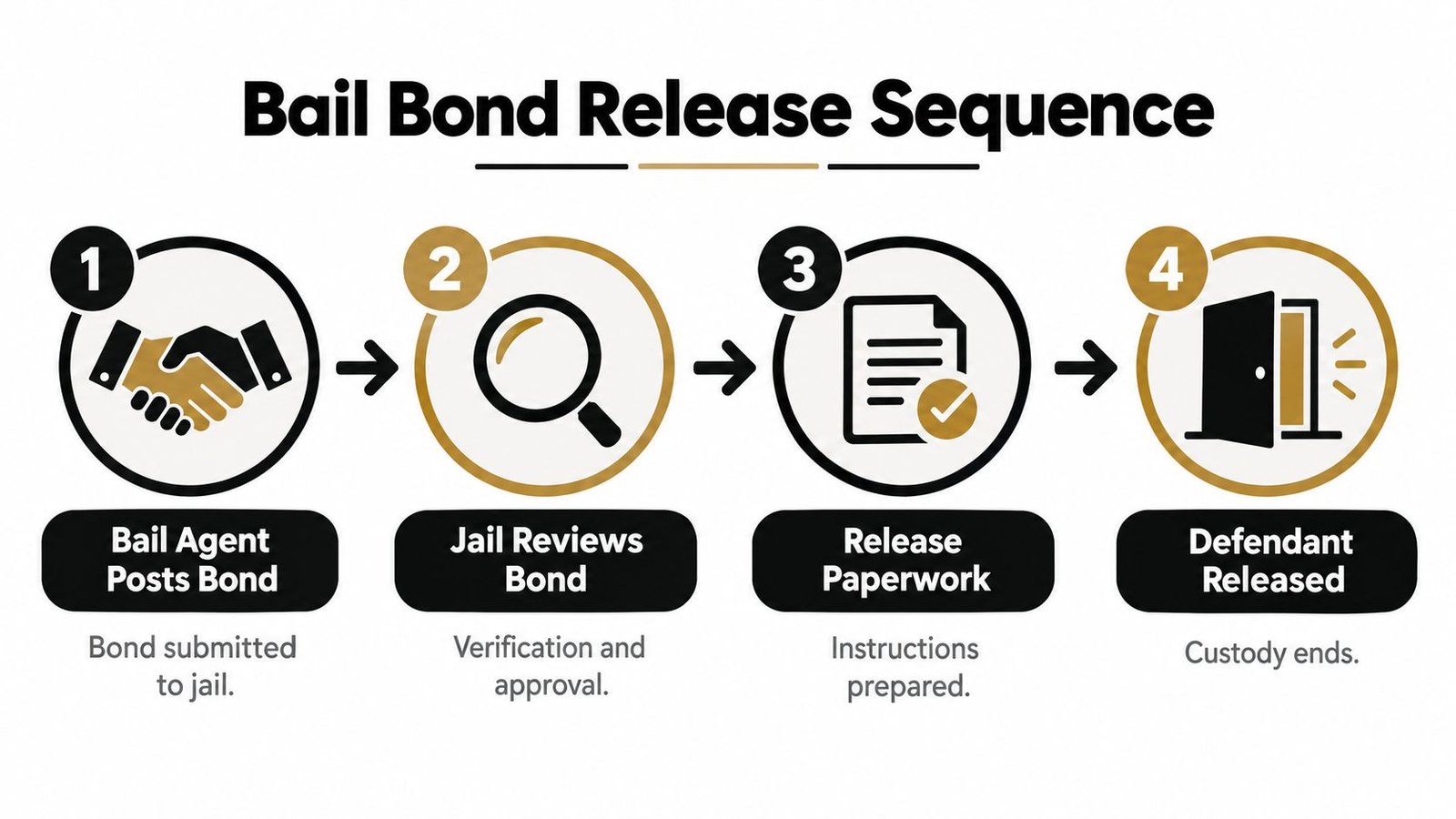
The blockers that actually keep someone in custody
The first blocker is unfinished jail processing. The bond may be posted and accepted, but release can still stop while booking is completed, fingerprints or identity checks are finished, classification signs off, or records reviews the file for release. I see this most often on night shifts, weekends, and after a busy intake window.
The second blocker is another agency hold. Common examples are a warrant from another Colorado county, a probation or parole hold, an immigration detainer, or a second case with no bond posted yet. In that situation, the bond only clears one file. The jail cannot release until every active basis for custody is cleared.
The third blocker is a paperwork mismatch. A wrong case number, a name variation, a date of birth mismatch, or bond paperwork that does not match the jail record will stop release cold. This is one of the most fixable delays, but only after someone confirms exactly what does not match.
A fourth blocker is release conditions that still need to be entered or acknowledged. Some defendants must sign paperwork, receive a court date sheet, or be processed under case-specific restrictions before the jail releases them. If you need to check what those restrictions can look like, review these common conditions of bond in Colorado.
Administrative delay is common, but the cause still matters
Court and jail systems have long treated bail status and physical release as separate events. Analysts and court administrators in multiple jurisdictions have documented the same pattern. A person can be legally releasable and still remain in custody until records, warrants, classification, or another agency finishes its part.
Independent research shows how long those outliers can stretch when a hold or verification issue is sitting in the file. One state report found that nearly half of cash or surety releases happened within 24 hours, but the mean booking-to-release time was still 6.6 days, and 10% waited more than a week, according to the ACLU report on pretrial release timing.
Practical rule: The more useful question isn't “Was bail paid?” It's “Who still has authority to hold this person, and what has to happen before release is approved?”
What usually helps and what wastes time
What helps is getting the hold owner and the exact step. Ask whether the delay is with jail records, warrants, the court clerk, probation, parole, medical, or another county. Ask whether the bond has been accepted into the jail system, whether any additional holds are active, and whether a case number or identity mismatch is blocking release.
What wastes time is asking for a generic update every hour. Families get farther when they ask for the name of the unit handling the release, the reason the inmate is still not releasable, and whether any paperwork is missing. Those answers give your bondsman, the court, or the other agency something concrete to fix.
How Jail and Bail Bond Release Processing Actually Works
Families get better answers when they know the sequence. Release isn't one act. It's a handoff between the bond side, the court side, and the jail side.
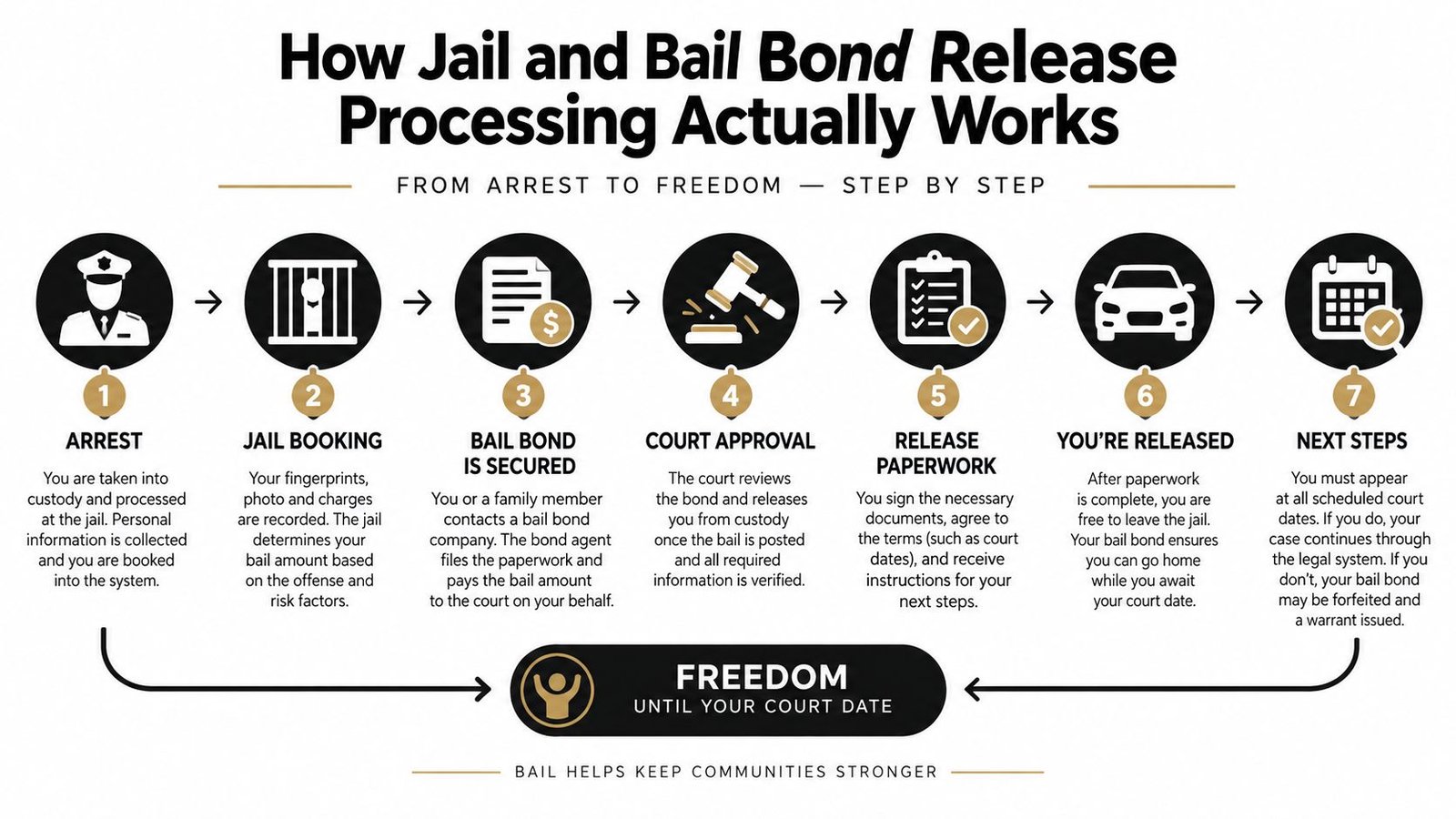
What happens first
A surety agent prepares the bond, verifies indemnitor information, and submits the required paperwork to the detention facility or court channel that controls acceptance. At that point, the bond side may be done even though the inmate is still in housing.
Then the jail reviews the bond for acceptance. Staff confirm the defendant identity, match the case, check the amount and terms, and make sure the bond is legally sufficient. If anything in the file is incomplete, release pauses there.
For a practical overview of this handoff, see the Colorado release process explained here.
What the jail does before the door opens
The jail's records or release unit then checks whether any other barriers exist. Extra warrants, detainers, incomplete booking, medical clearance, property return, and release paperwork can all slow the exit.
That variation is one reason people often hear different estimates from different facilities. New York reporting found that a sample of city-jail clients waited an average of 6 hours 52 minutes after posting bail, with more than 92% waiting longer than the city's three-hour window and some held overnight, as reported by the Queens Eagle's coverage of post-bail release delays.
Here's a short walkthrough of the release chain in plain language:
- Bond agent handles the surety paperwork and delivery.
- Court clerk or court system may transmit orders or bond status depending on the case.
- Jail records verify the bond and check for holds.
- Housing and release staff prepare the inmate for discharge and property return.
A short video can help if you need the big picture before making calls.
What should be handed over at release
In Colorado, once release happens, the sheriff must provide the bond paperwork and next-court-date information when the bond is posted. That part matters because a lot of later problems start with someone leaving custody confused about dates, conditions, or reporting obligations.
What to Do Right Now If Your Loved One Is Not Released
You posted the bond, the jail accepted it, and hours later your person is still inside. Treat that delay like a custody blocker with a name, a department, and a document trail. The job now is to find the exact point where release stopped.
Start by pulling together the identifiers staff will ask for right away: full legal name, date of birth, booking number, jail location, case number if you have it, and proof the bond was posted or tendered. Without those, every call slows down.
The first calls to make
Call the jail and ask for records, release, or inmate information. The front desk usually cannot tell you where the file is stuck.
Ask for the answer to four specific questions:
- Bond status: Has the bond been received, accepted, and entered into the jail system?
- Hold status: Is there any other hold, warrant, detainer, probation issue, or parole issue blocking release?
- Current stage: Is the person waiting on booking completion, medical clearance, classification, supervisor approval, or final release?
- Next required step: What has to happen before the door opens?
Write down the staff member's name, department, and time of call. That record matters if you need to press the issue with a supervisor.
If you are not sure which facility has custody, use a verified locator first. This guide on how to find someone arrested in Colorado can help you pin down the right jail before you start calling.
What to request and save
Keep every paper and screenshot tied to the bond and release:
- Bond receipt or posting confirmation
- Booking number and facility name
- Bond amount and conditions
- Next court date paperwork
- Any explanation of a hold and which agency placed it
Ask staff to be specific. “Still processing” is not enough. A useful answer sounds like this: “Records entered the bond, but Denver has a warrant hold that has not cleared,” or “Medical has not signed off yet.”
Colorado law gives you a timing standard you can use. Under Colorado Revised Statutes section 16-4-102, release must occur as soon as practicable and, absent extraordinary circumstances, no later than six hours after a personal recognizance bond is set or a cash bond is set and the jail is notified the bond is ready to be posted. The sheriff must also provide bond paperwork and next-court-date information when the bond is posted.
That statute does not override a valid outside hold. It does tell you when a plain processing delay may have crossed the line from routine to a problem that needs pressure.
When to bring in outside help
Remote contract signing and payment can keep the bond side from becoming the holdup, especially when family is out of town. Express Bail Bonds handles electronic paperwork and phone coordination for that reason.
If the jail says another agency placed a hold, shift quickly. Call the agency named in the hold. Ask whether it is a probation matter, parole matter, warrant, immigration detainer, or another county case. Then tell defense counsel exactly what the jail told you, with names and times. A bondsman can post the bond. A lawyer is the one who can push court action if the blocker is a warrant, detainer, or an incorrect hold.
How Long Release Should Take and When to Escalate
You post the bond at 7:30 p.m., the jail confirms it was accepted, and by 11:00 p.m. your person is still sitting inside. At that point, the question is no longer “how long does release usually take?” The question is “what specific step is blocking the release?”
Colorado families get into trouble when they treat every delay like ordinary waiting. Some delay is ordinary. A stalled release with no identified blocker is not.
What counts as normal
In plain terms, many releases happen within a few hours after the bond is accepted and entered. Same-shift release is common when booking is complete, staffing is steady, and no other agency has placed a hold. Overnight posting, weekend staffing, shift change, and a large county jail can all slow the handoff from bond acceptance to property return and discharge.
Colorado also gives you a legal timing standard for some bond situations. As noted earlier, state law requires release as soon as practicable, and absent extraordinary circumstances, no later than six hours after a personal recognizance bond is set or a cash bond is set and the jail is notified the bond is ready to be posted. That does not erase a valid outside hold. It does give you a line between normal processing and a delay that needs pressure.
If you want a stage-by-stage breakdown, this guide on how long bail takes to process explains where time usually gets spent.
Normal vs. red-flag release waits
| Situation | What it usually means | Action to take |
|---|---|---|
| Bond was just posted, jail confirms receipt, no hold is showing | Records and release processing may still be in line | Log the exact time bond was posted and the time the jail says it received notice |
| Bond posted late at night, on a weekend, or during shift change | Staffing and discharge flow may be slower | Call the release desk or records unit for status, not only the front lobby |
| Jail says bond is accepted but cannot say what step is pending | The release may be stuck between units | Ask which department has the file now and ask for the supervisor on duty |
| Staff mention another county, probation, parole, immigration, or warrant issue | A separate custody authority may be blocking release | Contact that agency directly and give defense counsel the details immediately |
| Many hours have passed, no one can identify a hold, and answers stay vague | The problem may be paperwork, data entry, or an unlawful continued hold | Escalate with your timeline, receipt, booking number, and the names of the staff you spoke with |
One practical rule from the bond side is simple. If staff can name the step, there is usually still a path forward. If nobody can tell you what unit has the file or what approval is missing, the delay needs closer attention.
When legal escalation makes sense
Escalate when the bond has been accepted, the jail cannot identify any lawful hold, and repeated calls still produce no release and no clear explanation. Ask for the watch commander, records supervisor, or release supervisor. Be ready with the booking number, case number, time bond was posted, and the time the jail says it received the bond.
I have seen plenty of delays that turned out to be fixable. Court paperwork had not reached the jail. A warrant screen had not updated. Medical clearance was finished, but records had not been notified. Those are not abstract system problems. They are custody blockers, and they clear faster when someone pins down the exact blocker and the exact desk holding it.
A later-case issue can also matter, even though it does not fix a same-night release problem. The Colorado Bail Book explains that if trial does not begin within 90 days and the delay is not attributable to the defense, the court must schedule a bail hearing and set bail. That is a different kind of escalation, but it matters if someone remains in custody well beyond the initial release window.
Getting Help Fast and Preventing the Next Delay
The biggest mistake families make is treating delay like dead time. It usually isn't. It's either a processing stage or a custody blocker. Once you identify which one it is, the next move becomes obvious.
What prevents repeat problems
Keep a clean file from the start. Save the bond receipt, booking number, case number, next court date, and any release conditions. If there's an old warrant, probation issue, or another county matter, deal with it early instead of waiting for it to surface during release.
A responsive surety process also matters. If the bond can be signed and transmitted quickly, the jail can start its side sooner. That doesn't guarantee instant release, but it removes one common source of lag.
What Colorado families should know about cost
Colorado regulates bail-bond pricing. Under Colorado law on cash-bonding agent premiums and charges, a professional cash-bail agent's premium or commission is capped at the greater of $50 or 15% of the amount of bail furnished, and extra charges are limited to defined items such as court filing fees, actual collateral storage costs, or premium financing charges.
Colorado sources also note that the standard surety-bond premium is 15%, and a 10% rate may be available for bonds over $5,000 when an approved co-signer is used, as described on the Express Bail Bonds online contract signing page. Knowing that up front helps families separate a real release issue from confusion over pricing or paperwork.
Clean paperwork, confirmed court dates, and early hold checks do more to prevent future custody problems than repeated status calls after the fact.
If you're trying to move a release forward tonight, stay focused on the blocker. Find out who owns it, what document is missing, and whether the jail has already entered the bond. That's what gets results.
Express Bail Bonds handles Colorado surety bond paperwork statewide, including electronic applications, signatures, and payment coordination that can help families move quickly when someone is posted bail but not released. If you need help identifying where the release process stands or what question to ask the jail next, visit Express Bail Bonds.