
Posting bond is the process of paying money or securing a promise to a court to get someone released from jail while they await trial. In many cases, that means a bail bond company posts a surety bond and the family pays a non-refundable premium that commonly falls between 10% and 20% of the bail amount, so a $15,000 bail could mean a $1,500 premium at 10% instead of paying the full amount up front.
If you're reading this after a late-night call from a jail, you're probably not looking for legal theory. You want to know what to do next, how fast someone can get out, and what this is going to cost your family in real life.
The phrase post bond meaning sounds technical, but the decision is usually practical. Can you pay the full amount directly to the court, or do you need a bondsman to guarantee it? In Colorado, that choice affects speed, paperwork, risk, and how much cash you need today.
Your Guide Through a Stressful Time
Most families start in the same place. Someone calls from custody. You scribble down a name, maybe a booking number, maybe the jail. Then you hear a mix of terms like bail, bond, cash bond, surety, hold, release conditions. It all blurs together when you're tired and worried.
What helps first is getting organized. Write down the defendant's full name, date of birth, where they were booked, and whether a bond amount has been set yet. If your hands are shaking, it also helps to slow yourself down for five minutes. Some people use simple mental health tools for anxiety just to get through the first calls clearly and avoid mistakes.
What families usually need first
- A clear release path: Is there a bond amount already, or is the person still waiting to see a judge?
- The right jail information: County and facility matter because release timing and procedures can vary.
- A practical checklist: If you need a starting point, this guide on how to get out of jail walks through the basics in plain language.
The first goal isn't to solve the whole case. It's to get accurate information and make the next good decision.
If you're trying to understand the process fast, a Colorado agency like Express Bail Bonds handles surety bonds statewide and explains what the jail, court, and cosigner will need before release can happen. That matters because most delays don't come from one big problem. They come from missing details, confusion about the bond type, or waiting too long to start paperwork.
What Does It Actually Mean to Post Bond
The simplest way to think about it is this. Bail is the amount the court sets. Bond is the way that requirement gets satisfied so the person can be released.
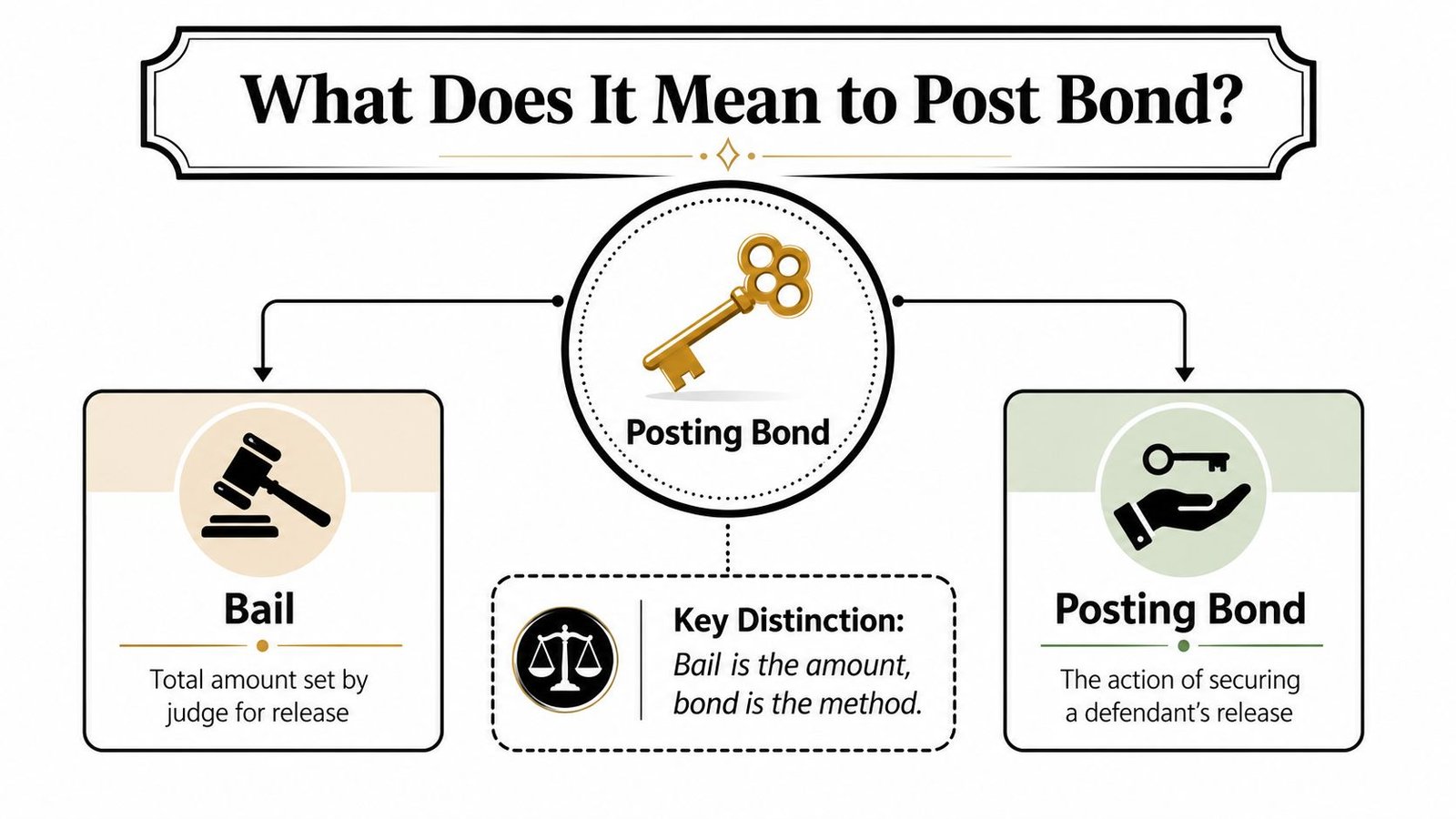
A lot of people hear "post bond" and assume it means paying the whole amount in cash. That's only one route. In actual court use, posting bond usually means filing a bond agreement with the court to secure release, and that bond can take different forms depending on the court order and local rules, as explained in this overview of the difference between bail and bond and in the Bail Project's explanation of bail versus bond.
A simple way to picture it
Think of bail like the number written on the ticket. Think of the bond like the payment method.
If a judge sets an amount, the court wants assurance that the defendant will come back for future court dates. The bond isn't a fine and it doesn't resolve the case. It's a release tool.
A bond is a promise to the court, backed by money, property, or a surety company.
That one idea clears up most of the confusion around post bond meaning. You're not "buying freedom." You're meeting the court's release requirement in an approved form.
The two terms that matter most
| Term | Plain-English meaning |
|---|---|
| Bail | The amount or property the court requires for release |
| Bond | The mechanism used to satisfy that requirement |
Families usually care about a different question. Which method gets the person out fastest without putting the household in a worse financial position? That's where cash bond, surety bond, and property bond become real-world decisions, not just legal words.
The Step-by-Step Process for Posting Bond
When families call in, the process feels chaotic at first. It usually isn't. It follows a sequence, and once you know the order, it becomes manageable.
To make that easier to follow, here's the usual flow:
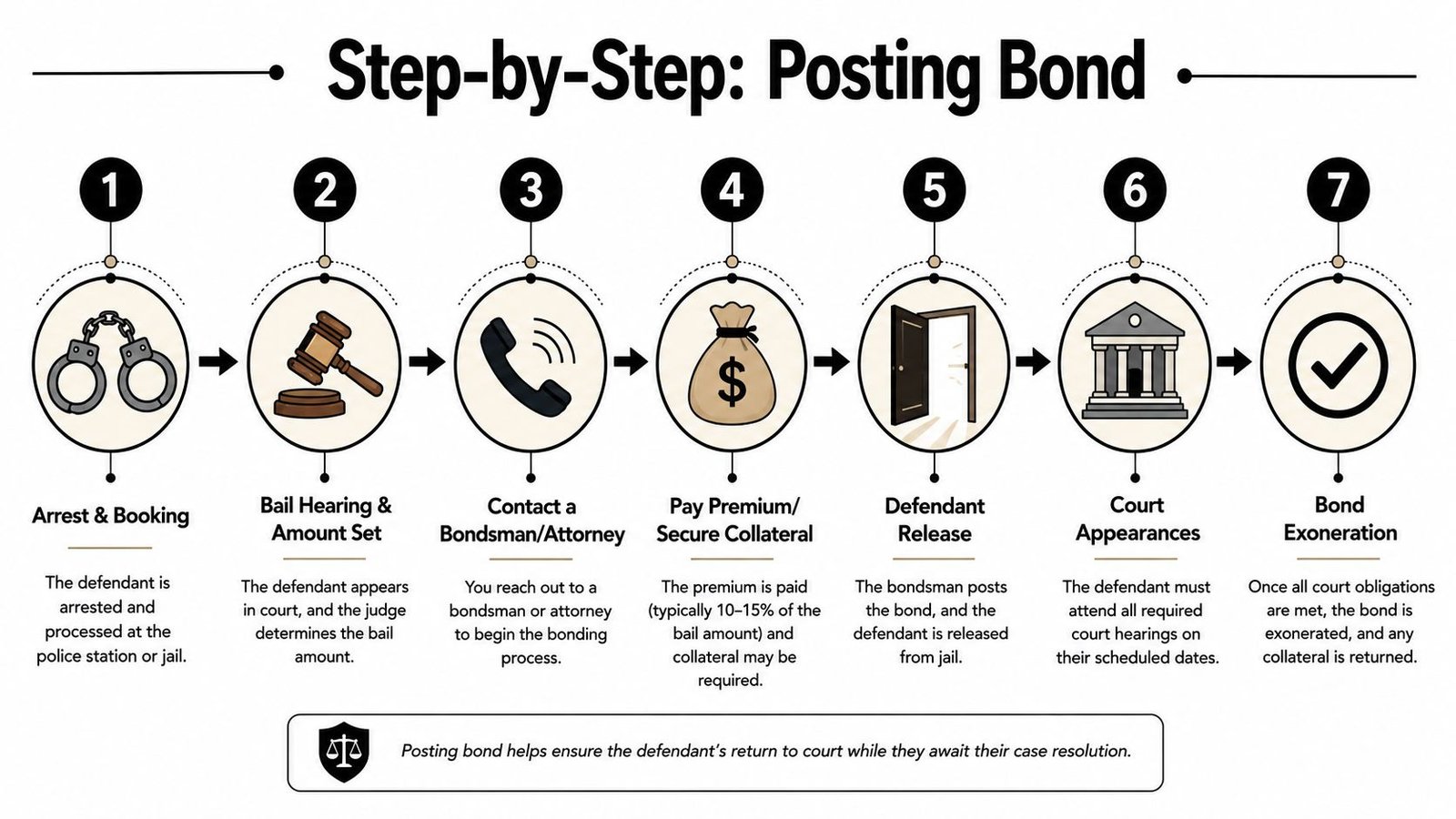
Start with the jail facts
Before anyone can post a bond, you need the basics:
- Full legal name: Nicknames cause problems.
- Date of birth: Jails may have multiple people with similar names.
- Jail or county location: Release happens through the holding facility involved.
- Bond amount and bond type: Cash-only, surety, or another form changes your options.
If you need a practical walk-through, this page on how to post bail for someone lays out the steps in plain language.
Then contact the right party
If it's a cash bond and you can pay the full amount directly to the court or jail, you ask about accepted payment methods and any required identification.
If it's a surety bond, you contact a bail bondsman. At that point, expect questions about the defendant, the charges, the cosigner, where the person lives, and whether anyone can sign paperwork quickly.
A lot of agencies now handle applications, signatures, and payments electronically. That helps especially when the cosigner is out of town or can't get to the jail in person.
Later in the process, it helps to hear a walkthrough from another format too.
What happens after paperwork
Once the agreement is signed and any required payment or collateral is handled, the bond is posted with the jail or court. Then the release process moves to jail staff.
That last part is where many families get frustrated. Posting the bond doesn't mean the person walks out immediately. The jail still has to process release, confirm there are no other holds, and complete its internal steps.
Practical rule: Bond posting and physical release are two different stages. Families often confuse them.
Professional surety bonding became the standard alternative to full cash payment in part because it can move release in hours rather than waiting to raise the full bail, with some processes described as taking 1 to 3 hours and sometimes longer depending on the county, according to the City of Houston courts page on posting a bond. In real life, county workflow, shift changes, and jail volume still affect the final timeline.
Understanding the Different Types of Bonds
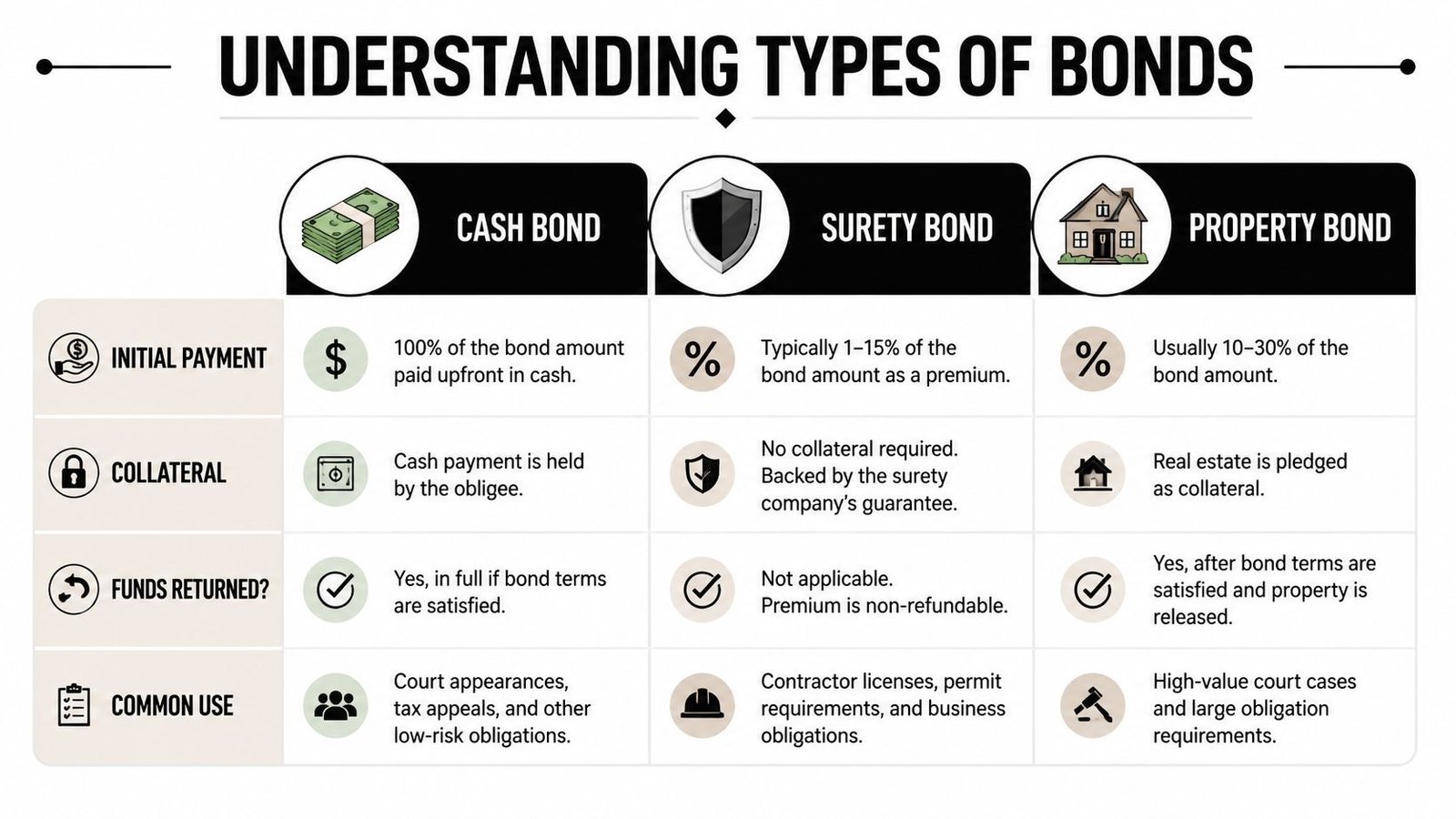
When people ask about post bond meaning, what they usually mean is, "Which option should we use?" In Colorado, that choice often comes down to cash, surety, or property.
Cash bond
A cash bond means paying the full bail amount directly. If the court allows this form and your family has the funds available immediately, it can be straightforward.
The drawback is obvious. Tying up that much money can strain rent, payroll, childcare, or other urgent bills. Even families who could pull the money together sometimes decide not to because the short-term hit is too severe.
Surety bond
A surety bond is what is commonly referred to when someone says they need a bondsman. In modern U.S. practice, a licensed bail bond agency posts the bond on the defendant's behalf when the full amount can't be paid directly to the court, and the defendant or family typically pays a non-refundable premium instead of the entire amount. Legal explanations commonly place that premium at 10% to 20%, and some jurisdictions use a standard 10% rate. One example given is that a $15,000 bail may require a $1,500 premium at 10%, while the bondsman guarantees the full amount to the court if the defendant fails to appear, as explained in this guide on post bond versus bail.
That structure is why surety bonds are often the most workable option for families under pressure. You don't need to produce the entire bail amount at once.
Property bond
A property bond uses real estate as backing. On paper, some families see this and think, "We own a home, so this may be cheaper."
Sometimes it isn't cheaper in any practical sense. It can involve title issues, valuation questions, court approval, and a lot of paperwork. It also puts real property at risk if things go wrong.
If your main goal is speed, property bonds usually aren't the first option to explore.
For readers comparing states or trying to understand the broader bond system, this Michigan bail bond guide gives a useful general overview of how bond types differ.
If you want a Colorado-focused breakdown of release options, this page on types of bail is a practical next read.
Colorado Bail Rules and Typical Costs
Colorado families usually want two answers right away. What will this cost me, and what choice is realistic tonight?
The first thing to know is that the bond type controls the conversation. If the court allows a surety bond, families often choose that route because it avoids putting up the full cash amount. If the court requires cash-only, that is a different situation and needs to be handled directly with the jail or court.
What Colorado families run into most often
From a working bondsman's perspective, the sticking points in Colorado are rarely mysterious. They're usually one of these:
- Cosigner issues: The right person isn't available to sign, verify identity, or answer financial questions.
- Document delays: People don't have the information needed for the application.
- Wrong assumptions about property: Families think a house automatically makes release simple.
Colorado courts make the property issue especially important. The state's guidance says property bonds require extensive documentation and that unencumbered equity must be 1.5 times the bond amount, which you can read in Colorado Judicial's page on types of bonds. That's a very different reality from the common assumption that posting bond just means paying a small percentage and walking out.
How to think about cost without making a bad choice
The cheapest option on paper isn't always the cheapest option in practice.
A cash bond can preserve the possibility of getting money back through the court process, but it requires the full amount now. A surety bond usually lowers the up-front burden, but the premium is the fee for the service and risk. A property bond may look attractive until the documentation, equity requirements, and delays start stacking up.
If you're trying to estimate what a surety bond may look like in your case, this guide on how much a bail bond costs helps frame the decision. For local help, families dealing with a Golden case often start with Jefferson County bond information, while those handling an Arapahoe-area arrest may need Centennial bail bond details.
One practical option in Colorado is Express Bail Bonds, which handles surety bonds and allows much of the process to be completed electronically for qualified cases. That's often useful when the cosigner is juggling work, kids, distance, or a middle-of-the-night arrest.
What Happens After the Bond Is Posted
Families sometimes relax too early. Release is important, but the bond stays in good standing only if the defendant follows the rules from that point forward.
The obligations after release
The defendant must appear for every required court date. They may also need to follow release conditions such as check-ins, travel limits, no-contact orders, or other court instructions tied to the case.
The cosigner has a role too. If the bonding company asks for updated contact information, court reminders, or status checks, answer quickly. Silence creates problems that are easy to avoid.
Missing court isn't a paperwork mistake. It can trigger bond forfeiture, a new warrant, and financial liability for the person who signed.
What usually causes trouble
A few patterns come up again and again:
- Ignoring mail or phone calls: Court dates get missed because someone assumes they'll hear about it again.
- Changing address without notice: The court and the bond company need current contact information.
- Treating release like the case is over: It isn't. Bond is the beginning of the next phase, not the end.
If anything changes after release, call the attorney and the bonding company right away. Problems are easier to manage before a missed appearance becomes a warrant.
Frequently Asked Questions About Posting Bond
Can I post bond if I can't afford everything at once
Sometimes, yes. That depends on the bond type, the amount, the cosigner, and the agency's requirements. Families should ask directly what is needed to start the bond and whether payment arrangements are available for the premium or any collateral requirement.
Who can post a bond for someone
Usually it's an adult family member, friend, or other responsible person who can sign the agreement and accept financial responsibility. The key issue isn't just willingness. The person has to be able to verify identity, provide accurate information, and understand what happens if the defendant doesn't appear.
How long does release take after the bond is posted
It varies by facility. Even after the bond is accepted, jail staff still have to complete release processing, and that can take time depending on staffing, other holds, and jail volume.
Is the premium refundable
No, not on a surety bond. The premium is the fee paid for the bond service and the risk the bond company takes when it guarantees the defendant's appearance.
For immediate answers about a specific Colorado jail, a pending bond amount, or whether a surety bond is even allowed in your case, call a licensed bail agent instead of guessing from fragments online.
If you need help right now, contact Express Bail Bonds. They handle Colorado surety bonds statewide, can explain your next step clearly, and can tell you what information to gather before you spend time or money on the wrong bond option.