
A late-night call often starts the same way: someone you love has been arrested, the jail locator shows custody, and the family wants one answer, how fast can we get them out? The honest answer depends on more than the bond amount. Booking, court orders, paperwork, outstanding holds, jail workload, and release conditions can all affect when someone walks through the facility door.
In Colorado, getting released from jail commonly involves a surety bond posted by a licensed bail agent, but cash bonds and court-ordered releases remain separate paths. The practical difference is important. Paying or arranging the bond starts the release process, but it doesn't always finish it.
What Getting Released From Jail Really Means in Colorado
At midnight, a family may think the job is simple: learn the bond amount, pay it, and pick up the defendant. In practice, the bond is one part of a custody workflow. The jail may still need to verify the bond paperwork, check for other warrants or holds, finish booking, and obtain supervisory approval before release can occur.
That distinction explains why “bail posted” doesn't always mean “released.” An agent may submit a properly completed surety bond, yet the detention facility controls the final processing steps. The timing can also change if the court has ordered supervision, travel limits, treatment, weapons restrictions, employment requirements, or another condition.
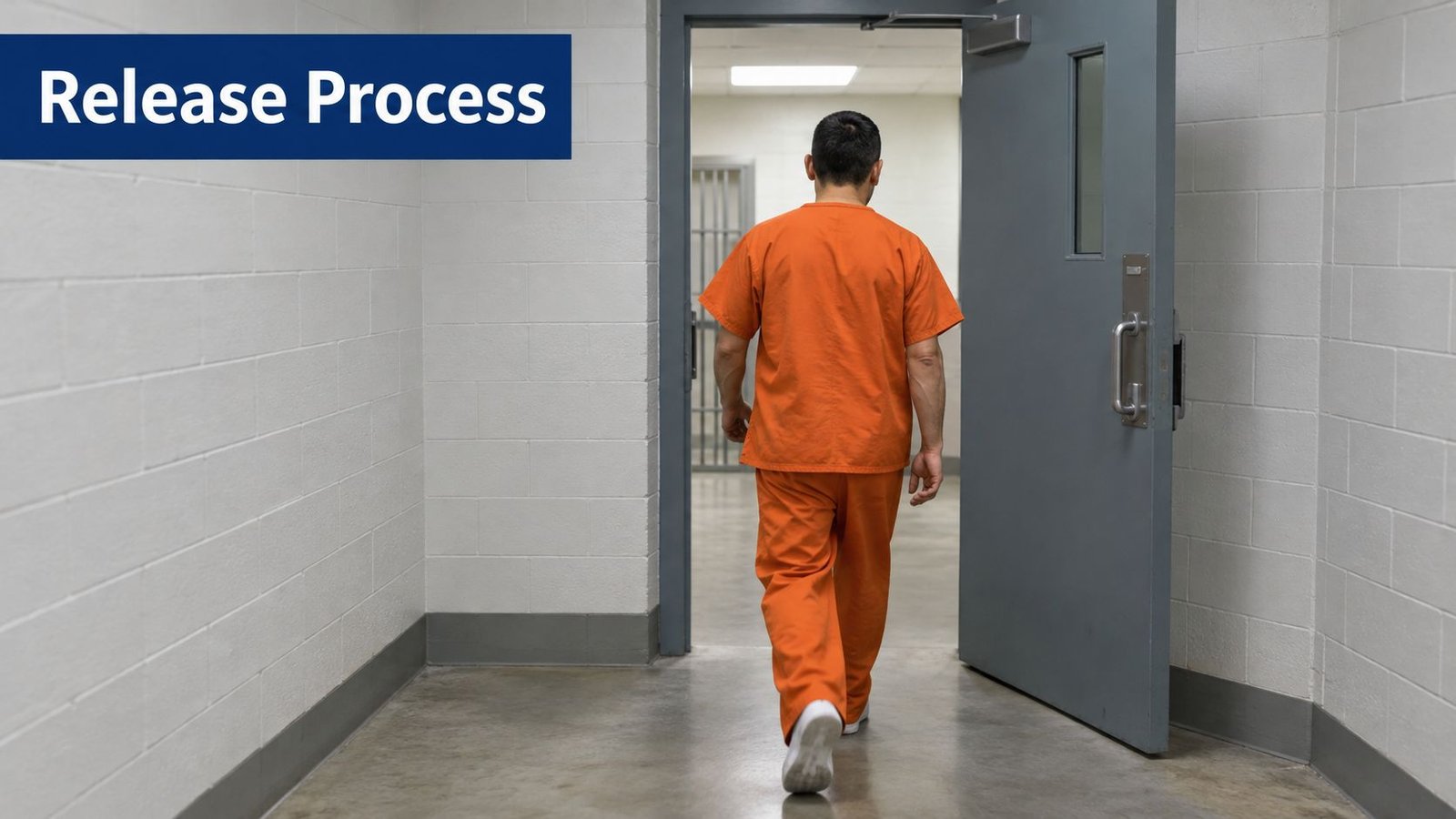
Release is a legal and administrative event
Federal data illustrates why release isn't a cash transaction. Across fiscal years 2011 through 2018, 747,468 pretrial cases were disposed in federal district courts, and 32% of defendants were released before trial. Among those released, 22% were released at the initial court appearance and 10% at a later detention or bond hearing. The same dataset reports that 76% were released without financial conditions, while 79% had nonfinancial conditions, such as travel restrictions, substance abuse treatment, weapons restrictions, or employment requirements. Federal pretrial release data
Those figures don't determine a Colorado jail's schedule, but they show the larger point. Modern release decisions often rely on structured conditions and court supervision rather than money alone. The defendant's charge category and legal circumstances matter too. In the federal dataset, property defendants were released at a much higher rate, 73%, than immigration defendants, 12%. The same federal release dataset shows that release outcomes vary by case and person.
A surety bond can be handled remotely, which is useful when relatives live outside Colorado or can't spend hours at a detention center. The application, identification documents, payment, and contract signatures can be completed electronically, and the agent can submit the bond to the facility. For a separate explanation of situations involving an existing warrant and treatment entry, review rehab with a warrant: what to know.
Practical rule: Treat the bond as the start of release processing, not a guarantee that the jail will open the door immediately.
A court may also order release without a traditional bond. That process is different from arranging a surety bond, and families should confirm the exact order and submission requirements through the court or counsel. Information about release by court order can help distinguish that route from a bond posted through an agent.
If you're trying to move the process forward, contact Express Bail Bonds for 24/7 guidance on the information the agent and jail will need.
Choosing Between Cash Bond and Surety Bond
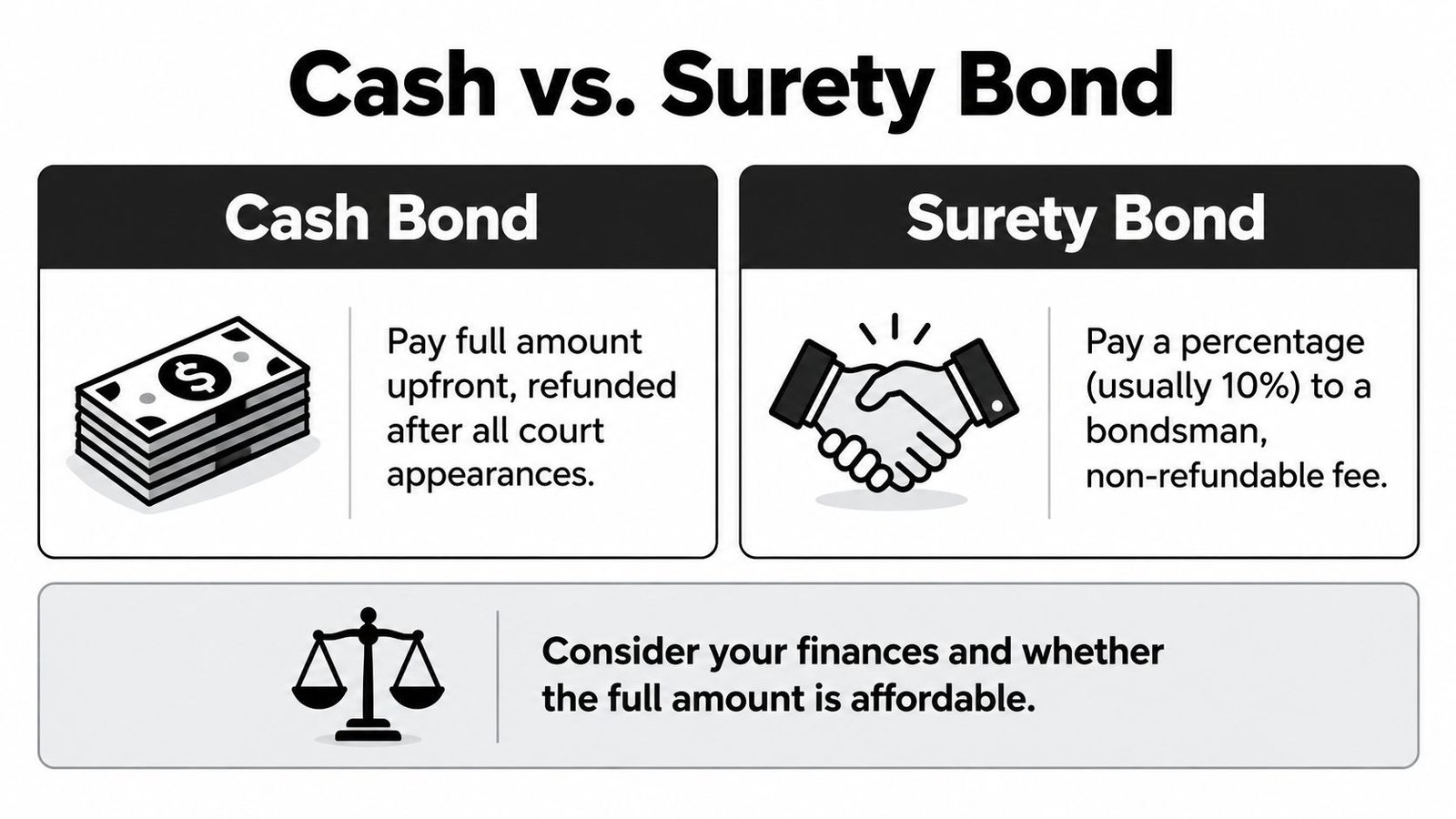
The right choice usually turns on available funds, timing, collateral, and the family's tolerance for financial exposure. A cash bond requires the full bond amount in cash. An official Arapahoe County explanation states that the court may return a cash bond after required court appearances are completed, while a licensed agent's surety bond uses a non-refundable premium instead. Arapahoe County bond information
A surety bond transfers the financial obligation to the licensed agent, subject to the agent's contract and approval requirements. The family generally pays a premium rather than producing the entire bond amount, and the agent may require a cosigner or collateral. A county sheriff's bonding guidance describes the typical agent charge as about 10% to 15% of the total bond amount, with possible cosigner and collateral requirements. Douglas County sheriff bonding guidance
The financial trade-off
Colorado law caps a bail bond premium at the greater of $50 or 15% of the amount of bail furnished. The law also prohibits extra bond-related fees except specified limited charges, including court filing fees, secure storage of collateral, or premium financing. Colorado bail bond premium statute
| Feature | Cash Bond | Surety Bond via Agent |
|---|---|---|
| Amount paid at the start | Full bond amount in cash | Non-refundable premium |
| Potential return | The court may return the cash after required appearances | Premium isn't returned |
| Collateral | Usually not the central feature, because the full amount is deposited | The agent may require collateral |
| Cosigner | May not be needed for the court deposit | The agent may require an approved cosigner |
| Remote convenience | Depends on the facility's cash-payment process | Application and contract work may be completed remotely |
| Main risk | A large amount of money remains tied to the case | The premium is paid even if the case ends favorably |
The comparison isn't purely about which option costs less. A cash bond may preserve more value if the court later returns it, but it requires the family to produce the complete amount immediately. A surety bond may be more manageable when the full amount isn't available, but the premium is a service cost and the contract carries responsibilities.
Ask the right question before paying
Ask whether the posted bond is cash-only, surety-eligible, or subject to a court hearing. Then ask what the agent needs from the cosigner, whether collateral is required, how payment will be made, and whether the jail has additional processing requirements.
Express Bail Bonds focuses on surety solutions rather than cash-only bonds. Families dealing with a Jefferson County arrest can review Jefferson County and Golden bail bond information, while people handling an Arapahoe County matter can use Centennial bail bond resources. For a broader explanation of the alternatives, see cash bond versus surety bond.
How Remote Bail Posting Works With Express Bail Bonds
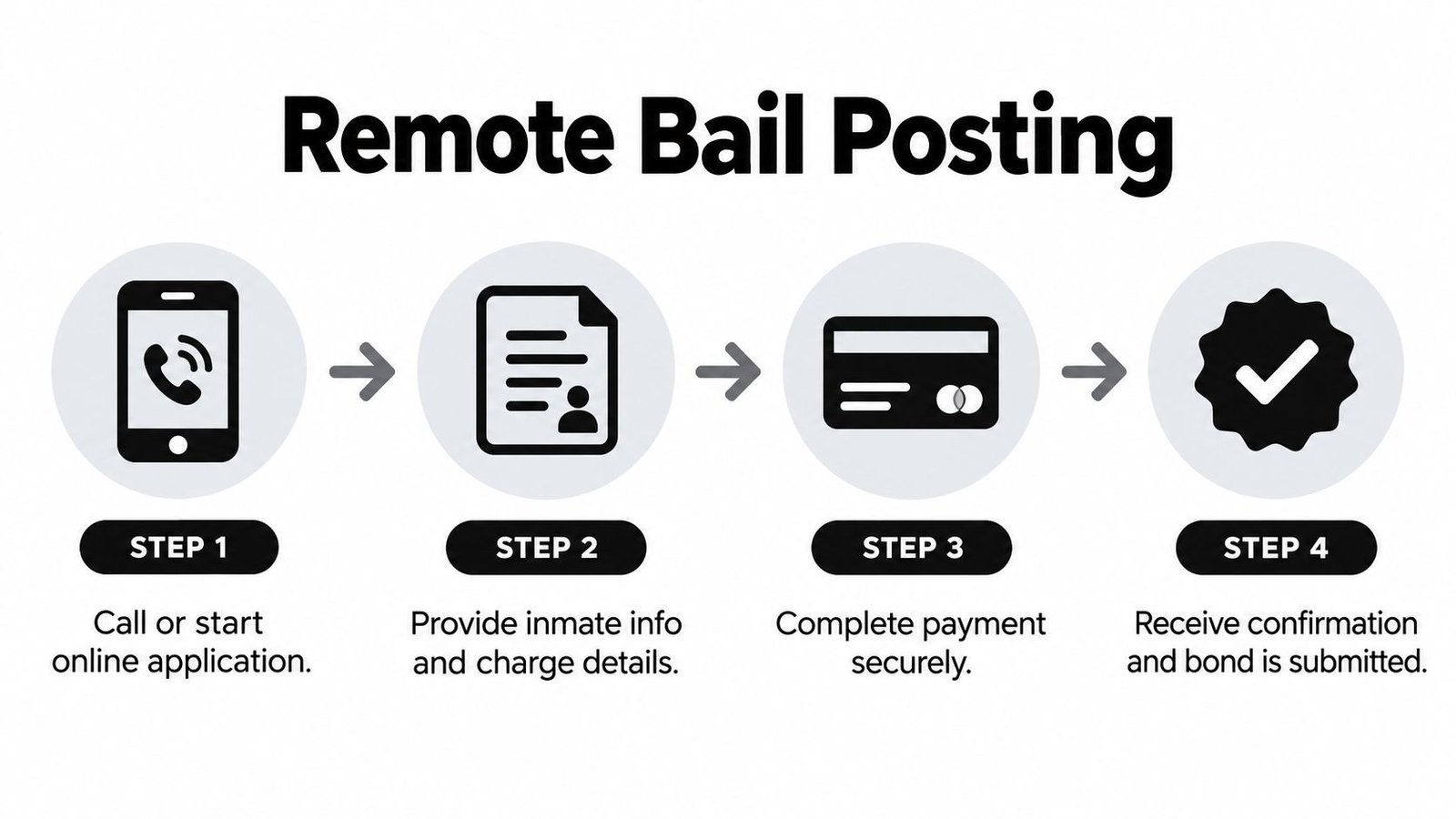
Remote posting works best when the family gathers accurate information before starting. Have the defendant's legal name, date of birth, booking location, booking number if available, charge information, bond amount, and a reliable way to reach the cosigner. If the jail hasn't completed booking, some details may not be available yet, so give the agent whatever the facility has confirmed.
Start with a call, text, or online application. The agent uses the information to identify the detention facility, confirm whether the bond can be posted as a surety bond, and explain the financial and contract requirements. This early verification prevents a common waste of time, submitting paperwork for the wrong facility or before the court has entered the bond.
The next part happens electronically. The cosigner or responsible party provides identification, completes the application, reviews the agreement, signs the contract, and makes the required payment through the available remote process. Read the contract carefully. It explains the premium, collateral terms if any, appearance obligations, and what happens if the defendant fails to comply with the bond.
Why complete paperwork matters
Colorado law provides that bond fees, booking fees, and similar debts don't have to be paid to secure release on a money bond. The bond amount is the amount required for release, while a $10 bond fee and up to a 3.5% credit-card fee may be collected later as a debt if the payer doesn't cover them at bonding time. Colorado bond fee statute
That rule doesn't eliminate the need to understand the agent's contract. The premium and any approved contract obligations remain separate from fees the statute treats as later-collectible debt. Ask for a clear breakdown before signing, and keep copies of every document.
Once the paperwork is complete, the agent posts the bond directly at the detention facility. Express Bail Bonds serves Denver, Arapahoe, Jefferson, Douglas, Weld, El Paso, and other Colorado jurisdictions, with call or text support at 720-984-2245. Remote processing means the cosigner generally doesn't need to travel to the jail just to deliver documents.
For a plain-language overview of the process, use how to get a bond. To see the process in context, watch the following video before contacting an agent.
Begin at Express Bail Bonds with the booking information you have. If a detail is missing, don't guess. Tell the agent what the jail confirmed, and let the agent help identify what still needs verification.
Why Release Takes Time After Bail Is Posted
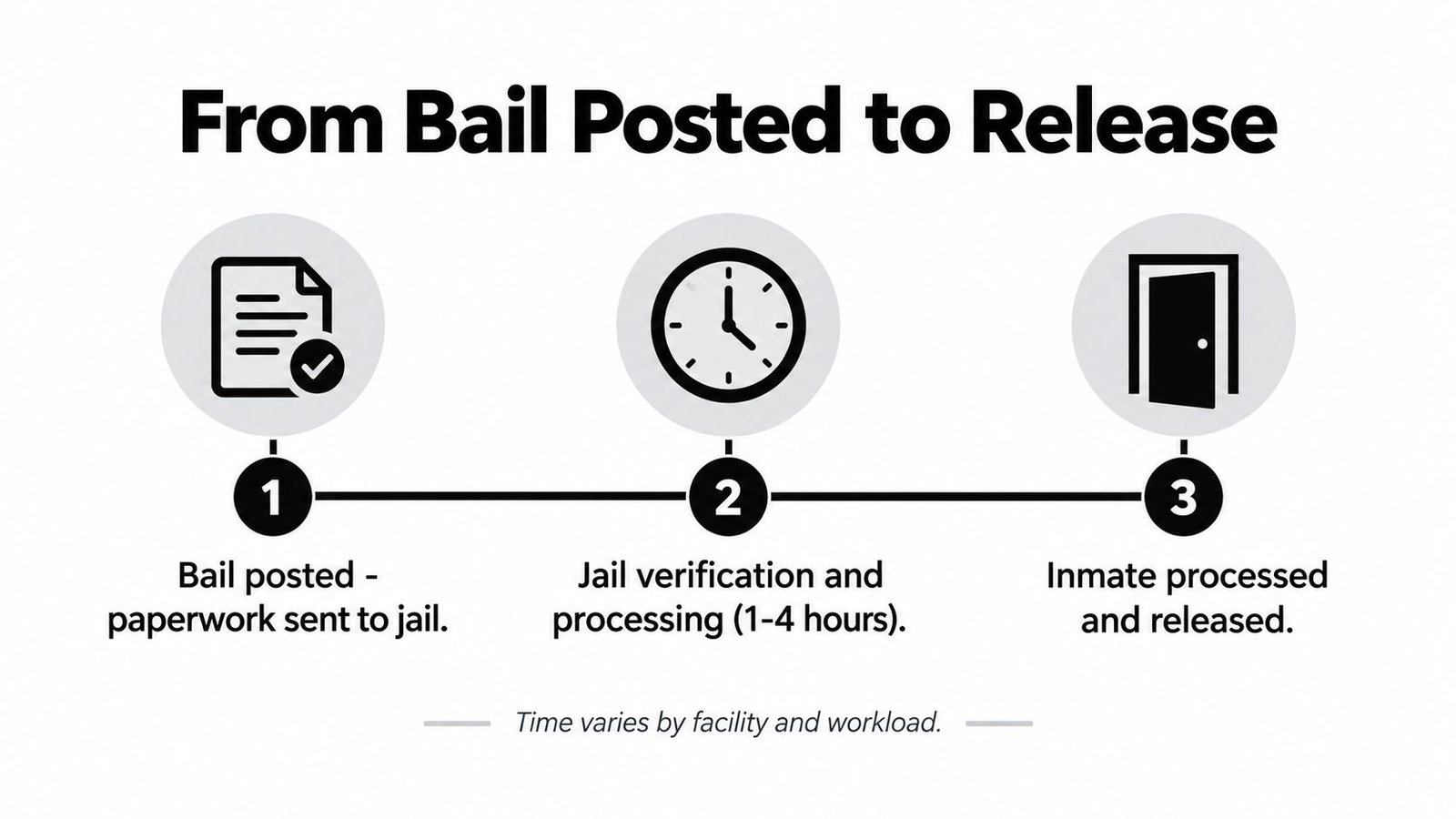
The most frustrating moment comes after the family receives confirmation that the bond was posted, but the defendant remains in custody. That delay usually reflects jail operations rather than a second payment problem. The facility must match the bond to the correct person and case, check for outstanding warrants or holds, finish required booking work, and obtain the appropriate supervisory sign-off.
A missing document can stop the process. So can an unresolved hold from another agency, incomplete booking, a court order that requires review, or a condition the jail must explain before release. The person posting the bond can't clear every obstacle through the bail agent because some decisions belong to the court or another law-enforcement agency.
Conditions can add work after approval
Federal practice offers useful context. The federal dataset covering fiscal years 2011 through 2018 reports that 79% of defendants released pretrial had nonfinancial conditions, including travel restrictions, treatment, weapons restrictions, and employment requirements. Federal pretrial release data A Colorado release may involve its own conditions, and the defendant must understand them before leaving custody.
The broader national picture also shows why release isn't governed by one universal rule. In 2019, 94.3% of defendants were released pretrial. Among those released, 88% appeared at court dates, and 98% to 99% weren't rearrested for a violent crime while awaiting trial. U.S. Commission on Civil Rights bail reform report Those figures describe national experience, not a promise about an individual Colorado case, but they reinforce the importance of clear conditions and reliable follow-through.
What families can do during the wait
Stay reachable. The agent may need a clarification, the jail may release information only to an approved contact, and the defendant may need transportation as soon as processing finishes.
Use this short communication list:
- Confirm submission: Ask whether the bond was accepted by the jail, not merely completed by the cosigner.
- Ask about holds: Find out whether another agency, warrant, or court matter may prevent release.
- Check booking status: Confirm whether fingerprints, property inventory, and required intake work are complete.
- Clarify conditions: Ask where the defendant will receive release instructions and whether a court or pretrial office must be contacted.
- Arrange pickup: Keep a driver available and confirm the facility's designated release area.
A facility's workload and shift change can affect the final wait. The agent can explain what has been submitted and what remains outside the agent's control, but only the jail can confirm when the person has completed its release process. For a practical discussion of timing, see how long bail takes to process.
What to Expect at Pickup and How to Stay Compliant
Pickup is the final operational step, but it still requires preparation. Bring valid identification, follow the facility's instructions about the release entrance, and wait where staff direct you. Don't assume the person will exit with every item they had at booking. Jail property may be returned through a separate procedure, and staff control that handoff.
The released person may be tired, confused, embarrassed, or focused on immediate needs. Arrange transportation before arriving, bring weather-appropriate clothing if possible, and avoid turning the pickup into an argument about the case. The first conversation should focus on safety, medication needs, food, a phone, and the next required appointment.
The first day requires a written plan
Court conditions can include reporting, travel limits, treatment, employment expectations, weapons restrictions, or communication rules. The defendant must understand each condition and ask the attorney or pretrial office for clarification when the language isn't clear. A missed condition can create a new legal problem even when the original bond remains in place.
Use a written checklist:
- Secure the paperwork: Keep the bond documents, release order, court notice, and agent contact information together.
- Record the next date: Put every court date and reporting appointment into a calendar immediately.
- Confirm transportation: Plan how the defendant will reach court, counsel, treatment, or pretrial services.
- Protect communication: Tell the agent and attorney about changed phone numbers, addresses, or travel plans.
- Follow restrictions: Don't treat release as permission to ignore travel, contact, treatment, or weapons conditions.
- Ask before acting: Get legal guidance before leaving the area, changing residence, or making decisions that could affect compliance.
After release: A defendant's freedom depends on following the court's order, not just on leaving the jail.
A Colorado county sheriff's guidance states that a licensed bail agent typically charges a non-refundable fee of about 10% to 15% of the total bond amount and may require a cosigner or collateral. County bonding guidance The cosigner should understand that the obligation continues beyond pickup and may involve helping the defendant remain available for court.
Out-of-state cosigners can coordinate remotely by keeping electronic copies of the contract, confirming the defendant's local transportation, and arranging a reliable contact plan. Families handling a Jefferson County release can consult Jefferson County and Golden resources, while those coordinating a Centennial matter can use Centennial bail bond guidance. For conditions and responsibilities, review conditions of bond.
Getting Help Fast and Taking the Next Step
The fastest lawful path usually begins with identifying the type of release available. If the court permits a surety bond, remote processing can save a family a trip to the detention center and reduce delays caused by incomplete forms. If the bond is cash-only, a court hearing is pending, or another hold exists, an agent can explain what a surety bond can and can't solve.
Have the defendant's full name, birth date, booking location, booking number, charge information, bond amount, cosigner identification, and payment method ready. Don't wait for perfect information before calling. Give the agent the facts you have, identify what hasn't been confirmed, and let the agent work from the jail's records.
Colorado's rules distinguish the two main financial paths. A cash bond requires the full bond amount in cash, and the court may return it after court appearances are completed. A surety bond through a licensed agent uses the agent's non-refundable premium instead. Official county bond information
Avoid the delays families can control
Keep identification legible. Use the defendant's legal name exactly as the jail records it. Read every contract before signing, answer the agent's calls, and make sure the pickup driver knows the facility's instructions. Understand that bond submission and physical release are separate events.
Express Bail Bonds has served Colorado detention facilities statewide since 1988, using electronic applications, payments, and contract documents for remote surety processing. The agency offers 24/7 call or text support at 720-984-2245 and provides guidance on fees, court requirements, and next steps. Start with Colorado bail bond assistance and ask what the jail still needs before assuming the release is complete.
For local coordination, keep the Jefferson County and Golden bail resource and Centennial bail bond page available. The right information won't control the jail's workload, but it can prevent avoidable paperwork problems and help your family respond quickly when the facility is ready to process the release.
If someone is in custody in Colorado, Express Bail Bonds can explain the surety process, complete applications and contracts electronically, and submit the bond at the detention facility without requiring a jail visit from the cosigner. Call or text 720-984-2245 for 24/7 guidance, or visit Express Bail Bonds to start the release process now.