
32% of defendants in U.S. federal district courts were released before trial, and 76% of those released were let out without financial conditions such as personal recognizance or other non-monetary terms. A person “released by court order” has been granted release from custody by a judge, but that does not mean the criminal case is dismissed or resolved.
If you've ever gotten a late-night call, driven to a jail in a hurry, and heard that phrase from a deputy or clerk, the confusion is immediate. Families usually want one clear answer first, whether the person is coming home, what happens next, and whether the case is over.
A court-ordered release is a formal change in custody status. The person may walk out of jail, but the court case keeps moving. That distinction matters because release is about where someone sleeps tonight, not whether they're guilty, innocent, or finished with the system.
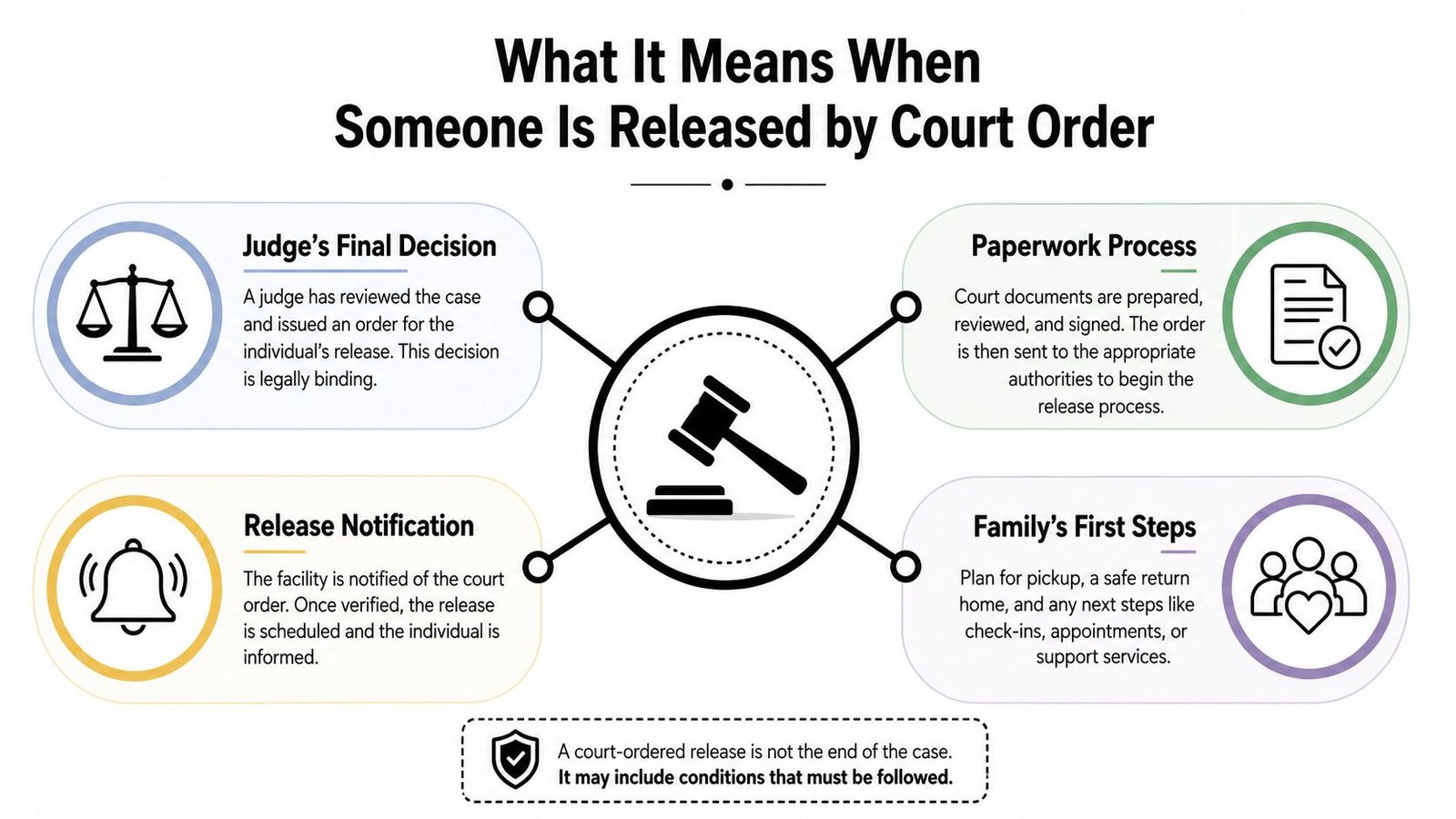
What It Means When Someone Is Released by Court Order
A family can hear the phrase at the jail counter and still not know what it means. The person may be coming home soon, but the case is not over just because a court ordered release.
The order changes custody, not the case
Custody status works like a switch. Before the judge signs the order, the person is held. After the order is entered and processed, the person is released, but the criminal case keeps moving unless something else later changes it, such as dismissal, plea, or sentencing.
Under federal pretrial procedure, the judge must enter a written order placing the person into one of four custody categories, release on personal recognizance or unsecured bond, release with conditions, temporary detention for specified purposes, or detention pending further proceedings. Federal guidance also requires written findings when detention is ordered, which makes “released by court order” a documented change in legal status, not a casual jail decision. The jail follows the judge's order because the court controls whether the person leaves immediately, leaves with conditions, or has to satisfy additional steps such as supervision or bond execution. See the federal guidance on release and detention pending judicial proceedings.
That is why the phrase can be easy to misunderstand. A person can be released and still have court dates, reporting duties, or no-contact terms waiting in the background.
Practical rule: if a judge ordered the release, the order controls. The jail does not decide the release path on its own.
What families should hear in plain English
A court-ordered release means the person's custody status has changed, but the court case has not disappeared. That is the part families often need explained twice, because release from jail sounds final even when the legal process is still active.
The distinction is simple once you separate the two questions. One question is where the person is sleeping tonight. The other is what the court still requires next. Release answers the first question. It does not, by itself, answer the second.
Families also run into a practical issue here. In Colorado, the next step may involve a bond, compliance terms, or later bond exoneration, so the meaning of “released” depends on what the judge ordered and what the jail or court still needs processed. If you want a plain-language companion to the basics, the judicial release overview is a helpful starting point for Colorado families trying to separate release status from the rest of the case.
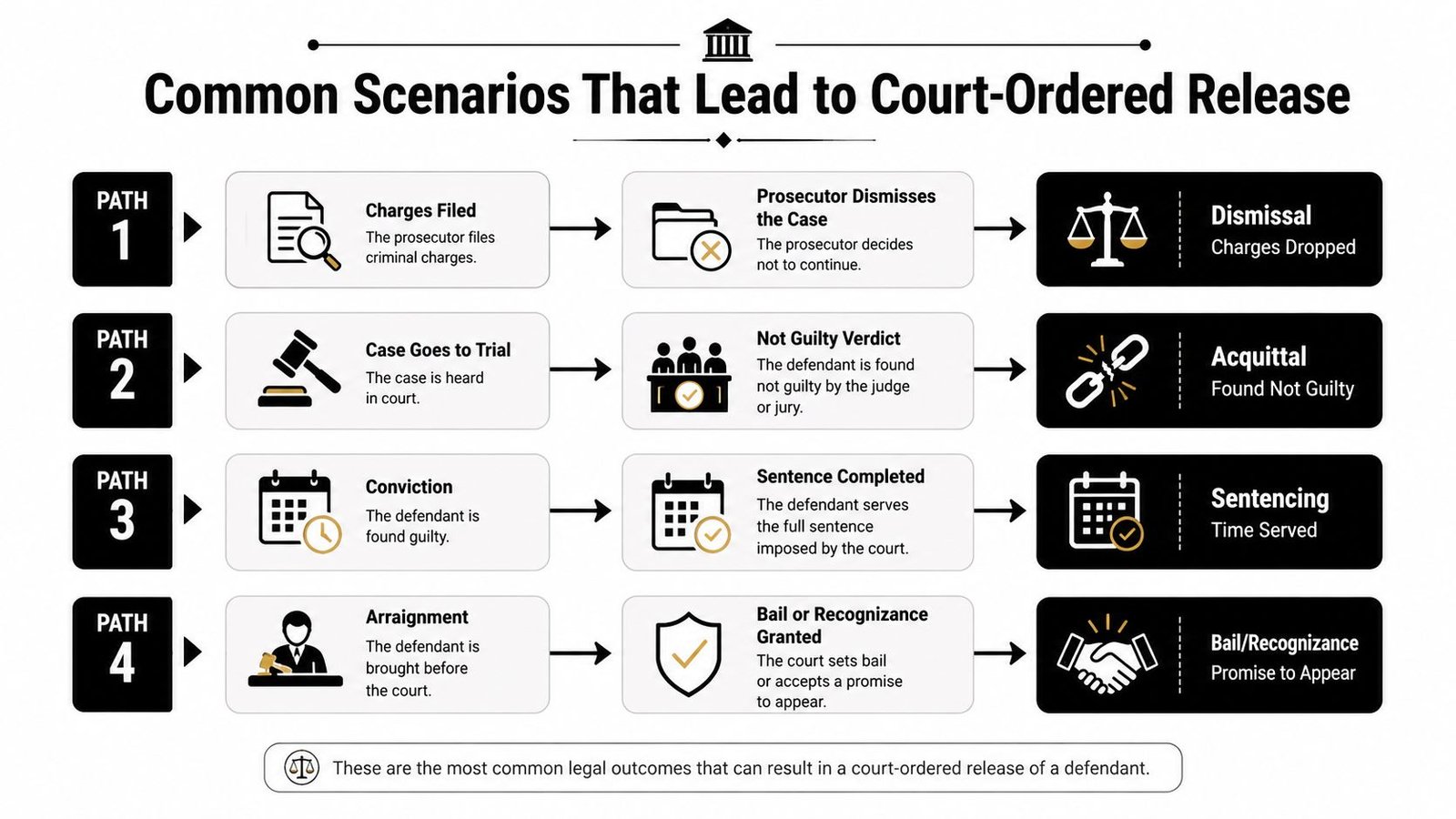
Common Scenarios That Lead to Court-Ordered Release
A family may hear that someone is being let go, but the reason behind that release can look very different from one case to another. One person leaves because the case is over, another because the court wants the person moved elsewhere, and another because the judge has set release terms that still need to be followed. The phrase sounds broad because it is broad.
There are four common legal paths that lead to court-ordered release, and each one affects the family differently.
Four common legal paths
A dismissal is the clearest example. The prosecutor drops the charges, so the person is no longer held on that case. Families usually feel immediate relief in that situation, but it still makes sense to confirm whether any other charges, holds, or future filings remain in play.
A transfer works differently. The court may order the person moved to another facility or jurisdiction, so the custody location changes even though the person is still in the legal system. That distinction matters when a family hears “release” and expects home, because the actual step may be a move to a different place, not freedom from custody.
Time served is another path. A judge can decide that the time already spent in custody satisfies the sentence or the detention requirement connected to the case. Once that happens, there is no further reason to keep the person locked up on that matter.
Conditional release is the path families need to pay the closest attention to. The person leaves custody, but the court can still require reporting, no-contact rules, travel limits, drug testing, curfews, or other conditions. Under federal appellate procedure, release decisions can also be reviewed on appeal under the release-and-detention framework, which shows how formal these orders can be. See Rule 9 of the Federal Rules of Appellate Procedure.
A release order can change where someone sleeps tonight without ending the court's control over the case.
Why the scenario matters
If charges are dismissed, the next steps are usually straightforward. If the release is conditional, the family needs to pay attention right away. A missed condition can send the person back into custody, and in some systems a separate offense can arise from failing to follow a release order condition.
Colorado families also run into a practical problem after release. The person may still have a bond to satisfy, court conditions to follow, or later bond exoneration to deal with, so the word “released” does not tell the full story by itself. The question is what the judge ordered and what the court or jail still needs handled.
Canadian criminal procedure reflects the same basic idea in another setting. A judge starts with release unless the prosecution shows why detention or tighter terms are needed, and that structure keeps pretrial detention from becoming automatic. A release order can also control the handling of property or exhibits in certain situations, which shows how much detail a court order can cover. See the Canadian Criminal Code provisions on release orders and conditions.
The main point is simple. Families need to identify the path, not just the phrase. “Released by court order” is the umbrella, and the details underneath it tell you what the person can do next.
Court-Ordered Release Versus Bond or Citation Release
Families often use “court-ordered release,” “bond release,” and “citation release” as if they're the same thing. They're not. The differences affect who pays, when a person can leave, and what happens if the person misses court.
The three release mechanisms side by side
A court-ordered release is the broad category. A judge signs an order that tells the jail how to treat the person's custody status. That order might lead to release with no money, release with conditions, or release tied to a bond process.
Bond release is more specific. Money or a surety bond is posted to secure the person's appearance. If the person fails to appear, the bond can be forfeited. That's the financial risk families usually worry about, and it's one reason bond paperwork matters so much.
Citation release is the simplest of the three. An officer issues a citation at arrest and lets the person go without posting bail at that moment. That can happen quickly, but it depends on the arresting officer's authority and the charge involved.
For a closer look at one common non-financial release path, see release on own recognizance.
| Comparison of Release Types in Colorado | Who Issues It | Financial Obligation | Forfeiture Risk | Typical Use Case |
|---|---|---|---|---|
| Court-ordered release | Judge | May be none, or may include bond or conditions | Depends on the order | Any release directed by the court |
| Bond release | Court or jail processes the judge's order, with a surety or cash posted | Yes, bond money or surety terms usually apply | Yes, if the person fails to appear | When appearance needs a financial guarantee |
| Citation release | Arresting officer | No posting at the scene | No bond forfeiture at the scene | Minor matters or qualifying arrests |
What that means for Colorado families
The practical issue is control. A citation release happens right away, a bond release requires a financial step, and a court-ordered release can include either of those or neither. That's why people get confused when they hear the same phrase used in different contexts. The court order is the legal trigger, while the bond is the financial tool that may or may not be part of it.
If you're helping someone in Colorado, ask one question first, “What exact release mechanism did the judge order?” That answer tells you whether you're dealing with paperwork, payment, or just compliance with conditions. It also helps you avoid paying for a step the case doesn't need.
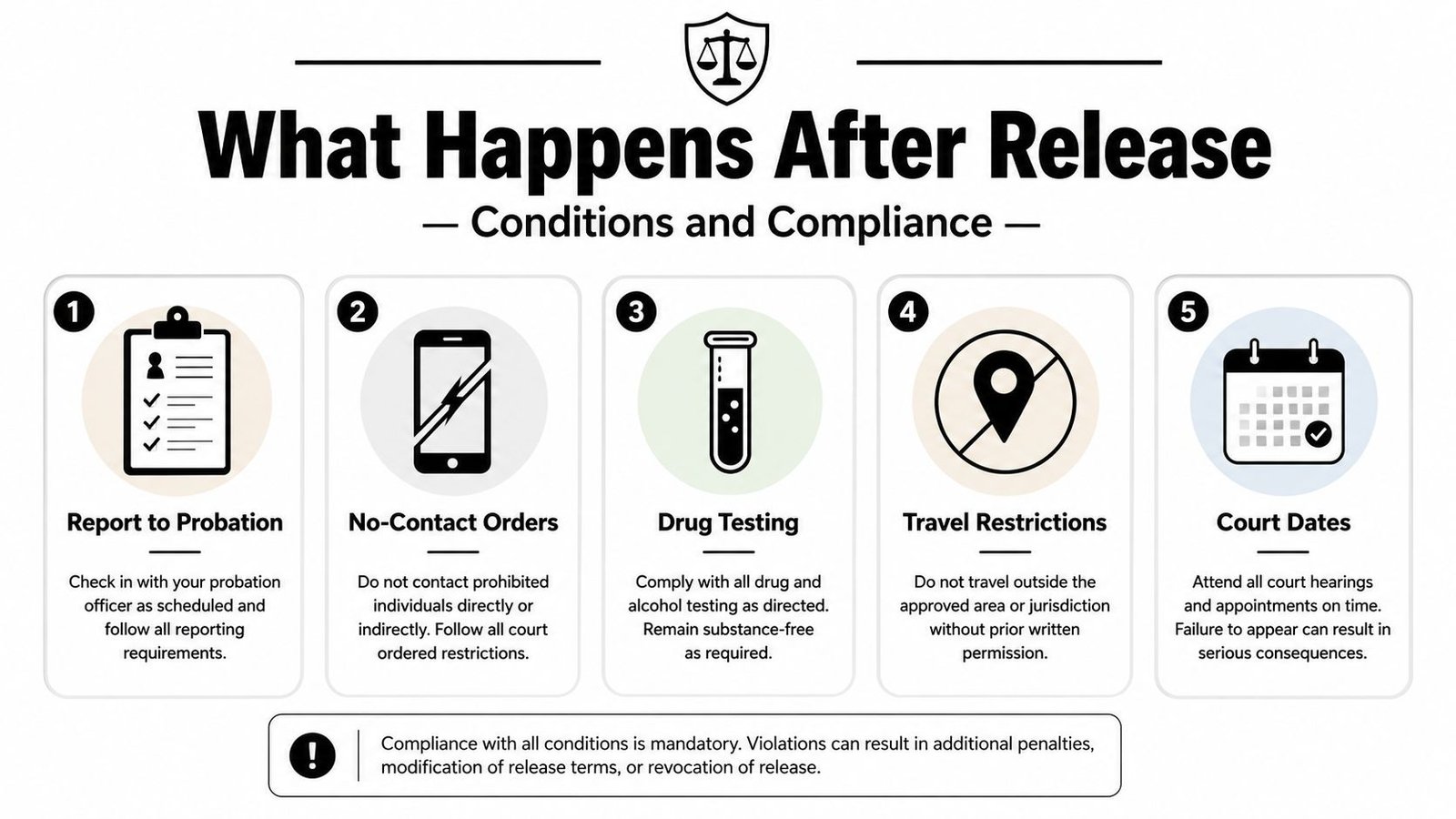
What Happens After Release and Compliance
A judge signs the release order, and the legal work does not stop there. For the family, the next phase is usually about watching conditions closely, keeping records organized, and avoiding a mistake that turns a release into a new problem.
Conditions can follow the person home
Courts can require no-contact orders, reporting requirements, travel restrictions, drug testing, or curfews. A release order can also include house arrest or other limits that shape daily life after the person leaves custody. That is why a release order should be read like part of the case plan, not just a note that someone is out of jail.
In Colorado, families often see these conditions tied to the bond itself. Our guide on bond conditions and what they mean explains how those requirements can affect what the defendant may do, where they may go, and how quickly a bond can stay in good standing. If the order says “released,” the conditions are part of that release.
Practical rule: if the order says “released,” read the conditions like they're part of the release itself, because they are.
The bond question families ask most
If a bond was already posted and the court later enters a release order, the bond may be exonerated. In plain terms, that means the bond obligation can end, but the premium usually isn't refunded. The collateral, if any, is typically returned when the bond is formally cleared. The timing can vary by county, and some bonds stay open until every required court appearance has happened.
Colorado families also need to watch the conditions that can keep a bond active. Missing a hearing, ignoring a no-contact order, or failing to report as directed can create problems even after the person has been released from custody. That is why the paperwork matters as much as the jail release itself.
For families working through the financial side, the short version is simple. Release changes the custody status, and then the court and the bond company each follow their own process to close the loop.
Step-by-Step Next Actions for Families and Defendants
The first hours after release are the easiest time to make a mistake. People are tired, stressed, and relieved, and that's exactly when missed court dates or unclear conditions cause trouble. A simple checklist helps.
Start with the order, not the rumor
Confirm which court issued the release, what the exact conditions are, and when the next appearance is scheduled. Don't rely on a memory from a jail lobby conversation, ask for the paperwork and keep it with you. The release order is the document that tells everyone what happens next.
Then secure the conditions that need immediate attention. If there's a no-contact order, understand exactly who's covered. If drug testing or reporting is required, write down where and when that starts. The earlier the family clarifies these details, the less likely the defendant is to miss a requirement by accident.
For a simple arrest-to-release checklist that helps family members stay organized, the what to do when someone gets arrested guide is a useful reference point.
Keep the paperwork in one place
Put the release order, bond agreement, court dates, and any contact information in one folder or one digital file. Use calendar alerts for every hearing. If the person has a phone, program reminders right away. If they don't, the family should carry that responsibility.
A few focused habits help a lot:
- Confirm transportation immediately. Don't assume the person can get home safely on their own.
- Save every document. The release order and bond paperwork can answer questions later.
- Review conditions out loud. People remember better when they hear the terms spoken plainly.
- Set multiple reminders. One calendar alert isn't enough when court dates matter.
- Plan for out-of-state help. Remote paperwork and electronic communication can make the process much easier.
Know when outside help is useful
If the person still needs a bond, or if the family is unsure about financial exposure, a bail bond agent can explain the release paperwork and the next steps. That's especially helpful for relatives who are out of state and need to manage the case without driving in immediately. The goal isn't speed alone, it's avoiding avoidable mistakes.
How Express Bail Bonds Supports Colorado Families
A court order can change custody in a matter of moments, but the family still has to handle the practical side, paperwork, payment, and timing. That's where a Colorado bail bond agency can be useful, especially when everyone is trying to coordinate from different places.
What the service looks like in practice
Express Bail Bonds is a licensed Colorado agency based in Denver that has served county detention facilities statewide since 1988. It handles surety bond posting, and families can complete applications, payments, and contract documents electronically, which helps when someone needs release quickly and nobody wants to sit in a detention center for hours. The agency is available 24/7 by call or text at 720-984-2245.
Colorado's standard bail bond premium is 15%, and for bonds over $5,000 licensed agencies often secure a 10% premium with an approved cosigner. Express Bail Bonds works with that structure and does not post cash-only bonds. For families trying to understand local options, the county pages for Jefferson County and Golden and Centennial can help them find the right starting point.
Why that matters when someone has been released by court order
Release by court order doesn't always mean the practical work is over. Sometimes the person is out, but a bond still needs to be tracked, conditions still need to be explained, and future hearings still need to be calendarized. In those situations, a responsive bond agent can help the family keep the release from turning into a compliance problem.
The safest approach is simple. Read the order, confirm the conditions, and make sure the bond paperwork matches the court's directive. If the release is moving fast, having a local agency that can process documents electronically can reduce delays and confusion. When the situation is urgent, clear paperwork matters as much as the release itself.
Frequently Asked Questions and County Resources
Families usually have the same few questions after hearing that someone was released by court order. The answers are short, but each one matters.
Can the court revoke release later
Yes. If the person violates conditions, misses required appearances, or otherwise fails to comply with the order, the court can change custody status again. That's why release terms should be treated as active obligations, not suggestions.
What is bond exoneration in Colorado
Bond exoneration is the formal end of the bond obligation. If a bond was posted, the agency or court can clear the bond after the defendant has met the required conditions and appearances. The premium is generally not refunded, but any collateral may be returned once the bond is properly closed.
Do I need a bondsman if the court already released the person
Not always. If the judge ordered a release without bond, a bondsman may not be needed. If a bond still has to be posted, or if the family needs help understanding the financial terms, a bond agent can explain what the order requires before money is committed.
How do I verify release status in my county
Start with the jail or court contact information for the county where the arrest happened. The county jail phone numbers guide is a practical place to find those contacts quickly. If you're trying to stay organized while the legal stress is building, a mental health resource like the guide to mental health for families can also help relatives handle the pressure without losing track of the paperwork.
For families who need county-level help in Colorado, verify the release first, then confirm the next court date, then make sure every condition is understood. If the paperwork is unclear or the financial side still isn't settled, call or text 720-984-2245 and ask for direct guidance.
If you need help understanding a release order, bond paperwork, or what happens after someone comes home, Express Bail Bonds can walk you through the next step and help you avoid costly mistakes. Their Colorado team works with families across the state, including Jefferson County and Centennial, and they're available when timing matters most.