
The call usually comes at the worst time. A spouse, parent, sibling, or friend says they've been arrested in Colorado, they don't know what happens next, and you're sitting in another state trying to fix a problem from a distance.
That's where people lose time. They start calling random jails, guessing at county names, or trying to send money before they know whether a surety bond is even the right path. In out of state bail bonds, speed matters, but clean information matters more. A local agent can move quickly only when the details are right.
The First Call What to Do When a Loved One is Jailed in Colorado
Your phone rings late at night. A son, spouse, or sibling says they were arrested in Colorado. They are scared, talking fast, and may not know which jail has them yet. Your job in that first call is not to solve everything. It is to gather the few facts that let a Colorado agent verify custody and start the right process.

Start with the details that actually move a bond
Get a pen and write down exactly what your loved one knows. Partial information is still useful if it is accurate.
- Full legal name: Use the name the jail will have on file. Nicknames and shortened names slow the search.
- Date of birth: This often helps confirm you have the right person, especially with common names.
- Arrest location: County usually matters more than city because bond processing happens through the local jurisdiction.
- Booking number if available: This can speed up verification with the jail.
- Charge level and bail amount if known: If they are unsure, say they are unsure. Bad information causes more delay than missing information.
If you do not have a case number or warrant number, the call can still move forward. In many Colorado cases, an agent can start with the person's name, date of birth, and where the arrest happened.
Confirm the jail before you talk about money
Families from out of state often want the price first. That reaction makes sense, but payment is not the first decision. First, confirm the exact jail and whether a bond has been set.
A Colorado agent needs correct details to move quickly. The bond must be written in the jurisdiction holding the defendant, and release timing depends on that jail's booking and processing rules. Sending money before anyone confirms custody location, bond type, and bond amount can waste hours.
Practical rule: Do not approve a payment until the jail, bond amount, and defendant's status have been confirmed.
What to ask the agent on that first phone call
A good first call is short and specific. Ask what jail has the person, whether bond has been posted by the court yet, what information the agent still needs, and whether an out-of-state family member can be approved remotely as a cosigner.
That last question matters more than families expect. In my experience, the first delay in an out-of-state case is often not the jail. It is missing cosigner information, unreadable ID documents, or a signer who is ready to pay but not ready to verify identity and residence electronically.
Keep the first step simple
A lot of families are dealing with this same problem from another state, and the ones who get through it fastest usually stay focused on the basics first. Find the jail. Confirm the bond. Get the cosigner requirements early. Then send documents in the format the agent asks for.
If you want a basic overview before you make that call, review what to do when someone gets arrested.
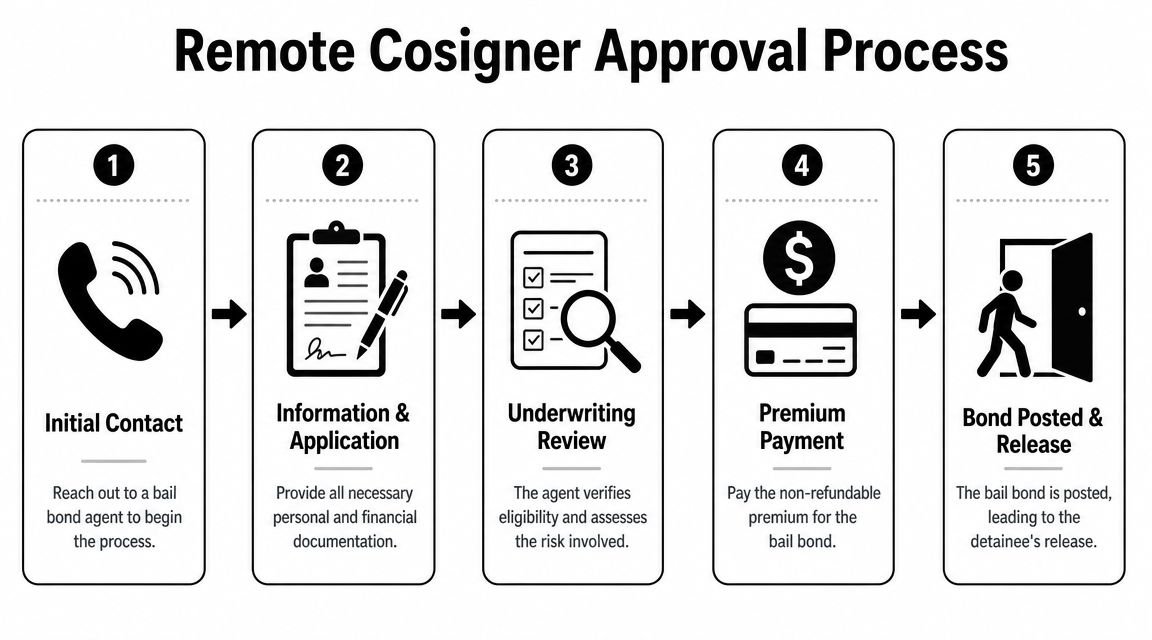
The Remote Cosigner Approval Process Explained
The biggest question from out-of-state families is usually not whether bail exists. It's whether they can cosign without getting on a plane.
In many cases, yes. The primary issue is whether the cosigner can be verified quickly enough for the surety company to approve the bond.
What the agent is trying to verify
The practical bottleneck in out-of-state cases is often not the defendant's release, but the surety company's underwriting and identity verification for a remote guarantor, as explained in this overview of the remote guarantor problem in out-of-state bail. The agent needs stable contact information, work information, and a realistic plan for the defendant to return to court.
That's why remote approval feels more like underwriting than a simple payment form.
The checklist that helps approval move faster
Have these items ready before you start the application:
- Government-issued ID: A driver's license or other photo ID lets the agent confirm identity and match the signer to the contract.
- Current address information: A recent document showing where you live helps verify that you're reachable and stable.
- Employment details: Employer name, role, and contact information show financial reliability.
- Phone and email that you monitor: If the agent can't reach you, the file stalls.
- Basic defendant plan: Be ready to explain where the defendant will stay, how they'll get reminders, and how they'll return for court.
- Collateral documents if requested: In some files, especially when the defendant and cosigner are in different states, the company may ask for added security.
A lot of delay comes from people sending blurry photos, old addresses, or unsigned forms. Clean paperwork matters more than fast paperwork.
Remote approval usually goes smoothly when the cosigner acts like a borrower on a serious financial file, not like someone filling out a casual web form.
How electronic signing works in practice
Most remote cosigners don't need to appear at the jail or the bond office. The usual path is electronic delivery of agreements, identity checks, and payment authorization, followed by final review and posting.
A typical sequence looks like this:
- Initial call with the agent
- Identity and contact verification
- Delivery of indemnity and fee agreements
- Electronic signatures
- Final underwriting decision
- Bond posting
If you're trying to understand the legal role you're taking on, this page on a bail bond cosigner is worth reading before you sign. The strongest cosigners aren't just willing to help. They're reachable, organized, and realistic about the defendant's court obligations.
Understanding Bail Bond Premiums and Remote Payments
After a remote cosigner is approved, the next question is usually simple: what has to be paid, by whom, and how fast can it be done?
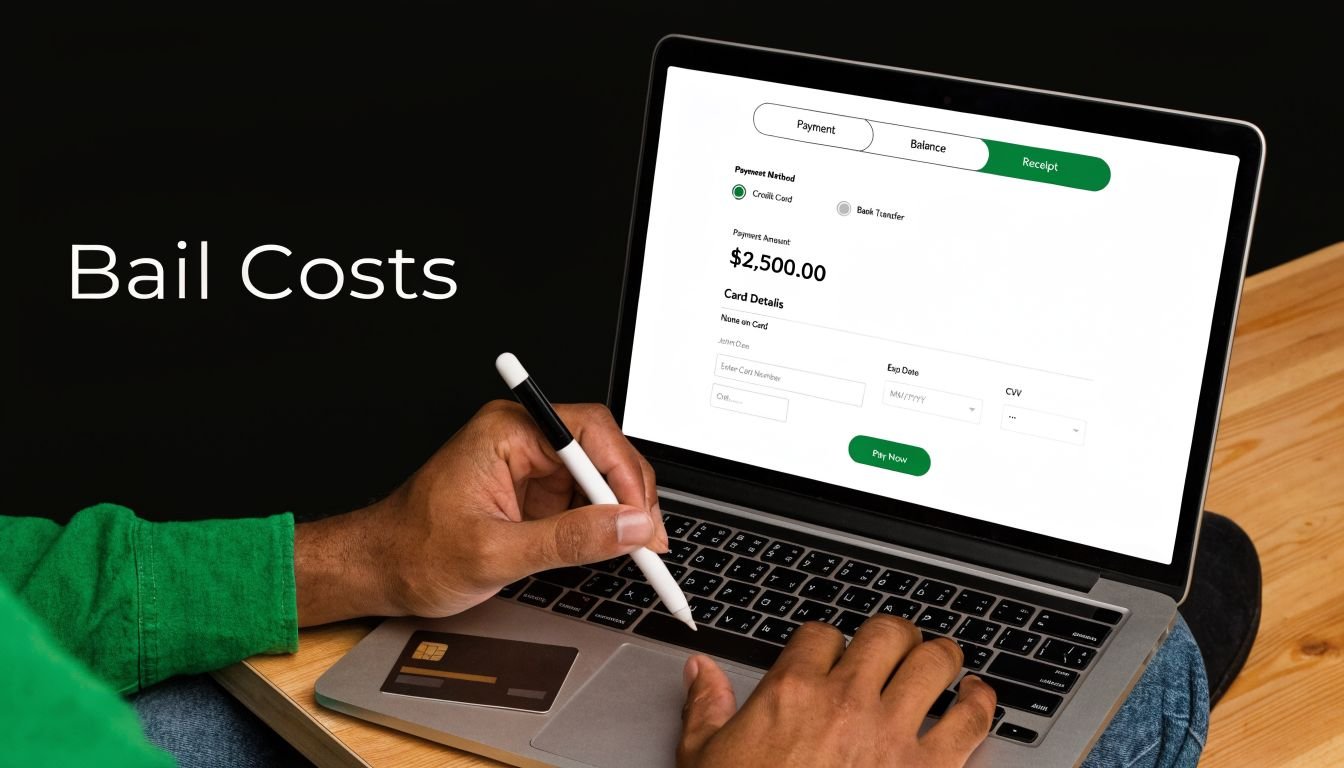
In Colorado, the bond premium is the fee charged for writing the surety bond. It is separate from the court's full bail amount. Families calling from another state often mix those up at first, especially when they are trying to act quickly from a phone and email instead of an office visit.
What the premium actually covers
The premium pays for the bond service. It does not go toward reducing the defendant's charges, and it is not the same as posting cash directly with the court.
That distinction matters for out-of-state families. A cash bond can require more money upfront and more coordination with the court or jail. A surety bond lets the family handle the matter remotely with signed documents, identity checks, and payment once the file is approved.
In practice, the amount due can vary based on the bond size, the file risk, and the agency's underwriting decision. The right move is to ask for the exact amount due in writing before sending money.
How remote payment usually works
Remote payment is common in out of state bail bonds, but payment is only one part of the file. An agent still needs a cleared cosigner, signed agreements, and any final approvals required before posting.
Families usually pay in one of these ways:
| Payment method | Why families use it | What to confirm first |
|---|---|---|
| Card payment | Fast and easy to authorize from another state | Whether the cardholder must also be the cosigner |
| Phone payment | Useful when a family member needs agent guidance in real time | Identity steps and recorded authorization requirements |
| Electronic invoice or portal | Creates a clean payment record | Exact balance due and when the link expires |
| Wire or bank-supported transfer | Sometimes preferred for larger amounts | Bank cutoff times and how proof of transfer should be sent |
If your paperwork is already cleared, pay a bail bond online can be the fastest way to finish the payment step without waiting on an office visit.
What speeds things up
The families who get through this fastest do three things well. They confirm the exact premium before paying, they use the same name and contact information on every form, and they send payment from a person the agent can verify.
One more point matters. A payment receipt does not mean the bond has been posted yet. Posting happens after the full file is cleared, so the practical question to ask is, “What is still missing before you can post the bond?”
How Agents Coordinate with Colorado Jails and Courts
Once the cosigner is cleared and payment is handled, the work shifts to the Colorado side. This is the part families don't always see, but it's where local knowledge matters.
The standard workflow for a surety agent includes confirming the defendant's exact custody location and booking number, verifying the out-of-state cosigner's identity and employment, collecting electronically signed agreements, and then posting the bond. Rapid document completion helps reduce jail processing delays, as described in this guide on posting bail without avoidable delays.
What happens after approval
A typical file moves like this:
First, the agent confirms that the defendant is still in the same facility, that the bail amount is current, and that there are no obvious mismatches in the booking record.
Next, the agent prepares the bond package and presents it to the jail or court channel required by that county. Some facilities move quickly once the bond is accepted. Others take longer because release processing has its own queue, separate from the bond posting itself.
Then the waiting shifts from paperwork to jail operations. Clothing return, discharge review, hold checks, and release procedures can all affect timing.
A bond can be posted promptly and the release can still take time. Those are two different steps.
Why the local county matters
Colorado cases don't all move the same way. A family dealing with a Jefferson County hold may face a different workflow than a family dealing with a south metro facility.
If the defendant is in Golden, local details matter, and the same is true if the case is tied to Centennial-area detention. You can review the local service areas for Jefferson County and Golden and Centennial bail bond help.
The value of a local agent
An out-of-state family usually can't solve jail-side issues by making more phone calls from home. The practical value of a local professional is access to the right process, the right paperwork, and the right sequence.
If you want a plain-language overview of that role, see what a bail bond agent does. The good agents keep the family updated, set realistic expectations, and don't confuse “bond posted” with “person walking out the door.”
Common Pitfalls When Securing Out of State Bail
Most delays in out of state bail bonds don't come from one dramatic problem. They come from small mistakes stacked together.

Common pitfalls include confusion over hidden fees, incomplete paperwork, and poor communication about court compliance. These are frequent causes of delay and post-release problems, especially when the family is coordinating remotely, as discussed in this review of out-of-state bail problems and preventable delays.
Mistakes that cost time and money
- Guessing at the defendant's location: Calling the wrong county wastes the first hour.
- Sending partial paperwork: Missing signatures, unclear ID images, and inconsistent addresses often trigger re-review.
- Not understanding the cosigner role: A cosigner isn't just “helping with the fee.” The cosigner is taking on contractual responsibility tied to the bond.
- Ignoring court logistics after release: Families focus so hard on getting someone out that they don't build a plan for appearances, transportation, and reminders.
- Choosing on urgency alone: Panic makes people agree before they understand the terms.
A separate issue comes later. Arrest information can linger online long after the emergency is over, so some families also look into how to clear your digital reputation once the immediate release problem is under control.
The simple fixes
Ask every fee question before signing. Ask what triggers delay. Ask who must sign, what happens if the defendant moves, and how court dates will be communicated.
Make sure to ask about travel and compliance. Some defendants assume release means they can go wherever they want. That can create trouble fast, which is why it helps to understand whether you can leave the state while on bail.
This short video is useful if you're trying to think clearly before making the next call.
After Release Responsibilities and Critical FAQs
Release brings relief, but it also starts the part of the case that can protect the bond or wreck it. The family's job changes from “get them out” to “keep them compliant.”
What the defendant and cosigner need to do next
The defendant needs to know every court date, every condition, and every communication rule that applies after release. Missing details creates avoidable risk.
The cosigner needs to stay reachable and stay involved. If the defendant changes address, changes phone numbers, talks about travel, or starts avoiding the case, the cosigner can't treat that as none of their business. It is their business.
One practical option in Colorado is Express Bail Bonds, which offers statewide surety bond service with electronic applications, payments, and contract processing for remote families and cosigners.
Stay in front of the court calendar. Most bond problems start with silence, confusion, or last-minute scrambling.
FAQs families ask on the phone
What happens if the defendant misses court
That needs immediate attention. A missed appearance can trigger serious bond problems and a new arrest situation. The right response is fast communication with the attorney and bond agent, not delay and not guesswork.
How long does the full process take
There isn't one guaranteed timeline. Approval depends on accurate information, the cosigner's paperwork, the jail's release queue, and whether the file has any added complications. Sometimes the bond side moves quickly and the jail side takes longer.
Can the cosigner do everything remotely
Often yes, if the agency accepts electronic paperwork and remote verification, and if the file supports that structure. The smoother the documents and identity proof, the smoother the process.
Is the premium refunded at the end of the case
The premium is the fee for the bond service. It is not treated like a refundable court deposit.
What should I have ready before calling
Have the defendant's legal name, date of birth, custody location if known, booking number if known, your own ID, your current address, and your employment details. If collateral may be needed, gather those records too.
When families are calm, organized, and realistic about what an out-of-state file requires, these cases are manageable. The process isn't pleasant, but it is navigable.
If you need help with out of state bail bonds in Colorado, contact Express Bail Bonds for 24/7 guidance. A licensed local agent can tell you what information is missing, whether a remote cosigner can be approved, and how to move the bond forward without wasted time.