
That phone call usually comes fast and with very little information. Someone says they were arrested in Fort Morgan, they don't know what happens next, and suddenly you're trying to figure out where they are, whether bond has been set, and how long it will take before they can come home.
If you're dealing with Morgan County Jail Colorado for the first time, the process can feel harder than it needs to be. Families often find basic jail details, but they still get stuck on the practical questions that matter most. Can I call the jail right now? When will the person show up in the system? What if bond is posted but release doesn't happen? What if another agency is involved?
This guide is written for that moment. It's meant to walk you through the jail and bail process in plain language, one step at a time, so you can slow things down and make solid decisions.
Navigating an Arrest in Morgan County
Most families start in the same place. You get a short call, the line disconnects, and now you're left trying to piece together what happened. Sometimes the person was stopped for a traffic issue. Sometimes it's a missed court date, a new charge, or an old warrant they didn't know was still active. Either way, the first few hours are usually the most confusing.
Morgan County Jail in Fort Morgan isn't a tiny holding cell setup. It was built as a 424-bed adult detention facility with an expansion capability to 600 beds, and it houses both male and female detainees, according to the jail project profile from Wold Architects and Engineers. That matters because larger facilities tend to have more formal intake, classification, release, and communication procedures. Families often expect a quick handoff. Instead, they run into processing delays and limited information at the front end.
A simple example helps. A mother gets a call from her son after an arrest in Fort Morgan. He says, “I think I'm at the county jail,” but he doesn't know his booking number, bond amount, or court date. She starts searching online and finds scattered information, but not a clear answer on what to do first. In that moment, the best move isn't to guess. It's to confirm the person's location, wait for booking to be completed, and gather the exact details needed to move on bond or release questions.
Practical rule: Don't make plans based on the first phone call after arrest. Early details are often incomplete or wrong.
If the arrest involved alcohol, driving, or a diversion question, it can also help to understand what local DUI-related alternatives may exist later in the case. A useful plain-English resource is Still Water Wellness Group's DUI help, especially if you're trying to sort out what happens after the immediate jail crisis passes.
For the first stretch, keep your focus narrow:
- Confirm identity: Use the person's full legal name, not a nickname.
- Confirm location: Make sure they're at Morgan County Jail and not another facility.
- Wait for booking: Bail questions usually can't be answered clearly until processing is entered.
- Follow a clean checklist: If you need a broader arrest response plan, review what to do when someone gets arrested.
Panic makes people rush. Good release decisions usually come from slowing down and getting the right facts in the right order.
Morgan County Jail Location Contact and Hours
A lot of families get stuck here. They have a name, a rough idea of where the arrest happened, and a strong urge to start calling every number they can find. That usually creates more confusion than answers.
What helps is treating the jail's contact details like a tool kit. Each number and office has a different job. One line may answer general jail questions. Another may handle dispatch. Another may deal with administrative issues. If you call the wrong place for the wrong reason, you can lose time and still end the call without a clear answer.
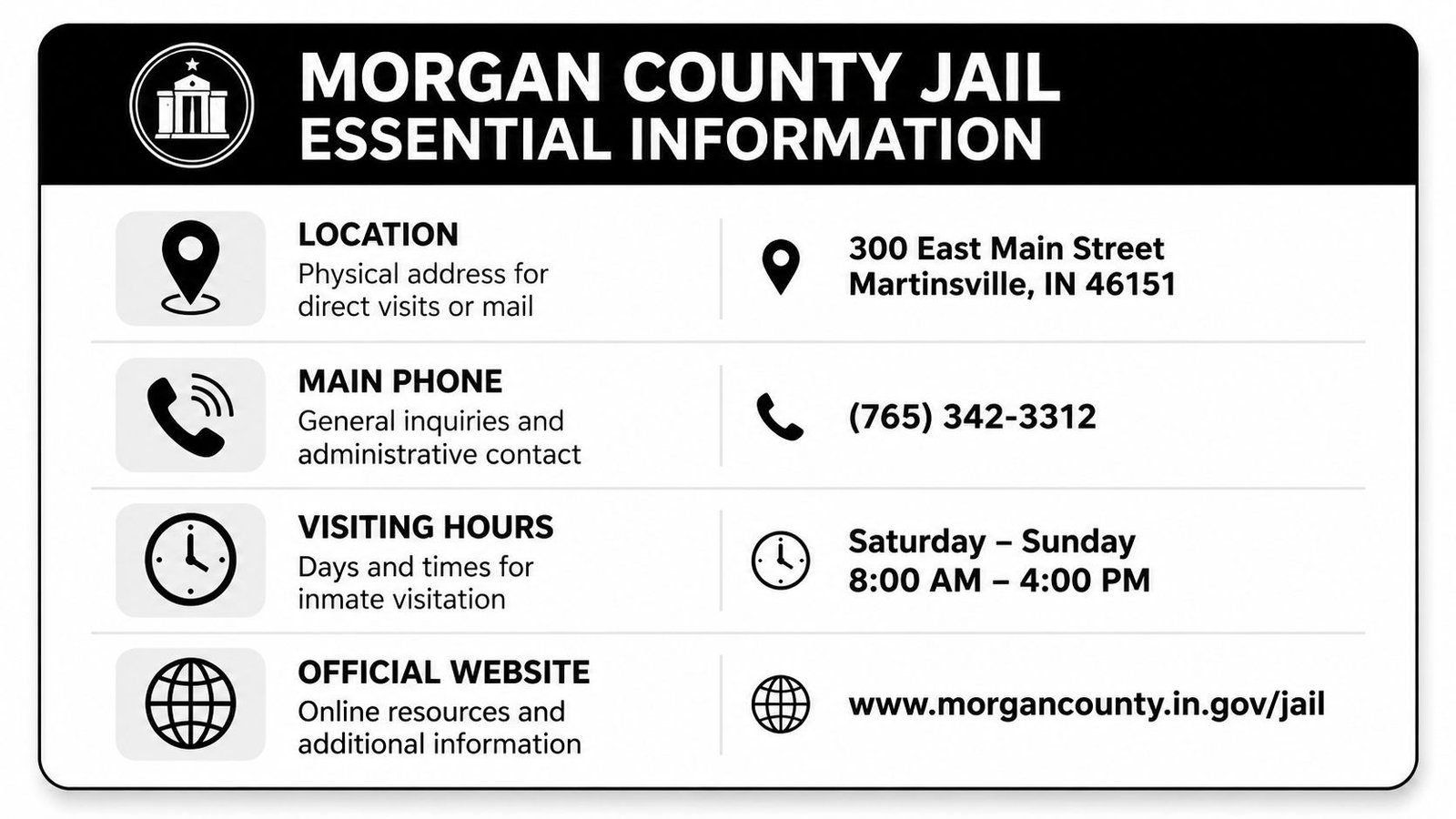
What to keep in front of you
Keep these four items written down before you call or go in. Stress makes it easy to miss a detail you will need again five minutes later.
| Item | Why it matters |
|---|---|
| Physical address | You may need it for in-person bond questions, attorney visits, approved jail business, or release pickup planning. |
| Main phone number | This is the best starting point for general jail procedure questions and for finding out which desk handles your issue. |
| Visiting hours | Visitation usually follows its own rules, and those rules may be different from lobby or release hours. |
| Official website | Policy updates, inmate information, mail rules, and scheduling instructions may change without much notice. |
If you are not yet sure whether the person is housed in Morgan County, a broader Colorado inmate locator guide can help you verify the right facility before you spend time calling the wrong one.
How to call without wasting time
Start every call with one simple question: “Is this the jail desk, dispatch, or administration?”
That one sentence clears up a lot. It is similar to walking into a courthouse and learning that one window handles payments, another handles records, and another handles scheduling. The building is the same, but the jobs are different.
Once you know who answered, keep your questions narrow and practical:
- For inmate status: Ask whether booking has been completed and whether the person is currently housed there.
- For visits: Ask whether visits require approval, scheduling, or a current visitor list.
- For release questions: Ask whether the file shows any hold, transfer issue, or outside-agency restriction.
- For paperwork or property: Ask whether the issue must be handled in person, by court order, or through another office.
If the staff member cannot answer, ask, “Which office handles that specific issue?” Then write down the name of the office and the number before you hang up.
Hours are not always one-size-fits-all
Families often encounter surprises. Jail operations do not always run on one universal schedule. Lobby access, visitation, records help, and release processing may all follow different hours.
So do not ask only, “What are your hours?” Ask the question that matches the task:
- What hours can I post bond or ask bond-related questions?
- What hours are visits allowed?
- What hours can property be dropped off, if that is allowed?
- If someone is released tonight, where does pickup happen?
That last question matters more than people expect. Release can be delayed by paperwork, court conditions, holds from another agency, or custody transfers. In some cases, a person who is otherwise releasable may not walk out to the parking lot because another agency is waiting to take custody. Families also run into complications with work-release status or other special housing arrangements, where the rules are different from a standard release.
The safest approach is simple. Confirm the exact office, confirm the exact task, and confirm the exact hours for that task before you make the drive.
How to Locate an Inmate in Morgan County
Before you can help, you need to know exactly where the person is and what status they're in. Families often say, “I know he was arrested,” but they don't yet know whether he has been booked, transferred, released, or is still waiting on processing. That difference matters.
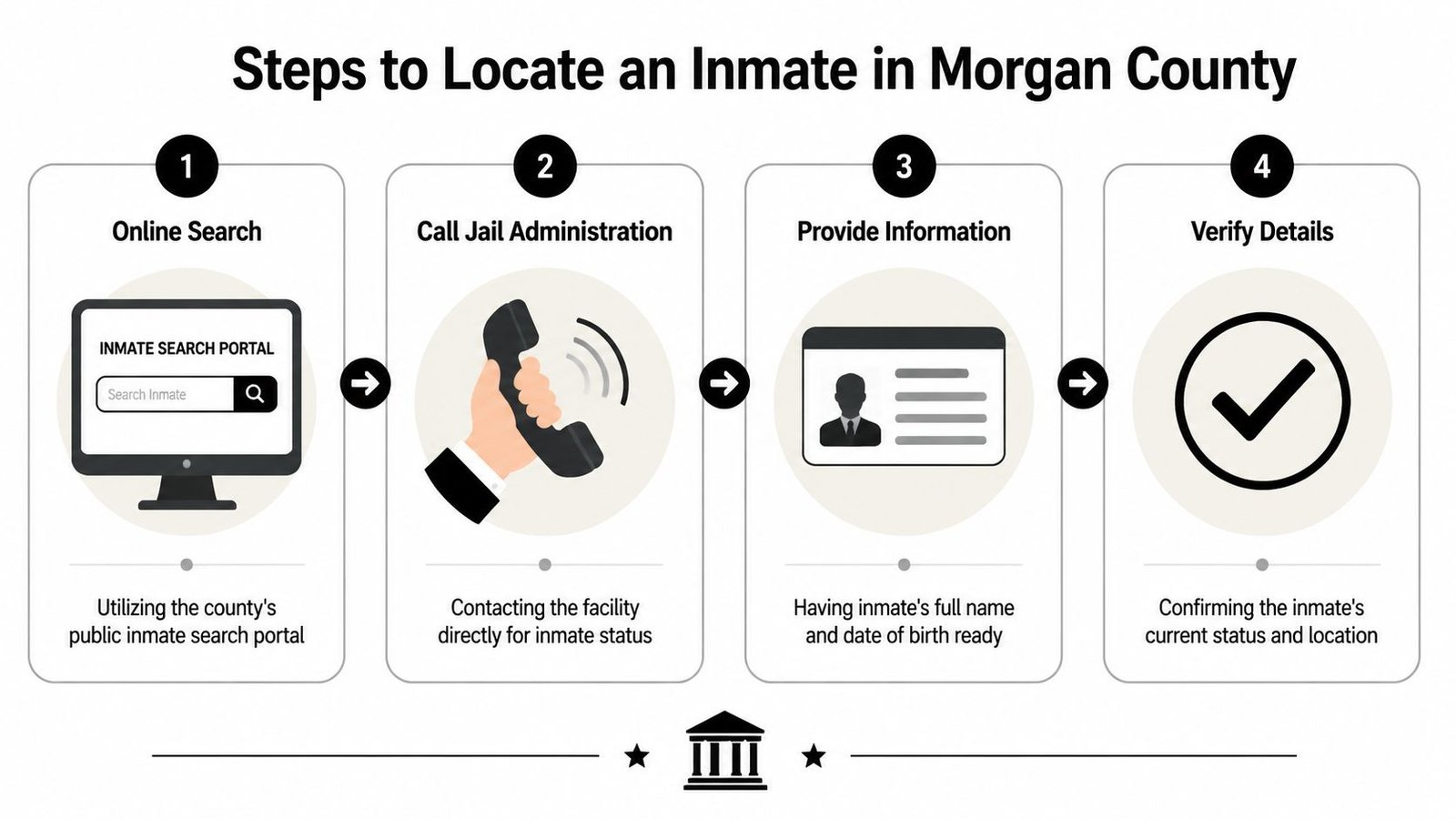
Start with the basic identifiers
Have this information ready before you search or call:
- Full legal name
- Date of birth
- Possible arrest date
- Any known agency involved, such as city police, state patrol, or the sheriff
A nickname, middle initial, or partial birthday can lead to the wrong result. If you're calling by phone, staff may be limited in what they can say unless you can identify the person accurately.
If you need a broader statewide search approach, use this guide to the Colorado inmate locator process.
What the result usually tells you
Once the person appears in the system, you may see or be told details such as:
- Booking status
- Housing location
- Listed charges
- Bond or bail information
- Release status, if the file has been updated
These common scenarios often lead to confusion. Seeing a charge listed doesn't tell you whether bond is already available. Seeing a bond amount doesn't always mean the person will walk out immediately after payment. And if the person isn't showing up yet, that doesn't automatically mean they aren't there. It may only mean booking hasn't been completed or records haven't updated.
A simple way to interpret what you find
Think of inmate lookup as a snapshot, not a full story.
| What you see | What it may mean |
|---|---|
| No result yet | The person may still be in transport, intake, or waiting for data entry. |
| Booked with charges | The jail has entered the person into custody records. |
| Bond listed | There may be a path to release, subject to holds or court conditions. |
| Released | The person may have left local custody, or another agency may have taken over. |
Don't rely on one search result from one moment. If the arrest was recent, check again after some time or call for clarification.
The best mindset is steady, not frantic. Confirm the person's identity, confirm that booking is complete, and write down every detail exactly as given. One wrong letter in a name or one misunderstood bond condition can waste hours.
The Booking Process and Jail Life Explained
The period right after arrest is the part families understand the least. They know someone was taken into custody, but from the outside it can feel like nothing is happening. Inside the jail, a series of intake steps usually has to happen before the case becomes easier to track.
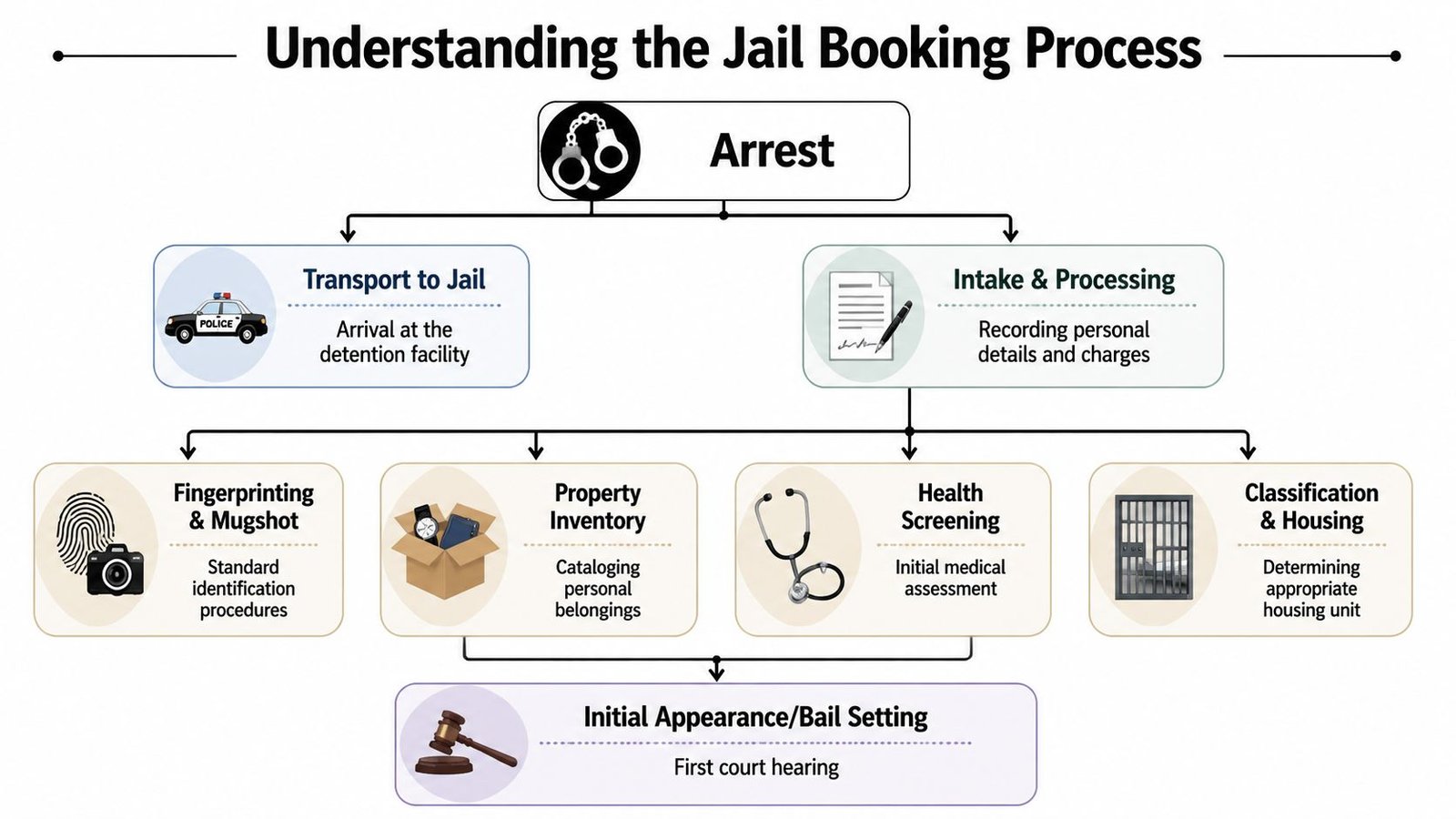
What booking usually includes
Booking often involves identification procedures, charge entry, and basic screening before housing is assigned.
Common steps include:
- Fingerprinting and mugshot: Standard identity and records procedures.
- Property inventory: Personal belongings are collected, logged, and stored.
- Health screening: Staff may ask medical and safety questions at intake.
- Classification review: The jail decides where the person should be housed.
That last step matters more than most families realize. Housing isn't random. Staff usually separate people based on safety concerns, behavior, risk, medical needs, and similar factors. That's one reason intake can take time even when the arrest itself seemed simple.
How the jail's design affects daily life
Morgan County's adult detention facility is 142,500 square feet and uses a pod-type housing configuration, according to the project description from I.C. Thomasson Associates. That design improves supervision and supports more efficient classification of detainees by risk level, behavior, or program status, which helps explain why where someone is housed can change during custody.
In plain language, a pod layout gives staff better visibility and a more controlled way to group people. Families may hear that their loved one was “moved,” “reclassified,” or placed in a different housing area. That doesn't always signal a problem. It can reflect ordinary jail operations.
Why booking time feels unpredictable
Families want a simple answer to “How long will booking take?” The honest answer is that it depends on staffing, arrest volume, medical needs, charge review, and whether the person needs to wait for a court-related decision. Some people move through intake faster than others. Some don't.
If you want a fuller breakdown of the intake timeline itself, this guide on how long booking can take in jail is useful background.
Booking delay doesn't always mean trouble. It often means the jail is still completing intake, screening, or classification before release options can move forward.
During the COVID-19 period, the Morgan County jail had an average daily population of 64 people, which the ACLU of Colorado reported was a 35% drop compared with pre-COVID-19 levels. Using that percentage, the pre-pandemic average daily population was roughly 99 inmates. That historical comparison from the ACLU of Colorado jail depopulation report shows how sharply jail population levels can shift when public-health conditions or policy choices change.
For families, the takeaway is practical. Jail operations are not static. Intake speed, housing, and release flow can all change depending on conditions inside the facility.
Communicating with an Inmate Phone Calls and Mail
Once the person has been booked, your next concern is usually contact. You want to know they're okay, tell them you're working on the situation, and get missing details like their charges, court information, or property needs. Communication helps, but jail communication has rules, and those rules matter.
Phone calls
Most inmates don't receive ordinary incoming personal calls the way they would at home. Instead, they usually make outgoing calls through the jail phone system. Those calls may be collect or tied to a prepaid account run by a communications vendor.
A few practical points can save frustration:
- Answer unfamiliar calls: Jail calls often come from a system number you won't recognize.
- Keep the first call focused: Ask for full name, date of birth, charges if known, and whether they've been given bond information.
- Assume the call isn't private: Don't discuss case facts in detail.
- Have a pen ready: The first successful call often gives you the details you need to act.
If you're trying to understand how these systems usually work, this guide on receiving phone calls from jail gives a helpful overview.
Say less than you want to. Confirm safety, confirm identity, confirm next steps.
Mail and written communication
Mail can be a lifeline, especially if release isn't immediate. But mail is usually inspected, and facilities commonly reject items that don't follow their rules. Before sending anything, verify the jail's current mailing instructions and formatting requirements.
As a general rule, families should keep mail simple:
- Use the inmate's full legal name
- Include any required booking or identifying number if available
- Avoid prohibited inserts, such as items the jail doesn't allow
- Write clearly on the envelope
- Stick to supportive, practical content
Money and commissary questions
Families also ask how to send money. Procedures vary by facility and vendor, so it's important to confirm the jail's current accepted method. Funds are often used for commissary purchases such as hygiene items, snacks, or writing materials, depending on what the inmate is permitted to access.
The biggest mistake here is moving too fast. Don't send money, mail, or property based on assumptions from another county jail. Confirm the exact Morgan County process first, then follow it exactly.
Understanding Bail and the Release Process
A lot of families reach this point feeling hopeful and frustrated at the same time. You finally know bail may be possible, but now the questions pile up fast. How much is it. What type of bond is allowed. If you pay it, how long until your person walks out. Those are fair questions, and Morgan County cases do not always move in a straight line.
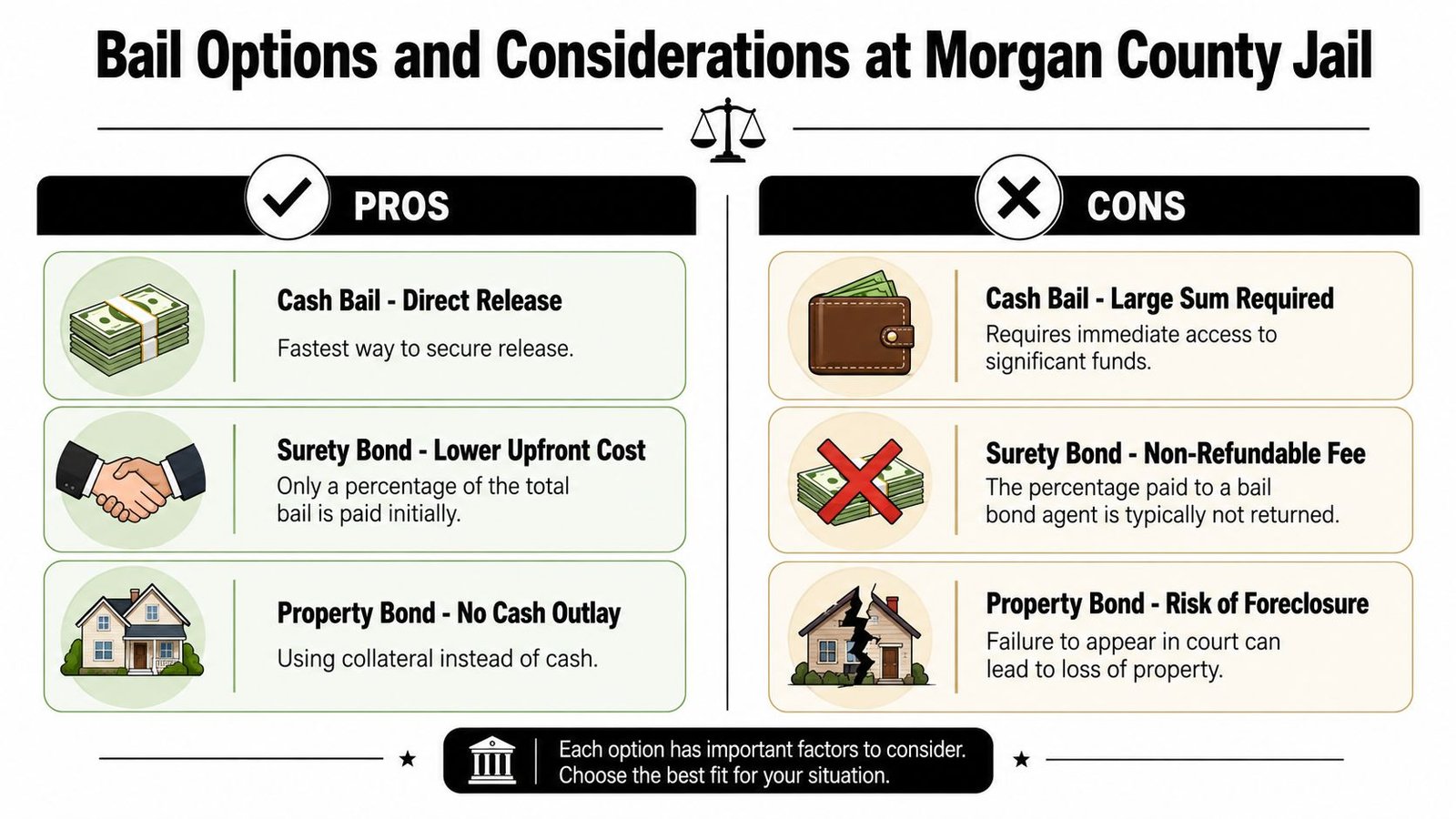
Start with three answers before anyone spends money or signs anything:
- Has a bond amount been set yet?
- What bond type did the court allow?
- Is there any hold or detainer that could stop release after bond is posted?
That third question causes the most confusion.
Families often hear “bond is set” and assume release is only a payment away. Sometimes that is true. In other cases, local bond solves only the county case, while another hold keeps the person in custody or leads to a transfer. ICE-related holds are a common example. Work-release status, court restrictions, or another agency's paperwork can also change what release looks like.
Cash bond, surety bond, and property bond
A cash bond usually means the full bond amount must be paid as required by the court or jail process. If bail is set at an amount your family can cover, this may be the simplest route.
A surety bond means a licensed bail bond company posts the bond under court rules, and the family pays the bond premium and signs the required paperwork. If paying the full amount at once would strain your household, a Morgan County bail bond option in Fort Morgan may be the more practical path.
A property bond can apply in some cases, but it usually takes more paperwork and more review. Families should confirm whether the court will even accept that type of bond in the specific case before counting on it.
Why release can still take time after bond is posted
Posting bond is often one checkpoint, not the finish line. The jail may still need to complete final processing, verify paperwork, clear internal checks, and confirm there are no other active holds. If another agency is involved, the local case and the outside hold are treated as separate issues.
A simple way to view it is this. Bond answers, “Can the person be released on this Morgan County case?” It does not always answer, “Can the person leave custody today?”
Release warning: Posting local bond may clear the county case but still not result in immediate release if an ICE hold, another detainer, or a separate custody issue is in place.
That can feel unfair when your family has done everything right. But the delay usually comes from process, not from anyone ignoring the payment.
After-hours release, work release, and other complications
Release timing also depends on staffing, inmate movement, shift changes, transportation arrangements, and final approval steps. Nights, weekends, and holidays can slow communication even when the case itself is straightforward.
Then there are the situations families do not expect on day one. A person may be part of a work-release program. They may be moved for medical care. They may have a court condition that limits how release happens or where they report next. Two people in the same jail can be on very different tracks.
That is why the safest question is not just “Was bond posted?” Ask, “What still has to happen before release?” That wording gets you closer to the complete answer.
If you are helping a loved one, keep a written log with the bond type, amount, time posted, and the name of anyone who confirmed the next step. In stressful moments, that small habit works like a paper trail. It helps you catch misunderstandings early and gives you something solid to rely on while you wait.
Your Next Steps and Frequently Asked Questions
Your loved one has been booked. You have a name, maybe a case number, and a lot of half-clear answers. This is the point where families often feel pulled in five directions at once. The best way to steady things is to treat the next few hours like a checklist, not a guessing game.
Start by building one clean set of notes. A notebook, phone note, or folder works. What matters is having one place for the person's full legal name, date of birth, arrest date, any bond information you were given, and the name of each staff member or bondsman you spoke with. In a stressful moment, scattered details cause extra delay.
A practical checklist for right now
If someone you care about is in Morgan County Jail Colorado, focus on these steps in order:
- Confirm the person is fully booked in: A recent arrest may not show up right away.
- Write down the exact charges if available: Small wording differences can matter later.
- Ask what kind of bond applies: Cash bond, surety bond, personal recognizance, or a court hold all work differently.
- Ask whether any hold is attached to the case: That includes ICE or another agency hold.
- Check whether the person is in a special status: Work release, medical transport, or another custody arrangement can change what happens next.
- Keep jail-call conversations simple: Focus on names, dates, court information, medications, and urgent needs.
- Save every detail in one place: Time called, who answered, and what they told you.
That last step helps more than people expect. Jail information can change as paperwork moves through different hands, and a written log helps you catch the difference between "bond posted," "cleared for release," and "physically leaving custody."
Frequently asked questions
How long does release take after bail is posted?
Release time varies. Even after payment is accepted, the jail may still need to finish internal steps, confirm there are no other holds, and complete final approval. If another agency is involved, the clock often gets longer.
What if the person was taken to a hospital or medical facility?
That can interrupt the usual jail routine. The person may still be in custody, but their location and release timing may be less predictable while medical care and transport are being handled.
Does an ICE hold change everything?
It can change a lot. A local bond may resolve the Morgan County case, but an ICE hold can keep the person from walking out after that case is cleared. Families often mistake bond payment for guaranteed release. In this situation, those are two separate issues.
Does work release mean the person is basically free?
No. Work release works more like a tightly controlled schedule than freedom. The person remains in custody status and must follow program rules, reporting times, and restrictions. It can also affect when staff can process movement or release.
Can I get my money back if I post bond?
It depends on the bond type. Cash posted directly with the court or jail may be handled differently from a surety bond through a bail bond company. Ask for the terms before paying so you know what is refundable, what fees apply, and what happens if the person misses court.
What if I live outside the area?
You can still help. Long-distance families often do well when one person becomes the main contact, keeps the notes, and repeats information carefully to everyone else. That cuts down on confusion and conflicting stories.
If you also need jail and bail guidance for other Colorado areas, these local pages can help: Jefferson County in Golden and Centennial bail bond information.
If you need immediate help understanding bond options, release timing, or what to do next at Morgan County Jail, contact Express Bail Bonds. A live agent can walk you through the process, answer questions about surety bond paperwork, and help you sort out the next practical step without guesswork.