
If you're trying to find someone after an arrest, the first problem usually isn't bail. It's location. You need to know which jail has them, whether they're still in custody, and whether the booking information online is current enough to trust.
That urgency is normal. In Colorado, inmate search isn't handled through one universal database for every situation. The system is split across county jail rosters, city detention tools, the Colorado Department of Corrections locator, and Colorado VINE. If you search the wrong system first, you can lose time while a bond amount, hold, or transfer status is still changing.
What matters most is moving in the right order. Search the most likely local facility first. Confirm what you find. Then decide what action makes sense based on the booking and bond details in front of you. If you need a quick starting point, this guide on how to find someone arrested is useful alongside the county and state tools covered below.
Finding a Loved One A Guide to Colorado's Inmate Locators
You get a call late at night. A family member has been arrested, nobody knows which facility has them, and the first few search results online do not match. That is a common Colorado problem. The online record may lag behind the booking desk by hours, and a person can be in custody before a public locator catches up.
Speed matters, but accuracy matters just as much.
Colorado sees heavy jail traffic. According to the Prison Policy Initiative's Colorado incarceration profile, at least 87,000 different people are booked into local jails in Colorado each year, and the state's overall incarceration rate is 556 per 100,000 people when prisons, jails, immigration detention, and juvenile facilities are included. With that many bookings and transfers, families often run into incomplete records, missing bond amounts, or search results that have not updated yet.
That gap between online search tools and real-time jail information is where people lose time. A county roster may show a name but no bond. A city jail page may show nothing even though the person was arrested there because they were already moved. A state prison locator may return no match because the person has not entered DOC custody at all. The right response is not to keep guessing. It is to confirm the likely holding agency, then act on the booking details you can verify.
If you are starting from almost no information, this guide on how to find someone arrested in Colorado can help you narrow the search before you start calling around.
A practical rule helps here. Use online locators to get pointed in the right direction. Use direct confirmation to make decisions about bail. That second step saves families from waiting on stale information while a bond is already available or a transfer is still pending.
Understanding Where to Start Your Search
A family usually starts with one question. Where is he right now?
That sounds simple until the online results disagree. A county roster may be empty because booking is still in process. A state locator may show nothing because the person has not entered prison custody. The fastest way to avoid wasted time is to start with the system that matches the arrest stage, then confirm details by phone if the screen is incomplete.
Colorado uses separate systems for separate types of custody. The Colorado Department of Corrections locator is for people already in state prison. County jail rosters and VINE are the tools families use more often after a recent arrest. The Colorado DOC inmate locator page makes that split clear, but many families still lose time by searching the wrong place first.
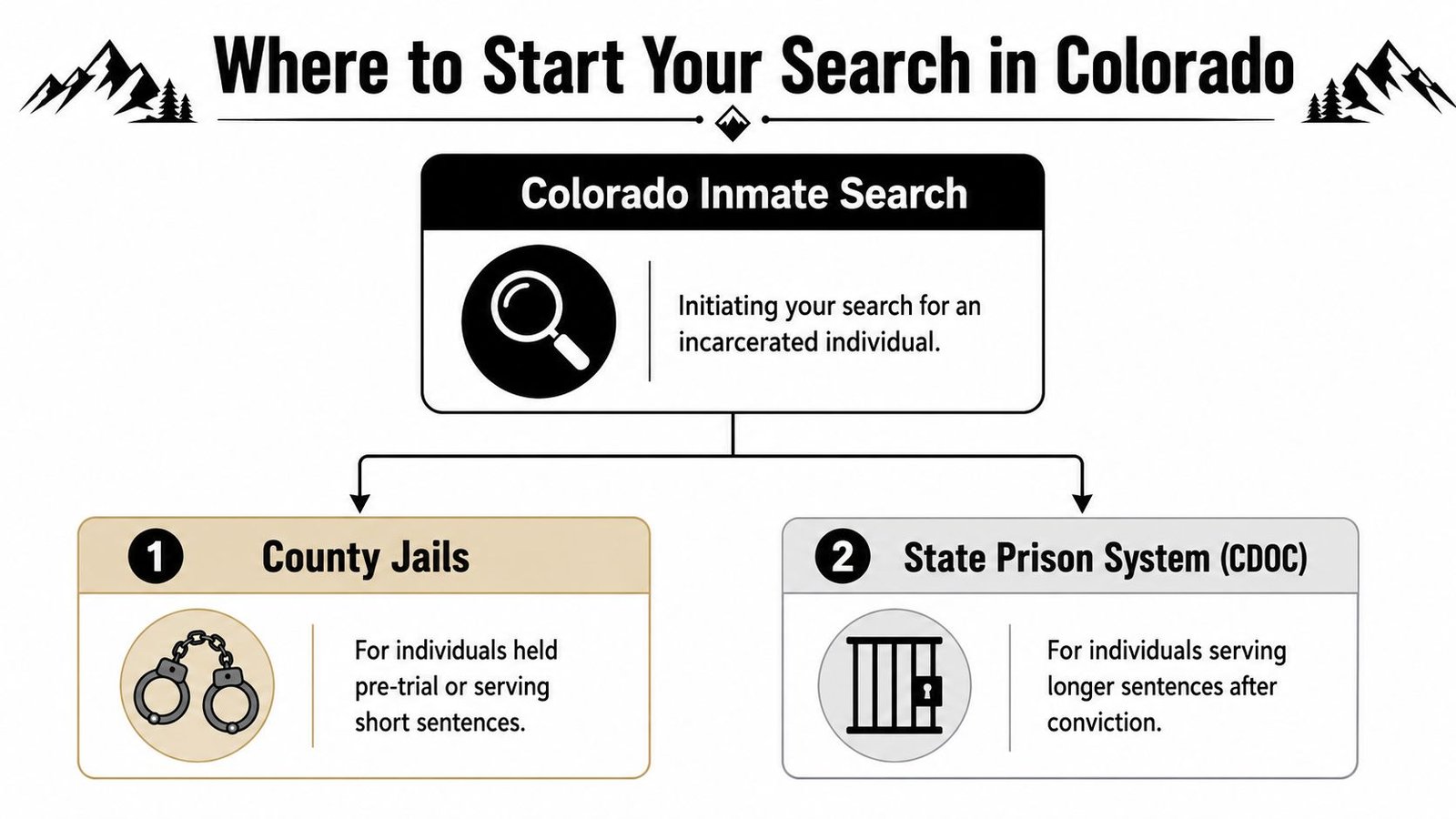
County jail versus state prison
Recent arrests usually land in county jail first. State prison comes later, after conviction and transfer into DOC custody. That one distinction answers a lot of failed searches.
If someone was arrested a few hours ago, start local. If someone has already been sentenced and transferred, use the prison locator. Families often assume a blank result means release, but it can just mean the record has not posted yet or the person is sitting in a different system.
Start with the arrest location
The arresting area gives you the best first lead. An arrest in Denver points you toward Denver custody records. An arrest in Jefferson County points you there first. Intake, booking, and bond setting usually happen at the local level, so the county or city system is often the first place that updates.
Use this order:
- Search the county or city jail roster first for a recent arrest.
- Check Colorado VINE for another custody check and alert option.
- Use the DOC locator if there is reason to believe the person has already entered state prison custody.
One accurate search in the right jurisdiction beats repeated searches across the wrong databases.
If the name is common, the date is unclear, or you are trying to sort out what an arrest entry means, this guide to Colorado arrest records can help you verify the details before you call the jail or a bail bondsman.
How to Use the Colorado Department of Corrections Locator
The DOC locator is useful, but only for the right type of search. If the person you're looking for is already serving time in the Colorado prison system, this is the proper tool. If they were arrested recently and haven't moved beyond county custody, this usually won't help.
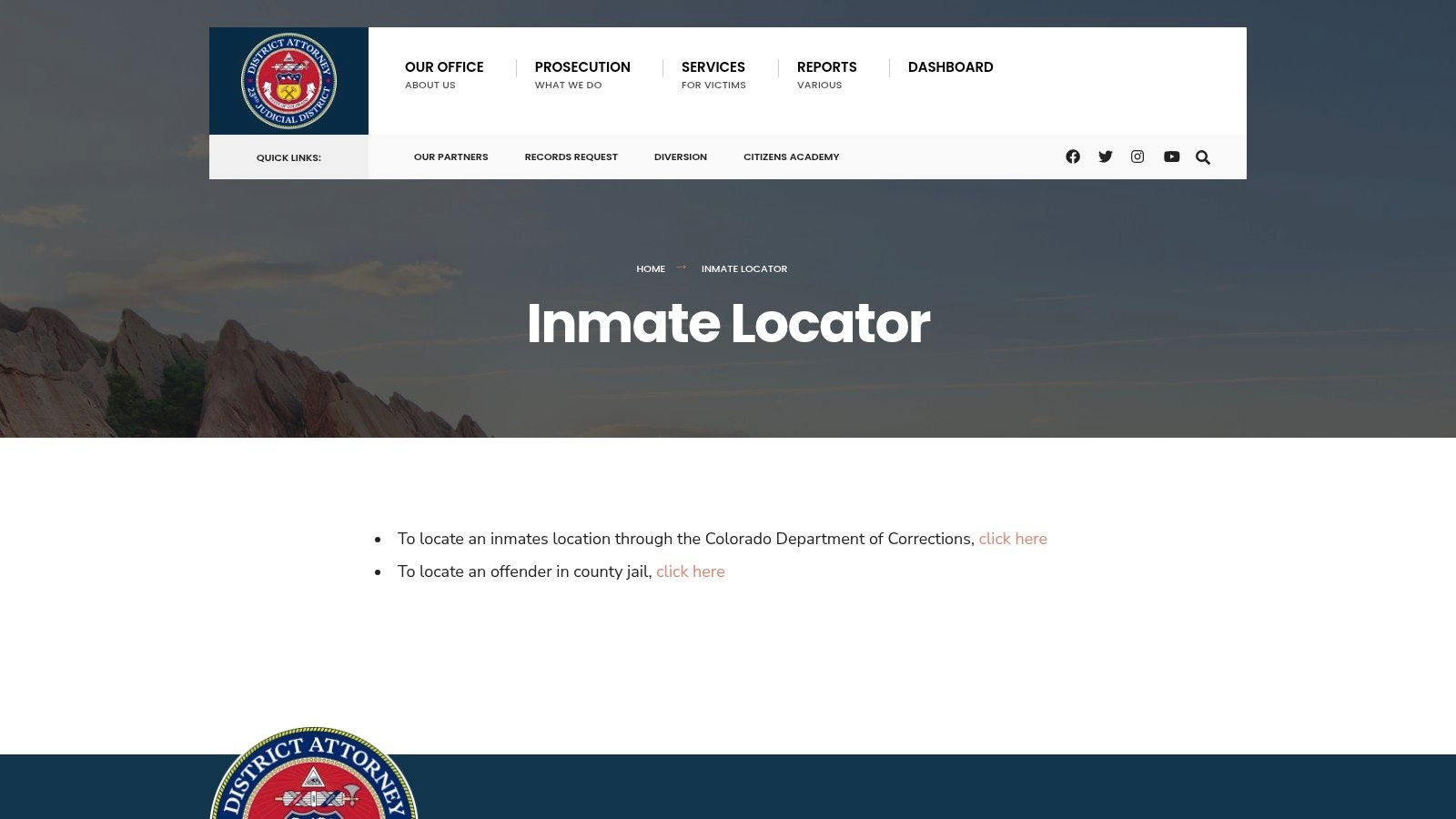
Who the DOC locator is for
Use the Colorado Department of Corrections inmate locator when you're searching for someone who has already entered the state prison system after conviction. This is not the first stop for a fresh arrest.
If you're still sorting out whether you're dealing with jail custody or prison custody, this guide on what separates jail from prison gives a quick practical comparison.
What to enter and how to search
The best searches use as much accurate identifying information as you have. Depending on the tool, that usually means the person's name and other confirming details. If you have an agency identification number, use it. If you don't, use the full legal name rather than a nickname whenever possible.
A clean workflow looks like this:
- Use the full name first: Nicknames and shortened first names can miss a record.
- Double-check spelling: A one-letter error is enough to produce no result.
- Match the right system: If the person was just booked locally, stop and return to the county roster.
- Write down the result: Facility name and identifying details matter later when you call.
The portal below gives a visual sense of the process if you want to see the system before searching.
What the locator won't tell you well
The DOC locator is not the best tool for fast-moving booking events. It isn't built for the early hours after arrest, when bond information, holds, and housing status may still be unsettled. In that stage, local jail systems are usually more useful.
If the DOC search returns nothing, don't assume release. It may mean the person is still in county custody, was booked under a name variation, or hasn't entered the system you're searching.
Searching Major Colorado County Jail Rosters
A family usually reaches this point after the statewide search comes up empty and the phone is still quiet. In the first hours after an arrest, county jail rosters are often the better tool because they reflect local bookings sooner than the state system. They still have limits. A name can post late, charges can look abbreviated, and bond details may be incomplete until the jail finishes processing.
Denver, Jefferson, and Arapahoe
Start with the county where the arrest likely happened, then treat the online result as a starting point rather than a final answer. What matters most at this stage is getting enough accurate information to make the right call next.
Denver is often the first place to check for arrests inside city limits. Its inmate information page is useful for confirming current custody, but families often still need help understanding what the listing means and what to do with it. If you need a local reference tied to that system, this Denver County jail search resource is a practical place to start.
Jefferson County covers arrests connected to Golden, Lakewood, Arvada, Wheat Ridge, and nearby areas that book through the county jail. Online records there can be brief, especially early on. After you confirm the person is in custody, the next step is usually figuring out bond and release options for that area, which is why bail information for Jefferson County in Golden can help.
Arapahoe County creates confusion for families because the arresting agency, the city, and the jail location do not always line up the way people expect. Centennial and surrounding jurisdictions often route into that system. Once you find the booking, the practical question becomes how to act on it, and Arapahoe County bail help for the Centennial area fits that next step.
What works best on county rosters
County rosters work best for confirming whether someone is currently being held and where. They are less reliable for the details families care about most under pressure, such as whether every hold has posted, whether the bond amount is final, or whether the person has just been moved.
Use a simple process:
- Start with the county tied to the arrest location: That gives you the highest chance of finding a fresh booking.
- Search the legal last name first: Nicknames and shortened names miss records.
- Use the booking number if you have it: It clears up common-name problems fast.
- Write down exactly what the roster shows: Facility, booking number, listed charges, and bond amount all matter when you call a bondsman or the jail.
One practical point matters here. If the roster shows a person in custody but the bond field is blank, that does not automatically mean no bond is available. It often means the jail has not updated the public record yet, or another hold is still being entered. That gap between the website and the live jail system is where families lose time. A quick call to a bail bondsman can help confirm what the online roster does not spell out.
Quick links to Colorado county inmate search tools
| County | Inmate Search Link |
|---|---|
| Denver | Denver inmate search portal |
| Jefferson | Jefferson County jail information |
| Arapahoe | Arapahoe County detention information |
| Adams | Adams County inmate search |
| El Paso | El Paso County inmate search |
| Larimer | Larimer County jail information |
Local rosters are usually the fastest way to confirm a recent booking. They do not always show the full release picture in real time.
Troubleshooting a Colorado Inmate Search
It is common to search a name, get no result, and assume the person has already been released or was never booked. In Colorado, that is often the wrong conclusion. Public inmate locators can lag behind the jail's live system, especially in the first hours after an arrest, and families lose time when they treat a blank search as a final answer.
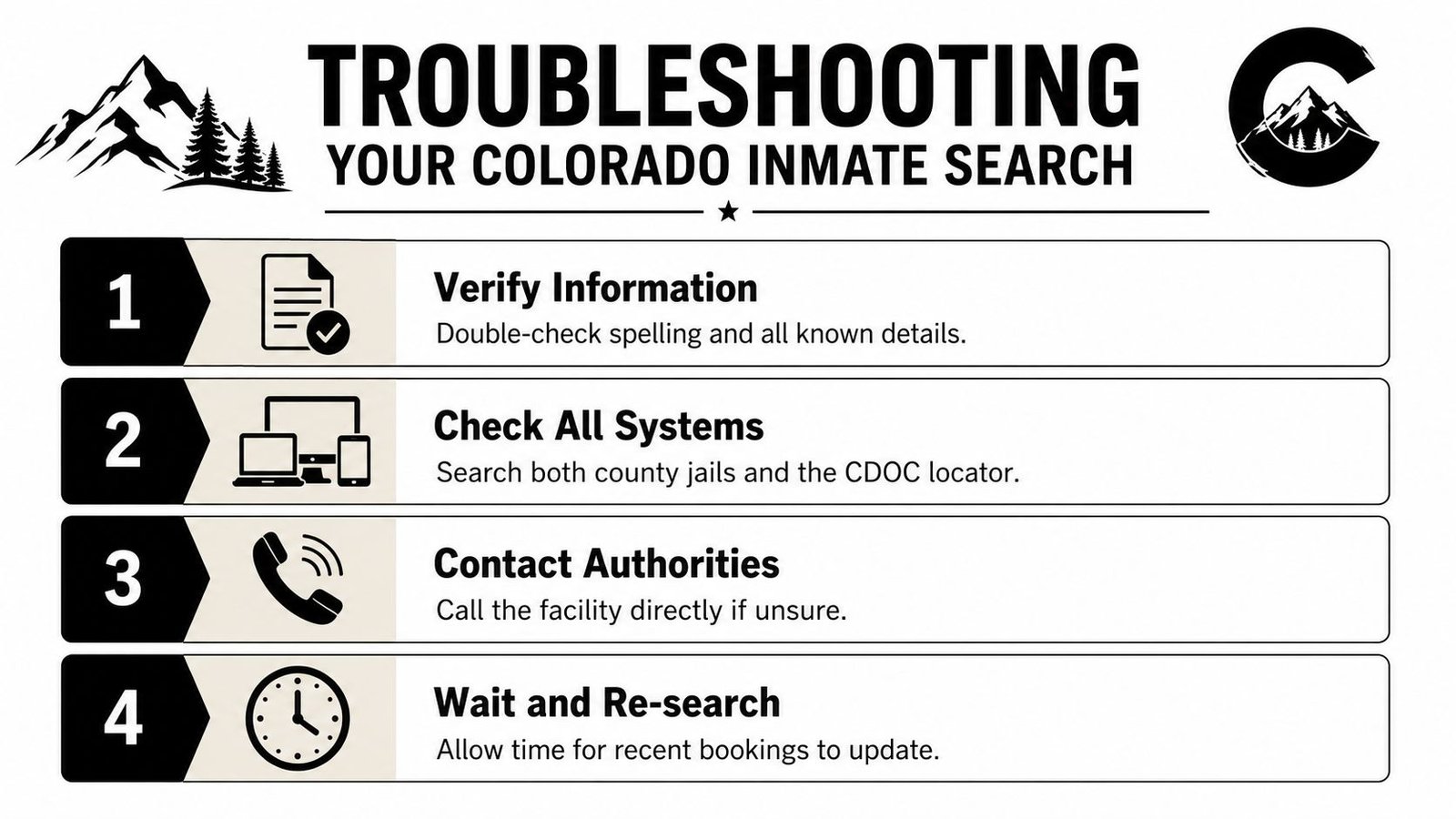
Check the simple errors first
Start with the details you can control. Search failures usually come from incomplete or mismatched information, not from a bad arrest tip.
Try these fixes in order:
- Use the full legal name: Search Robert instead of Rob, and use the full last name rather than a nickname or shortened version.
- Correct small spelling mistakes: One wrong letter can keep a record from appearing.
- Check the right jail, not just the arrest city: A person arrested in one place may be booked into a different county facility.
- Wait and search again if the arrest was recent: Booking, fingerprinting, and data entry do not always hit the public site right away.
A blank search result only tells you the website is not showing the record yet. It does not tell you what the jail sees internally.
Know when online tools stop helping
After one careful search, stop guessing and call the jail booking desk. That is usually the fastest way to confirm whether the person is in custody, whether the booking is still being processed, and whether another hold is delaying release information.
Have this ready before you call:
- Full legal name
- Date of birth, if known
- Approximate arrest location
- Approximate arrest time
- Any known booking number
If the online roster says one thing and booking staff says another, rely on booking staff. Their system is the one that matters for release timing.
Re-search with a purpose
Refreshing the same page over and over wastes time. Change one variable at a time so you can narrow down the problem. Try a broader name search first. Then check the likely county jail. Then call if nothing matches.
Colorado VINE can help as a second check for custody status and notifications. The statewide line is 888-263-8463. Use it as a backup tool, not as the final word when you are trying to post bond quickly or confirm release conditions.
One more point matters here. Families sometimes find the person, see missing bond information, and assume they have to wait. Sometimes they do. Sometimes the court has not set bond yet, the public site has not updated, or another agency hold is still being entered. That practical gap between the website and the live jail record is exactly when a bondsman can save time by calling the facility, confirming what is active, and explaining the risk of mistakes such as missing deadlines or understanding bond forfeiture.
Decoding an Inmate's Booking and Bond Details
You finally find your family member in the locator, then hit a screen full of partial answers. That is usually the point where people lose time. A booking page can tell you enough to act, but only if you know which details matter and which ones often change.

The details to write down immediately
Start by saving the booking number, the exact jail location, and the charge wording exactly as the site shows it. A single digit off can send a bondsman or jail clerk into the wrong file, which slows everything down.
Then check the bond field closely. Look for the bond amount, the bond type such as cash, surety, or personal recognizance, and any note that suggests a hold, warrant, or court review is still pending. Those extra labels often matter more than the dollar figure.
Why the Posted Bond Amount Can Be Misleading
A posted amount online does not always mean that amount can be paid right now. Booking data often reaches the public site before every hold, condition, or court update is entered. Families see a number and assume release is straightforward. In practice, the jail may still be waiting on a judge, another agency may have placed a hold, or the listed bond type may block the release method you expected.
That gap between the website and the live jail record is where mistakes happen.
For example, no bond can mean several different things. It may mean the court has not set bond yet. It may mean the person has a separate hold from another county, probation, immigration, or a warrant issue. It may also mean the charge has release limits that need direct confirmation from booking staff before anyone pays money or signs paperwork.
The charge list needs careful reading too. Abbreviated charge names can make a case look simpler than it is. Multiple charges, failure to appear cases, or out-of-county warrants can change release timing even when the locator shows one clear booking entry.
If the record shows a surety bond is allowed, families can save time by reviewing the online bail bond payment process before they call. That helps you gather the right information and avoid delays caused by missing paperwork.
One more point matters after release. If anyone signing the bond does not understand the court obligations, the financial risk goes up fast. This explanation of understanding bond forfeiture can help you avoid that problem before paperwork is completed.
Your Next Step for a Fast Jail Release
A family member shows up in a Colorado inmate search, but the screen still leaves open questions. The bond amount may be listed without the release method. The booking may appear before the jail updates holds, court restrictions, or transfer status. That is usually the point where waiting costs time.
Once you have the jail name, booking number, and the most current bond information you can confirm, the next step is to start the release process with a bondsman who can verify whether that online record is ready for action. Online tools help you find the person. They do not always tell you whether the jail can release the person right now.
What to do after you confirm custody
Use this order:
- Confirm the exact jail and booking number. Similar names and duplicate records cause avoidable delays.
- Call to verify the bond is current. Jail websites can lag behind the live booking system.
- Ask what bond type the jail will accept. Cash bond and surety bond follow different release steps.
- Check for holds or pending court review. A listed bond amount does not always mean the jail can process release yet.
- Start paperwork as soon as surety is allowed. Release time often depends on how fast the indemnitor information and signatures are completed.
If a surety bond is permitted, Express Bail Bonds handles Colorado surety bonds and can process applications, signatures, and payment remotely. Families who are ready to begin can use the online bail bond payment process to move that part forward without waiting to meet in person.
The practical benefit is simple. You stop trying to interpret an incomplete jail listing on your own, and you get a clear answer on whether the bond can be posted now, what paperwork is missing, and what could still delay the release.
If you need help checking whether a bond is actionable or getting a release started quickly, contact Express Bail Bonds. A licensed agent can review the booking details you found, confirm the jail, and explain the next step for a Colorado surety bond.