The phone call usually comes at the worst time. Late at night. During work. Right when you're trying to figure out whether this is a misunderstanding or a real arrest.
Most families start in the same place. They need to know where the person is, whether they're booked into custody, and what to do next if the online search doesn't show anything. A Denver County jail search can answer some of that fast, but only if you know how Denver's system works and what the results mean.
If you're trying to locate someone right now, stay practical. Gather the right details, use the official search tool carefully, and don't assume a blank result means the person isn't in custody.
Navigating the First Steps After an Arrest in Denver

You get the call late at night. They say they were arrested in Denver, they are scared, and the details are incomplete. At that point, the priority is simple. Find out where they are, whether booking is finished, and whether the jail search should show them yet.
Denver's jail system can move slowly at the front end. After an arrest, a person may be transported, identified, medically screened, classified, and entered into the system before the public record catches up. That gap is where families get tripped up. A blank search result can mean the record is not posted yet. It can also mean the arrest happened outside Denver, the name was entered differently, or the person was released before the record became easy to find.
The first few hours are usually the most confusing.
Families often make the same mistakes under stress. They search a nickname, rely on a text from a friend, or keep refreshing the tool every few minutes without checking whether the arrest was booked into Denver custody. In practice, those habits waste time. A careful search with the right identifiers usually gets better results than ten rushed searches with partial information.
Use this order:
- Confirm the person's full legal name as it would appear on an arrest or court record.
- Verify the arrest location so you know you are searching Denver and not a nearby county or city agency.
- Check the official inmate tool first instead of relying on social posts, scanner pages, or secondhand updates.
- Write down the time of each search and the exact status shown, especially if you may need to call the jail or arrange bail next.
One rule helps more than anything else. Treat the booking process as active until you see a stable custody record.
If you need a plain-language overview of booking, custody, and release, our guide to the post-arrest process is a useful starting point.
What You Need Before Starting Your Search
A good Denver County jail search starts before you ever open the inmate lookup page. Most failed searches happen because the person doing the search has only part of the information.
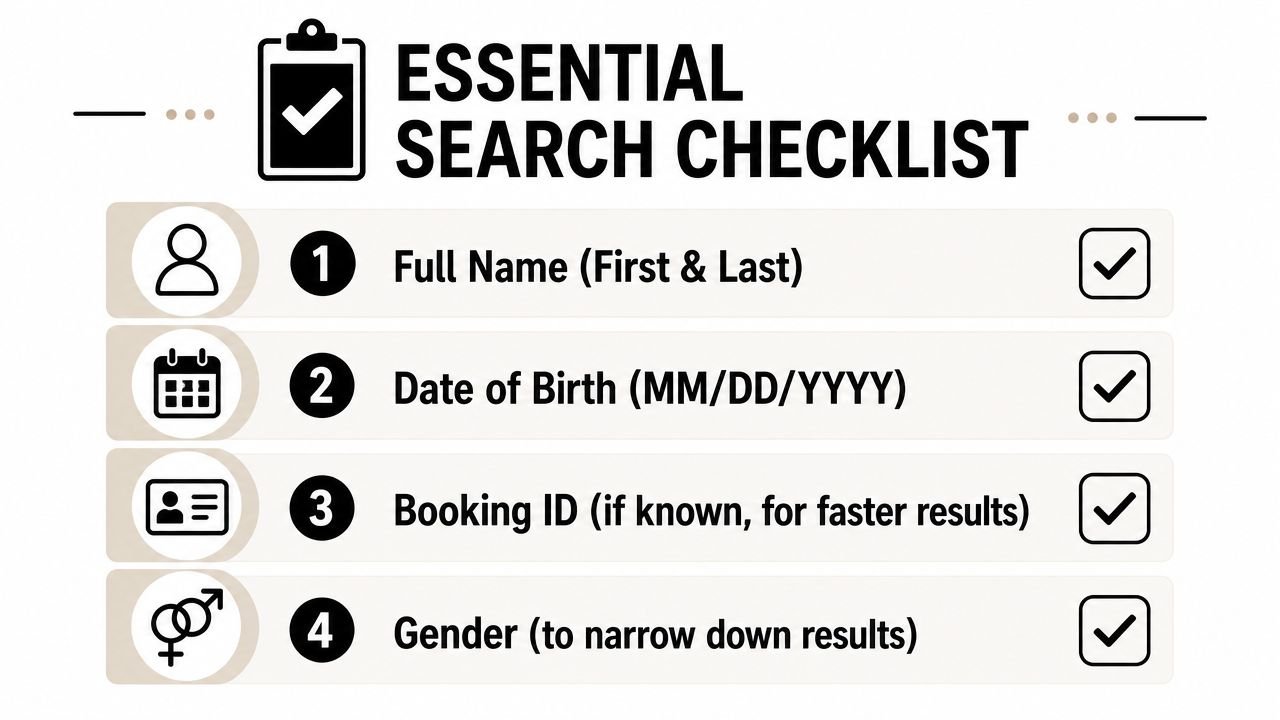
The official City and County of Denver search tool accepts last name, middle name, first name, booking number, race, facility, and status. Denver also makes it clear that the most reliable approach is to use at least two identifiers and verify against booking status rather than relying on a name alone, as shown on the official Denver inmate search page.
The details that save time
Here's the checklist I'd use before searching:
- Full legal name: This is the base search field. If the person goes by a nickname, still start with the legal first and last name.
- Date of birth: The Denver search tool doesn't list date of birth as a search field in the fact set provided, but for your own verification it helps you confirm you found the right person if multiple names look similar.
- Booking number if known: This is the cleanest identifier when you have it.
- Basic descriptors: If the name is common, narrowing by race, facility, or status can help.
What works and what usually doesn't
Some methods are solid. Some waste time.
| Search approach | How useful it is | Why |
|---|---|---|
| Full last name plus first name | Strong | Gives cleaner results than a one-name search |
| Booking number | Best when available | Ties directly to the arrest record |
| One common last name only | Weak | Can return too many matches or the wrong person |
| Nickname search | Unreliable | Booking records usually follow legal identity |
Search narrow enough to identify the right person, but not so narrow that a small spelling issue blocks the result.
If you're also trying to understand how booking records and public arrest information fit together, Colorado arrest records gives useful background.
A Walkthrough of the Official Denver Inmate Search Tool
A family member gets arrested, someone says they were taken to Denver, and the first search returns nothing. That usually does not mean they are gone or released. It often means the booking record is still being processed, the name was entered differently, or the search was narrowed too early.
Denver's public lookup tool lets you search by name and other identifying details. Use it in stages. A wide first pass usually works better than trying to guess every filter on the first try.
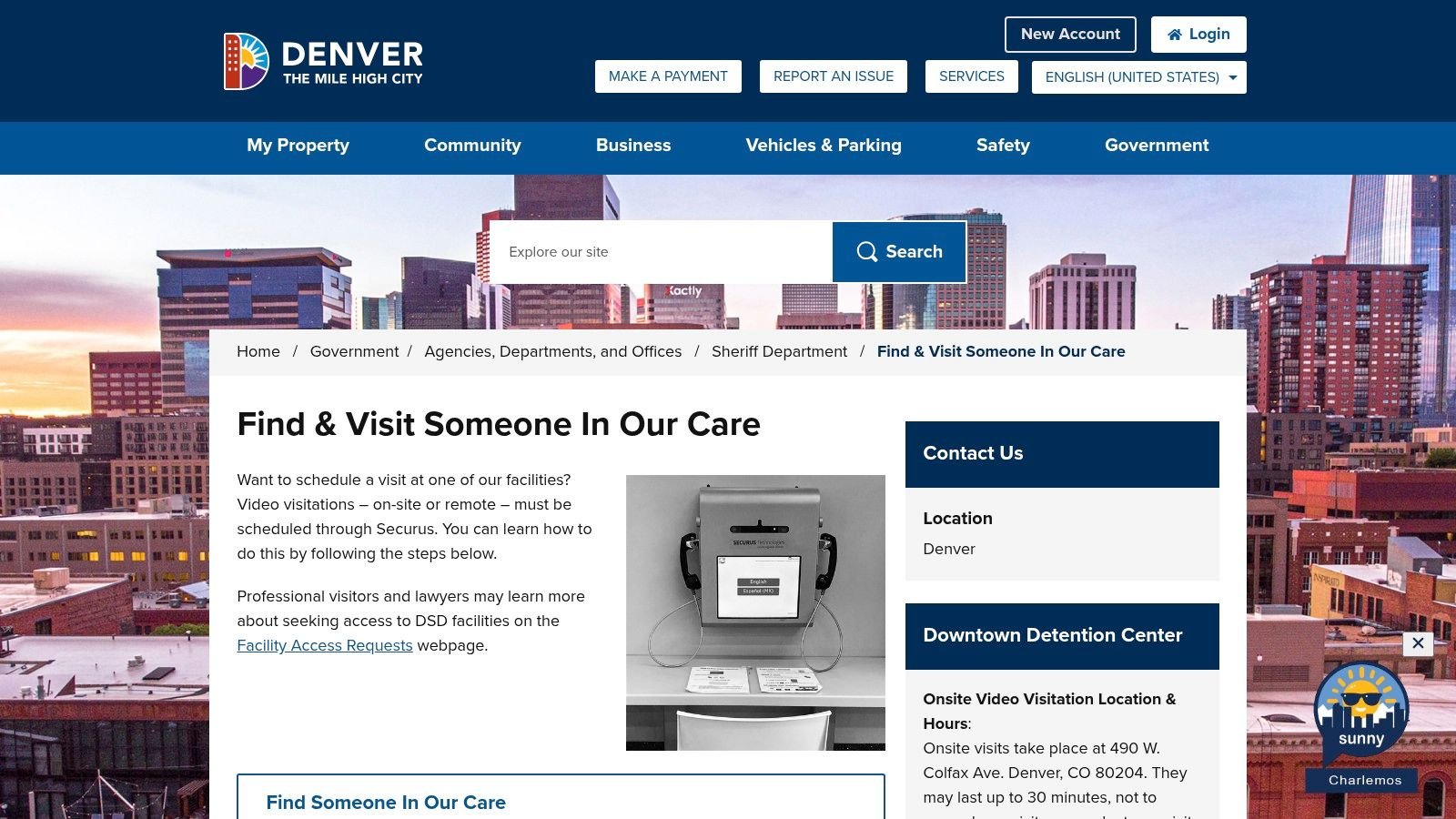
A page from Denver's custody and visitation system looks like this:
How to run the search without screening out the right person
Start with the cleanest identifier you have. If you know the booking number, use that first. If you do not, search the legal last name and first name together.
Then add filters carefully:
- Last name: Enter the legal spelling first, even if everyone knows the person by a nickname.
- First name: Use it with the last name right away, especially for common surnames.
- Middle name: Helpful if you get several similar results.
- Race: Use only to narrow a result list, not as your starting point.
- Facility: Apply this only if you already have reason to believe the person is at a specific Denver facility.
- Status: Save this for later. A guessed status is one of the easiest ways to miss a valid record.
That last point matters. Families often pick a facility or custody status based on what they assume should have happened after the arrest. If the booking process is still active or the person was moved within the system, those choices can hide the record you need.
A search order that works in real cases
Use this sequence:
- Search by last name and first name only.
- Review every close match before adding anything else.
- Add the middle name or booking number if you have it.
- Use facility or status filters only after you confirm identity.
If the first search fails, rerun it with small adjustments. Try a shortened first name, leave out the middle name, or remove filters completely. Typos, hyphenated names, and data-entry timing issues are common enough that a second pass is often worth it.
The video below gives more context around jail and custody-related processes that families often need to understand while searching:
If you need to check whether the person may have been booked outside Denver, these Colorado jail search resources by county can help you widen the search.
How to Interpret Inmate Search Results
You find the name, feel a moment of relief, then the screen raises a new set of questions. The charge listing looks incomplete. The bond field is blank or confusing. The facility does not match what the arresting officer mentioned. That does not always mean something is wrong. It usually means the booking process is still catching up.
What the main fields usually tell you
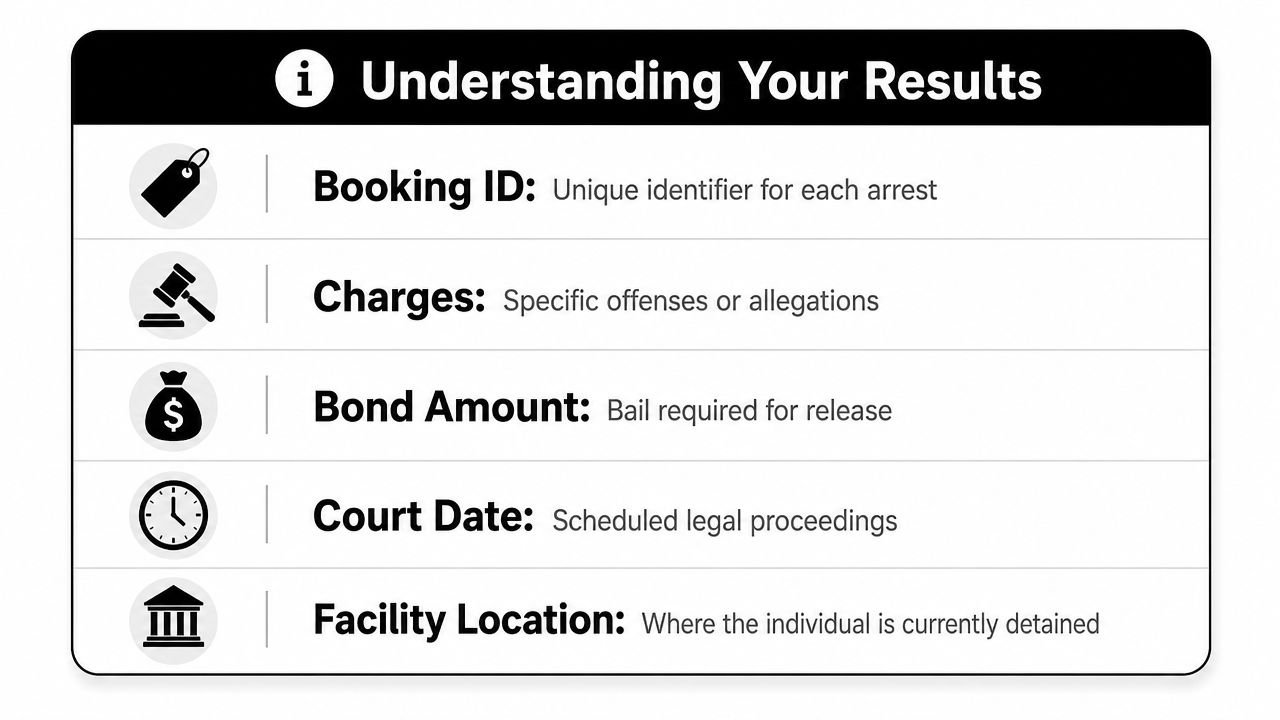
Start by reading the result as a custody snapshot. It shows where the person stands at that moment, not the full story of the case.
| Field | What it tells you |
|---|---|
| Booking ID | The identifier tied to that arrest event |
| Charges | The listed allegations or offenses |
| Bond amount | Whether release may require a bond and what amount is listed |
| Court date | The next listed appearance, if shown |
| Facility location | Where the person is currently being held |
The trade-off with any public custody tool is speed versus detail. Records often appear before every field is cleaned up, confirmed, or updated.
Why status and location can change
Denver's intake process includes identity confirmation, fingerprinting, and classification before housing is finalized. During that process, a person can appear with limited information, then show a different location or status later. The Denver County Jail intake video gives a useful look at how fingerprinting and classification work inside the facility: Denver County Jail intake and fingerprinting video.
That matters in real cases. If the arrest was recent, families often read the first result as final when it is only the first usable record.
A few practical examples:
- A facility location may reflect current housing, not the first place the person was taken after arrest.
- A status field can change while staff finish intake steps or move the person within the system.
- A bond amount can appear before families understand whether there are holds, conditions, or court timing issues affecting release.
If you need to confirm details before taking action, use the Denver County Jail phone number and contact guide to verify where the person is being held and who to call.
Terms that people often misread
Families usually focus on the bond figure first. I understand why. But the safer approach is to read the whole record together.
A listed bond amount does not guarantee immediate release. The person may still be in intake, waiting for processing, or dealing with another hold that is not obvious from a quick search result. A missing bond amount does not automatically mean bond is denied either. Sometimes the record is not complete yet.
The same goes for charges. Early charge descriptions can be abbreviated, and they may not answer the question families care about most, which is how soon the person can get out.
Important: A result showing the person in custody confirms location. It does not confirm release timing.
Denver jail records can also reflect people with different medical, mental health, or classification needs, and those issues can affect housing and release planning. In practice, that means two people with similar-looking search results may move through the system on very different timelines.
Read the result for what it does well. It tells you who is in custody, where they are, and some of the release picture. For the parts it does not answer clearly, treat the record as a starting point and verify the rest before you make bail decisions.
Troubleshooting a Failed Inmate Search
A failed Denver County jail search doesn't always mean the person isn't in custody. That's the point families miss most often.
The City and County of Denver explicitly tells users to call 720-913-3600 if they can't find the person in the system, which you can see on Denver's Find and visit someone in our care page. That tells you something important. The online tool has limits, especially during booking delays, transfers, or recent arrests.
The most likely reasons no result appears
If the search comes back blank, work through the possibilities in this order:
- The booking is still in progress. Recent arrests may not appear right away.
- The name was entered differently. Try legal spelling, then partial name combinations.
- The arrest happened outside Denver. This comes up often near county lines or when an arresting agency books elsewhere.
- The person was transferred or released. A blank result can mean the online snapshot changed before you checked.
What to do instead of refreshing the page
Use a short decision process:
- Try another identifier: Add first name, middle name, or booking number if you have it.
- Remove one guessed filter: Facility and status guesses can hide a valid match.
- Call the official number: If the online result is blank, contact Denver directly at 720-913-3600.
- Check the county question: If the arrest may have happened outside Denver, search the neighboring jail system next.
If you need the direct custody contact details in one place, Denver County Jail phone information is worth keeping handy.
Your Next Steps Arranging Bail in Denver
You finally find your person in custody, then a new problem starts. The record shows a bond amount, but no one has explained what kind of bond it is, whether a hold is attached, or how long release will take.
That confusion is normal. The search result tells you where the person is. It does not tell you whether release can happen tonight, whether another agency has placed a hold, or whether the booking record has fully updated.
Start with the booking details in front of you. Confirm the person's full name, booking number, bond amount, and any status notes tied to release. If the listing is unclear, call the jail and ask one direct question at a time. Ask whether the bond is cash-only, personal recognizance, or a surety bond, and ask whether any holds or court conditions will delay release even after payment is arranged.
That last part matters. Families often assume paying the amount ends the process. It does not. A hold from another county, an immigration issue, or a pending advisement can keep someone in custody after the bond is posted.
What helps at this stage
Once you know the bond type, choose the release method quickly. If the jail accepts a direct payment and the family can cover it, that may be the simplest route. If the amount is too high or the paperwork needs to be handled fast, a Denver surety option such as Denver bail bond assistance can help complete the application, payment, and contract documents electronically.
A short checklist keeps this from turning into guesswork:
- Verify the booking number and identity
- Confirm the exact bond type, not just the amount
- Ask whether any holds or release conditions apply
- Decide who is paying and how
- Keep one family contact available for calls or texts
If the arrest may involve a nearby jurisdiction, review services for Jefferson County in Golden or Centennial bail bonds. That comes up more than families expect, especially when the arrest happened near a county line or the person was booked somewhere other than where the stop occurred.
If you need help locating someone, understanding bond information, or starting the release process, contact Express Bail Bonds by call or text at 720-984-2245. They serve Colorado jails statewide and can walk you through the next step without making you figure it out alone.