
If you're trying to find a loved one after an arrest in Denver, the first few hours are usually the hardest. You may have a name, a short phone call, or word from someone else, but not much else. Families often assume the public inmate search will answer everything right away. Sometimes it does. Sometimes it doesn't.
What helps most is a calm process. Start with the official search. Confirm whether the person is in Denver custody. Then move quickly into the next step if the search comes back blank, because a missing result doesn't always mean the person isn't in jail. It can mean booking is still underway, records are still being processed, or the person is being held under a different custody path.
Your First Step Navigating the Denver Jail System
Denver's jail system stays busy. The City and County of Denver reported that its facilities can hold no more than 2,330 people at a time, and the average daily population was 2,159 across 2012 through 2017, with a projected 2,110 average daily population for 2018. The same reporting noted the facilities reached about 2,300 inmates in October, which shows how close the system can get to capacity (Denverite's reporting on Denver jail population).
That matters for one reason. When a jail is handling a heavy volume of people, delays and confusion feel bigger on the family side. You want answers now, but the system moves in stages.
Start with the basics you can verify
Before you call anyone, gather the details you're sure about:
- Full legal name if you know it
- Date of birth if you know it
- Approximate arrest time
- Agency involved if someone mentioned Denver Police, a municipal agency, or another department
- Any case or booking number from paperwork, a text, or a call
If you only have a nickname or partial name, write down every variation. Search failures often start with simple identity mismatches.
Use the official search first, then escalate
Your first move should be Denver's inmate locator. If you need the direct facility contact details alongside that search process, keep this Denver County Jail phone number guide handy.
The fastest families aren't the ones who panic less. They're the ones who verify the right details early and stop guessing.
Two practical mistakes slow people down. The first is searching once and assuming the result is final. The second is calling multiple places without knowing whether the person has completed booking. In Denver, the right first step is simple. Search, confirm, then move to the next branch if nothing appears.
How to Locate an Inmate in Denver Online and By Phone
A family usually starts here after the first phone call stops making sense. Someone says your loved one was arrested in Denver, you search the jail roster, and nothing comes up. That does not automatically mean the person is in the wrong county or already released. In many cases, it means booking is still in progress, the name was entered differently, or the person was moved to another holding path.
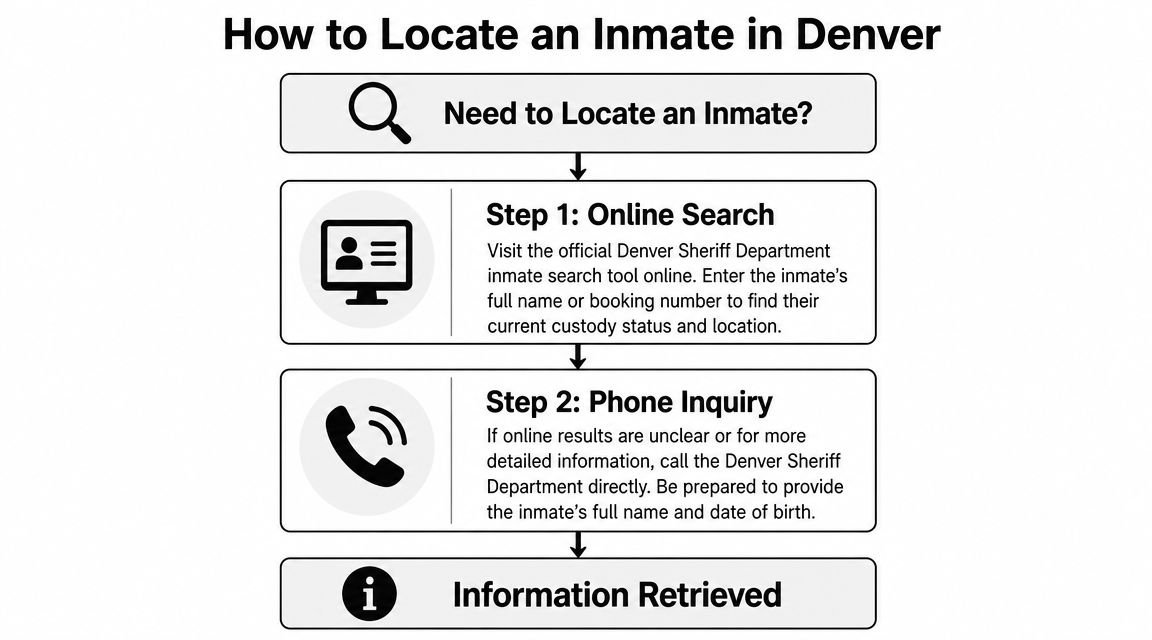
Search online first, but search with a plan
Start with Denver's public inmate locator using the fullest legal name you have. If you have a booking number, use that first. It cuts down on wrong matches and spelling issues.
If you are not sure the person is still being held in Denver, use this broader Colorado jail inmate search tool to check whether the arrest location and the current holding location are different.
When you do find a record, confirm these points before you call anyone:
Identity
Match the date of birth or other personal details to make sure you have the right person.Custody status
This shows whether the inmate is still in custody, has been transferred, or is no longer listed there.Location
The facility or housing information affects who you call and what release options are available.Charge or case reference
Even if the wording is unfamiliar, this helps jail staff and a bail agent pull the correct file faster.
Why a search fails
A no-result screen is common right after an arrest. Public records usually lag behind the actual arrest because staff still have to complete intake. That process can include property inventory, fingerprinting, medical screening, and classification before the record appears publicly (Denver jail intake overview video).
I tell families the same thing every day. Search results are often late. The system is not always wrong, but it is not always current either.
A failed search usually comes down to one of these problems:
- The person is still being booked
- The name was entered under a full legal name, suffix, or different spelling
- The person is being held under a different Denver custody status
- The person was transferred or placed on a non-local hold
Use a simple decision tree
If the arrest happened very recently, wait a short time and run the search again.
If you still get nothing, check every name variation you have. Include middle names, hyphenated names, Jr., Sr., and any formal first name that might replace a nickname.
If there is still no match, call the jail directly. Ask one clear question: Is this person still in intake, housed under another Denver custody status, transferred, or no longer in your system?
That question gets better answers than asking staff to search the same name over and over. It also helps you figure out the next move quickly. If the person is still in intake, you wait and recheck. If the person was transferred, you stop wasting time on the wrong facility. If the person is in custody and bond information is available, a bail bond agent can usually move the process along faster than calling different offices without a booking number.
Here's a quick visual summary before you start calling around:
What to have ready when you call
You will get farther with exact details than with a general description of the arrest. Have these ready:
- Full legal name
- Date of birth
- Approximate arrest date or time
- Whether the arrest happened in Denver
- Any case number, citation, or booking reference
If you have only partial information, say that upfront and give the strongest identifiers first. A calm, direct call usually gets better results than calling five places with five different versions of the story.
Understanding Booking Details and Charges
Once you find the record, the next problem is reading it correctly. Most families see unfamiliar abbreviations, a booking number, and charge labels that sound more serious or more confusing than they are.
What the booking details usually tell you
A Denver County jail inmate record often includes a booking number, identifying information, and charge data. The booking number matters because it lets jail staff, court staff, and a bail agent find the same person quickly without relying only on a name that may be spelled several ways.
The charge line matters for a different reason. It tells you what authority is holding the person and what kind of release process may apply. Some people are held on city or municipal matters. Others are facing county or state-level criminal charges. That difference can affect timing, bond setting, and where paperwork is handled.
If you want a clearer sense of the timing behind the intake side of this, this guide on how long booking takes in jail gives practical background.
Read the record before you react
Families often jump straight to the charge title and miss the rest of the screen. Slow down and look at the whole record:
- Booking number helps identify the correct inmate
- Housing or location field helps with visitation and contact planning
- Charge list shows what the jail is holding the person on
- Bond or bail field tells you whether release may already be possible
- Hold information may explain why someone can't be released yet
If the record shows a hold, don't assume paying bond will solve everything. A hold can change the release path completely.
What works and what doesn't
What works is treating the booking page like a checklist. Write down the booking number exactly, copy the charge names as listed, and note whether bond appears to be set.
What doesn't work is trying to decode every legal term on your own in the middle of a crisis. You don't need to become a criminal lawyer in an hour. You need to know whether the person is in custody, where they are, what they're being held on, and whether release has been authorized.
Inmate Communication and Visitation Rules
Once you know where your loved one is, the next priority is usually contact. Families want to know how to talk, visit, send support, and avoid making a mistake that causes delays.
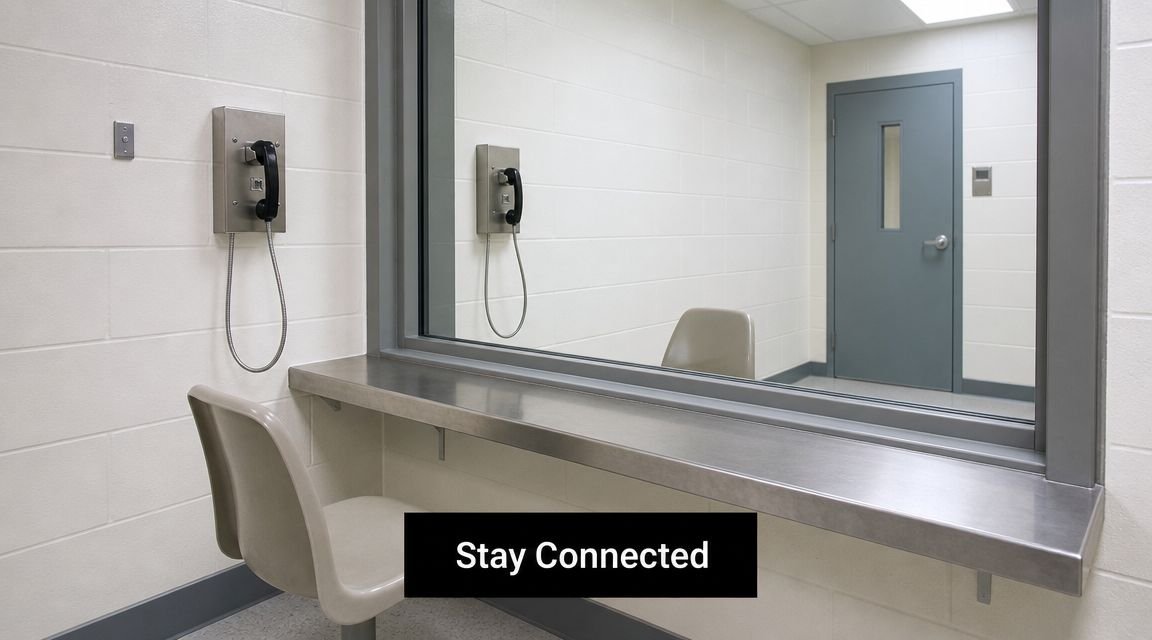
Denver provides both remote video visits through a Securus account and limited in-person visits, but each option comes with strict scheduling rules, time limits, and conduct requirements (Denver Sheriff visitation information).
Visiting a Denver County jail inmate
If you're planning to visit, don't assume showing up is enough. The process is more segmented than many families expect.
A good starting point is this practical page on whether you can visit someone in jail, especially if this is your first time dealing with a detention facility.
For Denver visits, focus on these points:
- Remote visits usually require a Securus account before you can schedule or connect
- In-person visits are limited by location and schedule
- Time limits apply so you need to be logged in or checked in on time
- Rules of conduct matter because visits can be denied or ended if rules are broken
Show up early, use the exact name on the account and ID, and assume the jail will enforce the rules as written.
Calls, support, and coordination
Communication after booking is often fragmented. That's hard on families, especially if they're helping from outside Denver. The public pages for search, visitation, and custody information are separate, which means you often have to connect the dots yourself.
That usually creates two problems:
- People focus on visitation before confirming release status
- Out-of-town relatives create accounts before knowing which facility path applies
The better approach is to do this in order:
- Confirm the inmate's location
- Check whether bond has been set
- Set up remote communication if release won't happen right away
- Coordinate clothing, transportation, and court reminders early
What families often miss
The missed issue isn't usually the visit itself. It's the release timing around the visit. Denver's process for finding someone, arranging a remote visit, and tracking release logistics doesn't always feel connected on the public side.
If your goal is emotional support, visitation helps. If your goal is getting the person out as soon as legally possible, communication should support that goal, not distract from it.
How to Post Bail Fast with Express Bail Bonds
Once bond is set, the question changes from “Where are they?” to “How do we get them released?” That's where families can lose time by chasing too many options at once.
Some people post the full amount directly when that option is available to them. Others use a surety bond because it avoids tying up the entire bail amount in cash at once. The right path depends on the bond type, the amount set, and whether there are holds or release conditions attached.
For Denver-area help, this Denver bail bonds page is the most relevant local starting point.
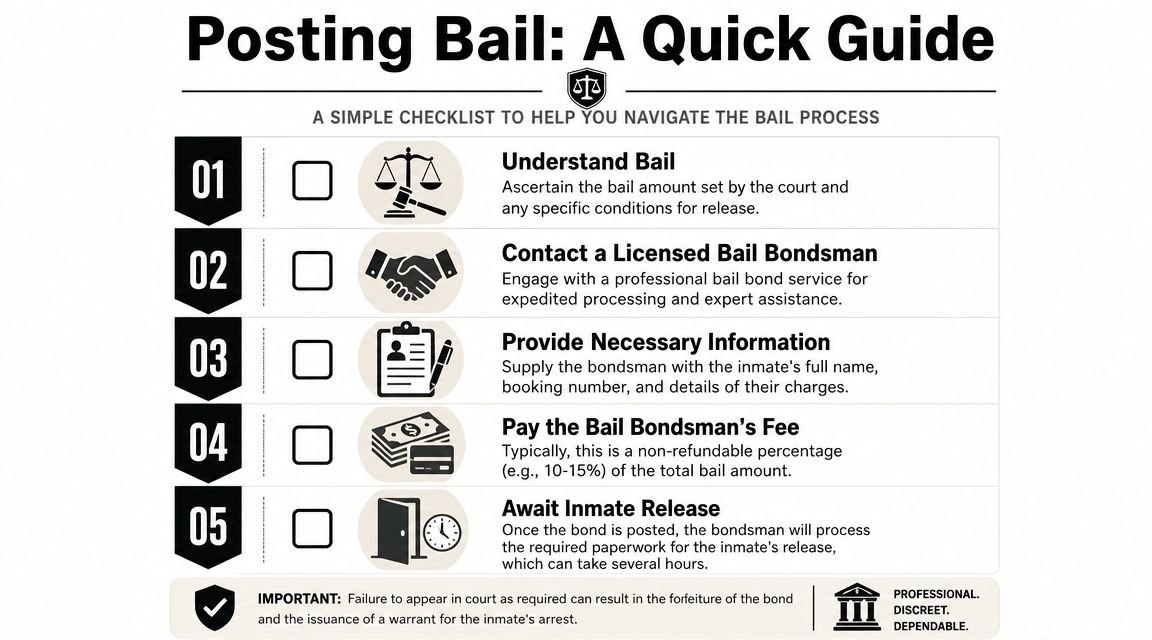
What information you need before you call
A bail bond goes faster when the paperwork starts with accurate details. If you call without the basic identifiers, the first part of the process turns into detective work.
| Information | Where to Find It |
|---|---|
| Full legal name | Booking record, court paperwork, or ID |
| Date of birth | Family records, ID, or jail record |
| Booking number | Jail inmate search or booking screen |
| Jail location | Custody record or jail staff |
| Charges listed | Booking record |
| Bond amount | Jail or court record once set |
| Cosigner information | The person agreeing to sign the bond documents |
How the process usually works
If the bond type allows a surety bond, a licensed agency can begin the application and contract process once the inmate and bond details are confirmed. Express Bail Bonds handles surety bonds, offers remote document processing, and serves Denver and detention facilities across Colorado. The company states that Colorado's standard premium is 15%, and for bonds over $5,000 they often secure 10% with an approved cosigner. It does not post cash-only bonds (Express Bail Bonds home page).
That matters for families because remote processing can remove one of the biggest delays. You may not need to spend hours driving between the jail, a bond office, and court-related stops just to start paperwork.
If the arrest happened outside central Denver, nearby county logistics can matter too. These local resources for Jefferson County and Golden bail bonds and Centennial bail bonds can help you identify the right geographic path when custody or court location shifts.
What works best in real situations
Families move fastest when they do three things well:
- Confirm bond is set before trying to arrange payment
- Use the exact booking information from the jail record
- Choose one release path and follow it cleanly instead of mixing cash-bond questions, inmate-search questions, and visitation questions in the same call
What doesn't work is assuming release starts the moment bond is discussed. Release begins after the correct bond is posted and the jail completes its own release processing.
A bondsman can move the bond process forward. The jail still controls the physical release.
If you're an out-of-state relative trying to understand how bail works more broadly, this overview of bail information for Georgia residents is useful because it explains the general logic behind bond, cosigners, and court obligations in plain language. Just remember that procedures and bond types vary by state and by jail.
When to call right away
Call immediately when you have these pieces in hand:
- The inmate's full name
- Booking number if available
- Bond amount or confirmation that bond has been set
- A ready cosigner
- A clear phone number and email for documents
If you don't have the bond amount yet, you can still get organized. Gather the identity details, confirm the facility, and be ready to move as soon as the court or jail updates the record.
Your Next Steps After Securing Release
Getting someone out is important, but it isn't the finish line. Release starts a different part of the case, and that part is where people get into avoidable trouble if they relax too early.

Focus on the first day out
The first hours after release should be practical, not emotional chaos. Make sure the person has transportation, a working phone, a place to sleep, and a safe copy of every release or court document.
Then check these items right away:
- Court date
- Location of the next appearance
- Any release conditions
- Attorney contact plan
- Reminders for the defendant and cosigner
Keep the bond in good standing
A bond only helps if the defendant follows the court's rules. Missing court, ignoring release conditions, or disappearing from contact can create a new arrest problem and put the cosigner at risk.
The most expensive mistake isn't usually the bond. It's failing to handle what comes after release.
If your family member was hard to locate at first, stay organized now. Save screenshots, write down court dates, and keep one person in charge of communications. Too many relatives passing along half-correct information creates the same confusion after release that families face during booking.
When people treat release as the start of a checklist instead of the end of a crisis, things usually go more smoothly.
If you need help locating a loved one, understanding whether bond has been set, or starting the release process, contact Express Bail Bonds. They serve Denver and facilities across Colorado, and their team can help you sort out the next step quickly and clearly.