
Your phone rings late. The voice on the other end is shaky. Someone you care about has been arrested for DUI, and the first question is usually the same.
“How much is bail?”
That’s the moment when people start guessing, panicking, and losing time. A bail amount for dui in Colorado can be fairly manageable in one case and much higher in another. The difference usually comes down to the charge, the county, prior history, and whether anything made the arrest more serious.
If you're dealing with that call right now, the goal is simple. Find out the bond amount, figure out the fastest release option, and avoid mistakes that slow the process down.
The Call You Never Wanted and What to Do Next
The hardest part of a DUI arrest for most families isn't the legal language. It's the uncertainty. You don't know where your person is being held, whether they'll see a judge tonight, or whether you're supposed to drive to the jail with cash.
That confusion is normal. The fix is to slow the situation down and handle it in order.

Start with the jail and the charge
Before you talk money, confirm three things:
- Who was arrested: Full legal name and date of birth help avoid delays if the jail has similar names.
- Where they are booked: Denver, Jefferson, and Arapahoe all move differently.
- What the charge is: A basic first-time DUI is one thing. A case involving an accident, injuries, priors, or refusal issues can move very differently.
A lot of families lose an hour chasing the wrong problem. They argue about whether to bring cash before they've confirmed whether the bond has even been entered.
What helps right away
The quickest path is usually this:
- Verify the booking information
- Find out whether a bail amount has already been set
- Choose the release method
- Get paperwork handled fast, preferably electronically
- Stay available for calls from the agent, jail, or defendant
When families stay organized in the first hour, release usually moves cleaner than when everyone starts calling five different people at once.
If you need a basic first-step checklist, this guide on what to do when someone gets arrested is useful because it focuses on the immediate moves, not legal theory.
Some families want to wait until morning. Sometimes that's fine. Sometimes it just means your loved one sits longer than necessary. If the bail amount is already set, action tonight usually beats stress tomorrow.
If you need direct bail help at any hour, you can contact Express Bail Bonds and start the process remotely instead of waiting at a facility window.
How Judges Determine the Bail Amount for a DUI
Judges set DUI bond by asking a practical question. If this person is released tonight, will they come back to court and can they be released without creating another safety problem?
That is why two arrests that sound almost identical in a late-night phone call can get very different bond amounts by morning.
What the court is really looking at
Start with the charge itself. A first misdemeanor DUI is usually viewed differently from a case involving a crash, injuries, a child passenger, a revoked license, or facts that push the filing toward a felony. In Colorado, the judge or magistrate is not just reacting to the arrest. The court is deciding what level of financial pressure and release conditions are needed to get compliance.
Local procedure matters too. In some Colorado cases, bond is set from a schedule or by a magistrate early in the process. In others, the court takes a closer look at the file before deciding. If you want a clearer picture of that review, this guide on what happens at a bail hearing walks through the steps families usually see.
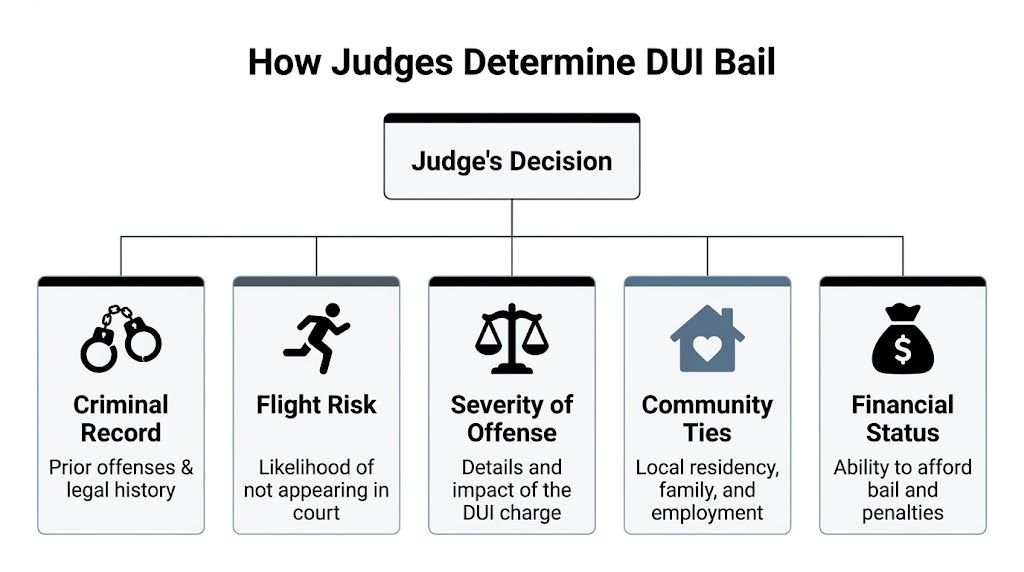
Five factors that usually move bond up or down
Severity of the allegations
A plain first-offense DUI is one category. A DUI tied to property damage, bodily injury, high BAC allegations, reckless driving facts, or felony exposure is another. More serious facts usually mean a higher bond or stricter release terms.
Prior criminal and DUI history
Judges look hard at priors. One old DUI can matter. Multiple alcohol-related cases, probation violations, or a pattern of arrests usually matter more. From a bail standpoint, priors suggest the current arrest may not be an isolated mistake.
Failure-to-appear risk
The court wants to know whether the defendant will come back. Missed court dates, open cases in another county, unstable housing, or weak contact information can push bond upward fast. If someone has a record of ignoring court orders, the judge may decide a low bond will not do the job.
Ties to the community
Strong local ties can help. A steady job, family in Colorado, a long-term residence, and reliable references all give the court more confidence that the person will stay put and deal with the case. In Denver, Jefferson, and Arapahoe County, those details often matter more than families expect.
Ability to follow release conditions
This is the piece families often miss. The court is not only setting a dollar amount. It may also consider whether the person can realistically follow no-alcohol orders, testing requirements, driving restrictions, or check-in rules. If the facts suggest those conditions will be ignored, bond can rise or release can become more restrictive.
Practical rule: Bond usually goes up when the file shows more danger, more history, or less reason to trust the person will return.
What families should listen for during the first update
A common mistake is to argue about whether to bring cash before confirming what facts are driving the bond decision.
Ask these questions instead:
- Was there an accident or alleged injury?
- Is this charged as a misdemeanor or does it have felony exposure?
- Are there prior DUIs, probation issues, or missed court dates?
- Is there a hold from another case, county, or agency?
- Did the court add release conditions that could slow the release even after bond is posted?
Those details explain a high bond more often than families realize.
If the amount sounds steep, that does not automatically mean the court got it wrong. It usually means the judge saw something in the booking facts or record that raised concern beyond the basic DUI arrest.
DUI Bail Amounts in Denver Jefferson and Arapahoe Counties
National articles don't help much when your person is sitting in a Colorado jail. Counties handle DUI bonds differently, and local practice matters. The same type of arrest can feel very different depending on where booking happened and how that county handles first advisements and bond schedules.
For Colorado families, the useful question isn't “what's normal in America?” It’s “what does this county usually do tonight?”
Denver and Arapahoe ranges
Colorado varies by county, and the local ranges matter more than generic national estimates. Denver County often sets first-offense DUI bail between $750 and $5,000, while nearby Arapahoe can range from $1,000 to $7,500, and those figures can be adjusted based on BAC and prior history, according to this overview of Colorado DUI bail practices.
That gives families a practical starting point, not a promise. Judges and magistrates can still move the amount based on the booking facts.
What that means in real life
Denver often moves quickly, but speed doesn't always mean simplicity. If the case looks straightforward, bond information may be available quickly. If there are complicating facts, families can get a number and still find that release takes longer because of processing, holds, or court timing.
Arapahoe tends to be a county where prior history and case details matter a lot in practice. The range itself tells you something important. There is room for a relatively moderate bond, and there is also room for a much more expensive one.
Jefferson County deserves special attention because it sits in the middle of a lot of family decision-making. People there often ask whether they need to physically go somewhere or whether they can handle the bond remotely. If the arrest happened in that area, the local Jefferson County bail bond page is the most direct starting point.
Why county knowledge saves time
The part families underestimate is logistics. County-by-county differences affect:
- How quickly booking information appears
- How bond amounts are communicated
- Whether remote paperwork is the fastest route
- How long release processing may take after the bond is posted
For Arapahoe-area cases, the local Centennial bail bonds page is useful because it keeps the focus on the actual detention and court flow in that corridor.
A local bond estimate is a planning tool. It isn't a quote, and it isn't a guarantee. The actual amount comes from the court or jail record attached to that specific arrest.
That’s the difference between internet advice and a real response plan. County-specific information helps you decide what to do next without burning time on assumptions.
Cash Bail vs a Surety Bond Which is Right for You
Once you know the bail amount for dui, the next decision is how to post it. Families usually have two practical options. Pay the full cash amount yourself, or use a surety bond through a bail bondsman.
A lot of people confuse those terms. If you want a plain-English legal explanation, this short guide on bail vs bond is worth reading.
Cash Bail vs. Surety Bond at a Glance
| Feature | Cash Bail (Paying Yourself) | Surety Bond (Using a Bondsman) |
|---|---|---|
| Upfront cost | Full bail amount must usually be paid | Premium is paid instead of the full bond |
| Impact on savings | Ties up a large amount of money | Preserves cash for attorney fees and other costs |
| Paperwork help | You handle the process directly | Agent helps with bond paperwork and court-related logistics |
| Cosigner role | Usually not needed in the same way | Often important, especially on larger bonds |
| Best fit | Families with immediate access to the full amount | Families who need a faster, more practical funding option |
What usually works better for families
Cash bail sounds simple until the number is high enough to disrupt rent, payroll, business cash flow, or emergency savings. A surety bond exists for that exact problem.
There’s another practical point. Flight risk algorithms used by courts can lower bonds by 20 to 30 percent for defendants with strong community ties, and bonded cases have an 85 percent court compliance rate, according to this discussion of DWI bond-setting and compliance. In plain terms, courts and agents both care about stability, because stable defendants are easier to keep on track.
The trade-off most people miss
Cash can be the right option when the amount is low and the family can absorb it without strain. But many DUI cases don't stay simple for long. Legal fees, towing, work disruption, and court conditions start stacking up.
That's why people compare release methods carefully. This breakdown of cash bond vs surety bond helps families think through cost, convenience, and risk before they commit.
The smartest choice is usually the one that gets the person out without creating a second financial crisis at home.
A cosigner can also make a big difference. If the defendant has support, stable ties, and someone responsible willing to sign, the bond process usually becomes much more manageable than families expect during the first late-night call.
How to Secure a Bail Bond and Get Released Tonight
If the bond has already been set, don't overcomplicate this. Release usually moves fastest when one person takes the lead, gathers the facts, and handles the paperwork cleanly.

What to gather before you call
Have this information ready:
- Defendant details: Full name and date of birth.
- Jail location: County and detention facility if you know it.
- Charge information: DUI, DWAI, or any added allegations shown at booking.
- Bond amount if available: If you don't have it yet, an agent can often help you confirm where to check.
- Cosigner information: Basic ID and contact details for the person who will sign.
The cleaner your information is, the fewer delays you'll hit.
Why time matters on DUI bonds
DUI bonds can jump quickly when the facts get worse. Aggravating factors like a BAC of 0.15% or higher can double or triple a base bail amount, making the speed and affordability of a 10 to 15% surety bond premium even more critical for securing a quick release, based on this explanation of DWI bail versus bond in Texas.
The lesson for Colorado families is practical. If the bail is already set, waiting around rarely helps.
The fastest path is usually electronic
For many families, the quickest method is remote processing. That means:
- Call or text the agent
- Confirm the bond amount and jail
- Complete the application electronically
- Review and sign contract documents
- Pay the premium
- Wait for the bond to be posted and the jail to process release
Colorado’s standard premium is 15%, and for bonds over $5,000, a qualified cosigner can sometimes bring that down to 10%. Those are often the numbers families need most because they tell you what your out-of-pocket cost may look like tonight.
If you need a county-specific service page focused on this exact type of release, this page on a bond for DUI keeps the process straightforward.
A Colorado agency such as Express Bail Bonds handles surety bonds statewide, offers electronic contracts and payment options, and can work with out-of-state cosigners by phone, text, and email. That matters when no one wants to sit in a parking lot waiting for a window to open.
If you prefer in-person help
Some families still want a physical office option, especially when they're signing as a cosigner for the first time. If that's you, these map listings can help you locate the office that fits your side of town:
A quick visual walk-through can also help if you're trying to settle everyone down and decide the next move.
What slows release down
Families usually run into trouble in three places:
- Missing booking details: Wrong spelling, wrong jail, or wrong birth date.
- Too many decision-makers: Everyone wants updates, but nobody takes control.
- Waiting for daylight without a reason: If the bond can be handled now, delay usually just means more jail time.
One calm caller with the right information beats five frantic callers every time.
A Cosigners Guide Responsibilities After Bail is Posted
Posting the bond isn't the finish line. It's the handoff. Once the defendant is released, the cosigner becomes part of the compliance system.
The main job is simple. Help make sure the defendant appears for every required court date and follows any release conditions. If they disappear, miss court, or break conditions in a way that affects the bond, the cosigner can face serious financial consequences.
What the cosigner should do right away
- Keep copies of documents: Save the bond paperwork, receipts, and court information.
- Track every court date: Put them in your phone and on a paper calendar.
- Stay in contact: If the defendant changes address, phone number, or work schedule, tell the bond agent.
- Watch for risk signs: If the defendant starts talking about leaving, ignoring court, or dodging service, don't wait to address it.
The defendant also has responsibilities. They need to show up, answer calls when needed, and comply with court orders. That can include conditions tied to driving, alcohol use, supervision, or check-ins.
If you're signing for someone and want a clearer picture of your obligations, this page on being a bail bond cosigner is worth reviewing before you put your name on anything.
A good cosigner isn't just a signer. They're the person who keeps a bad night from turning into a much bigger problem.
DUI Bail FAQs for Families and Cosigners
Can I get someone out if I can't afford the full bail amount?
Usually, yes. In Colorado, many families do not post the full cash bail themselves. They use a surety bond and pay a smaller bond premium instead.
What matters tonight is speed and accuracy. Have the defendant's full name, date of birth, jail location, and bond amount ready before you call. In Denver, Jefferson, and Arapahoe County cases, that can save time if you're trying to get paperwork handled electronically instead of driving jail to jail.
Is the bail amount the same as the total cost of the DUI?
No. Bail is only the amount tied to release.
A DUI case often brings other costs later, such as towing, attorney fees, court fines, classes, ignition interlock requirements, and insurance increases. Families get in trouble when they treat bail as the whole financial problem. Treat it as the first problem to solve so your person can get out and start dealing with the case.
Do you get money back after the case ends?
It depends on how the bond was posted.
If someone posts full cash bail directly with the court, that money may be returned at the end of the case, depending on the court's handling of fines, fees, and any missed appearances. If you use a surety bond, the premium paid to the bail bond company is the fee for that service. It is generally not refunded. Ask that question before you sign anything, not after release.
What if the defendant misses court?
Act fast. Call the bond agent and the defense lawyer right away.
A missed court date can lead to a warrant and put the bond at risk. In some situations, a quick response helps fix a calendar mistake or gets a hearing reset before the problem gets worse. Waiting usually limits your options.
How fast can someone get out on a DUI bond?
Release time depends on the jail, the hold status, and when the bond is processed. Some people are released the same night. Others wait longer because of booking delays, staffing, or an added hold.
The fastest path is usually the one with the fewest mistakes. In many Colorado DUI cases, especially around Denver metro counties, electronic bond paperwork can speed things up because the family does not have to chase signatures in person at midnight.
If you need fast, calm guidance tonight, contact Express Bail Bonds. They serve Colorado statewide, handle surety bond paperwork electronically, and can help families figure out the next step without guessing.