
The phone usually comes at the worst time. A family member says someone you care about was arrested in Boulder. You’re suddenly trying to answer three questions at once: where are they, what are the charges, and how do you help without making a stressful night worse.
The fastest way to settle the panic is to get good information and act in the right order. A proper boulder colorado inmate search isn’t just about finding a name on a screen. It’s about confirming the booking, reading the record correctly, and deciding what to do next.
Finding Calm After "The Call"
Most families make the same mistake first. They start texting five people, searching random databases, and guessing which jail the person might be in. That burns time and raises stress.
A better approach is simple. Slow down, collect the person’s legal name, and check the official Boulder County tools first. If you need a general first-response checklist, this guide on what to do when someone gets arrested is a useful starting point.
What helps most in the first hour is having a calm sequence:
- Confirm the jurisdiction: If the arrest happened in Boulder County, start with Boulder County tools before checking broader databases.
- Use the legal name first: Nicknames often fail. Middle initials, suffixes, and spelling differences can also affect results.
- Focus on booking status: Until booking is complete, the person may not appear where you expect.
Practical rule: Don’t assume “not found” means “not in custody.” It often means the booking hasn’t finished, the name was entered differently, or you’re checking the wrong report.
Once you find the listing, the situation becomes more manageable. You’ll know whether bond information is posted, whether a court date is already assigned, and what details you need for the next call. That turns a chaotic moment into a short list of decisions you can make.
How to Perform a Boulder Inmate Search
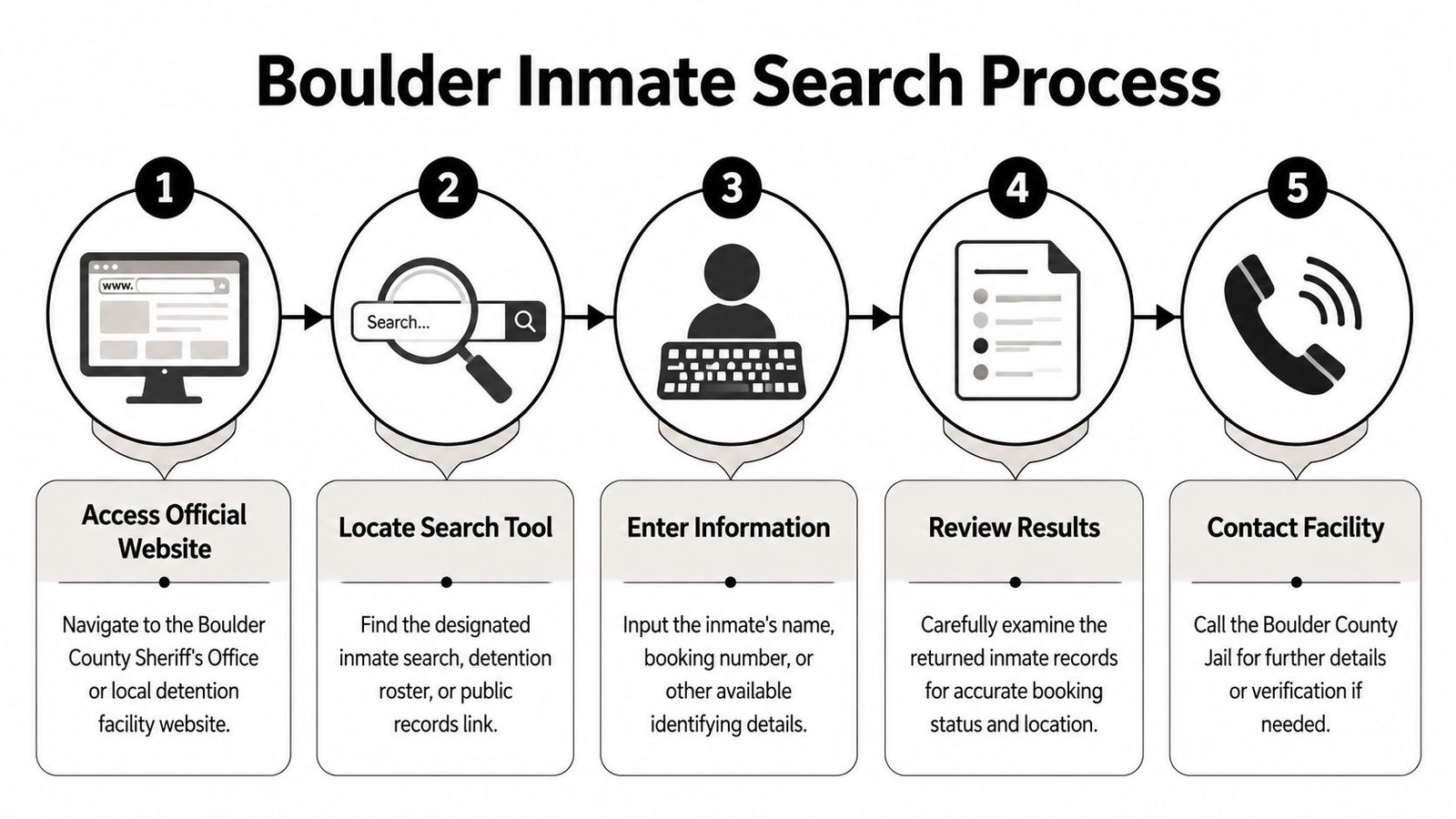
The official Boulder County jail listing should be your first stop. The Boulder County Sheriff’s Office upgraded its reporting page with name-based searches and detailed inmate profiles that can show the booking number, full name, charges, and bond amount through Power BI dashboards and direct listings, according to the Boulder County Sheriff’s Office enhanced jail reports announcement.
Start with the official jail listing
If you’re searching right after an arrest, use the Boulder County Jail Daily Booking and Listing Reports page. Have these details ready before you search:
- Full legal name
- Date of birth if you know it
- Booking number if someone already gave it to you
- Approximate arrest date
- Likely arresting agency
The official roster is usually the most practical tool because it gives you the details that matter for immediate action. You’re not just looking for confirmation that someone is in custody. You’re trying to pull the exact record that shows the current status.
When you open a record, scan the screen for the fields that affect release: booking number, charges, bond amount, court information, and agency details. Don’t get distracted by extra descriptors unless you’re trying to confirm identity between two people with similar names.
What to do when the search returns nothing
Search failures are common, especially early in the process. The biggest issue is name variation. A suffix, alternate spelling, or cultural naming format can keep an inmate from appearing under the exact search you typed.
Try this sequence instead:
- Search the last name only: This often catches spelling variations.
- Use the first name only: Helpful when the surname was entered differently.
- Check multiple reports: Current listing and release-related information can show different timing windows.
- Call the jail directly: If the online result still doesn’t make sense, ask for confirmation.
Check the digital listing first, but trust the phone when the record looks incomplete or the timing feels off.
If you’re helping a family that handles these situations often, even a simple intake checklist can reduce confusion. Many offices use forms to streamline client intake processes so they don’t lose important details like booking number, charge language, cosigner contact information, or court date notes.
Use a second check if needed
Official county tools should lead. If you still can’t verify custody, use a secondary method only as a backup. The key is not to bounce across too many databases and create more uncertainty.
A cleaner approach is to follow one chain of verification:
- official county listing
- direct phone confirmation
- records inquiry if the case is older or unusually complex
If you need a broader statewide-oriented search strategy, this page on how to find someone arrested can help you cross-check your next move without losing time.
Decoding the Inmate and Court Information
Finding the record is only half the job. The next step is reading it correctly so you don’t make decisions off the wrong field.
The fields that matter most
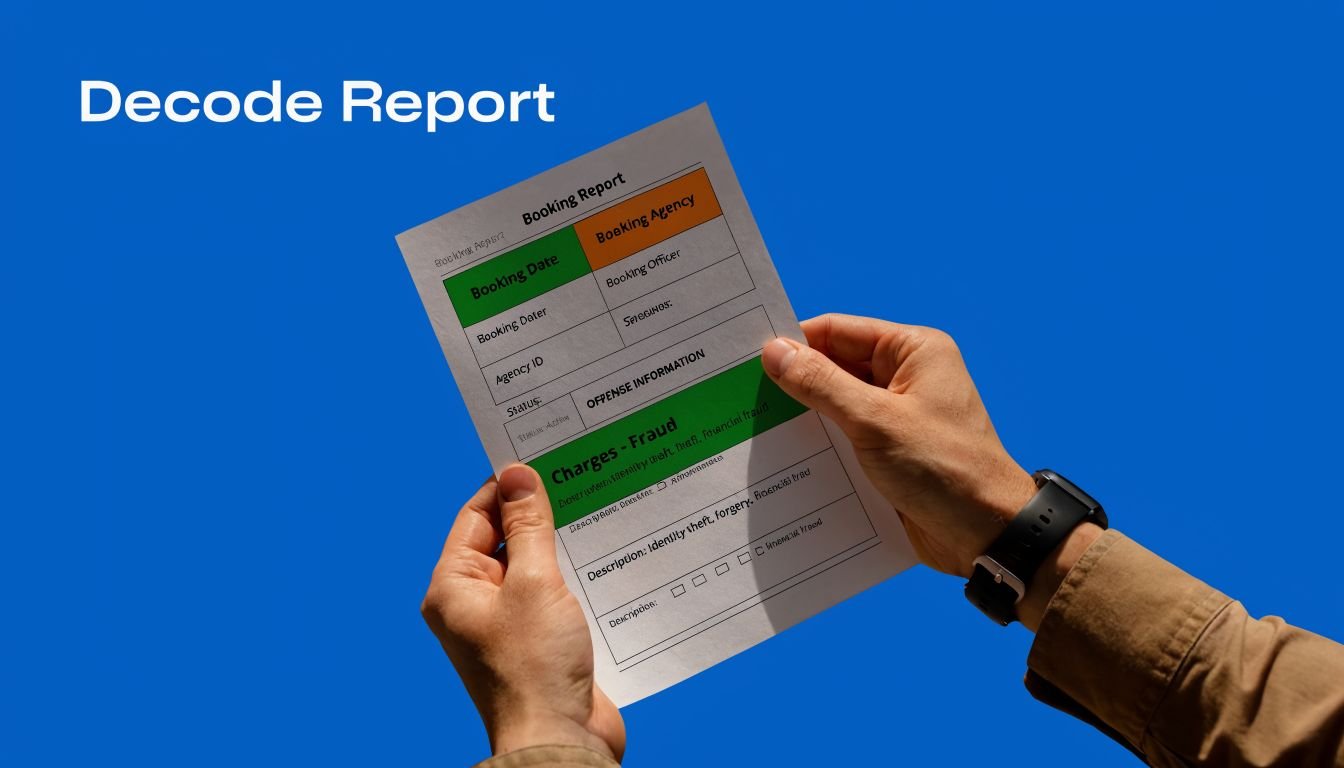
Start with the booking number, sometimes shown as JL_BKG_NO. This is the cleanest identifier on the record. If two people have similar names, the booking number removes the guesswork. Keep it written down exactly as shown.
Then read the charges carefully. Families often skim this line too fast and miss that there may be more than one charge listed. That matters because release conditions often depend on the full charge set, not just the first line you notice.
The bond amount is usually the most urgent field. If it’s posted, you now know release may move quickly once the right process starts. If it isn’t posted yet, that doesn’t always mean bail is impossible. It can mean the case is still moving through booking or awaiting court assignment.
Why some records look incomplete
The public database includes 12 standardized fields, but not every field populates consistently, especially when a case is still waiting for court assignment, as noted by Boulder jail roster reporting details. That’s why one record may show charges and bond amount clearly while another looks thin or partially blank.
This is also where search confusion starts. The same source notes that name spelling variations are a primary failure point, and when a normal search fails, a partial-name search or direct confirmation with the jail at 303-441-4650 may be necessary.
Here’s a quick way to read the page:
| Field | What it tells you | Why it matters |
|---|---|---|
| Booking number | Unique booking ID | Best reference for calls and paperwork |
| Charges | What the person was booked on | Affects release conditions |
| Bond amount | Bail figure if assigned | Determines next release step |
| Court date | Upcoming appearance | Important for planning and compliance |
| Housing location | Where the inmate is held | Helps with communication and verification |
If the record looks incomplete, don’t guess. In jail data, a blank field often means “not entered yet,” not “doesn’t exist.”
Families also get tripped up by legal language around release status. Terms like cash, surety, and recognizance each point to different release paths. If you need a plain-English walkthrough of what the system usually does after booking, what happens after you get arrested gives helpful context.
Your Immediate Next Steps After Finding an Inmate
Once the record is confirmed, stop searching and start acting. At that point, the priority shifts to release logistics, communication, and making sure the family doesn’t create delays by sending mixed information.

First decision made after the search
The most important thing on the screen is usually the bond field. If bond has been set, figure out what kind of bond the court or jail requires before anyone drives anywhere with cash or starts making promises.
A practical way to think about common outcomes:
- Cash bond: Paid in full directly through the required channel.
- Surety bond: A licensed bail bond agent posts the bond.
- Personal recognizance: Release may happen without posting a traditional financial bond, subject to the court’s terms.
Not every option fits every case. What works depends on the bond type attached to the inmate record, whether the bond is already active, and whether there are any other holds or conditions affecting release.
What usually works fastest
For many families, a surety bond is the most workable path because it avoids tying up the full bond amount in cash. Express Bail Bonds states that Colorado’s standard premium is 15%, and for bonds over $5,000, the premium is often 10% with an approved cosigner, according to the company information at Express Bail Bonds. The company also states it has served Colorado statewide since 1988 and offers electronic applications, payments, and contract documents so families can often handle the process remotely.
That matters in Boulder because speed usually comes from accuracy, not from showing up in person without the right information. If the booking record is clear, a remote process can save hours and reduce mistakes.
If your case is outside Boulder or tied to a nearby jurisdiction, these county pages may help:
What to gather before you make the next call
Have one person in the family handle communication. That keeps details straight and prevents duplicate instructions.
Collect this before calling for release help:
- Booking number
- Full inmate name
- Charges shown on the listing
- Bond amount and bond type if listed
- Court date if posted
- Your contact information as the responsible caller
The family that moves fastest isn’t the one making the most calls. It’s the one with the cleanest information.
Communication and support while release is pending
Don’t overlook basic support. Families often focus so hard on bond that they forget the inmate may still need message coordination, court reminder planning, or help with transportation once released.
During this phase, keep your role narrow:
- verify the booking data
- secure the correct release method
- prepare for court compliance
- avoid giving the inmate advice based on guesswork
If you need a more detailed overview of release logistics, how to bail someone out of jail covers the process in a practical way.
Troubleshooting Common Search Problems
Some searches fail even when you’re doing everything right. The most common problem is timing. A recent arrest may not appear immediately, and a release-related report may not match what you expected if the timing crosses midnight or the person was processed quickly.
Another issue is data quality. Boulder County’s reporting tools provide useful population and booking details, including arresting agency, gender, sentencing status, and ethnicity, and professionals use those data points to analyze a case and work through obstacles more efficiently, according to Boulder inmate search reporting information. That transparency helps, but it doesn’t remove every booking delay or entry inconsistency.
Use this checklist when the search stalls:
- Retry with fewer characters: A partial name search often works better than a perfect full-name attempt.
- Check whether you’re reading the right report: Current custody and recent release information don’t always appear in the same place.
- Call for confirmation: If the online record looks off, direct confirmation beats assumption.
- Look for hidden complications: A separate hold or pending data entry can change what you see.
When families hit a wall, it helps to use a central page with verified county resources instead of random search sites. This directory of Colorado jail, court, and search tools is a practical place to regroup.
If you’ve found the inmate, or you’re stuck trying to confirm the booking, Express Bail Bonds can help you move from search results to real action. They handle Colorado surety bonds statewide, offer electronic processing, and can walk you through the next step without wasting time. Call or text 720-984-2245 any time for direct help.