There's no single Colorado DUI bail amount: the Fourth Judicial District lists reference amounts of $1,000 for adult DUI and $3,000 for felony DUI, but county rules, prior records, and release conditions can change the figure. A prior conviction can also bring added conditions, rather than a predictable statewide surcharge.
You may be reading this after a late-night call from someone you love. Before moving money or signing anything, you need to know what the jail requires, what an agent would charge, and whether payment is the next step at all.
Why DUI Bail Amounts Are Not One Number in Colorado
The phone rings, a family member says they've been arrested, and you start searching for DUI bail amounts. Someone mentions a dollar figure, but you still don't know whether that's the court's bond, an agent's fee, or an estimate that hasn't been reviewed.
A DUI bond isn't a price tag attached to the charge. The court or applicable schedule establishes a release requirement for a particular person and case. An amount passed along during booking may not tell you the permitted payment method, other conditions, or whether judicial review is still pending.
Start with the order, not the estimate
Ask the detention facility whether the bond has been set, what type it is, and whether anything else prevents release. Understanding when bail is set helps you distinguish an unfinished booking process from a case that's ready for payment.
Colorado's local differences aren't new. A Bureau of Justice Statistics study of 15 Colorado counties in 1983 found that 92% of booked defendants were released before trial, and DUI defendants represented 22% of the sample. That's historical context, not a forecast for tonight's release.
Practical rule: Ask, “What does the current release order require?” before asking, “How much money should I bring?”
The useful checklist concerns charge severity, prior history, alleged harm, assessed risk, and county practice. Release conditions and payment choices then determine what that order means for your household.
Online information needs its own filter. A resource to compare SEO plugins for WordPress concerns website publishing, not Colorado bail law, and shouldn't influence a release decision.
You don't have to understand the entire court system before making a productive call. You need the current order, the correct facility, and a clear distinction between an estimate and an enforceable requirement.
What "DUI Bail Amount" Actually Means in Colorado
Bond amount means the financial amount attached to the court's release arrangement. Premium means the charge for a surety producer's service, not a payment that reduces the criminal charge or buys a favorable outcome.
Collateral is a separate financial backstop a producer may require under the agreement. Think of these as different lines on the paperwork: the court's amount, the service charge, and any property or funds pledged to support the obligation.
Fourth Judicial District Reference Bond Amounts
The Fourth Judicial District bond schedule supplies the following reference amounts and conditions. They're local starting points subject to individualized judicial decisions, not statewide promises.
| Charge Level | Reference Bond Amount | Common Added Conditions |
|---|---|---|
| Adult DUI | $1,000 | Conditions depend on the individual order |
| Adult DWAI | $800 | Conditions depend on the individual order |
| DUI or DWAI with a prior qualifying conviction | Verify the applicable amount and current order | Monitored abstinence from alcohol and illegal drugs |
| Felony DUI | $3,000 | Monitored abstinence |
The prior-conviction entry deserves attention. You shouldn't assume that every repeat allegation produces a fixed surcharge. The schedule identifies an added abstinence condition, and the actual monetary requirement still needs confirmation.
Read each number according to its purpose
Suppose your paperwork contains a court-set bond amount, a quoted premium, and a collateral requirement. Those aren't interchangeable, and adding them together without understanding their purposes can give you a misleading picture of the arrangement.
Before signing, identify:
- The court obligation: What amount and bond type does the release order authorize?
- The service charge: What premium will the producer charge?
- The pledged security: What collateral is required, and under what written terms?
- The continuing requirements: What must the defendant do after leaving custody?
A lower cash outlay today doesn't necessarily mean less financial exposure overall. Read the indemnity and collateral terms alongside the quoted premium so the person signing understands the whole commitment.
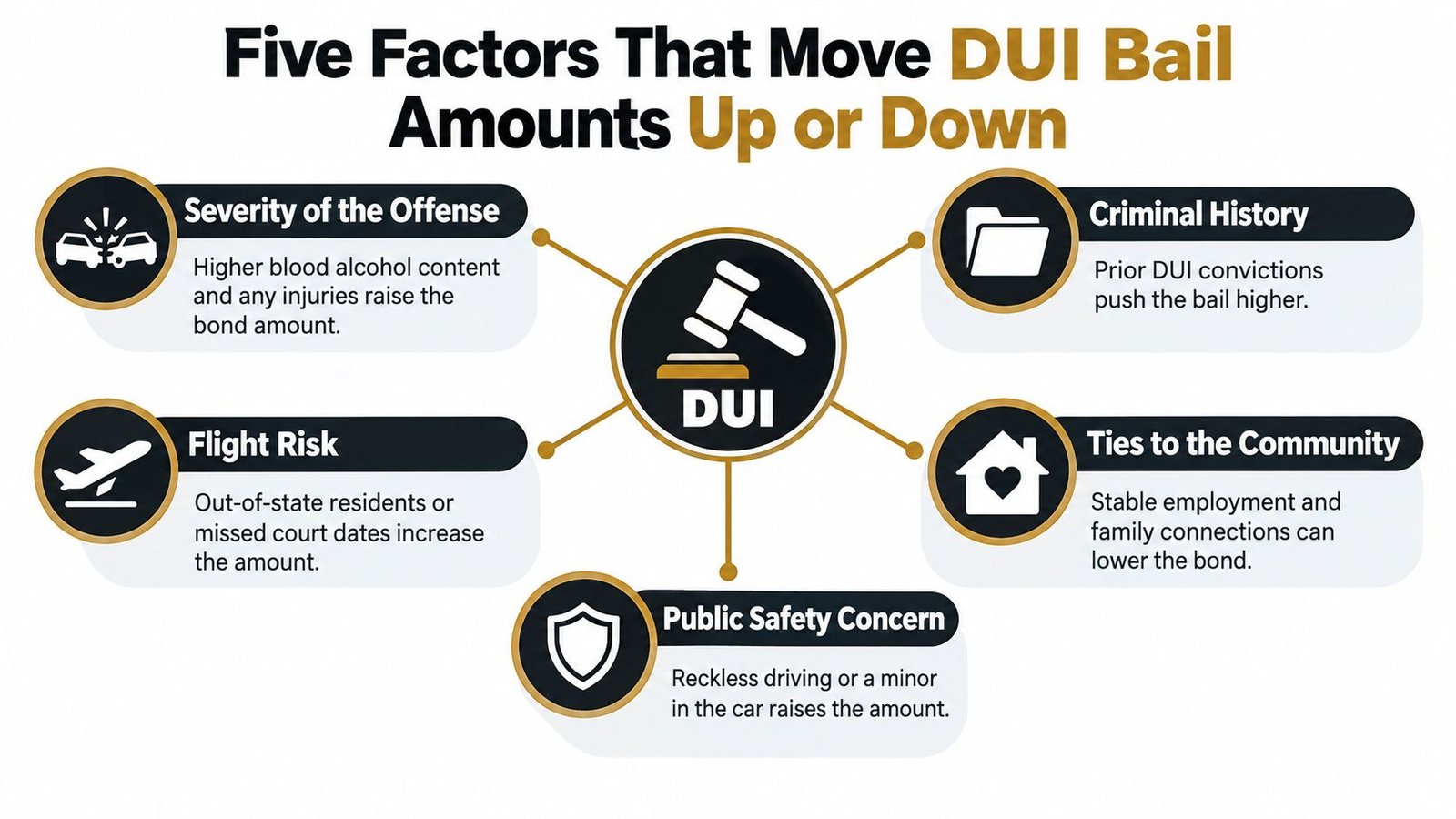
Five Factors That Move DUI Bail Amounts Up or Down
The most useful question isn't whether a bond seems high. It's which facts the court is considering and whether the current order accurately reflects them.
This visual groups common concerns that can affect the release decision.
Charge level and prior history
Charge level is the starting category, not the final answer. A misdemeanor allegation and a felony allegation can lead to different schedule entries. Think of the category as a file folder: the judge still needs to examine what's inside.
Aggravating allegations also deserve careful reading. If the booking record mentions a child passenger or other concerning circumstances, ask counsel how those allegations affect the actual charges and requested conditions. Don't assign your own automatic dollar increase.
Prior history changes the context. The court may consider prior DUI allegations or convictions, pending cases, and compliance history. A prior record is more like a driving history than a checkout surcharge: its significance depends on what happened and how it relates to the current decision.
Alleged harm and assessed risk
A crash allegation requires more detail than the word “accident.” Property damage, alleged injury, and an accompanying vehicular-assault allegation can present different concerns from a stop without reported harm.
Treat the booking record like a parts list: every listed charge needs attention. Don't assume a DUI quote accounts for another charge or release restriction.
A pretrial risk assessment addresses concerns about appearance and safety rather than pricing the accusation itself. For a plain-language explanation of that process, review how pretrial risk assessment works.
A risk assessment informs a release decision. It isn't a finding of guilt or a preview of the sentence.
Gather accurate information about employment, residence, family responsibilities, and prior court compliance. Those details help counsel present the person's circumstances rather than leaving the court with an incomplete picture.
County practice
County rules are the local operating instructions. A familiar charge label doesn't establish that another county will use the same initial schedule or release process.
The historical Colorado study discussed earlier found higher scheduled amounts in counties with pretrial-release programs than in counties without them. That counterintuitive result is a reason to verify local practice, not a reason to predict a particular person's bond.
More broadly, research examining 3,058 felony cases across judicial circuits found substantial variation associated with local bail schedules. For your family, the practical lesson is straightforward: use the county's current record, not a national average.
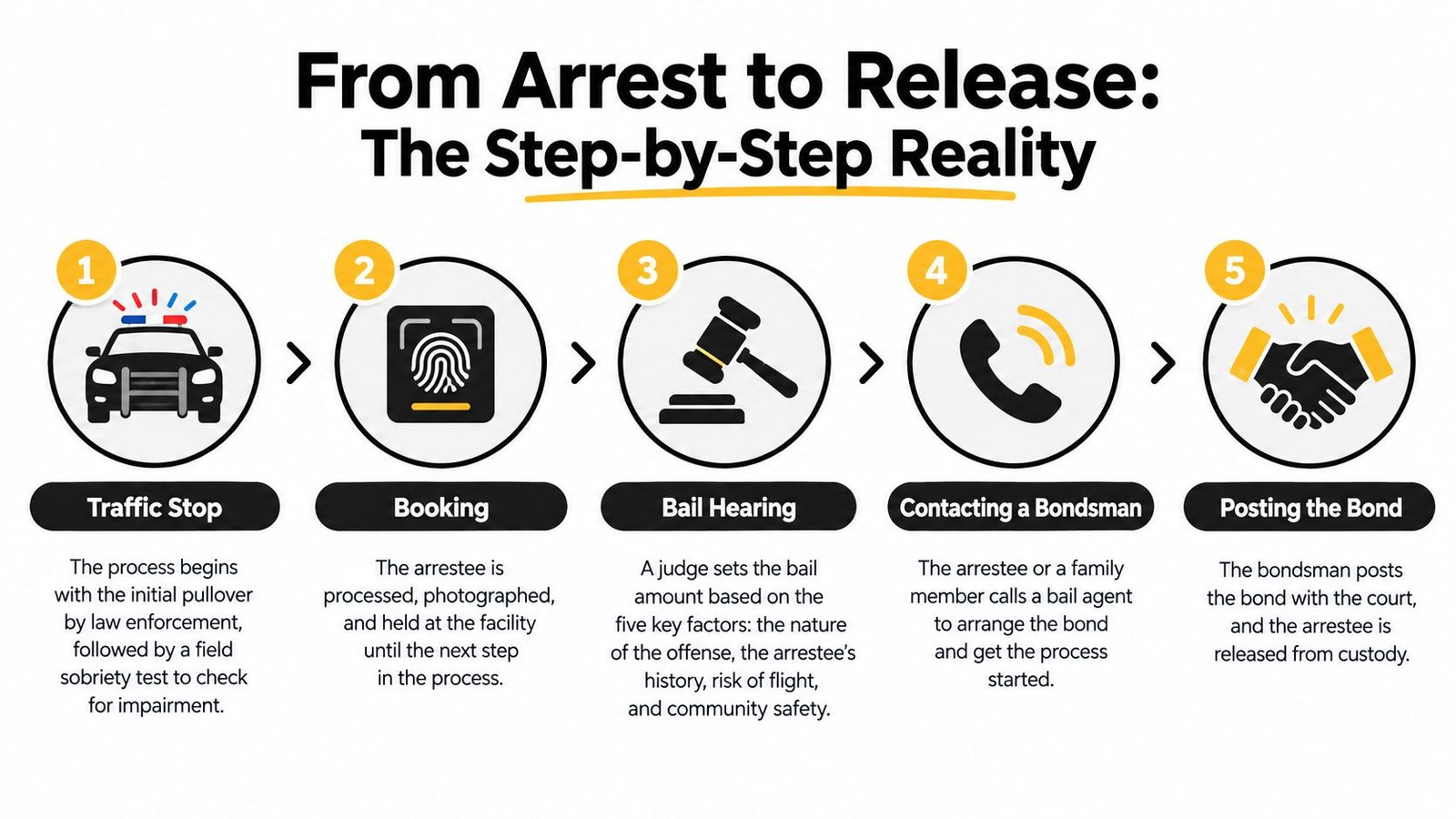
From Arrest to Release the Step-by-Step Reality
Not every DUI arrest follows an identical route. The first task is to establish whether the person was released on a summons, is still being processed, or is waiting for a release decision.
The timeline below shows the broad sequence, not a guaranteed timetable.
Establish where the case stands
Colorado judicial guidance on pretrial policies identifies a first DUI arrest as potentially eligible for release and summons at law-enforcement discretion. It also explains that a personal-recognizance bond carries no monetary requirement.
If the person remains in custody, ask whether booking is complete and whether a judge must set or review conditions. Don't assume that calling an agent can bypass a required hearing.
The release paths have different meanings:
- Personal recognizance: Release rests on the defendant's promise and court-ordered conditions, without a monetary payment requirement.
- Unsecured bond: A financial obligation may apply if specified requirements are breached, rather than requiring the stated amount upfront.
- Cash bail: The required amount is deposited directly through the court or facility's authorized process.
- Surety bond: A licensed producer arranges the financial guarantee under a written agreement.
Confirm what remains after posting
Ask about unresolved holds, required monitoring, and the facility's remaining processing steps. Posting a bond doesn't eliminate separate conditions, and an agent can't promise the precise moment someone will walk out.
For unfamiliar paperwork, AskLegally's resource on navigating complex legal filings can supplement your preparation. The actual release order and advice from counsel should control your decisions.
This video offers another way to review the process.
Use the jail release process guide to organize your questions. Ask the facility what's complete, what's pending, and who is responsible for the next action.
Cash, Surety, or Bond Review Comparing Your Real Options
The least expensive-looking option isn't always the most workable. A household needs to weigh available cash, contractual exposure, and the consequences of waiting for another court decision.
Cash Bail vs Surety Bond vs Bond Review
| Option | What You Pay | Refundable? | Best Fit |
|---|---|---|---|
| Cash bail | The full amount required by the order | Subject to court rules, deductions, and forfeiture | Families able to tie up the required funds |
| Surety bond | A producer's premium, with possible collateral | Generally not refundable, subject to limited legal exceptions | Families seeking an authorized alternative to depositing the full amount |
| Bond review | Any applicable legal expense and the eventual revised requirement | Depends on the resulting arrangement | People seeking reconsideration of unaffordable or inappropriate conditions |
For more detail on the payment structures, compare cash bonds and surety bonds. Neither choice overrides the wording of the court's order.
How the premium cap works
Under Colorado's bail-bond premium statute, the maximum premium is the greater of $50 or 15% of the bail amount. A $1,000 bond therefore carries a maximum statutory premium of $150, while a $5,000 bond carries a maximum of $750, under that same provision.
That's a ceiling, not a requirement that every producer charge the maximum. For bonds over $5,000, the publisher describes potentially available 10% pricing with an approved cosigner in its Colorado surety-bond service information. Approval and the written quote matter; don't treat a reduced rate as automatic.
The premium statute also generally prohibits extra fees except specified charges involving court or law-enforcement filing, secure collateral storage, or premium financing. Ask for an itemized explanation rather than accepting an unexplained total.
Before signing: Ask what you must pay now, what you might owe later, and what happens to pledged collateral.
Colorado also requires the financial arrangement and payment schedule to be signed and dated before consideration is accepted, under its written bail-bond agreement requirements.
If payment is unaffordable, ask defense counsel about review rather than assuming detention is unavoidable. Research on initial bail and pretrial detention connects higher initial amounts with a greater likelihood of detention.
A surety arrangement may help when cash is limited, but it doesn't guarantee quicker release. Bond review may reduce the financial requirement, but it requires a court decision.
What to Do Before You Call a Bail Agent
Gather the booking information before calling. A useful quote depends on the actual order, not a relative's recollection of an early estimate.
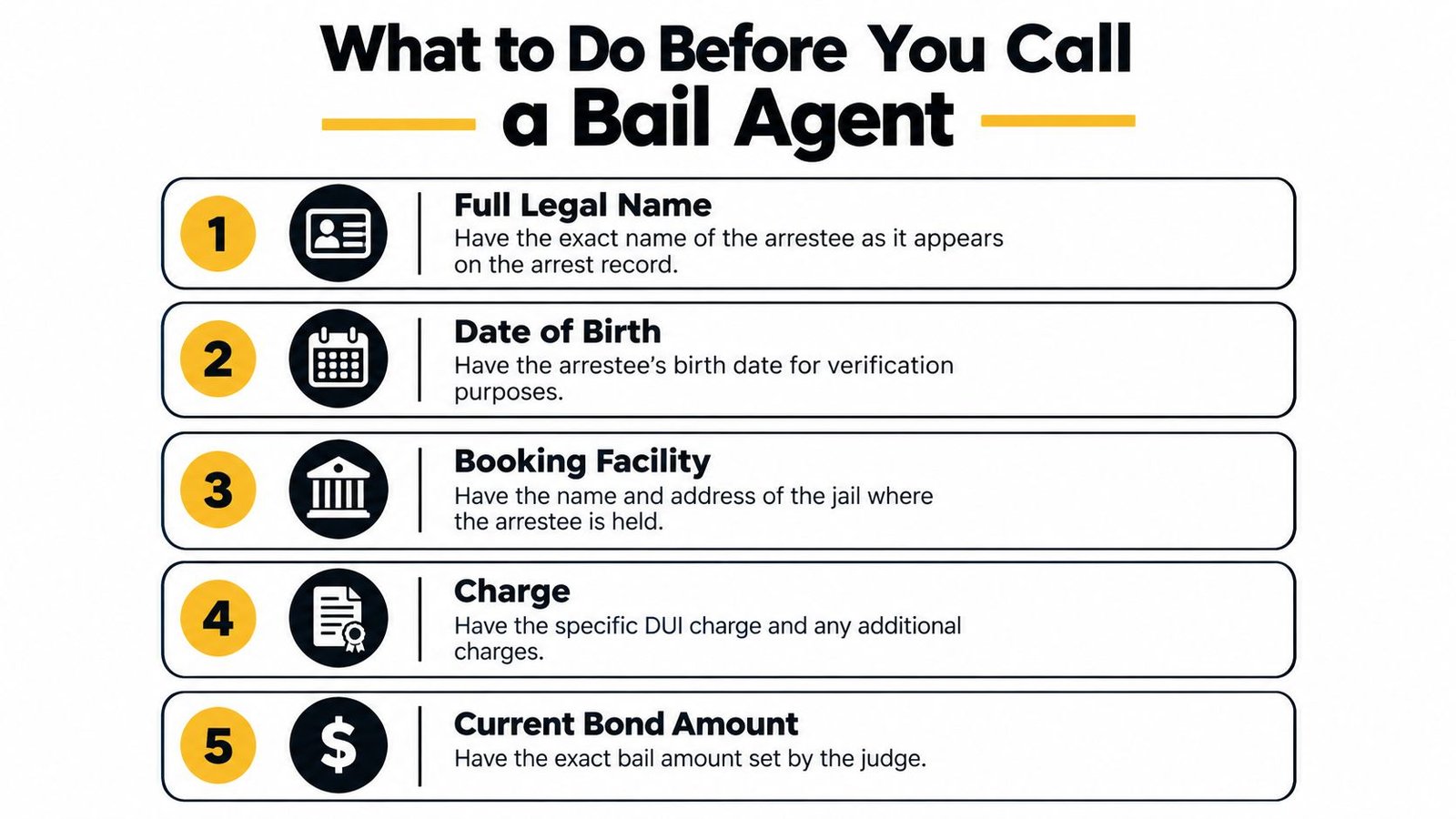
- Identity: Have the full legal name and date of birth.
- Location: Confirm the booking facility.
- Charges: Include additional charges, holds, and known warrants.
- Order: Obtain the current amount, bond type, and conditions.
- Cosigner: Identify who can review and sign the agreement.
Use the required-documents checklist to prepare for remote processing. For local guidance, visit the Jefferson County and Golden page or the Centennial service page, and identify the actual facility when calling from Denver or Arapahoe County.
Keep longer-term budgeting separate from urgent release decisions. Peaceful Mindful Pocket LLC's strategies to eliminate car debt quickly concern household debt, not eligibility for bail.
Frequently Asked Questions and Next Steps
Can the bond amount change after it's set?
Yes. Ask defense counsel whether a bond-review motion is appropriate and what local procedures or deadlines apply. An initial schedule entry isn't necessarily the court's final release arrangement.
Don't confuse review timing with the separate premium-refund rule. Under Colorado's compensated-surety provisions, a court may order a partial premium refund when bond terms change within 14 days after posting, if the required factual findings support it. That window isn't a universal deadline for requesting bond review, and a refund isn't automatic.
What if we can't afford the full amount?
Ask whether the order permits a surety bond and whether counsel can request a lower financial requirement or nonfinancial conditions. These are different routes, with different costs and timing.
Be direct about the household's limits. Don't pledge property or sign an indemnity agreement without understanding the potential obligation.
Does a higher amount mean a worse case or outcome?
No. The number reflects a pretrial release decision, not a conviction or sentence.
A Palm Beach County study published in 2025 found that reduced bond amounts increased release and shortened custody without evidence of worse compliance, new criminal activity, or failures to appear. That doesn't establish what any particular DUI defendant should receive, but it cautions against treating a larger financial requirement as a reliable measure of safety.
What should we remember before paying?
Keep the immediate decisions separate from the eventual defense of the case. Verify the current order, confirm the permitted release method, and read every financial term.
- No statewide flat fee: Local practice and individual circumstances matter.
- No substitute for verification: The facility or court must confirm the operative order.
- No unlimited premium: Colorado's statutory limits apply to the producer's charge.
You can be worried and still make a careful decision. A clear quote should tell you what's due, what approval is required, and what remains before release can occur.
Express Bail Bonds offers Colorado surety bonds with electronic applications, payments, and documents, but doesn't post cash-only bonds. Call or text 720-984-2245, available 24/7, or visit Express Bail Bonds to request a quote based on the verified DUI bond order and discuss cosigner requirements with a Colorado-licensed agent.