
Bail is typically set within 48 hours of an arrest during the defendant's first court appearance, which in Colorado is usually called an advisement or bond hearing. If your family just got that late-night call from a jail, that hearing is the moment when a judge decides whether release is possible and on what terms.
That timing matters because the first hours after an arrest feel chaotic. People want one clear answer to one urgent question: when is bail set? In Colorado, the answer is usually soon, but what happens in those first hours depends on booking, the jail's process, the court calendar, and the type of charge. If you understand that sequence, you can stop guessing and start making smart decisions.
The First 48 Hours After an Arrest
The clock for the 48-hour bail hearing timeline starts when the jail finishes intake and booking, not at the moment of arrest. In Colorado, that detail matters because families often start calling for a bond amount before the case is even entered far enough for the jail or court to give a useful answer.
Those first hours are usually the most confusing. A person may be in custody, but the paperwork, fingerprints, charge entry, and jail classification still have to be completed before the case is ready for the next step. Until then, you may only get a basic custody confirmation.
What you should do right away
If someone you care about is arrested, take these simple steps first:
- Confirm the jail location: Colorado counties do not all process inmates at the same speed, and the jail determines where you call and what information you can get.
- Get the full legal name and date of birth: One wrong letter or missing middle name can slow down an inmate search.
- Ask what the listed charge is: The charge affects whether release might happen quickly or whether the person will likely wait for a judge.
- Use a practical next-steps guide: This what to do when arrested resource helps families sort out the immediate basics without guessing.
A quiet jail phone line usually means processing is still underway. It does not automatically mean the case is getting worse.
One more point helps a lot in these first calls. Families often use bail and bond to mean the same thing, but they are not identical. Bail is the amount or release condition set by the court. A bond is the financial method used to secure release. For a plain-English explanation from an outside source, Miles Hansford Law Firm's bail insight lays out that distinction clearly.
The practical goal in this window is simple. Get accurate information, confirm where the person is being held, and be ready to act once Colorado sets the release terms.
The General Bail Setting Timeline From Arrest to Hearing
A family usually calls at the same point. Booking is done, the jail confirms the person is there, and the next question is, “So when does bail get set?” The general answer across the United States is straightforward. Bail is usually addressed at the first court appearance after arrest, although the exact timing depends on the jail, the court calendar, and whether a preset bond schedule applies.
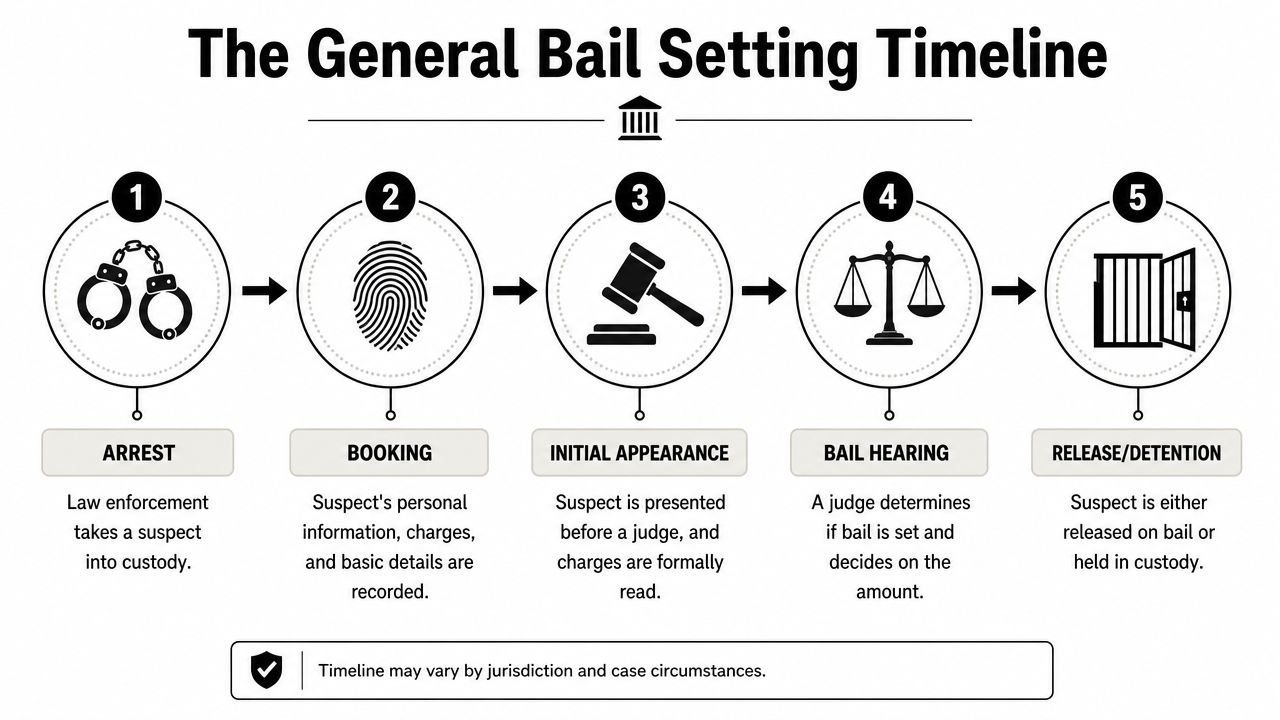
The five basic stages
Arrest
Law enforcement takes the person into custody and decides where they will be transported.Booking
Jail staff log identifying information, charges, fingerprints, and property. Until this step is far enough along, families often cannot get clear answers about release.Initial appearance
The defendant appears before a judge or magistrate for the first formal review. Different courts use different names, including first appearance, advisement, or arraignment.Bail hearing
The court decides whether the person will be released and under what terms, unless that issue was already handled through a schedule or another local procedure.Release or detention
The person is released on the conditions set, or remains in custody pending the next court date.
For general background outside Colorado, the national process described in this guide for Humble residents on bond hearings tracks the same broad sequence families usually see after an arrest.
Where the waiting usually happens
The hardest part for families is that the legal decision and the physical release are two different steps. A court can set bond, and the person can still remain in custody while the jail finishes its own release process.
That gap causes a lot of confusion.
Here is the practical timeline families should watch:
| Stage | What usually controls the timing |
|---|---|
| Arrest | Which agency made the arrest and where the person was taken |
| Booking | How quickly the jail completes intake and enters the case |
| First hearing | When a judge or magistrate is available to review release |
| Bond posting | What type of bond was set and whether payment or paperwork is ready |
| Jail release | Internal jail processing after bond is accepted |
The trade-off is simple. A fast hearing does not always mean a fast release, and a slow booking process can delay everything behind it. If you need a realistic sense of what happens after bond is accepted, this guide on how long bail takes to process after posting explains the jail-side delay families run into all the time.
In Colorado, that distinction matters even more because local advisement schedules, weekends, and county procedures can change how this general timeline plays out in real life.
How Bail Is Set in Colorado Specific Rules and Timelines
Colorado is where generic national advice stops being enough. If your loved one is in Denver, Jefferson County, Arapahoe, Douglas, Weld, El Paso, or another Colorado facility, the local timing and rules matter more than broad national summaries.
Colorado law is more specific than many readers expect. In Colorado, bail is formally set during the defendant's first court appearance, known as the advisement or bond hearing, which must occur within 48–72 hours of arrest, excluding weekends and holidays, and Colorado law discussion under C.R.S. §16-4-107 states arrestees must be brought before a judge within 48 hours for initial bond setting.
Why the timing can feel longer
The phrase excluding weekends and holidays is where many families get confused. If someone is arrested late on a Friday or before a holiday closure, the hearing may not happen on the same rhythm you expected from a weekday arrest. That doesn't always mean anyone broke the rules. It usually means the calendar affects when the court conducts advisements.
Colorado also uses charge-based restrictions in some situations. The state's 2025 Amended Bond Schedule says courts cannot require a monetary condition of release for traffic or petty offenses, and for certain domestic violence or protection order violations the schedule requires “NO BOND until advisement,” according to the Colorado Judicial Branch bond schedule.
What no bond until advisement means
If the jail tells you there's no bond until advisement, that means no one can walk in and pay to get the person released before the judge reviews the case. This comes up often in charges where the court wants to address safety concerns first.
That's frustrating for families, but it's better to know the truth early than to waste hours chasing a payment option that doesn't exist yet.
- Traffic or petty offense: Colorado's current schedule says monetary release can't be required.
- Certain domestic violence or protection order allegations: Release may be blocked until the advisement hearing.
- Serious repeat or violence-related concerns: Higher bond or a hold becomes more likely.
For a plain-language comparison from another jurisdiction, the guide for Humble residents on bond hearings helps illustrate what families should expect when the judge finally addresses release.
If you want a Colorado-focused walkthrough of what happens inside that courtroom moment, this bail hearing overview gives a practical breakdown.
Key Factors That Determine the Bail Amount
Once the court reaches the hearing, the next question isn't just when is bail set. It becomes how does the judge decide the amount or conditions?
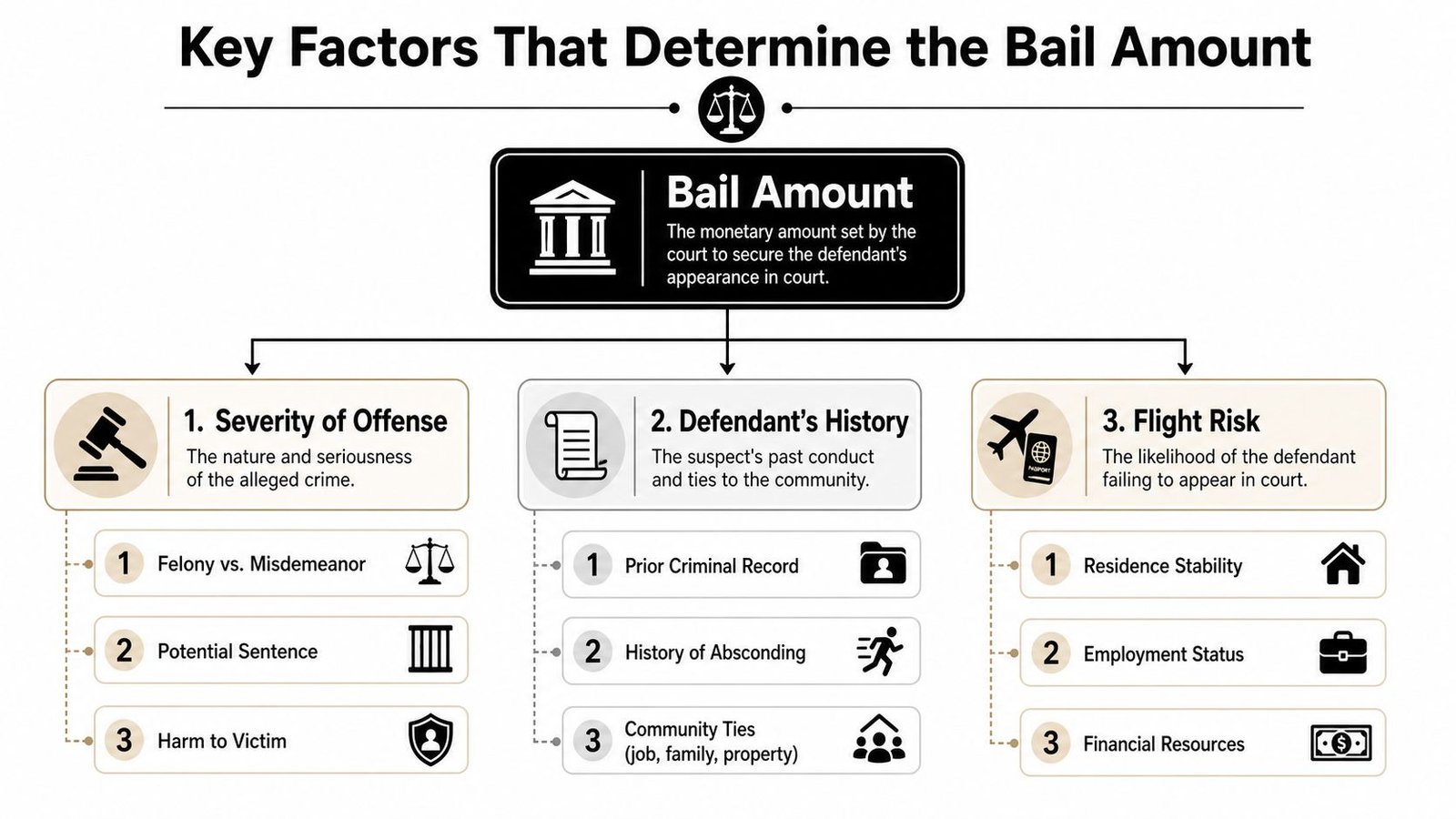
The short answer is that judges don't pick numbers at random. The decision is based on risk. The overview of bail in the United States describes bail decisions as part of a risk-assessment framework that tries to balance pretrial liberty, public safety, and confidence that the defendant will return to court. That same source notes reforms such as Illinois abolishing cash bail in February 2021, which reflects a broader shift toward risk-based decisions.
The factors judges look at
A judge usually focuses on a mix of practical questions:
- How serious is the alleged offense? Violent charges and serious felonies tend to draw stricter release conditions than minor allegations.
- What does the defendant's record look like? Prior criminal history matters.
- Has the person missed court before? Prior failures to appear hurt.
- Does the person have strong community ties? Family, work, and stable residence can help.
- Is there a safety concern? Public safety is a core issue.
- Is substance abuse part of the picture? Judges may weigh that when assessing release conditions.
Why similar charges can lead to different results
Two people can face the same charge and receive very different outcomes because judges are evaluating the person, not just the label on the case. A stable person with deep local ties and no history of missed court dates is in a different position from someone with repeated failures to appear.
Courts are trying to answer one practical question. If released, will this person come back and follow the rules?
That's why families should gather the details that matter. Employment information, residence stability, and family support can shape how the court sees risk. If you want a closer look at that process, this pretrial risk assessment guide is a helpful reference.
What to Do After Bail Is Set Your Next Steps
The hearing is over. Bond is set. Now the family has to decide what gets someone out of a Colorado jail as quickly as possible without creating a bigger problem next week.

Start by getting the exact release terms from the jail or court. In Colorado, the details matter. A family may hear “bail is set” and assume they can pay right away, but the bond type, amount, and any release conditions control what happens next.
Your main options
| Option | What it means | Main trade-off |
|---|---|---|
| Cash bond | Pay the full bail amount directly to the court or jail | Your money is tied up until the case ends, and any missed court date can create serious problems |
| Surety bond | Use a bail bond agency to post the bond | You pay a service fee, and that fee does not come back |
| Request a change later | Ask the court to review the amount or conditions | It may help, but it usually does not solve the immediate release problem |
For many Colorado families, the question is not which option sounds best. It is which option fits the time pressure, the bond amount, and the household budget today.
If cash bond is possible without draining rent money, car payment money, or grocery money, it can be the simplest route. If the amount is too high to pay in full, a surety bond is often the practical choice. If the amount is plainly out of reach, defense counsel can look at whether a bond review makes sense while the family focuses on the fastest available release path.
What to confirm before anyone pays
Slowdowns usually come from missing details, not from the payment itself.
- Confirm the exact bond amount.
- Confirm the bond type.
- Ask whether there are special conditions of release, such as no-contact orders, drug testing, or travel limits.
- Make sure someone has the defendant's next court date in writing.
- Ask the jail what the release process and timing look like after bond is posted.
That last point matters more than people expect. Posting bond does not always mean immediate release. Booking checks, jail workload, and local procedures can all add time.
Families also need a plan for the first day out. Transportation, a charged phone, medication needs, work contact, and court reminders should be handled before release if possible. I have seen people get out, miss a condition they did not fully understand, and end up back in custody over something that could have been prevented.
If you need a plain-English breakdown of how a bondsman handles paperwork, cosigners, and release steps, this guide to using a bail bondsman in Colorado covers the process clearly.
Here's a short video that helps explain the process in a more visual way:
If the amount seems too high
A high bond does not always mean the family has to accept it without review. In Colorado, the defense can ask the court to reconsider the amount or the conditions. That process can help, but it takes time, and time is usually what families do not have in the first day or two after arrest.
The safer approach is to handle the immediate release decision and then talk with counsel about whether the bond should be challenged. Keep records, keep every court date, and follow every condition exactly. Those steps protect the bond and reduce the chance of a new setback.
For firms that publish legal help online, clear local guidance often matters just as much as legal accuracy. Good visibility often starts with local seo for lawyers.
Get Help Immediately Contacting a Bail Bonds Agency
It is 10 p.m., your family member is in a Colorado jail, and you still do not know whether release can happen tonight or has to wait until morning. That is usually the point where calling a bail bonds agency stops being optional and starts being the fastest way to get clear answers.
A Colorado bondsman cannot change the bond amount or override a judge's conditions. What an experienced agent can do is confirm where the person is being held, verify whether bond has been entered into the jail system, explain what the cosigner needs, and start the paperwork without wasting another few hours. In Colorado, those details matter because release timing often depends on the county, the jail's booking flow, and how quickly the bond is processed after the hearing.
Have this ready before you call
- Full legal name and date of birth: Small mistakes slow everything down.
- Jail and county: Release procedures in Jefferson County are not always handled the same way as in Denver, Adams, or Arapahoe.
- Case status: Has bond been set yet, or is the person still waiting for advisement?
- Cosigner information: Government ID, contact details, and basic employment or residence information if requested.
- Questions about the process: This guide on how to use a bail bondsman in Colorado explains the paperwork, cosigner role, and release steps in plain English.
Families usually feel better once they know the next call to make and what information to gather. That alone can cut down on the back-and-forth that causes delays.
If you need immediate help in Colorado, contact Express Bail Bonds 24/7 at 720-984-2245. For local support, their Jefferson County and Golden bail bond help page and Centennial bail bond assistance page explain electronic processing options and how to start from outside the jail. For families trying to confirm their rights and contact steps under Colorado bail law, the guidance discussed earlier is also summarized by H. Michael Steinberg's article on Colorado bail laws.
One practical reality is easy to miss in a crisis. Families usually call the agency they can find fastest, understand fastest, and reach after hours. If you are curious why local visibility matters so much for urgent legal services, this explanation of local seo for lawyers gives useful background.
The immediate goal is simple. Confirm that bond has been set, get the jail details right, and speak with a Colorado agent who handles local release work every day.