
The call usually comes fast and with very little detail.
Someone says your son, daughter, spouse, or friend was arrested near home in the 80231 ZIP code, then the line goes quiet or cuts off. You're left with the same questions every family asks in the first few minutes. Where are they? Who took them? Can they get out tonight? What are you supposed to do first?
Panic makes people lose time. They call the wrong jail, drive to the wrong building, or wait for information that won't come on its own. The better move is to slow down and get specific. In this part of Denver, the location of the arrest matters because it can change which jail, which court, and which release process applies.
If you're in that first hour right now, start with a basic checklist. Save the arresting agency name if you have it. Write down the person's full legal name and date of birth. Keep your phone close because callbacks often come at odd times. If you need a broader primer on the immediate aftermath, this guide on what to do when someone gets arrested is a useful starting point.
The families who get traction quickest aren't always the ones with the most money. They're the ones who confirm the correct jail first.
Individuals searching “80231 zip code” don't need neighborhood trivia in this moment. They need a practical path from arrest to release. That means sorting out jurisdiction, identifying the likely detention center, understanding what booking is doing behind the scenes, and then acting when bond information becomes available.
Introduction A Stressful Call and Your First Steps
A late-night arrest creates a strange kind of confusion. You may know the cross streets, the neighborhood, or who was in the car, but still not know where the person was taken. In the 80231 area, that gap matters because one side of the process can point toward Denver and another can point toward Arapahoe County.
What to do in the first fifteen minutes
Start with facts, not guesses:
- Get the full name right: Nicknames slow everything down.
- Ask where the stop or arrest happened: Even a nearby landmark helps.
- Find out which officer or agency made contact: City police and county deputies don't feed into the same system.
- Don't promise immediate release: The person may still be in transport or booking.
- Keep notes: Stress makes families repeat calls and miss details.
That last point matters more than people think. A family member may call from a patrol car, then disappear for hours while being processed. That silence doesn't necessarily mean something went wrong. It usually means the system is doing what it does, slowly and in order.
What doesn't work
A few mistakes come up again and again:
- Driving around without confirming location
- Calling every number you can find online
- Arguing with jail staff about why the arrest was unfair
- Assuming the person can call whenever they want
- Waiting too long to prepare bond paperwork
The practical move is to build a straight line from the arrest location to the likely county system. Once you know that, the rest gets easier.
What and Where Is the 80231 ZIP Code
The 80231 ZIP code sits in southeast Denver, but for arrest cases the bigger point is jurisdiction. This mailing area touches both Denver County and Arapahoe County, which is why two families on nearby blocks can end up dealing with different jails, different court systems, and different release timelines. One ZIP code does not mean one process. ZIP-level mapping for 80231
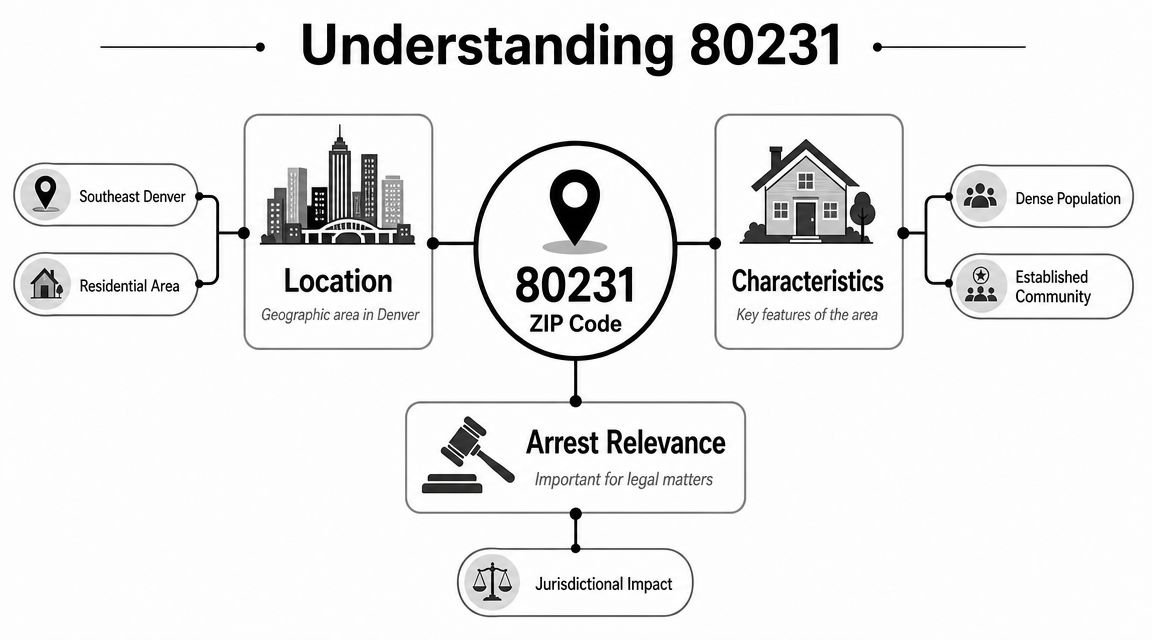
A lot of neighborhood pages describe 80231 by schools, apartments, and commute patterns. Families dealing with an arrest need a different map. They need to know whether the stop, warrant contact, or domestic call is feeding into Denver or Arapahoe, because that choice controls where to search, who to call, and how soon bond can realistically be posted.
One local source of confusion is how normal this area feels on the ground. People move through it as one part of town. The system does not. A traffic stop near a county line, an arrest by a city officer, or contact with a county deputy can send the case down different tracks within the first hour.
Why this ZIP code creates confusion
The practical problem is simple. Families hear “80231” and assume there is one place to start. There usually is not.
Use the arresting agency as your first filter:
| Clue | What it suggests |
|---|---|
| Denver Police responded | Start with Denver custody and court channels |
| Arapahoe County Sheriff handled it | Start with Arapahoe County detention and case records |
| The stop happened near a county edge or service overlap | Verify the agency before driving anywhere |
| The caller mentions Centennial or county deputies | Arapahoe County becomes more likely |
| You only know “80231” | Hold off on assumptions and confirm who made the arrest |
That last row matters. I have seen families lose hours because they searched by ZIP code instead of by agency.
What the local footprint means in practice
The 80231 area is densely settled, with population and housing figures that vary a bit by dataset. One source lists about 35,883 residents, roughly 7,352.33 people per square mile, and about 14,702 households in United States ZIP Codes data for 80231. In plain terms, this is a busy residential area where calls for service happen in apartments, condo complexes, shopping corridors, and major roads. That increases the odds that a family gets only partial information at the start.
The housing mix adds another real-world complication. Records, ID, mail, and proof of address are not always sitting in the same house as the person who was arrested. Cosigners may live across town. Parents may be using an old address for an adult child. A girlfriend or roommate may know the facts of the arrest but not the legal name needed for a jail search. Those small gaps slow release more often than people expect.
One shortcut can help if the arrest points to Denver. Our guide to the Denver County jail inmate search process shows what information families usually need before they start calling around.
Practical rule: In 80231, the ZIP code helps you place the area. The arresting agency tells you what system you are dealing with.
Key Jails Police Precincts and Courthouses
Once you know the likely jurisdiction, you need a working list of facilities. At this point, families either get organized or get stuck.
Denver side of the 80231 area
If the arrest falls under Denver, the person is often processed through the Denver Downtown Detention Center. Related court activity may also run through Denver's court system depending on the charge.
Common touchpoints include:
- Denver Police District 3: Often relevant for field enforcement in southeast Denver areas.
- Denver Downtown Detention Center: The jail families often need to confirm first.
- Denver court locations: The exact courthouse depends on the case type and charge level.
If you need help finding someone already in the Denver system, this page for the Denver County jail inmate search process can save time.
Arapahoe County side of the 80231 area
If county deputies handled the arrest, or if the case belongs on the Arapahoe side, the person may be taken to the Arapahoe County Detention Facility in Centennial. That's the location many families overlook because they assume a Denver ZIP always means a Denver jail.
The linked county context matters here. When a caller says “they were picked up near home in 80231,” that still leaves open the possibility that the booking and court process will run through Arapahoe County.
A quick field guide under stress
Use this simple decision list:
- If the officer said Denver Police: Check Denver detention and Denver court channels first.
- If the officer said sheriff or county: Look to Arapahoe County detention.
- If the family member only knows the ZIP code: Ask for the street, nearest intersection, business name, or patrol car markings.
- If the online lookup shows nothing yet: That often means booking is still in progress, not that the person vanished.
Don't let the ZIP code alone decide the jail. In this area, that's one of the fastest ways to end up at the wrong window.
What to have ready before you call
A jail or court clerk can usually do more with complete identifying information than with a story about the arrest. Keep these details in front of you:
| Needed detail | Why it matters |
|---|---|
| Full legal name | Search systems are usually name-based |
| Date of birth | Helps separate similar names |
| Arrest date | Narrows the intake window |
| Agency involved | Points you to the right county |
| Possible charge type | Helps set expectations about hold times and release conditions |
The chain of command is more important than often recognized. Police make the arrest. Jail staff handle intake and custody. The court or magistrate handles bond decisions in many cases. Families get better results when they know which office controls which step.
Understanding the Arrest and Booking Process
The hardest stretch is often the quiet period after the arrest. The person has called once, maybe twice, and then nothing. Families start thinking the jail is ignoring them or the system has lost the paperwork. Usually, neither is true.
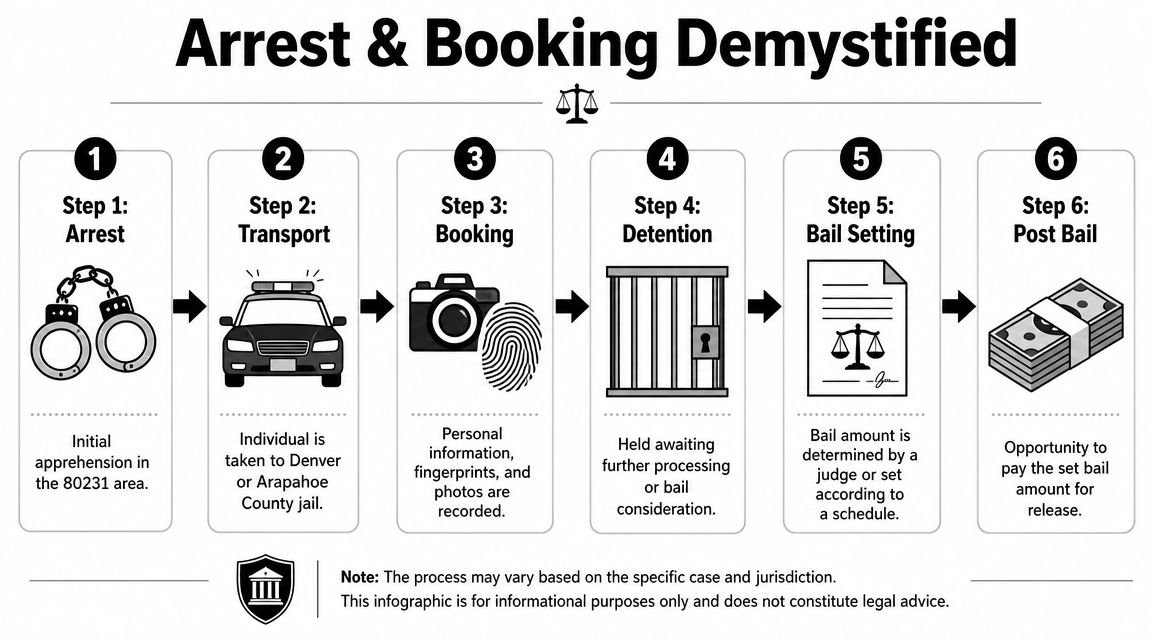
A typical booking path goes like this. Officers transport the person from the street to the appropriate jail. Staff collect identifying information, fingerprints, and photos. They review records, check for warrants or holds, enter the case into the system, and place the person in holding while the case moves to the next decision point.
What families usually notice first
From the outside, booking feels like dead time. From the inside, it's an administrative funnel. During that window, the person may not be available by phone and may not appear in online records right away.
That delay is one of the biggest sources of panic. A mother calls and says, “I know he's there, but nobody can find him.” A spouse says, “They told me he'd call back and he hasn't.” Those situations are common during intake.
The stages that matter most
Here's the version that helps families stay grounded:
Arrest and transport
The person leaves the scene and goes into custody.Initial booking tasks
Identity, fingerprints, photos, and intake screening are handled.Holding and review
The jail checks records and waits for the next legal step.Bond amount or release decision
Some cases move quickly. Others require a hearing or additional review.
For a more detailed overview of the process after intake begins, this explainer on what happens after you get arrested is useful.
Most of the waiting happens before the family can actually do anything. That's frustrating, but it's normal.
What you can do while waiting
The best use of that time is preparation, not repeated guessing.
- Gather identifying details: Full name, date of birth, booking location if known.
- Keep your phone available: Release-related calls don't always come at convenient times.
- Prepare payment and cosigner information: Once bond is active, speed matters.
- Stay factual in calls to the jail: Emotional explanations won't move intake faster.
A lot of families make the mistake of treating booking like a customer service problem. It isn't. It's a processing sequence. You can't talk your way around it, but you can be ready when it finishes.
How to Post Bail A Step by Step Guide
Once bond is set, the process becomes more practical. At that point, you stop searching and start making decisions.
Step one Confirm the jail and bond amount
Before anyone hands over money or signs paperwork, confirm two things: where the person is and what kind of bond is allowed. Families often rush this part and create delays for themselves.
Use the inmate or custody tools for the county involved. Ask whether the bond is available for posting now, whether there are holds, and whether additional conditions apply. If you need a straightforward overview of the mechanics, this guide on how to post bail for someone lays out the basics.
Step two Choose the bond route that fits reality
There are usually two broad paths families look at.
| Option | How it works | Trade-off |
|---|---|---|
| Cash bond | You pay the full amount directly if the court allows it | Ties up a large amount of money and may not be realistic for many families |
| Surety bond | A licensed bail bond agent posts the bond under a contract | Requires a premium and usually a responsible cosigner |
Cash sounds simple until the amount is more than the family can access quickly. A surety bond is often the route people use when they need a release process that can move without pulling together the full amount at once.
Step three Get your documents and cosigner details in order
Most delays happen because the family is emotionally ready but administratively unprepared.
Have this ready:
- Defendant's full legal name
- Date of birth
- Jail location
- Bond amount if known
- Cosigner identification
- Current contact information
- A plan for transportation after release
This is also where remote processing can matter. The 80231 ZIP code appears in federal datasets that identify areas with potential barriers to accessing services, which supports the value of low-friction options such as online bail applications when transportation or income constraints make in-person logistics harder, as shown in the CMS low-income and HPSA ZIP listing.
A short video can help if this is your first time handling bond paperwork:
Step four Work with a licensed surety agent if needed
If you use a bond company, ask direct questions. Can the paperwork be completed electronically? Can a cosigner handle documents remotely? How quickly can the bond be posted at the specific facility involved? For Arapahoe-side cases and neighboring jurisdictions, resources like Jefferson County bail bond information and Centennial bail bond services can help families understand local county handling.
One option families use is Express Bail Bonds, a Colorado surety bond agency that handles electronic applications, remote documents, and posting at detention facilities across the state. The right fit depends on the bond type, the county, and whether the family needs a remote process.
Step five Wait for release without creating new problems
Posting bond does not mean the person walks out instantly. Release still takes jail processing time. Families often make the mistake of promising a pickup time they can't control.
Once the bond is posted, the release clock belongs to the jail, not the family.
Use that window wisely. Confirm who is picking the person up, where they're sleeping that night, and whether medications, work notices, or childcare need immediate attention.
Practical Tips for Families and Cosigners
Getting someone out is a relief. It's not the end of the responsibility. The person who signs the bond has real obligations after release, and most problems later come from poor follow-through, not from the original paperwork.
What a cosigner is really agreeing to
A cosigner is telling the bond company, in practical terms, “I will help make sure this person appears and stays in contact.” If the defendant misses court, disappears, or violates bond terms, the cosigner may be pulled into the consequences.
That's why it helps to read a clear explanation of a bail bond cosigner's responsibilities before signing anything.
The habits that keep families out of trouble
The strongest cosigners do a few things consistently:
- Track every court date: Don't rely on memory or a verbal promise.
- Keep address and phone records current: If the defendant moves, update what needs updating.
- Stay in contact early, not late: A missed check-in is easier to fix before it becomes a missed court date.
- Ask questions when paperwork is unclear: Confusion grows when people are embarrassed to ask.
- Build a document folder: Arrest records, bond papers, court notices, IDs, and medical or childcare information should stay together.
For families trying to get organized after a crisis, this checklist on preparing a next of kin folder is useful. It helps people gather the practical records that tend to become urgent all at once.
Local realities families should plan around
The 80231 area includes residents with different work schedules, transportation situations, and household structures. In a ZIP with strong educational attainment and dense urban housing, some families can move quickly online while others still struggle with child pickups, job shifts, or getting across county lines on short notice. One dataset places the local median household income at $73,961, per-capita income at $44,436, median house value at $493,436, and shows 50.1% of residents have at least a college degree in Simplemaps ZIP profile data for 80231. In practice, that means some households may look stable on paper while still feeling stretched when a sudden bond, court schedule, and transportation problem hit at the same time.
If you're the cosigner, your job isn't just signing once. Your job is keeping the case from drifting.
If a court date is missed, act fast. Contact the lawyer if there is one. Contact the bond agent. Don't wait and hope the issue clears itself. Most of the damage in bond cases comes from silence after a mistake.
If your family is dealing with an arrest tied to the 80231 area, the fastest next step is to speak with a licensed bond professional who can help confirm the jail, explain the bond type, and handle the paperwork clearly. Contact Express Bail Bonds for 24/7 help with Colorado surety bond questions, remote application options, and practical guidance on what to do next.