
The call usually comes at the worst possible time. A spouse, parent, brother, or close friend says they've been arrested, they don't know what happens next, and you're suddenly expected to solve a problem you may have never dealt with before.
That moment feels chaotic, but the process itself is more structured than it seems. If you're trying to figure out how to get out of jail in Colorado, focus on the next decision in front of you, not the whole case at once. The immediate job is simple in principle. Find the right jail, confirm the bond information, decide how the bond will be posted, and prepare for release so the person doesn't walk back into trouble the same day they get out.
Your First Steps After an Arrest in Colorado
The first mistake families make is trying to solve everything at once. Don't start with the criminal case, the long-term defense plan, or what might happen in court weeks from now. Start with the arrest as an immediate logistics problem.

A practical first move is to gather a short list of facts while the phone call is fresh. Get the person's full legal name, date of birth if you know it, where the arrest happened, and any clue about which agency made the arrest. City police, county deputies, and state agencies don't always route people to the same place, and that matters because posting at the wrong facility wastes time.
What to do in the first few minutes
Write down these details before you start calling around:
- Full legal name: Use the exact name on the person's ID if possible.
- Date of birth: This helps separate your loved one from anyone with a similar name.
- Arresting agency: Denver Police, Jefferson County Sheriff, Aurora Police, and other agencies may book into different facilities.
- Possible charges: Even a rough idea helps you understand whether bond may be quick to confirm or may require a hearing.
- Any medical or mental health concerns: This affects what you should prepare before release, not just how fast you can post bond.
Practical rule: Treat the first call like an intake interview. Good information at the start saves hours later.
The larger system is busy. The U.S. prison population declined for over a decade after 2010, then rose again in 2022 and 2023, a trend highlighted through the HHS incarceration and reentry overview summarizing national pressure on release systems. That's one reason families need a calm, orderly process instead of guesswork.
The three parts of the process
Most Colorado families move through the same three phases:
Booking
The jail receives the person, identifies them, inventories property, and starts the official record.Bail or bond
You confirm whether a bond amount exists, what kind it is, and how it can be posted.Release
Even after bond is posted, the jail still has to process paperwork and discharge the person.
A lot of stress comes from not knowing what happens between those stages. If you need a plain-language overview of the sequence after an arrest, what happens after you get arrested gives a useful baseline.
Don't assume silence means nothing is happening. Jails are processing paperwork, checking records, and moving people through intake. Your job is to stay organized, keep your phone on, and be ready to act as soon as the bond information is available.
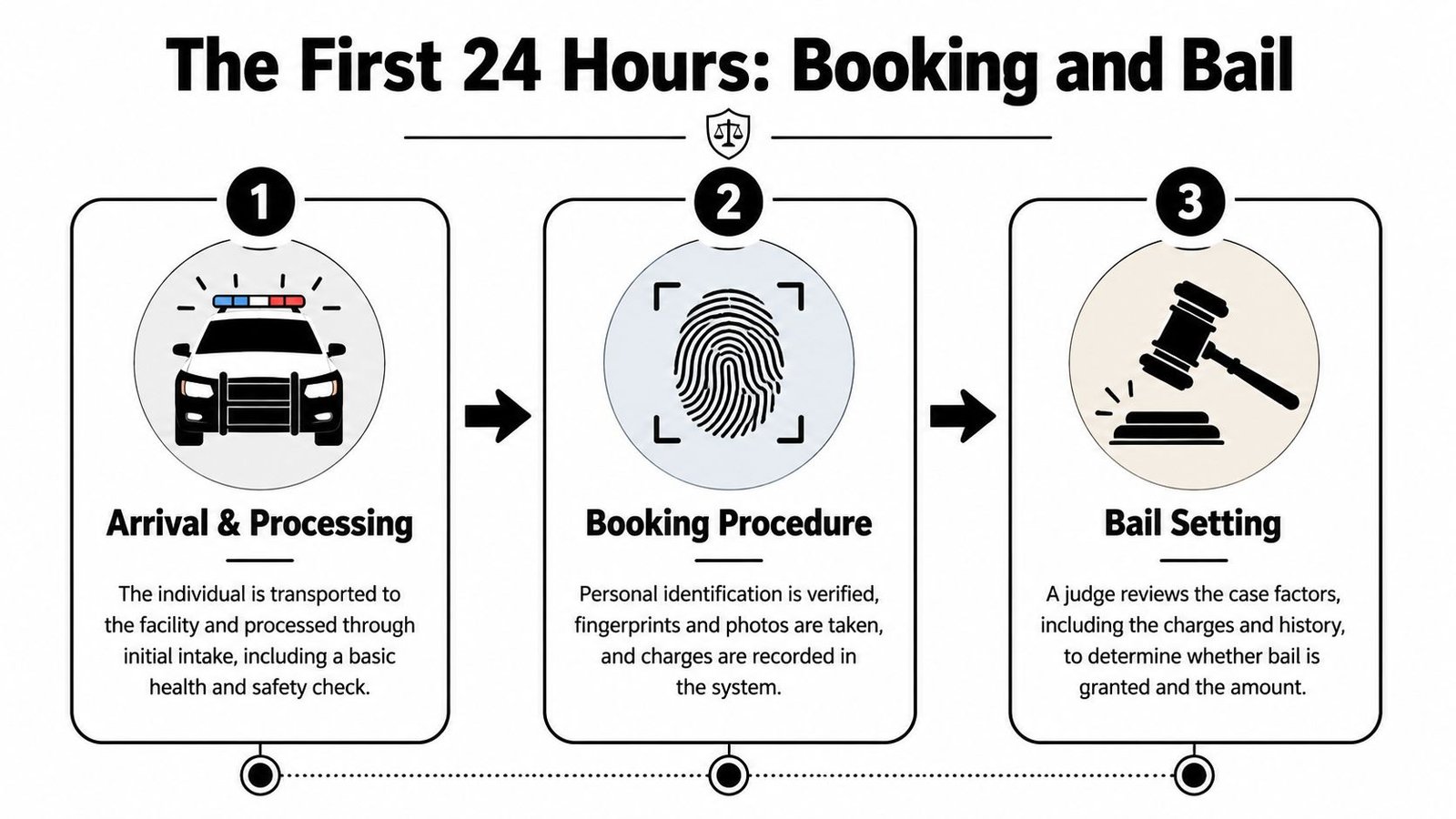
The First 24 Hours Navigating Booking and Setting Bail
The first day is mostly administrative. Families often imagine that once someone reaches the jail, release can happen immediately. Usually, it can't. The jail has to receive the person, complete booking, and confirm whether the person can bond out right away.
What booking usually includes
Booking is the intake process. That usually means identification, fingerprints, photographs, a property inventory, and entry into the jail system. During this stage, family members often get limited information because staff are still processing the arrest.
Expect delays if the arrest happened during a busy shift, late at night, or near a weekend. Also expect confusion if the person was first held by one agency and then transferred.
What you should verify before talking about payment
Before anyone spends money, confirm these points:
- Exact facility: The practical release workflow starts with confirming the right jail, then confirming the bail type and amount, then posting bail, then waiting for processing, as explained in this overview of how to get someone out of jail.
- Bond type: A cash bond and a surety bond are not the same thing. That distinction affects how money is handled.
- Whether the person is being held on anything else: A second hold, transfer issue, or paperwork problem can slow release even after bond is addressed.
Posting money before you've confirmed the right location is one of the most common ways families lose time.
Cash bond versus surety bond
Here's the plain-English version.
A cash bond means the full amount is posted directly with the jail. Industry guidance notes that cash bail is typically refunded only after the case ends and the defendant appears at required court dates, while a bail bond generally involves a non-refundable premium and the bondsman posts the full amount on the defendant's behalf through the surety process in the jurisdictions described in that guidance.
A surety bond means a licensed bail bond agent posts the full bond for the defendant, and the family pays the bond premium instead of the entire bail amount.
That distinction matters because families often think “bond amount” means that's what they need in hand tonight. Sometimes it does. Often it doesn't.
What families can do while waiting
Instead of calling the jail every few minutes, focus on tasks that help:
- Keep one decision-maker on the phone: Too many callers create confusion.
- Gather identity details: Full name, date of birth, and booking location are the basics.
- Prepare the cosigner: If a surety bond is needed, that person should be ready with ID, contact information, and employment details.
- Stay flexible about timing: Posting the bond is not the same as walking out the door.
If you want a close look at how timing and jail workflow affect release, 24 hour booking and release is worth reading before you assume the delay means something has gone wrong.
Securing Release with a Colorado Bail Bond
Once the bond amount is set, speed matters. Not rushed decisions. Efficient decisions.
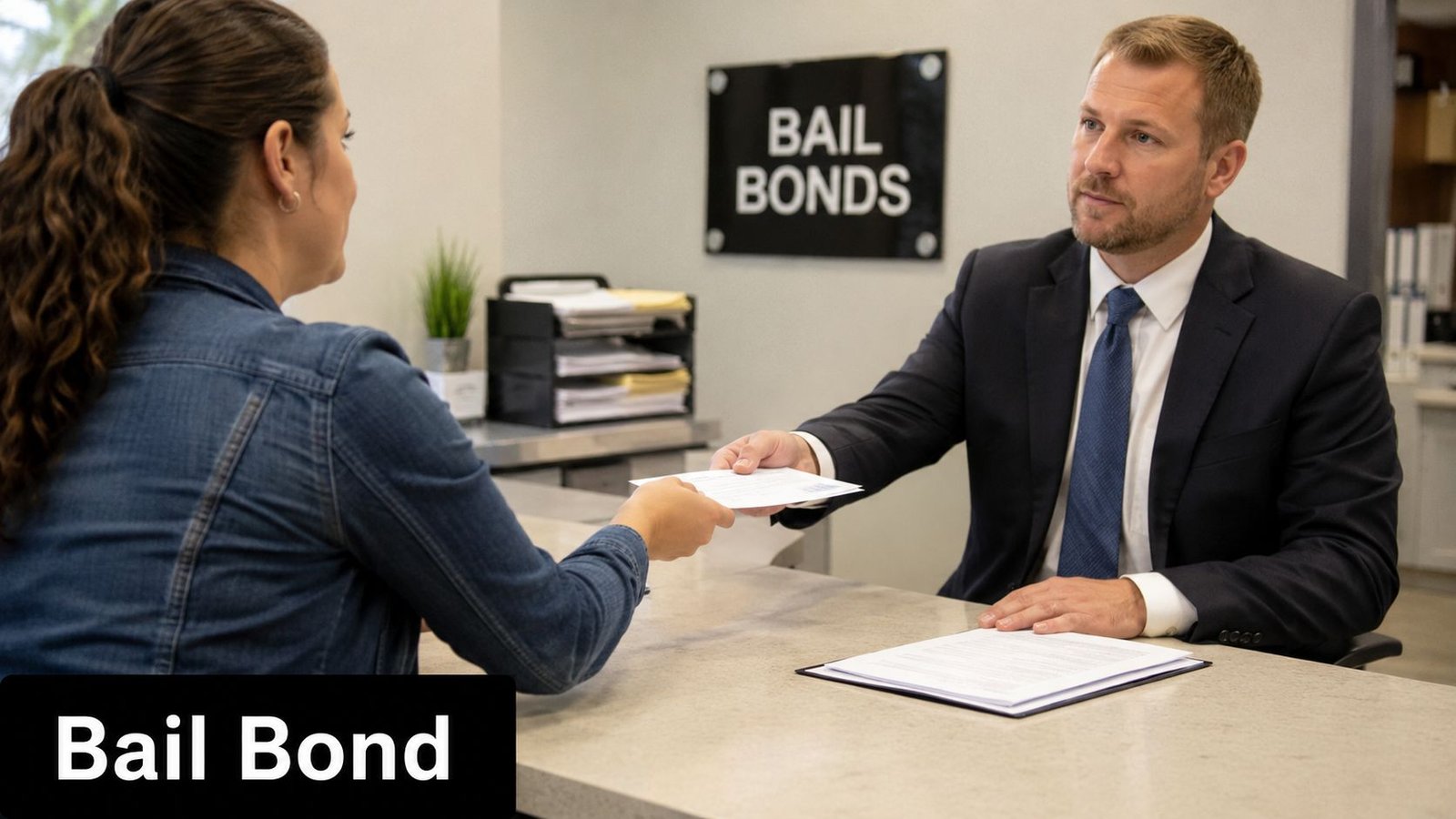
In Colorado, many families choose a surety bond because it avoids coming up with the full cash amount. The key is choosing a licensed agent who can move quickly, explain the paperwork clearly, and handle the process without making you drive across town in the middle of the night unless the jail requires it.
Why electronic processing helps
A modern electronic process does more than feel convenient. It starts the release sequence sooner.
The Center for Health Care Strategies notes that jail-based pre-release coordination helps people secure services upon release and continue care in the community in its discussion of coordinated access and release preparation. In practice, that means every hour you save on applications, signatures, and payment can give the family more time to handle transportation, medication access, clothing, and a safe place to go after discharge.
That's why remote applications and digital contracts matter. They reduce dead time.
What a Colorado family should ask a bail bond agent
Don't just ask, “How fast can you get them out?” Ask better questions.
Can you process the application electronically?
If yes, you may be able to complete documents from home.What kind of bond is this?
Some bonds can be handled through surety. Some cannot.What does the cosigner need to provide?
You want this answer upfront, not halfway through the process.What happens after the bond is posted?
A good agent will explain the release queue, not pretend the person walks out instantly.
If you want the technical background on this bond type, what is a surety bail bond lays it out clearly.
A Colorado agency such as Express Bail Bonds handles surety bonds statewide and allows applications, contracts, and payments to be completed electronically. For families in the west metro area, their Jefferson County Golden service page is relevant. For south metro cases, their Centennial bail bond page is also available.
A short video can help if you'd rather hear the process explained out loud before making calls.
What works and what slows things down
What works is simple. One responsible cosigner. Accurate information. Quick signatures. Clear communication.
What slows things down is predictable too. The wrong jail, missing ID, a cosigner who isn't ready, or family members arguing over who will take responsibility.
The fastest bond isn't the one with the loudest promise. It's the one backed by complete paperwork and a reachable cosigner.
Documents and Cosigners What You Need to Post Bail
Families often lose time on avoidable details. The jail information is finally confirmed, everyone is ready to move, and then the process stalls because nobody has the right ID, nobody knows who will cosign, or the person taking charge doesn't understand what the cosigner is agreeing to.
What you should have ready
Think of this as a working checklist, not red tape. The point is to remove delays before they happen.
| Information / Document | Required For | Purpose |
|---|---|---|
| Full legal name of the person in custody | Defendant information | Matches jail and bond records |
| Date of birth | Defendant information | Confirms identity |
| Jail or detention facility location | Defendant information | Ensures bond is posted for the correct facility |
| Booking number if available | Defendant information | Helps staff locate the correct file faster |
| Charge information if known | Defendant information | Helps identify the case and bond status |
| Government-issued photo ID | Cosigner | Verifies identity for the bond contract |
| Current address and phone number | Cosigner | Allows contact about court or bond issues |
| Employment information or source of income | Cosigner | Helps the agent evaluate responsibility |
| Payment method for the premium | Cosigner | Completes the bond transaction |
| Ability to stay reachable | Cosigner | Supports compliance and communication after release |
What a cosigner is actually agreeing to
A cosigner is not doing a favor in the casual sense. A cosigner is taking responsibility under the bond agreement.
That means the cosigner should be someone stable, reachable, and realistic about what comes next. If the defendant misses court, disappears, or ignores bond conditions, the cosigner may face financial and practical consequences under the agreement they signed.
Choose the cosigner based on reliability, not family politics.
What makes the process smoother
Some families benefit from reading an outside explanation of bail procedure before signing anything. For a plain-language example of the mechanics from another jurisdiction, this guide on understanding the Humble bail process is helpful because it frames the questions families should ask, even though Colorado procedures differ.
If you're not sure whether you should be the person signing, read about the role of a bail bond cosigner before committing. That's better than backing out halfway through the application.
A good rule is simple. The best cosigner is the person who answers the phone, keeps records, and will still be paying attention a month from now.
After the Bond Is Posted What to Expect Next
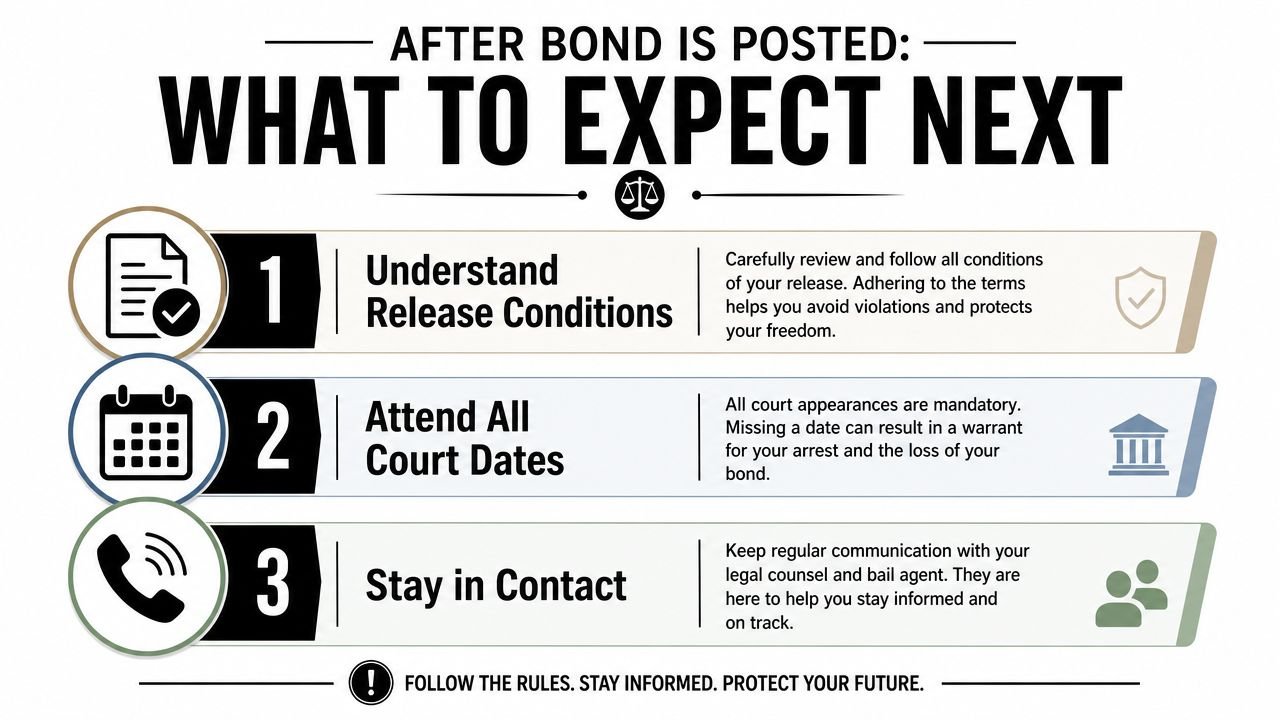
Posting the bond is a major step. It is not the finish line.
The jail still has to verify the bond, clear internal checks, complete discharge paperwork, and release the person through its normal process. Families often think something is wrong because they paid and the person is still inside. Usually, the jail is still processing.
What to handle immediately after release
The first hours matter more than often realized. Don't make release the end of the conversation.
Start with this short list:
- Transportation: Have a ride ready. Don't assume the person can sort it out from the curb.
- Phone access: Make sure they have a working phone and at least one reliable contact saved.
- Court paperwork: Read every condition before anyone leaves the parking lot.
- Medication and basic needs: If the person needs prescriptions, clothing, food, or a place to sleep, handle that first.
Documentation matters right away
The U.S. Office of Justice Programs reentry manual emphasizes proof of identity, understanding collateral consequences, and having a concrete reentry plan in place through its reentry survival manual summary. In real terms, that means release goes more smoothly when the person has access to identification, knows what restrictions apply, and has a next destination that isn't improvised in a parking lot.
If your loved one doesn't have ID in hand, doesn't know where they'll stay, or leaves without understanding their paperwork, the risk goes up fast. Small failures stack up. Missed calls. Missed dates. Missed instructions.
Common mistakes that send people back
Families can prevent a lot of trouble by watching for these issues:
- Missing court: This is the big one. Put every date in the phone calendar before the day ends.
- Ignoring bond conditions: No-contact orders, location restrictions, or sobriety requirements are not suggestions.
- Assuming the case was “handled” by release: Release only means the person is out while the case continues.
- Losing track of paperwork: Keep photos of every document on at least two phones.
Release is a handoff, not a reset. The person has changed locations, but the case is still active.
If you want a realistic sense of why people sometimes wait after the bond has already been posted, how long does bail take to process is a useful reference.
A calmer first night out
Keep the first night simple. Go home or to a stable address. Avoid arguments. Avoid alcohol or risky social contact. Read the paperwork again. Make sure tomorrow's plan is clear.
That isn't legal strategy. It's damage prevention.
FAQ Your Questions About the Colorado Bail Process Answered
Can someone get out of jail right away after arrest?
Sometimes yes, sometimes no. Release depends on booking status, the type of charge, whether a bond amount has been set, and whether there are any holds or administrative issues. Even when everything goes smoothly, there's usually a gap between arrest, booking, and release.
If charges are dropped later, does that change the bond premium?
A surety bond premium is generally treated differently from cash posted directly with the jail. The premium pays for the bond service and paperwork involved in posting the bond. Families should ask the bond agent to explain the contract before signing so there's no confusion later.
What if we can't afford the full cash amount set by the court?
That's why many families look at a surety bond. Instead of posting the entire cash amount, they work through a licensed bail bond agent and pay the bond premium required for that arrangement, subject to the agency's terms and cosigner approval.
How long does release take after the bond is posted?
There isn't one clean answer. The jail still has to process the release internally. Some delays come from shift changes, warrant checks, paperwork review, or general jail volume. A posted bond starts the release process. It doesn't guarantee immediate discharge.
What should family do in the first day or two after release?
This part matters more than is widely acknowledged. An NIH review found that family involvement and contact after release are linked to better outcomes and mental health in its review of reentry and family support. In practical terms, your role doesn't end when the person walks out.
Focus on the basics first:
- Get them where they need to be: Safe housing and reliable transportation come first.
- Protect the calendar: Add every court date, check-in, and attorney meeting immediately.
- Stabilize daily needs: Food, phone access, rest, and medication make compliance much easier.
- Stay in contact: One dependable family member should keep regular communication going.
What's the biggest mistake families make?
They treat bail like the whole problem. Bail is only the release mechanism. Staying out requires follow-through, court attendance, and a stable first few days.
If you need help with a Colorado surety bond right now, contact Express Bail Bonds. They handle statewide bail bond service, including remote applications, electronic contracts, and payment processing so families can move the release process forward without unnecessary trips back and forth to a detention facility.