
When someone you care about may have been arrested, the first problem isn't paperwork. It's uncertainty. You're trying to figure out where they are, whether they are in custody, and what you need to do next.
That's what makes an Otero County inmate search frustrating in Colorado. Many people expect a simple online jail roster. In Otero County, that's not how it works. If you're searching for someone in or around La Junta, the fastest path is much more direct. You need the right phone number, the right questions, and a clear idea of which databases help and which ones waste time.
Navigating the Stress of an Otero County Arrest
A lot of families start the same way. A phone stops getting answered. A friend says there was an arrest. Someone mentions La Junta. Then the online searching begins, and nothing looks certain.

That's where people lose time. They bounce between court pages, prison databases, old directory sites, and search results that do not confirm custody. If this is your first arrest situation, it helps to understand that jail intake, booking records, court scheduling, and bond information don't always show up in one neat place. A quick review of what happens after you get arrested can make the timeline easier to follow.
Why this county feels harder to search
In some counties, the public can check a live inmate list online. In Otero County, Colorado, that shortcut isn't available. That changes the whole approach. Instead of hunting for the right website, you need to focus on direct jail confirmation and use statewide tools only as backup.
Practical rule: If you're trying to confirm whether someone is in the Otero County Jail, direct confirmation beats guessing from third-party websites.
There's another reason people get confused. A person can be in local jail custody, moved, released, or tied to a court process that doesn't tell you their current housing status. That's why a calm, methodical search works better than opening ten browser tabs at once.
What actually helps right now
If you're worried and need answers fast, keep your attention on three things:
- Identity details: Full legal name, date of birth, and any alternate spelling you've seen used before.
- Arrest location: City and county matter. A person arrested near Otero County may not always be booked where you expect.
- Live confirmation: The best answer comes from the jail or a custody notification system, not an outdated directory.
You don't need to know every legal detail before you start. You just need enough information to make one productive call.
The Direct Method for Locating an Inmate in Otero County
For an Otero County inmate search in Colorado, the main step is simple. Otero County does not provide a public online inmate search roster, so the primary and most reliable way to confirm custody is to call the jail directly at (719) 384-5941. The jail is located at 222 E 2nd Street, La Junta, CO 81050, according to the Otero County Jail information page.
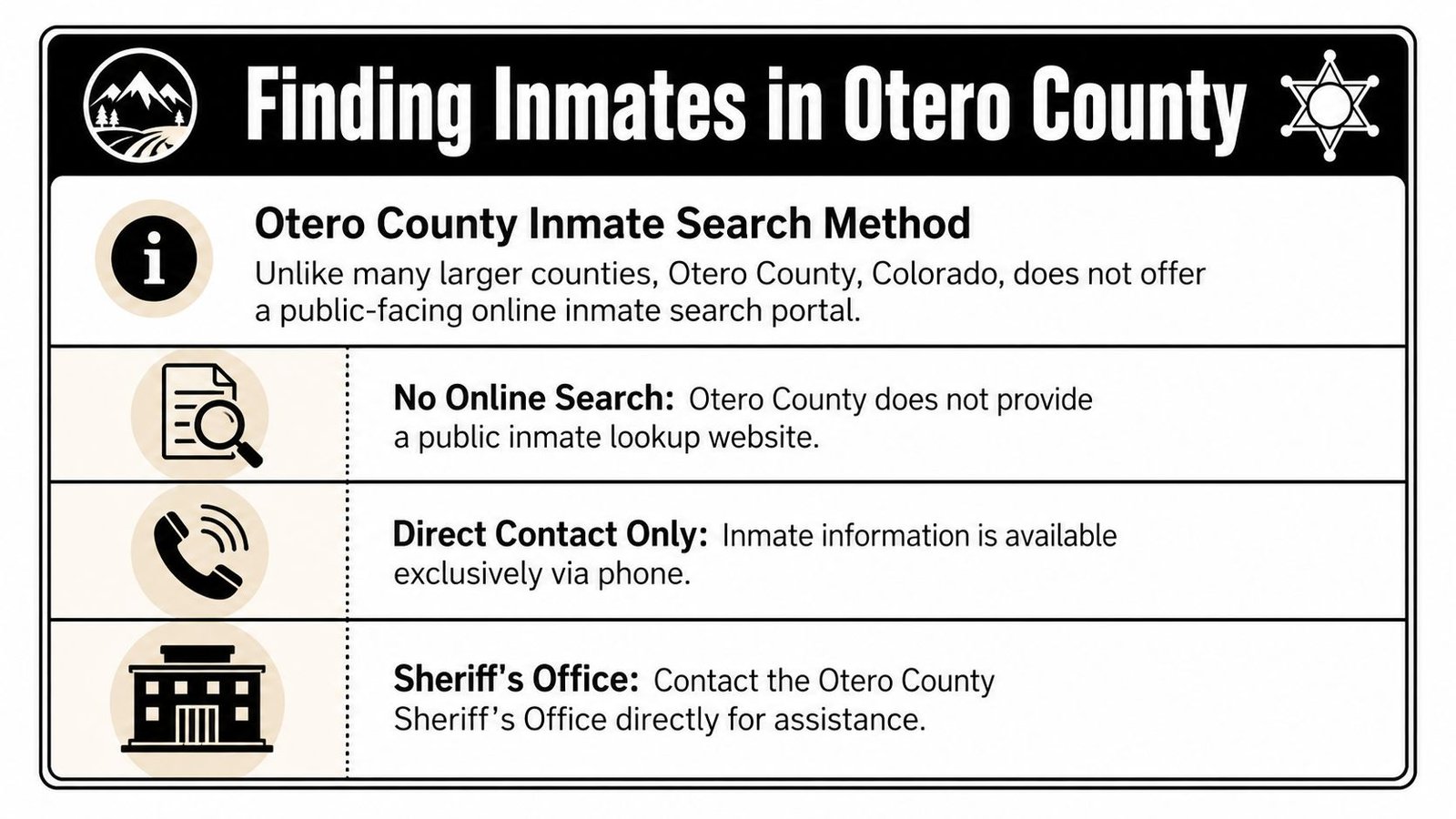
If you've searched larger metro jail systems before, this can feel unusual. It isn't a dead end. It just means the process is more old-school and more accurate when handled directly.
What to have ready before you call
A short prep list makes the call smoother. The person answering may have limited time, and precise details help them check the correct record.
- Full legal name: Use the name likely given at booking, not just a nickname.
- Date of birth: This is one of the fastest ways to separate similar names.
- Possible alias or alternate spelling: Small spelling differences can matter.
- Approximate arrest date or time: Even a rough window helps narrow the search.
- Likely arresting agency or city: If you know where contact happened, mention it.
If you need a comparison point, counties with public portals work differently. For example, this Arapahoe County inmate search guide shows the kind of online process people often expect, but Otero County requires direct contact instead.
Why calling works better here
A phone call does two things an internet search often can't. First, it confirms whether the person is in that facility. Second, it gives you a chance to ask follow-up questions immediately if they are.
When a county doesn't offer a public roster, the right call usually solves in minutes what random online searching won't solve in an hour.
That's the trade-off. It's less convenient than a website, but it can be more useful because you can confirm identity and ask about the next step in the same conversation.
Using Statewide Tools Like VINELink and CO DOC Search
Otero County's lack of a public inmate roster sends a lot of families into the wrong search. They start hunting through statewide databases and assume a missing result means the person is not in custody. In practice, these tools are only support tools. For a fresh Otero County arrest, the jail phone call is still the fastest way to confirm where someone is.
Statewide searches help in a narrower set of situations. They are useful if you are checking late at night, trying to track a transfer, or want automatic notice if custody status changes.
When VINELink helps
VINE lets users search custody information and sign up for status notifications through VINELink. That can save time if you are waiting for movement and do not want to keep calling for updates.
Use VINELink when:
- You want release or transfer alerts: Notifications can help you catch a status change quickly.
- You are helping from out of town: Relatives who cannot call during local business hours often prefer a second way to monitor status.
- You are checking after the initial jail call: It works better as follow-up support than as your first move in Otero County.
The trade-off is simple. VINELink can help you monitor status, but it does not replace a direct conversation with the jail when you need booking details, bond information, or confirmation that you have the right person.
What the Colorado DOC search is for
The Colorado Department of Corrections Offender Search serves a different purpose. It is for people already in the state prison system, not someone recently booked into a county jail. The Colorado DOC offender search makes that distinction clear.
That point matters because families often read too much into a no-result search. If someone does not appear in DOC, that only means they are not in state prison custody. It does not tell you they were never arrested, and it does not tell you they have been released from the Otero County Jail.
If you need a clearer breakdown of which search tool fits which custody level, this Colorado jail inmate search guide lays out the difference between county jail records, notification tools, and DOC records.
Use the jail to confirm a recent Otero County booking. Use VINELink to monitor status changes. Use DOC only if you are checking for state prison placement.
What to Ask When You Call the Otero County Jail
When a family member has just been arrested, this call can feel harder than it should. Otero County does not give you a public online roster to sort through, so the jail call is the step that gets you real answers. A calm, organized call usually saves an hour of confusion later.
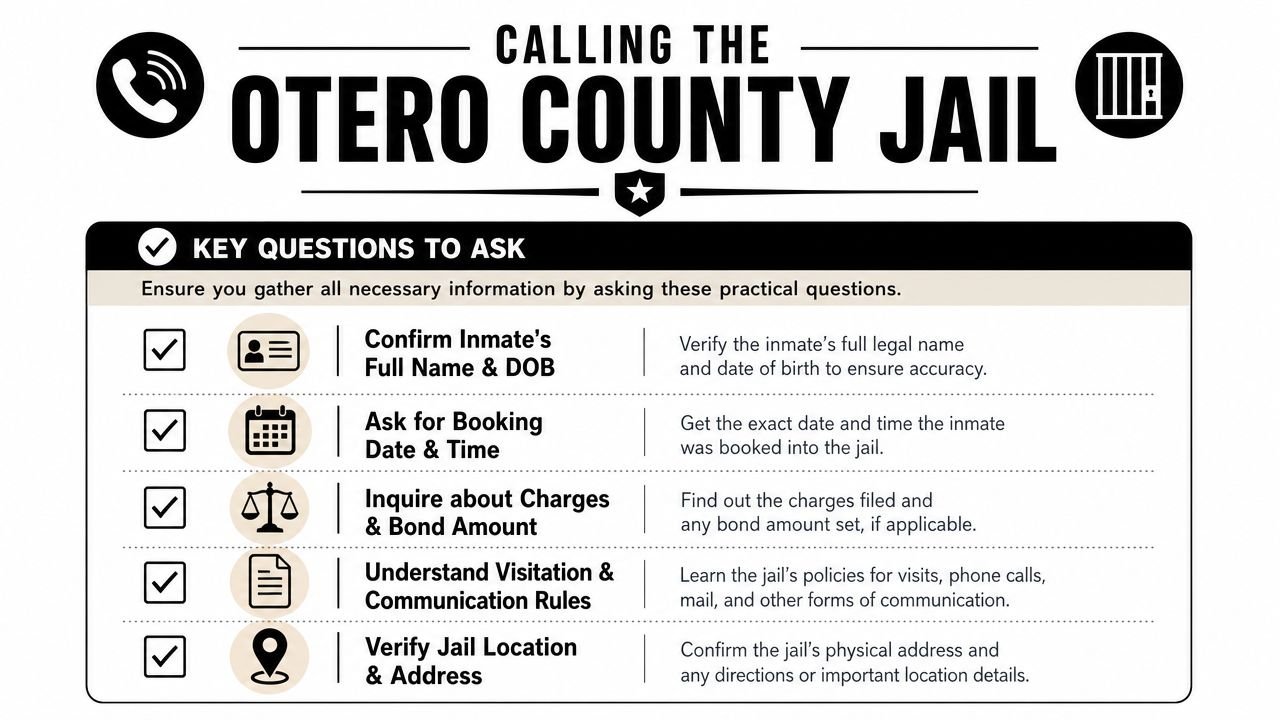
Start with identification. Then move straight into booking and release details. If you ask in that order, staff can confirm you have the right person before you start writing down charges or bond terms that belong to someone else.
The core questions
Keep your questions short and specific.
- Can you confirm whether this person is currently in custody?
- What name are they booked under?
- Can you confirm a date of birth or other identifying detail so I know I have the right person?
- What is the booking number, if one is available?
- What charges are listed right now?
- Has bond been set? If yes, what is the amount and what type of bond is it?
- Is there a court date or first appearance scheduled yet?
- Are there any holds from another agency or reasons they cannot be released right now?
That last question matters. A family may hear that bond is set and assume release is simple, then lose time because of a separate hold or transfer issue.
Questions that help after the first call
Once you have confirmed custody, ask about the details families usually need within the next few hours.
- How does inmate phone access work?
- What are the current visitation rules?
- How do property drop-off and medication questions get handled?
- If the person is released, what is the expected process and timing?
If you expect to visit, check the jail's rules before you drive over. This guide on visiting someone in jail helps families avoid common mistakes with ID, dress code, and scheduling.
Write everything down while you are on the phone. Names, charges, booking number, bond type, and holds are easy to mix up under stress.
A plain-language script
Use a simple script if you feel flustered:
“I'm trying to confirm whether my family member is there. I have their full name and date of birth. If they are in custody, can you tell me the booking name, charges, booking number, bond amount and type, whether there are any holds, and whether a court date has been scheduled?”
That wording is direct and respectful. It also gets to the information that affects what you do next.
You Found Them What Happens Next
Finding the person is the first big hurdle. The next question is what their bond information means and how to act on it without losing more time.
If the jail tells you bond has been set, you generally need to understand two things. First, what type of bond it is. Second, whether your family can realistically handle it as cash or needs a surety bond instead.
Cash bail versus a surety bond
Cash bail usually means the full amount must be posted directly through the proper channel. For many families, that's not practical on short notice.
A surety bond works differently. In Colorado, the standard premium for a surety bond is 15% of the total bail amount. For bonds over $5,000, experienced agencies can often secure a lower 10% rate with an approved cosigner, according to Express Bail Bonds.
That difference matters because families aren't just dealing with the arrest. They're also balancing rent, work schedules, transportation, and legal planning.
How to use the information from the jail
Once you have custody confirmation, charges, and bond details, your next moves usually look like this:
- Confirm the bond type: Not every hold is handled the same way.
- Check whether there are multiple holds: A person may have another agency issue that affects release.
- Decide how to post: Cash and surety are different paths with different financial realities.
- Prepare for communication limits: Jail release doesn't happen the second paperwork starts.
If you're also helping with family contact, visitation questions often come up right away. This guide on whether you can visit someone in jail can help you sort out that part while release is being arranged.
What usually works best in real life
Most families want speed, clarity, and a manageable way to get someone out while the case moves forward. That's why surety bonds are often the practical option when bond is eligible and cash bail would put too much strain on the household.
One option families use is Express Bail Bonds, which handles Colorado surety bonds and remote processing. The key isn't hype. It's whether the agency can clearly explain the bond terms, the cosigner role, and what paperwork has to happen before release can move forward.
Securing Release with Express Bail Bonds
Distance is a real problem in Otero County cases. A family member may be in Denver, Jefferson County, Centennial, or out of state while the jail is in La Junta. That's where remote processing changes the experience.
Modern bail bond agencies like Express Bail Bonds use electronic contracts and payment systems. That means a cosigner can secure a loved one's release from any Colorado jail, including Otero County, without leaving home, as described on the Centennial bail bonds page.
Why remote processing matters
Instead of driving across the state, families can focus on getting documents signed correctly and moving the bond process along. That's especially useful when work schedules, child care, or distance make an in-person trip hard.
A few helpful resources if you're comparing options or trying to understand the process better:
- Learn the basics of working with a bail bondsman in Colorado.
- If you're based farther north or helping from another county, Jefferson County release guidance gives more local context.
- For a broader explanation of how bail funds are treated in another legal context, Ticket Shield offers essential Florida bail information that can help clarify common questions about where bail money goes.
The important part is speed with accurate paperwork. Delays often come from missing signatures, confusion about bond type, or misunderstanding the cosigner's role, not from the jail search itself.
If you need help with a Colorado release, contact Express Bail Bonds. They serve jails statewide, handle remote documents and payments, and can walk you through the next step once you have the booking and bond information.