
The call usually comes late. Someone says they were arrested, they're at the jefferson county jail, and the rest of the details are blurry. Families start asking the same urgent questions right away. Where are they? Can I talk to them? How much is bail? How fast can they get out?
That first hour matters because stress makes people do the wrong things. They call the wrong number, drive to the wrong building, or hand money to someone before they know whether a bond is even allowed. A calmer approach works better. Confirm where your person is, get the booking information, find out the bond type, and then make decisions from there.
A jail problem feels personal and chaotic. The process itself is usually more mechanical than people expect. Once you know the sequence, things get easier fast.
Your Guide to Navigating an Arrest in Jefferson County
Most families reach this point in the same condition. They've slept badly, they've missed part of a workday, and they're trying to separate rumor from fact. One person says bail is already set. Another says no one can visit yet. Someone else insists they must go to the jail immediately.
Slow it down. The first useful move is to confirm whether your loved one is in custody at the Jefferson County Detention Facility in Golden, Colorado, and whether they've finished booking. If they were arrested recently, there can be a delay before their record appears publicly. That doesn't always mean anything is wrong. It usually means the intake process is still catching up.
Families also make the mistake of treating every arrest the same. A traffic-related arrest, a warrant pickup, a probation issue, and a new criminal filing can all move differently. If the arrest involves impaired driving, the criminal case is only one piece of the problem. Driver's license consequences, classes, and court conditions can follow quickly. If someone you care about is comparing Colorado issues with another state, a plain-language guide on navigating Cobb County DUI laws and penalties shows how confusing those layered rules can become when criminal charges and administrative penalties overlap.
What to do in the first few hours
Start with these steps:
- Confirm the jail location. Not every Jefferson County arrest ends in the same place immediately.
- Get the full legal name. Nicknames create search problems.
- Wait for booking to finish if the arrest was recent. A little time can save a lot of wrong turns.
- Find out whether bail has been set.
- Avoid sending random money before you know the bond type.
Practical rule: The fastest families aren't the ones who panic first. They're the ones who verify details before spending money or driving anywhere.
If this is your first time dealing with the system, it also helps to understand the basic sequence from arrest to booking to release. A simple breakdown of what happens after you get arrested can make the next day feel less uncertain.
Jefferson County Jail Location Contact Info and Hours
Before you call anyone else, keep the basic facility details in one place. That prevents duplicate calls, missed directions, and wasted trips.

Jefferson County Detention Facility At-A-Glance
| Information | Details |
|---|---|
| Facility name | Jefferson County Detention Facility |
| County served | Jefferson County, Colorado |
| Common city reference | Golden |
| Primary role | Booking and detention for Jefferson County arrests |
| Best first action | Confirm inmate status before visiting |
| Before you go | Check the current jail roster, release status, and facility instructions |
The exact details you need can change, especially for visitation windows, release procedures, and lobby access. That's why I tell families not to rely on an old screenshot, a relative's memory, or a social media comment thread.
What this means in practice
If you're trying to help someone get out, the jail's public-facing information is only the starting point. You still need to know whether the person has been booked, whether the bond amount is active in the system, and whether any hold or court appearance is delaying release.
That's also why inmate lookup matters before you leave home. A current Colorado jail inmate search guide can help you avoid showing up before the record is posted or after a transfer has already happened.
Call first, then drive. Families who skip that step often spend hours solving the wrong problem.
Hours and timing
Jails operate around the clock, but that doesn't mean every function moves at the same speed all day. Booking continues continuously. Administrative tasks, release processing, and staff response times can vary depending on the hour and how busy intake is.
The practical takeaway is simple. If you need information, verify it as close to real time as possible. If you need a release, expect some waiting even after the bond issue is solved.
How to Find an Inmate at the Jefferson County Jail
When someone says they're in the jefferson county jail, don't assume the first spelling you have is enough to locate them. The record has to match the jail system, and small errors can throw off the search.

The simplest way to search
Use the person's:
- Full legal first name
- Full legal last name
- Correct spelling, including suffixes if applicable
- Date of birth if the system or staff asks for it
A quick arrest search works best when you use the exact name from their ID or court paperwork. Middle initials can help, but they can also create confusion if entered inconsistently.
What the booking record usually tells you
Once the inmate appears, the record may show several pieces of useful information. Families often focus only on the charges, but the rest matters too.
- Booking number helps staff or a bondsman identify the correct record.
- Housing information tells you where the inmate is being held inside the facility.
- Charge list gives you the filed offenses at that stage.
- Bond information may show whether bail is set and what type it is.
- Status notes can hint at whether the person is pending court, release, or another hold.
If you're new to this, don't overread the charge wording in the first listing. Initial booking language can be technical, abbreviated, or incomplete.
Common reasons families can't find someone
Most failed inmate searches come from a short list of problems:
- The arrest was too recent. Booking may still be in progress.
- The wrong jail is being searched. An arresting agency may hold someone temporarily before transfer.
- The name was entered incorrectly. Hyphenated names and suffixes cause trouble.
- The person was released already. This happens more often than families expect.
- A hold or transfer changed the listing.
Important: “Not found” doesn't automatically mean the person isn't in custody. It often means the paperwork hasn't caught up yet.
If you want a cleaner walkthrough of the process, this resource on how to find someone arrested is useful for first-time families trying to confirm where a person landed after arrest.
What to write down before your next call
Keep a note on your phone with:
- Legal name
- Booking number
- Listed charges
- Bond amount or bond type
- Any court date shown
- Housing assignment if listed
That short list saves time with the jail, your lawyer, or any bail professional you speak with afterward.
Understanding Visitation and Inmate Communication
The biggest mistake families make with jail communication is assuming normal rules apply. They don't. The Jefferson County jail will have its own procedures for visitation, calls, and mail, and staff won't bend those procedures because someone drove a long way or because this is your first time dealing with custody.
Visitation basics
If you plan to visit, confirm the current rules before you go. Some facilities use scheduled visitation only. Others separate in-person and remote video options. Identification rules are usually strict, and even small dress code issues can lead to a denied visit.
Bring a government-issued ID and arrive with extra time. If the jail requires advance scheduling, do that before leaving home.
What usually works
- Bring valid identification. Expired IDs commonly cause problems.
- Dress conservatively. If your clothing is questionable, assume it's a bad idea.
- Show up early. Processing for visitors takes time.
- Follow staff directions exactly. Arguing at the check-in desk never helps the inmate.
What usually does not work
- Showing up unannounced and expecting immediate access
- Trying to bring prohibited items
- Using another visitor's appointment
- Assuming a minor can enter without checking the jail's rules first
Jail visitation is not a negotiation. If staff says no, the answer that day is no.
Phone calls from jail
Inmates generally make outgoing calls through the jail's phone system. Families are often surprised by how awkward these calls can be. The call may come at an odd hour, it may be brief, and the inmate may not know all the facts yet.
When you get the first call, keep the conversation focused. Ask where they are, whether they've been booked, whether bail has been mentioned, and whether they've seen a judge or expect to.
Good questions to ask on the first call
- What exact jail are you in?
- Have you been booked yet?
- Do you know your charges?
- Has bail been set?
- Do you have any medical issue I need to report to the jail or your lawyer?
Don't use the first call to argue about what happened. That's one of the least productive things families do.
Mail and account funding
Mail rules are usually narrow. The jail may inspect incoming mail, reject certain items, or require specific addressing formats. Before sending anything, verify the current mailing instructions directly with the facility.
Money for commissary or phone use is also handled through approved systems only. Don't assume cash, personal checks, or hand-delivered items will be accepted.
If you want a broader overview of the limits most families run into, this guide on whether you can visit someone in jail explains the kinds of restrictions that surprise people most often.
A practical communication plan
Use one family point person if you can. Too many callers and too many conflicting stories create confusion fast. Have that person handle updates, write down instructions, and keep one running list of booking status, visitation status, and court information.
That approach keeps everyone calmer and reduces mistakes.
How to Post Bail at the Jefferson County Jail
Once bail is set, families usually want one answer. What gets this person out fastest? The answer depends on the bond type, the amount, and whether you're paying the court directly or using a surety bond.
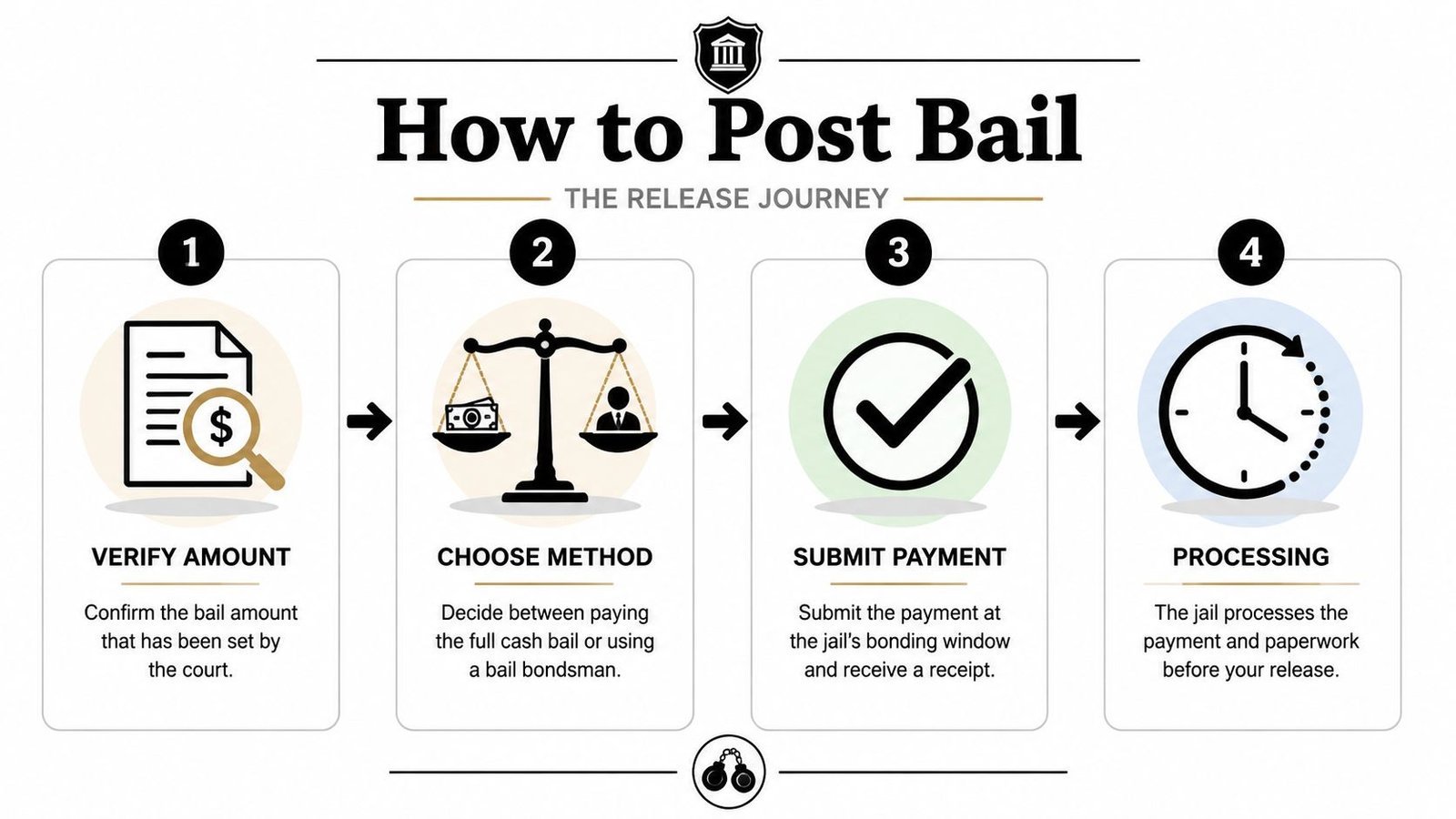
The two main paths
A family usually deals with one of these situations:
| Option | How it works | Trade-off |
|---|---|---|
| Cash bond | You pay the full amount directly where required | Ties up a large amount of money |
| Surety bond | A licensed bondsman posts the bond on the defendant's behalf | Requires a non-refundable premium and approval process |
If the bond is a standard surety-eligible bond, many families choose that route because paying the full amount in cash isn't realistic on short notice.
What a bondsman actually does
A bondsman is not buying someone's freedom. A bondsman is guaranteeing the court that the defendant will appear as required. In return, the family or cosigner signs paperwork accepting financial responsibility if the defendant fails to comply.
That's why the questions from a bondsman matter. They aren't there to waste time. They're part of the risk review.
Colorado premium and what families should expect
For Colorado surety bonds, the publisher states that the standard premium is 15%, and for bonds over $5,000 they often secure 10% with an approved cosigner, according to Express Bail Bonds. That premium is non-refundable because it pays for the surety service, not the bail amount itself.
A lot of frustration comes from families expecting that fee to work like a deposit. It doesn't. If the court case ends cleanly, the fee paid to the bondsman is still earned.
The posting sequence that works best
Here's the order I recommend:
- Confirm the active bond amount. Don't rely on secondhand reports.
- Confirm the bond type. Cash-only and surety bonds are not the same.
- Choose who will cosign. Pick the most stable and reachable adult, not the most emotional relative.
- Gather identification and basic case details.
- Complete documents carefully. Small errors can slow release.
- Stay available after payment. Sometimes the jail or agent needs one more confirmation.
A lot of families lose time on step three. They pick a cosigner who can't verify residence, won't answer calls, or backs out halfway through.
Field advice: The best cosigner is usually the person with steady contact information, stable income, and a real willingness to make sure the defendant goes to court.
For people using a surety bond, how to post bail for someone is easier when you understand the paperwork before the panic sets in.
Later in the process, some families choose a Colorado agency that handles applications, signatures, and payment electronically. Express Bail Bonds offers that option statewide, which can help when the cosigner is out of town or can't spend hours at the jail.
A short visual can help if this is your first bond:
What slows release after bail is posted
Families often think posting the bond ends the problem instantly. It doesn't. The jail still has release steps of its own.
Common delays include:
- Shift changes
- Busy intake or release queues
- Final paperwork review
- Warrant checks or holds
- Property return procedures
That's why I tell people to separate two questions. First, “Has the bond been posted?” Second, “Has the jail completed release?” Those are related, but they are not the same event.
What Happens After Being Released from Jail
Getting out of the Jefferson County jail is the first relief point, not the finish line. The decisions made in the next few days matter a lot. I've seen people handle release well and stabilize quickly. I've also seen people get out, miss one court date, and land right back in custody.

The first 24 hours after release
Do these things right away:
- Read every release paper. Don't toss paperwork in the car and forget it.
- Write down all court dates. Put them in a phone calendar with reminders.
- Confirm any bond conditions. Travel limits, no-contact orders, and check-in requirements matter.
- Stay reachable. If the court, lawyer, or bondsman can't find the defendant, problems grow quickly.
A cosigner should also keep copies of the paperwork. If the defendant loses documents, the cosigner still needs to know what was ordered.
The cosigner's role after release
A cosigner is not just helping someone out financially. The cosigner is taking on real responsibility. If the defendant skips court, hides, or violates conditions in a way that affects the bond, the cosigner may face financial consequences.
That means the right conversation after release is direct. Where are you staying? How are you getting to court? Who is tracking the dates? If treatment, counseling, or sobriety support becomes part of the bigger picture, practical local help matters more than promises. For families looking at relapse prevention and longer-term stability issues, comprehensive recovery solutions for Houston adults is a useful example of the kind of structured support people often need after a crisis.
Missing court is the fastest way to turn one jail stay into two.
A better way to think about release
Release gives the defendant a chance to prepare the case from the outside. That usually means easier access to work, family, records, legal counsel, and treatment if needed. People tend to do better when they use that time on purpose.
The families who handle this well usually keep it simple. One calendar. One folder for paperwork. One person making sure deadlines don't get ignored.
Frequently Asked Questions for Jefferson County Jail
How can I put money on an inmate's books?
Use the jail's approved deposit method only. That may be an online vendor, phone system, or jail kiosk, depending on current policy. Before sending funds, confirm the inmate's name and booking details so the money goes to the right account.
Can an inmate receive packages?
Usually, no. Most jails restrict packages from home because of security rules. Books, publications, or other items may only be allowed through approved vendors if the facility permits them.
What if the bail is cash only?
A cash-only bond means the full amount must be paid directly as required by the court or jail process. A surety bondsman can't convert that into a standard bail bond. If that's the situation, you'll want to ask exactly where payment must be made and what form of payment is accepted. If you're dealing with Colorado release questions outside Jefferson County, including the south metro area, Centennial bail bond information can help you understand how different local procedures fit into the wider state system.
For anything beyond these basics, get a live answer from someone who handles Colorado jail release issues every day.
If your family is trying to get someone out of custody and you need clear next steps, contact Express Bail Bonds. Call or text anytime for a confidential conversation about bond type, paperwork, cosigner requirements, and what to expect next.