
It's 2 a.m. and your phone lights up with a number you don't recognize. Someone you love has been arrested, they're scared, and you're supposed to figure out how do you bond someone out before morning. You don't need legal theory right now. You need the next call, the right information, and a clear picture of what signing will obligate you to do after release.
When a Loved One Gets Booked in Colorado
The first call rarely gives you clean facts. You might hear a county name, a partial charge, or just that they're at a Denver area jail and need help. Don't assume booking is finished, and don't assume a bond amount exists yet. Fingerprinting, warrant checks, medical screening, and property intake all happen before release is even possible.
Some people are cited and released without ever being fully booked. Others stay in custody until a court or authorized officer sets release conditions. That's why your first job isn't paying. It's confirming they're in custody, where they're held, and whether the court has set a monetary bond, allowed a personal recognizance bond, or ordered them held without bond for now.
What Happens While You Are Waiting
In Denver, defendants arrested and booked on a new pending criminal charge are evaluated by Pretrial Services. That process includes an interview, searches of national, state, and local criminal history databases, and a pretrial risk assessment used to recommend release conditions to the court. The court then decides whether money, supervision, or other conditions will be required.
That evaluation explains the frustrating gap families hit. You can be ready to pay while the jail can't yet accept a bond because the advisement, risk assessment, or bond setting isn't complete. Calling every ten minutes doesn't speed that review, but having the defendant's full legal name and date of birth ready does help staff locate the right record.
Don't drive to a jail until you've confirmed the facility, booking status, and bond type by phone or roster. Showing up at the wrong county wastes the hours you need most.
By the time you finish this guide, you'll know what to gather in the next hour, what a Colorado surety bond costs, who can sign, and how cosigners avoid losing money weeks later over a missed court date or a condition nobody explained.
What to Have Ready Before You Call a Bail Agent
Most delays I see aren't caused by a slow agent. They're caused by a missing middle name, the wrong facility, or a bond amount that hasn't been set. A complete intake takes minutes. A guessing game can burn an entire night.
Gather these details before you call, even if a couple items are still blank.
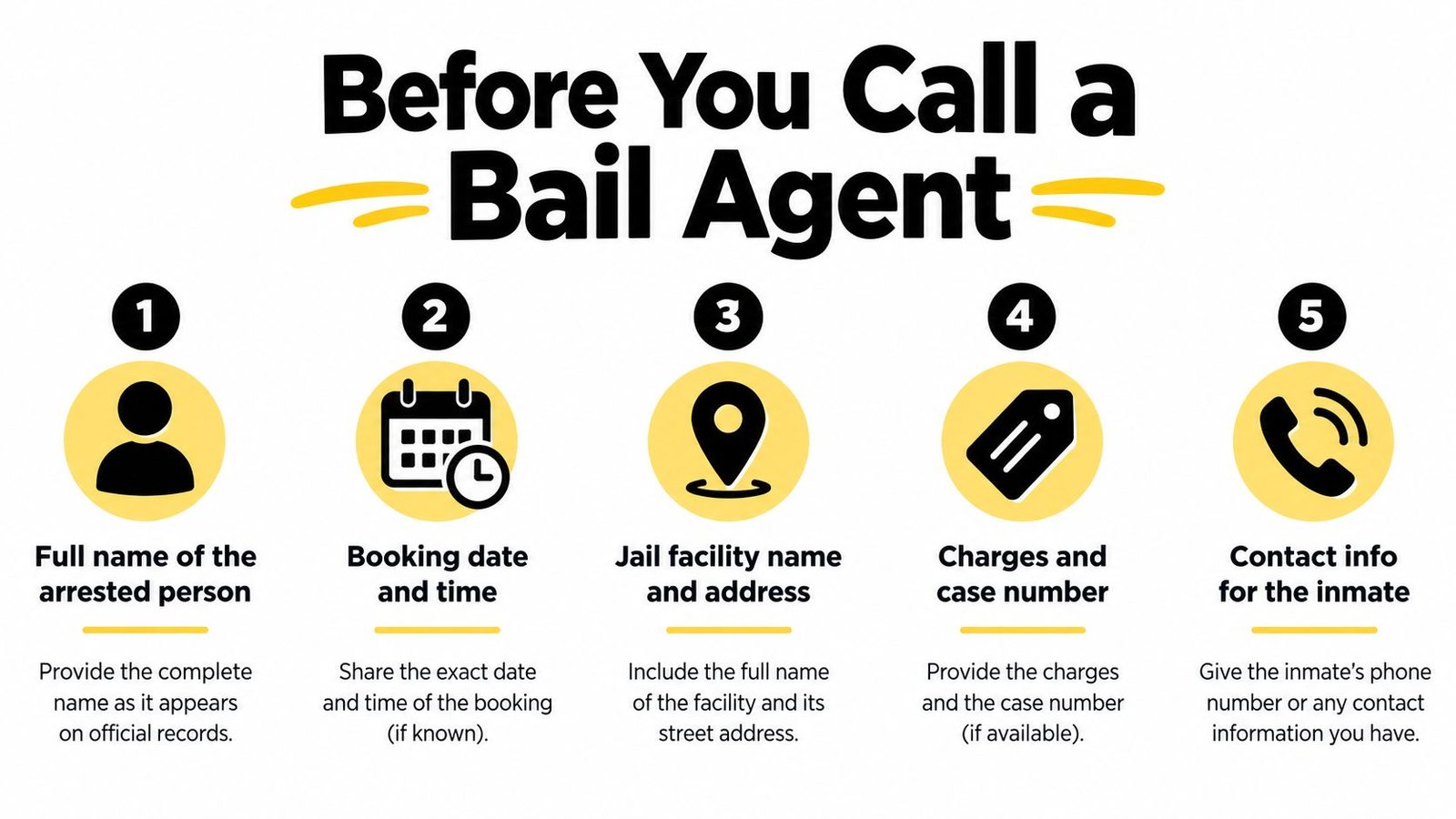
- Full legal name and date of birth: Use the name on their ID, not a nickname, so the roster search matches.
- Facility and booking or case number: Denver, Jefferson, Arapahoe, Weld, El Paso, and Douglas counties each run separate rosters and booking desks.
- Charges and bond amount: Note exactly what's listed, including whether it's cash only, surety allowed, or no bond.
- Your relationship and contact information: The agent needs to know who will act as cosigner and how to reach you if the jail updates the record.
Online rosters usually show charges, booking time, and sometimes bond amount. They often don't show holds, updated court conditions, or whether Pretrial Services has finished. If two staff members give you different amounts, ask which record is current and whether a judge has changed it at advisement. Under Colorado law for misdemeanor and petty offense release, a person in a misdemeanor or petty offense case must be admitted to bail or another form of pretrial release, and a designated officer may handle release when a county judge isn't immediately available.
Questions to Ask on That First Call
Ask whether the jail is accepting a surety bond right now, what identification the cosigner needs, and what documents are required before posting. The checklist at documents needed to start a Colorado bond mirrors what agents request at intake. If money is tight and you're weighing borrowing to cover immediate costs, review the BadCreditMD Colorado borrowing guide before committing to any loan, so you understand the credit tradeoffs separate from the bond itself. Families near Centennial face the same intake questions as families in Denver, which is covered in the local guidance for bail bond help in Centennial and Arapahoe County.
Who Can Legally Post the Bond and What Forms Get Signed
A surety bond involves three roles, and confusing them causes most signing mistakes. The defendant must appear and follow conditions. The cosigner, also called the indemnitor, promises the surety that the defendant will comply and accepts financial responsibility under the contract. The licensed surety provides the court's financial guarantee.
You don't have to be the defendant to arrange release. A family member, friend, or other third party can act, and Colorado law doesn't require a monetary bond to be posted in the defendant's name. For cash payment methods, follow the jail's instructions exactly rather than assuming a check or money order should name the incarcerated person.
The Paperwork You Will Actually Sign
Expect a surety application, an indemnity agreement, a premium receipt, and, when required, a collateral agreement. The application identifies the defendant and cosigner. The indemnity agreement spells out what the cosigner owes if the defendant fails to appear or the bond is forfeited. Before you sign, read what signing a bond for bail commits you to and ask the agent to explain any term you can't restate in plain English.
Premium and collateral are not the same money, and treating them as interchangeable leads to disputes later.
Premium vs Collateral at a Glance
| Item | What it is | When you get it back | Colorado rule |
|---|---|---|---|
| Premium | Fee paid to the licensed producer for writing the surety bond | It's earned upon release and isn't refundable as a deposit | Capped at the greater of $50 or 15% of the bail amount under Colorado insurance law capping bail bond producer charges |
| Collateral | Cash, vehicle title, or other security held to protect the surety | Released when the bond obligation ends and terms are satisfied | Extra fees are restricted to authorized filing charges, secure collateral storage, or premium financing |
That statutory ceiling means the maths is regulated, not negotiated from scratch. On a $10,000 bond, 15% is $1,500. On a $2,000 bond, 15% is $300, which is above the $50 minimum. Confirm the exact bond amount first, then confirm premium, any permitted filing charge, and whether collateral is required at all.
Signing rule: If you wouldn't be willing to bring this person to court yourself, don't sign as indemnitor. Your signature is a promise, not a favor.
Paying the Premium and Locking In the Bond
Payment is where good intentions stall over card limits, missing ID, or a cosigner who lives out of state. Ask upfront which methods the agency accepts, such as card, ACH, wire, or money order, and whether electronic application and signatures are available so you don't have to travel to an office overnight.
The payment step below shows the moment most families picture, but the contract review matters more than handing over a card.
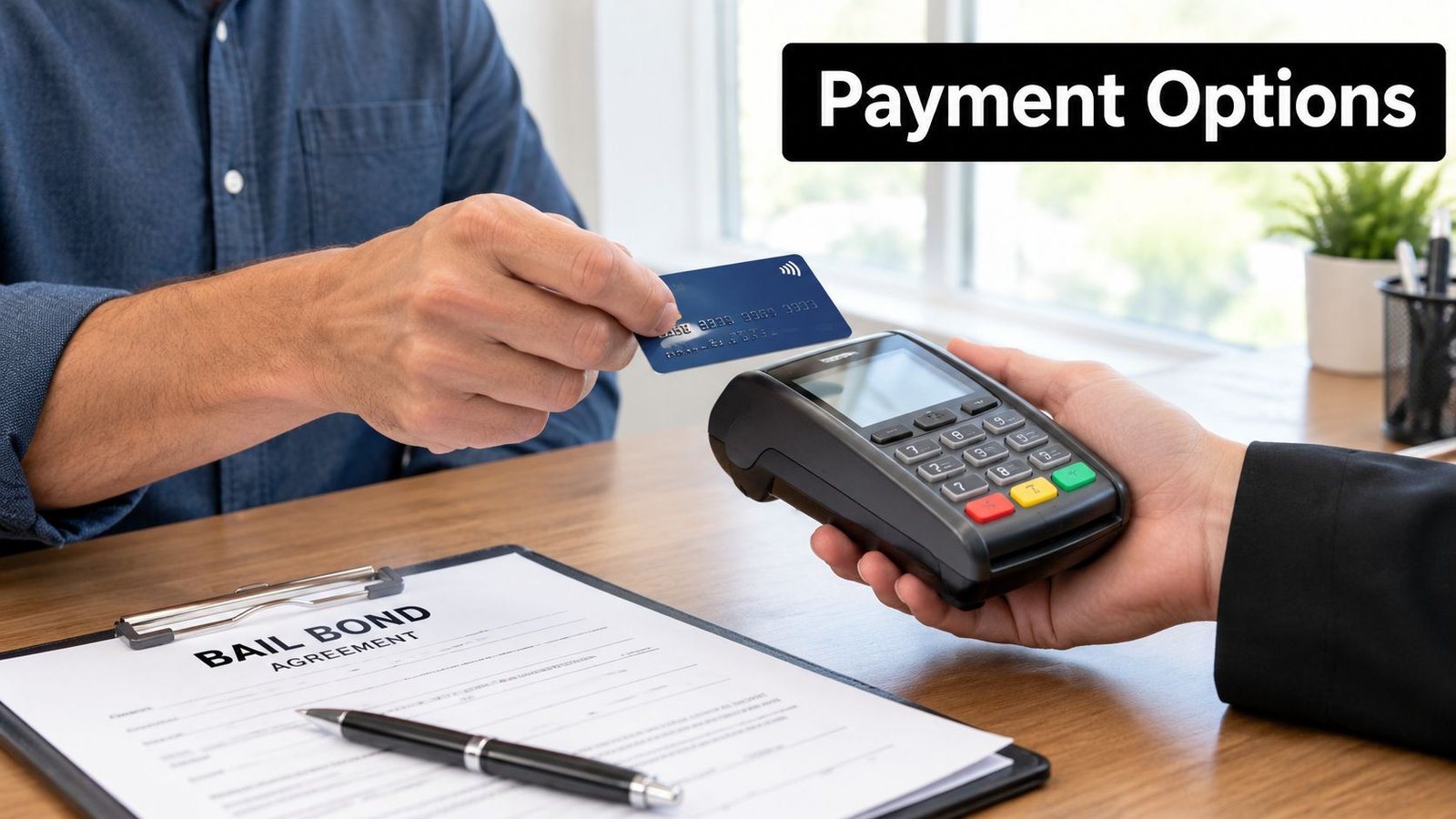
Express Bail Bonds is one Colorado agency that handles applications, payments, and contract documents electronically and posts surety bonds at detention facilities statewide. For bonds over $5,000, it often secures a 10% premium with an approved cosigner, rather than the standard rate. Whether you use that agency or another licensed producer, get the quoted premium, collateral terms, and financing terms in writing before authorizing payment, and compare them against available bail bond payment options in Colorado.
Collateral and Payment Plans in Real Terms
Collateral might involve a vehicle title, real property security, or a signed promissory arrangement, depending on bond size and risk. A qualified indemnitor with stable residence, employment, and a clear ability to keep the defendant accountable may not need collateral on every bond. A thin cosigner on a large bond is a different risk, and agents price that reality clearly.
Premium financing is permitted only within Colorado's restricted fee structure, so ask what's due today, what's financed, and what happens if a payment is missed. Also separate agency charges from jail charges. Under Colorado's 2025 bond processing fee limits, jail bond fees are capped at $10 per bond, including bonds posted online, and additional kiosk, cash, check, or money order fees at release are forbidden.
This short walkthrough shows how electronic payment and posting fit together before the jail takes over.
Once the premium is paid and documents are signed, the agent submits the bond to the jail. Keep your receipt, a copy of every signed page, and written confirmation that the bond was posted. From that point, release runs on the jail's clock.
What Happens at the Jail Until Release
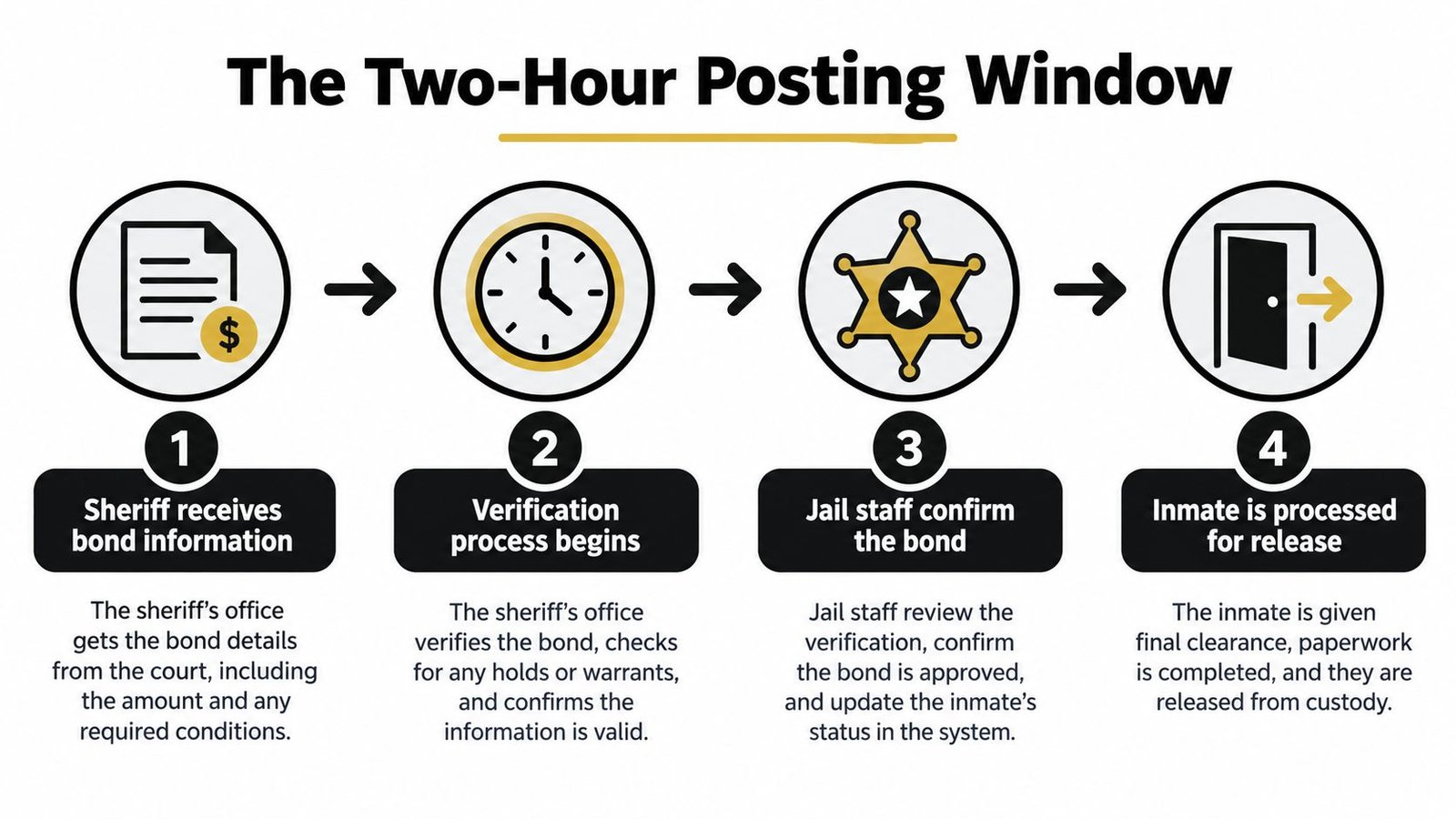
Posting a bond doesn't open a door instantly. Jail staff still verify the bond, check for other holds, complete release processing, and prepare paperwork. A warrant from another county, a medical clearance issue, unfinished booking, or electronic monitoring setup can delay release even after payment clears.
Colorado does give you a concrete posting window. Unless extraordinary circumstances exist, the defendant, a surety, or another third party must be allowed to post bond within two hours after the sheriff receives bond information from the court, as stated in Colorado's enacted two hour bond posting provisions. That window covers being allowed to post. It isn't a guarantee that the person walks out exactly two hours later.
The sequence inside the facility follows a predictable order once the court information reaches the sheriff.
A Jefferson County Example
On a Jefferson County booking in Golden, a family can complete everything electronically, then still wait while staff confirm there are no additional holds and print release conditions. That's normal, not a sign the bond failed. Local facility details for posting a bond in Jefferson County and Golden help you confirm where release occurs and where to meet the defendant.
Before the defendant leaves, verify they have paperwork showing the next court date, release conditions, and any pretrial supervision contact information. Colorado requires the sheriff to provide bond paperwork and the next court date when the bond is posted. As cosigner, request copies for your own records and reconcile the bond amount, court date, and conditions against your contract. The steps for what discharge from jail should include give you a final checklist for that handoff.
Your job during release processing is verification, not waiting silently. Confirm holds are cleared, conditions are printed, and the court date is in hand before anyone leaves the lobby.
After Release, How to Protect the Bond and the Cosigner
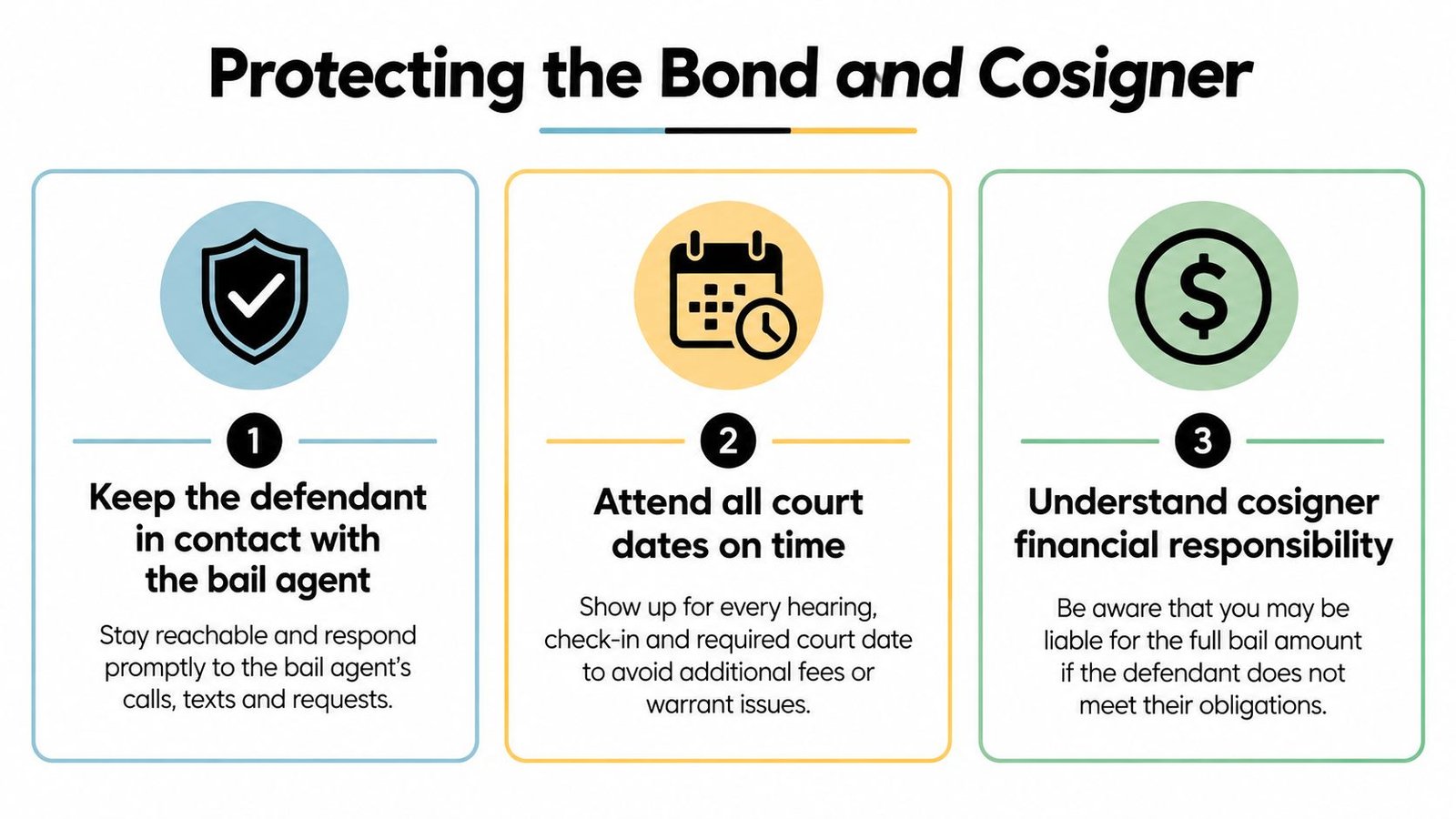
Release ends the jail stay. It doesn't end the case, the conditions, or your financial exposure. The question that matters now is what can make your family lose money after the premium is already paid.
Court date management is the highest value protection you control. Put every hearing on two calendars, confirm transportation and childcare in advance, and keep the defendant's phone and address current with both the court and the surety. Document compliance with no contact, geographic, treatment, weapons, or electronic monitoring conditions instead of relying on memory.
Surrender, Forfeiture, and Exoneration
If the defendant won't comply, contact the agent and their attorney immediately. Surrender means returning the defendant to custody through proper procedures rather than waiting for a failure to appear. Ignoring a missed date can trigger forfeiture proceedings and a show cause hearing over why bond money shouldn't be forfeited.
Exoneration is how bond liability ends when statutory conditions are met. In one Colorado mechanism, the surety provides satisfactory evidence to the court that the defendant was removed from the country, files a motion seeking exoneration, and submits an affidavit with required information. Once granted and the premium has been paid, collateral securing the bond is released. Don't assume collateral returns automatically. Keep documents and ask what court action is still needed. Review cosigner responsibilities that continue after release before the first hearing, not after a problem.
A larger secured bond doesn't by itself guarantee appearance. In a pretrial research summary covering nearly 2,000 cases across 10 counties, there was no statistically significant difference in nonappearance between secured and unsecured bonds after controlling for assessment scores, and 94% of people with unsecured bonds were released compared with 61% with secured bonds, as summarized in Colorado Judicial Branch guidance on types of bonds. Reminders, rides, and honest communication protect you more reliably than bond size alone.
Before you sign any bond, ask these questions:
- Premium and collateral: What's nonrefundable, what's held as security, and when is collateral released?
- Conditions: What travel, contact, or monitoring limits apply from day one?
- Failure plan: Who do we call first if a hearing is missed or the defendant is arrested again?
If you're trying to bond someone out tonight, call or text for clear intake, electronic paperwork, and posting at Colorado jails without spending hours in a lobby. Visit Express Bail Bonds to start the application, confirm the premium and cosigner requirements for your county, and get the next court date and conditions in writing before release.