
That call usually comes at the worst time. A spouse says they've been taken in. A parent only knows the arrest happened “somewhere near Denver.” A friend texts a name, a birthday, and nothing else. Then the search begins, and the first thing encountered is confusion.
A bail bonds inmate search sounds simple until you're the one doing it under pressure. County jail site or state prison database. Booking record or court case. Bond amount listed or not listed. Search returns three people with the same name, or no one at all. That's where families lose time.
The good news is that this process is manageable when you slow it down and work it in the right order. Start with identity details. Search the correct custody system. If the online record is incomplete, switch to the jail phone line and live verification. Once you confirm custody location and bond status, you can move from searching to release instead of refreshing a page over and over.
Your Guide Through a Difficult Moment
Those looking up an inmate aren't casually browsing. They're trying to solve a problem right now. A loved one was arrested, the details are unclear, and every minute feels longer because nobody knows where the person is being held or whether release is even possible.
That urgency makes sense. The Prison Policy Initiative's pretrial detention research reports that 69% of people in U.S. city and county jails are held pretrial, and it also notes that the median felony bail often exceeds $10,000. For families, that means the first practical task isn't arguing about the case. It's finding the booking record, the bond amount, and the jail that has custody.
When people call in a panic, the same pattern shows up again and again. They've searched one site, usually the wrong one, and assumed the record should already be there. Or they found a name match but aren't sure if it's the right person. Or they saw “no bond” and thought that meant the person could never get out, when in reality the case may still be moving through booking or review.
Practical rule: Don't try to solve everything at once. First confirm where the person is. Then confirm whether the charge is bondable. Then deal with release.
A calm search beats a frantic one. Get the person's full legal name, date of birth, where the arrest happened, and when it happened. If you know the suspected charge, write that down too. Those details matter because common surnames and recent bookings create mistakes fast.
If you're in Colorado, the process usually begins at the county level. Recent arrests are commonly housed in local detention facilities, not the state prison system. Once you understand that difference, the search gets much easier.
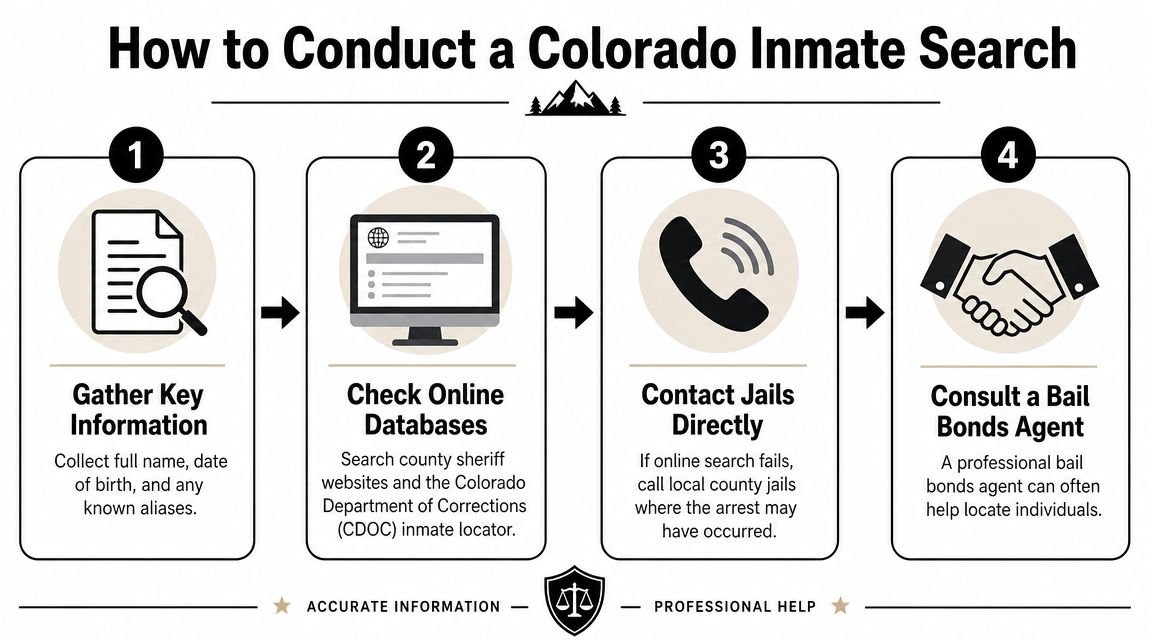
How to Conduct a Colorado Inmate Search
The biggest mistake in a bail bonds inmate search is starting with too little information. Name-only searches waste time, especially in busy counties. Before you touch a database, gather the minimum details that help separate one person from another.
Start with the right identifiers
Use this checklist before searching:
- Full legal name: Use the name that would appear on the booking paperwork, not a nickname.
- Date of birth or age: This helps narrow down near-matches.
- Arrest date or approximate time: Recent bookings may not appear immediately.
- Arrest location: County matters. The arresting agency often determines where booking starts.
- Suspected charge: Even a rough idea helps confirm you found the right record.
Independent guidance on inmate lookup stresses that exact matching with identifying details improves accuracy and helps cut down false positives in crowded systems, especially when you're dealing with common names and recent arrests. That's why experienced agents don't rely on a name alone when starting the search.
Right after that, use a county-first strategy.
Search county jail tools before state prison databases
A common mistake is searching the wrong system. State Department of Corrections databases typically list inmates currently incarcerated in state prisons, while recent arrests are usually found in county jail systems. Government guidance from a statewide offender system makes this distinction directly, noting that county jail cases must be searched on the county's own website rather than the state database.
That means if someone was arrested today, last night, or even recently, start with the county sheriff or detention center search, not the prison system.
For Colorado families, that often means checking county detention tools for places like Denver, Arapahoe, Jefferson, Douglas, Adams, Weld, or El Paso before trying a state-level offender locator. If you need a county-focused shortcut, the Colorado jail inmate search page can help you sort local detention options more efficiently.
Here's the practical order that works:
- Search the county where the arrest happened
- Check neighboring county detention systems if the arrest location is unclear
- Look for court or magistration records if the jail record is delayed
- Use the state prison system only if you know the person is already serving a sentence
A simple comparison helps:
| Search tool | Best used for | Common problem |
|---|---|---|
| County jail roster | Recent arrest and current booking status | May lag during early booking |
| County court docket | Case movement and hearing activity | May not show live custody details |
| State DOC offender search | People already in state prison custody | Won't usually show a fresh county arrest |
After you've run the online search, use a second channel if the answer still looks shaky.
A short walkthrough can help if you want to see the process visually:
If the person was arrested recently, don't assume “no results” means “not in custody.” It often means the record hasn't fully hit the public-facing system yet.
Decoding the Booking Record and Bond Details
Once you find the booking record, the next problem is understanding what you're looking at. Families often see a screen full of codes, abbreviations, and status labels, then miss the one or two fields that control release.
What the key fields usually mean
A typical jail record may show some or all of these:
- Booking number: The jail's internal identifier for that custody event.
- Charges: The alleged offenses entered during booking.
- Custody status: Whether the person is still in custody, pending transfer, or released.
- Bond amount: The amount set for release, if bond has been set.
- Bond type: Whether the bond is cash, surety, or unavailable at that stage.
The booking number matters because jail staff can often locate the person faster with it than with a name alone. The charges help confirm identity. The bond line is the one most families care about first, but it needs context.
Cash bond, surety bond, and no bond
These three labels get mixed up constantly.
A cash bond generally means the full amount must be paid directly to the jail or court under that bond type. A surety bond means a licensed bail agent can post a bond guarantee instead of the family paying the entire bail amount in cash. A no bond hold usually means release isn't available yet under the current status, or another hold is blocking release.
Florida's consumer regulator describes a bail bond as a surety guarantee that the defendant will appear in court, and it notes that commercial bail premiums commonly fall in the 10% to 15% range depending on jurisdiction and underwriting in its bail bonds overview. For a family trying to decide what comes next, that distinction matters. You are not usually paying the entire stated bail amount when a surety bond is allowed.
If you're trying to make sense of charges and custody records before signing anything, it also helps to review how arrest records and booking data fit together. This guide on Colorado arrest records gives useful background for that step.
A booking record tells you where the person is and what the jail entered. It doesn't always tell you whether release can happen immediately.
Read the record with a release mindset
When reviewing a booking entry, focus on three questions:
- Where is the person physically housed right now
- Has booking been completed enough for bond information to appear
- Does the listed bond type allow a surety bond
If the answer to any of those is unclear, don't guess. A lot of trouble starts when a family sees a bond figure and assumes they can head straight to the jail with the wrong form of payment. Read the custody status carefully, then verify by phone if anything looks incomplete.
What to Do When the Inmate Search Comes Up Empty
An empty search result doesn't always mean the person isn't there. It often means the public system hasn't caught up with the booking process, the name was entered differently, or you're searching the wrong database.
That's one of the most frustrating parts of a bail bonds inmate search. People know the arrest happened, but the roster shows nothing. At that point, families often waste hours refreshing the same page instead of switching methods.

Why records go missing at first
Online search tools are not always real-time. Official jail guidance notes that calling directly can produce bond information sooner than the public database shows, especially when the caller has the correct full name and date of birth. Bexar County's inmate and bond information page specifically tells callers they need those details to obtain charges and bond amounts through the live information channel in its inmate bond information guidance.
That same issue shows up in Colorado. Public rosters may lag. Booking officers may still be entering information. A recent arrest may be under a slightly different name format than what the family is using.
What to do next
When the search comes up empty, use this order:
Recheck spelling and identity details
Use full legal name. Add date of birth. Try common variations only if you're sure they're used in official records.Confirm you searched the right custody level
Recent arrests are usually county-jail matters, not state prison records.Pause, then run the search again later
Early booking windows are messy. A delayed result is common.Call the jail information or booking desk
Live staff can often verify custody faster than the public-facing system.Check for related issues that may affect visibility
If the arrest may connect to an older case, a warrant, or another county matter, it can help to understand how custody and open cases intersect. This overview on checking whether someone has a warrant can clarify that side of the picture.
Don't treat the website as the final answer. Treat it as one tool.
If the jail confirms custody but won't release complete bond details yet, that usually means the process is still moving through booking, magistration, or charge review. Keep working from verified information, not assumptions.
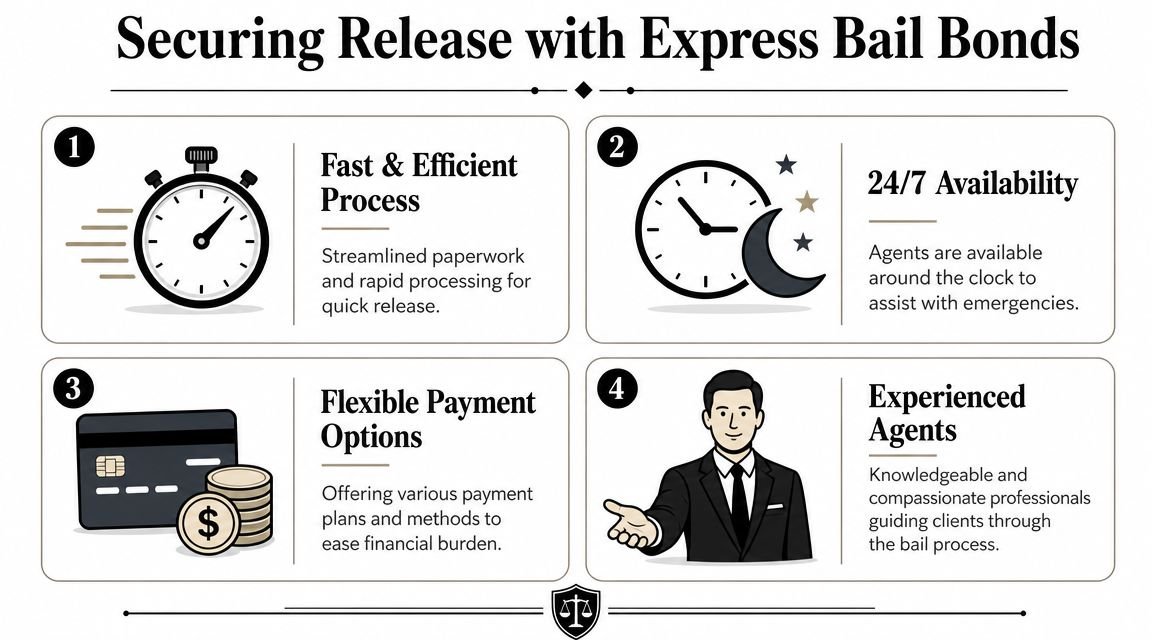
Securing Release with Express Bail Bonds
Once you know where the person is and what kind of bond is allowed, the goal changes. You're no longer searching. You're trying to get the bond posted correctly and avoid delays caused by paperwork, payment confusion, or showing up at the wrong place.
What helps release move faster
The smoothest release process usually depends on four things:
- Accurate inmate details: Full name, date of birth, county, and current facility
- Clear bond status: Whether the jail accepts a surety bond on the listed charge
- Ready cosigner information: Identification and basic financial or residence details when required
- Remote completion when available: Electronic documents and payment options save a trip and reduce mistakes
That last point matters more than people expect. In many cases, the slow part isn't locating the inmate. It's the scramble after that, especially if the cosigner is at home, out of state, or trying to get paperwork done late at night.
Remote processing changes the practical side
A modern surety process is usually more straightforward than families expect. Instead of driving from office to jail to courthouse, many steps can be handled remotely once custody and bondability are confirmed. The agent verifies the jail, prepares the bond documents, sends the paperwork for signature, collects the required payment arrangement, and then posts the surety bond with the facility.
That's where a service like Express Bail Bonds fast release help fits into the workflow. Their published process focuses on Colorado surety bonds, statewide jail coverage, and electronic applications and documents, which is useful for families who can't handle everything in person during an arrest emergency.
For readers dealing with a Texas case instead of a Colorado one, the Fagan Law Office Texas bail guide is also a practical reference because it walks through how bond and release logistics work in that jurisdiction.
Here's the trade-off to understand. Remote processing removes travel and waiting-room friction. It doesn't remove the jail's own release timeline. Once the bond is posted, the detention facility still controls release processing, identity checks, and final discharge.
The bond can be posted correctly and the person can still remain inside while the jail finishes its own release steps. That's normal.
If you're helping someone from another city or another state, remote handling is often the difference between immediate action and losing a night to logistics.
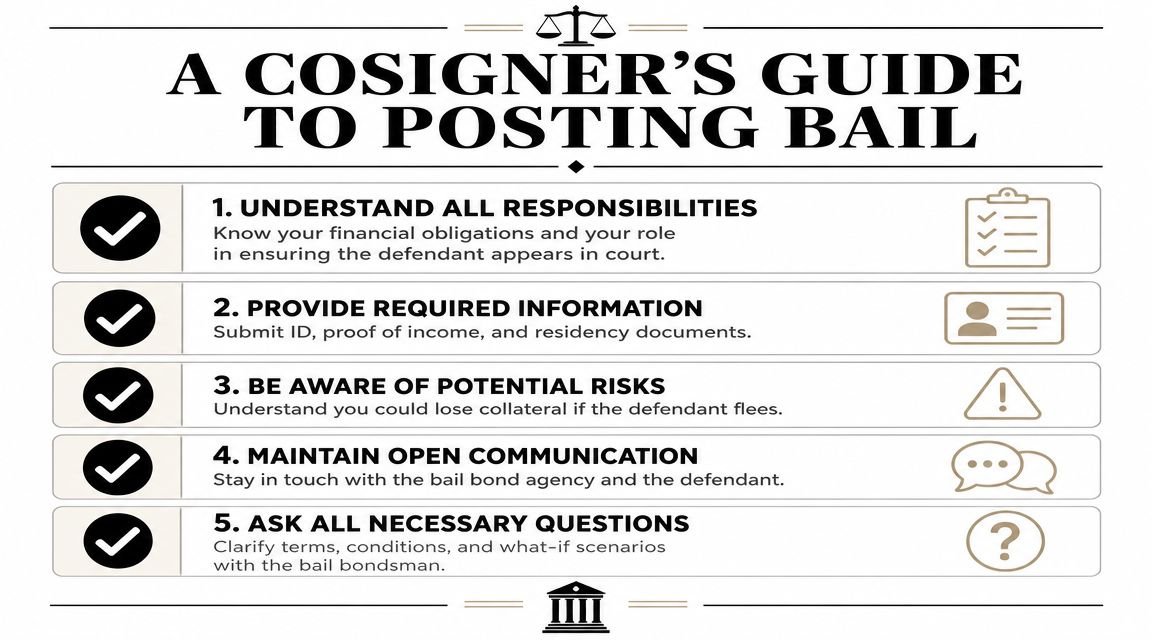
A Cosigner's Guide to Posting Bail
Cosigners carry more responsibility than many people realize. You're not just helping with paperwork. You're backing the bond agreement and taking on a real obligation to help keep the case on track.
That doesn't mean you should be intimidated. It means you should slow down and understand exactly what you're signing.
What a cosigner usually needs to provide
A bail agency may ask for documentation that helps verify identity, residence, and ability to support the bond contract. That commonly includes:
- Photo identification: Driver's license, state ID, or other government-issued ID
- Residence information: A recent document showing where you live
- Employment or income information: Enough to support the underwriting decision
- Defendant relationship details: How you know the person and how you'll stay in contact
Some bonds require more review than others. If the charge, custody history, or court risk looks more complicated, expect more questions, not fewer.
Your real responsibilities after signing
The premium and the promise are different things.
The premium is what you pay for the surety bond service. Your larger responsibility is helping ensure the defendant appears in court and follows bond conditions. If the person disappears, ignores court, or breaks the agreement, the cosigner can face consequences under the contract.
A few questions should always be asked before signing:
| Question | Why it matters |
|---|---|
| What must the defendant do after release | Court dates and conditions start immediately |
| What happens if the defendant misses court | You need to know the contract consequences |
| Is collateral required | Some bonds involve additional security |
| Can documents be signed remotely | Important for out-of-county or out-of-state cosigners |
Local knowledge matters
Colorado release logistics vary by county. The jail procedures, court timing, and intake flow in one area may not match another. If your case is tied to Golden, Jefferson County bail bond help is a useful local reference. If the case is in the south metro area, Centennial bail bond assistance gives location-specific context.
If you're concerned about whether you can step away from the bond later, read this guide on whether a cosigner can be removed from a bail bond. That question comes up often, and it's better to understand the answer before signing than after there's already a problem.
Read the contract line by line. Ask what happens in the bad-outcome scenario, not just the easy one.
A steady cosigner helps more than a rushed one. Stay reachable. Keep the defendant reachable. Save every court date and every agency contact in one place.
If you need help locating someone in custody, confirming bond information, or starting a Colorado surety bond remotely, contact Express Bail Bonds. Share the person's full name, date of birth, county of arrest, and any bond details you already have. That gives the fastest path from inmate search to actual release.