Your phone rings, and the voice on the other end sounds tense. Your son, brother, partner, or friend missed court. Now you're hearing words like failure to appear, bond risk, and maybe even recovery agent. For most families, that's the moment panic sets in.
The hard part is that people often fill that panic with movie scenes. They picture a badge, a door getting kicked in, and someone acting like police without rules. That picture causes a lot of unnecessary fear. In real life, a bail bond recovery agent works within legal limits, contractual limits, and often insurance limits too.
If you're in Colorado and you're trying to understand what happens next, the most helpful thing you can do is separate fact from drama. A missed court date is serious, but it isn't the same as lawless chaos. It's a problem with a process attached to it.
What Happens When Someone Skips a Court Date
A common version of this starts small. A defendant thinks they wrote the court date down right. A ride falls through. Someone is scared to walk into court because they expect bad news. Then the hearing passes, and nobody shows up.
A little later, the cosigner gets the call.
The first question is usually, "Does this mean a bounty hunter is coming right now?" The second is, "Am I about to lose everything?" Both questions come from the same place. People don't know what a recovery agent does, or where the boundaries are.
What a missed court date changes
When someone misses court, the bond is suddenly in danger. The bail agency now has a financial problem to solve, and the cosigner may also be exposed under the bond agreement. A bail bond recovery agent is brought in to help locate and return the defendant so the matter can be resolved before the loss gets worse.
That doesn't automatically mean force, confrontation, or a dramatic arrest scene. In many cases, the first push is communication, not physical recovery. The fastest resolution is often getting the defendant to surrender voluntarily.
The widespread misconception that bail recovery agents possess police-like powers, such as warrantless home entry or badge authority, without legal or insurance oversight is rarely debunked. In reality, their authority is increasingly restricted by state-specific laws and insurance mandates, as noted by Mercy Bail Bonds.
Why families get blindsided
Families usually aren't prepared for the paperwork side of this process. Court calendars, reporting dates, and filing deadlines can feel overwhelming even for lawyers. If you've ever wondered how legal teams keep track of appearances and deadlines, this plain-language explanation of docketing for modern law firms helps show why a single missed date can trigger such serious consequences.
For a Colorado-specific look at the court side of the problem, this guide on what happens if you miss court explains the practical fallout in simple terms.
Here are the first things a family should understand:
- The bond is at risk: The issue isn't just that court was missed. The financial guarantee behind release is now in trouble.
- The recovery agent's job is targeted: Their role is to locate and return the defendant, not to act like general law enforcement.
- Fast communication matters: The longer everyone waits, the fewer calm options remain.
If you're the cosigner, the best mindset is this. Don't assume the worst, and don't assume you can ignore it until morning. Treat it like a time-sensitive problem that still has workable solutions.
Bondsman vs Recovery Agent Understanding the Roles
A bondsman and a recovery agent are connected to the same bail bond, but they step in at different points and for different reasons. If your family is getting calls after a missed court date, knowing which role you are dealing with can lower some of the panic and help you ask better questions.
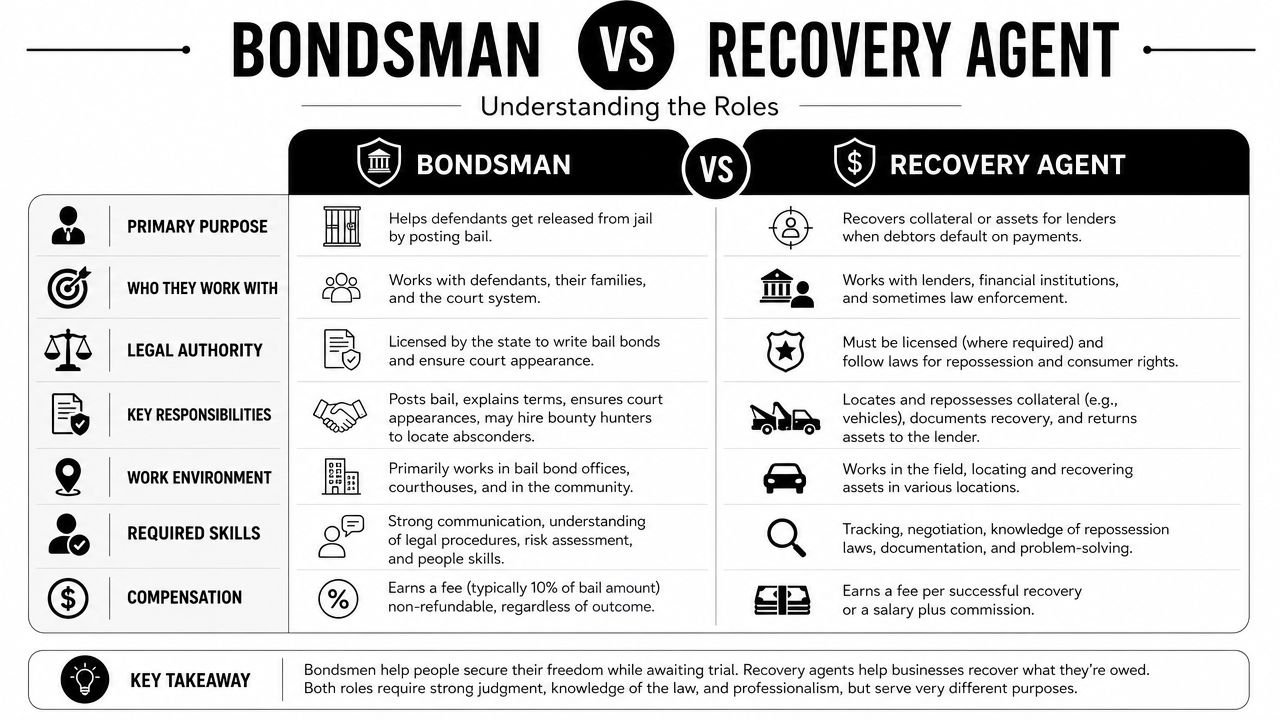
The bondsman handles the release side of the case. That means arranging the bond, explaining the paperwork, collecting the premium, and taking on financial risk if the defendant does not follow the bond terms.
The recovery agent enters later, after the bond has been put in danger by a failure to appear or another serious violation. Their job is narrower. They work to locate and return the defendant based on the bond agreement and the rules that control bail recovery work. In Colorado, that distinction matters because families often assume a recovery agent has the same authority as police. They do not. Their authority comes from the contract and state law, not from general law enforcement power.
The cleanest way to separate the two
A good way to keep it straight is to ask what problem each person is dealing with.
A bondsman helps get someone out of jail and keeps the bond in place. A recovery agent helps address what happens after the bond terms are broken. One role starts the release process. The other tries to contain the damage after a skip.
That difference also helps debunk a common myth. Recovery agents are not free-ranging enforcers with unlimited authority. States set rules for who can do this work and how it must be done. For a useful comparison of how private authority is limited in another field, see what security guards can and cannot do for California businesses and property owners. The same basic lesson applies here. Private professionals may have real responsibilities, but those responsibilities still have boundaries.
Side by side comparison
| Role | Main function | Relationship to the case | How they fit into the bond |
|---|---|---|---|
| Bondsman | Arranges and posts the bond | Works on the release side | Creates the financial guarantee that gets the defendant out |
| Recovery agent | Locates and returns a defendant who didn't comply | Works after a bond violation | Tries to protect the bond after a skip or serious breach |
It is common to confuse these roles because the same bail agency may stay in contact with the family throughout the process. A bondsman may call about paperwork, surrender options, or court information. A recovery agent may contact you if they are actively trying to locate the defendant. The overlap in communication can make the two roles sound interchangeable, but their responsibilities are still different.
For a broader explanation of the field, this guide on what bounty hunters are and how they work gives helpful background.
Practical rule: Ask one direct question at the start of the call. "Are you with the bail bond company handling the bond, or are you the recovery agent assigned to locate the defendant?" That answer tells you what role they have, what authority they likely do or do not have, and what kind of conversation comes next.
The Legal Authority of a Recovery Agent in Colorado
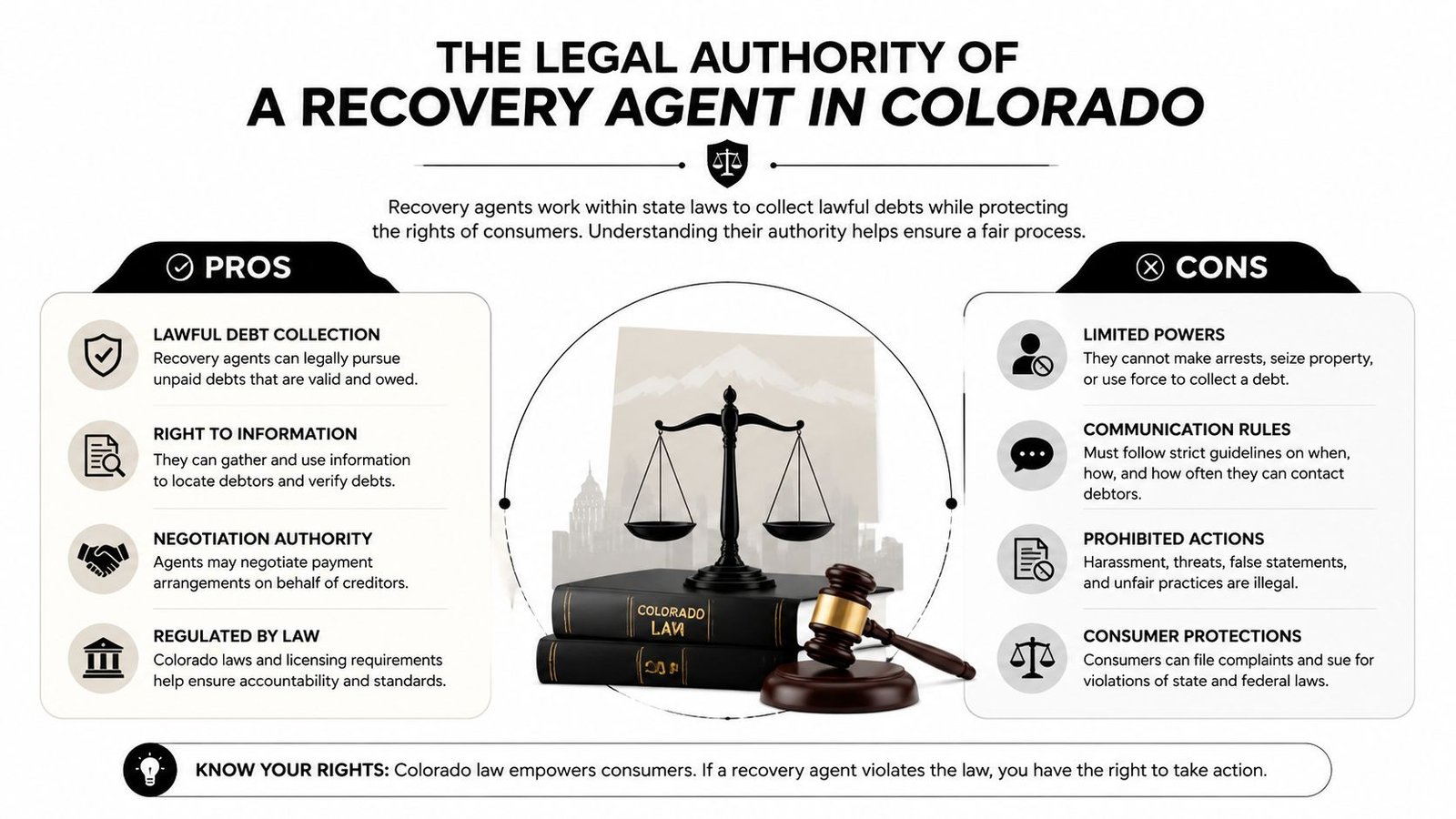
Colorado law starts from a point many families don't expect. A recovery agent is not a peace officer. That one fact changes how you should understand their authority.
According to Colorado legal analysis on bail recovery limits, bail recovery in Colorado is legally defined as actions taken by a non-peace officer to apprehend someone who failed to comply with bail bond requirements. That same source also notes that bail recovery agent is the preferred professional term over bounty hunter, and that for a successful arrest, agents are paid a commission ranging from 10% to 20% of the original bail bond's face amount.
Where the authority comes from
In plain language, a recovery agent's authority is tied to the bail bond contract and the defendant's failure to follow it. That's very different from police power. Police act under public authority. Recovery agents act within a narrower lane tied to the bond relationship and the legal rules that govern that work.
That distinction matters because families often assume, "If they can arrest someone, they can do anything police can do." That's not how it works.
What this doesn't mean
It doesn't mean a recovery agent has unlimited power to enter any property, detain anyone present, or ignore identification and safety concerns. It also doesn't mean every rumor you've heard about badges, forced entry, or unlimited interstate authority applies in Colorado.
Some states spell out strict procedures in detail. The National Conference of State Legislatures overview of recovery agents notes that in Washington, agents face detailed notification requirements tied to RCW 18.185.300 and WAC 308-19-450 before entering a defendant's residence, and Fulton County requires agents to be at least 25, be U.S. citizens, hold a valid gun license under 16-11-129, have a high school diploma or GED, and pay a $100.00 registration fee plus a $45.00 fingerprinting fee. Those examples aren't Colorado law, but they show the bigger point: this field is regulated, technical, and far removed from the Hollywood version.
For people who want a useful comparison about how private security authority is limited in another setting, this guide on what security guards can and can't do for California businesses and property owners helps illustrate the same legal principle. Private actors may have serious responsibilities, but they don't become police.
Limits families should keep in mind
If a recovery agent contacts your household, keep these boundaries in view:
- They must stay in their lane: Their role is tied to the defendant and the bond issue, not general criminal investigation.
- Third-party rights still matter: A stranger's home or unrelated occupant isn't just an empty obstacle.
- Identification matters: You can ask who they are, who they work for, and which bail agency authorized the contact.
- Insurance oversight matters too: Agencies and agents often operate under insurance requirements that can narrow what conduct is allowed in practice.
Colorado readers who want more local detail can review Colorado bounty hunter regulations.
The safest approach is to think of a bail bond recovery agent as a regulated private professional with limited authority, not as an off-duty officer with a blank check.
The Fugitive Recovery Process Step by Step
Most recoveries don't begin with a chase. They begin with a file, a phone, and a list of names.
That surprises people. They expect noise. The actual work is usually slow, procedural, and built around locating a person who has gone off schedule or gone silent.
A useful snapshot of the profession comes from the Professional Bail Agents of the United States. PBUS says most skips involve bail amounts between $1,000 and $5,000, bail agents typically pay a ten percent recovery fee, and bail enforcement agents earn an average annual salary of $60,728. PBUS also explains that many work as independent contractors, so they don't get paid solely for showing up. They get paid for resolving the assignment.
What the timeline often looks like
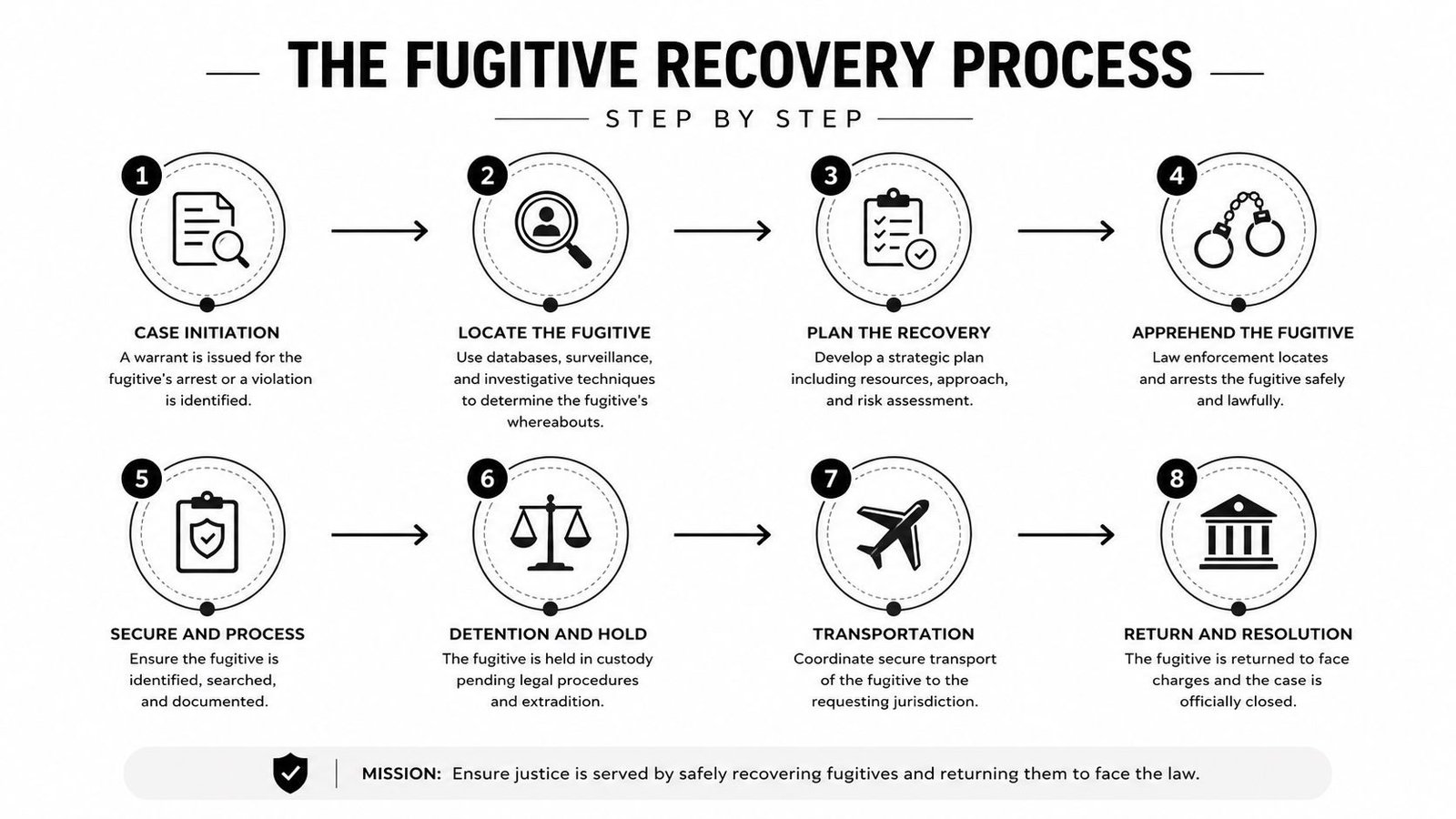
A recovery file usually opens after the missed appearance is confirmed and the bond agency decides the case needs active follow-up. From there, the work often moves through several phases.
Initial review
The agent reviews the bond file, court information, addresses, employer details, emergency contacts, and cosigner information.Phone calls and outreach
The first effort may be simple. Calls to the defendant, family, or known contacts. Sometimes the person isn't hiding at all. They're scared, embarrassed, or confused.Verification work
The agent checks whether the old address is still current, whether the car is still there, and whether routine patterns still match what was in the file.
Before any direct contact turns serious, many professionals rely on planning and protective gear suited to uncertain encounters. If you're curious how safety equipment gets evaluated in high-risk professions, this article on critical factors for police vests offers a useful parallel.
Later in the process, direct contact may become necessary.
What families often miss
A lot of this work is communication. If the defendant answers the phone, agrees to meet, and surrenders peacefully, the file can close without the kind of confrontation people fear.
A calm surrender is usually better for everyone involved than waiting until the defendant is cornered by time, stress, and bad decisions.
Typical end points include:
- Voluntary surrender: The defendant agrees to return without resistance.
- Field apprehension: The agent locates the person and takes them into custody within legal limits.
- Transfer back into custody: The defendant is delivered where the process requires.
If you're trying to understand the career side of this profession, this page on how to become a fugitive recovery agent gives a helpful industry view.
Your Rights and How to Ensure a Safe Resolution
At 10 p.m., your phone rings. The caller says they are trying to locate your son, husband, or friend because a court date was missed. Your stomach drops. In that moment, clear steps matter more than fear.
A recovery agent is not a police officer with unlimited authority. In Colorado, that point matters. Their authority comes from the bond agreement and from state rules that govern the bail business, including insurance oversight. That means you should treat the contact seriously, but you do not have to assume the person can do anything they want.
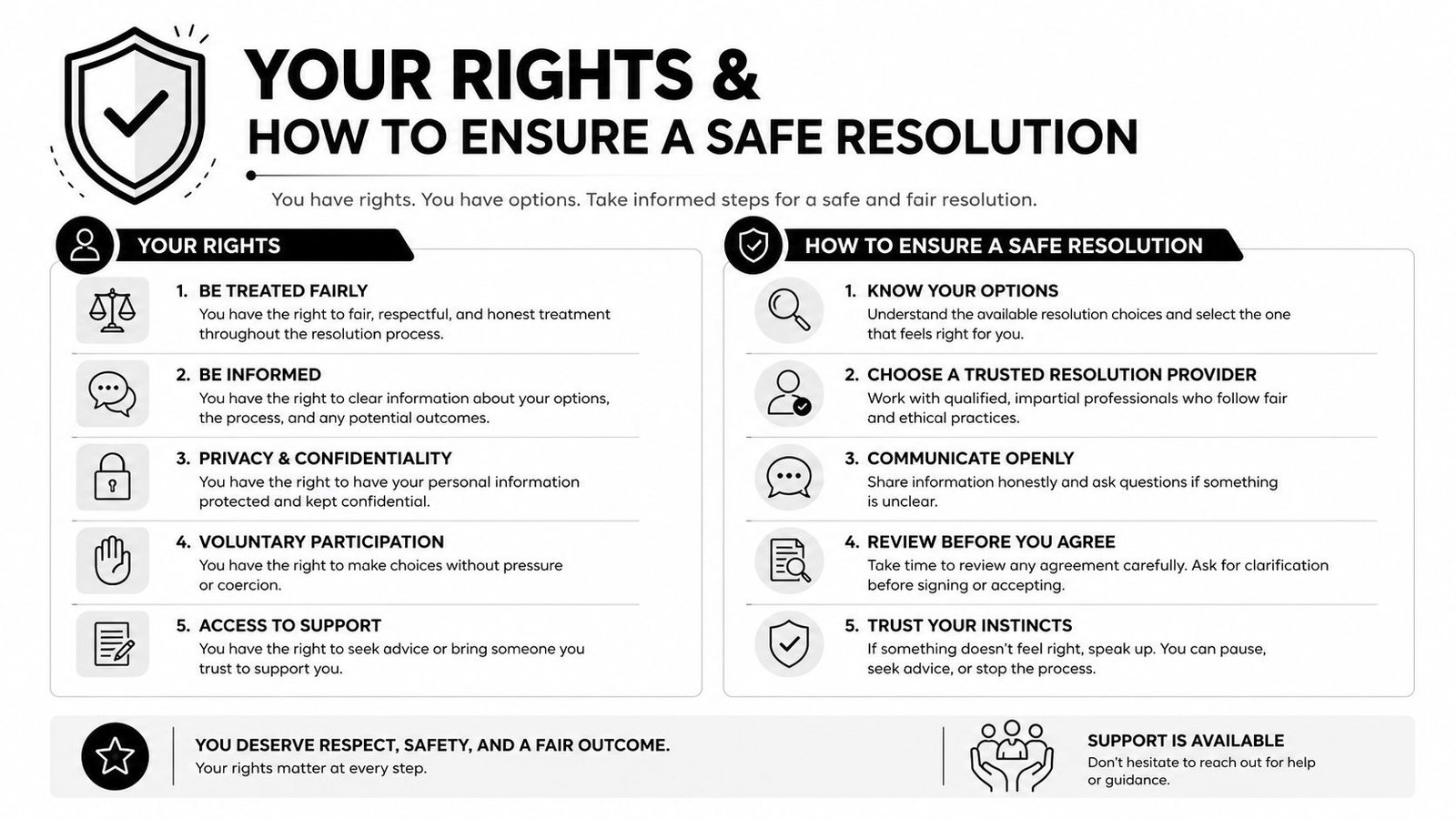
What a family member or cosigner should do
Start by slowing the moment down. A missed court date feels like a house fire, but your job is not to throw water everywhere. Your job is to find the shutoff valve. That usually means confirming who is calling, finding out whether a peaceful surrender is still possible, and keeping a written record of what you are told.
If you are the cosigner, focus on facts.
- Verify identity: Ask for the person's full name, the bail agency they work for, and a callback number. Then contact the agency directly through a number you find independently.
- Ask for the status of the bond: Find out whether the defendant can surrender voluntarily, where that should happen, and whether there is a deadline.
- Write everything down: Record names, times, phone numbers, and instructions. Stress blurs memory fast.
- Do not interfere physically: Hiding the defendant, blocking access, or trying to transport them in secret can create more legal trouble and more risk.
Families often worry that asking questions will make them look uncooperative. It usually does the opposite. Calm verification shows that you are trying to resolve the problem safely.
What the defendant should do
If you are the person who missed court, the safest move is usually the plainest one. Make contact early and ask for surrender instructions. Silence gives everyone fewer options.
Use this checklist:
- Call before contact turns into a search in person: Early communication often makes a controlled surrender easier.
- Follow instructions exactly: Go to the right place, at the right time, with the documents you were told to bring.
- Stay sober and calm: Alcohol, drugs, arguments, or surprise companions can turn a simple surrender into a dangerous scene.
- Tell your family the truth: They cannot help if they are working with half the story.
Safety note: If you are unsure whether the person contacting you is legitimate, verify through the bail agency before opening the door or agreeing to meet.
Many families also worry about weapons and use of force. If that concern is on your mind, this guide on whether a bounty hunter can carry a gun explains the issue in plain language.
The safest way to lower tension
Cooperation protects everyone when it is paired with verification and clear communication. That does not mean giving up your rights or accepting rude or reckless behavior. It means reducing confusion, avoiding sudden confrontations, and steering the situation toward a scheduled surrender instead of a chaotic encounter.
The myth is that recovery agents have free rein, like they are outside the rules. In Colorado, they are still tied to the bond contract, the bail agency behind them, and the state system that oversees that business. For families, that is the key point to remember. Stay calm, confirm who you are dealing with, and push the situation toward an orderly resolution.
Resolving the Situation and Getting Help
Once the defendant is back in custody or completes a proper surrender, the situation usually becomes more manageable. The search phase ends. The next questions are about court, the bond, and what the cosigner may still need to do.
For many families, that shift matters. Uncertainty is often the hardest part. A known process, even a stressful one, is easier to handle than waiting for a knock at the door and wondering what happens next.
At this stage, focus on the next concrete steps:
- Confirm where the defendant is being held and what court date or hearing comes next.
- Ask the bail agency what the bond status is and whether the bond has been revoked or can be addressed in court.
- If you are a cosigner, ask what paperwork, payment obligations, or updates are expected from you.
- Write down names, times, and instructions so nothing gets lost in the stress.
A recovery agent's role is limited here. They are not deciding criminal charges, setting new bond terms, or acting with police powers. In Colorado, their authority comes from the bond agreement and operates within a regulated insurance system. Once the person is returned, the matter shifts back to the court and the bail agency.
If you need immediate guidance, Express Bail Bonds provides bail bond help across Colorado.
Clear information lowers panic. Get the facts, write them down, and deal with one step at a time.
Frequently Asked Questions About Bail Recovery
Can a recovery agent act like police
No. In Colorado, a recovery agent is not a peace officer. That's why it's important to stop using movie logic and start asking practical questions about identity, authority, and the bond involved.
What if the defendant is staying with relatives
That can complicate the situation because other people's rights and safety matter. If you're the relative, don't assume silence will protect anyone. The better move is to contact the bail agency, verify the situation, and ask how a voluntary surrender can happen safely.
Can a cosigner help stop things from getting worse
Yes. A cosigner often has the most power to lower the temperature. If you maintain contact, give truthful information, and encourage surrender instead of hiding, you improve the odds of a controlled resolution.
Should the family pay a recovery agent directly
Families should be careful here. Payment questions should go through the bail agency that holds the bond, not through improvised side deals made in a moment of panic. If money is part of any discussion, get clarity from the agency in writing.
What if the defendant is scared to turn themselves in
That's common. Fear, shame, and confusion cause a lot of missed court situations to spiral. But avoiding contact usually makes every consequence harder. A planned surrender is often safer than waiting for field contact.
If you're dealing with a missed court date, a bond problem, or questions about surrender, contact Express Bail Bonds. Their team serves Denver and communities across Colorado, and you can also find local jail and bail information through their Jefferson County page and Centennial page.