You’re probably coming at this from one of two places.
Either you like the idea of fugitive recovery work and want the straight answer before you spend money on training, or you already know the bail side of the business and want to know whether recovery work is a real path in Colorado. Both are smart reasons to ask.
The short answer to how do you become a fugitive recovery agent is simple. Learn your state’s rules, get trained, build real field skills, carry the right insurance, and earn trust with bail bond agencies that assign work. The hard part is that many individuals stop at the training step and think they’re ready. They aren’t.
This job can pay well, but it doesn’t reward swagger. It rewards patience, paperwork, judgment, and restraint. If you want a practical answer instead of television nonsense, start there.
The Reality of Fugitive Recovery Work Beyond Television
A bounty hunter is often imagined kicking in doors, making dramatic arrests, and cashing a check by sunrise. That picture sells TV. It does not build a career.
The work involved is slower, less glamorous, and more disciplined. A lot of your time goes into records, addresses, phone numbers, social circles, court dates, surveillance, and confirming information before you move.

What the work usually looks like
A productive recovery agent spends far more time preparing than grabbing. That means:
- Skip tracing: Working through public records, known associates, old addresses, employer leads, and vehicle information.
- Interviews: Talking to family, neighbors, coworkers, and anyone else connected to the case without escalating the situation.
- Surveillance: Waiting, watching patterns, documenting movements, and confirming identity before contact.
- Case review: Reading the bond paperwork and understanding exactly who you’re looking for and why the agency wants them returned.
- Documentation: Writing down what you did, when you did it, and what you learned.
If you need a practical primer on the research side, this guide to conducting comprehensive online background checks is useful because it reflects how much of the early work happens before you ever approach a location.
The temperament that actually works
The best new agents are not usually the loudest people in the room. They’re the ones who stay calm, keep notes, and don’t let ego make decisions.
Practical rule: If you love confrontation, this job will eventually hurt you, your case, or your reputation.
What works in the field:
- Patience: People surface when routines slip.
- Clear communication: Families, bondsmen, and partners need updates they can rely on.
- Emotional control: Bad targets make worse decisions. You can’t join them.
- Observation: Small details solve cases.
- Humility: If the intel is weak, you back off and build a better file.
A lot of new people also confuse authority with ability. They think the badge-looking gear or tactical clothing is the job. It isn’t. The job is producing lawful, safe results for the agency that hired you. If you want a grounded overview of that role, this page on bounty hunters helps frame the basics: https://expressbailbonds.com/what-are-bounty-hunters/
What fails in the real world
Three habits wash people out fast:
- Running on rumors
- Using force as a first option
- Treating every case like an action scene
A recovery agent who can verify, plan, de-escalate, and report clearly is far more valuable than one who wants excitement. That’s the first truth to accept before you buy gear, sign up for classes, or tell anyone this is your next career move.
Navigating Colorado's Legal and Licensing Labyrinth
A new recovery agent in Colorado can make the mistake before the first case even lands. He buys cuffs, a vest, and a light package, prints business cards, then learns a bondsman will not hand him a file because his paperwork is thin, his insurance is missing, and his understanding of legal limits is shaky. That is an expensive lesson.
Colorado rewards the agent who handles compliance first. The tactical side gets attention, but the legal side decides whether you get hired, what you can charge, and how much risk you carry on every assignment.
Start with Colorado law and agency policy
State rules are only part of the picture. In this line of work, the bond agency's standards matter just as much because they are deciding whether you are worth the liability. A good first pass for general licensing information can help you understand how regulated professions usually handle qualifications, applications, and compliance. Then bring your focus back to Colorado and the agency that may hire you.
If you expect to assist on cases that cross state lines or involve different recovery practices, study the state-by-state differences before you promise anything to a bondsman. This overview of bail enforcement rules by state is a useful starting point.
What a Colorado bondsman wants to see
A serious agency is looking at more than your attitude. They want to know whether you can work a file without creating a lawsuit, a bad arrest, or a loss on the bond.
Keep these basics in order:
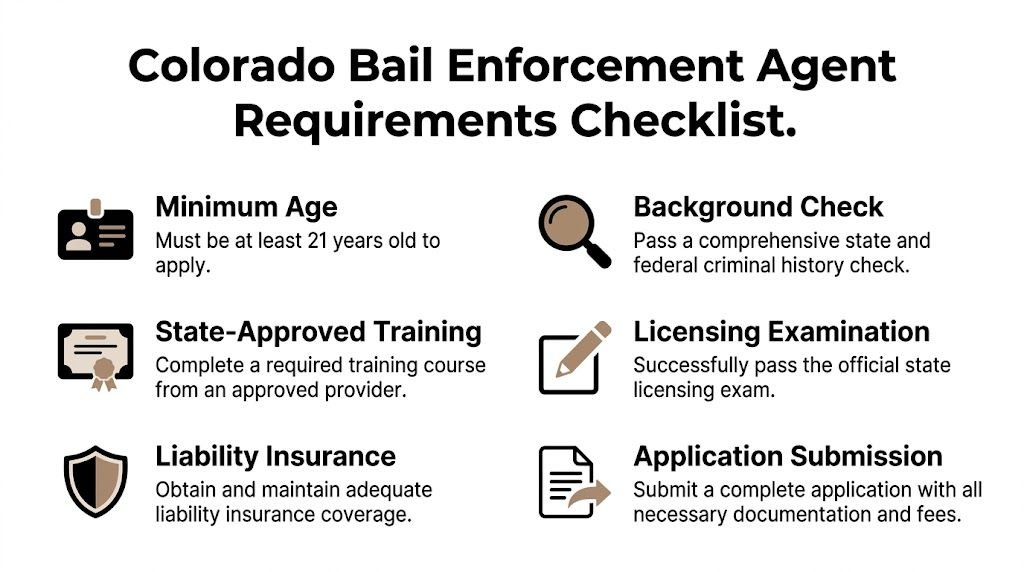
- Proof you meet basic entry standards: Adult status, identification, and any background screening or fingerprinting the agency or applicable rules require.
- Education and training records: A high school diploma or GED is commonly the floor. Practical training matters more than fancy credentials, but you still need clean documentation.
- Insurance paperwork: Many newcomers skip this until a bondsman asks for it. That delay costs work.
- Clear recordkeeping: Keep contracts, certifications, IDs, and incident documentation organized from day one.
- A realistic understanding of authority: You need to know where your role starts, where it stops, and when to call counsel or law enforcement instead of improvising.
That last point affects your income more than beginners expect.
Compliance is part of your profit model
Every legal mistake gets expensive fast. One bad entry, one sloppy detention, or one misunderstanding about your authority can cost far more than your first month of field income. Even if nothing criminal comes from it, you can lose agency relationships, pay higher insurance premiums, or spend your own money defending a civil claim.
That is why experienced bondsmen ask hard questions early. They are not trying to haze you. They are pricing your risk.
An agent who understands the rules is easier to insure, easier to contract, and easier to trust with better files. That usually means more consistent assignments and better long-term earnings. An agent who treats compliance like paperwork overhead usually stays broke, because every agency can feel the liability coming.
Handle the legal side before you market yourself
Do not tell the market you are ready until your file says you are ready. Talk to Colorado bail bond agencies. Ask what documentation they require from independent recovery agents, what insurance limits they expect, and what conduct will get an agent removed from their rotation.
That groundwork is not glamorous. It is how you avoid burning cash on gear before you have a lawful, insurable way to earn it back.
Essential Training and Certification Pathways
A rookie in Colorado spends money on a weekend class, buys a vest, prints business cards, and starts calling bond offices on Monday. Two weeks later, he still has no files, no mentor, and no clear idea how to write a field report that will hold up if a pickup goes sideways. That is how people waste startup cash in this line of work.
Training has to do two jobs at once. It has to make you safer in the field, and it has to make you worth hiring. If it does not improve both, it is an expense, not an investment.

The core subjects worth paying for
New agents often overpay for flashy material and underinvest in the boring skills that produce recoveries. The work usually turns on preparation, paperwork, and judgment.
Put your time and money into training that covers:
Skip tracing
You need to work addresses, utilities, social connections, employment leads, vehicle patterns, and false trails. Good skip tracing cuts wasted drive time and raises your close rate.Legal process and bond mechanics
Learn how a file starts, what documents matter, how forfeiture pressure affects the agency, and what authority you do and do not have on a recovery.Arrest, control, and transport
Handcuffing, search awareness, positioning, and vehicle transport discipline are basic field skills. Poor technique creates injuries, complaints, and insurance problems.De-escalation and interview work
A calm conversation with a family member, employer, or indemnitor often gets better results than force. Professionals know how to lower tension and collect usable information.Report writing
If your paperwork is weak, the agency remembers that longer than your tough talk. Clear reports protect the bondsman, support the file, and help you get called again.
Mentorship is what turns training into income
Certificates help. Supervised reps matter more.
Most bond offices are not looking for a brand-new agent who only knows the classroom version of the job. They want someone who can sit on surveillance without getting burned, knock on a door without escalating the scene, and document every step afterward. Those habits usually come from working around experienced people.
A better path looks like this:
- Take a solid entry-level course
- Ride along or observe, if lawfully arranged through an experienced agent or agency
- Study real files and learn how the bondsman evaluates risk
- Practice reports, phone work, and skip tracing before you expect solo assignments
- Build a reputation for showing up prepared, calm, and insurable
That last word matters. Insurable. Bond offices in Colorado are making a business decision every time they hand you a file. Training that lowers their risk gives you a better shot at steady work and a faster return on what you spent to get started.
If you want a clearer picture of what agencies expect from the role itself, read this overview of a bail enforcement agent job before you spend more money on classes.
Training that actually improves your first-year odds
The minimum path and the smart path are rarely the same.
A basic course may get your foot in the door, but extra instruction is what keeps small mistakes from turning into expensive ones. New agents who want to become profitable sooner should add skills that reduce failed attempts, injuries, and wasted mileage.
The best add-on training usually includes:
- First aid and trauma response
- Defensive tactics
- Surveillance methods
- Interview and information gathering
- Firearms instruction, if you lawfully carry
- Vehicle and transport procedures
- Court and paperwork literacy
Some newcomers also benefit from professional associations and industry networks, not because a directory magically creates work, but because relationships do. Groups tied to bail enforcement and fugitive recovery can help you meet working agents, hear how different shops run files, and find apprenticeship opportunities that are hard to get cold.
The agent who keeps improving stays useful. The agent who stops learning becomes a liability.
This video is worth watching as part of that broader education:
Treat training like a budget decision. Every course should answer a simple question: will this help you get files, work them safely, and get paid again by the same agency. If the answer is no, keep your money for the tools and coverage you will need later.
The Business Side Gear Insurance and Startup Costs
Most guides fall short here. They’ll tell you how to train. They won’t tell you what it takes to operate like a business.
That gap matters because recovery work is often contractor work. You may be responsible for your own training, insurance, equipment, travel, communication tools, and administrative setup before you see your first paid recovery.
The hard truth about startup budgeting
One source notes a 2022 training course fee of $550 and references insurance requirements, but it does not provide a complete startup-cost picture, which is exactly why the ROI side of this career is so often misunderstood (how-to-become-a-bounty-hunter.com/states/california/).
That means if you want to build a real plan, you have to think in categories instead of pretending one class is the whole investment.
| Expense Category | Estimated Cost (Low-End) | Estimated Cost (High-End) | Notes |
|---|---|---|---|
| Initial training course | $550 | $550 | One cited course fee appears in the source above. |
| Licensing or application-related costs | Varies | Varies | Confirm current Colorado requirements and any related filing costs directly before budgeting. |
| Liability insurance | Varies | Varies | Often necessary for agency relationships and personal asset protection. |
| Gear and restraints | Varies | Varies | Buy for reliability and legality, not for appearance. |
| Communications and data tools | Varies | Varies | Phone, records access, mapping, and documentation tools add recurring cost. |
| Vehicle and travel expenses | Varies | Varies | Recovery work burns fuel and time. Local work still adds up. |
| Continuing education | Varies | Varies | The people who stay current stay marketable. |
Where new agents usually overspend
Beginners often spend too much on visible gear and too little on the things that help them get hired.
They buy tactical-looking equipment before they have:
- Insurance paperwork
- Clean records organization
- A professional case-update process
- Reliable transportation
- Training that agencies respect
A bondsman cares more about whether you can receive a file, work it cleanly, and report back than whether you look like a movie character.
Why insurance is not optional in practice
Even when a state discussion treats insurance like a business detail, professionals know better. Insurance protects your personal assets, signals seriousness, and can be part of what makes an agency willing to trust you with work.
If you’re trying to understand why the economics matter on the bail side too, this page is useful context: https://expressbailbonds.com/how-do-bondsman-make-money/
Local market relationships matter just as much. In fast-moving suburban and metro areas, agencies want recovery partners who are organized and available. This local page reflects the kind of market where professionalism and response time matter: https://expressbailbonds.com/bail-bonds-centennial/
Cheap gear is annoying. No insurance can be catastrophic.
Thinking about ROI the right way
Don’t ask, “How fast can I make money?” Ask, “How long until I’m trusted with enough quality assignments to justify the overhead?”
That’s the key question.
The answer depends on your training, your reputation, your market, and your agency relationships. Some people burn money because they enter the field with no mentor and no file source. Others build carefully, shadow experienced operators, and become useful fast enough to create repeat work.
If you treat this like a side hustle built on attitude, your costs will feel heavy. If you treat it like a risk-managed service business, your decisions get sharper.
Forging Partnerships with Bail Bond Agencies
You can have training, gear, and confidence and still have no career if no agency will hand you a file.
That’s the part new people underestimate. Fugitive recovery work starts with trust. Bail bond agencies aren’t shopping for the most aggressive personality. They’re looking for someone who lowers risk, protects the bond, communicates well, and doesn’t create new legal trouble.

What agencies actually look for
If I were advising a new recovery agent on how to present themselves, I’d tell them to bring proof, not promises.
A professional introduction packet should include:
- Training records
- Any relevant prior experience
- Proof of insurance
- A clean resume
- A short explanation of your service area
- A clear contact method
- A sample of how you provide updates
That last item matters more than people think. Bondsmen want to know whether they’ll hear from you after assignment, not whether you can talk tough in the office.
What to say when you approach a bondsman
Keep it direct. Don’t oversell.
You’re not there to pitch heroics. You’re there to show that you understand chain of communication, discretion, documentation, and legal limits. A good opening sounds more like a contractor than a cowboy.
Try this approach:
- State your background plainly
- List your current training and coverage area
- Explain how you handle updates
- Show proof of insurance
- Ask what they require from outside recovery partners
That tells an agency you understand the assignment is part of their business, not your stage.
Understanding the pay structure
Recovery pay is usually tied to successful performance. According to Indeed’s career overview, compensation is typically 10% of the original bail amount per successful recovery, with annual earnings often averaging $50,000 to $60,000, and top earners exceeding $80,000 in high-volume areas (Indeed).
That sounds attractive, and it can be. But read it correctly. Performance-based pay means dry spells are part of the business. Cases vary. Markets vary. Your relationships with agencies matter.
A recovery agent doesn’t get paid for looking busy. The pay comes from closing files.
If you want to see the type of local professional operation a recovery agent may want to know in Colorado, review this Jefferson County page: Jefferson County Golden Colorado bail bonds. For local presence and professionalism, a Google business profile like this one also matters when you’re evaluating who you want to work with: Golden CO Google Maps profile.
How partnerships are earned
Agencies remember a few things:
- Did you answer your phone
- Did you stay inside your lane
- Did you keep them updated
- Did you make their problem smaller or bigger
You earn repeat business by being predictable in the best way. That means no drama, no inflated stories, no missing paperwork, and no confusion about what happened in the field.
That’s how you move from “new person asking for a shot” to “someone we can call again.”
Your First Apprehension and Building a Long-Term Career
Your first apprehension shouldn’t be the moment you decide who you are in this business. That decision gets made earlier, in how you prepare, how you communicate, and how you control yourself when a case gets tense.
The safest first recovery is usually the one that looks boring from the outside. Good file review. Good intel. Good timing. Good communication. Clear handoff.
What matters on the first real file
Before contact, make sure you can answer the basics:
- Who exactly is the defendant
- What is the current verified location information
- Who needs updates and when
- What are the likely risks at contact
- What is your plan if the location or identity is wrong
That last point saves embarrassment and liability. New agents get in trouble when they rush to be first instead of right.
This is also where de-escalation starts paying off. Most agencies value a recovery that ends cleanly more than one that ends dramatically. Your language, posture, and pacing matter. So does your restraint. Use only the force the situation lawfully requires.
Good recovery work is controlled work. Sloppy adrenaline gets expensive.
Build habits that keep you employable
A long career comes from repeatable habits.
- Document each step: Keep notes, times, addresses, calls, and outcomes.
- Protect the file: Share information only with the people who need it.
- Report promptly: Agencies shouldn’t have to chase you for updates.
- Review mistakes critically: Every bad lead, missed opportunity, or messy contact should teach you something.
There’s also value in understanding the larger process around warrants and court appearances, because your work sits inside that system. This resource is a useful reference point: https://expressbailbonds.com/how-to-check-if-someone-has-a-warrant/
Reputation compounds faster than skill alone
Plenty of people get competent. Fewer become trusted.
Trust grows when agencies know you won’t freelance legal judgment, won’t exaggerate results, and won’t disappear when a case gets difficult. The longer you work, the more your name matters. In this field, your reputation becomes part of your qualification.
If you’re new, don’t chase volume first. Chase consistency. A careful first year builds the foundation for every file that comes after it.
If you need help understanding how fugitive recovery work connects to Colorado bail practice, or you want to connect with an established agency that works statewide, reach out to Express Bail Bonds. You can also review their local presence in Centennial and their Arapahoe County Google Maps profile to get a feel for the kind of professional operation serious recovery agents should know.