When a family member calls from jail, a common first reaction is to grab their phone and search fast. Terms like AA Professional Bail Bonding show up because they sound established, urgent, and easy to remember. In that moment, you're not looking for clever branding. You need to know who can explain the process clearly, what the bond really costs, and how to get someone released without making a bad decision under pressure.
That's what this guide is for. If you searched for AA Professional Bail Bonding, you're really searching for a professional bail agent who knows Colorado procedure, moves quickly, and tells you the truth about the risks as well as the solution.
Searching for AA Professional Bail Bonding
A lot of people assume “AA” points to one specific company. Sometimes it does. Often, it's just a naming tactic that dates back to phone book listings and directory placement. Companies used “AA” or similar names to appear near the top in alphabetical listings.
What matters more than the name is whether the agency handles professional surety bail bonds correctly, communicates well, and knows the jail where your loved one is being held. Bail bonding isn't some tiny corner service. It's a regulated national market with projected $3.5 billion in industry revenue in 2025, according to IBISWorld's U.S. bail bond services industry overview.
What families usually need right away
Most callers need answers to the same practical questions:
- Where is the person being held
- What is the bond amount
- Is the bond a surety bond, cash-only bond, or something else
- Who can cosign
- How fast can the release process start
Those questions matter more than the company name on the screen.
The right bail agent lowers confusion first. Speed matters, but clarity matters just as much, because one wrong assumption can delay release or create a problem for the cosigner later.
What to look for instead of a catchy name
If you're comparing agencies, start with process, not promises. Look for a company that can explain the bond type, the cosigner's responsibility, and the jail's release procedure in plain language. If you want a practical benchmark for evaluating agencies, this guide to what makes strong bond companies in Colorado is a useful place to start.
A professional bondsman should sound calm, not vague. They should ask for the defendant's identifying information, explain what documents are needed, and tell you what part of the process depends on the jail rather than the bond agent. That's the difference between marketing and actual help.
Understanding Professional Surety Bonds in Colorado
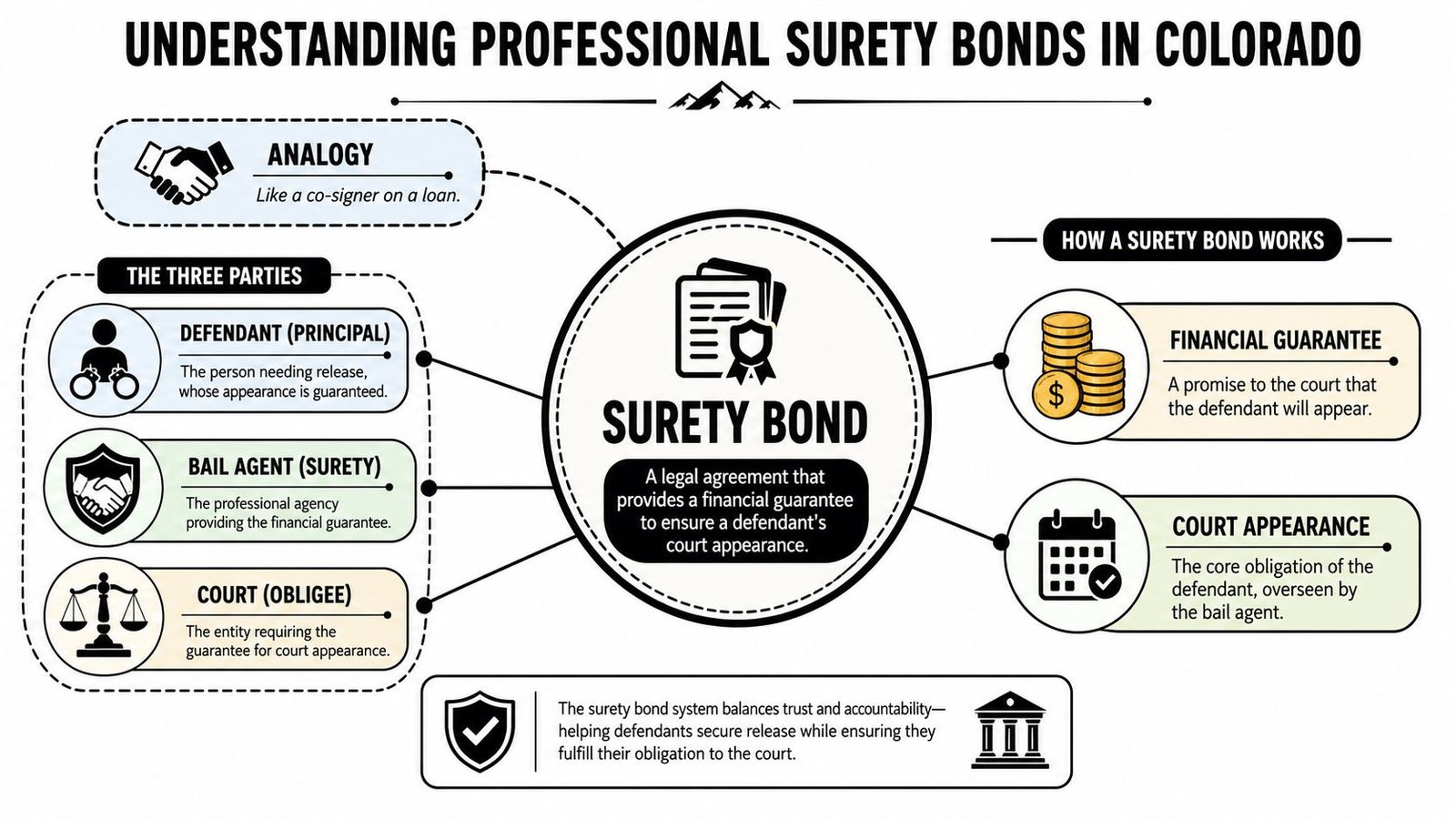
A surety bond is the core product in professional bail bonding. The easiest way to understand it is this. The bail agent is giving the court a financial guarantee that the defendant will appear as required.
Who is involved in the bond
There are three main parties in a surety bond arrangement:
- The defendant is the person who needs release and must appear in court.
- The court requires a financial guarantee before release.
- The bail agent provides that guarantee through the surety bond.
There's usually a fourth practical player too. That's the cosigner, also called the indemnitor. This is the person who agrees to back the defendant and accept financial responsibility if the defendant doesn't meet the bond conditions.
Why a surety bond exists
Many families can't put up the full cash bail amount on short notice. A professional bail bond exists because the agent guarantees the full bond amount to the court, while the family pays a nonrefundable premium and may also pledge collateral depending on the risk. That's the basic structure described in Georgia's explanation of insurer bail bonding and collateralized risk.
This is why a bail bond is not a flat convenience fee. It's a collateralized credit-risk product. The agent is taking on exposure tied to whether the defendant appears at every required hearing and complies with bond conditions.
Practical rule: If someone tells you bail bonding is “just paperwork,” they're leaving out the most important part. The bond creates real financial liability for the agency and the cosigner.
How this differs from cash bail
With cash bail, someone pays the full amount directly to the court. With a surety bond, the family pays a premium for the bonding service instead of tying up the entire bond amount in cash. That distinction is why surety bonding remains a common option in states that allow commercial bail.
If you want a broader primer on how bond obligations fit within the world of surety bonds and commercial insurance, that resource helps explain the larger framework. For a Colorado-specific explanation of the jail release side, this page on what a surety bail bond is is also useful.
The Cost of Freedom Bail Bond Fees and Cosigner Duties
Money is usually the first question families ask, and it should be. You need a direct answer before you sign anything.
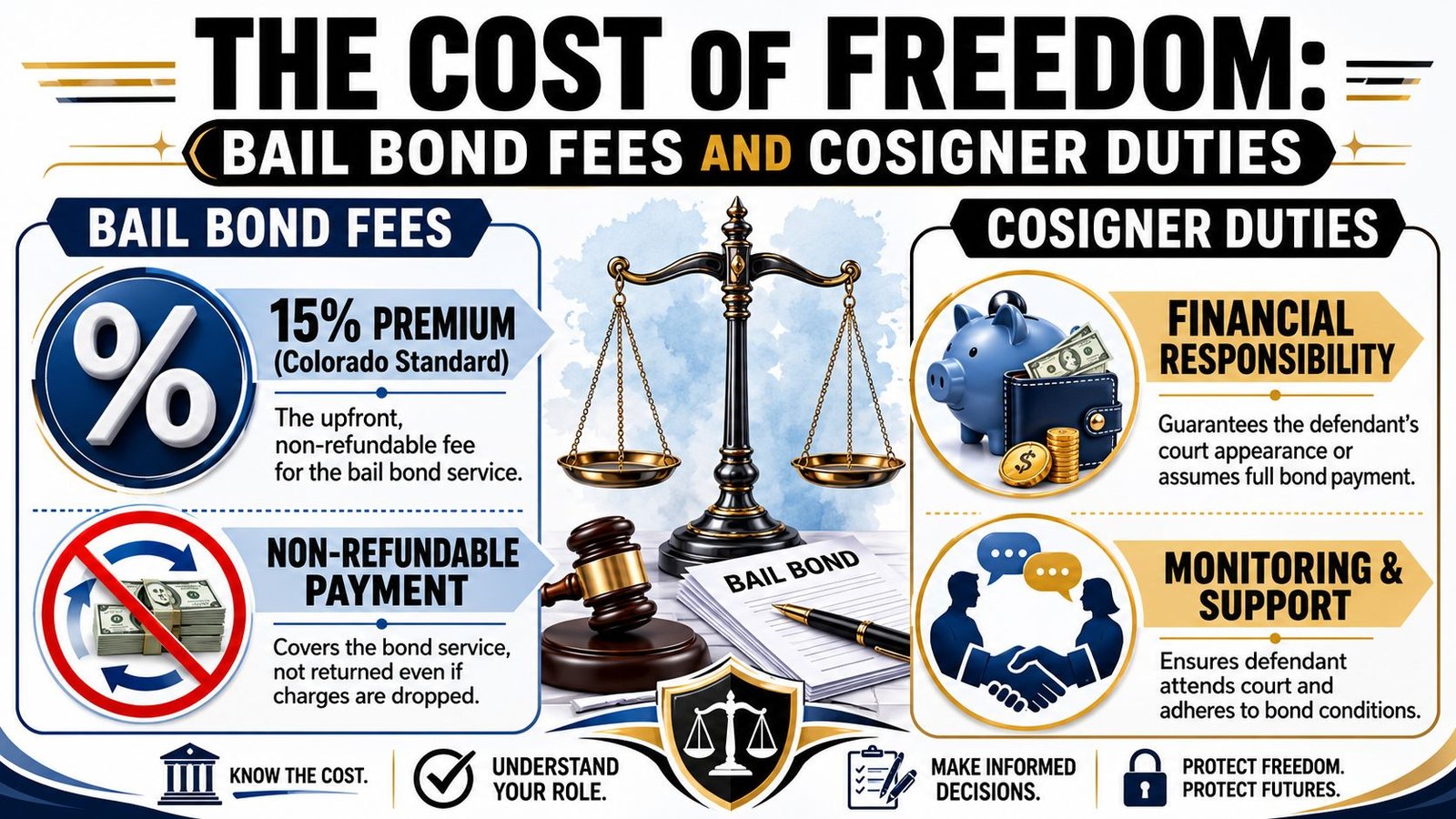
The standard commercial bail premium is typically 10% to 15% of the total bail amount, and professional bail agents help secure release for more than 2 million people each year in the United States, according to the Center for American Progress fact sheet on commercial bail. In Colorado practice, families commonly encounter the standard 15% premium, and for some larger bonds a qualified cosigner may help open the door to a lower rate.
What the premium does and does not do
The premium is the fee for the bonding service. It is nonrefundable. It doesn't become a court deposit, and it doesn't come back just because the case ends, charges are reduced, or the defendant does everything correctly.
That point causes a lot of confusion. Families often think they are “putting money toward bail.” In a surety bond, they are paying for the agent to post the financial guarantee.
What a cosigner is agreeing to
The cosigner's role is serious. This person is not just an emergency contact. The cosigner is agreeing to stand behind the bond and the defendant's performance under it.
A strong cosigner usually has some mix of the following:
- Stable residence so the agent knows where official contact can be made.
- Reliable income because the bond creates financial exposure.
- Verifiable identity including valid identification and accurate personal information.
- A realistic relationship to the defendant so support and communication are possible during the case.
Here's the part families need to hear plainly. If the defendant misses court, disappears, or violates release terms in a way that triggers bond trouble, the cosigner can face financial consequences.
A good cosigner doesn't sign because they feel pressured. They sign because they understand the defendant's habits, know how to stay in contact, and are willing to help keep the case on track.
Questions to ask before anyone signs
Before a cosigner agrees, ask:
| Question | Why it matters |
|---|---|
| Can the defendant reliably appear in court? | Court appearance is the core obligation behind the bond. |
| Does the defendant have transportation and housing? | Practical instability often leads to missed dates. |
| Can the cosigner stay in regular contact? | Silence creates risk fast. |
| Is collateral being requested? | The cosigner needs to understand what property or assets are at stake. |
If you need a plain-language explanation of the legal role, this guide on what a bail bond cosigner does lays it out clearly.
How to Secure a Bail Bond in Colorado Fast
Your phone rings late at night. A family member has been booked, everyone is talking at once, and half the information is wrong. In Colorado, fast release usually comes from getting the facts straight first and starting the bond in the right order.
People often search for “AA Professional Bail Bonding” because they want a quick, reliable answer. Fair enough. The name itself does not tell you much. What matters is whether the agency handles Colorado surety bonds every day, verifies jail status before writing, and can move paperwork without creating errors that slow release.
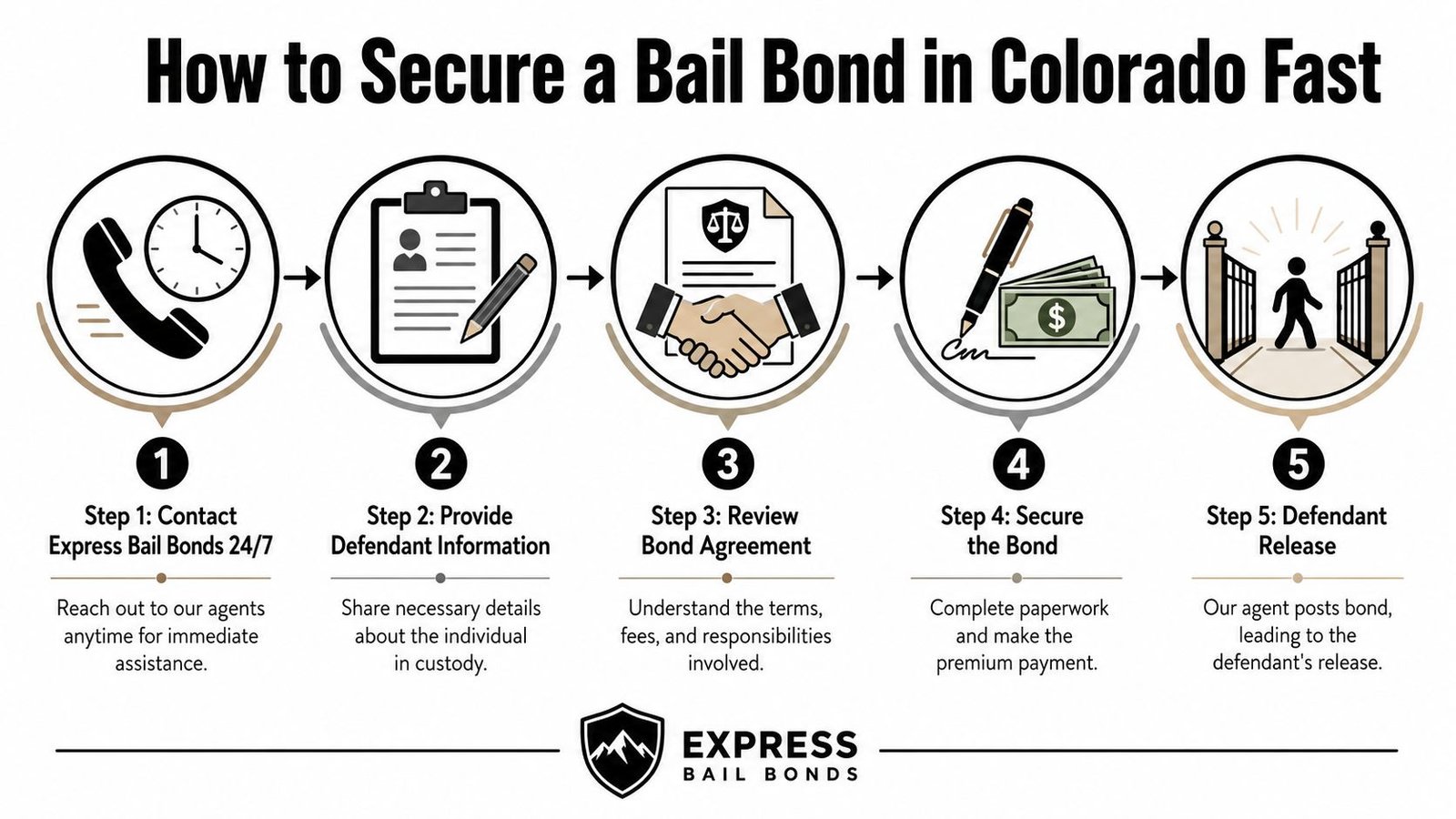
The fastest order of operations
Make contact as soon as booking is confirmed
Call or text a licensed Colorado bail bond agency once you know the person is in custody. A lot of time gets lost when families wait for secondhand updates instead of confirming the arrest and starting the process.Verify the defendant's exact information
Have the full legal name, date of birth, and the county or facility holding the defendant. A booking number or case number helps. If you are still trying to confirm location, a Colorado jail inmate search resource can save time before paperwork starts.Confirm the bond type and any hold
Release depends on more than the bond amount. Some bonds are surety-eligible. Some are cash-only. Some defendants have additional holds, advisements, or release conditions that affect timing.Review the agreement before signing
The cosigner needs to read the indemnity agreement, premium terms, and any collateral requirements. Fast paperwork still has to be correct paperwork.Complete signatures and payment
Many agencies can handle applications, signatures, and payment electronically. That is often the quickest path for working families, relatives in another county, or out-of-state cosigners.
Express Bail Bonds handles Colorado surety bond applications, electronic documents, and remote payment processing for jails across the state. That can shorten the process when the bond qualifies and the information provided is complete.
Before you go further, it helps to watch the process explained visually.
Information to have ready
The process moves faster when the caller has the basics organized.
| Information Type | Details Needed |
|---|---|
| Defendant identity | Full legal name and date of birth |
| Jail details | County jail, detention facility, or holding location |
| Case details | Booking number or case number if available |
| Cosigner identity | Valid government-issued ID and current contact information |
| Financial review | Proof of income, employment details, or other qualifying information if requested |
| Release planning | Current address, phone contact, and expected transportation after release |
What slows things down
The same problems come up every week, and they are usually preventable.
- Guessing at the defendant's name, birth date, or jail location instead of confirming it first.
- Assuming every bond works the same way when the case may involve a cash-only bond or another hold.
- Using the wrong cosigner because that person cannot qualify or cannot provide identification quickly.
- Driving to the jail before paperwork is started when remote processing may be available and faster.
To get someone out quickly, accuracy matters more than panic. A complete file with the right information usually moves faster than rushed paperwork that has to be corrected.
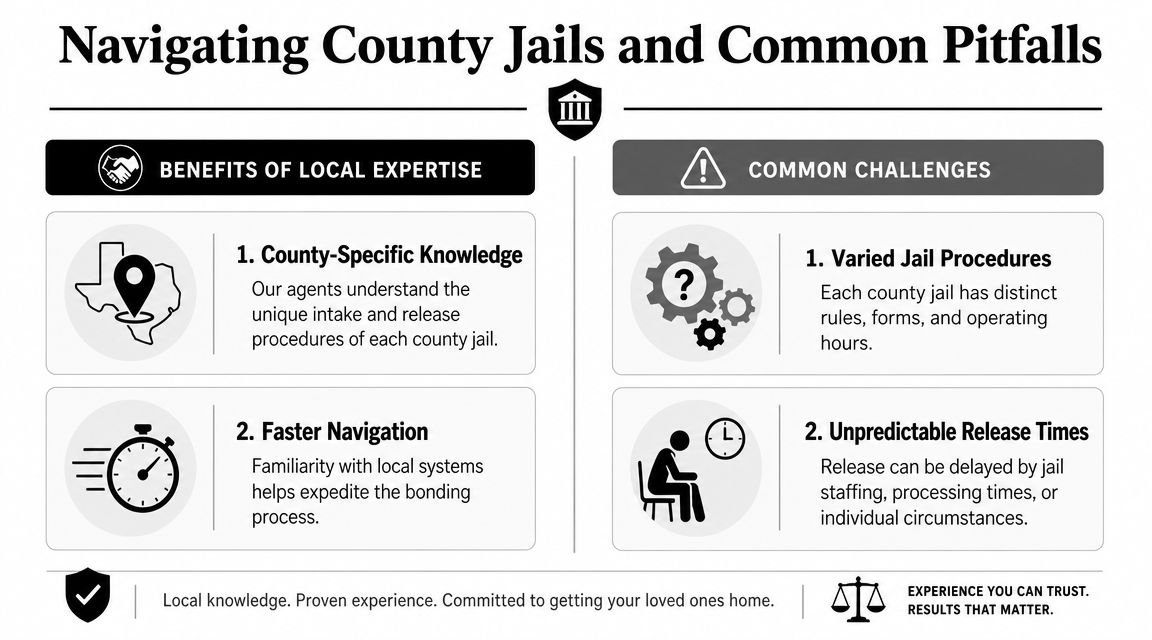
Navigating County Jails and Common Pitfalls
Colorado doesn't have one uniform jail release experience. Every county runs its own facility, paperwork flow, intake sequence, and release rhythm. That means the same bond can move differently depending on where the defendant is held.
Why local jail familiarity matters
A bondsman who knows county-specific procedure can often spot issues early. Jefferson County in Golden may present one set of intake and release habits. Arapahoe County in Centennial may move differently based on staffing, housing assignment, medical clearance, or internal processing.
If your loved one is in the west metro area, this page for Jefferson County bail bonds in Golden can help orient you to that facility. If the arrest is farther south or east of Denver, this resource on bail bonds in Centennial is relevant for that part of the metro area.
Common mistakes families make
Some errors show up over and over:
- Waiting too long to call because the family thinks release will “probably happen on its own.”
- Giving incomplete jail information and expecting the bondsman to work from a nickname or guessed date of birth.
- Treating the cosigner role casually without discussing what happens if the defendant stops communicating.
- Assuming posting bond means instant release when the jail still has to complete its own internal steps.
For broader county lookup help, a practical starting point is this Colorado jail inmate search resource.
Release time is never controlled by one person. The court sets conditions, the bondsman posts the bond, and the jail completes the release. Families get the best result when they understand all three parts.
Why Choose Express Bail Bonds for Your Needs
If you searched for AA Professional Bail Bonding, what you probably wanted was straightforward help from someone who knows Colorado and won't make the process harder than it already is.
That means clear fee explanations, honest discussion about cosigner risk, and a process that can be handled without unnecessary trips or confusion. It also means working with an agency that understands that release speed depends on both the bond paperwork and the county jail's procedures.
For Colorado families, attorneys, and out-of-state relatives, Express Bail Bonds provides statewide surety bond service, remote documents, and 24/7 contact by call or text. That matters when the arrest happens at night, in another county, or when the person responsible for cosigning can't appear in person.
When you're under stress, the right move is usually the simplest one. Confirm the jail, verify the bond type, choose the right cosigner, and get the paperwork started with someone who explains every obligation before you sign.
If you need immediate help with a Colorado surety bond, contact Express Bail Bonds. You can get answers about eligibility, cosigner requirements, fees, and next steps any time, day or night.