
When you get the call that a friend or family member has been arrested, one of the first questions that floods your mind is, "can you visit someone in jail?"
The short answer is yes. But it’s not as simple as just showing up. Every jail has a strict set of rules you have to follow, so think of it less like a casual visit and more like a formal, scheduled appointment.
Your First Steps to a Successful Jail Visit
Trying to figure out the jail system can feel like learning a new language, especially when you're already stressed and worried. The good news is that the process for visiting someone isn't designed to be impossible—it’s just highly regulated to keep everyone safe and maintain order.
You’re not alone in figuring this out. More families are navigating this process than ever before. In fact, as of May 2024, an estimated 11.5 million people were in prison on any given day around the world. That's a huge increase over the last twenty years and shows just how many people are suddenly forced to learn the ins and outs of visitation. You can read more about these global prison trends to get a sense of the bigger picture.
Know Your Options: In-Person vs. Video
Before you do anything else, you need to understand the two main ways you can visit someone in a Colorado jail.
In-Person Visits: This is the traditional way, where you physically go to the detention center. In most jails, these are "non-contact" visits. You'll be separated by a glass partition and talk to your loved one through a phone or an intercom.
Video Visits: A more modern approach lets you connect from home using a computer or smartphone. It’s essentially a video call, but it's monitored by the facility and comes with its own specific set of rules and technical requirements.
A quick comparison can help you decide which option works best for you and your situation.
In-Person vs Video Visitation At a Glance
| Feature | In-Person Visitation | Video Visitation (Remote) |
|---|---|---|
| Location | Must travel to the jail facility. | From your home or anywhere with internet. |
| Connection | Face-to-face, but often through glass. | Screen-to-screen, digital connection. |
| Scheduling | Limited slots, must be booked in advance. | More flexible, often available on-demand. |
| Cost | Usually free. | Typically involves a per-minute fee. |
| Convenience | Requires travel and time off work. | Highly convenient, no travel needed. |
| Atmosphere | Can be sterile and emotionally difficult. | More relaxed, but lacks physical presence. |
Ultimately, the choice depends on your ability to travel, your budget, and what feels right for you and the person you're visiting.
Your first practical step is to confirm exactly which facility is holding your loved one. Once you know their location—whether it’s in Jefferson County, Centennial, or another city—you can look up that specific jail’s visitation policies online. If you're not even sure where to begin looking, our guide on how to find someone in jail can point you in the right direction.
While visiting provides temporary comfort, the ultimate goal is bringing your loved one home. At Express Bail Bonds, we specialize in fast, professional service to secure their release. See how our clients rate our services on our Google review page and our other Google business profile.
Understanding Your Jail Visit Options
When someone you care about is in jail, staying connected is one of the most important things you can do. Figuring out how to visit can feel confusing, but you generally have two main options: visiting in person or connecting through a video call. Which one works best will depend on the jail's specific rules, how far away you live, and your own schedule.
The Two Main Types of Jail Visits
Most of us have an image of a jail visit from movies—talking to someone on a phone through a thick glass window. That's a pretty accurate picture of an in-person, non-contact visit, which is the most common kind. You'll be physically at the jail, but for everyone's safety, you won't be able to have any direct physical contact.
These days, you also have another option: video visitation. Think of it like a FaceTime or Skype call, but with a few major differences. These calls are always monitored and recorded by the facility, and you have to follow their rules just as you would in person.
No matter which path you choose, the basic steps to set up a visit are pretty straightforward.
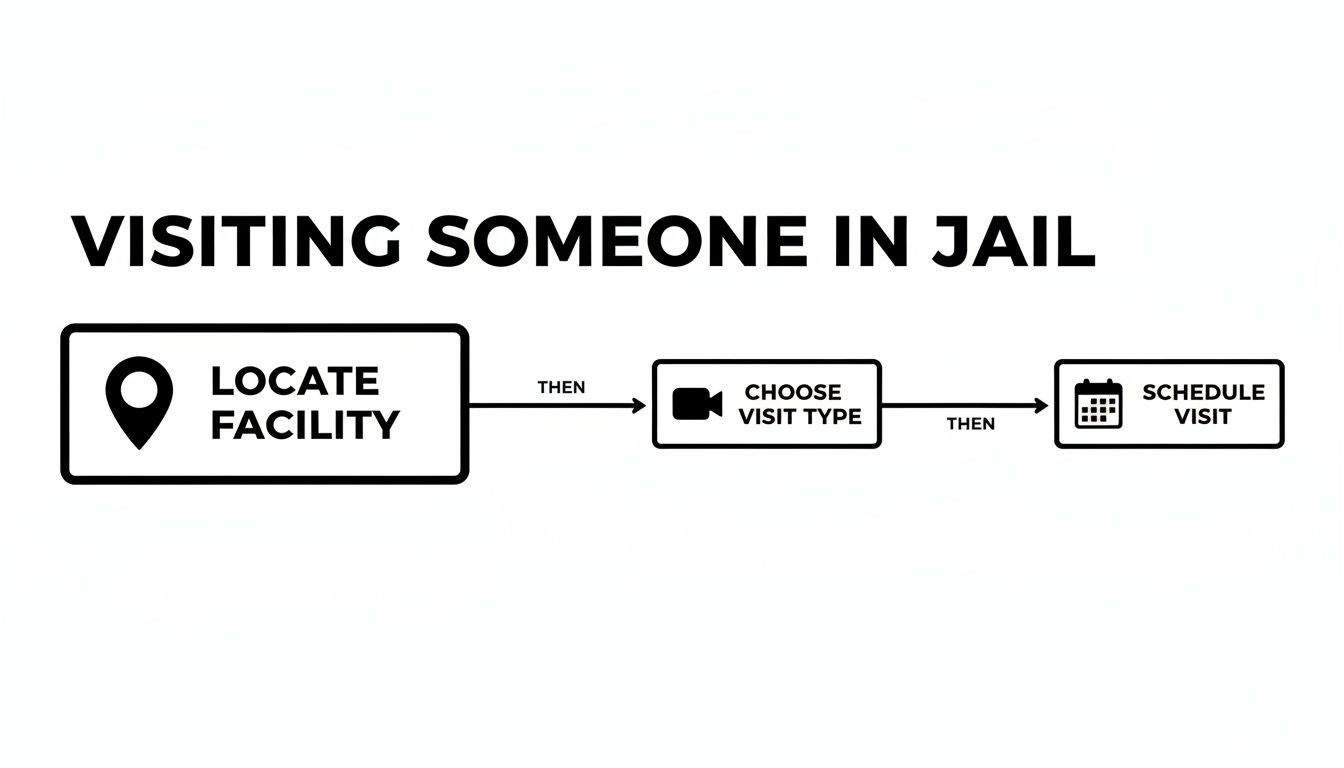
As you can see, it really boils down to finding the right facility, figuring out which type of visit works for you, and getting it on the schedule.
Comparing In-Person and Video Visits
There’s a real emotional weight to showing up in person. Seeing a friendly face can be incredibly comforting for your loved one, and for you, even with a physical barrier between you. But let's be practical—it also means traveling to the jail, which isn't always easy if you live far away or have a demanding job. In-person visits are also limited to very specific times and days.
Key Takeaway: You're often choosing between the powerful emotional connection of being there in person and the simple convenience of a remote call. What's most practical really depends on your unique situation.
On the other hand, video visits are all about convenience. You can connect right from home, which saves a ton of time and travel money. Jails in Colorado, like those in Jefferson County and Centennial, often contract with outside companies for these services, which usually come with a per-minute fee. Some jails also have on-site video kiosks in their lobby that might be free, but you'll still have to travel there to use them.
While visiting is a great way to show support, remember it's a temporary fix. The real goal is to get your loved one home. Taking a moment to learn more about pretrial release can open up a path to bringing them home while they await trial.
Ultimately, the best way to end the cycle of scheduled visits is to secure their release. If you need help navigating that process, our team at Express Bail Bonds is here 24/7 to answer your questions. See what our clients are saying on our Google review page and Google business profile.
The Essential Rules for a Successful Jail Visit
When you're planning a jail visit, think of it like going through airport security. The rules aren't suggestions; they're mandatory. One small slip-up can get the visit canceled on the spot, and in some cases, you could even lose your visitation privileges for good. Knowing the rules inside and out is the only way to make sure your visit goes smoothly.

While the specifics can differ between facilities, like the jails in Jefferson County versus Centennial, the core regulations are pretty much the same everywhere. Your very first step should always be to check the jail’s official website for their policies.
Dress Code: What to Wear and What to Avoid
Jails are incredibly strict about the dress code, and it's one of the most common reasons people get turned away at the door. The goal is to create a secure, neutral environment, which means avoiding anything that could be seen as provocative, gang-affiliated, or easily used to hide contraband.
Do Wear:
- Simple, conservative clothes like plain t-shirts, blouses, and slacks.
- Shoes that cover your entire foot (no sandals or flip-flops).
- Clothing that fits properly—not overly baggy or skin-tight.
Don't Wear:
- Revealing items like tank tops, short skirts, crop tops, or see-through material.
- Clothing with gang colors, symbols, or any offensive words or images.
- Anything that resembles a uniform worn by staff or inmates.
- Hats, scarves, bandanas, or too much jewelry.
Required Identification and Contraband
You absolutely cannot get in without a valid, government-issued photo ID. This is a non-negotiable rule. A driver's license, state ID card, passport, or military ID will usually work.
Crucial Tip: Leave everything else locked in your car. We mean everything—cell phones, wallets, keys, purses, and lighters. These items are considered contraband and are forbidden in the visiting area. Getting caught with an unauthorized item is a serious offense.
It's helpful to understand the scale of this system. In the United States, nearly 2 million people are held in thousands of correctional facilities. In 2022 alone, there were over 7 million bookings into local jails. That’s millions of families who suddenly needed to figure out visitation rules or, even better, arrange for a quick release. These numbers really show why efficient bail services are so important for getting families back together. If you want to dive deeper, you can explore more data on the U.S. correctional system.
Finally, your conduct matters. Show up early for your scheduled time, be patient with the staff during check-in, and stay calm and respectful during the visit. Any disruptive behavior is a surefire way to have your visit cut short. The team at Express Bail Bonds has been helping families navigate these stressful situations for years. You can see what they have to say on our Google review page and our other Google business profile.
How to Schedule a Visit in a Colorado Jail
Alright, you’ve learned the rules and you're ready to set up a visit. Now comes the actual scheduling part. Booking a time to see someone in jail is a formal process, and honestly, every single facility does it a little differently. Think of it like making an appointment at the DMV—each location has its own specific system, and you have to follow their instructions to a T.
First things first, you absolutely need the inmate’s booking number. This is the key that unlocks almost everything at the jail, including scheduling visits. If you don't have it, you can almost always find it on the jail's website using their inmate search tool.
Finding the Right Scheduling Method
Most jails today have moved to one of a few common scheduling systems. Your best bet is to go directly to the website for the specific jail where your loved one is being held and find their "Visitation" page. This page is your single source of truth and will walk you through exactly what you need to do.
You'll likely run into one of these methods:
- Online Portals: This is the most common way now. Many jails use third-party websites where you'll have to create an account, add the inmate (using their booking number), and then pick from a list of available time slots.
- Phone Systems: Some facilities, especially smaller ones, still rely on a dedicated phone line for scheduling. Just be ready for specific call-in hours and the possibility of a long wait time.
- On-Site Kiosks: It's less common, but a few jails might require you to book your next visit using a kiosk in the lobby right after you finish your current one.
No matter which system they use, you must schedule your visit in advance. Jails don't allow walk-in visits, period. Planning ahead is the only way to guarantee you'll get a spot and won't be turned away at the door.
Scheduling a Visit in Major Colorado Counties
To give you a clearer picture, let's look at a couple of real-world examples here in Colorado. The process for visiting an inmate at the Jefferson County jail in Golden is handled through their official website, which points you to a specific online portal. Likewise, if your friend or family member is in Arapahoe County, you’ll need to check the local procedures relevant to bail bonds in Centennial and the detention centers there.
Following the jail's specific, step-by-step process takes the guesswork out of it. When you find their official policy, you avoid making a simple mistake that could get your visit canceled. For a handy list of local facilities, you can use our page with links to Colorado jails and courts.
Of course, scheduling visits is just a temporary fix. The best way to see your loved one without any barriers is to get them home. The team at Express Bail Bonds is here to make that happen as quickly and smoothly as possible. You can see what our clients have to say about our work on our Google review page and our other Google business profile.
Special Visits for Attorneys and Emergencies
Not all jail visits are for catching up with friends and family. Sometimes, a visit is absolutely essential for legal reasons or because of a serious family crisis. These special visits don't follow the same strict rules as regular visitation, and it’s important to know how they work.
A person's right to speak with their lawyer is a fundamental part of our justice system. These meetings are protected by attorney-client privilege, meaning they are confidential and cannot be monitored. Because of this, jails typically offer much more flexibility for scheduling legal visits to ensure a case can proceed without unnecessary delays.
Visits for Professionals and in a Crisis
Beyond legal counsel, jails also recognize the importance of spiritual and emotional support. Most facilities allow professional visits from clergy or other approved spiritual advisors. These are usually arranged through the jail's chaplaincy services and follow their own set of procedures.
An "emergency visit" is an exception made for truly dire situations, like the verified death or life-threatening illness of a close family member. These are rare, not guaranteed, and require official documentation (like a notice from a hospital or funeral home) before the jail administration will even consider approval.
Maintaining any kind of contact, even for emergencies, becomes harder as detention systems get bigger. For example, the U.S. immigration detention system has seen explosive growth. As of mid-December 2025, Immigration and Customs Enforcement (ICE) was detaining 68,440 people, a staggering 78% increase from the previous year. You can learn more about the impact of detention system growth on families and the challenges it creates.
Here at Express Bail Bonds, we understand how stressful it is to navigate this system. Our clients in Jefferson County, Centennial, and beyond often tell us how much they appreciate our professionalism during a difficult time, which you can see on our Google review page and other Google profile. While knowing these rules is helpful, our real goal is to make visits—special or otherwise—unnecessary by getting your loved one back home.
Bring Them Home with a Bail Bond
While figuring out jail visitation rules is one way to stay connected, it’s really just a temporary fix for a much bigger problem. The real goal, of course, is to bring your loved one home. Securing their release with a bail bond isn't just another option—it's the most direct path to ending the stressful cycle of scheduled visits, strict rules, and conversations through glass.

So, instead of focusing on "can you visit someone in jail," the question quickly becomes, "how do we get them out for good?" This is exactly where a professional bail bondsman can change everything. It's about trading the frustration of the visiting room for the relief of a reunion at home.
The Faster Path to Freedom
Working with Express Bail Bonds provides a clear, straightforward path to getting someone out of jail, often much faster than people realize. We’ve designed our entire process around speed and simplicity because we know time is critical.
A bail bond is the long-term solution that makes short-term visits unnecessary. Our expert team is focused on one thing: resolving the problem of incarceration so your loved one can return home, where they belong.
We get it—your life doesn’t stop just because this crisis has started. That’s why we offer electronic processing for surety bonds. In many cases, you can handle applications, payments, and contracts right from your phone or computer, without ever having to leave home. This is a huge help for families in places like Jefferson County or Centennial who need immediate assistance.
Over the years, we've helped countless families through these tough situations, and their experiences speak for themselves. You can see what they have to say on our Google review page and our other Google business profile.
Don't let a visitation schedule run your life. The best visit is the one that happens in your own living room. If you're ready to make that happen, our guide on how to bail someone out of jail breaks down the entire process. Let us help you make jail visits a thing of the past.
Common Questions About Jail Visitation
Even with the rules laid out, you probably still have a few specific questions running through your mind. It’s completely normal. Getting these details straight can make all the difference between a successful visit and a frustrating, wasted trip. Let’s tackle some of the most common questions we hear.
Can Children Visit a Parent in Jail?
Yes, in most Colorado jails, children are allowed to visit a parent. However, the rules are very strict. Any minor must be with their legal guardian for the entire visit, and you'll almost certainly need to bring the child's birth certificate to prove their age and your guardianship.
It's also important to remember that the accompanying adult is responsible for the child's behavior. Jails are serious, formal environments, so it’s wise to prepare your child for what to expect.
How Long Is a Typical Jail Visit?
Visit lengths can vary quite a bit from one facility to another, but they usually last somewhere between 15 and 60 minutes. You'll often find that remote video calls are on the shorter end of that spectrum, while in-person visits might be a little longer. Jails also cap how often someone can have visitors, typically limiting it to one or two times per week.
Crucial Reminder: Arriving late will almost certainly mean forfeiting your visit. Jails run on a very strict schedule and will not hold your spot. Plan to arrive at least 30 minutes early to handle check-in and security screening without rushing.
What Happens if We Get Disconnected During a Video Visit?
Technical glitches are a fact of life. If your video call drops because of a problem with the jail's equipment, they will usually work with you to reconnect or reschedule the visit without penalizing you.
However, if the call disconnects because of an issue on your end—like a weak Wi-Fi signal—you will probably lose that visiting time. It’s always a good idea to test your connection beforehand.
Even simple things like scheduling can be affected by factors you can't control, like holiday hours or weekend staffing. On that note, you might find our article about whether you can you bail someone out on the weekend helpful.
Visiting is a powerful way to show support, but the best help you can offer is getting them home. Instead of wrestling with visitation schedules and strict rules, let Express Bail Bonds provide the fastest path forward. We offer professional, compassionate service across Colorado, including in Jefferson County and Centennial.
Don't just take our word for it—see what our clients have to say on our Google review page and our other Google business profile. Contact Express Bail Bonds today and let us help bring your loved one home.