
You're probably dealing with the worst kind of phone call, the one that lands late at night, makes the whole house go quiet, and leaves everyone asking the same thing, how fast can we get them out. In Colorado, the answer is usually not “whatever agent answers first.” It's the family that gets the paperwork right, chooses the correct posting channel, and understands whether a surety bond is even the right move.
Fast release is a sequence, not a vibe. If you rush the wrong part, you waste time. If you get the order right, you give the jail and the agent what they need to move.
The Moment the Phone Rings at 2 a.m.
At 2 a.m., nobody is thinking about statutes or release workflows. A spouse is staring at a dead phone charger, a parent is trying to remember a birthday, and someone else is saying, “Just get a bond now.” That urgency is real, but panic makes people skip the one thing that speeds release, accurate information.
A fast bail bond starts with control, not volume. The first family member to calm down and collect the facts usually saves the most time. If the defendant's name is misspelled, the jail is wrong, or nobody knows the bond amount, the process stalls while somebody calls back and forth.
Practical rule: speed comes from getting the bond accepted, not from saying yes to the first offer that sounds urgent.
The cleanest way to think about it is this. A surety agent can move quickly only after the file is complete, the contract is signed, and the jail will take the bond. If any of those steps is missing, “fast” becomes waiting with better branding.
For Colorado families, that matters because release is tied to the jail's process as much as the money. The smartest move in that first frantic hour is to stop treating the bond like a rescue button and start treating it like a file that has to be built correctly.
What to Have Ready Before You Call a Bail Agent
Speed starts before anyone talks about payment. The intake call goes much faster when one person gathers the basics instead of everyone trying to help at once. Keep it simple, because the agent doesn't need a story first, they need identifiers.
The four things to have in hand
- Full legal name: Use the exact name the jail has, not a nickname or shortened version.
- Date of birth: This helps the agent confirm the right person fast and avoid a bad match.
- Exact county and facility: The jail matters because posting rules differ by location.
- Charge or bond amount, if available: If you already know it, the agent can narrow the path faster.
Those four items let the conversation stay on rails. They also reduce the chance that someone spends 20 minutes describing the arrest when the agent still can't identify the file. If a cosigner is out of state, have a government photo ID ready and be prepared to send proof of funds or other requested documents without delay. For a fuller checklist, see the agency's document guide.
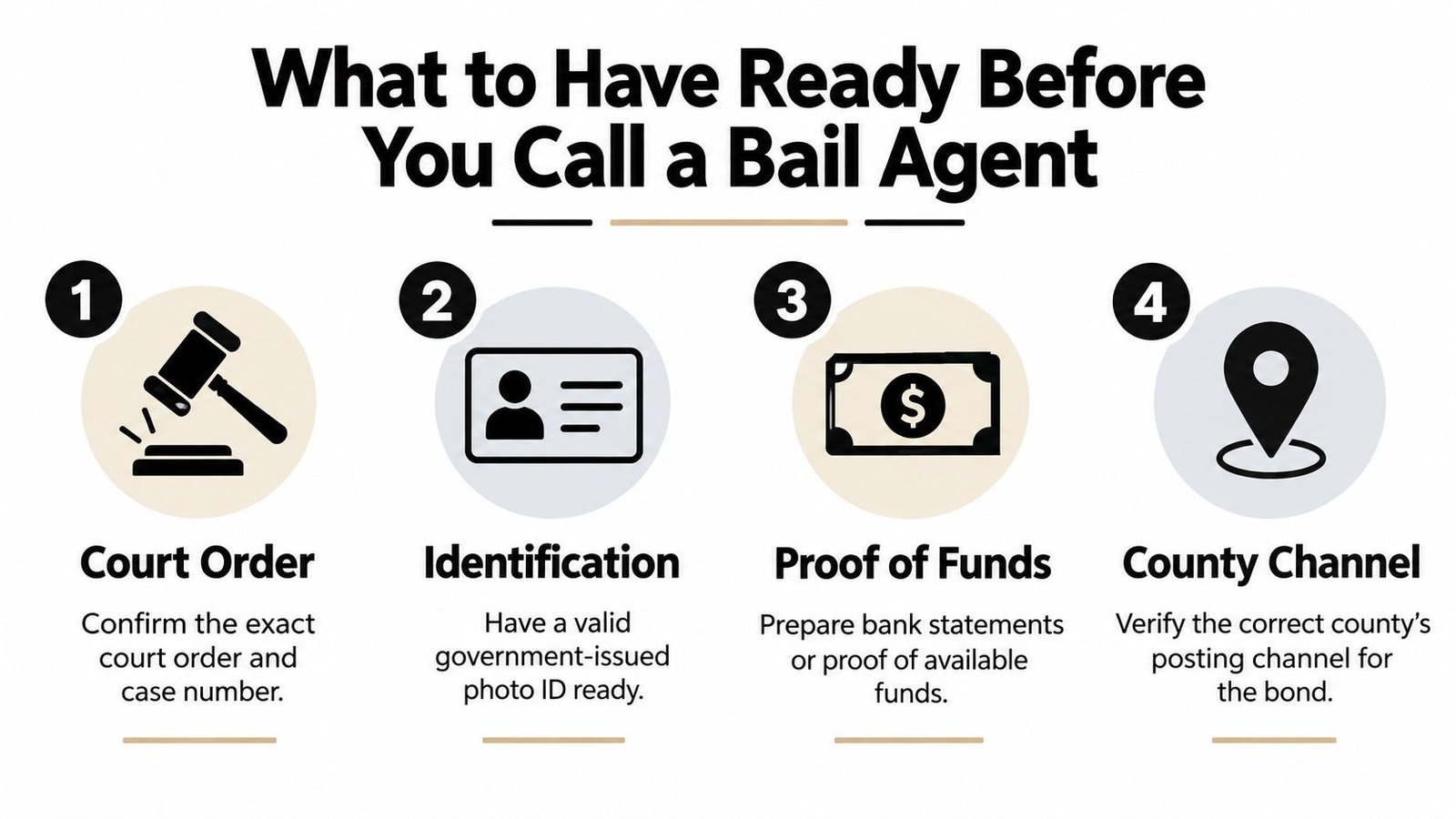
The agent still has to underwrite the bond and prepare the paperwork, so this isn't about pretending the process is automatic. It's about making sure the file can move without a second round of basic questions. If you want the call to matter, come prepared enough to let the paperwork start immediately.
The Online Application and E-Signature Workflow
Colorado families often think the biggest time-saver is money. It isn't. The main time-saver is being able to finish the contract remotely while the defendant is still in custody and the jail is still processing the case.
A modern surety workflow usually begins with a secure intake form, then moves to the agreement, then to payment. That order matters. If the cosigner fills out the wrong form, forgets an ID image, or pauses to hunt for a scanner, the file sits unfinished while the arrest clock keeps running.
What slows digital posting
Remote work is fast only when the file is clean. The common drag points are easy to spot:
- Incomplete identity verification: The agent can't finalize a file if the person signing isn't clearly identified.
- Missing collateral or supporting documents: If the bond requires documentation, the agent can't guess.
- Delayed signatures: A contract sitting in someone's inbox is not a completed bond.
- Payment friction: If the approved payment doesn't go through, nothing posts.
A clean online package fixes the boring problems before the jail ever sees the bond. That's why out-of-state relatives are often better off using the remote route instead of trying to “help” by driving to the facility with half the documents missing. If you're comparing workflow options, the electronic document exchange page shows how the remote exchange is handled in practice.
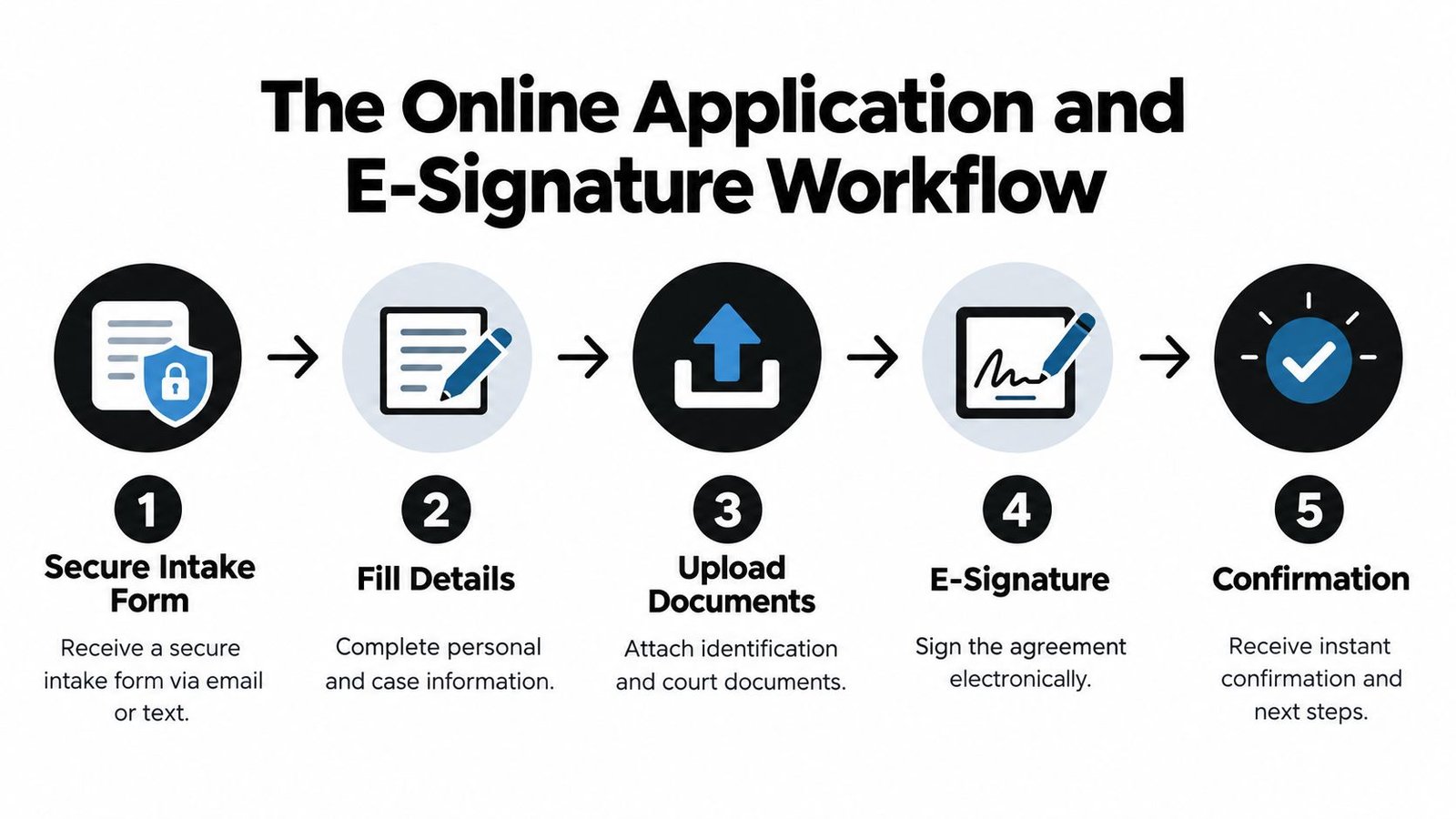
A 24/7 answering line matters because arrests don't respect office hours. But electronic doesn't mean instant. The agent still has to check the file, and the jail still has to accept the bond. What online processing really gives you is less dead time between steps, which is exactly where release usually gets bogged down.
How Colorado Premium Pricing Affects Your Out-of-Pocket Cost
Families lose time when they confuse the bond amount with the premium. Those are not the same thing. In Colorado, the statute caps what a producer may charge on a bail bond, and that cap is the greater of $50 or 15% of the bail amount under Colorado Revised Statutes § 10-2-707.
That matters because the premium is what you pay to arrange the surety bond, not the amount written on the court's bond order. For a $5,000 bond, 15% is $750. For a $10,000 bond, 15% is $1,500. Those numbers are exactly why families need to slow down long enough to understand what they're signing.
What Colorado allows and blocks
Colorado law also restricts extra fees. A producer generally can't tack on additional charges for a bond posted with a court unless the fee is tied to an authorized filing cost, the actual cost of securely storing collateral, or premium financing. The law also requires written premium or fee documentation before consideration is accepted, including signatures and payment schedules under § 10-2-705. In plain English, that written agreement is there to stop surprise charges and force clarity up front.
The premium is generally earned once the defendant is released from custody, so families should treat the decision as real money, not a placeholder. That's why I'd rather see a family read the contract once than rush into a bond they don't understand. If you're pricing options, the surety bond rates page is the kind of place to verify how the charge is framed before anyone signs.
The useful habit is simple. Separate the court's bond amount from the agent's premium, check the written terms, and make sure the release path is worth the cost before you authorize anything.
Online Jail Posting Versus In-Person Posting in Colorado
Posting is where families lose the most time in their heads, because they assume the bond is basically done once the premium is paid. It isn't. The jail still has to accept the filing, confirm the paperwork, and run its release process.
Colorado's current framework supports online posting at county jails, and it also requires sheriffs to publish instructions for posting online where eligible. That's a real advantage when the right county channel is available, because a remote payor can finish identity verification and transmit the bond without traveling to the detention facility. But the channel still depends on the case and the jail.
Denver gives a clear example
Denver's Court Services page says inmates are generally released within a two-hour window after the bond has been signed by all involved parties, and its County Court Bonding Office at 490 East Colfax lists bonding hours as 7:00 a.m. to 10:30 p.m., Monday through Sunday. Denver County Court also says bond posting is accepted in person at the Van-Cise Simonet Detention Center 20 hours per day, seven days a week, including holidays. If the person has an active warrant, Denver also provides an online public bond portal for clearing and addressing the warrant.
| Channel | Best For | Typical Hours | Speed |
|---|---|---|---|
| Online posting | Remote families, eligible county procedures, cases where the jail accepts digital filing | Depends on county portal access | Fast when the file is complete and accepted |
| In-person posting | Cases needing direct jail delivery or facilities with limited digital workflow | Denver bonding office hours and detention-center windows vary by location | Fast only if someone can physically appear and paperwork is ready |
The right question is not “online or in person?” It's “what does this county accept for this exact bond?” A family member in another state can absolutely help, but only if the county's posting channel fits the case. The county bond page is the kind of resource people use when they need to match the facility to the process instead of guessing.
Do You Need a Surety Bond Right Now, or Is Non-Financial Release Available?
Families waste time and money when they assume every arrest requires a surety bond. Before anyone signs a premium contract, confirm whether the court is offering personal recognizance, unsecured release, or supervised release. If one of those options is available, the fastest move may be to wait for the court's order instead of paying for a bond you may not need.
Advancing Pretrial's research summary says that, after controlling for assessment scores, there was no statistically significant difference in nonappearance between secured and unsecured bonds. The same summary reports that 94% of people with unsecured bonds were released, compared with 61% with secured bonds, according to Advancing Pretrial's research summary. That does not predict a Colorado outcome, but it does show that secured release is not the only lawful path.
Ask these questions before you pay
- Is personal recognizance allowed? If the court permits it, a commercial bond may be unnecessary.
- Is unsecured or supervised release on the table? Those options can change the cost picture completely.
- Is a bond hearing still pending? Paying before the court sets conditions can create avoidable delay.
- What does the current order require? The order, not the rumor, controls the next move.
Don't spend money on a surety bond until someone has confirmed the court's release path in writing or directly from the jail or court.
A 10-minute triage call can confirm whether a non-financial release is available before anyone signs a premium contract.
A Realistic Timeline From Arrest to Release
Colorado law says an in-custody arrestee must be brought before a court for bond setting as soon as practicable and no later than 48 hours after arriving at a jail or holding facility, subject to statutory exceptions, according to Colorado Revised Statutes § 16-4-102. That's the outer frame, not a promise of immediate release.
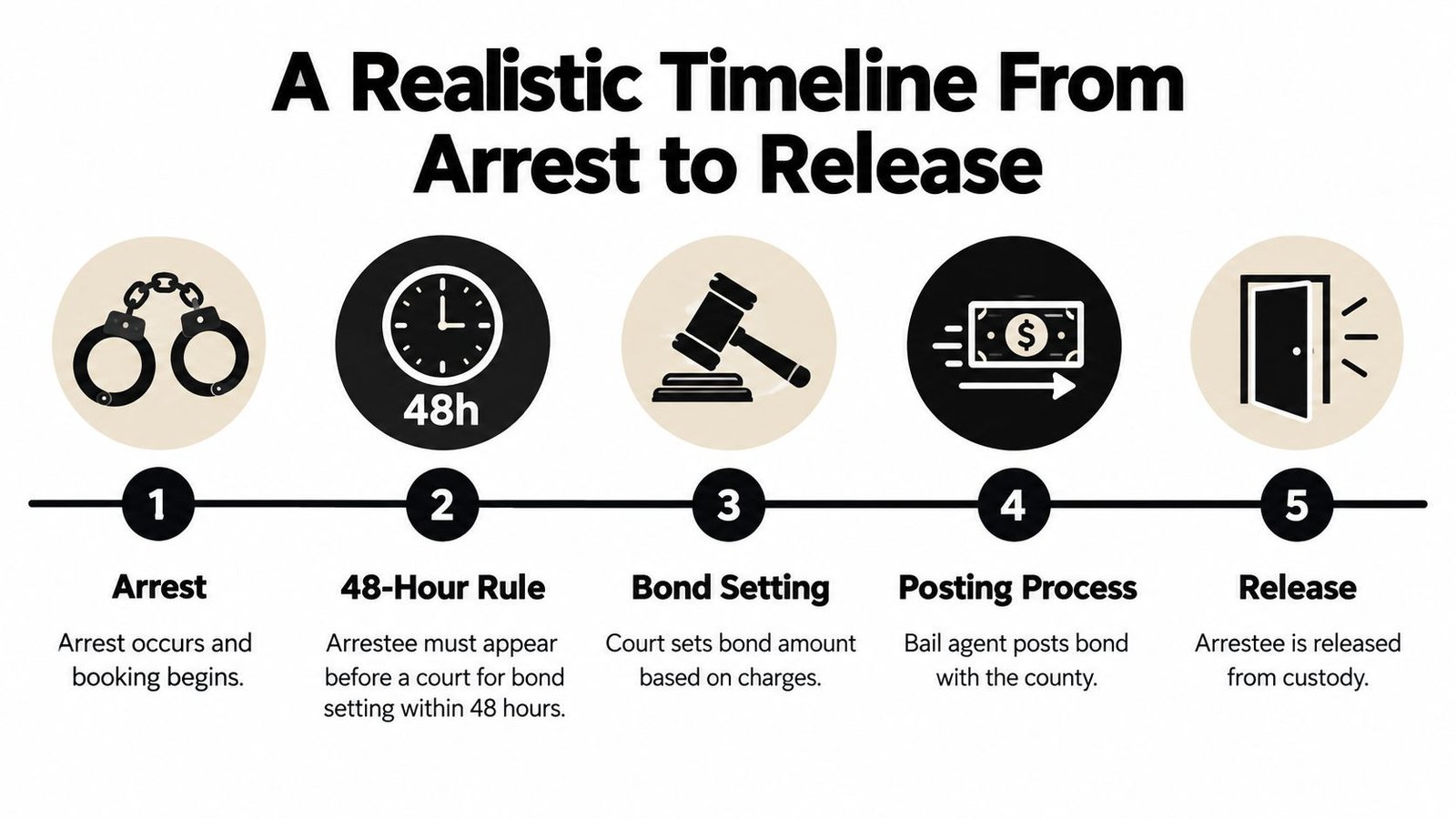
- Arrest and booking begin. The jail starts processing the case and enters the basic information.
- Bond is set. The court decides what condition, if any, will secure release.
- The bond package is prepared. The cosigner signs, the premium is paid, and the paperwork is finalized.
- The county accepts the posting. This is the step families underestimate.
- Release happens after validation. Denver says that, once the bond is signed by all parties, release is generally within a two-hour window.
The part you can control is the file. The part you can't control is the jail's validation pace and the court's schedule. A clean online package often moves within hours of bond setting, but the last stretch still depends on the facility. For a straightforward breakdown of that timing, see the processing timeline.
The practical takeaway is blunt. If your paperwork is incomplete, you're waiting. If your signatures are missing, you're waiting. If the jail hasn't accepted the bond, you're still waiting.
Your Next Step and How to Reach a Colorado Bondsman Now
Start with the order, not the panic. Confirm the court condition, gather identification, scan proof of funds, and verify the county's posting channel before anybody pays or signs. If you need a place to compare contact options or verify a phone route, the contact page can be used as a simple resource to keep the communication step organized.
If the bond is in Colorado and the jail accepts the format, call a licensed surety agent who can work the file without making you repeat everything twice. Express Bail Bonds handles electronic applications, contract documents, and statewide surety processing, and it maintains pages for Jefferson County Golden Colorado and Centennial bail bonds for county-specific cases.
If you need a Colorado surety bond handled quickly, visit Express Bail Bonds and get the paperwork moving now. The right bond is the one that matches the court order, the county channel, and the release conditions, and that's exactly where a responsive agent helps.