You get the call, or maybe a text from a friend who heard it from someone else. A loved one was arrested somewhere in Colorado, and now nobody knows where they are, whether they're still being booked, or how to get them out. In those first minutes, people usually do the same thing. They start searching random inmate sites, guessing counties, and assuming a blank result means the person isn't in custody.
That usually wastes time.
A proper county jail lookup is simpler than it looks once you know the order. Start with the county. Use the official sheriff or detention center website. Check the booking details carefully. If the arrest was recent, understand that the person may still be in the system but not visible online yet. That gap is real, and it causes more panic than almost anything else.
If you're helping someone for the first time, the process below will keep you focused on the only questions that matter right now. Where are they? Are they in custody? Is there a bond amount yet? And once you find that record, what do you do next?
Your First Steps After an Arrest
Most families start in the middle of the story. They know a person was arrested, but they don't know which agency made the arrest, whether the person is at a city holding cell, or whether they've already been moved to the county jail. That's normal.
A common example is a late-night DUI arrest near Denver. A spouse may hear “they were taken in” and assume that means the person will appear instantly in an online roster. Then the search comes back empty, and the fear goes up fast. In practice, the first job is much narrower. Slow down and pin down the place of arrest, the approximate time, and the person's legal name.
Start with what you know
Before you search anything, write down the basics:
- Full legal name as it appears on ID
- Date of birth if you have it
- Where the arrest happened, even if it's only a city or nearby landmark
- Time of arrest as best you can estimate
If the person was stopped in Golden, that points you in a different direction than an arrest in Centennial or downtown Denver. Small location details matter because jail systems are local.
When families stay focused on the arresting county first, they usually find answers faster than people who bounce between statewide and third-party databases.
Don't lose time on the wrong tools
In the first hour, people often jump to paid background sites or broad inmate search pages that scrape data from somewhere else. Those can be outdated, incomplete, or missing the one detail you need, which is current custody status.
If the person just got arrested, the cleaner move is to follow a direct path and then prepare for bail. If you need a companion guide for the immediate aftermath, what to do when arrested lays out the practical basics.
The goal right now isn't to become an expert on the system. It's to get reliable information without adding more confusion.
Gathering the Right Information for Your Search
A successful county jail lookup usually depends less on luck than on prep. If you go in with partial information, you'll get partial results. If you go in with the right identifiers, the search gets much easier.
The most important point is this: county jail systems are local, not national. The county jail lookup process requires a jurisdiction-first methodology because jail rosters are organized by facility and entity rather than aggregated nationally. A second common problem is name variance. Local systems may record names as booked, including aliases, missing middle names, or unusual spellings, which can prevent a record from appearing under the version you expect, as discussed in this PubMed overview of jail lookup challenges.
The details that matter most
Here's the information worth collecting before you open any sheriff website:
Legal last name first
Search by the name most likely used at booking. If the person uses a nickname every day, don't start there.First name and middle initial
A middle initial can make the difference between finding the right person and finding no one.Date of birth
This helps you confirm you've found the correct record when multiple people share a similar name.Alias or maiden name
If the first search fails, this is one of the next things to try.County of arrest
This narrows the search from many possible jails to one likely roster.
Why small spelling differences break searches
A person you know as Mike may be booked as Michael. A hyphenated last name may be entered without the hyphen. A recent marriage may mean relatives search under one surname while the jail booked the person under another.
Practical rule: Search the legal last name first, then test first name variations, middle initials, maiden names, and alternate spellings before assuming the record isn't there.
That same issue shows up when families search too quickly after arrest and then conclude the jail has no record. Sometimes the record exists under a different booking name. Sometimes the booking process isn't complete yet.
Keep one written note in front of you
When people are stressed, they repeat the same failed search without realizing it. Keep a short note with:
- County you're checking
- Name version used
- Time searched
- Any known agency involved
That one habit saves a lot of backtracking. If you also need help understanding what public arrest information may exist beyond the jail roster, Colorado arrest records can help fill in the bigger picture.
How to Use Official County Sheriff Websites
If you know the county, the official sheriff or detention center website is usually the best place to start. In Colorado, county-level jail records are handled locally, so you want the county's own inmate search, not a general directory.
A Jefferson County example
Jefferson County gives a clear example of what a useful roster looks like. In Jefferson County, Colorado, the official inmate lookup tool allows users to search for in-custody individuals by entering either the inmate's full name or their booking date, and once a record is found, the system displays booking photos, exact charges, active bond amount, and scheduled court dates, as described by Colorado Inmate Roster's Jefferson County summary.
If the arrest happened in Golden, that's the kind of county-specific tool you want. Search the name carefully, confirm the identity, and then note every booking detail shown.
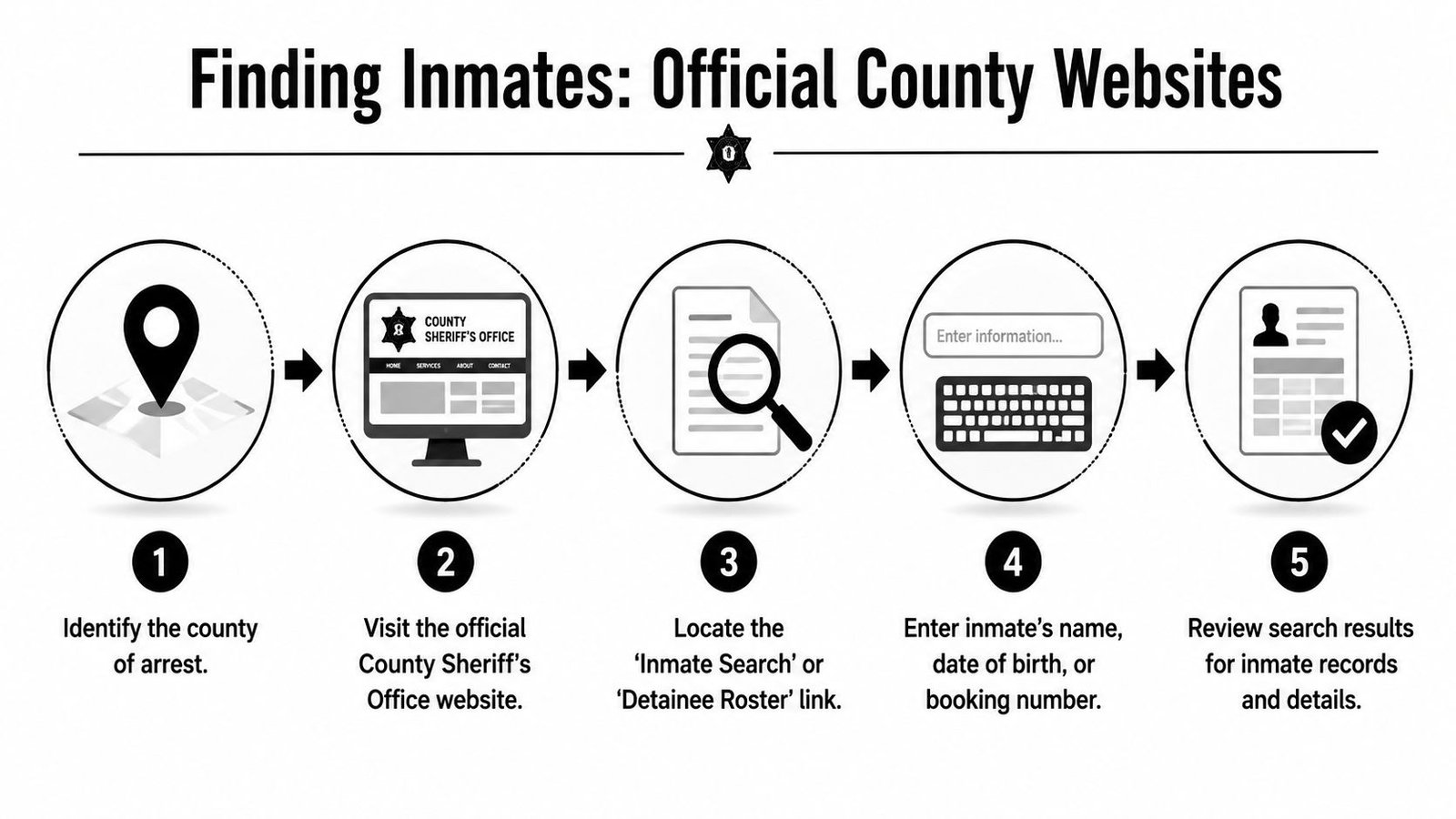
The five-step search pattern
The same pattern works across most Colorado counties:
Identify the arrest county
Golden points you toward Jefferson County. Centennial usually points you toward Arapahoe County. The arrest location comes first.Open the official sheriff or detention site
Skip broad directories if you can get to the county page directly.Find the inmate search tool
Look for labels like “Inmate Search,” “Inmate Lookup,” “Detention,” or “Jail Roster.”Enter the strongest identifier you have
Start with legal last name. Add first name, booking date, or date of birth if the tool allows it.Review the record closely
Save the booking number, charges, bond amount, and court setting if listed.
If a county website gives you a booking number, write it down immediately. That number helps when you call the jail or start the bail process.
What to pull from the record
Once the record appears, don't just glance at it and move on. Capture the details you'll need next.
| Detail | Why it matters |
|---|---|
| Booking number | Helps jail staff pull the correct record quickly |
| Charges | Affects release conditions and bond handling |
| Bond amount | Tells you whether bail may be posted |
| Court date | Shows the immediate schedule ahead |
| Custody status | Confirms whether the person is still in jail |
A good county jail lookup ends with usable information, not just confirmation that someone is in custody. For those looking in or around the metro area, Denver County jail search is another practical reference point for how these local systems are organized.
Alternative Lookups and State vs County Systems
Sometimes the county isn't obvious. Maybe the arrest happened while traveling across multiple jurisdictions. Maybe a family member only knows the person was “taken somewhere near Denver.” In those cases, alternative tools can help, but only if you understand what each system is designed to do.

County jail versus state prison
A county jail usually holds people shortly after arrest, during active court proceedings, or while serving shorter local sentences. A state prison is different. That's where the Colorado Department of Corrections comes in after conviction and transfer.
The Colorado Department of Corrections maintains a statewide Inmate Locator Tool that requires either the inmate's full name or CDOC number and returns custody status, facility, and estimated release date, according to this Colorado court records summary of the CDOC locator.
That means the CDOC locator is useful if someone has already been transferred into the state prison system. It is not the right first stop for a fresh local arrest.
Which lookup to use and when
A quick comparison helps:
Official county sheriff roster
Best when the arrest was recent and you know or strongly suspect the county.State DOC locator
Best when the person has already moved beyond county jail into state custody.Notification and broad search tools
Useful as backup when details are thin, but they're still secondary to the official county source.
County records tell you where a person is right now in the local system. State records tell you whether custody has shifted beyond the county level.
If you're unsure where to start
Use the facts you have to make your best first pass. Start with the city of arrest, nearby county lines, and any agency name you heard. If those still don't produce a result, move outward logically instead of searching everything at random.
For families who need a central starting point for several search paths, an inmate locator tool can help organize the search before you contact the jail directly.
Troubleshooting When You Cannot Find a Record
The most upsetting moment in a county jail lookup is often the blank search result. You know the person was arrested. You searched the county website. Nothing appears. That doesn't automatically mean the person isn't there.
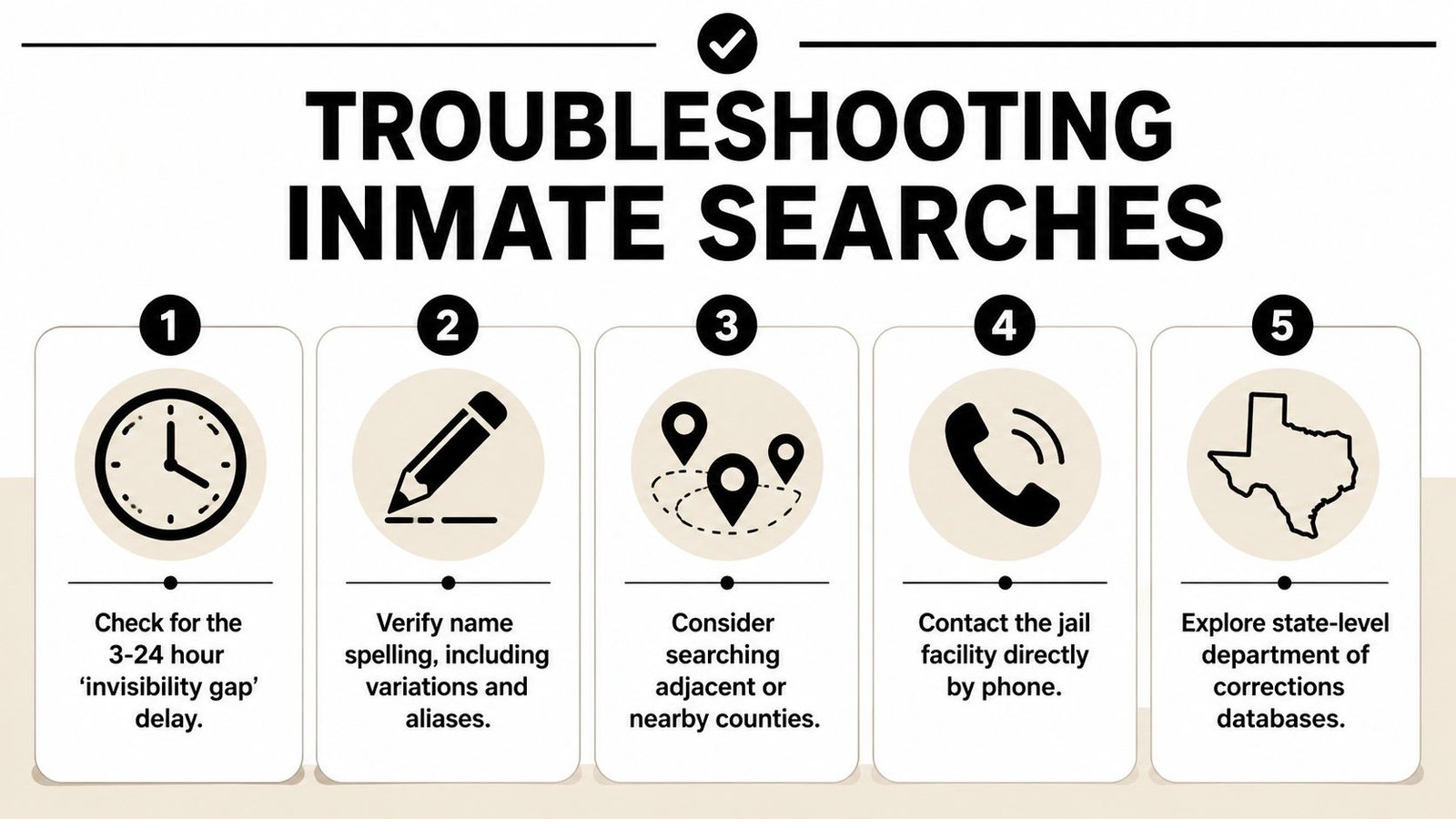
There is often a 3-to-24-hour invisibility gap where recent arrestees are not yet searchable on county rosters despite being physically in custody. That delay can happen because of administrative processing, intake delays, or system synchronization issues, and best practice is to call the jail directly if the arrest is recent and the record is missing, as noted by Jail Inmate Searches.
What a missing result usually means
A missing record usually points to one of these problems:
The booking isn't visible yet
The person may still be in intake even though they're already at the facility.The name was entered differently
Try alternate spellings, middle initials, or a different surname.You're searching the wrong county
Arrest location and booking location don't always match what families first assume.The person moved quickly through a short local hold
In some cases, custody status changes before third-party sites catch up.
What to do in order
Don't keep refreshing the same page for hours without changing your approach. Use a short sequence instead.
- Search the official county roster again with a different name variation.
- Check whether the arrest may have occurred in a neighboring county.
- Wait a bit and search again if the arrest was very recent.
- Call the jail booking desk with the legal name and date of birth.
A blank online result after a recent arrest is a delay problem more often than a disappearance problem.
That distinction matters. Once families understand the invisibility gap, they usually stop assuming the worst and start taking practical steps.
You Found Them Now What? Next Steps for Bail
Once you locate the record, the search phase is over and the release phase begins. At that point, the details on the jail page matter more than the search itself.
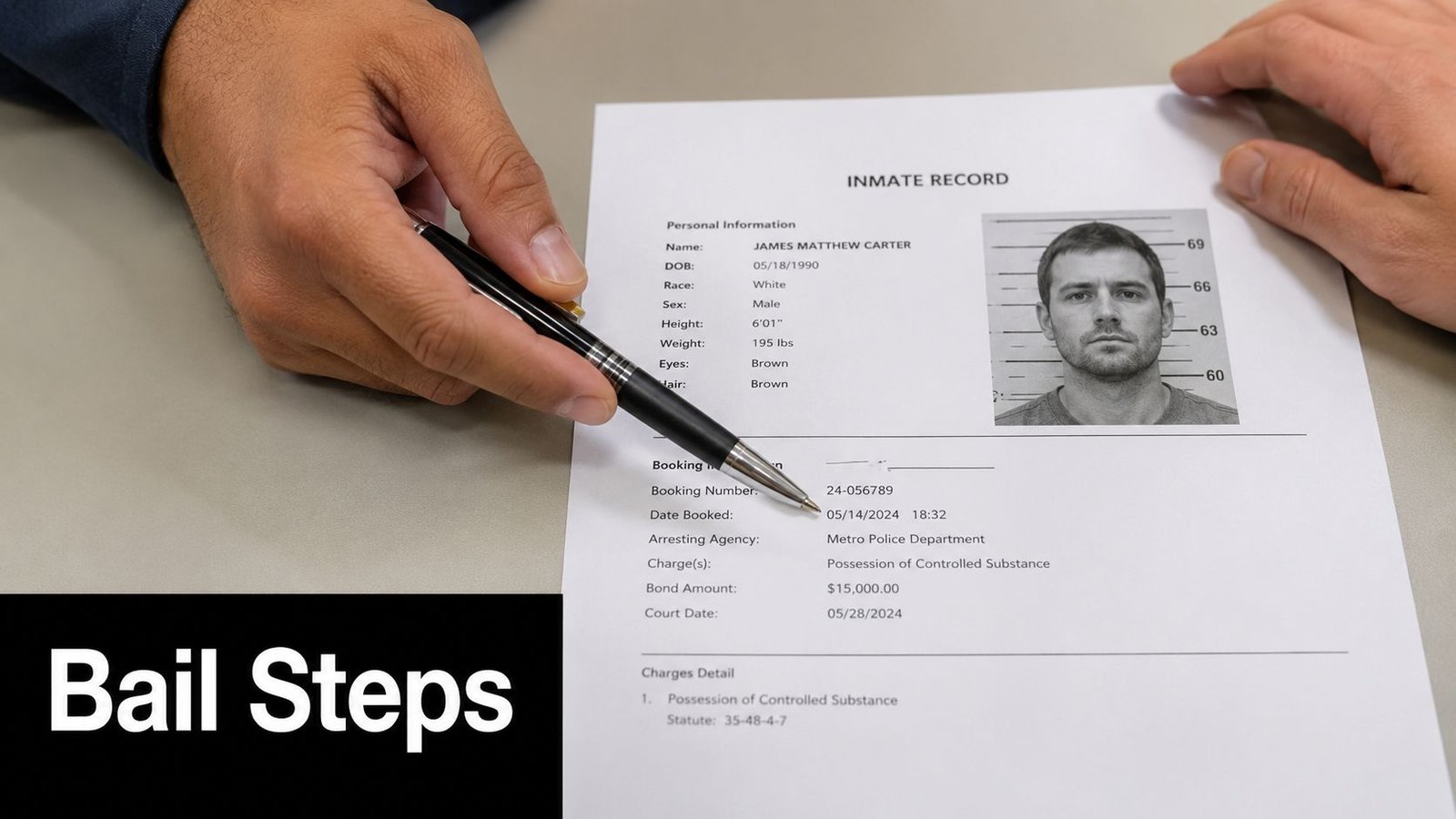
For county-level jail records in Colorado, the primary source is the specific County Sheriff's Office rather than a single state database, because each county maintains its own records. Larimer County is one example, with a direct online offender lookup through its sheriff's office, as described in this Larimer County jail information page. Once you find the right county record, pull the booking number, the charge list, and the bond amount if one has been set.
The information that moves bail forward
You should have in hand before you call about bail:
- Booking number or inmate ID
- Full booked name
- County and facility
- Charges shown
- Bond amount or bond status
If you're gathering paperwork for a lawyer, employer, or another official purpose at the same time, a verified identity service or an FBI background check may be relevant in separate situations. That's not part of posting bail, but families sometimes need both tracks moving at once.
What a bail bonds agent actually does
If the bond type allows it, a bail bonds agent helps you post a surety bond so you don't have to handle the full bond amount in cash yourself. The practical value isn't just the bond itself. It's having someone confirm the jail, check the bond status, explain the paperwork, and keep the release process moving without guesswork.
One Colorado option is how to bail out of jail, which explains the process and lets families start electronically once they have the booking information.
A short overview may also help if you're doing this for the first time:
The main point is simple. Once you've found the inmate record, don't keep searching. Use the record. The bond amount, booking number, and custody location are the pieces that matter now.
If you need help turning a jail record into the next practical step, contact Express Bail Bonds. If the arrest happened in Golden, see the Jefferson County bail bond page. If it happened in Centennial or nearby, start with bail bonds in Centennial.