
The call usually comes after business hours.
A mother, brother, spouse, or friend says the same few things in different ways. “He missed court.” “She said it was a misunderstanding.” “The bondsman is calling.” “Are we about to lose everything?” In that moment, most families aren't looking for legal jargon. They want to know what bail bond revocation means, how bad it is, and whether there's still a smart move left to make.
There usually is. But timing matters.
What Bail Bond Revocation Really Means
At 9:30 at night, the family is usually asking the wrong first question. They ask whether the mistake can be explained away. The better question is whether the defendant is still legally allowed to remain out of custody.
That is what bail bond revocation changes.
Bail bond revocation means the court has canceled the defendant's release, or is in the process of doing it because a bond condition was broken. Once that happens, the defendant can be taken back to jail, and the case stops being just a court compliance problem. It becomes a custody problem and, very quickly, a money problem for the cosigner.
For a family, the underappreciated part is control. A cosigner is not always stuck waiting for the court or the bondsman to act first. In the right situation, the cosigner can choose to surrender the defendant before the risk gets worse. That does not erase the violation, but it can stop a bad situation from turning into a bond forfeiture problem.
What families need to separate right away
These terms get blurred together in a panic, but they do different things:
- Revocation means the release is canceled or pulled back by the court.
- Forfeiture means the bond is exposed to financial loss.
- Surrender means the defendant is returned to custody, sometimes before law enforcement picks them up.
- A warrant means an arrest can happen at any time. The Law Office of Bryan Fagan PLLC explains how failure-to-appear warrants can escalate once someone stops complying with court requirements.
Those differences matter because they affect your next move. If release is only at risk, there may still be time to act. If a warrant is already active, the goal shifts to controlled surrender and damage control.
What revocation looks like in real life
Revocation is not just paperwork. It usually follows a moment that tells the court the original release decision may no longer be safe or reliable. Sometimes that moment is obvious, like missing court or picking up a new charge. Sometimes it is quieter, like repeated check-in problems, contact with a protected person, or signs the defendant may run.
Courts in Colorado can change or revoke bond conditions when a defendant fails to comply with release terms. The Colorado Judicial Branch outlines that bond conditions are enforceable court orders, and violating them can lead to arrest and a return to custody. See the Colorado courts' information on bond and pretrial release conditions at https://www.coloradojudicial.gov/self-help/criminal-cases/bond-and-bail.
The practical trade-off is simple. Waiting may give the defendant one more night out. Acting early may protect the cosigner from a larger loss and show the court that the family took the violation seriously.
That is why I tell families to stop treating surrender like betrayal. In some cases, it is the last responsible step available.
Common Reasons a Judge Will Revoke a Bail Bond
Release on bond is an agreement with rules. Some are obvious. Show up to court. Don't pick up a new case. Don't contact the alleged victim if there's a no-contact order. Others are easy to violate by carelessness, like testing dirty, traveling without approval, or tampering with location monitoring.
The court doesn't care much whether the defendant thought the violation was minor. Judges care whether the conditions were followed.
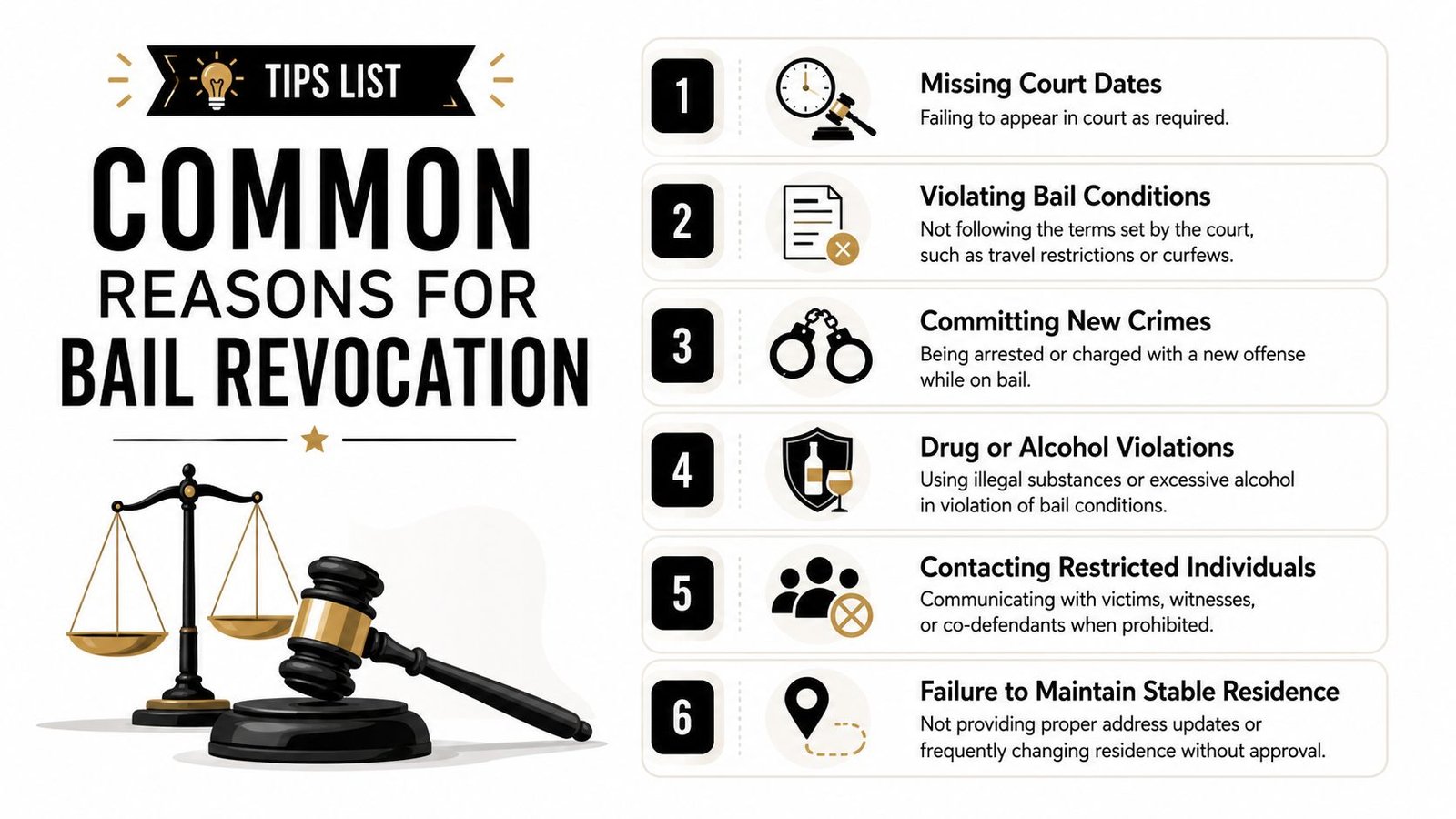
The violations that trigger trouble most often
The big triggers usually look like this:
- Missing court. This is the fastest way to turn a manageable case into a custody problem.
- Getting arrested again. A new case while on bond tells the court the first release may have failed.
- Breaking a no-contact order. “We were just talking” doesn't fix it if the order says no contact.
- Failing a drug or alcohol condition. If sobriety testing is part of release, one failed test can be enough.
- Ignoring supervision rules. Missed check-ins, GPS issues, curfew violations, or leaving the area without permission can all matter.
- Interfering with the case. Contacting witnesses or obstructing proceedings can put bond at risk.
A condition-of-release overview like this page on conditions of bail is useful because many defendants violate terms they barely read.
Why missed court and new charges are so serious
Once a judge believes the defendant isn't following the rules, the court starts reassessing risk. Upon revocation, the bail bond is forfeited, and defendants charged with a new crime while on bail are the most frequent subjects of revocation, with over 60% of bond revocations in major jurisdictions stemming from new criminal charges or failure to appear, according to this bond revocation overview.
In Colorado, missing court is even more dangerous because it can create a second legal problem. Failure to appear doesn't just irritate the judge. It can produce a warrant and additional exposure.
A bond condition is only “small” until it becomes the reason a judge decides the defendant can't be trusted out of custody.
One useful outside reference on warrants
If your concern started with a missed appearance, this plain-language piece from the Law Office of Bryan Fagan PLLC is a useful read on how failure-to-appear warrants generally work and why waiting rarely helps.
The Legal Process and Timeline in Colorado
Once a violation is reported, Colorado cases can move quickly. Families often assume there will be plenty of warning. Sometimes there is. Sometimes there isn't. A missed court date can lead to immediate consequences, and a new alleged felony while on bond raises the stakes even faster.
The most helpful way to understand this is as a sequence, not a mystery.
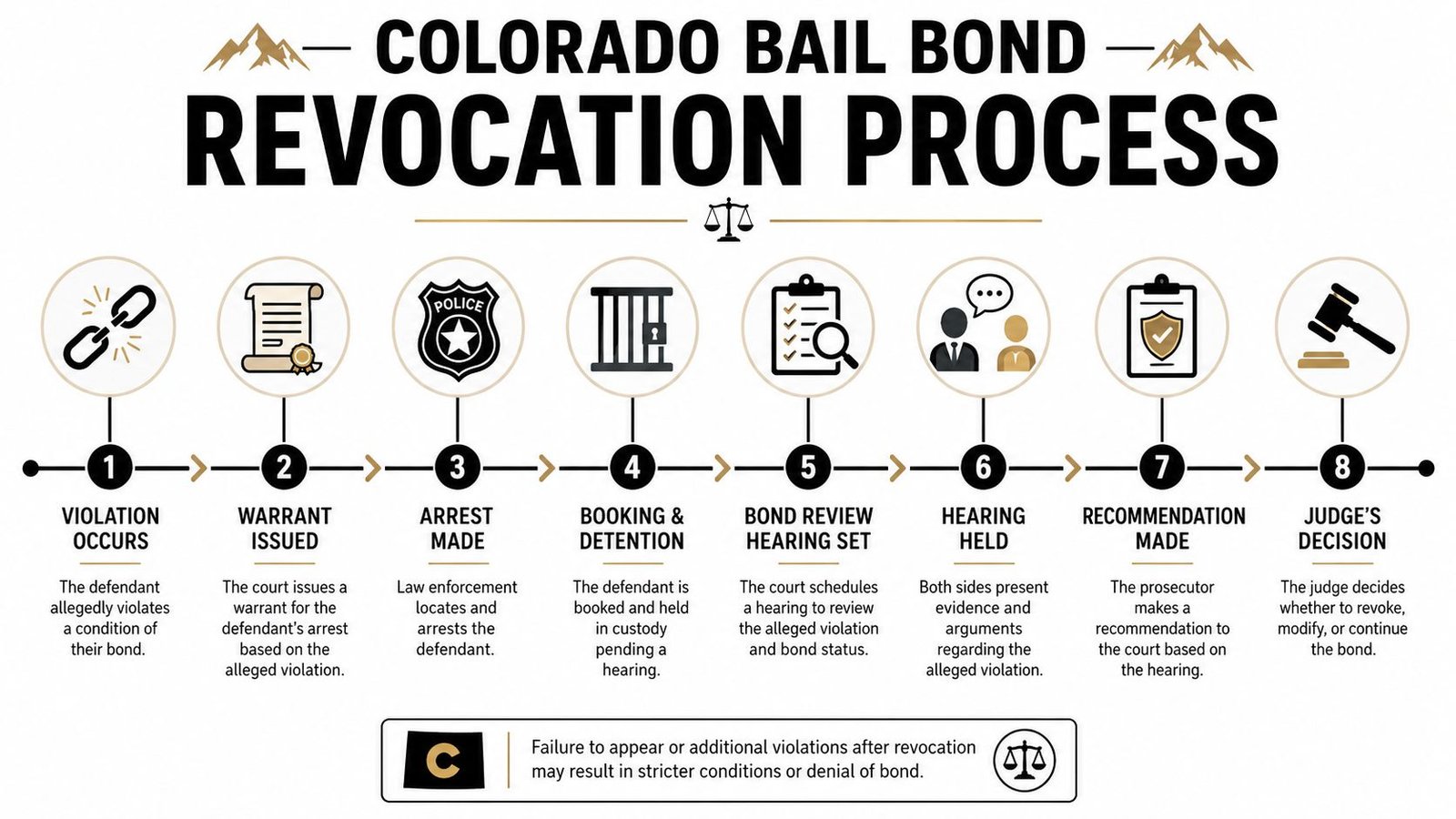
A practical timeline
A typical Colorado revocation path often includes some version of these steps:
- A violation happens. That may be a missed court date, new arrest, prohibited contact, or another release violation.
- The court learns about it. That can come through the prosecutor, pretrial services, law enforcement, or the missed appearance itself.
- A warrant or motion follows. For some violations, a bench warrant comes first. In other cases, a hearing gets scheduled.
- The defendant is arrested or ordered back into court. If they're already in custody on a new case, the original court gets notified.
- The judge reviews the alleged violation, deciding whether release should continue, tighten, or end.
- The bond status changes. The judge may revoke the bond, continue it, or increase the amount.
- The defendant returns to custody if revocation is ordered. At that point, the family is no longer dealing with routine bond compliance.
- Future release becomes harder. The court now sees a compliance problem, not just an underlying charge.
Colorado law on a new felony during release
Colorado law is direct on one of the most serious scenarios. Under Colorado Revised Statutes § 16-4-105(3), a bond can be revoked if the court finds probable cause that the defendant committed a new felony while released on bail, and the court may also increase the bond amount or incarcerate the defendant, as stated in this Colorado statute.
That's the point where families need to stop thinking in terms of excuses and start thinking in terms of damage control.
What the hearing stage usually means
A bail hearing after a violation isn't a casual status update. It's where the court decides whether the defendant can still be trusted in the community under conditions. If you want a sense of what that courtroom phase looks like, this overview of what happens at a bail hearing is a good place to start.
The practical lesson is simple. Delay makes every stage harder. Voluntary action before arrest is almost always better than waiting for officers to show up.
Consequences for the Defendant and the Cosigner
Families often focus on the defendant first, which is natural. But bail bond revocation has two tracks of consequences. One hits the defendant's freedom. The other hits the cosigner's financial liability.
Those tracks overlap, but they aren't the same.
What happens to the defendant
For the defendant, the most immediate consequence is loss of release. If the issue is failure to appear, Colorado treats that as a formal break in pretrial freedom. In Colorado, a bail bond is formally revoked when a defendant fails to appear at a scheduled court proceeding, which immediately terminates pretrial freedom and triggers a new, separate criminal charge for the FTA, according to this Colorado bail revocation explanation.
That means the defendant may now be dealing with:
- Re-arrest
- Time in jail pending the original case
- An added charge tied to the missed appearance
- A judge who is less likely to trust future compliance
What happens to the cosigner
The cosigner's problem is different. The indemnitor promised financial responsibility if the defendant didn't follow the bond terms. Once revocation and forfeiture come into play, the cosigner can be exposed to the loss tied to the bond.
Many families often feel blindsided at this point. They thought they were “helping someone get out.” Legally, they were also backing that person's compliance.
If you're unclear on the mechanics of physically returning a defendant before things get worse, this explanation of what bond surrender means is worth reading carefully.
Bail revocation consequences side by side
| Consequence Area | For the Defendant | For the Cosigner (Indemnitor) |
|---|---|---|
| Freedom status | Can be arrested and returned to jail | Doesn't go to jail on the defendant's charge, but loses control if they wait too long |
| Court exposure | May face a revocation hearing, stricter conditions, or detention | May need to respond to financial demands tied to the bond agreement |
| New legal risk | Failure to appear can bring a separate charge in Colorado | No new criminal charge from the defendant's FTA simply for cosigning, but contract liability remains |
| Money | May lose any money already paid and may face harder release terms later | Can be pursued for the amount owed under the indemnity agreement after forfeiture |
| Future bond chances | Judges may view the defendant as a higher risk | Cosigner may be less willing, or less able, to sign again after a loss |
| Best immediate move | Voluntary surrender and fast legal advice | Immediate contact with the bondsman and full disclosure |
When a family waits because they're embarrassed, they usually trade a controllable problem for a more expensive one.
How Your Bail Bondsman Can Help After a Violation
A good bondsman can't erase a violation. What they can do is help control the fallout. That's a big difference.
Most families call only after the court has already reacted. The smarter move is earlier. If there's even a serious risk of noncompliance, the bond agent needs to know before the defendant misses court or disappears.
What actually helps
After a violation, the useful actions are practical:
- Confirm the status fast. Is there already a warrant, or is the case still at the warning stage?
- Coordinate a surrender. Voluntary surrender is often cleaner than waiting on an arrest.
- Document communication. Mixed stories hurt everyone. Clear records help.
- Separate emotion from exposure. The family may want to protect the defendant. The cosigner also has to protect the household.
A lot of people don't realize how broad the bondsman's role can be in the middle of a crisis. This plain-language overview of how to use a bail bondsman helps explain where that support begins and where it doesn't.
The underused option that can save a cosigner
This is the part families rarely hear soon enough. A co-signer can voluntarily withdraw the bond, sometimes called recommitment, if they believe the defendant is becoming a flight risk or is refusing to attend court. That allows the defendant to be proactively surrendered before total forfeiture occurs. The co-signer remains liable until the defendant is physically returned to jail, as explained in this co-signer surrender guide.
That changes the whole mindset.
The cosigner is not just a passive victim waiting for disaster. The cosigner can become a risk manager. If the defendant starts using again, talking about running, ignoring court reminders, or violating conditions, the family still has a move available.
What works and what doesn't
What works:
- Early disclosure
- Voluntary surrender
- Honest assessment of flight risk
- Acting before the court loses patience
What doesn't:
- Covering for the defendant
- Believing promises with no action behind them
- Waiting because you don't want to upset the family
- Assuming one missed check-in won't matter
For readers comparing how forfeiture concepts are handled in other states, this Georgia bond forfeiture guide gives useful context on the financial side, even though procedures differ from Colorado.
If you think the defendant may run, the worst move is silence.
Your Immediate Action Plan for a Revoked Bond
The call usually comes at the worst time. Court was this morning. The defendant is not answering. The family is arguing. The co-signer wants to know whether there is still a way to limit the damage.
There usually is, but speed matters.
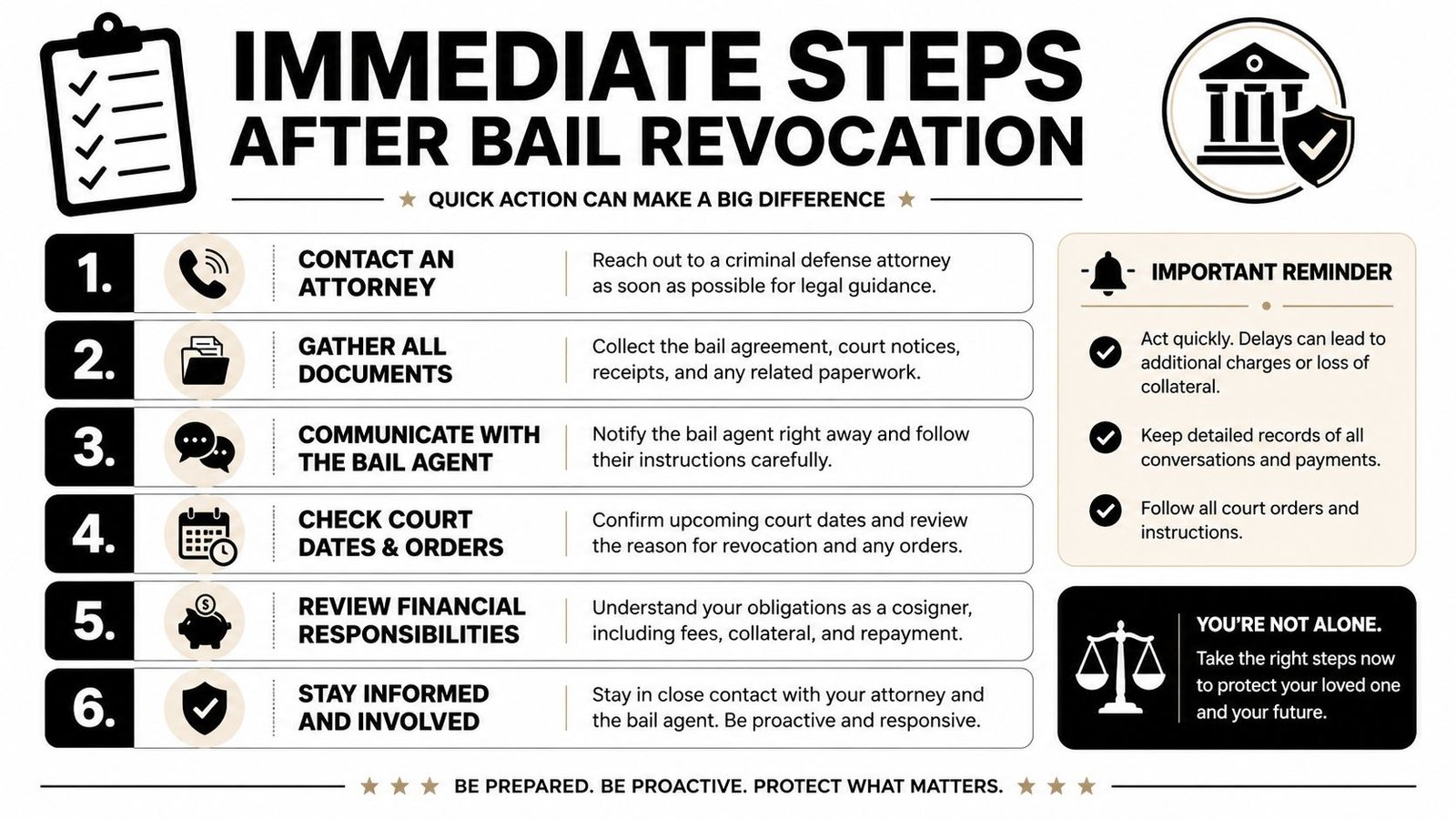
The checklist to use right now
Call the bond company immediately
Ask a direct question. Has the bond already been revoked, or is there still time to arrange a surrender before the court takes the next step? That answer changes everything.Give straight information about the defendant's location, condition, and recent behavior
If the defendant missed court, relapsed, cut off their phone, or started talking about leaving town, say so. A bondsman can work with bad facts. We cannot work with hidden facts.Decide quickly whether voluntary surrender is the safest move
Families often wait here because they feel guilty. Waiting can turn a manageable problem into a forfeiture problem. If the defendant is spiraling or refusing to cooperate, the co-signer may need to push for surrender to protect the bond.Pull together every document and message that matters
Get the bond agreement, court notices, release conditions, text messages, voicemails, and anything showing what happened before the violation. That record helps your bondsman and defense lawyer respond faster.Call defense counsel the same day
The court side and the bond side need to be handled together. A lawyer may be able to address the warrant, explain the violation, or ask for a hearing quickly, but that only happens if counsel has the facts early.Protect the co-signer before the situation gets worse
A co-signer still has options after a violation starts. If the defendant is becoming a flight risk, refusing treatment, or ignoring court, talk plainly with the bond company about surrender and withdrawal procedures. The goal is not punishment. The goal is stopping further loss.
One point gets missed too often. The co-signer is not stuck waiting for the court or the defendant to decide what happens next. In the right situation, the co-signer can act before the bond is completely lost.
This short video may also help you think through the next move before emotions take over.
Where to get help in Colorado
If you need immediate help from a Colorado agency, start with Express Bail Bonds. If you are also comparing how another state handles reinstatement after revocation, this overview of the Minnesota bond revocation process gives useful contrast.
Use the phone now. Delay usually helps the warrant, not the family.
Frequently Asked Questions About Bond Revocation
Can a revoked bond be reinstated
Sometimes. The answer usually turns on why the bond was revoked, how the defendant responded after the violation, and whether the court believes the problem will happen again. A missed court date followed by a quick surrender is judged very differently from hiding out or picking up a new charge.
If you want a comparison point from another state, this overview of the Minnesota bond revocation process shows how reinstatement questions can play out under a different set of rules.
What is a motion for remission
A motion for remission asks the court to give back some or all of the bond money after a forfeiture. It is a request for relief, not a reset button. The court may look at why the bond was lost, whether the defendant was returned quickly, and what costs or disruption the violation caused.
For families and co-signers, the practical point is simple. Even after forfeiture, there may still be something worth asking for, especially if the defendant was surrendered or brought back before the case got worse. Timing matters, and so does documentation.
What's the difference between revocation and forfeiture
Revocation means the defendant loses the right to stay out on bond and can be taken back into custody. Forfeiture means the bond money is put at risk because the bond conditions were broken.
Those events often connect, but they are not the same event. One changes the defendant's custody status. The other creates the financial exposure that keeps co-signers up at night.
Can a cosigner act before court revokes the bond
Yes, and families should understand how important that is.
A co-signer does not have to sit still and hope the defendant starts doing the right thing. If the defendant is talking about running, missing treatment, using again, or refusing to go to court, the co-signer can contact the bond company and ask about surrender before a full forfeiture hits. That step can protect money, reduce risk, and show the court and bondsman that someone acted before the file turned into a fugitive recovery problem.
It is one of the most underused tools in this whole process. Used early, surrender can be risk control.
If your family is dealing with a possible bond violation, missed court, or an urgent surrender decision, contact Express Bail Bonds. They serve Colorado statewide and can help you understand the next step quickly.