
That call usually comes at the worst possible time. A spouse, parent, sibling, or friend says someone was arrested in Alamosa, and suddenly you're trying to figure out where they are, whether they've been booked, and how to get them out.
The hard part is that panic pushes people toward bad shortcuts. They search random roster sites, rely on nicknames, or keep refreshing pages that don't control the jail. A better approach is simple. Confirm custody through the county's actual process, get the right booking details, and then move quickly on bond and release.
Navigating the First Steps After an Arrest in Alamosa
The first thing to know is that Alamosa doesn't work like every larger county. If you're expecting a polished public portal with instant results, that expectation can waste time. In this county, a calm phone call with the right information usually gets you farther than chasing unofficial listings.

That urgency makes sense. Alamosa County has been documented as having one of Colorado's highest jail incarceration rates. The Vera Institute reported that the county's jail rate rose from 3 people per 10,000 residents in 1970 to 82 per 10,000 in 2013, while Colorado's statewide average in 2013 was 33 per 10,000, putting Alamosa at roughly 2.5 times the state average at that time, according to Vera Institute reporting on life and jail in southern Colorado.
When families call after an arrest, the same pattern shows up again and again. They want three answers right away:
- Is my person in the Alamosa County jail
- What are they being held on
- Can they bond out today
Those are the right questions. But they only help if you ask them in the right order.
Start with verification, not assumptions
If you only heard about the arrest secondhand, don't assume the person is already fully booked. They may be in intake. They may be listed under a full legal name you don't usually use. They may also still be moving through the early paperwork that happens before anyone can give you solid bond information.
Practical rule: Don't start with “How do I bail them out?” Start with “Can you confirm whether they are in custody, and under what name?”
If you need a broader overview of what happens after an arrest, this guide on what happens after you get arrested helps put the timeline in plain English.
How to Conduct an Alamosa County Inmate Search
A family usually calls when they have been waiting for hours, getting fragments of information from friends, and still do not know whether their person is booked into Alamosa County jail. At that point, speed matters, but accuracy matters more. One wrong name, one guessed birthday, or one call to the wrong facility can cost you the rest of the day.
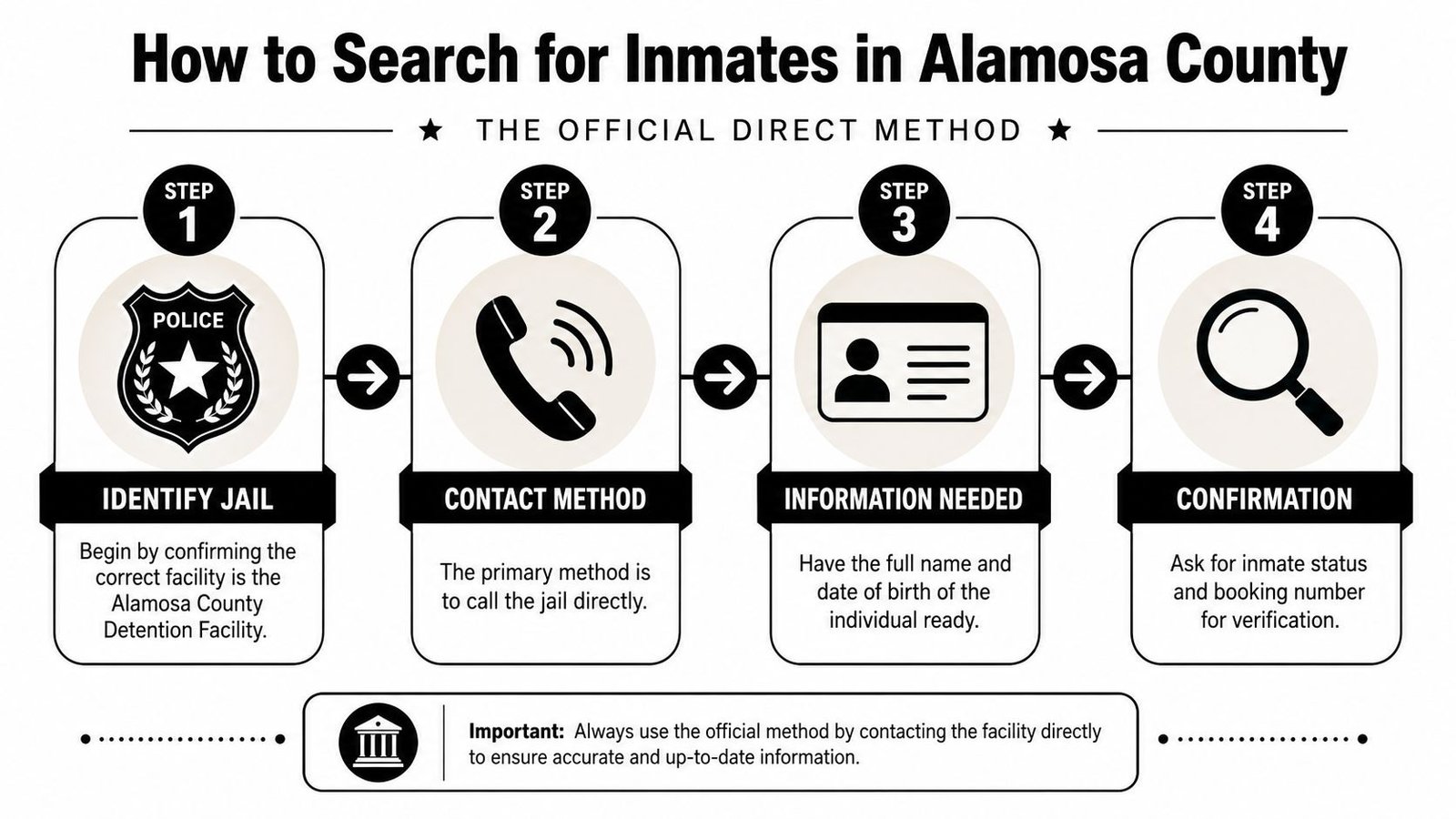
For Alamosa County, the fastest reliable step is to contact the jail directly. The Alamosa County Sheriff's Department operates the county jail, and the county directs the public to call 719-589-6608 on the Alamosa County jail page to verify custody status.
Gather the right details before you call
Jail staff can usually help much faster if you are ready with identifying information that matches the booking record. In practice, three details do most of the work: the person's full legal name, date of birth, and booking number if you already have it.
Keep these ready:
- Full legal name. Use the name that would appear on a license, court paperwork, or arrest record.
- Date of birth. This helps separate your person from someone with a similar name.
- Booking number if known. If an attorney, another relative, or the inmate already gave it to you, use it first.
- Rough arrest time and location. This can help you figure out whether the person is still in transport or intake rather than fully booked.
If you are not even sure the arrest happened in the right county, use this Colorado jail inmate search guide first to narrow down the likely facility before you start calling around.
Ask for the details you will need later
Keep the call focused. The goal is not just to hear “yes” or “no.” The goal is to get the information you will need for the next step if bail is available.
A simple script works well:
I need to confirm whether someone is in custody at the Alamosa County jail. I have the full legal name and date of birth. Can you confirm whether they are there, give me the booking number, and tell me whether bond information is available yet?
That last part matters. Families often stop after confirmation and call me back later without the booking number or bond details. Then we have to repeat work that could have been handled in one call.
What usually helps, and what slows families down
Small mistakes cause the biggest delays. I see the same ones over and over.
| Step | Helps | Slows things down |
|---|---|---|
| Name check | Full legal name | Nickname, middle name only, or a shortened first name |
| Identity match | Exact date of birth | Guessing on the birth month or year |
| Jail status | Asking whether booking is complete | Assuming an arrest means the record is already available |
| Follow-up | Writing down the booking number | Relying on memory during a stressful call |
| Bond prep | Asking whether bond info is posted yet | Calling a bondsman before you know whether a bond exists |
One more practical point. If the jail cannot confirm the person right away, that does not always mean they are not there. It can mean the booking process is still underway, the name was entered differently, or the person is being held at another facility tied to the arrest. That is why a clean first call, with the right identifiers, saves time and gives you a clearer path to release.
Decoding the Inmate and Bond Information
Once the jail confirms your family member is in custody, the search part is over. The next job is figuring out whether they can be released today, what it will take, and what could slow that down.
The details on the record matter because each one answers a different practical question.
- Booking number: The jail's internal ID for that custody record. Write it down exactly. If you call the jail again or speak with a bondsman, this number saves time.
- Booking date: The date the person was formally processed into custody. That helps you gauge where they are in the process.
- Charges: The reasons the jail is holding the person. Charges affect whether bond is set, how high it is, and whether any restrictions apply.
- Bond information: The release amount and the type of bond allowed, if one has been posted yet.
If you only remember one thing from this section, keep the booking number and the bond type together. Families often remember the dollar amount and forget the rest. That creates delays because a $1,500 cash bond and a $1,500 surety bond are handled very differently.
What the bond type actually means
A cash bond usually means the full amount must be paid directly to the jail or court, subject to that agency's rules.
A surety bond means a licensed bail bond company can post the bond for the defendant, assuming the bond is eligible and the indemnitor qualifies. That is the point where a lot of families save time by calling for help instead of guessing.
For a plain-English breakdown of common types of bail, review the bond category before you start moving money around.
One warning from the field. Bond information can exist but still be incomplete for release purposes. A hold from another agency, a pending advisement, or a bond amount that has been discussed but not fully entered can all change what happens next. If the jail gives you partial information, ask one direct follow-up question: “Is this person bondable right now, and if so, under what exact bond type?”
That question gets you closer to release than just asking, “How much is the bond?”
What to Do If You Cannot Find the Inmate
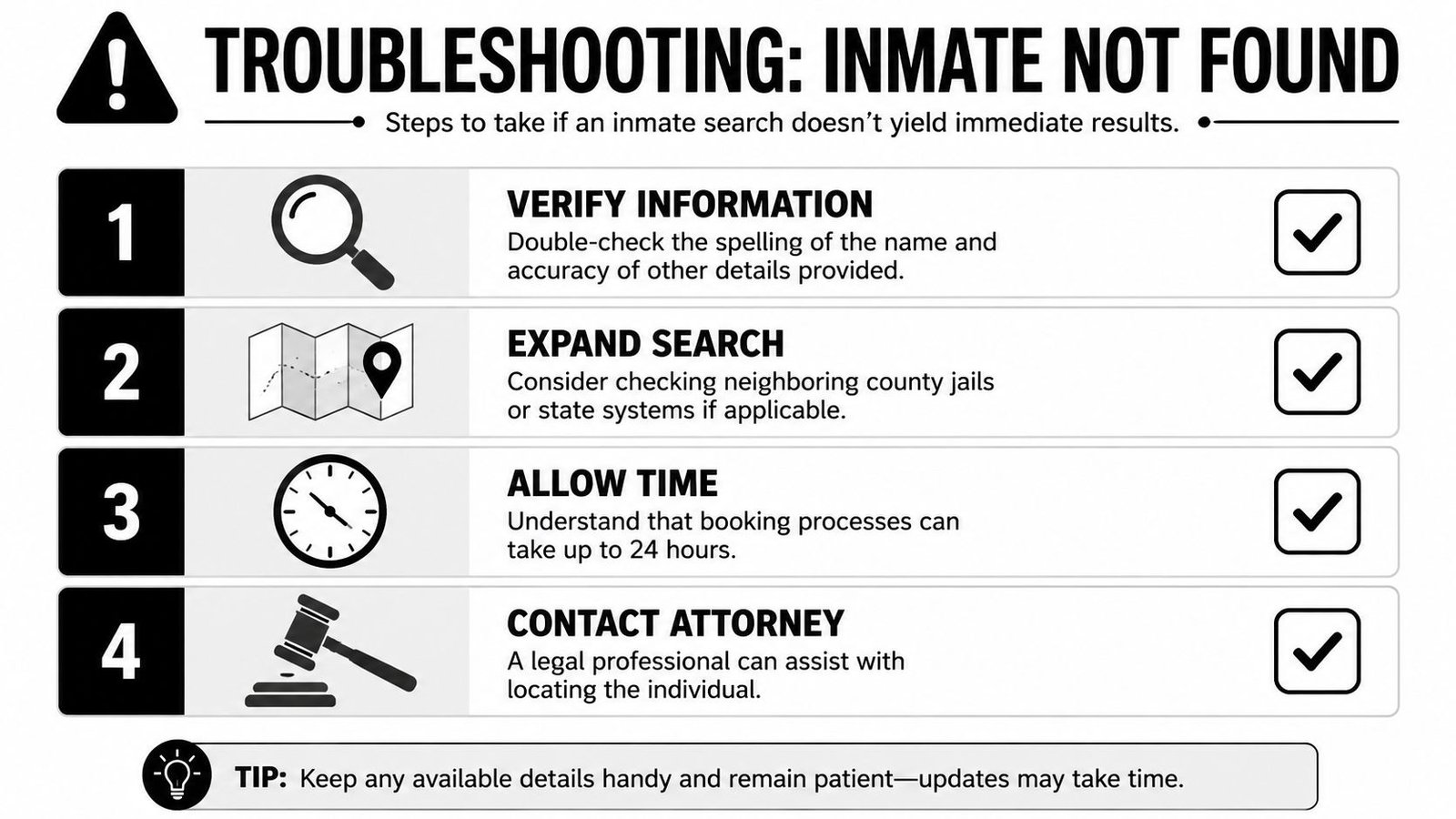
If the jail says the person isn't there, don't spiral. In a real-world Alamosa County jail inmate search, “not found” often means “not yet showing correctly” or “you're searching with the wrong identifier,” not that the person vanished.
The first places searches go wrong
A lot of failed searches come from ordinary family habits. You know the person as “Mike,” but the jail has “Michael.” You know her married name, but the arrest record may still show another legal variation. A single wrong birth date can also shut down an otherwise good search.
Another issue is timing. Booking records don't always line up perfectly with the moment of physical arrest. If the intake process is still moving, the phone answer may be incomplete for a while.
Reality check: A failed first search doesn't tell you much by itself. It usually tells you to verify the details and try again.
A useful troubleshooting checklist
Run through these in order before assuming transfer, refusal, or hidden information:
- Check the legal name carefully: Spell the first name, middle name, and last name exactly as they appear on official documents if possible.
- Confirm the date of birth: Even one wrong digit can lead to a dead end.
- Call back later: If the arrest was recent, the booking process may still be catching up.
- Ask whether there's a booking number yet: If staff can't confirm full record details, this question can clarify whether intake is still active.
- Consider another jurisdiction: If the arrest happened near a county line or involved another agency, the person may be housed elsewhere.
When to widen the search
Some families focus so hard on Alamosa that they miss the possibility of another detention location. If the arrest involved another county, a warrant from elsewhere, or transport after initial contact, you may need to look beyond one jail.
For nearby examples of county-specific jail and bail logistics, these area pages for Jefferson County and Golden and Centennial bail bonds show how custody and release workflows can differ from one Colorado location to another.
From Search to Release How Bail Bonds Work
Once you have confirmed custody and obtained bond information, the question becomes practical. How do you get the person released without wasting hours or making an expensive mistake?
Why the bond type matters more than the bond amount alone
A lot of families hear a bond amount and focus only on the number. That's understandable, but the type of bond usually tells you what path is available.
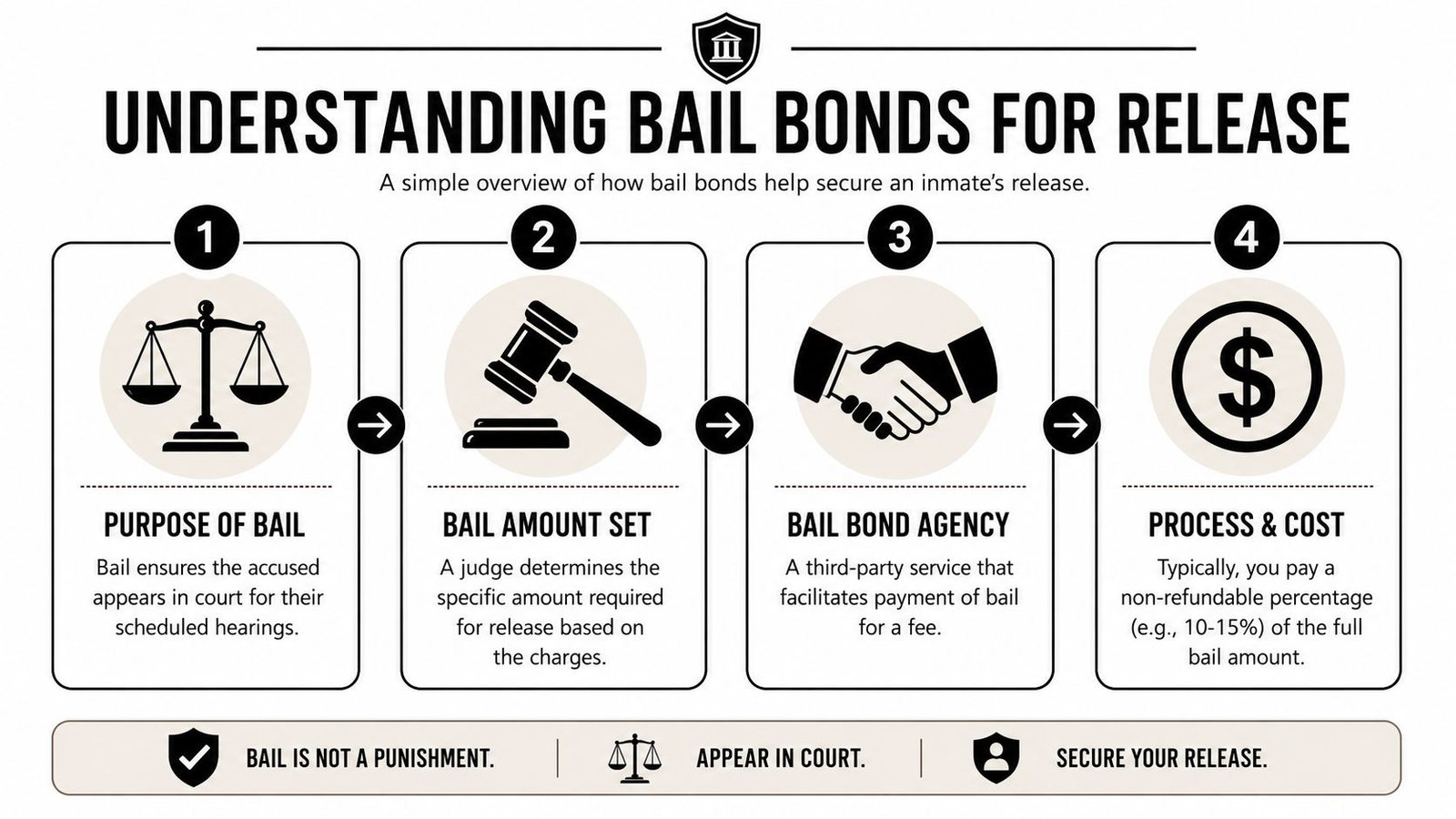
If the bond is a surety bond, a licensed bail bondsman may be able to post it. If it's cash only, that's a different situation and usually requires direct payment to the court or jail under that specific order. The search part of the process gets you the facts. The release part depends on reading those facts correctly.
Colorado's standard premium is 15%, and for bonds over $5,000 Express Bail Bonds often secures 10% with an approved cosigner, according to the company information provided in the publisher background. That's one reason families often choose a surety route instead of trying to produce the full bond amount immediately.
What a bail bondsman actually does
A bail bondsman doesn't erase the case or change the court date. The job is narrower and more useful than that. The bondsman provides the surety bond that allows release, then helps the family or cosigner handle paperwork, payment, and required signatures properly.
In practice, that solves several problems at once:
- You avoid guessing at the bond process
- You don't have to stand at the jail trying to decode forms
- Out-of-town family can often help remotely
- You get a clear answer fast if the bond isn't eligible for surety
The best time to call a bondsman is right after you have confirmed bond type and booking details, not after you've spent hours trying to reverse-engineer the jail process.
Speed comes from complete information
The fastest releases usually happen when the family has these details ready in one place:
| Needed for release | Why it matters |
|---|---|
| Full legal name | Matches the custody file |
| Date of birth | Confirms identity |
| Booking number | Speeds communication |
| Charges | Helps confirm the case |
| Bond type and amount | Determines whether a surety bond can be posted |
If you want a plain-language walkthrough of the process, this guide on how to use a bail bondsman is a solid next read.
Next Steps Contacting and Supporting an Inmate
After the search and bond issues settle down, families usually face a second wave of questions. How do I talk to them. Can I send money. What do they need right now.
The Alamosa County jail page notes that money can be deposited into an inmate commissary account through Inmate Canteen. That matters because it tells you the jail uses a managed phone-and-commissary system rather than a fully public online roster, and it gives you a practical starting point for supporting someone after booking. If you're waiting for contact, this guide on how to receive phone calls from jail can help you prepare for the call flow and common setup issues.
Keep your support practical
Early support usually works best when it stays simple:
- Be consistent: Missed calls and scattered messages create more stress.
- Keep names and numbers handy: Save the booking number and case details in one place.
- Ask before sending money: Make sure you understand the jail's approved process.
- Stay focused on court compliance: Release is only the beginning. The case keeps moving.
A good family contact does two things well. They get accurate information, and they keep the defendant organized enough to make the next court date and follow conditions.
If you need fast help after an arrest anywhere in Colorado, Express Bail Bonds is available 24/7 to guide you through inmate verification, bond questions, and surety bond release. Whether the case is in Alamosa or another Colorado jail, their team can help you move from confusion to action without wasting critical time.