An indemnity agreement for a bail bond is your binding promise to pay the full bail amount to the bail company if the person you're bailing out misses court. It transfers the financial risk from the bail agency to you.
That's why this document matters so much when you get that late-night call from jail. You're not just helping someone get released. You're stepping into a legal and financial role that can follow you until the case is over and every court date is satisfied.
The Urgent Document You Need to Understand
People often first hear the words indemnity agreement when they're stressed, tired, and trying to get a son, daughter, spouse, or friend out of custody fast. The paperwork can feel like it's written for lawyers, not families. But the idea behind it is simpler than it sounds.
At its core, an indemnity agreement is a contract where one person legally agrees to cover another party's losses tied to a defined event. In broader legal terms, it's a pre-emptive risk allocation tool, meaning it decides in advance who carries the financial burden if something goes wrong, as explained in this overview of indemnity law and practice.
In bail, that “something goes wrong” usually means the defendant misses court.
What this means in real life
If you sign the bail paperwork as the indemnitor, you are the person taking on that risk. The bail company is putting up the bond to the court. Your signature tells the company, “If this person doesn't appear, I will stand behind this bond.”
That's why this isn't just routine paperwork. It's the foundation of the entire release process.
Practical rule: Never sign a bail indemnity agreement unless you trust the defendant to appear in court and stay in contact with you.
A lot of families confuse this with ordinary insurance paperwork. It isn't. If you want a broader non-bail example of how indemnity works in professional settings, this Lighthouse Consultants guide to professional indemnity gives helpful context. Bail uses the same basic concept, but the stakes are immediate and personal.
If you're still trying to get your bearings on the release process itself, a plain-language walkthrough on how to bail someone out of jail can help you connect the contract to the actual steps ahead.
The Bail Bond Indemnity Agreement Explained
The easiest way to understand what is an indemnity agreement in the bail setting is similar to co-signing a loan for a court appearance. The court wants assurance that the defendant will come back. The bail company provides that assurance. You promise to protect the bail company if the defendant doesn't do their part.
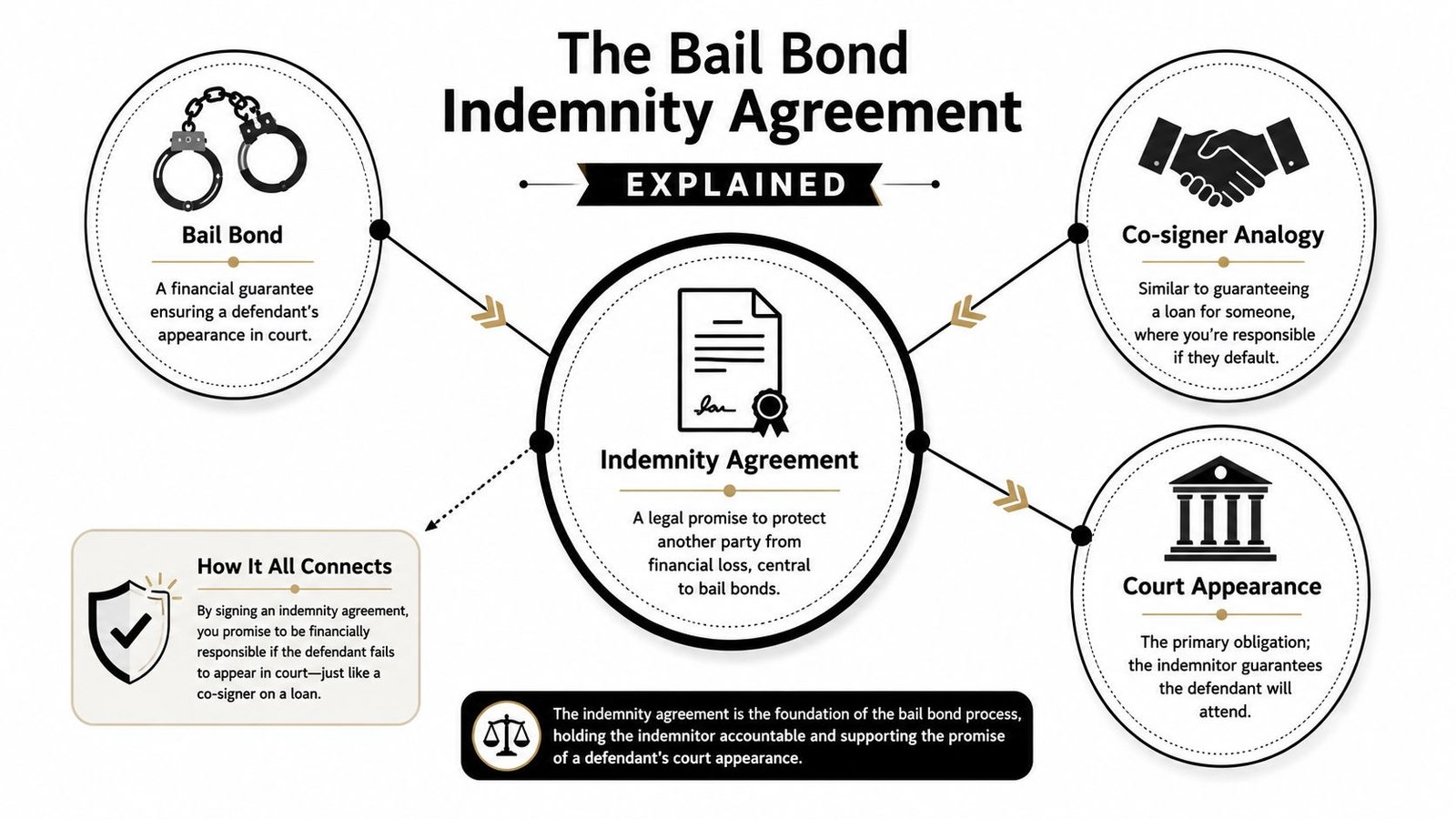
The three people in the agreement
There are usually three roles involved:
Defendant
The person who was arrested and must appear in court.Indemnitor
The friend or family member who signs the agreement and accepts financial responsibility.Surety
The bail bond company that issues the bond and guarantees the defendant's appearance.
In the surety bond world, the indemnity agreement is the tool that makes the principal or indemnitor financially responsible for losses caused when obligations aren't met, and it's typically required before a surety will issue a bond, according to this explanation of surety indemnity agreements.
Why the bail company requires it
A bail bond company takes a real risk every time it posts a bond. The company is promising the court that the defendant will return. Without an indemnity agreement, the company would have far less protection if the defendant disappeared.
That's why the contract shifts the risk away from the bond company and onto the signer. In plain English, the company is saying, “We will help secure release, but you must stand behind this decision.”
A lot of people nod through this part and think, “I'm only helping with paperwork.” That's the wrong mindset. You're making a guarantee.
A good way to think about it is this. The defendant is the person who must show up. The indemnitor is the person who promises there will be consequences if they don't.
What the agreement is really buying
It's not buying freedom from the case. It's not wiping away charges. It's not permission to ignore court dates.
It's buying temporary release based on trust, backed by money.
If you want a separate attorney-written overview of how jail surety works at a practical level, David G. Moore on surety bonds is useful background reading. But the key point for families is simple: your signature makes the bond possible because your signature gives the bail company someone to collect from if the defendant fails to appear.
Key Terms and Obligations in Your Agreement
When you sit down to sign, the contract may look dense. Don't let the wording scare you off. Most bail indemnity agreements contain a handful of terms that matter more than the rest. Once you understand those, the document becomes far less mysterious.

The core contract language
For an indemnity agreement to hold up, it needs to clearly name the parties, define the scope of indemnity, describe triggering events, spell out covered losses, and identify exclusions such as gross negligence or willful misconduct, as outlined in this discussion of enforceable indemnity provisions.
In a bail setting, that means the agreement should plainly tell you:
| Term | What it means for you |
|---|---|
| Indemnitor | You are the person promising to cover loss if the bond goes bad. |
| Indemnitee | The bail company is the party being protected. |
| Triggering event | A missed court date, forfeiture event, or other contract-defined problem can activate your liability. |
| Covered losses | These can include the bond loss and related expenses tied to enforcing the agreement. |
| Exclusions | The contract may state limits on what is or isn't covered. |
If you want a more local breakdown of the paperwork itself, this guide to understanding your Colorado bail bond contract helps translate the forms into plain English.
Four words you should never skim past
Here are the terms families most often misunderstand:
Premium
This is the fee paid for the bond service. It is not the same thing as the full bail amount.Collateral
This is property, money, or another asset pledged to secure the bond. If the agreement allows it, collateral may be taken or applied if the defendant fails to appear.Failure to Appear
Often shortened to FTA, this means the defendant didn't show up for court as ordered.Forfeiture
This happens when the bond is lost because the defendant did not comply with the court's appearance requirement.
A common mistake is assuming the premium is the total risk. It isn't. The premium is the fee for the service. Your bigger exposure comes from the indemnity promise behind the bond.
Read these sections slowly
Before signing, slow down on these parts:
- Names and case details. Make sure the defendant, court, and case information are correct.
- Collateral terms. Know exactly what property or funds are being pledged and when they can be kept or returned.
- Default language. Read what happens if the defendant misses court, disappears, or breaks conditions.
- Recovery costs. Check whether the agreement includes attorney fees, costs, or other enforcement expenses.
This short video can help you hear the contract concepts explained in a more conversational way:
If you don't understand a clause, stop and ask before you sign. Confusion after a missed court date is much more expensive than asking one more question up front.
Your Responsibilities as the Indemnitor
Signing as an indemnitor isn't passive. You're not just lending your name. You're taking on a job.
The biggest responsibility is making sure the defendant appears in court. In practical terms, that means staying in contact, knowing the hearing dates, and paying attention if their behavior starts to suggest they may run or avoid the case.
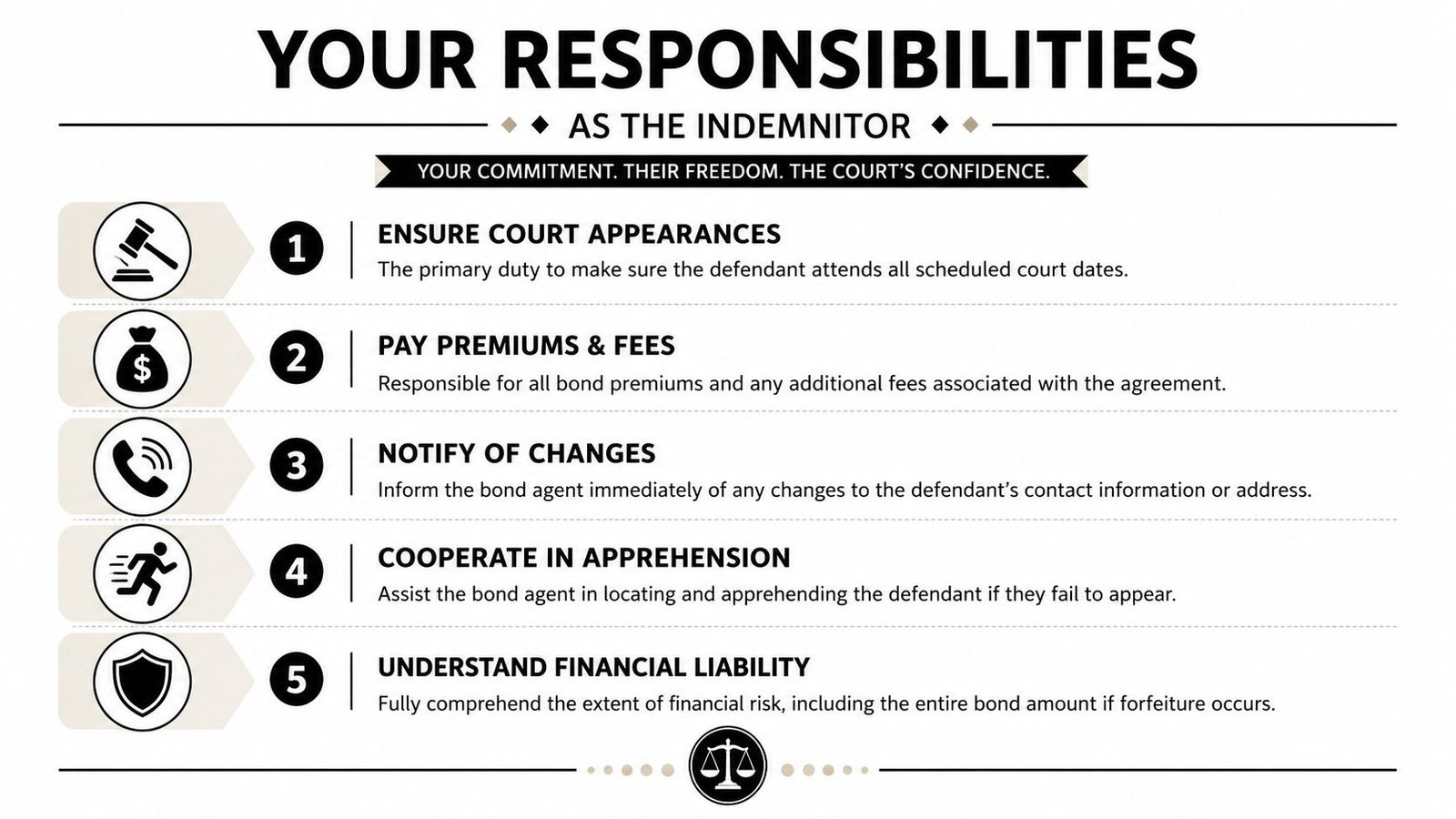
According to this explanation of bail bond co-signer obligations, once you sign the indemnity agreement, you assume full responsibility for ensuring the defendant appears at all court hearings, and if the defendant fails to comply, the agency may seize collateral used as security to pay the full bail amount in the event of forfeiture.
What your role looks like day to day
Your duties usually include:
Track court dates
Don't assume the defendant will remember them. Write them down yourself and remind them early.Stay reachable
If the bond agent calls, answer. Silence creates problems fast.Report changes
If the defendant changes address, phone number, or work situation, the bond agent needs updated information.Watch for warning signs
Missed calls, sudden travel plans, talk about leaving town, or avoiding paperwork are all red flags.
This practical guide to being a bail bond cosigner is useful if you want a closer look at how that responsibility plays out after release.
What full responsibility really means
Many people think, “I'm just helping them get out. If they mess up, that's on them.” Legally, that's not how it works. If the defendant vanishes, the financial consequences can come back to you.
Here's the plain version:
- You may lose collateral.
- You may owe the bond amount under the contract.
- You may also face collection efforts tied to the agreement.
Reality check: If you wouldn't trust this person with your car, your credit card, and your house keys, think carefully before trusting them with your indemnity signature.
The hard part is emotional, not legal. Families sign because they love someone, feel guilty, or want to fix a crisis quickly. Those feelings are understandable. But the contract doesn't care why you signed. It only cares that you did.
Risks and Forfeiture Enforcement in Colorado
The question that often goes unasked is the one that matters most. What happens if the defendant misses court in Colorado?
Start with the paperwork. Colorado law requires a bail indemnity agreement to be in writing and signed by the bail agent and the defendant or indemnitor, and it must state details including the bail amount, defendant's name, case number, court location, premium charged, and collateral terms under Colorado Revised Statutes section 10-2-705. That written contract becomes the road map when something goes wrong.
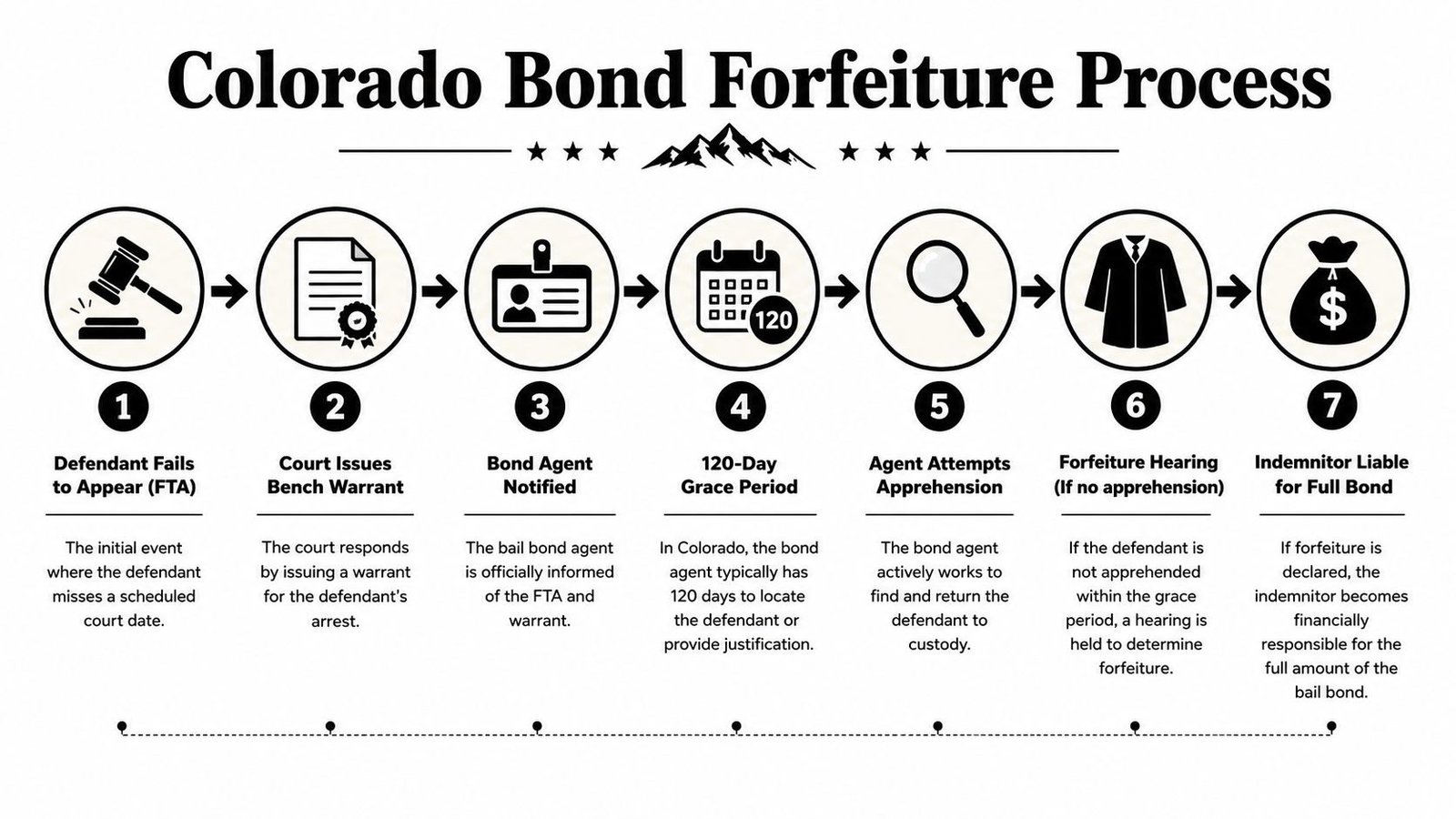
The usual chain of events
When a defendant fails to appear, the process often unfolds like this:
The court marks the nonappearance
The missed hearing becomes an immediate legal problem.A warrant may issue
The defendant can face arrest based on the missed date.The bond is now in danger
The surety has to respond because the bond was tied to that appearance.Recovery efforts begin
The bond agent may try to locate the defendant, contact family, and determine whether the absence can be corrected.Collateral and reimbursement issues move front and center
If the bond is forfeited, the indemnitor can be pursued under the agreement.
Colorado families often hear about a 120-day period tied to forfeiture matters, and that timeline appears in the process graphic above. The practical lesson is simple. Don't treat a missed court date as a paperwork glitch. Treat it like a financial emergency.
How enforcement can reach the indemnitor
If the defendant isn't brought back into compliance, the surety may have to answer financially and then turn to the indemnitor for reimbursement. That can involve collateral, direct payment demands, and civil collection action.
A missed appearance doesn't only create legal trouble for the defendant. It can also trigger a chase for money and assets against the person who signed.
| If this happens | The risk to the indemnitor |
|---|---|
| Defendant misses court | The bond is exposed |
| Defendant can't be located | Recovery pressure increases |
| Bond is forfeited | The signer may owe under the contract |
| Collateral was pledged | The collateral may be seized or applied |
If you're trying to understand the process from the bond side, this overview of bond forfeiture in Colorado fills in the practical details.
Why agents move quickly after an FTA
Bond agents don't have the luxury of waiting around. Once a defendant misses court, every delay makes recovery harder. In some situations, locating someone can involve investigative legwork similar to the methods described in these private detective services. The reason is simple. The longer a person stays missing, the harder it is to protect the bond.
When a defendant skips court, the problem stops being personal and starts being procedural. The court, the warrant, the bond, and the contract all start moving at once.
That's why the safest move is prevention. Reminders, communication, and quick action before the court date matter far more than arguments after a forfeiture starts.
Signing the Agreement and Your Next Steps
By the time you're ready to sign, the main thing to understand is this: the indemnity agreement gives the surety broad rights to recover liability, loss, or expense from the indemnitor, including court costs, attorney fees, and interest, and in some cases the surety may seek indemnification once liability is legally fixed, as explained in this discussion of surety recovery rights.
That sounds heavy, because it is. But it doesn't mean you should panic. It means you should sign with clear eyes.
What to do before you sign
Use this short checklist:
Confirm the defendant's reliability
Ask yourself whether they've shown they'll appear in court and stay in touch.Read the financial terms
Pay close attention to collateral, recovery costs, and default language.Check every identifying detail
Names, court, case number, and bail amount should all be accurate.Ask how signing works
If you're not local, remote processing may be available through electronic signature requirements for bail bond paperwork.
What to do after you sign
Don't treat signing as the end of your role. It's the beginning.
Keep a copy of the agreement. Save every court date. Stay in regular contact with the defendant. If something changes, act early instead of hoping it will sort itself out.
The families who handle bail best are usually the ones who stay organized, ask direct questions, and don't confuse trust with blind faith.
Frequently Asked Questions About Indemnity Agreements
Is an indemnitor the same as a co-signer
Usually, yes in everyday bail conversations. People often say co-signer, guarantor, or indemnitor to mean the person who signs and takes financial responsibility.
Can I be removed after I sign
Sometimes changes can be made, but that depends on the bond company, the case status, and whether a replacement indemnitor or other acceptable arrangement is available. You shouldn't assume you can walk away just because you changed your mind.
What if I can't afford to pay if the bond is forfeited
That's the risk you need to think through before signing. If forfeiture happens, the contract may allow the surety to pursue collateral and other recovery options. Waiting until after a missed court date is too late to discover the exposure.
Will signing affect my credit
The agreement itself isn't the same thing as a loan application. But if the contract goes into default and collection efforts or legal action follow, financial consequences can spill into other parts of your life. If credit risk is one of your concerns, ask direct questions before you sign.
Is this just a formality
No. This is the document that makes the bond possible and gives the surety a path to recover losses if the defendant doesn't meet court obligations.
Don't sign because the room feels rushed. Sign because you understand what you're promising and you've decided you can stand behind it.
What's the smartest question to ask before signing
Ask this: “If the defendant misses court, what exactly can you recover from me under this agreement?” If you understand that answer, you understand the heart of the contract.
If you need help right now, contact Express Bail Bonds for fast Colorado bail bond assistance. You can also get location-specific help through their Jefferson County Golden bail bond page or their Centennial bail bonds page. When time matters, getting clear answers early can protect both your loved one's release and your own financial peace of mind.