You get the call, your stomach drops, and the first thing you want is a straight answer. Where are they, what happens next, and how do you get them out?
That's where most families get stuck. The arrest happened fast, but the jail process doesn't move in a way that feels obvious from the outside. Phones ring, names get misspelled, booking takes time, and nobody explains the order of operations. Panic makes people rush into the wrong move, usually before the person is even fully booked.
If your loved one is at the Montezuma County Jail, stay focused on the next right step instead of trying to solve the whole case tonight. Release starts with good information, then the right bond decision, then follow-through.
Navigating an Arrest in Montezuma County
A lot of people read jail rules when what they really need is a roadmap. If your spouse, child, partner, or friend called from custody, you're not looking for theory. You need the jail location, the phone number, and a plan.
The Montezuma County Jail, officially the Detention Division of the Montezuma County Sheriff's Office, is at 730 East Driscoll Street in Cortez, CO 81321, and the facility operates under the supervision of the Detention Lieutenant. The jail's administrative phone number is (970) 564-4995 according to the Montezuma County Detention Division page.
That matters because your first job is simple. Confirm where the person is, confirm they've arrived, and stop guessing.
Start with control, not panic
When families call in a panic, they usually want to know bail amount first. I get it. But bail is not the first question if the booking process isn't finished. First confirm the person is in the system, then ask what hold or charge is involved, then ask whether bond has been set.
Use this order:
- Confirm the facility so you don't waste hours calling the wrong place.
- Confirm booking status because release can't move until intake is complete.
- Ask about bond eligibility if the jail can provide that information.
- Write everything down including spelling of the name, date of birth, and any case details you receive.
Practical rule: The family member who stays calm gets the fastest answers.
If you're dealing with this for the first time, read this guide on what to do when arrested. It helps you avoid the common mistake of trying to jump straight to release before the jail has finished its internal steps.
What people usually get wrong
Families often do three things that slow everything down. They call ten people before calling the jail. They assume the arresting agency and the holding facility are the same. They also assume that a quick phone call from custody means release is close.
Sometimes it is. Often it isn't.
The fastest path through the Montezuma County Jail process starts with accurate information and realistic expectations. You don't need perfect knowledge tonight. You need the next confirmed fact.
The First 24 Hours What Happens After an Arrest
The first day feels like a black box because most of the work happens behind secured doors. Your loved one may be transported, searched, photographed, fingerprinted, medically screened, and entered into the jail system before bond can even be discussed in a practical way.
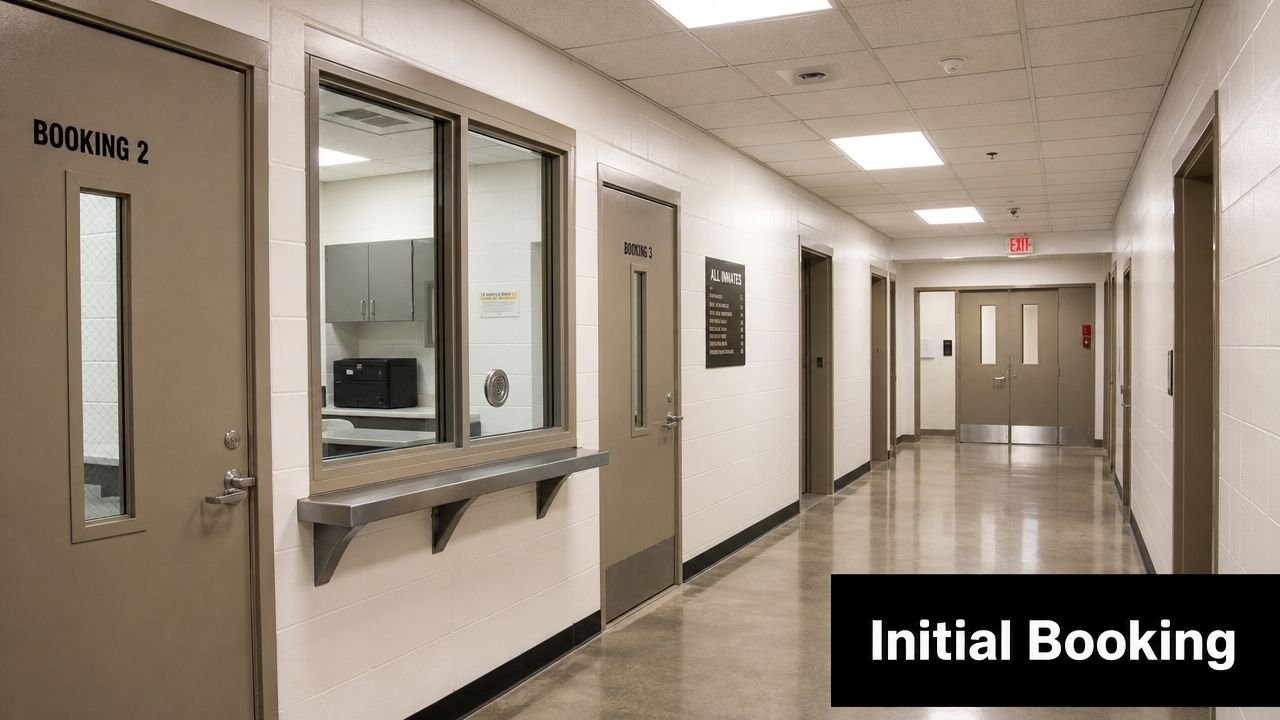
In public reporting, during May 2026, the Montezuma County Detention Center housed 131 inmates and had processed 698 people year to date at the facility in Cortez, as noted in the Montezuma County sheriff's office report for April and May 2026. That doesn't tell you how long one specific booking will take, but it does tell you this is an active working jail, not a place where every release happens instantly.
What booking usually includes
Booking is the jail's intake system. Families don't see most of it, but they feel the delay.
Expect these steps:
- Identity processing: The jail confirms who the person is through personal data, fingerprints, and photos.
- Property collection: Personal belongings are taken, logged, and stored.
- Search and screening: Staff search the person and conduct basic health and safety checks.
- System entry: The arrest and custody status have to be entered before the person becomes easier to locate.
That last part is where families get frustrated. If someone just called you from custody, they may still not be fully searchable or ready for release processing.
What you should do during that window
Don't sit there refreshing your phone with no plan. Use the time.
Ask these questions in order:
| Question | Why it matters |
|---|---|
| Is the person fully booked? | Bond and release movement often depend on completed booking. |
| What name is the jail using? | A spelling issue can derail your search. |
| Is there a bond hold or pending court review? | Not every case moves straight to bond posting. |
| Can family retrieve property now or later? | Policies vary by timing and case status. |
You can also review this page on 24-hour booking and release to understand why late-night arrests don't always lead to late-night release.
Don't measure progress by silence. In the first hours, silence usually means the jail is still processing.
Set realistic expectations
The worst mistake is promising the defendant they'll be home in an hour. Don't do that. Tell them you're working the process, confirming status, and getting ready for the moment bond can be handled.
That answer is honest, and it keeps everyone calmer.
Inmate Communication and Support Rules
Release is the priority, but communication matters. A person in custody who can reach family, receive mail properly, and get funds for basic needs is easier to support and easier to keep informed about court and release planning.
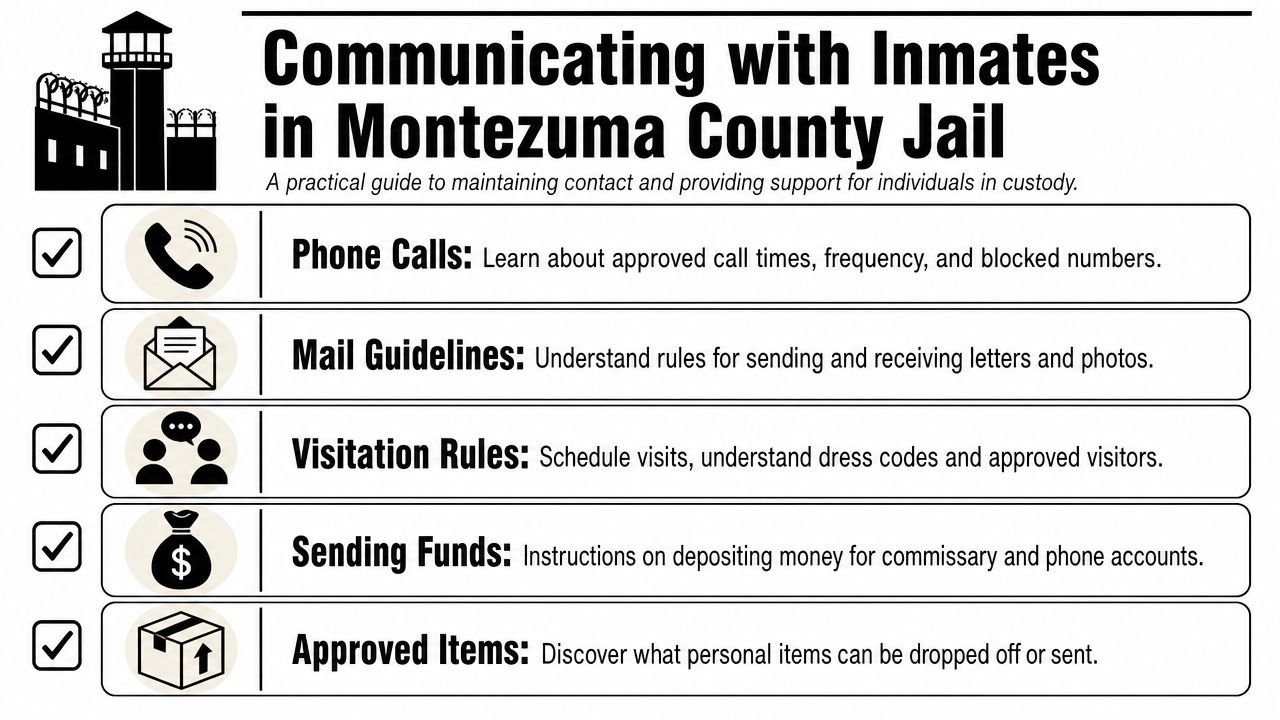
The key here is discipline. Don't assume a jail works like a hotel, a hospital, or another county facility you've dealt with before. Call the Montezuma County Jail directly for current visitation, mail, commissary, and property-drop rules before you drive over or send anything.
Communication that actually helps
Families often think more contact is always better. Not exactly. Clear, rule-following contact is better.
Focus on these basics:
- Phone calls: Keep your phone available and accept calls from numbers you don't recognize if you're expecting contact. If calls aren't coming through, check whether your phone settings or carrier are blocking them. This guide on how to receive phone calls from jail is useful if your calls keep failing.
- Mail: Use the inmate's correct legal name and any booking information the jail requires. If the jail rejects mail, it's usually because the format or contents violated policy.
- Visitation: Don't show up in clothing that could trigger a dress-code denial. Don't bring extra items. Don't assume children, friends, or extended family are all automatically approved.
- Funds: If the jail offers a commissary or account funding process, follow the posted instructions exactly. A small mistake with identifying details can delay access.
What support looks like from the outside
Support isn't just emotional. It's organizational.
Keep one written record that includes:
- Call dates and times
- Names of staff or departments you spoke with
- Any visitation or mail rules you were told
- Case reminders the inmate needs to hear clearly
- What still hasn't been confirmed
That list becomes your control center. Without it, family members repeat calls, mix up details, and argue over what they think they heard.
The person inside doesn't need ten conflicting updates. They need one calm outside contact who keeps facts straight.
Avoid the most common communication mistakes
Don't promise release unless bond is handled. Don't send items before confirming they're allowed. Don't use letters or calls to discuss anything that could create legal problems.
If you're helping a loved one, your role is simple. Keep communication clean, accurate, and useful. That gives them the best support possible while the release process moves.
How Bail Works in Montezuma County
Once bond is set, you have a decision to make. At this point, families either solve the problem efficiently or create a bigger financial mess than they needed to.
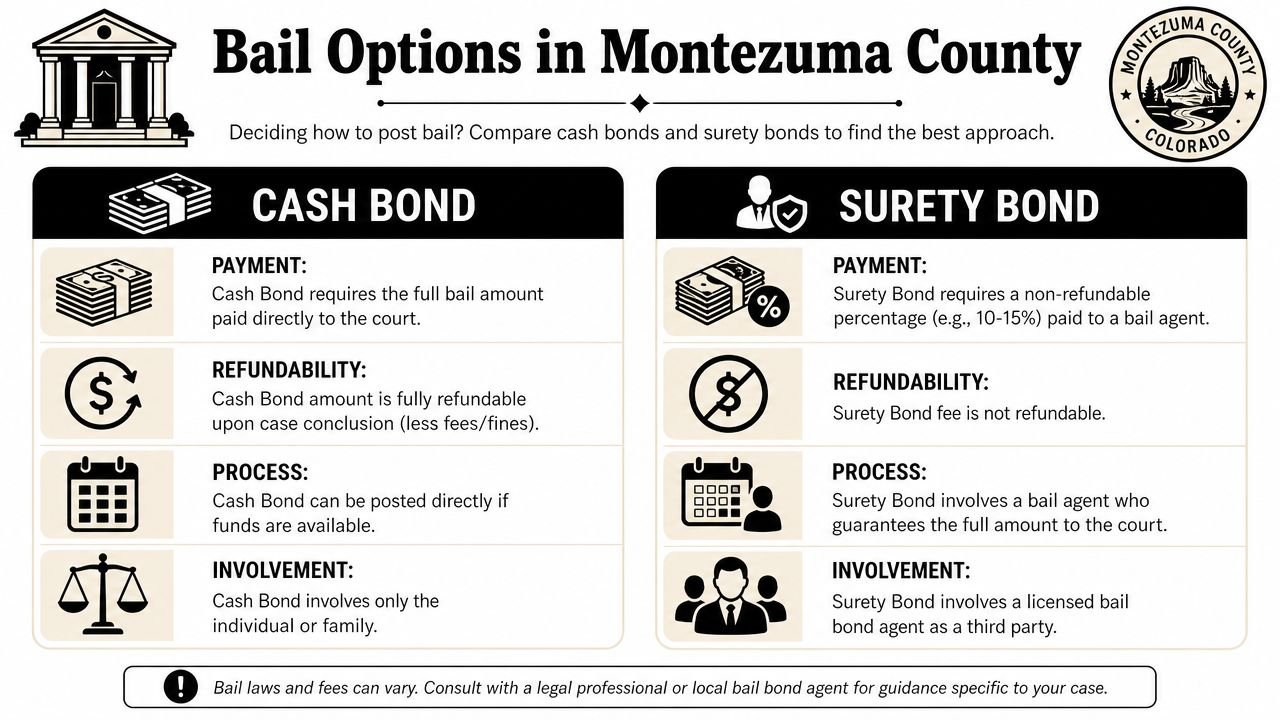
The two choices people usually compare are cash bond and surety bond. They are not the same thing, and treating them like they are leads to bad decisions.
Cash bond versus surety bond
Here's the clean comparison:
| Option | What you pay | Who receives it | Main tradeoff |
|---|---|---|---|
| Cash bond | The full bail amount | The court | You need all the cash available now |
| Surety bond | A non-refundable premium to a licensed bail agent | The bail agency | You avoid tying up the full bond amount |
A cash bond can make sense if you already have the entire amount available and you're comfortable having that money tied up while the case moves. Most families aren't in that position, especially during an unexpected arrest.
A surety bond is usually the practical choice because it solves the immediate release problem without requiring the entire bail amount in cash.
Why families get confused right now
Recent state changes have made the conversation murkier. Recent Colorado regulations are reshaping jail operations, public guidance on Montezuma-specific procedures is limited, and bond amounts in the county have been seen as low as $100, which has left many families unsure about release expectations, according to The Journal's reporting on new Colorado jail rules and Montezuma County operations.
That confusion is exactly why you need to ask direct questions. Don't assume a low amount means immediate walkout. Don't assume a bond listed on paper means every release step is complete. The bond type, the jail's timing, and any legal holds all matter.
If you want a plain-language breakdown of bond categories, this guide to types of bail is worth reading.
If paying the full amount would hurt your rent, savings, or ability to hire a lawyer, cash bond is usually the wrong move.
The smart way to decide
Use three decision points:
- How fast can you access the full amount? If the answer is “not fast,” cash bond isn't solving tonight's problem.
- What else does this case require? Court costs, legal fees, missed work, and family expenses don't stop because bail got paid.
- Can you handle the process remotely? If you're out of town, a surety route is often much easier to manage.
Here, clear thinking beats panic. Bail is not the place to make an emotional money decision.
A Step-by-Step Guide to Posting a Surety Bond
If you're using a surety bond, the goal is speed with as little friction as possible. You should not be scrambling to drive across Colorado with a stack of cash if the process can be handled electronically.
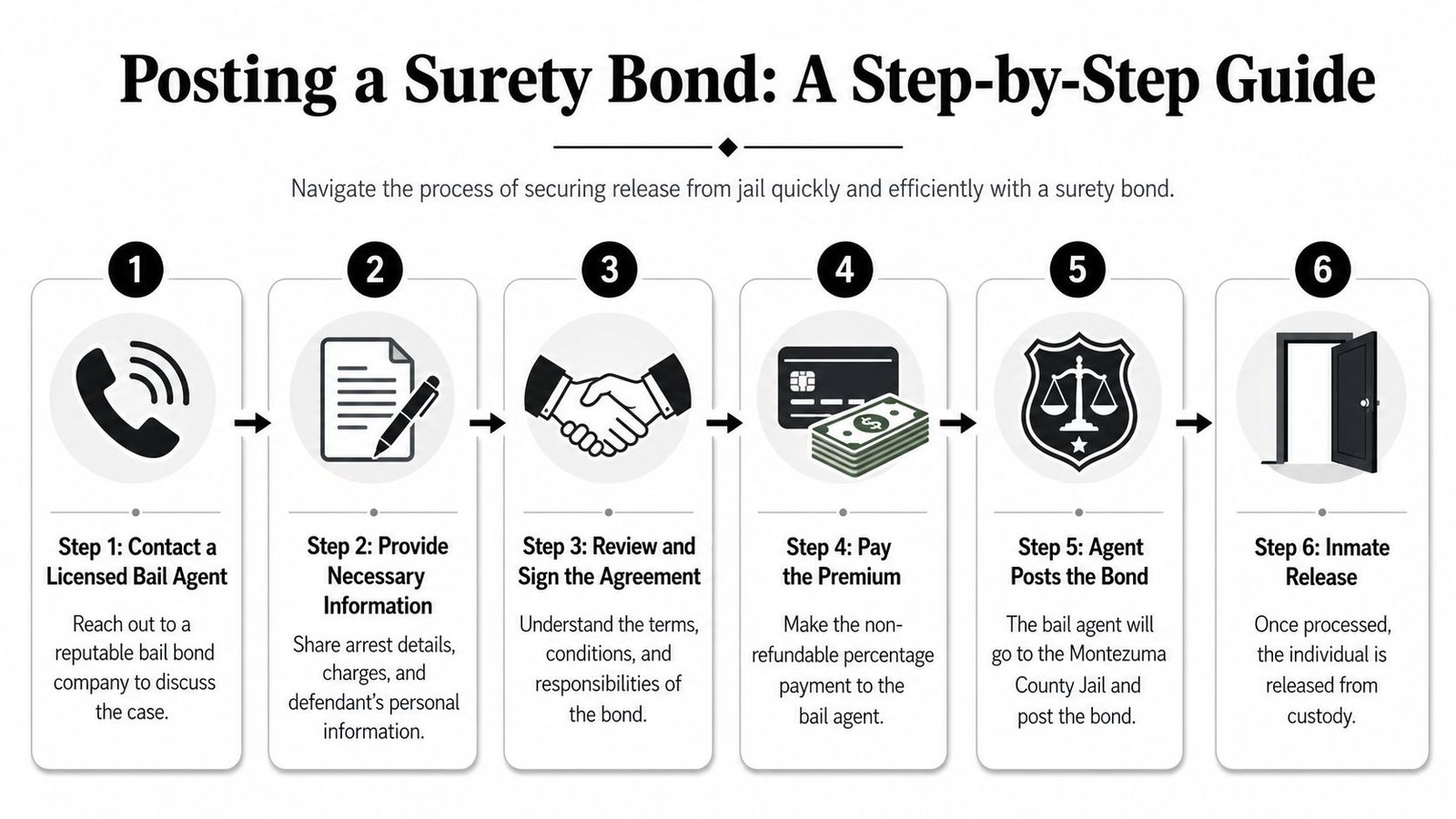
The sequence that works
A surety bond process is straightforward when you stick to the order.
- Make contact with a licensed bail agent. Start with the defendant's full name, date of birth, jail location, and any bond information you have.
- Provide the case details. The agent needs enough information to evaluate the bond and prepare documents correctly.
- Review the agreement carefully. If you're cosigning, understand your responsibility before you sign anything.
- Complete documents online. This is what saves families time. You can handle paperwork from your phone or computer.
- Pay the premium electronically. Once the transaction is complete, the bond can move toward posting.
- The bond is posted and release processing begins. After that, the jail still controls the physical release timeline.
A lot of people think posting bond and walking out happen at the same second. They don't. Posting bond starts the release process. The jail still has to finish its side.
Where people slow themselves down
The biggest delays usually come from missing information or hesitation at the document stage.
Watch for these issues:
- Wrong personal data: A bad spelling, missing middle name, or incorrect date of birth can create avoidable delays.
- Unread contracts: Cosigners sometimes freeze because they didn't expect legal paperwork. Read it early, not after the agent is ready to post.
- Payment problems: If the payment method isn't ready, the process stalls right there.
This explainer on what a surety bond for jail means helps if you're trying to understand your role before you sign.
A short video can also make the process easier to grasp:
What to tell your loved one
Be careful with your wording. Don't say, “You're getting out right now,” unless the jail has already cleared the release. Say this instead:
“The bond is being handled. Stay patient, follow instructions, and wait for the jail to complete release.”
That language helps because it's accurate. It gives hope without making a promise you can't control.
After Release Responsibilities and Next Steps
Getting out of the Montezuma County Jail feels like the finish line. It isn't. It's the handoff from custody to court obligations, and at this point, families need to stay sharp.
The defendant must appear for every required court date. If they miss court, the legal trouble gets worse fast, and the financial risk to the cosigner becomes very real. Bond only works when the defendant follows through.
What the defendant has to do
Once released, the person needs structure immediately. Don't let them drift into “I'll deal with it later” thinking.
Use this basic checklist:
- Save every court date in a phone calendar and on paper.
- Answer calls from counsel or the bond company if they're involved in reminders or updates.
- Follow release conditions exactly, including travel, contact, or conduct restrictions if any apply.
- Keep paperwork together in one folder so nothing gets lost.
If documents are being shared between family members, lawyers, and cosigners, use secure tools for protecting confidential files. Arrest records, ID copies, court notices, and bond paperwork shouldn't be floating around unsecured email threads.
What the cosigner is agreeing to
Cosigners sometimes think they're just helping with paperwork. That's not how this works. A cosigner is backing the defendant's appearance in court.
That means the cosigner needs to know:
| Responsibility | Why it matters |
|---|---|
| Stay in contact with the defendant | Missed communication turns into missed court dates |
| Track every court obligation | Memory is unreliable under stress |
| Respond quickly if problems arise | Waiting usually makes it worse |
| Take noncompliance seriously | Excuses don't protect the bond |
Release is relief, not permission to ignore the case.
Keep the case from getting more expensive
The smartest families get organized the same day the person comes home. They arrange transportation, confirm the next legal date, and make sure the defendant sleeps somewhere stable and reachable.
If you need help outside Montezuma County later, statewide experience matters. Families often move between counties during a case, and resources in places like Jefferson County in Golden or Centennial bail bond support can become relevant depending on court, warrant, or transfer issues.
Your Partner for Fast Montezuma County Jail Release
The Montezuma County Jail process is stressful because it forces families to make decisions while they're scared and short on information. That's exactly why a professional surety bond service makes sense. It turns a chaotic situation into a workable sequence.
You don't need to drive around hunting for answers. You don't need to come up with the full cash amount if a surety bond is the better fit. And if you're helping from another city or another state, you can still get the release process moving without standing in a jail lobby for hours.
The best approach is the one that removes delay, reduces financial strain, and gives you clear next steps. For most families, that means using a licensed bail bond agency that can handle documents and payment electronically, then move quickly to post the bond.
If your loved one is sitting in the Montezuma County Jail right now, don't wait for the situation to “sort itself out.” It won't. Get accurate jail information, confirm bond status, and start the release process with someone who handles Colorado jails every day.
If you need fast help with a Montezuma County Jail release, contact Express Bail Bonds. They provide statewide Colorado service, handle surety bonds remotely, and can walk you through the process step by step so you can focus on getting your loved one home.