
If you just got the call, you probably don't need a lecture. You need to know where your person is, what the bond is, how fast you can move, and what to do before the night gets worse. In Lake County, Colorado, that means staying focused on the Leadville jail, the county's own rules, and the clock that starts running the moment booking happens.
Lake County isn't a big-city jail system with a dozen shortcuts. It's a mountain county with one local detention hub, a limited in-person workflow, and real distance between families and the jail. That's why the right move is usually a simple one, get the inmate confirmed first, then use the fastest lawful way to post bond.
When the Call Comes in the Middle of the Night
The first call usually lands in the worst possible moment. Your son, your husband, your brother, or your friend is in custody, and the person speaking on the phone is scared, tired, and not thinking clearly. That's normal. Panic makes people call the wrong county, ask the wrong questions, and waste the only advantage they have, time.
Lake County bail bonds in Colorado are different from what the average person might picture when they hear the word “bail.” You're not dealing with a giant metro system where every jail has its own private ecosystem. You're dealing with a rural county where the detention facility sits in Leadville, and that matters when families live hours away, or even out of state.
Start with the jail, not with the money
Before anyone starts talking about payment, confirm the person is in Lake County Jail and not somewhere else. If you want a clear example of how arrest situations can unfold in another state, what happens after a Texas arrest gives a useful sense of how quickly the first hours can get complicated. The core lesson is the same everywhere, location and custody status come first.
For families who want a fast path, use a process that cuts down the back-and-forth, like the emergency bail bond guide. In a county like this, speed comes from preparation, not guessing.
The family that wins at 2 a.m. is the family that gets the facts first.
Finding the Inmate at the Lake County Jail
Call the Lake County, Colorado jail information line at 719-486-1249 as soon as you have the person's full legal name. Have the date of birth and, if you know it, the date of arrest ready before you dial. That saves time and keeps you from getting bounced around while everyone is anxious.
If you need to make an in-person inquiry, the county's bonding policy says cash payments can be brought to the Lake County Sheriff's Office, 505 Harrison Avenue, Leadville. Use the county's own policy page to verify the current process before you drive, because the jail and the sheriff's office are where the answers live, not in random internet posts.
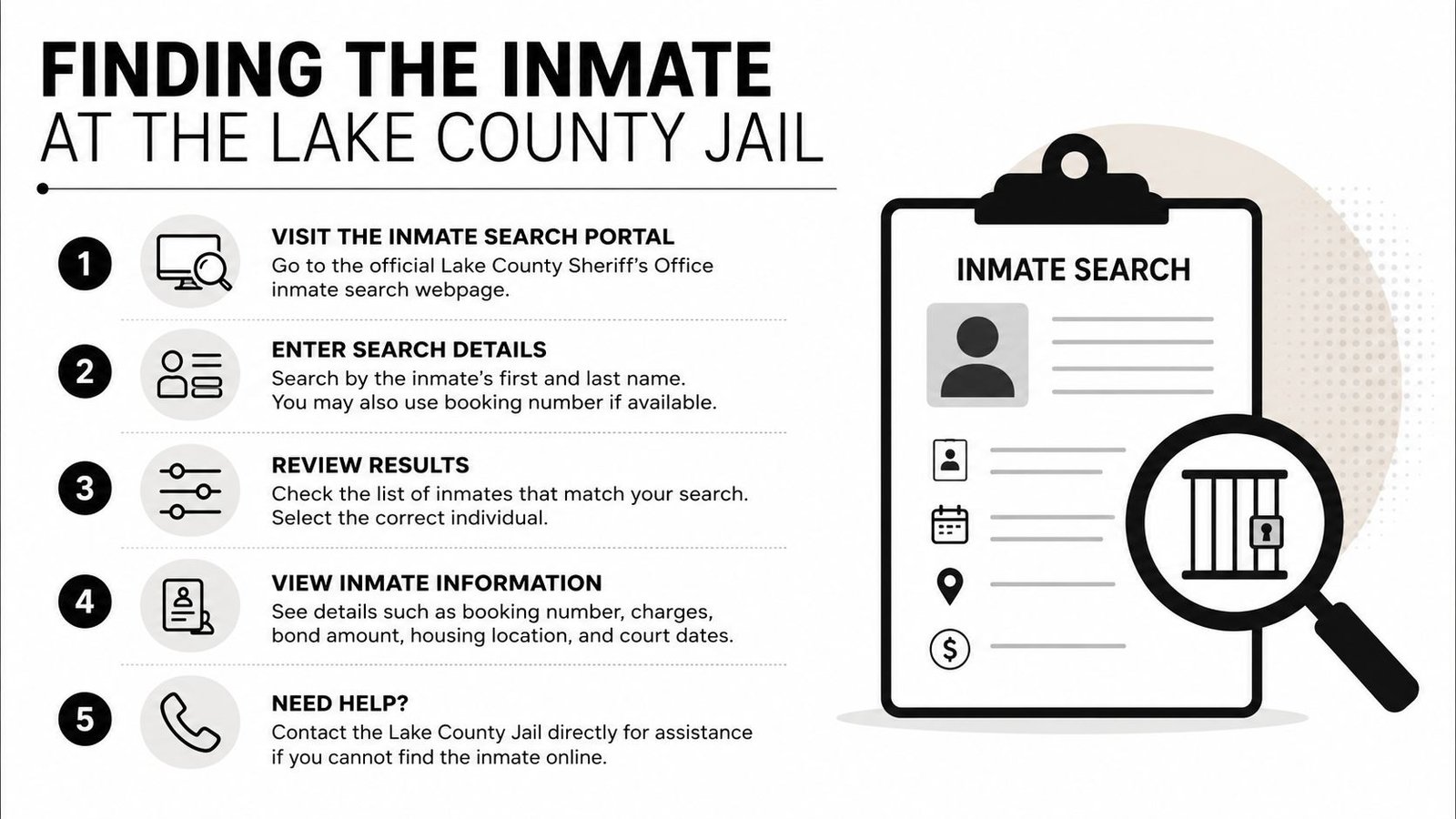
What to ask when you call
Don't ramble. Ask directly:
- Is the person in custody right now?
- Has a bond been set?
- Is this a bondable case, or is there a hold?
- What bond type was assigned?
- Where should payment or paperwork go?
A person can be in custody, booked, or sitting on a hold, and those are not the same thing. If you don't know which one applies, you'll waste money and time. That's why the jail should be your first call, not your second or third.
If you want a separate locator workflow, the inmate locator tool can help you keep the process organized while you confirm the county's information.
How Lake County Bonding Actually Works
Lake County's own bonding policy is blunt, which is useful. Cash payments can be brought to the Lake County Sheriff's Office at 505 Harrison Avenue in Leadville, and personal checks are not accepted. A licensed bondsman typically charges 10% to 15% of the bond amount, so you need to decide whether you're paying the full amount yourself or using a surety route that only requires the premium.
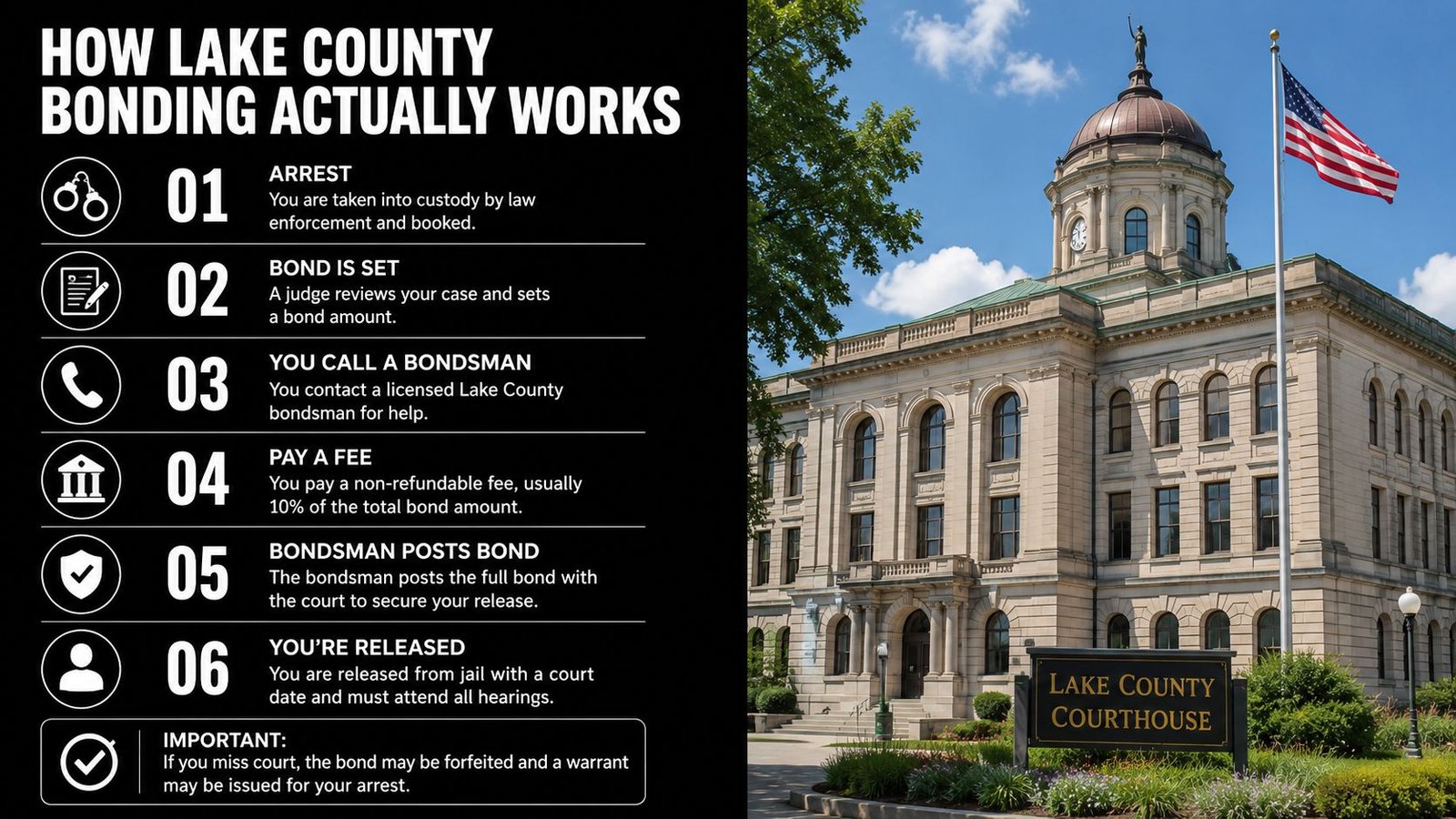
The 48-hour clock matters
Colorado law, under Colorado Revised Statute 16-4-102, requires an in-custody arrestee to be brought before a court for bond setting as soon as practicable, but no later than 48 hours after arrival at a jail or holding facility. That rule puts a hard boundary around the early process. If bond hasn't been set yet, the system still has a clock running.
This is why families shouldn't sit on a bad assumption. If the bond hasn't appeared, call, verify, and keep moving. Waiting for someone to “figure it out” is how people lose a full night.
Cash, surety, and why the county rule matters
A cash bond ties up a lot of money. A surety bond shifts the burden to a licensed agent, which is usually the saner move for a family that needs liquidity and speed. For a plain-English breakdown of the mechanics, the how bail bonds work guide is worth reading before you decide.
If you're comparing payment methods across counties, the rule here is simple, Lake County accepts cash, it does not take personal checks, and the county's process is built around fast, confirmed posting, not improvisation.
If you can't bring clean payment and the right paperwork, don't assume the jail will bend the rule for you.
Working With Express Bail Bonds Step by Step
A family usually starts by calling, texting, or emailing an agent and giving the defendant's name, booking details, and bond information. Express Bail Bonds handles the paperwork electronically, which matters when the cosigner is nowhere near Leadville and can't take time off to stand at a counter. That remote option is practical, not fancy.
What the workflow looks like
First, the agent confirms the bond and gathers the basics. Then the cosigner completes the application, signs the contract, and submits payment electronically if needed. After that, the agent posts the bond with the jail once the file is complete.
The speed comes from sequencing. Families who already have their documents ready move faster than families who have to hunt for a pay stub, a utility bill, or a driver's license while the defendant sits in custody. If you're screening a cosigner or checking background information for a responsible helper, a resource like affordable volunteer background checks can help you think through identity and trust, but the bail bond paperwork still has to be completed the right way.
Colorado's standard premium is 15%, and for bonds over $5,000 the company often secures 10% with an approved cosigner, according to the publisher's stated service terms. That's the kind of detail that should be confirmed during the call, not guessed at after the fact.
What to expect from the handoff
A clean application and a responsive cosigner can move quickly. A messy file, mismatched names, or missing ID slows everything down. The agent's job is to keep the paperwork moving while the family stays reachable, because in bail work, silence is expensive.
Documents and Information You Will Need
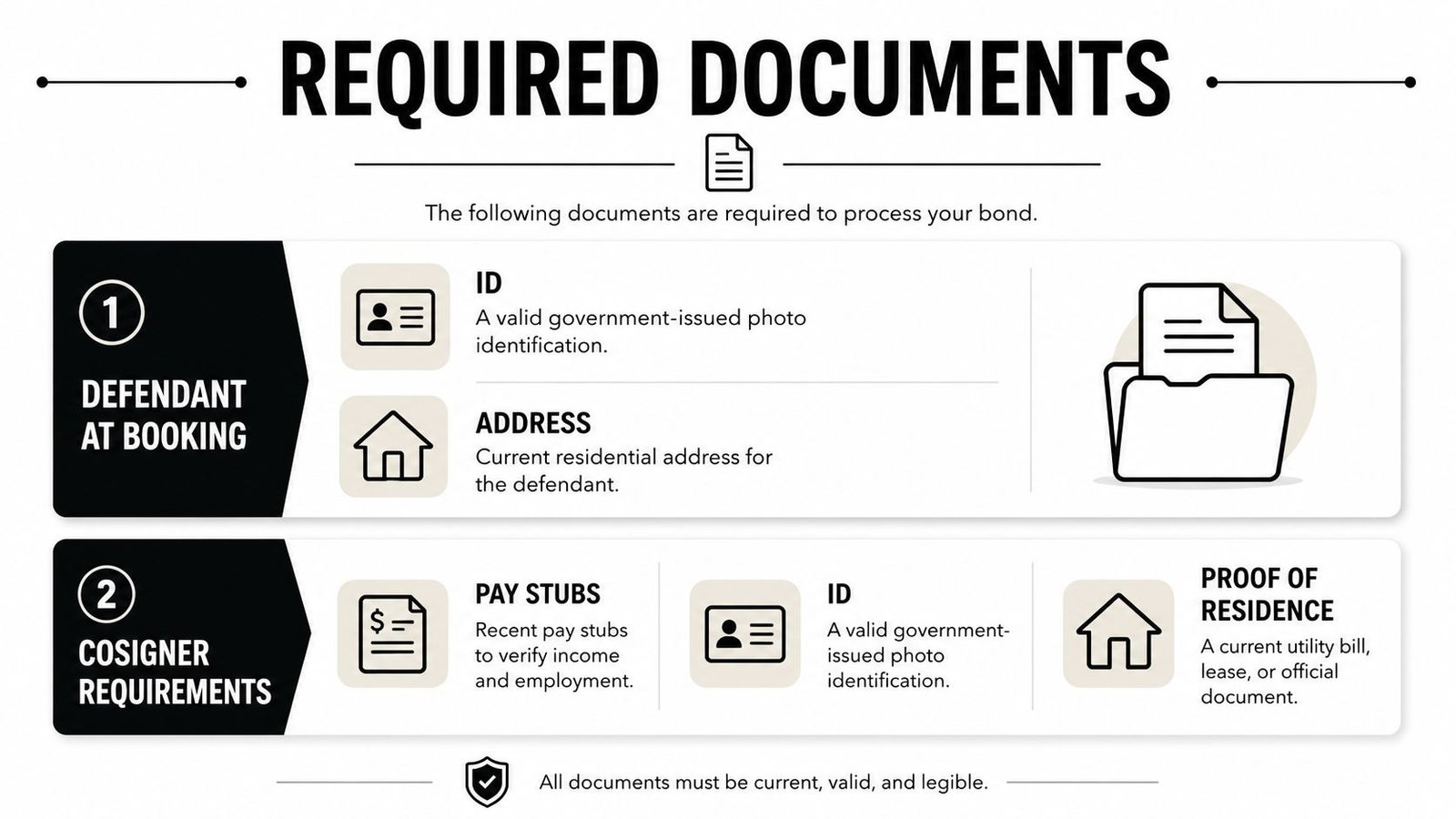
The defendant needs to be identified correctly at booking, and the cosigner needs to be qualified before anyone tries to post bond. Bring government-issued ID, the defendant's full legal name, and whatever basic charge information you've been given. If you don't have the charge sheet yet, write down exactly what the jail told you so you don't misstate it later.
For the cosigner, the usual basics are ID, proof of residence, and proof of income. That can mean pay stubs or similar documentation. If the cosigner lives out of state, the point isn't to force a drive to Leadville, it's to complete the file correctly from wherever they are.
The documents guide lays out the standard paper trail in more detail. Use that as a checklist before you start, not after you hit a snag.
A simple rule applies here:
- Defendant information: name, birth date, charge details, and booking context.
- Cosigner information: identification, residence proof, and income proof.
- Practical backup: a phone that stays on and someone who can respond fast.
An indemnitor agreement means the cosigner is taking responsibility for the bond conditions and the file if the defendant doesn't show. That's not casual paperwork. It's a real promise, and it should be signed only by someone who understands the risk.
Cash Bail, Surety Bonds, and Property Bonds Compared
Lake County gives you the basic choices, but not every choice makes sense at 2 a.m. Cash is direct. Surety is efficient. Property bonds are slower and usually more cumbersome than families expect. Since personal checks are not accepted and a bondsman typically charges 10% to 15%, the practical choice usually comes down to cash on hand versus a surety bond through a licensed agent.
| Ways to Post Bond in Lake County | Typical Cost | Accepted in Lake County? | Best For |
|---|---|---|---|
| Cash bond | Full bond amount | Yes, at the sheriff's office | Families who can tie up the full amount |
| Surety bond | 10% to 15% premium | Yes, through a licensed bondsman | Families who need speed and liquidity |
| Property bond | Based on property equity and court acceptance | Potentially, but not the easy path | Rare cases with usable property and time |
The surety route is usually the right call in a rural county. You don't have to produce the entire bond amount, you don't have to personally manage the jail counter, and you keep cash available for the month that follows arrest, because that month is always expensive.
For families deciding between payment structures, the surety bond vs cash bond guide is the cleanest way to understand the tradeoff. In plain English, cash gives the court the full amount, surety gives the jail a posted bond with a licensed guarantee, and property bonds create paperwork that most families do not want to rush through in the dark.
Timing, Court Appearance, and Common Mistakes
Release timing depends on the jail's processing load, the bond type, and whether the paperwork is clean. A bonded release doesn't mean the door opens instantly. It means the file is in motion, and in a smaller county that still takes coordination between the jail, the agent, and whoever is signing the bond.
The 48-hour rule in Colorado matters because the court setting can't be pushed indefinitely. If the defendant has already been brought in, the system has to move the bond-setting process along quickly. That gives families a reason to act the moment they get the call, not after breakfast, not after work, and not after they've argued about who should help.
The mistakes that slow everything down
- Wrong name spelling: One bad letter can send staff looking in the wrong record.
- Wrong county: Lake County, Colorado is not Lake County, Illinois or Lake County, Florida.
- Personal check at the jail: The county rule says no.
- Missing booking details: No booking number, no clean handoff.
- Dead phone line: If the cosigner disappears, the file stalls.
The first court date is not optional. The defendant has to appear, and the cosigner needs to understand that missed court dates create serious bond problems. For a straightforward overview of what happens when bond conditions are broken, bond condition violation penalties is a useful reminder that bond is a legal obligation, not a favor.
If the defendant gets transferred out of Lake County, the bond still depends on the new custody location and the new paperwork chain. If court is missed, the consequences get worse fast, and the cosigner should assume the bond can be jeopardized. The premium paid to a bondsman is generally non-refundable, because that fee buys the posting service, not a refundable deposit.
Call Express Bail Bonds at 720-984-2245 any time, day or night, and start the application online at Express Bail Bonds. If your case is in Jefferson County or Centennial instead of Lake County, use the county-specific pages for Jefferson County, Golden, Colorado and Centennial so you're not wasting time on the wrong jurisdiction.
If you need a Colorado bond posted now, contact Express Bail Bonds and get the paperwork moving. The team handles surety bonds, electronic contracts, and 24/7 support for families who can't afford to guess while someone sits in custody.