The phone call usually comes when nobody is ready for it. Maybe it's after midnight, maybe it's from a number you don't recognize, and suddenly you're trying to figure out whether your loved one is in Burlington, what jail they're in, and how fast you can help. If that's where you are right now, take a breath, because the next few steps are more orderly than they feel in the moment, especially in a small county where the sheriff, the court, and the detention center all work from the same place. For a quick first checklist, keep this arrest guide open while you make calls.
When a Loved One Ends Up in Kit Carson County Jail
A first jail call can throw a whole family into panic, especially when the booking happened in a county seat as small and centralized as Burlington. In Kit Carson County, you're not dealing with a maze of competing detention facilities spread across a metro area. You're dealing with one county seat, one detention center, and a handful of offices that handle the parts of the process that matter most.
That matters because the fastest path forward is usually not the loudest search result. It's the office that has the booking, the court, or the bond authority. When families understand that structure early, they waste less time calling the wrong place and more time doing the two things that help most, confirming custody and getting the bond process moving.
Practical rule: start with confirmation, then move to release planning. Don't guess which facility has your person, because one wrong assumption can cost hours.
A rural county jail also tends to operate with narrower business windows for some services, while still keeping bond posting available through the sheriff's office around the clock. That mix can confuse people who expect a big-city system with online dashboards and separate intake desks. The good news is that the county publishes enough contact information to make the process manageable if you follow it in order.
If you're trying to help tonight, focus on the next 12 to 48 hours. Confirm where the person is held, save every direct phone number, ask about bond status, and keep court contact information handy in case the next step shifts from detention to scheduling. That approach keeps the situation grounded instead of turning every phone call into a new search.
Where the Facility Is and How to Reach It
The county jail you're looking for is the Kit Carson County Detention Center in Burlington. The county's detention-center page says bonds can be posted 24 hours a day at the sheriff's office, and the main detention-center number is 719-346-7006. Save that number first, because it's the most direct starting point for booking questions and bond-related confirmation.
The county also publishes separate contact lines for the offices that most often affect release. The sheriff is reachable at 719-346-8934, courts at 719-346-5524, and probation at 719-346-8686. That division matters because each office controls a different piece of the process, so you don't want to ask the jail about a court calendar issue or call the court for a bond-posting question.
The detention-center page also shows a business-hour window for inmate-related services, listed as 9:30 AM–11:30 AM and 12:30 PM–4:00 PM. That kind of schedule is useful when you're trying to plan paperwork, deposits, or a follow-up call without sitting on hold at the wrong time. The county's setup reflects a small-county workflow, not a round-the-clock front desk for every task.
Good habit: save the jail, sheriff, court, and probation numbers in your phone before you need them again. In a rural county, that one step saves a lot of repeated explanation.
Confirming an Inmate Is Actually Booked Here
The most common mistake families make is assuming a person is in the first place that shows up in a search. In Kit Carson County, the safer move is to verify booking directly with the detention center, then use the court system as a second check if needed. Start with the jail's main line, give the person's full legal name and date of birth, and ask whether they're booked at the Kit Carson County Detention Center.
What to ask for on the first call
Keep the call simple and specific. Ask these questions in order:
Is this person currently booked here?
That gets you past guesswork quickly.What is the booking status?
You want to know whether they're being held, released, or already moved.Is there a bond amount set yet?
If there's a bond, the next steps change right away.Which court or office is handling the case?
That helps you route the right follow-up call.
If the answer is unclear, the Kit Carson County Judicial Branch is a useful secondary check. The court office runs Monday through Friday from 8:00 a.m. to noon and 1:00 p.m. to 4:00 p.m., and the clerk's-office email for record checks is kitcarsonclerksoffice@judicial.state.co.us. Use the court when you need case coordination, not just jail status.
The biggest source of confusion is the separate Kit Carson Correctional Center in Burlington. It's a different facility at 49777 County Road V, Burlington, CO 80807, with a different phone number, 719-346-9450, and a different visiting process. If you're calling the wrong building, you may get the wrong answer even when you've got the right town.
For a practical lookup workflow, use this county jail lookup guide as a reference point, then verify with the jail before you assume anything. That's the safest way to avoid wasting a night chasing the wrong roster.
Visitation Hours, Mail Rules, and Phone Access
Once custody is confirmed, families usually want to know when they can visit and how they can stay in touch. The first thing to remember is that the county jail and the separate correctional facility do not follow the same rules, so don't borrow one facility's policy and apply it to the other. The published schedule on the county detention page gives you the operational context, but the jail staff will still control whether a specific visit, drop-off, or contact method is allowed.
If you're planning a first visit, keep the process calm and simple. Bring the identification you expect the facility to require, dress conservatively, and arrive early enough to deal with any line, screening, or paperwork delay. Smaller facilities often work with limited staff coverage, so showing up late can turn a valid visit into a missed one.
The county does publish a structured approach to inmate-related services, which is a strong sign that the process is organized rather than improvised. That helps families, because it means there's usually a right office, a right time, and a right way to ask. If you're unsure about the visitor approval process, call before you drive.
The other piece families need is steady communication after the first few days. Mail and phone access are usually the safest channels for routine contact, but they come with restrictions. You should expect the jail to reject obvious contraband, and it's smart to assume that anything with loose parts, embedded metal, or extra material could be a problem.
Practical rule: ask the jail before mailing anything unusual. A simple call can prevent a letter, photo, or package from being returned or discarded.
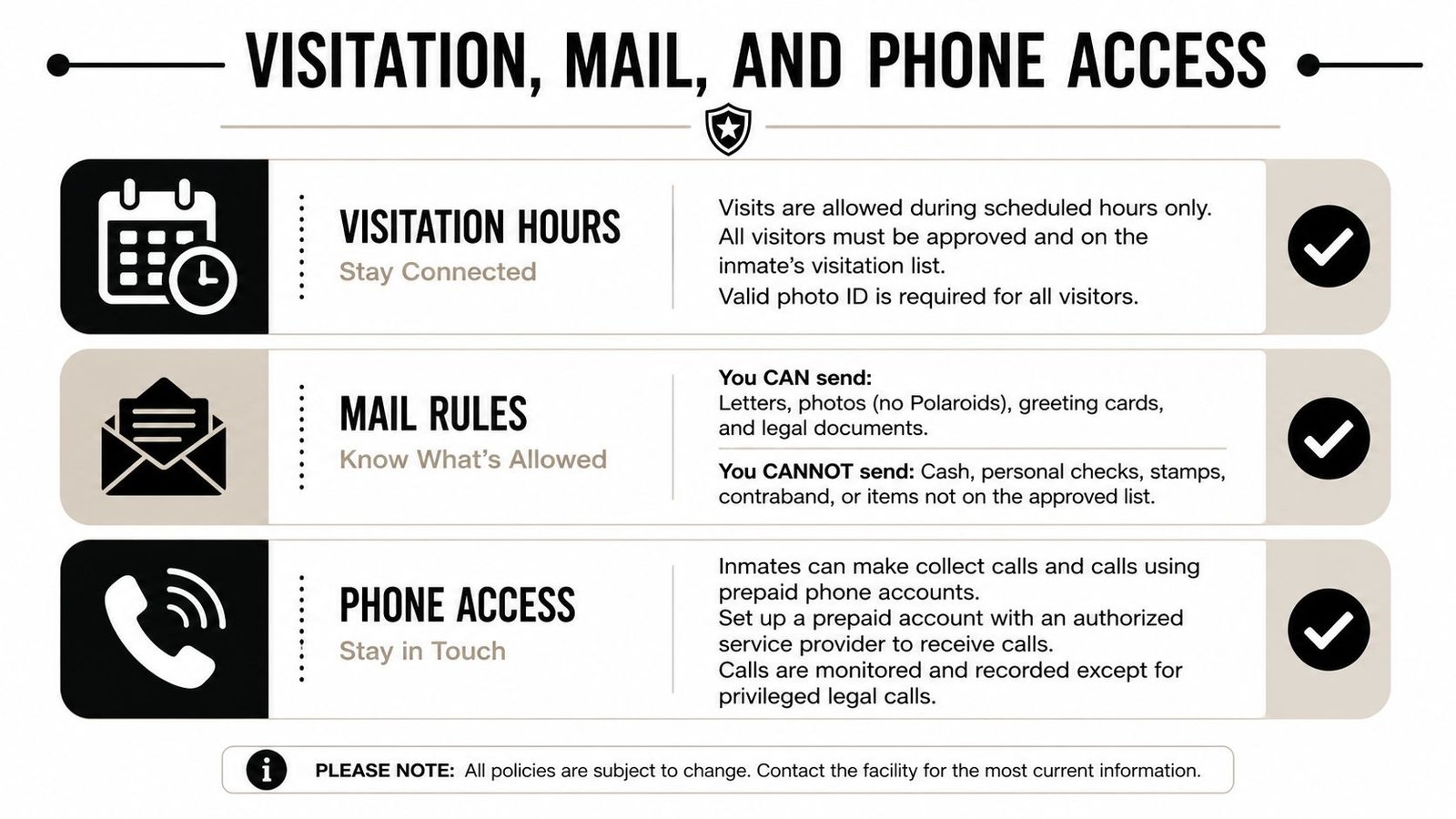
For a plain-language walk-through of what's usually allowed, use this jail visitation guide and then verify the local rules with the detention center itself. If you want a visual reminder of the contact limitations and visit flow, keep the infographic below handy while you plan.
How Bail Works in Kit Carson County
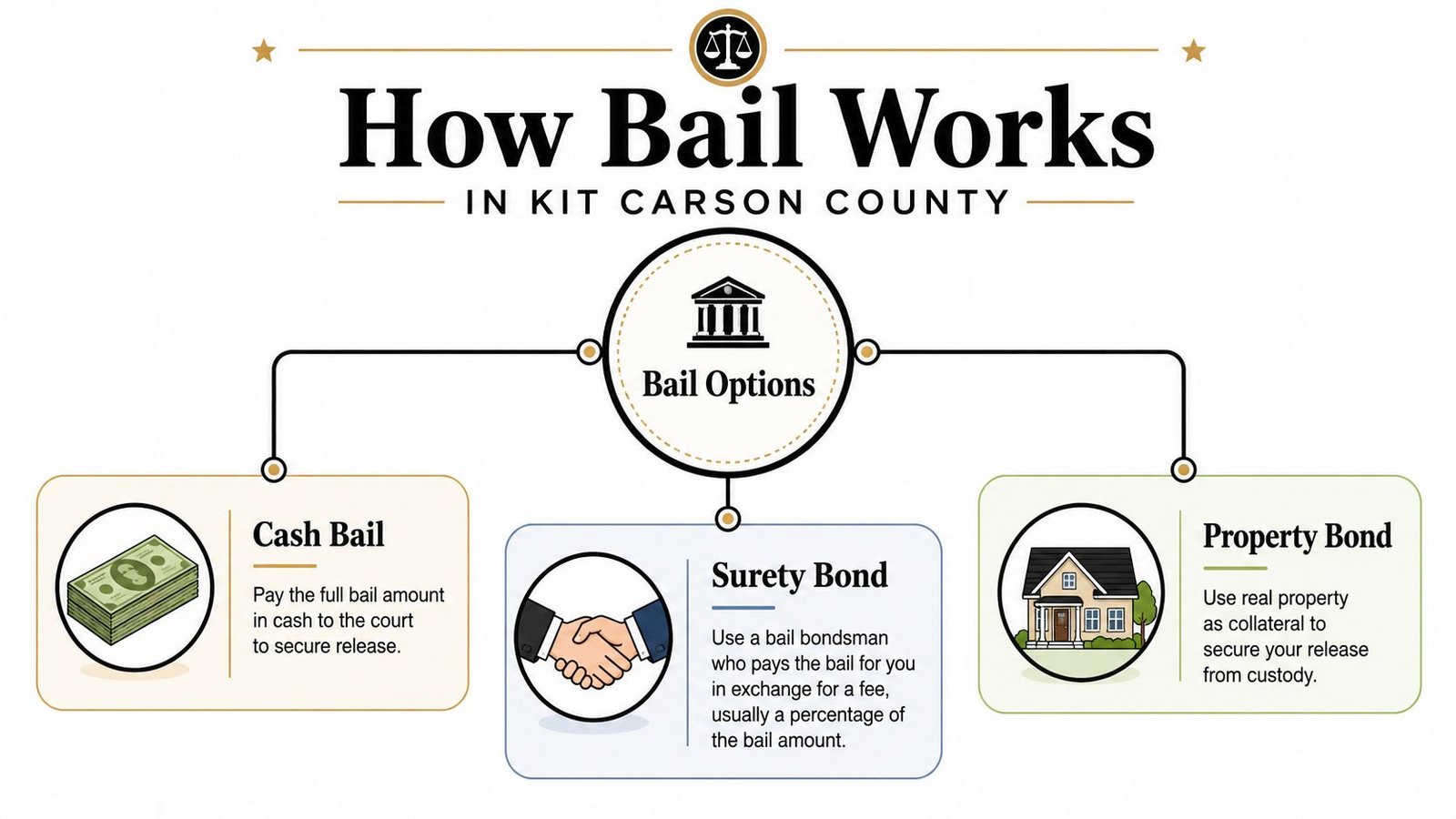
Bail is easiest to understand when you separate the goal from the method. The goal is release while the case moves forward. The method can be cash bail, a surety bond, or a property bond, and the court decides what fits the case at the first appearance.
The three common bond paths
A cash bail means the full amount is paid directly. That's straightforward, but it can tie up a lot of money. A surety bond uses a licensed bail bondsman who posts the bond for a fee, which is why many families choose it when they need speed and flexibility.
A property bond uses real estate as collateral. That route can work in some cases, but it usually takes more documentation and more time than people expect. In a small county where offices coordinate closely, the practical question is often not which method sounds cheapest, but which one gets the person released without dragging the process out.
The county also publishes that bonds can be posted 24 hours a day at the sheriff's office. That's important because it means bond timing doesn't have to wait for normal business hours, even though other inmate-related services follow the posted daytime windows. Families sometimes assume every step is locked to the courthouse schedule, and that isn't always true.
The key takeaway is that bail is a promise to the court, not a favor to the jail. If the person appears when required, the bond has done its job. If not, the court can treat it very differently, which is why the paperwork matters as much as the money.
The following visual breaks the options into the simplest form.
Posting a Surety Bond Step by Step
A surety bond is usually the fastest path for a family that can't or doesn't want to pay the full cash amount. The process starts with a call to a licensed Colorado bail agent, who gathers the details needed to identify the case correctly and prepare the bond paperwork. That usually means the person's full legal name, date of birth, booking number if you have it, the charges if they're known, and the facility name.
What the agent needs before posting
The cleaner your information, the less back-and-forth you'll have. The bond company uses those details to match the right defendant to the right jail and court file, because a small typo can slow the entire posting process. If a cosigner is involved, the agent may also need that person's identification and contact information so the paperwork can move remotely.
Good practice: if you're calling from out of town, keep the inmate's full name, date of birth, and Burlington facility details in front of you before the conversation starts.
The premium structure in Colorado is part of that conversation. Express Bail Bonds notes the state's standard premium is 15%, and bonds over $5,000 may qualify for 10% with an approved cosigner. Those terms are useful because they tell families what to expect before they start signing anything or arranging collateral. For a plain explanation of the bond type itself, see this surety bond guide.
What happens after approval
Once the paperwork is complete, the bond is posted to the jail or sheriff's office. If the facility accepts the bond and the case is ready for release, the defendant can be processed out. That last part still depends on jail procedures, so the release time isn't something anyone should promise to the minute.
Electronic contracts make a big difference for families who live outside Burlington. They let cosigners review and sign without driving across the state, which matters when time is tight and the county seat is small. For many people, that's the practical reason a surety bond beats waiting to gather full cash.
Coordinating Attorneys, Court Dates, and Probation
Release solves one problem, then the case schedule starts solving the next ones. Attorneys often handle communication with the jail and the court, but families still need to know the local contact points so they don't miss a deadline or misread a notice. In a county like this, the best results usually come from matching each question to the office that controls it.
Who handles what
The Kit Carson County Judicial Branch office keeps weekday hours from 8:00 a.m. to noon and 1:00 p.m. to 4:00 p.m., and the clerk's-office email for record checks is kitcarsonclerksoffice@judicial.state.co.us. That makes the courthouse the place to verify calendar issues, filings, and record-related questions, not the jail desk. The probation office at 719-346-8686 is the number to keep handy for supervision questions before or after release.
Families also ask what to do when a lawyer is involved. The simplest answer is to let the attorney handle legal strategy, then make sure the practical side stays organized. That means keeping court dates visible on a calendar, saving every official number, and checking whether any visitation or communication rules change once counsel gets involved.
A few avoidable mistakes create most of the stress after release:
Missing court notices.
One missed date can turn a manageable case into a bigger problem.Ignoring probation contact.
If the office reaches out, respond quickly and document the conversation.Signing forms too fast.
Read every line before you agree to anything tied to release or supervision.
If you need a plain overview of the release process, this jail-bail guide gives a useful framework. The point is simple, keep the legal, court, and supervision pieces lined up so a release doesn't turn into a second emergency.
Your Next Steps and How to Get Help Right Now
If you're handling a Kit Carson County arrest tonight, use the same order every time. First, confirm custody with the detention center. Second, save the sheriff, court, and probation numbers. Third, ask whether a bond is set, and if it is, start the posting conversation right away instead of waiting for business hours to come back around.
This county's setup is calm compared with a large metro jail, but it still moves fastest when one person is coordinating the calls. You don't need to know every legal term to get traction. You need the right facility, the right office, and a bond plan that fits the case.
For families who want a statewide bond option, Express Bail Bonds works with Colorado jail release situations and can help with the paperwork, posting, and follow-through that often slow people down. If your loved one is transferred or booked elsewhere, you can also check the Jefferson County and Centennial service pages for nearby coverage and local coordination.
If you need help with a Kit Carson County release right now, visit Express Bail Bonds and get the process started before another hour passes. The team can walk you through the bond steps, the paperwork, and the next call to make, so you're not trying to figure it out alone tonight.