
You get the call late at night. A family member has been booked, nobody can tell you exactly when they'll be released, and every minute feels urgent. You may think the only question is how to post bond, but Colorado jail rules can affect phone access, visitation, property return, paperwork, and the actual timing of release.
The practical mistake families make is treating a detention facility like a normal public office. It isn't. Staff must follow intake procedures, security classifications, approved-contact requirements, and release workflows. If you understand those procedures before you arrive or send money, you'll avoid preventable delays and communicate more effectively with the jail.
Navigating Detention Facility Regulations
A family member is booked after an arrest. You call the facility, but staff won't discuss every detail, the first phone call hasn't come through, and the person's wallet, keys, and identification are already locked in the property room. Meanwhile, the family is trying to arrange a bond without knowing whether the person has completed intake or whether a court has authorized release.
That confusion is normal, but guessing creates problems. A visitor who arrives without a scheduled appointment may be turned away. A caller who hasn't been added through the facility's communication system may not receive a call. A cosigner who assumes bond payment means immediate freedom may become alarmed when the jail still has to complete discharge procedures.
Jail rules exist because detention staff manage people, property, movement, communication, and safety inside a controlled environment. The security function of a municipal facility also affects the public outside it, a point explored in this overview of overton security municipal public safety.
Practical rule: Treat every jail instruction as an operational requirement, not a suggestion.
Start by identifying the exact county and facility. Then confirm booking status, bond conditions, visitation eligibility, phone procedures, and the documents required from a cosigner. Keep names, times, confirmation numbers, and receipts in one place. A calm, complete record helps when several agencies, court staff, and family members are coordinating the same release.
The Foundation of Correctional Standards
Modern jail procedures come from a long history of replacing improvised local practices with formal standards. In England, the Gaols Act of 1823 began government efforts to impose general standards across prisons nationwide. Oversight later strengthened through annual inspection reports under the Prisons Act of 1835 and full Home Office control under the Prisons Act of 1877. In the United States, the American Correctional Association published its first correctional standards in 1946. These milestones are documented by the UK Parliament's history of central prison control.
The important shift was institutional. A jail could no longer rely only on the preferences of an individual keeper or a locally improvised routine. Written standards created expectations for discipline, inspection, administration, custody, and accountability. That history explains why a detention officer often can't make an exception because a visitor traveled a long distance or a family says a release is urgent.
Why staff follow rigid procedures
A jail's daily operation depends on repeatable controls. Staff must know who entered, where an incarcerated person is housed, what property belongs to that person, which visitors are approved, and whether a disciplinary restriction applies. Standardized procedures also create records that supervisors, courts, inspectors, and attorneys can review.
Rule enforcement is a routine part of confinement, not an occasional event. A nationally representative 1986 survey of state prison inmates found that 53% had been charged with violating prison rules at least once during their current sentence. The survey estimated that about 450,000 inmates generated 1.75 million rule violations, and more than 90% of inmates charged with infractions were found guilty in administrative proceedings, according to the Office of Justice Programs summary.
That research concerns prisons rather than county jails, so it shouldn't be treated as a Colorado jail forecast. It does show why written rules drive daily management in confined settings. Families get better results when they work within the process instead of arguing with the employee responsible for enforcing it.
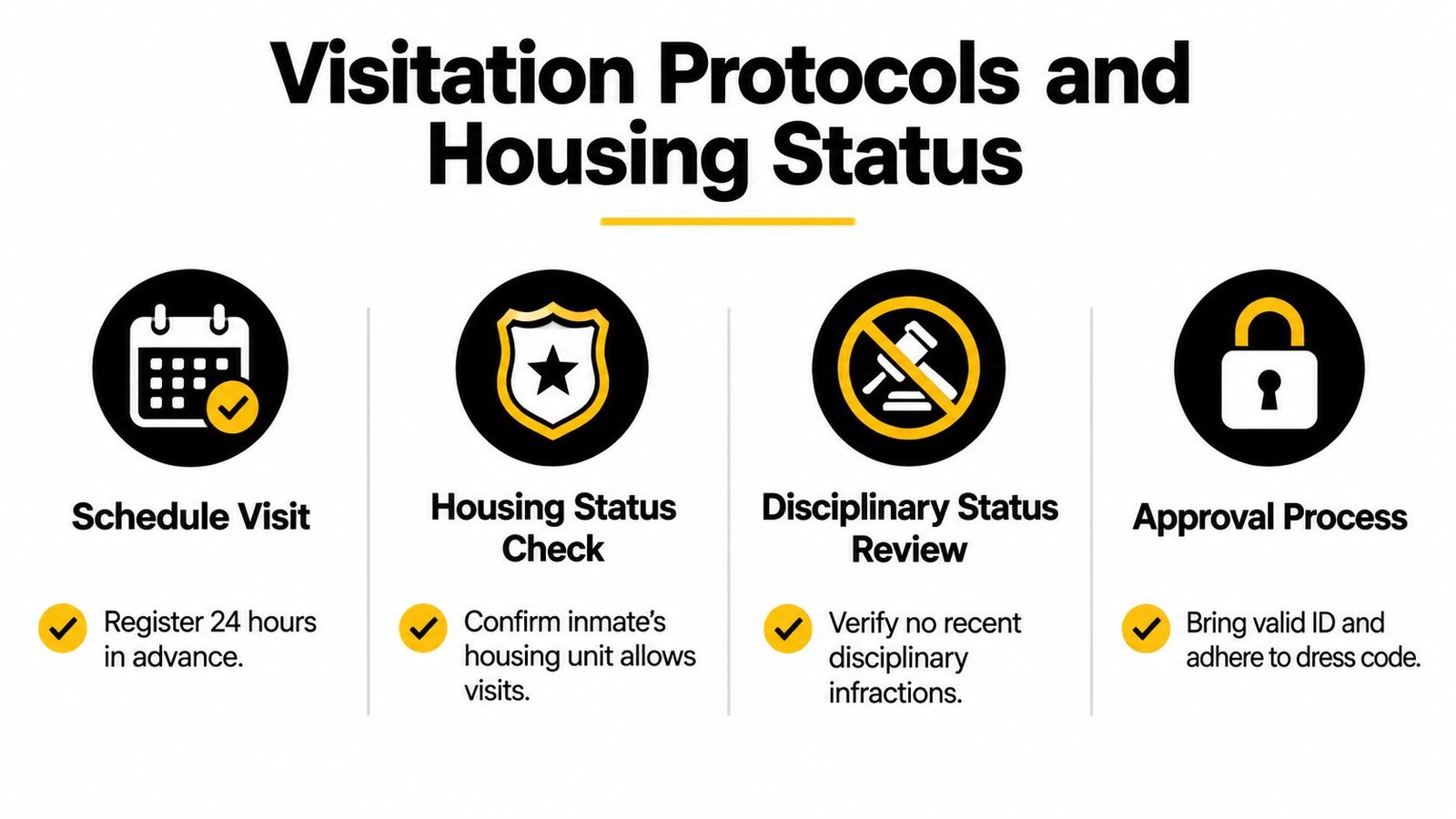
Visitation Protocols and Housing Status
Visitation isn't a single privilege that operates the same way for everyone. A newly admitted person, a person awaiting trial, someone in segregation, and someone under disciplinary review may face different access conditions. The facility may change a visit from contact to non-contact, limit the visitor list, or suspend access while staff address safety or disciplinary concerns.
Federal performance-based detention standards recognize visitation with family and friends while allowing restrictions based on security, staffing, space, and disciplinary status, as shown in the federal detention performance standards. State and local policies commonly require written visitation rules, visitor registration, posted procedures, identification checks, and the ability to deny a particular visit when safety or order requires it.
Confirm the status before traveling
Use this sequence before you leave home:
- Identify the housing status. Ask whether the person has completed intake and whether the current housing unit permits visits.
- Check disciplinary restrictions. A recent infraction, investigation, or special housing placement can affect eligibility even if the person was previously approved.
- Confirm the appointment. Many facilities require advance scheduling and don't accept walk-in visitors. Follow the jail's current booking and visitation instructions.
- Prepare identification. Bring valid government-issued photo identification and follow clothing requirements. If a minor is visiting, confirm whether a legal guardian must accompany the child and whether proof of age or guardianship is required.
- Ask about the visit type. Contact and non-contact visits have different physical-access rules. Don't assume a prior contact visit will remain available after a housing change.
- Verify the approved list. The facility may restrict visitors by relationship, prior conduct, or registration status.
Colorado standards state that in-person visits must be free, while professional visitors may visit subject only to limits necessary to maintain safety and security, according to the Standards for Colorado Jails. Attorney and professional access therefore shouldn't be treated as ordinary recreational visitation, although the facility can still impose security procedures.
For a practical explanation of scheduling, identification, and common restrictions, review whether you can visit someone in jail. Call the facility again before traveling because housing and disciplinary status can change faster than public-facing visitation pages.
Managing Phone Access and Mail Screening
Phone access begins with the facility's approved communication process. The person inside may need to provide a name or number for an approved list, while the outside contact may need to create an account with the jail's contracted phone provider. Calls are generally controlled or monitored under facility policy, so don't discuss anything you wouldn't want reviewed in connection with the case.
Jefferson County's inmate handbook provides exact mechanics for that facility. Module calls are limited to 15 minutes, calls require a 12-digit PIN, and loud, threatening, or abusive behavior can end a call and may trigger criminal charges connected to repair or replacement costs, according to the Jefferson County inmate handbook. The handbook also indicates that phone access varies by security level.
Set up communication correctly
Take these steps:
- Use the approved system. Don't try to bypass the jail's provider or pass messages through another person.
- Confirm the number. A wrong digit, blocked caller ID, or incomplete account can prevent a connection.
- Expect interruptions. Housing moves, counts, lockdowns, disciplinary restrictions, and equipment problems can stop calls without warning.
- Keep conversations focused. Discuss family logistics, attorney contact, medication information, and immediate needs. Avoid discussing facts of the alleged offense.
- Save account records. Keep payment confirmations and call details so the provider can investigate a technical problem.
Mail receives separate screening. Facilities may reject items that create security or storage problems, including unauthorized envelopes, prohibited photographs, stickers, or other materials listed in the local policy. Never assume that a stamped envelope, instant photograph, greeting card, or package will be accepted just because it seems harmless.
Use the person's full legal name, identification information required by the facility, the correct housing address, and your complete return address. The guide to receiving phone calls from jail can help you organize the outside-contact side of the process, but the facility's current rules control delivery and access.
Property Intake and Release Bottlenecks
Bond posting and release authorization don't automatically place a person at the facility exit. Jail staff still have to reconcile identity, court paperwork, housing status, medical clearance where applicable, and personal property. The property room can become the slowest part of discharge because staff must return the correct items to the correct person and preserve the chain of custody.
Tennessee jail minimum standards require cash and personal property to be taken at admission and listed on a receipt, while related correctional procedures commonly use documented storage and controlled access. The Tennessee Local Jail Minimum Standards illustrate the kind of inventory and accounting system that supports these controls.
What happens to property
At booking, staff identify, count, describe, receipt, and secure personal belongings. Restricted items may be separated from ordinary property, and evidence or contraband follows a different process. A person may need to sign for the returned items before discharge is complete.
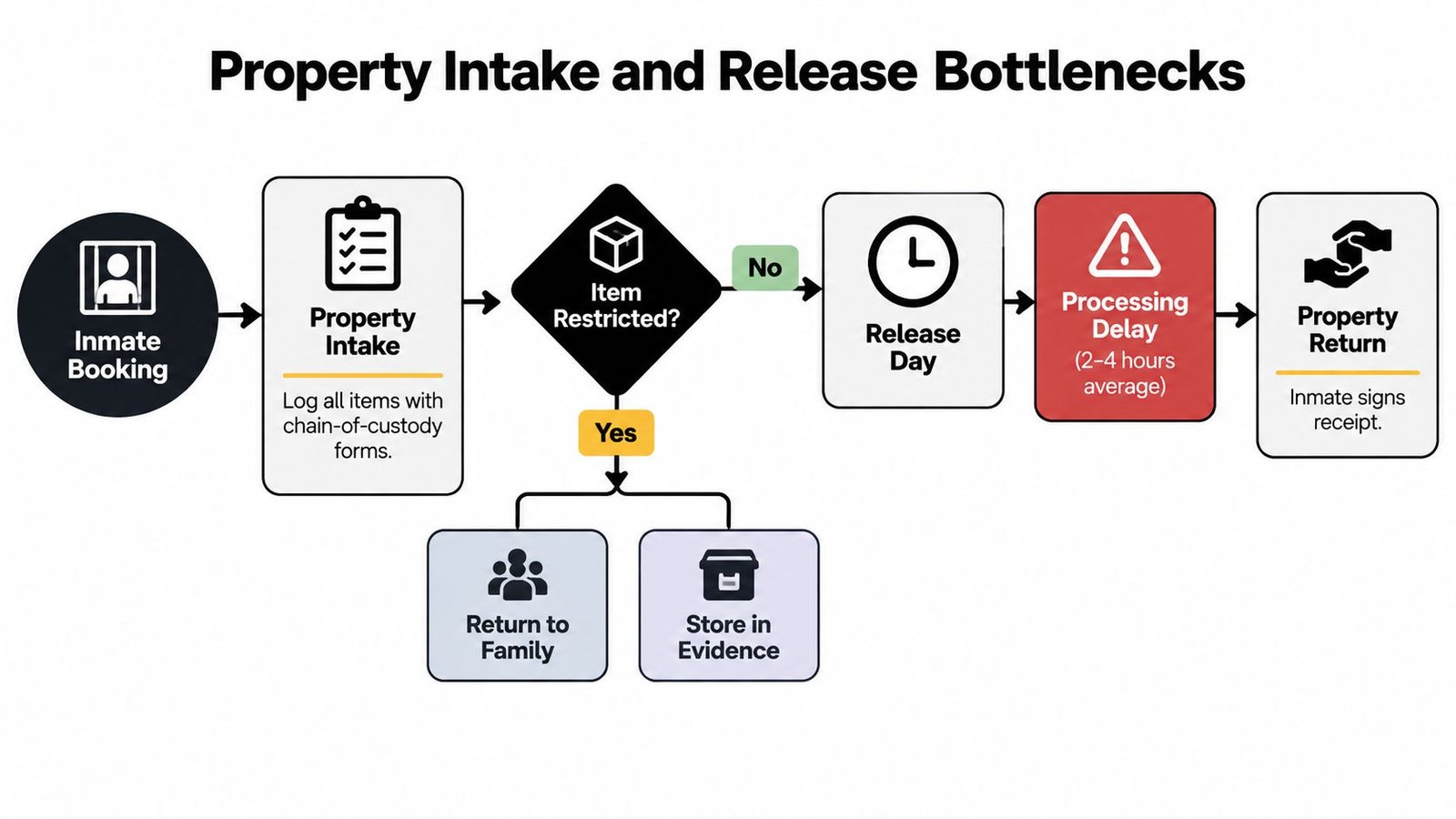
The bottleneck matters after bond because the surety transaction and the jail's discharge workflow are separate tracks. A bondsman can submit the required paperwork, but jail employees still have to process the release in the facility's system. If identification is missing, a property receipt is disputed, or an item requires evidence review, the family can't solve that by repeatedly calling the bond office.
Release advice: Post the bond, then wait for the jail to complete its own discharge checklist.
Before release, keep the cosigner's identification, contract information, payment records, and any court instructions accessible. If the person inside has questions about missing property, they should raise them before signing the return receipt or follow the facility's formal claim process afterward.
For a clear explanation of the booking workflow and why timing varies, see how long booking takes in jail.
A visual overview of the handoff process is available below.
Contraband Enforcement and Digital Rules
Contraband isn't limited to weapons or drugs. It can include unauthorized electronics, chargers, communication devices, clothing, hygiene items, documents, and other materials that a facility prohibits or cannot safely control. A family member may view a phone as a way to help someone stay connected, but taking an unauthorized device into a secure facility can create serious legal and custody consequences.
Cell phones receive particular scrutiny because they can defeat approved call monitoring, facilitate unauthorized contact, and allow communication outside the facility's records. The Urban Institute's contraband cell phone legislative tracker shows that states continue to update laws and enforcement approaches around these devices.
Digital communication has more controls
Facilities increasingly use structured digital communication, such as approved video calls, rather than allowing unrestricted personal devices. That access can require an approved visitor list, identity verification, limits on who may participate, and restrictions on call length or scheduling. Safer communication access therefore comes with tighter screening and account controls.
Don't bring a phone, charger, smartwatch, recording device, or other questionable item into a jail unless the facility expressly authorizes it. Don't hide an item in clothing, paperwork, food, or a personal package. The potential consequences can include denial of entry, loss of visitation privileges, investigation, and criminal charges under applicable law. Avoiding the item is the only reliable strategy.
Physical access controls also explain why facilities inspect people, belongings, vehicles, and delivery items. For broader context on screening, credentialing, and controlled entry, consult this facility manager security guide. The same principle applies to visitors: if staff can't verify an item or a person's authorization, they'll restrict access.
Dress Codes and Commissary Guidelines
Dress-code violations are among the easiest jail rules to prevent. Facilities commonly restrict revealing clothing, transparent garments, gang-related symbols, clothing that resembles an inmate uniform, excessive layers, and items that interfere with screening. Exact definitions vary, so check the county's current visitor policy rather than relying on what was accepted at another jail.
Arrive in conservative, practical clothing. Leave large jewelry, unnecessary electronics, bags, and questionable accessories at home. If the facility rejects an outfit, arguing rarely changes the decision and may jeopardize the visit.
Commissary support requires accuracy
Commissary lets an incarcerated person obtain approved food, hygiene products, writing supplies, and other permitted items through an account system selected by the facility. Families may be able to fund an account electronically, but the jail or vendor controls deposits, purchase categories, spending restrictions, and refund procedures.
Before sending money:
- Confirm the account type. A trust account, phone account, and electronic messaging account may be separate.
- Use the person's correct information. Booking identifiers and legal names matter.
- Check restrictions. A disciplinary status or housing assignment may affect purchases or delivery.
- Keep confirmation details. Save receipts and transaction references.
- Don't send unapproved packages. Commissary purchases are controlled because outside packages can carry contraband or create distribution problems.
Commissary isn't a substitute for legal support, medical communication, or bond assistance. Use it for approved daily needs, and direct urgent legal questions to the person's attorney or the court.
Colorado Bail Bond Premiums and Fees
Colorado's financial rule is straightforward. For a commercial bail bond, the premium is capped at the greater of $50 or 15% of the amount of bail furnished, under Colorado law governing bail bonding agents. The statute also limits additional charges to narrow categories, including court filing fees, actual collateral storage costs, and premium financing charges. Review the Colorado bail bond premium statute before signing.
That cap gives families a concrete question to ask: What is the premium, and what exactly is each additional charge for? A written contract should identify the bond amount, premium, collateral terms, payment arrangements, and any legally permitted expense.
Connect the money to the jail process
A bond agency handles the surety transaction and submits release documents. The jail still controls booking completion, court verification, housing status, property return, and discharge. Paying the premium therefore starts a coordinated process, but it doesn't erase the facility's independent requirements.
Don't hand over cash to an unverified person promising an instant release. Confirm the agency's identity, obtain written terms, and ask whether the bond is cash-only or eligible for a surety bond. A general bail guide from Ticket Shield, PLLC provides useful background on the release process.
Families can also review Colorado bail rates before contacting an agency. Ask direct questions, get receipts, and keep the contract available until the case and bond obligations are resolved.
County Variations in the Denver Metro Area
Colorado has statewide legal and regulatory standards, but county facilities still operate with local procedures. Visitation schedules, booking updates, phone vendors, property handling, online payment methods, and bond-submission instructions may differ between Denver, Jefferson, Arapahoe, Douglas, and other jurisdictions.
That difference matters when a family member is arrested in one county and relatives live in another. A visitor may know the rules at one facility and assume they apply elsewhere. That assumption can lead to a missed appointment, an invalid payment, or a trip to the wrong location.
Compare the practical variables
| Area to verify | Why it matters |
|---|---|
| Facility identity | Municipal and county detention facilities may use different websites, phone systems, and release desks. |
| Booking status | A person may not appear in a public search immediately, and staff may limit information during intake. |
| Bond submission | Some facilities use electronic procedures, while others require specific documents or court confirmation. |
| Visitation | Hours, scheduling, identification, dress code, and contact rules can change by facility and housing status. |
| Phone and mail | Vendors, account setup, PIN procedures, monitoring notices, and mail formats aren't universal. |
| Property release | Each property room may use its own receipts, storage practices, and claim process. |
For Jefferson County, the inmate handbook gives facility-specific phone and conduct rules that general statewide summaries can't replace. A person arrested in Arapahoe County or Denver may face a different provider, schedule, or administrative workflow.
Verify the county before you arrange transportation, send money, or promise a visitor that access is available. Attorneys and out-of-state cosigners should ask the detention facility and bond agency which county procedures apply, especially when the arrest location, court location, and residence are different.
Quick Reference for Families and Visitors
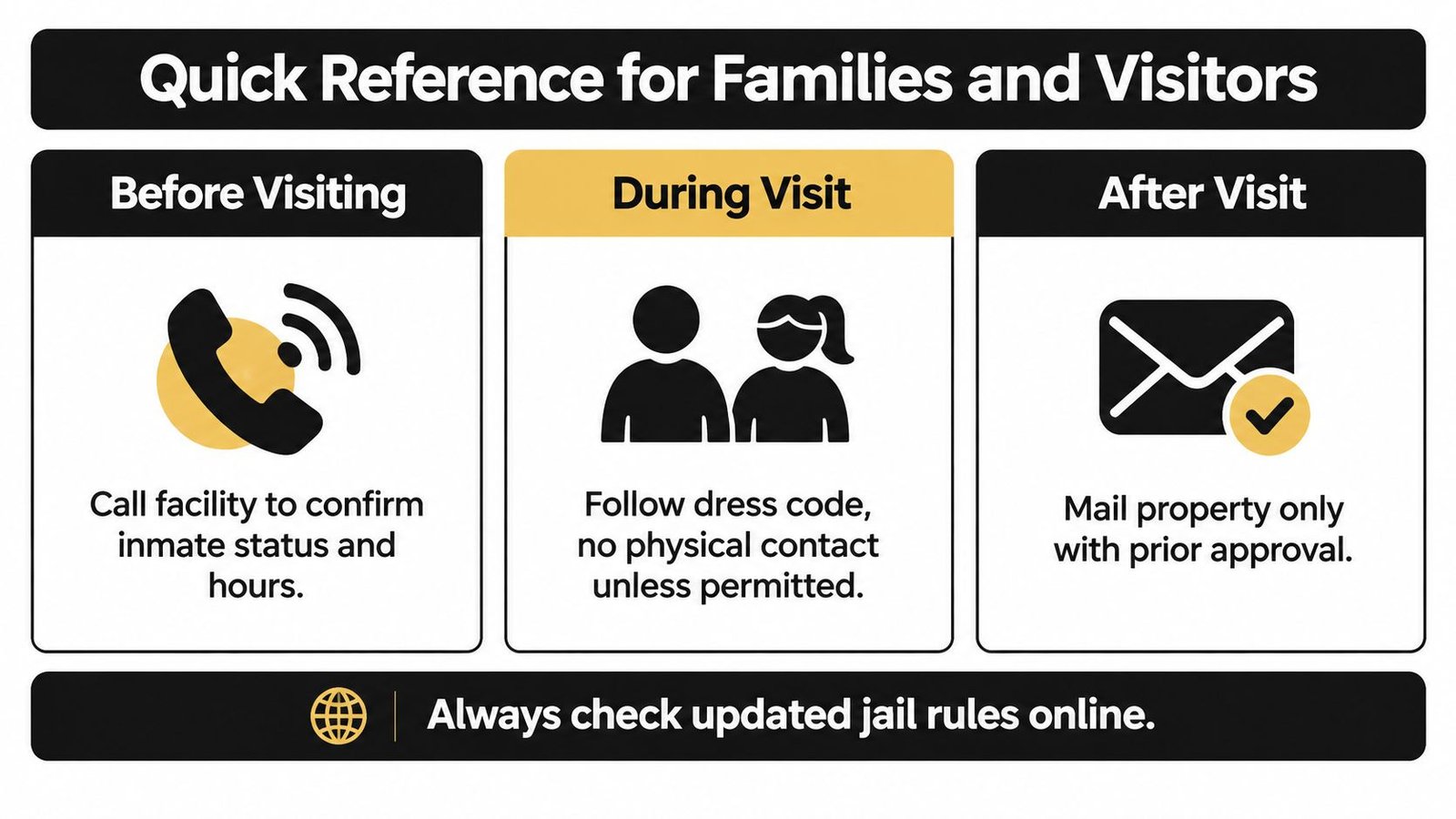
When a detention situation is active, use a short checklist instead of trying to remember every detail. The most important principle is sequence: identify the facility, confirm the person's status, follow the communication rules, arrange bond through a written agreement, and allow the jail to finish its release process.
Before you act
- Locate the correct facility. Confirm the county, detention center, booking status, and available public information.
- Ask about housing status. Newly admitted, segregated, or disciplinary housing can change visitation and communication access.
- Confirm visitation. Schedule in advance, verify the approved list, bring government-issued photo identification, and follow the dress code.
- Set up phone contact. Use the approved provider, confirm the outside number, and remember that calls are controlled under facility rules.
- Prepare bond documents. Have identification, payment information, and cosigner details ready for the surety application.
- Review the contract. Confirm the premium, collateral terms, payment schedule, and permitted additional charges.
During the process
Don't bring unauthorized electronics, packages, medication, food, or personal items into the facility. Don't discuss the alleged offense on a monitored call, and don't attempt to pass messages or property outside approved channels.
After bond authorization, don't assume release is immediate. Staff may still need to verify paperwork, reconcile records, return property, and complete discharge steps. Keep the person's property receipt and any payment confirmation available.
For facility contact information, use the Colorado county jail phone numbers resource, then confirm details directly with the detention center because schedules and procedures can change.
Remember: The fastest path is usually accurate information, complete paperwork, and strict compliance with the facility's current process.
Express Bail Bonds helps families arrange Colorado surety bonds with electronic applications, payments, and contract documents, while providing guidance on fees, court requirements, and next steps. If someone has been arrested, visit Express Bail Bonds to start the application and get direct help coordinating the bond with the jail's release procedures.