Someone you love has just been arrested. You're checking the jail roster, calling relatives, searching for a bond amount, and wondering why nobody can tell you exactly when the person will walk out. The most important thing to understand is that posting bond and completing the inmate release process are separate steps. A payment or court order starts the release workflow, but jail staff still have to clear holds, verify documents, return property, address medication needs, and complete the discharge.
Colorado procedures vary by county. Boulder County says bonding is available 24 hours a day and that processing and release normally take 4 to 6 hours (Boulder County Jail's frequently asked questions). Jefferson County reports a typical 2 to 6 hour processing window after the release order arrives (Jefferson County Sheriff's jail information). Plan for the actual workflow, not the simple phrase “bond was posted.”
Understanding the Initial Arrest and Booking Phase
The first call often sounds like this: “They arrested him, but I don't know where they took him.” Don't start by guessing the release time. Start by identifying the facility and gathering accurate booking information. A person may be transported, searched, photographed, fingerprinted, medically screened, and entered into the jail's records before anyone can confirm the bond path.
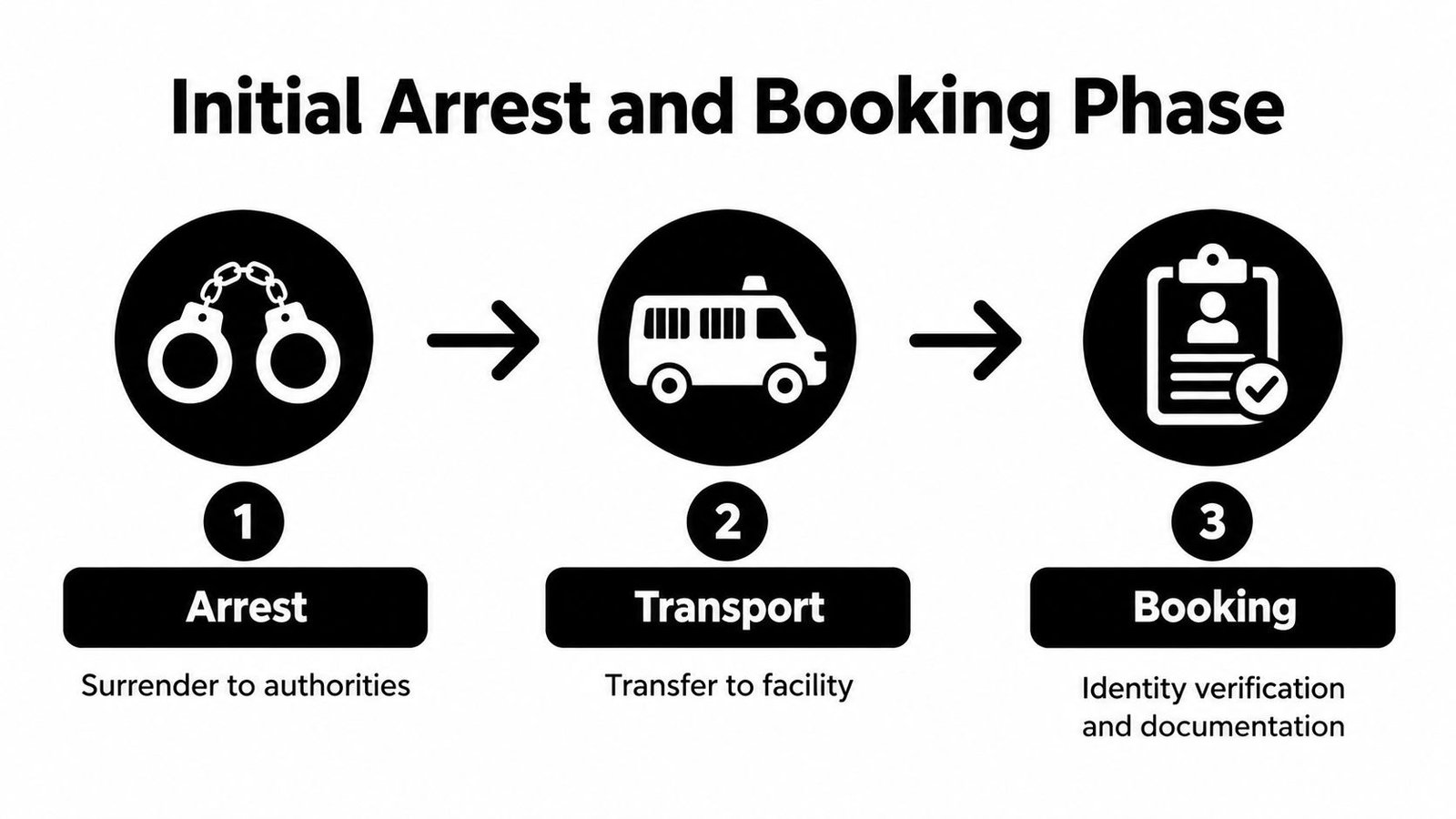
Booking creates the record jail staff use to process custody and release. Officers and detention staff verify identity, document the alleged charges, inventory personal property, and complete intake checks. The person may then wait for a first court appearance or another legal decision that determines whether release is available and under what conditions.
What families should collect immediately
Get the person's full legal name, date of birth, jail location, and booking number. Confirm spelling. A small error can send you to the wrong record, especially when several people have similar names. Ask whether the person has other cases, warrants, detainers, or holds, because a bond on one case may not resolve every custody issue.
Colorado courts consider the charge, the defendant's history, court obligations, and circumstances when setting or reviewing release conditions. The court may order a cash bond, a surety bond, personal recognizance release, or additional conditions. Don't assume that the number listed online tells the whole story. The jail must receive the correct order and clear every applicable custody barrier.
Practical rule: Get the jail and booking number first. A bondsman or defense lawyer can work much faster when the custody record is precise.
Families often lose time by waiting for a relative inside the jail to explain everything. That person may not have access to the bond details, may not know whether paperwork has reached the jail, or may be unable to make calls. Use a step-by-step guide to what happens after you get arrested and keep a written record of every call, document, and instruction.
Bail Options Available to Colorado Defendants
Colorado release decisions generally lead to one of several routes. Your first job is to identify the release type, then confirm what the jail needs before it can act. Paying the wrong party, sending incomplete paperwork, or overlooking a hold creates delay.
A surety bond uses a licensed bail bond agency. The agency provides the bond to the court or jail, while the defendant or cosigner pays the required premium and accepts the contract obligations. Colorado's standard premium is 15%, and Express Bail Bonds states that bonds over $5,000 may qualify for 10% with an approved cosigner. Those are financial terms, not a promise that every applicant will qualify.
A cash bond requires the full bond amount through the authorized payment process. The payer carries the financial burden directly and must follow the court's rules for any refund. Arapahoe County explains that bond fees, booking fees, and other debts don't need to be paid to secure release on a money bond. The payor needs to pay the bond amount, while a $10 bond fee and up to a 3.5% credit-card fee may be charged as debts after release (Arapahoe County detention-services guidance).
A personal recognizance bond, often called an OR bond, releases the defendant based on a promise to appear and follow conditions. It avoids a financial premium, but it isn't automatic. The court may consider community ties, prior court history, the current allegations, and perceived risk.
Match the option to the situation
If the family can't tie up the full bond amount, a surety bond may reduce the immediate financial burden, subject to approval and the premium. If the family has the full amount and accepts the administrative process, a cash bond may be appropriate. If the court grants OR release, there's no reason to purchase a surety bond for that order.
Don't treat the bond amount as the only requirement. Ask whether the defendant has another case, an immigration hold, a law-enforcement detainer, a medical clearance requirement, or a court condition that must be handled separately. Release depends on the complete custody record.
Comparing Surety Bonds, Cash Bonds, and OR Bonds
The fastest choice is the one that fits both the court order and the family's resources. A surety bond usually requires less money upfront than paying the entire bond, but the premium is generally nonrefundable and a cosigner may need to qualify. A cash bond puts more capital at risk temporarily, while an OR bond removes the financial payment only when the court authorizes that form of release.
| Option | Upfront Cost | Refundable | Best For | Typical Timeline |
|---|---|---|---|---|
| Surety bond | Premium and approved contract terms | Premium generally isn't refundable | Families needing a licensed bond agency | Posting can begin after approval and completed paperwork |
| Cash bond | Full bond amount, plus applicable handling terms | May be refundable under court rules | Families able to provide the full amount | Depends on payment acceptance and jail processing |
| OR bond | No financial bond premium | No premium to refund | Defendants the court approves for release on promise | Depends on court authorization and jail processing |
A surety bond is often the practical route when the family needs to preserve cash for housing, transportation, counsel, or immediate care. It still carries obligations. The cosigner should understand the defendant's court dates, contact requirements, and responsibility for complying with the agreement.
Cash sounds simple, but it can create its own problems if the family assumes a refund is immediate or automatic. Keep every receipt and confirm the court's refund rules before paying. Also verify whether the order is cash-only, because a bondsman can't replace a release type the court hasn't authorized.
An OR bond is financially attractive, but families can't demand it merely because they don't have money. The court decides eligibility and conditions. For a focused explanation of the financial and procedural differences, compare surety bonds and cash bonds before committing funds.
Posting Your Bond Through Express Bail Bonds
A surety bond works best when the application and paperwork are complete before the agency sends the bond to the jail. Have the defendant's legal name, date of birth, booking number, facility, bond amount, charges, and court information ready. The cosigner should also have identification, contact details, employment or income information, and any information needed to discuss the financial agreement.

Express Bail Bonds describes an electronic process that lets applicants complete contracts and payments remotely rather than spending hours at a detention center. The agency serves Colorado detention facilities statewide and is available by call or text at 720-984-2245. A licensed agent can confirm the bond type, explain the premium, review cosigner requirements, and identify what still has to happen after posting.
A practical posting sequence
- Confirm the order. Verify the bond amount, bond type, court, jail, and whether another case or hold exists.
- Complete the application. Provide accurate defendant and cosigner information. Incomplete answers can slow approval.
- Review and sign electronically. Read the indemnity and payment terms before signing. Ask about collateral or additional requirements rather than guessing.
- Submit payment. Use the approved remote payment method and keep the confirmation.
- Confirm delivery. Ask when the bond was accepted by the jail and whether the facility has placed it in the release queue.
- Wait for discharge. The agency can initiate the release, but jail staff still control the final processing steps.
The bond agent doesn't physically escort the defendant through every discharge task. Jail personnel must complete their own checks, and another hold can prevent release even after the bond is accepted.
The process is often easier when the cosigner stays reachable. Keep the phone available, respond to requests for documentation, and write down the agent's name and the time the bond was posted.
Ask the agent what the jail has confirmed, not only whether paperwork was sent. That distinction gives the family a more useful answer about where the release stands.
Why Jail Releases Take Hours, Not Minutes
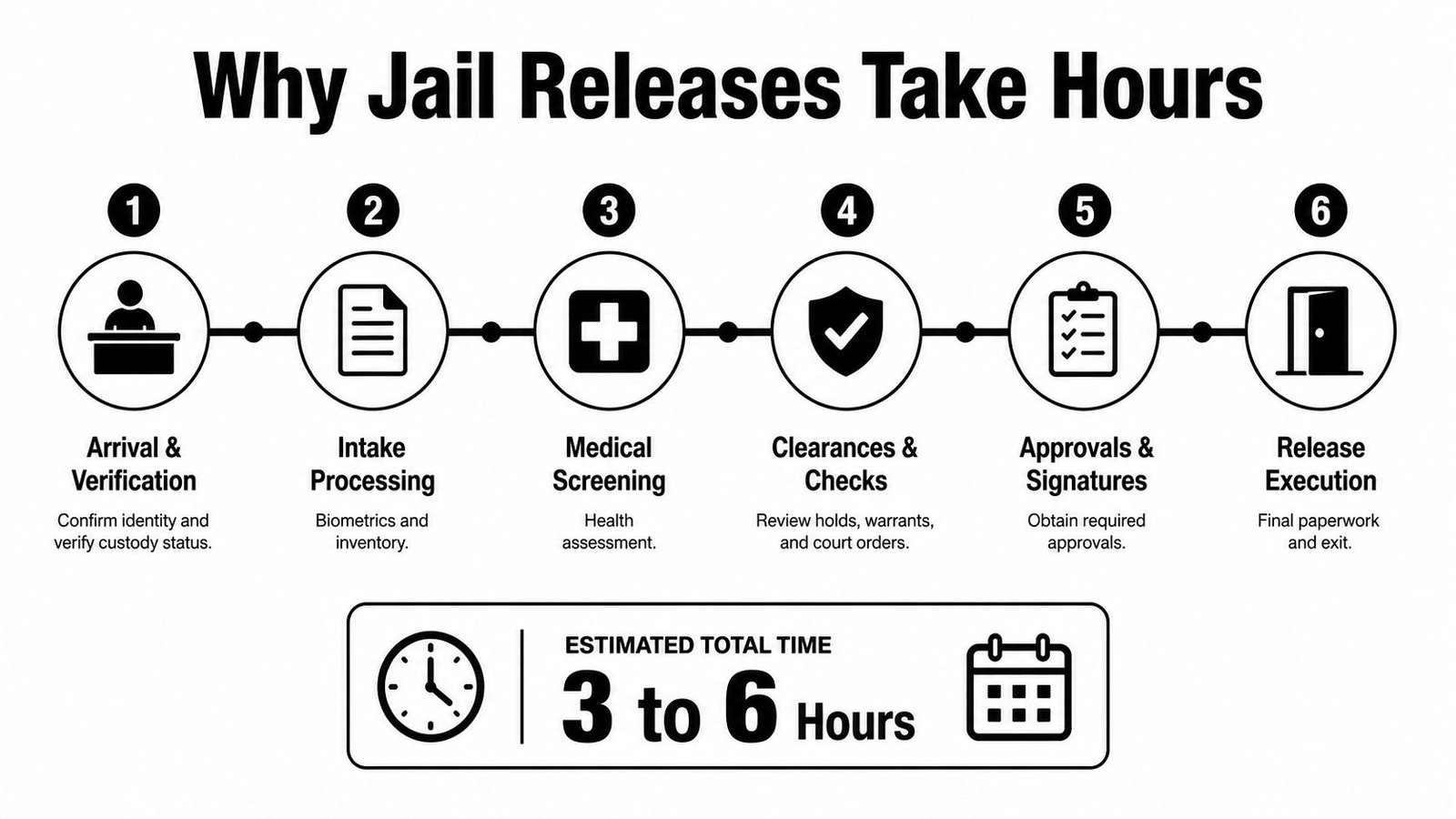
A family can pay the bond, receive confirmation, and still wait for hours before the defendant reaches the jail exit. The jail must match the legal authorization to the correct person, clear every custody record, and document the transfer out of government custody. Jefferson County reports that release processing usually takes 2 to 6 hours after receiving the release order, although releases may occur around the clock (Jefferson County Sheriff's jail information).
Boulder County gives a comparable expectation, stating that normal processing and release can take 4 to 6 hours (Boulder County Jail's frequently asked questions). County procedures, staffing, paperwork, and the defendant's record all affect the timing.
The work between authorization and exit
After the jail receives authorization, staff may verify identity, clear charges and holds, check warrants or detainers, complete a health review, reconcile property and funds, collect signatures, return facility items, issue civilian clothing, and provide required notices. Medication may require separate coordination. Jefferson County says a person may request a three-day medication supply before release, subject to the facility's process.
Nevada County describes a similar controlled workflow. Sentenced inmates are processed between 8:00 and 10:00 a.m. on their release day, and the jail may have up to 48 hours to release someone after receiving the order. Bonded inmates are typically released within about three hours after the required documentation arrives (Nevada County incarcerated-person release procedures).
The clock starts when the jail has the required paperwork, not necessarily when the judge signs an order or the family pays. Delayed documents, an unresolved warrant, classification questions, an incident inside the facility, or a medical issue can extend the wait.
Ask whether the jail accepted the release paperwork and whether any hold or clearance remains pending.
If the bond was accepted but the person remains in custody, review what to do when posted bail but not released. Do not send another payment until the agent or jail confirms what remains unresolved.
Post-Release Obligations and Common Mistakes
Release is the start of the defendant's court responsibility, not the end of the case. The person must leave with the court date, release conditions, and instructions for any pretrial services, probation, treatment, testing, or supervision requirements. If the jail doesn't provide a clear document, contact the court or defense attorney immediately.
The first responsibilities after discharge
- Record the court date: Put every appearance on a calendar with reminders and transportation plans.
- Confirm supervision: Complete any required check-in with pretrial services or probation within the stated deadline.
- Update contact details: Report a new address, phone number, or email through the required channel.
- Follow restrictions: Obey no-contact orders, travel limits, testing requirements, and other written conditions.
- Keep paperwork: Save the bond contract, release order, receipts, medication instructions, and court notices.
Missing court can trigger a warrant and put the bond at risk. Ignoring a check-in or violating a condition can also lead to revocation, even if the original release happened without difficulty. The defendant should ask the attorney before making a decision that could affect the case.
Cosigners need their own file. Keep copies of the contract, confirm how the agency communicates updates, and tell the defendant that court compliance protects everyone involved. A cosigner shouldn't assume the defendant will remember every date just because the jail gave them paperwork while they were tired, stressed, or medicated.
The most common mistakes are avoidable: leaving without the paperwork, failing to arrange transportation, changing phone numbers without notifying the required office, missing a court reminder, and assuming a bond agent can excuse a missed appearance. Build the calendar before release, not after the first court date.
Your Complete Release Checklist and Next Steps
Use this checklist when the situation is moving quickly:
- Before posting: Confirm the jail, booking number, bond type, bond amount, holds, and court.
- During the application: Provide accurate defendant and cosigner information, review every contract term, and keep payment confirmation.
- After posting: Confirm the jail received and accepted the bond documents. Ask what clearance remains.
- At discharge: Collect release papers, property, medication instructions, court details, and supervision requirements.
- After release: Arrange transportation, calendar every deadline, complete required check-ins, and keep contact information current.
For a document-focused preparation list, review what documents you need. Release procedures differ across Denver, Arapahoe, Jefferson, Douglas, Weld, El Paso, and other Colorado counties, so county-specific confirmation matters more than a generic promise of instant release.
Express Bail Bonds helps Colorado families arrange surety bonds through remote applications, electronic contracts, and payment options, with assistance available by call or text at 720-984-2245. If someone is waiting on release, visit Express Bail Bonds, provide the jail and booking details, and get clear guidance on the bond and the remaining release steps.