
That first phone call is always a shock. Hearing a friend or family member has been arrested can leave you feeling helpless and panicked. Your first instinct is to find them, and the quickest path is usually through an online county inmate locator or by calling the local jail directly. If you need immediate assistance navigating this process, our team at Express Bail Bonds is available 24/7 to help you locate your loved one.
To do that effectively, you absolutely need their full legal name and their date of birth. Those two pieces of information are the master keys to almost any search you'll conduct.
Your First Moves When Someone Is Arrested
When that wave of panic hits, it's tough to think straight. The best thing you can do is take a deep breath and switch from reacting emotionally to taking deliberate action. Before you can even begin to help, you have to confirm exactly where they are and get the basic facts of their situation.
That means your immediate priority is gathering information.
Trying to find someone with a nickname or a guess at their age is a recipe for frustration. Law enforcement and jail databases are built on official, precise records. Taking a few minutes to get the details right from the start will save you hours of hitting dead ends. If you're struggling to find this information, don't hesitate to contact us at https://expressbailbonds.com for guidance.
The Essential Information Checklist
To find someone who's been arrested, you need a few critical pieces of data. Having this information on hand before you start searching online or making phone calls is the single most efficient way to get answers.
Here’s a quick rundown of what you’ll need, why it's so important, and where you might find it.
Information Gathering Checklist
| Information Needed | Why It's Critical | Where to Find It |
|---|---|---|
| Full Legal Name | Essential for database searches. "John Smith" is too common; "John Michael Smith" is specific. | Driver's license, old mail, social media profiles (look for full names), or ask other family members. |
| Date of Birth | The primary way to confirm identity and distinguish between people with the same name. | Ask family or a close friend who would know. Sometimes listed on public social media profiles. |
| City/County of Arrest | Narrows your search from the entire state to a specific local jurisdiction's jail or detention center. | Often mentioned in the initial phone call, or you can deduce it from their last known location. |
This process might seem basic, but it’s the foundation for everything that comes next. First, you gather the facts. Then, you search. Finally, you make contact.
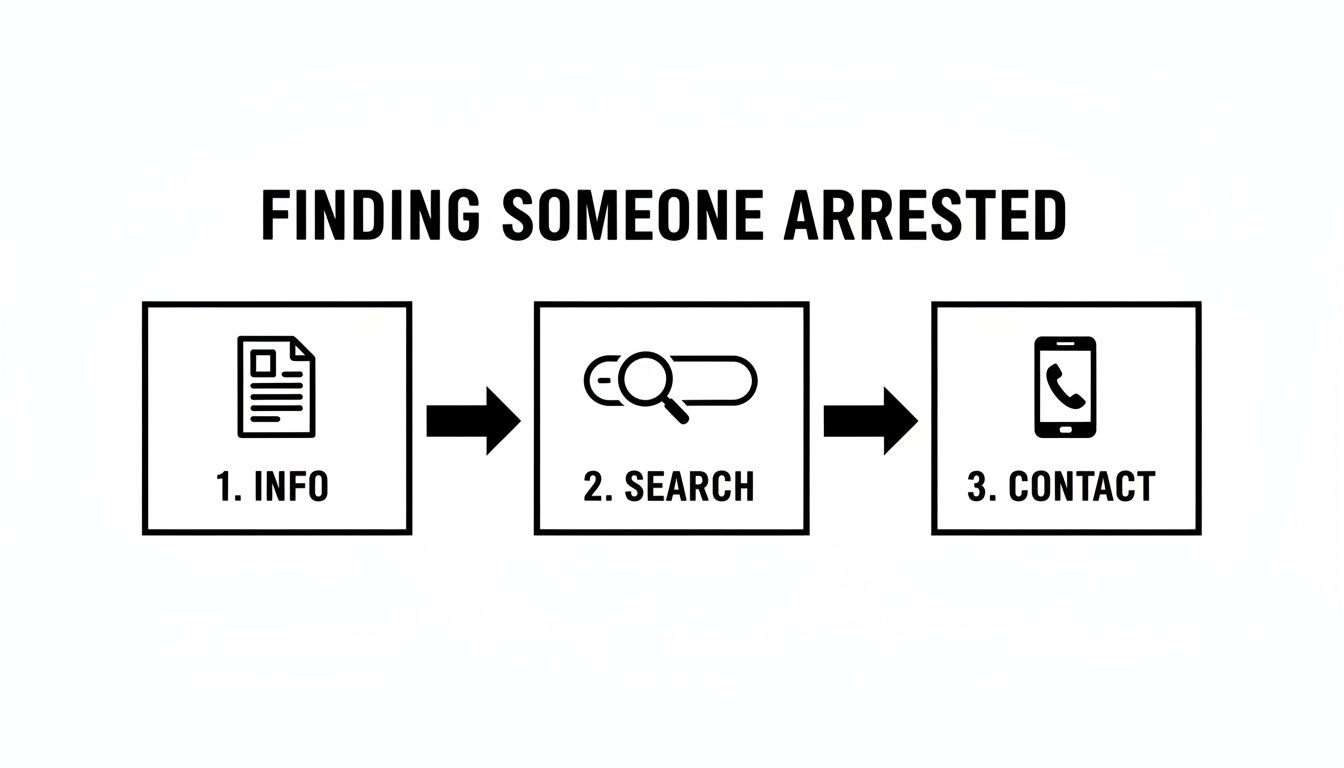
As you can see, a successful search starts with good prep work, not just frantic clicking.
Once you have this core information, you can confidently move on to the next steps: searching online inmate locators for major Colorado counties, calling detention facilities directly, and checking court records for case details. Knowing what to do when someone gets arrested can turn a moment of crisis into a clear, manageable plan. For expert help at any stage, call or text us at 720-984-2245.
Using Online Inmate Locators and Jail Websites
When you get that dreaded call, the fastest way to confirm an arrest is usually right at your fingertips. Most counties here in Colorado have online databases—often called "inmate locators" or "inmate search" tools—that provide up-to-the-minute information on who is in their custody. Think of these as your digital first stop; they can cut through the confusion and give you immediate answers.
These websites are specifically designed for public use. With just a few clicks, you can often find out if the person you're looking for is in a particular county jail. More importantly, they list the critical details you'll need, like their booking number (sometimes called a "CN" or case number), the specific charges they are facing, and the bail amount set by the court.
How to Navigate County Jail Search Portals
Most of these search portals work the same way: you just need the person’s first and last name. My best advice is to always use their full, legal name and double-check the spelling. It sounds simple, but a small typo can bring back zero results, causing a lot of unnecessary stress. Definitely avoid using nicknames or abbreviations.
Here's a look at the inmate search portal for the Denver Sheriff Department, a common starting point for anyone looking for someone arrested in the metro area.

As you can see, the interface is incredibly straightforward. You only need a name to get started, which is a big help when you're feeling overwhelmed.
It's worth remembering that this system is just one piece of a massive, complex network. The United States has the largest incarcerated population in the world, with roughly 1.8 million people held in thousands of different state, federal, and local facilities. This decentralized system, which costs at least $182 billion a year, means you have to know exactly which jurisdiction to search.
Key Colorado Inmate Search Tools
While nearly every county has its own system, you'll find that most searches start in the Denver metro area or other big population centers. Having direct links to these portals can save you a ton of time.
- Denver County Inmate Search: This is the primary tool for any arrests made within the City and County of Denver.
- Arapahoe County Detainee Search: Use this for arrests in places like Aurora, Centennial, and Littleton.
- Jefferson County Inmate Lookup: Covers arrests in Lakewood, Arvada, Golden, and the surrounding areas.
- El Paso County Inmate Search: This is your go-to for arrests in and around Colorado Springs.
Don't panic if your first search comes up empty. The person might have been arrested in a neighboring county, or they could still be in the booking process. It can sometimes take a few hours for their information to appear online after an arrest.
Pro Tip: Not sure which county to check? Start with the county where the person lives or was last seen. If that doesn't work, begin checking adjacent counties.
Finding the right information is just the first step, and it can feel like a lot to handle on your own. For a handy, consolidated list of direct links to these and other Colorado jail and court search tools, check out our guide at https://expressbailbonds.com/bail-bonds-links-to-jails-courts-and-search-tools/.
Once you find the information you need, the team at Express Bail Bonds is here 24/7 to help you make sense of it all and start the process of getting them released. Call or text us anytime at 720-984-2245 for immediate help.
When to Pick Up the Phone and Call a Jail Directly
Online inmate locators are fantastic tools, but they’re not foolproof. The single biggest issue we see is the time lag—it can easily take several hours from the actual time of arrest for someone's information to get processed and show up in a database. If you've run a few online searches and found nothing, it's time to start making some calls.
A direct phone call is often the quickest way to get a straight answer, especially within those first critical hours after an arrest. This is also the case if the arrest occurred in a smaller town or a more rural county, where the local sheriff's department might not have a sophisticated, real-time online portal. When the digital search comes up empty, talking to an actual person is your next best move.

Making Your Call Count
When you dial the facility, your aim is to get connected with someone who can look at the fresh booking records. The key is to ask for the booking desk or the intake department. These are the folks who are physically processing individuals as they come into the jail.
Before you even pick up the phone, have their full legal name and date of birth handy. The staff won’t be able to help you without that basic information.
- Keep Your Cool: The person answering the phone is juggling a lot. A calm, polite, and respectful approach will always yield better results than a frantic or angry one.
- Be Direct: Get straight to the point. Something simple like, "Hi, I'm trying to find out if someone is in your custody. His name is John Michael Smith, born January 15, 1985," works perfectly.
- Know What to Ask: If they confirm he’s there, ask for three key things: the booking number, the charges, and the bond amount.
A Quick Tip from Experience: The entire booking process, from arrival to being fully entered in the system, can take anywhere from 2 to 12 hours. If the arrest just happened, don't be surprised if they have no record yet. It's completely normal to have to call back in a few hours.
Important Phone Numbers for Jails in the Denver Area
Wasting time searching for the right phone number is frustrating. We’ve put the main contact numbers for the major detention facilities around Denver right here for you:
| Facility | Main Phone Number |
|---|---|
| Denver County Jail | (720) 913-3600 |
| Arapahoe County Detention Facility | (720) 874-3500 |
| Jefferson County Sheriff's Office Jail | (303) 271-5444 |
If making these calls feels daunting or you’re hitting a wall, please let us help. The team at Express Bail Bonds works directly with these jails every single day. We know who to call and what to ask to get information fast.
For immediate help locating a loved one, call or text us anytime, 24/7, at 720-984-2245.
Uncovering the "Why" with Colorado Court Records
Okay, so you’ve found your loved one. That’s a huge weight off your shoulders, but it’s really just the first hurdle. Now comes the critical part: figuring out the specifics of their legal situation. This is where you shift from just knowing where they are to understanding why they're there, and Colorado's judicial records are your best tool for the job.
Once someone is processed into the system, their arrest officially becomes a court case. This public record is a goldmine of information you'll absolutely need to plan your next steps, especially when it comes to posting bail. Looking up this info isn't just about satisfying curiosity; it’s a crucial strategic move.
Digging into the Colorado Judicial Branch Website
The Colorado Judicial Branch maintains an online database where you can search for court cases. This isn't just a simple search; it's your window into the official proceedings.
With a quick search, you can usually find:
- The official case number (this is essential!)
- A list of the specific charges filed
- Any scheduled court dates
- The judge assigned to the case
Think of it this way: a friend calls you in a panic because their brother was arrested in Denver last night. After you help them find him using the jail’s inmate locator, the next step is the court records site. You type in his name and—boom—you have a case number and see he’s on the docket for an advisement hearing tomorrow at 8:30 a.m.
Now you’re not just guessing anymore. You see the exact charges, which might have been vague or confusing before. This information is pure gold. You can give that case number to an attorney and a bail bondsman, which makes their job infinitely easier and faster.
It’s easy to feel alone in this, but the numbers show how common this situation is. In 2023 alone, there were 7.6 million jail admissions across the United States. The system can feel impersonal and massive, which is why having concrete information in your hands is so empowering. If you want to see the bigger picture, you can explore more data on national incarceration trends.
Expert Tip: The bail amount and any conditions for release are almost always set during the very first court appearance. By knowing when that hearing is, you can get a bail agent lined up beforehand. This means you’re ready to move the second the judge sets the bond, instead of scrambling to figure things out.
Getting a head start like this can dramatically speed up the release process. When you have the case details ready, you're no longer just reacting—you’re taking control.
If you have the case information and need to get ready for the bond hearing, that's where we come in. Express Bail Bonds can take those details and have everything ready to go for the fastest possible release. Call or text us 24/7 at 720-984-2245—we're here to guide you.
What Comes Next: Securing Their Release with Bail
You’ve successfully navigated the system and located your loved one. That’s a huge step. Now, the goal shifts from finding information to taking decisive action. The next phase is all about securing their release, and that almost always involves bail.
After confirming their location, the next crucial piece of the puzzle is understanding bail vs. bond options. Knowing the difference will help you choose the quickest and most effective path forward.
There are really only two ways to post bail in Colorado. Understanding both is key to making a smart, fast decision when time is of the essence.
Cash Bond vs. Surety Bond
Your first option is a cash bond. This is exactly what it sounds like—you pay the entire bail amount directly to the court in cash. If bail is set at $10,000, you would need to hand over the full $10,000. While it's a straightforward option, coming up with that kind of liquid cash on short notice is a major hurdle for most families.
The second, and far more common, route is a surety bond. This is where you work with a licensed bail bond agent, like our team here at Express Bail Bonds. Instead of paying the full amount, you pay us a non-refundable premium, which is a small percentage of the total bail.
In Colorado, that standard premium is 15%. So for that same $10,000 bail, you'd only pay the agent $1,500.
By partnering with a bail agent for a surety bond, you only pay a fraction of the total amount. This allows you to secure a release quickly without having to liquidate assets or drain your savings, making it the most practical choice for most families.
The Express Bail Bonds Process
We’ve worked hard to make our process as simple and stress-free as possible. When you call us, you’re not just starting a transaction; you’re getting a partner who works with every single jail in Colorado and knows exactly how to get things done without unnecessary delays.
Here’s how we turn the information you’ve gathered into a fast release:
- We’re Always On: Arrests don't happen on a 9-to-5 schedule, and neither do we. You can call or text us 24/7, day or night, and a real, experienced agent will be ready to help immediately.
- Simple Electronic Paperwork: Forget about driving to an office or the jail in the middle of the night. We can handle the entire application and payment process electronically, saving you precious time and a lot of anxiety.
- Expert Navigation: We take care of all the paperwork and communicate directly with the jail staff on your behalf. Our experience means we know how to anticipate and solve common hiccups, ensuring the process is as smooth as it can be.
Once we post the bond, the jail begins its release procedures. Our entire focus is on making this transition from custody back to freedom happen as quickly as possible. For a deeper dive, we provide a detailed walkthrough of how to bail someone out in our complete guide.
Don’t let the bail process intimidate you. You've done the hard work of finding them. Now let us handle the rest.
If you’re ready to bring your loved one home, call or text us now at 720-984-2245 for immediate, expert help.
Common Questions About Finding an Inmate in Colorado

It's completely normal to feel lost and have a million questions when you're trying to navigate the arrest and bail process. Getting straight answers is the first step toward feeling in control and taking decisive action. We’ve compiled some of the most frequent questions we get from families looking for a loved one in a Colorado jail.
Knowing the typical timelines and what to expect can make a world of difference. It helps you understand when it’s time to stop searching online and start picking up the phone.
How Long Until Someone Shows Up in an Online Inmate Search?
After an arrest, it generally takes between 2 to 12 hours for a person to appear in an online inmate database. This is just an estimate, though. The actual time can vary quite a bit based on the specific jail's size, how busy they are, and their internal booking process.
For instance, a large facility like the Denver County Jail often has a higher volume of arrests, which can slow things down. If you've been searching for several hours with no luck, your best bet is to call the detention center directly.
What If My Search for the Person Comes Up Empty?
Don't panic if you’ve checked the likely county databases and called local police departments and still can't find them. There are a couple of other scenarios to consider.
- They may be in federal custody. If an agency like the FBI or DEA made the arrest, the person would be in a federal facility. You’ll need to check the Federal Bureau of Prisons inmate locator instead.
- They might have already been released. For minor offenses, a person might be released quickly on a Personal Recognizance (PR) bond. This can happen so fast they never even show up in an online search.
If you've tried everything and still hit a dead end, an experienced bail agent can be your best resource. We often use our professional network and deep knowledge of the system to locate people when public searches just aren't enough.
How Can a Bail Bond Agent Help Me Find Information?
A good bail bond agent does far more than handle payments—we're your guide and information source through a confusing process. The team at Express Bail Bonds can help you quickly confirm exactly where your loved one is being held, get the right booking number, and find out the specific bond amount and any release conditions.
We work with Colorado detention centers every single day, so we know their systems inside and out. That direct experience often allows us to get the information you need much faster than you could on your own. Once we have the details, we can start the release process immediately, which is crucial when time is of the essence.
When you're trying to figure out how to find someone arrested and need immediate, expert help, don't wait. The team at Express Bail Bonds is on call 24/7 to answer your questions and get the bail process started. Call or text us anytime at 720-984-2245 or visit our website to learn more at https://expressbailbonds.com.