
The call usually comes at the worst possible time. Late at night, early morning, right in the middle of dinner, or while you're trying to get through an ordinary workday. A son, daughter, spouse, boyfriend, girlfriend, or close friend has been arrested, and the first question is almost always the same: do judges go easy on first time offenders?
The honest answer is sometimes, but not automatically.
A first arrest gives someone an argument for leniency. It does not give them a free pass. Families often think the clean record is the whole case. It isn't. What happens between the arrest and sentencing can matter just as much as the fact that this is the person's first time in trouble. Bail, court compliance, attitude, treatment, work history, and how the case is presented all shape the outcome.
If you're dealing with this right now, focus on two things. First, keep calm and get clear on the process. Second, understand that early decisions can help or hurt.
The Question Every Family Asks After an Arrest
When a family gets that jail call, the fear is immediate. You start thinking about criminal records, jobs, school, immigration issues, housing, and whether one bad night is about to change everything. The focus isn't typically on legal theory. Instead, a very practical question arises: "It's their first offense. Will the judge go easy?"
Sometimes that hope comes from stories people hear from friends. Someone says first-time offenders always get probation. Someone else says judges throw the book at everybody. Neither one is reliable.
The court system usually treats a first-time offender differently than a repeat offender, but not in a simple automatic way. Judges look at the charge, the facts behind the arrest, whether anyone was hurt, whether there was property damage, whether the person followed release conditions, and how they carry themselves in court. A clean record helps. A messy case can still outweigh it.
A lot of families also confuse the stages of the process. Bond, first appearance, filing decisions, plea negotiations, diversion, probation, and sentencing are all different decision points. If you need a plain-English overview, this breakdown of what happens after you get arrested helps families understand what comes next.
What families usually get wrong
The biggest mistake is assuming the judge has already decided everything because of the arrest itself. That's not how it works.
A first-time defendant often has the best chance to improve the outcome before sentencing, not after. That means the period right after arrest matters a lot. If the person gets out, meets with counsel, stays employed, gathers support letters, starts treatment if needed, and shows up prepared, the court sees someone taking the case seriously.
Practical rule: First-time status opens doors. It doesn't keep those doors open by itself.
What Judges Actually Consider for First-Time Offenders
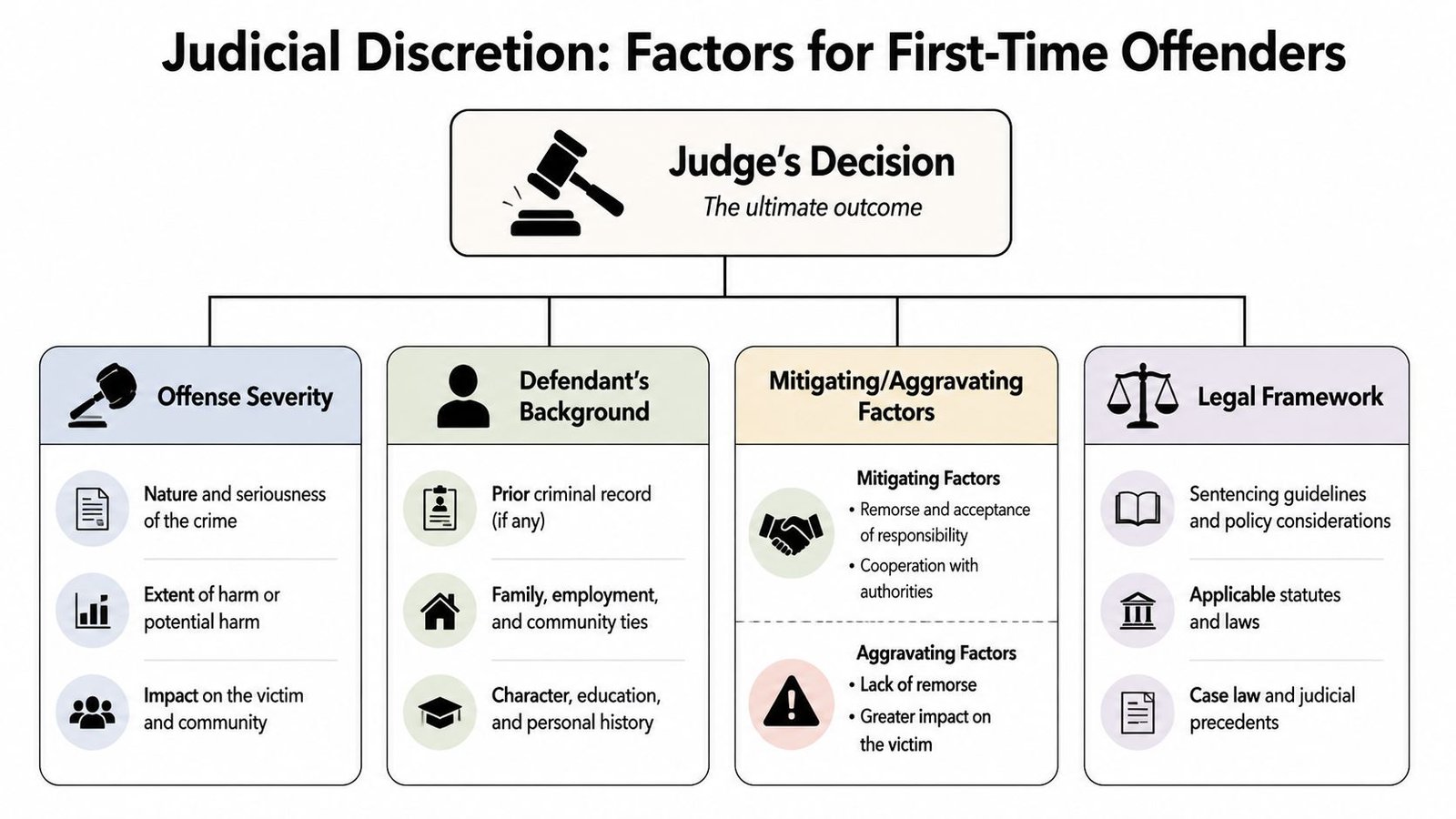
Judges don't use a simple first-arrest discount. Sentencing usually works more like a scale. On one side are mitigating factors, which support a lighter outcome. On the other side are aggravating factors, which push toward harsher consequences.
A clean record is one of the strongest mitigating factors. But it sits alongside everything else.
The factors that usually carry the most weight
The first question is usually the offense itself. A low-level nonviolent charge is in a different category from an assault, a weapons case, a serious DUI, or an offense with an injured victim. If the law requires certain penalties, the judge may have limited room to work with.
The second question is the person's background. Courts often look at employment, school enrollment, family responsibilities, military service, community ties, and whether this arrest looks like an isolated event or part of a larger pattern.
The third question is post-arrest behavior. According to legal guidance summarized by Sharp Criminal Attorney on first arrests and judicial leniency, judges don't apply a simple “first arrest = leniency” rule. Prior record is one of the strongest inputs, but judges also weigh the facts of the case, post-arrest behavior, and courtroom presentation. For low-level offenses, first-time offenders may be more likely to receive probation or diversion.
That means everyday choices matter. Missing court hurts. Failing a test hurts. Arguing with pretrial staff hurts. Walking into court looking indifferent hurts.
Where first-time status matters most
First-time status often has the biggest impact when the court decides whether someone is a good candidate for a noncustodial path. That might mean release conditions, diversion, probation, deferred judgment, or a negotiated reduction instead of jail.
Pretrial release can be a turning point because it gives the defendant a chance to do the work that supports leniency. If you want the basics, this explanation of pretrial release lays out how release fits into the larger case.
Military and civilian courts both wrestle with second-chance issues. For a useful example of how context, service history, and personal mitigation can shape the result, Gonzalez & Waddington's UCMJ defense insights are worth reading.
Judges often respond well to evidence that a person is stable, supervised, and actively addressing the problem behind the charge.
Common Forms of Leniency You Might Encounter
When people say a judge "went easy," they can mean very different things. Sometimes they mean no jail. Sometimes they mean reduced charges. Sometimes they mean a path that avoids a formal conviction if the person completes certain conditions.
The practical question isn't whether leniency exists. It's what form it takes, and what the person has to do to keep it.
The main options families hear about
Diversion programs usually require the defendant to complete tasks such as classes, counseling, community service, restitution, or staying arrest-free for a period of time. If completed successfully, the case may be dismissed or resolved without the harshest long-term consequences.
Deferred judgment or deferred adjudication generally means the court postpones the final conviction outcome while the person completes conditions. If they do well, the case may be dismissed or reduced, depending on the jurisdiction and charge.
Probation instead of jail is exactly what it sounds like. The person remains in the community under supervision, with conditions that may include reporting, treatment, testing, classes, fines, or no-contact orders.
Reduced-charge plea deals happen when the prosecution agrees to a lesser offense in exchange for a plea. This can matter a lot because the final record often matters more than the original arrest charge.
Comparing Leniency Options for First-Time Offenders
| Option | How It Works | Common Requirement | Final Outcome on Record |
|---|---|---|---|
| Diversion | Case is paused while the defendant completes a program | Classes, community service, restitution, no new trouble | May lead to dismissal or dropped charges |
| Deferred judgment | Court delays final judgment while conditions are completed | Probation-style compliance, treatment, court check-ins | May avoid a final conviction if completed |
| Reduced-charge plea | Defendant pleads to a lesser offense | Plea agreement, fines, classes, probation | Reduced offense remains on record unless later sealed if eligible |
| Probation in lieu of jail | Court imposes supervision instead of incarceration | Reporting, treatment, testing, compliance with all conditions | Conviction may remain, but jail is avoided |
What leniency does not mean
Leniency does not mean the case disappears on its own. It usually comes with obligations, deadlines, fees, classes, treatment, testing, or supervision.
It also doesn't always mean the person gets released without financial conditions. In some cases, the person may be released on recognizance. In others, they need a bond. If you're trying to sort out that difference, this guide to what released on recognizance means is useful.
A first-time defendant can get a favorable offer and still lose it by violating conditions. That's common. The court's second chance usually comes with very little patience for carelessness.
How Your Location and Offense Type Change the Outcome
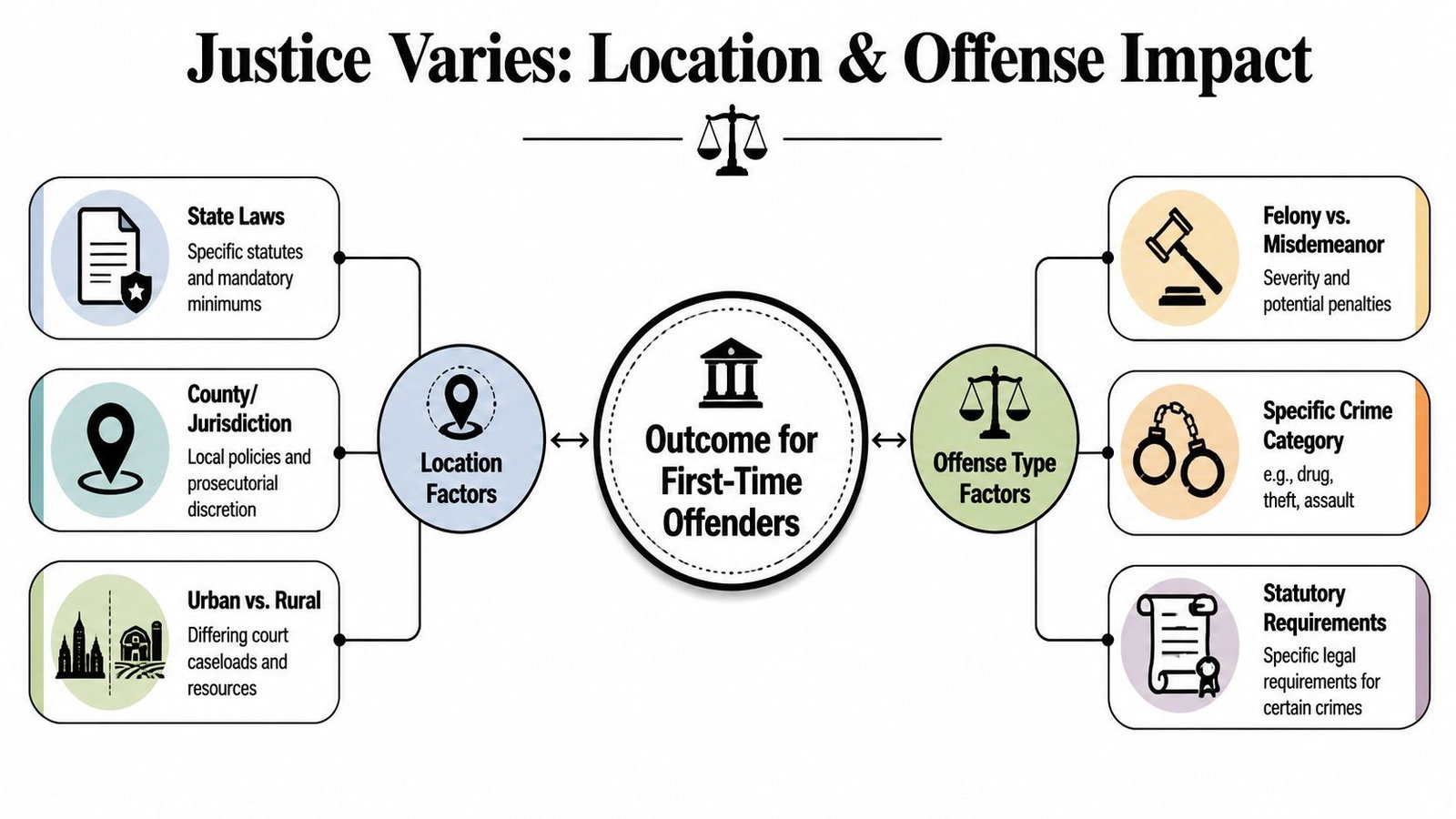
Two people can both be first-time offenders and get very different outcomes. One reason is obvious. A shoplifting case is not the same as a felony assault. The other reason is less obvious to families at the start. Location matters.
Local practice shapes everything from bond conditions to diversion availability to plea negotiations. One county may push treatment-oriented resolutions on certain low-level cases. Another may be stricter, more formal, or less flexible because of policy, staffing, docket pressure, or local politics.
Colorado families need local expectations
In Colorado, families often assume that neighboring counties handle similar charges the same way. They don't always. Jefferson County, Denver, Arapahoe County, and other surrounding jurisdictions can differ in how prosecutors evaluate treatment, how judges handle compliance issues, and how quickly a person can move through the system.
That matters in places like Golden and Centennial. A first-time misdemeanor in one court may be handled more practically, while another courtroom may focus harder on deterrence, victim concerns, or strict supervision terms. A lawyer who regularly appears in that courthouse will usually know what matters most to that bench and that prosecutor's office.
Offense type usually drives the ceiling and the floor
A first-time nonviolent property offense often presents more room for creative resolution. A violent offense, domestic-related allegation, serious DUI, or offense involving vulnerable victims can narrow the judge's options quickly.
Research also helps explain why courts treat criminal history differently. The Chicago Fed's summary of a major study reports that judges vary in severity, but incarceration has different long-term effects depending on criminal history. For people with a first offense, prison time can deter future crime, while for people with repeat offenses, prison time shows no lasting reduction in later criminal-justice contact, according to the Chicago Fed policy brief on sentencing. That distinction helps explain why prosecutors and judges often consider noncustodial options more seriously for people with no prior record.
A first offense can make a judge more willing to consider rehabilitation. A serious charge can still limit how far that willingness goes.
The takeaway is practical. Ask local, charge-specific questions. Don't ask, "Do first-time offenders get a break?" Ask, "How does this courthouse usually handle this exact type of first offense?"
Practical Steps You Can Take to Improve the Outcome
Families sometimes freeze after an arrest because they think the legal system is moving on its own timetable and there's nothing useful to do. That's backwards. The period after release is when a first-time defendant can build the record that supports leniency.
The court can't see good intentions. It can see documented action.
Start with release and structure
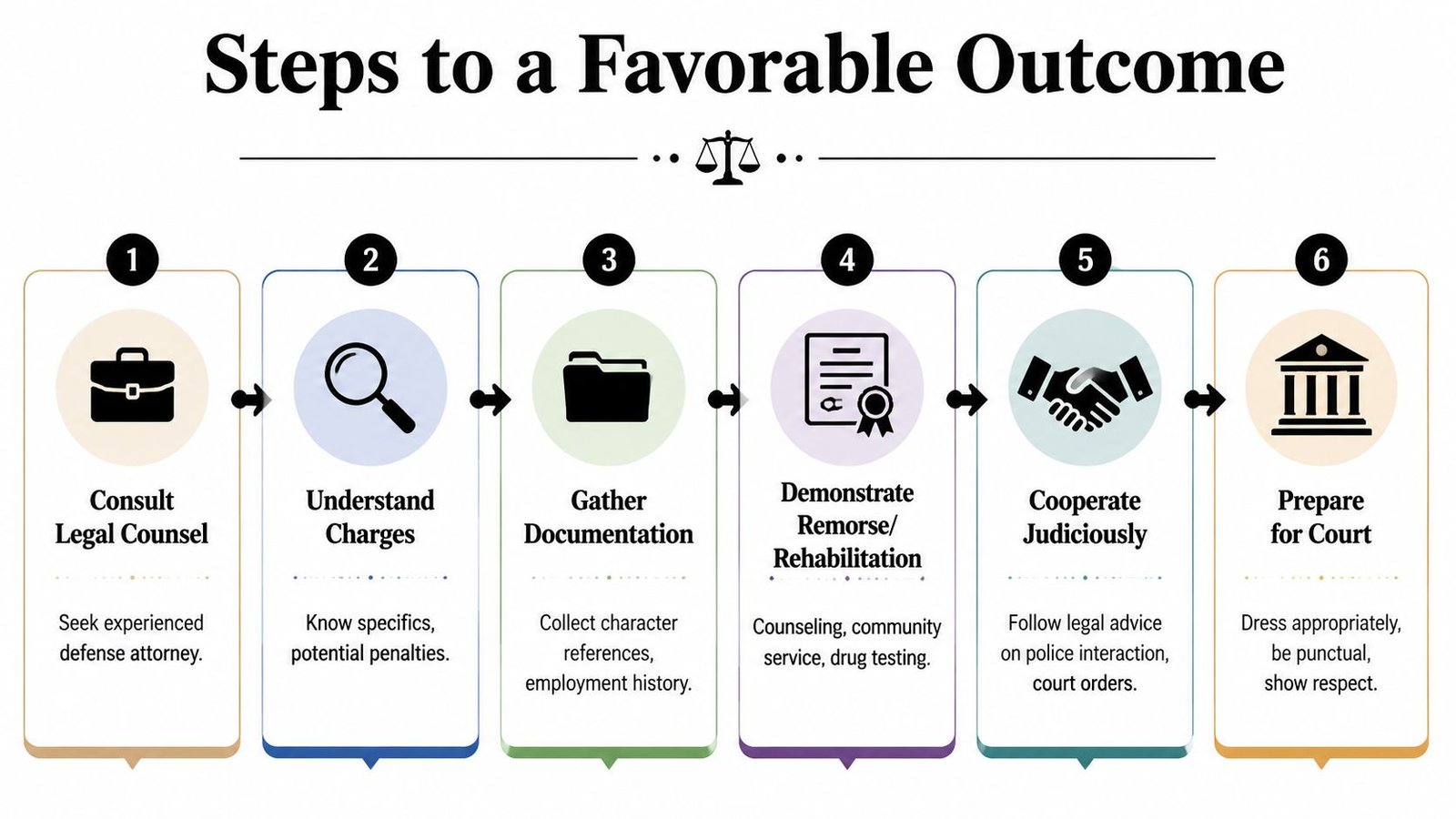
The first practical goal is getting the person out of custody if release is available. Someone who is out can meet with counsel, keep working, arrange treatment, collect records, and appear in court looking stable instead of overwhelmed.
A short video can help make that court-preparation mindset more concrete:
After release, keep the routine simple and strict:
- Hire local defense counsel quickly. Local experience matters because courtroom habits and prosecutor expectations are often county-specific.
- Follow every bond condition exactly. Don't improvise. Don't assume a small violation won't matter.
- Stay off social media about the case. Screenshots become evidence faster than families expect.
Build mitigation before court
Mitigation is the material that shows the defendant is more than the police report. Good mitigation can include work records, school records, proof of treatment, support letters, military history, volunteer work, and evidence that the defendant is taking the case seriously.
The U.S. Sentencing Commission has specifically focused on the recidivism risk of “first offenders,” and broader rearrest data reinforce why courts often distinguish between people with no prior record and those with repeated system contact. USAFacts cites Bureau of Justice Statistics figures showing that 70% of prisoners released in 2012 were arrested again within five years, while more than 8 in 10 youth offenders were arrested again within five years of release, a context referenced alongside the U.S. Sentencing Commission's research on first offenders. Courts know repeat contact matters, which is why first-time defendants should do everything possible to look like a low-risk, one-time mistake.
That means gathering proof, not excuses.
- Character letters should be specific. "He's a good person" is weak. "She's worked here for years, shows up on time, and is trusted with customers" is stronger.
- Treatment works better when it fits the case. Substance counseling for a substance-related charge makes sense. Anger management for an assault allegation makes sense.
- Courtroom conduct matters. Be early, dress respectfully, stay quiet, and let counsel do the talking.
If you need a checklist before the hearing, this guide on how to prepare for a court hearing is a good place to start.
Bottom line: Judges can't reward effort they never see. Put your effort on paper and put it in front of the court.
How a Bail Bond Service Is Your First Step to Leniency
Your phone rings late at night. A family member has been arrested, no one is sure what jail they are in, and the first question is usually, "Will the judge go easier because this is their first time?" The honest answer starts earlier than sentencing. In many cases, the first break in the case comes from getting the person out, stable, and able to do the work that courts tend to take seriously.

Time in custody makes almost every part of a first-offense case harder. It is harder to keep a job, harder to gather school or employment records, harder to start counseling, and harder to stay organized for court. Release gives the defendant a real chance to show the court something useful. Stability, compliance, and follow-through.
That is why bail matters so much in the arrest-to-sentencing process.
A bail bond service does not control the charge, the prosecutor, or the judge. It helps the family get through the release process quickly and correctly so the defendant can start building the kind of record that may support a better outcome later. If you want a plain-English explanation of the role, this guide to what a bail bond agent does explains it clearly.
Why speed matters after arrest
The first 24 to 72 hours often set the tone. If release happens quickly, the defendant can meet with counsel, make a plan, and start handling the practical problems that hurt cases when ignored. If release drags out, people miss work, lose housing, fall behind on family responsibilities, and show up to the next hearing in worse shape than when the case began.
I have seen families focus only on the bond amount and miss the bigger issue. The central question is what release allows the person to do next. Get to court on time. Stay employed. Begin treatment if the charge calls for it. Gather documents and support letters before deadlines start closing in.
What families should look for
Choose a bail bond service that answers the phone when the arrest happens, explains conditions in plain language, and handles paperwork without creating more confusion. Families also need clear communication about cosigner duties, payment terms, and what can put the bond at risk.
Local process matters too. Even within the same state, booking, release timing, and court logistics can differ from one area to another. A licensed agency familiar with the detention process can help families work through those details faster and avoid preventable mistakes.
For Colorado-specific help, families can reach Express Bail Bonds statewide in Colorado.
The practical benefit is simple. A person who gets out promptly has a better chance to do the things that may matter later at plea negotiations, bond reviews, and sentencing. For a first-time offender, that window can make a real difference.
Frequently Asked Questions About First-Time Offenses
A family usually asks these questions after the release is handled and the next worry sets in. What happens now, and does being a first-time offender help? It can help, but the biggest impact usually comes at specific points in the process: bond, compliance while the case is pending, plea discussions, and sentencing.
Does a first arrest usually mean no jail
No automatic rule exists. A first arrest can make probation, diversion, deferred resolutions, or another noncustodial outcome more realistic on lower-level charges, but judges still look at the charge itself, the facts in the police report, any victim harm, local sentencing rules, and how the person acts after arrest.
In practice, the period between release and sentencing often matters more than families expect.
Is a first-time offender the same thing as a first arrest
Usually, courts care more about prior convictions than a single prior contact with police. Still, prior arrests, pending cases, failures to appear, or past bond problems can affect how prosecutors and judges view risk and credibility.
That is why the record has to be reviewed carefully, not guessed at.
What hurts a first-time offender the most after release
Three problems show up over and over. Missing court. Violating bond conditions. Ignoring the issue tied to the charge, such as alcohol use, anger problems, or untreated mental health concerns.
A first-time offender gets the most benefit from that label when the court sees follow-through, not excuses.
What helps the most before sentencing
Mitigation helps the most. That usually means proof of steady work or school attendance, clean compliance on bond, treatment or classes when appropriate, support letters, and organized records that show responsibility rather than panic after the fact.
Families can help a lot here by gathering documents early and keeping everything in one place.
Will a judge care if the defendant has a job and family support
Often, yes. Employment, school enrollment, caregiving duties, and stable housing can all support the argument that the person is a better candidate for supervision in the community than time in custody.
Those facts do not erase the charge. They do give the court a practical reason to believe the person can follow rules and keep showing up.
Should the family talk to the judge directly
Usually no. Courts expect communication to go through the lawyer and the formal court process. Direct contact from family can create problems instead of helping.
The better use of a family's time is simple. Help the defendant get to every court date, follow every bond condition, enroll in appropriate programs quickly, and gather records that support mitigation.
Can a first-time offender keep the case off their record
Sometimes. That depends on the charge, the county, the prosecutor's position, and the final outcome. Diversion, deferred judgments, and some dismissals can lead to a better record outcome than a straight conviction.
Families should ask early what options may exist, because some opportunities are easier to pursue before the case hardens into a plea or sentence.
If your loved one has been arrested in Colorado and you need fast, clear help with release, contact Express Bail Bonds. They serve counties across the state and can help your family get the release process started quickly so you can focus on court dates, compliance, and the steps that may improve the outcome later.