
The phone rings, and nobody on the other end has a clean answer. A loved one is sitting in a detention center, the paperwork is unclear, and your family is trying to figure out whether this is one of those cases where someone can sign their way out or whether money has to be posted before release. That confusion is exactly where a signature bond matters, because it can change the whole path forward.
A signature bond is a written promise to appear in court instead of paying cash or putting up property right away. You may also hear it called a recognizance bond or release on recognizance, ROR. In plain English, the court is saying, “We'll release this person based on their promise and the conditions we set,” instead of demanding an upfront payment. If you're trying to define signature bond, that's the simplest answer, but the core question is whether the judge will allow it, what conditions come with it, and what happens if the promise is broken.
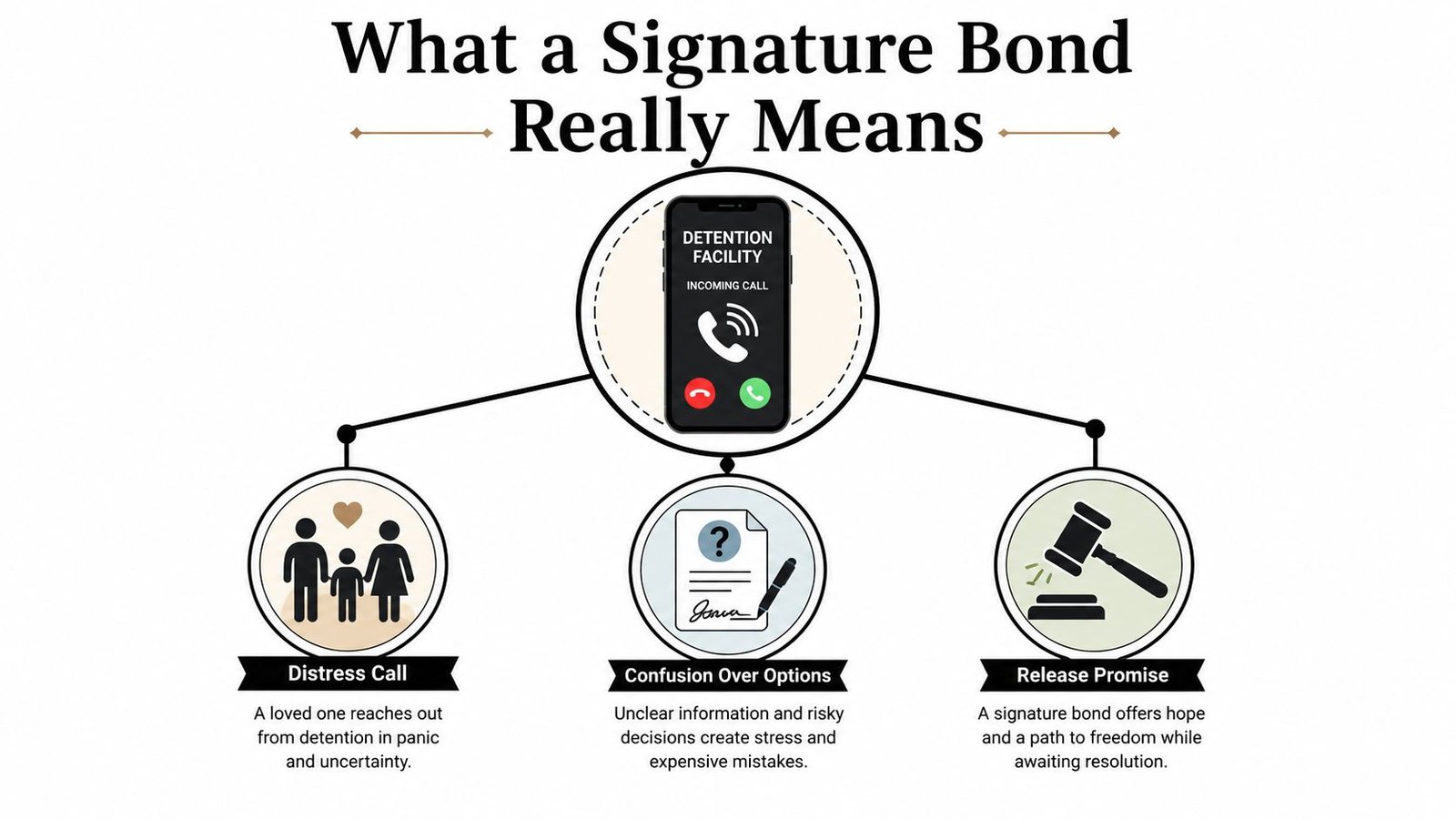
The judge's decision doesn't start with the bond paperwork. It starts with risk, the charge, and whether the court believes the person will return. That's why families often hear about signature bonds in one case and not in the next. If you want the shorter version first, this explanation of release on own recognizance uses the same concept from a practical angle.
What a Signature Bond Really Means
At 2 a.m., most families do not need a legal lecture. They need to know whether their person can come home tonight, and if so, what they are promising by signing paperwork at the jail or courthouse. A signature bond is that promise in writing. It tells the court, in a formal and enforceable way, that the defendant will return for hearings and follow the release rules.
The key point is that this bond is unsecured. No cash is handed over at the moment of release, and no property is pledged as collateral. Instead, the court relies on the signed promise and the possibility of a later monetary judgment if the defendant does not comply. signature bond definition and court order context explains the same basic structure, a written court order with conditions that can allow release once the paper is signed.
Why people confuse it with other release options
The word “bond” throws people off because it is used in different legal settings. In the bail context, a signature bond is a release tool. A bond in finance is different, it is a debt instrument, where investors lend money and receive interest and principal back later.
Practical rule: if the release depends on the defendant's handwritten promise rather than an upfront payment, you are dealing with a signature bond, not a market investment bond.
Families also run into another common mix-up, the term signing bonus. That is an employment payment offered when someone takes a job, often with written conditions and delayed payment, not a court release tool signing bonus overview. The words sound alike, but the legal consequences are nothing alike.
A signature bond means the judge lets the person out based on trust backed by court authority, and the person's signature is what makes the release work. That is why the bond matters even though no money changes hands up front. If you want a plain-language explanation of the same idea from another angle, see this guide to release on own recognizance.
How a Written Promise Replaces Cash
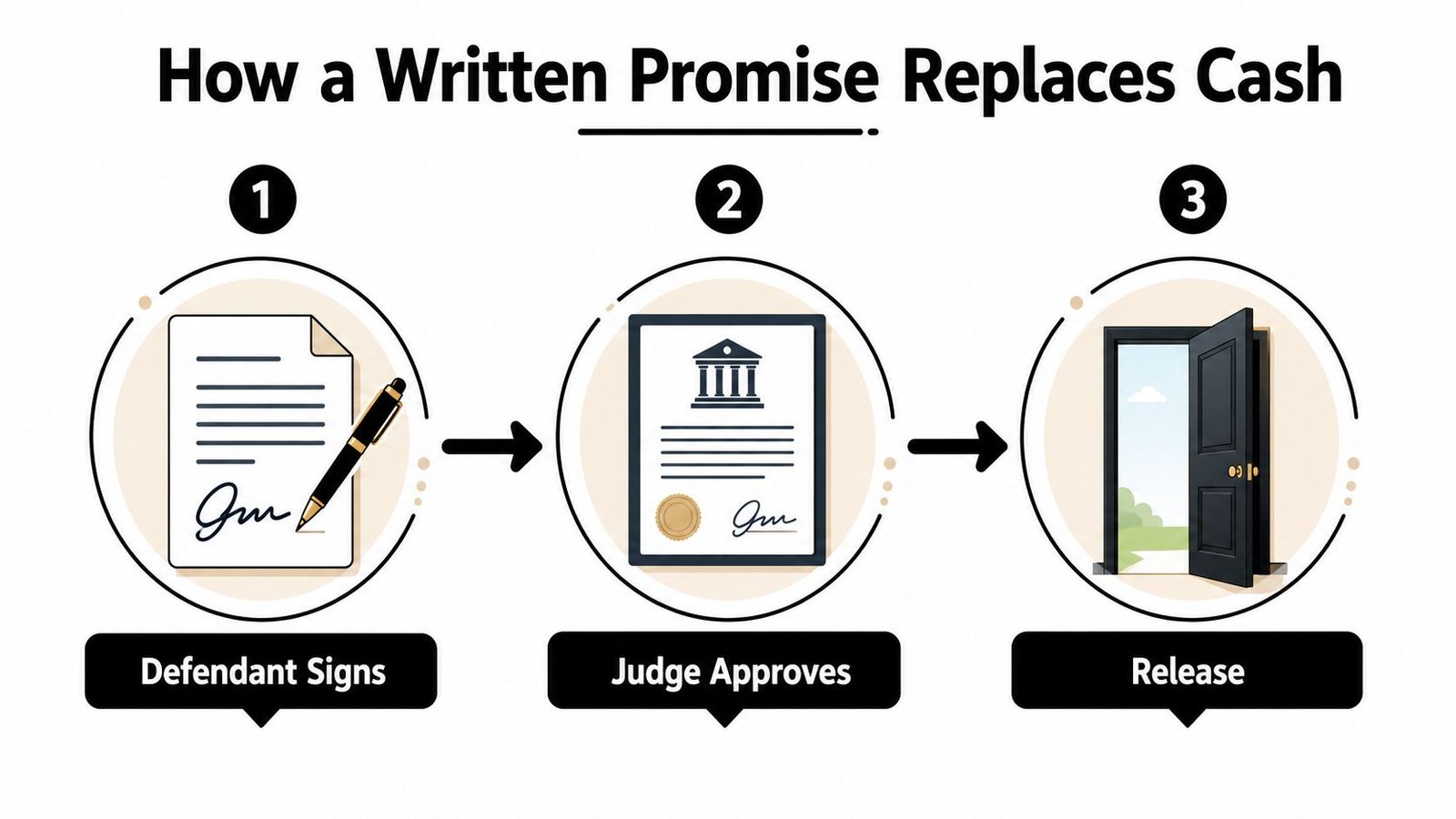
A signature bond works like a court-backed IOU. The defendant signs a document saying, in effect, “I understand the conditions, and I will return.” That signed paper is not just a formality. It is the enforcement tool the court can use later if the person skips court.
The legal mechanism in plain English
First, the court sets conditions and has the defendant sign the release paperwork. Second, the court approves the release under those conditions. Third, the defendant walks out without posting cash up front. That is the whole point of the unsecured structure, the promise stands in for the money.
The signature is the collateral.
That line matters because it explains why a signature bond is not “free” in the practical sense. No premium is paid to a bail agent at the door, but the defendant is still exposing themselves to a later money judgment if they fail to appear. The court's power is what backs the promise, not a cash deposit sitting in a clerk's office.
A surety bond works differently. In that setup, a licensed bail agent posts the bond for the defendant in exchange for an upfront premium, while the defendant and family are dealing with a separate commercial transaction. If you want to compare that path with the other common release method, this overview of cash bond meaning helps separate court payments from agent-driven release.
The practical difference is simple. A signature bond depends on trust and compliance. A surety bond depends on a bail company stepping in and guaranteeing the court money if the case goes sideways. If your family is trying to understand why one person got out with a signature and another needed a bondsman, the answer usually comes down to how much risk the court sees.
That is why the signed document itself matters so much. Once the paper is signed, the release is tied to the defendant's future conduct, not to an immediate cash exchange.
Signature Bond vs Surety Bond vs Cash Bond
The fastest way to sort this out is to lay the three choices side by side. Families often hear all three words in the same conversation, then leave the jail or courtroom unsure which one applies. The chart below separates the legal paths and who handles each one.
| Bond Type | Who Pays | Up-Front Cost | Who Handles It | Best For |
|---|---|---|---|---|
| Signature Bond | Defendant signs a promise | No cash up front | Court or jail | Lower-risk release decisions |
| Surety Bond | Family or cosigner works with a bail agent | Premium required | Licensed bail bond agency | Cases where the court wants guaranteed appearance support |
| Cash Bond | Defendant or family pays the full amount | Full bond amount | Court or jail | People who can post the entire amount directly |
A signature bond is the most forgiving on cash flow, but only if the judge chooses it. A surety bond is the route most families use when the court wants a financial guarantee and the full cash amount isn't realistic. A cash bond is the most direct, but it requires the full amount to be paid to the court.
Colorado families sometimes assume a bail agent can handle every release type. That's not how it works. Express Bail Bonds focuses on surety bonds, because signature bonds and cash bonds go through the court or jail, not a bondsman. For a side-by-side breakdown of the two common commercial paths, see surety bond vs cash bond.
Bottom line: if the judge grants a signature bond, the court handles the release. If the court requires money or a backed guarantee, a surety or cash bond may be the only practical path.
In Colorado, the standard surety premium is commonly discussed as 15%, and for bonds over $5,000 it can drop to 10% with an approved cosigner, but that applies to surety bonds, not signature bonds. That difference is why families should separate the court's release decision from the bail agent's role.
Who Qualifies for a Signature Bond in Colorado
Colorado judges don't hand out signature bonds automatically. The decision usually happens at the first court appearance, where the judge looks at the charge, the person's history, and whether release on a signed promise seems safe enough. The court is not asking whether the family wants the lowest-cost option. It is asking whether the defendant is likely to come back and follow the rules.
What judges weigh before granting release
Several risk factors typically matter. Judges look at the severity of the charge, the defendant's criminal history, ties to the community, employment, family connections in Colorado, and any prior failures to appear. A person with stable local ties and a clean court history has a better chance of unsecured release than someone with a pattern of missing court or moving around often.
Charges also matter. Signature bonds are much less likely in cases involving violence, repeat DUI allegations, or charges involving alleged victims. Lower-level misdemeanors and first-time non-violent offenses are more often the kind of cases where a judge may consider unsecured release. The court's concern is simple, if the person looks like a flight risk or a safety risk, the judge will likely want more than a signed promise.
If the judge does grant a signature bond, conditions often come with it. Those conditions can include no-contact orders, travel restrictions, mandatory check-ins, substance testing, and curfews. The release may look simple on paper, but day-to-day compliance can still be strict. For a broader look at how courts assess risk before release, see pretrial risk assessment.

What a family should listen for in court
The most important question is not “Can we get a bond?” It's “What kind of bond did the judge order?” If the judge says signature bond, the next issue is the conditions. If the judge says secured bond, the family needs to know whether that means cash, surety, or both.
A defendant can qualify on paper and still lose the unsecured option if the judge sees too much risk in the details.
That's why the answer is never just about the charge name. Two people can face similar accusations and get very different release orders because one has strong local ties and the other doesn't. Colorado judges make that call case by case.
From Arrest to Release in Colorado
An arrest starts with booking, and that part feels slow to the family waiting outside. The person is processed at the detention center, the paperwork gets entered, and then the case moves toward the first court appearance where release is decided. In counties like Denver, Jefferson, or Arapahoe, that first hearing is where the judge decides whether the door opens on a signature bond or whether money has to be posted.
If the judge grants a signature bond, the defendant signs the paperwork and leaves under the conditions the court set. If the judge orders a cash or surety bond, the family may not be able to get the person out alone, which is why so many people call a bail agent after reading about unsecured release. The court's choice is usually driven by perceived risk, not by what feels easiest for the family.
The two most common branches after the hearing
One branch is simple. The judge trusts the defendant enough for an unsecured release, and the signature takes care of the rest. The other branch is more stressful. The judge wants a monetary guarantee, and the family has to decide whether to post cash directly or work with a licensed surety bond agency.
That's also the point where outside practical issues start to matter. Families often need to keep employers informed, protect privacy, and manage online records while the case is pending. If that's part of your situation, managing your digital footprint can help you think through what people may see online while the case is moving forward.
The release decision is made in the courtroom, but the fallout can reach work, family schedules, and public visibility long after the jail door opens.
For a family, the big takeaway is timing. Booking happens first, the court hearing sets the terms, and only then does anyone know whether a signature bond is on the table. If not, the surety bond route becomes the practical next step.
For a plain-language explanation of when the court usually makes that decision, see when is bail set.
What Happens If the Defendant Misses Court
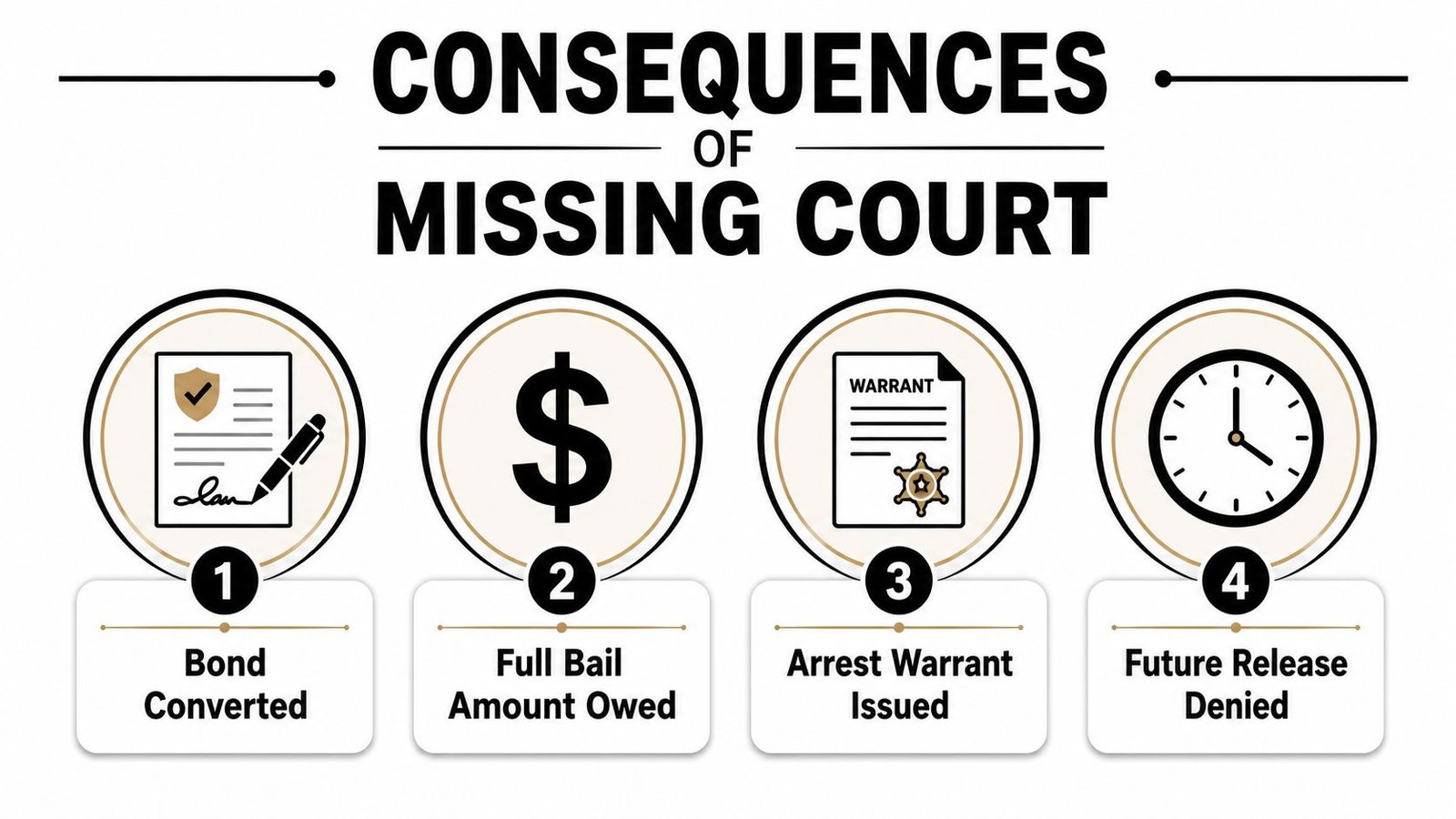
A signature bond is not a free pass. The promise itself is the thing the court relies on, and if the defendant misses court, the court can treat that promise as broken. That can trigger a monetary judgment, a bench warrant, and revocation of the signature bond for future cases.
Why missing court changes everything
The first consequence is immediate. The court can issue a warrant for the person's arrest, which means law enforcement is authorized to pick them up. The second consequence is financial, because the court can convert the signed promise into a debt for the bond amount. The third consequence is longer-term, because future judges in that jurisdiction may be far less willing to trust a signature bond again.
A missed appearance also affects how the court views later release requests. One missed date can push the court toward a secured bond in a future case, even when the new charge is less serious. Judges tend to remember who showed up and who didn't. That memory matters because the court is deciding whether a promise alone is enough.
How this differs from a surety bond
A surety bond creates a different incentive. If the defendant fails to appear, the bail company has a financial reason to help locate the person and bring them back. That doesn't make the system easy, but it does mean the bond company is directly invested in solving the problem. On a signature bond, the court is relying much more heavily on the defendant's own compliance from the start.
For families trying to understand how missed appearances can affect other legal problems, this overview of legal help for probation violations is a useful reminder that one court problem can spill into another.
The signature itself is the collateral, so missing court can turn a simple release into a serious legal and financial problem.
That's why families should treat every court date as firm, not optional. A signature bond can help someone get out sooner, but the responsibility that comes with it is real.
Practical Steps for Families and When to Call a Bail Agent
A late-night arrest is confusing, and the first few calls can feel like guesswork. Start with the basics. Confirm the exact detention facility, gather the defendant's full legal name and date of birth, and make sure someone is tracking the first court appearance. If the defendant has a lawyer, ask directly whether the judge granted a signature bond or ordered a secured bond instead. That answer determines the next move.
A few details make every call easier.
- Verify the facility first. Different Colorado jails and county detention centers handle paperwork differently, so you want the right location before you call anyone.
- Keep the court details handy. Full legal name, date of birth, and case information save time when you're asking about release.
- Ask about the judge's order. Don't assume release conditions are the same as the charge description. The bond type is what matters.
- Move quickly if a surety bond is needed. The sooner you contact a licensed Colorado bail agent, the sooner the release process can start.
If the court ordered a surety bond, Express Bail Bonds is one practical option to check because it posts statewide at Colorado jails and county detention facilities, and it accepts electronic applications and signatures for out-of-state family members. The company also provides around-the-clock guidance on fees and next steps, which helps when nobody in the family is in the same city as the jail. You can reach them at 720-984-2245 or visit the homepage at Express Bail Bonds.
For local help, the following pages are useful starting points: Jefferson County Golden Colorado and Bail Bonds Centennial.
If the judge did not grant a signature bond, don't wait around hoping the answer changes on its own. Get the exact bond type and act on that order.
Common Questions About Signature Bonds
Does a signature bond cost anything? No upfront premium is paid to a bail agent, but the unsecured promise can turn into a court judgment if the defendant misses court. That's why “no cost” and “no risk” are not the same thing.
Can the defendant travel out of state? Only if the court gives explicit permission. Travel rules depend on the judge's conditions, so the answer can change from case to case.
How long does a signature bond stay in effect? It usually stays in place until the case is resolved or the court changes the release terms. If the judge modifies the order, the new conditions control.
What if the judge denies a signature bond? The court will usually set cash or surety instead, and that's when a bail agent may become necessary. The denial doesn't end the process, it just changes the release path.
If your family is facing a Colorado arrest tonight, get the exact bond type first, then act on it without guessing. Express Bail Bonds helps families handle surety bond release when the court requires a secured option, and you can start the process by visiting Express Bail Bonds or calling 720-984-2245 for immediate guidance.