Getting the call that someone you care about is in jail throws everything off at once. Your first thought is usually how to get them out. Your second is what documents do I need, and how fast can I get them to the bond agent without making a mistake.
Colorado's bail process is more electronic than many families expect, which helps if you're trying to move quickly from home, work, or another county. It also means the paperwork matters. A smooth release usually depends on having the right names, ID, booking details, signatures, and payment authorization lined up before the bond is posted.
If your situation also involves immigration detention, this guide on securing release from ICE detention can help you understand that separate process.
For Colorado surety bonds, the practical document packet usually includes identity verification for the cosigner or indemnitor, the defendant's booking and court information, the bail agreement and premium disclosure, any collateral or indemnity forms, and signed authorization for electronic transactions when the file is handled remotely, as described in this overview of compliance documentation and audit-ready recordkeeping. That's why it helps to think in terms of a complete packet, not one form.
Start with the list below and gather each item in order. If you're working with Express Bail Bonds, you can usually move much faster by sending clear digital copies as you go instead of waiting until you have everything at once.
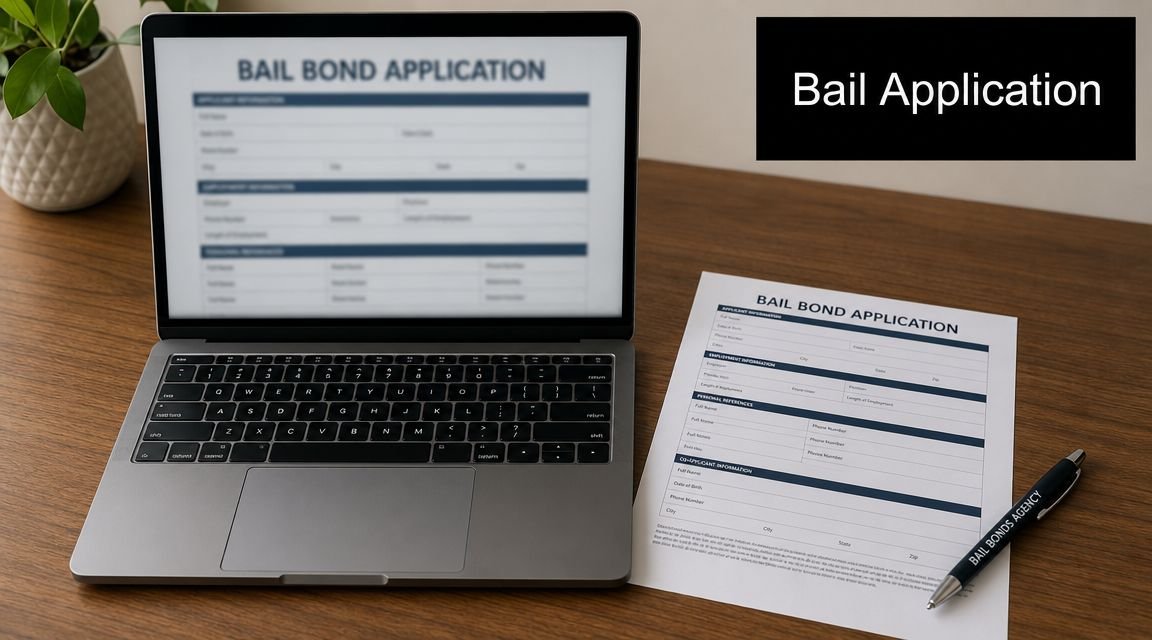
1. Bail Bond Application Form
This is the first document that gets the process moving. The application gives the bond agent the basic facts needed to identify the defendant, check the jail, prepare the bond paperwork, and decide what other documents are needed from you.
If you're in a late-night Jefferson County or Denver-area situation, don't wait until morning to start. A clean electronic application can be submitted as soon as you have the defendant's full legal name, date of birth, and booking details. If two family members were arrested in the same incident, each person needs a separate application.
A fast start helps most when the information is exact. Misspelled names, wrong dates of birth, and incomplete phone numbers are some of the most common reasons paperwork gets kicked back for correction.
What to have ready before you start
- Defendant details: Full legal name, date of birth, and the jail or detention facility holding them.
- Booking information: Booking number if you have it. If you don't, start the application anyway and tell the agent what you know.
- Cosigner details: Your legal name, current address, phone, email, and employment information.
- Arrest basics: The county, likely charge, and any known court or bond amount information.
The easiest way to avoid delays is to use the official online bail bond application and complete every field carefully the first time.
Practical rule: Match every name exactly to the jail record and the ID. Even one wrong letter can slow a release.
In Arapahoe County and Jefferson County cases, families often start from a phone and upload documents afterward. That works fine. Just make sure the email address and mobile number on the application are ones you're actively checking, because that's often where signature requests and follow-up questions go.
If the defendant has recently changed jobs or moved, list the current information, not the last stable address you remember. The bond file needs the most accurate present-tense details.
A quick walkthrough helps if this is your first time:
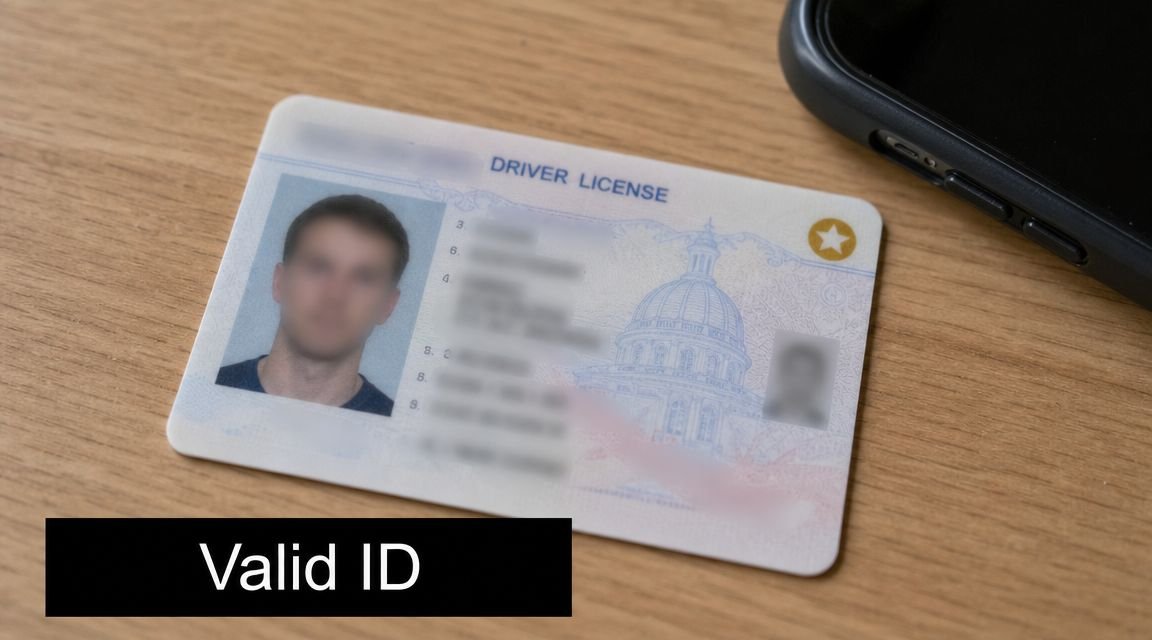
2. Valid Government-Issued Identification
If you ask a bond agent what documents do I need right now, the first answer after the application is usually your ID. The agency has to verify who is signing, who is paying, and who is agreeing to financial responsibility.
A Colorado driver's license works well for local cosigners. An out-of-state parent may use a passport or state ID. Military ID may also work depending on the transaction and what the agency needs to verify. The important point is that it must be current, readable, and clearly tied to the person signing the bond paperwork.
How to send ID the right way
For electronic bonds, send a clear photo of the front and back. Put the ID on a flat surface, use good light, and make sure all corners are visible. Blurry, shadowed, or cropped photos create back-and-forth that costs time.
For out-of-state cosigners, remote identity checks can be the part that causes the most anxiety. Public guidance often stops at “bring ID,” but families handling bail remotely usually need more than that. In practice, remote packets often involve a government-issued ID, proof of address, employment or residency verification, and contact details for e-signature, especially when a family member can't travel in person. That need for alternate submission paths and remote access is consistent with federal discussion of preferred-language materials and remote options for underserved communities.
If you're cosigning from another state, keep your ID next to your phone during the whole process. You may need to resend a clearer image or complete a live verification step.
Don't send an expired ID and hope it will be accepted. Ask first if that's all you have. If your mailing address has changed but your ID hasn't, tell the agent before the contract is prepared so the supporting documents can line up correctly.
3. Proof of Residency Documentation
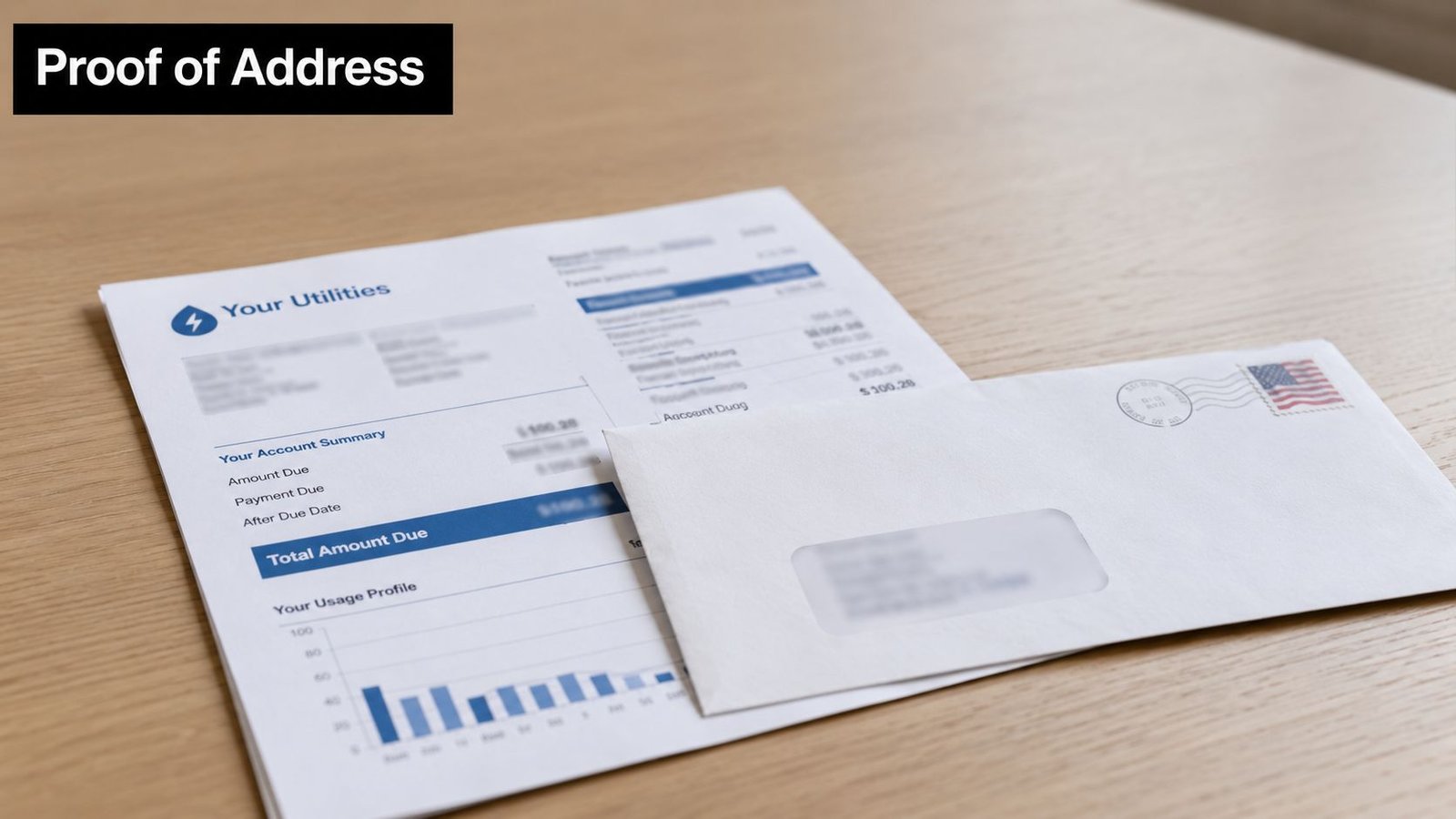
After ID, proof of address is the next document families most often scramble to find. A utility bill, lease, mortgage statement, property tax notice, or other current mail can help show where the cosigner or defendant lives.
The bond file requires a reliable residential address for contact, notices, and court-related follow-up. In plain terms, the bond company needs to know where the responsible person can be reached if anything changes.
Best documents to use
Some documents work better than others because they're easier to verify and usually show a full name and complete address.
- Utility bill: Good for renters and homeowners if it shows the current service address.
- Lease agreement: Helpful in Jefferson County or Arapahoe County apartment cases where the defendant or cosigner rents.
- Mortgage or property statement: Useful if the person signing owns the home.
- Official mail: Government or tax mail can help when other proofs are limited.
Send the most recent version you have. The closer it is to your current living situation, the smoother the file review usually goes. If the name on the proof of residence is different because you live with family, say that immediately and provide whatever supporting explanation applies.
In Colorado electronic bond files, matching matters. The address on your application, ID, and proof of residence should all tell the same story. If they don't, the bond agent can still work through it, but only if you explain the difference early.
Some families ask whether they need several proofs of address. Often one clear document is enough to get moving, but if your situation is unusual, have extra records ready so you don't lose time later.
4. Cosigner Agreement and Liability Form
If you're the person signing for someone's release, this is the form that makes your role official. The cosigner agreement states that you're taking on financial responsibility under the bond contract and that you understand the defendant must appear in court and follow release conditions.
Parents sign these forms for adult children. Spouses sign them. Sometimes a longtime friend or employer signs. In Colorado, out-of-state family members may also complete this step electronically if the agency can verify identity and complete the contract remotely.
What you're agreeing to
The most important part of this document isn't the signature line. It's the responsibility behind it. If the defendant misses court or violates terms in a way that affects the bond, the cosigner can face serious financial consequences under the agreement.
That's why you should read every page before signing, even in a rush. If something doesn't make sense, stop and ask. A calm five-minute explanation now is better than confusion later.
The cosigner information page is a good place to review what this role involves before you commit.
What I tell families: Don't cosign because you feel cornered. Cosign because you understand the responsibility and believe the defendant will follow through.
Common Colorado scenarios
In Jefferson County, a parent may be signing from Golden while the defendant is booked elsewhere in the metro area. In Arapahoe County, a spouse may handle the bond from work using e-signature on a phone. In both situations, the actual form is only part of the job. The cosigner also needs to stay reachable, keep copies of the signed documents, and help make sure the defendant gets to court.
If several relatives want to help, pick one primary cosigner unless the agency requests otherwise. Too many decision-makers can slow down a file, especially when signatures and supporting documents are arriving from different phones and email accounts.
5. Arrest Report and Booking Information
This is the information that tells the bond agent exactly where the defendant is, what they were booked on, and whether release can happen. You don't always need the full arrest report in hand, but you do need accurate booking details.
The key pieces are the defendant's full name, booking number, jail location, charges if known, and whether bond has been set. If another county has placed a hold, or if there's a separate warrant, that can change the release timeline even if the bond paperwork is ready.
What to look up first
Before you call or text a bond company, gather these details if you can:
- Booking number: This is the quickest way to identify the defendant in the jail system.
- Detention facility: Be exact about the location. County names matter.
- Charge information: Even a rough description helps if formal documents aren't in front of you yet.
- Bond status: Has a magistrate set bond, or is the person still waiting?
If you're not sure how long it may take for the jail to process someone before bond can move forward, review this guide on how long booking takes in jail.
A common Jefferson County example is a family member finding the booking record online but not understanding whether the person can be released yet. Another common Arapahoe County issue is seeing multiple charges and assuming that means multiple separate bonds. Sometimes that's true. Sometimes it isn't. Give the exact booking information to the bond agent and let them confirm the actual bondable status.
The fastest file is the one built on verified booking information, not family guesses from a frantic group text.
If the defendant was moved, tell the agent right away. Jail transfers, holds, and court appearances can affect where paperwork has to be posted and how release gets coordinated.
6. Employment Verification Letter or Pay Stub
You are ready to sign electronically, the jail has bond set, and then the file stalls because no one can confirm who is paying. That is when a pay stub or employment letter stops being a formality and becomes the document that keeps release moving.
For Colorado bond files, a recent pay stub is usually the fastest proof of steady income for the person paying or cosigning. In many Express Bail Bonds cases, especially with remote signing, a clear photo or PDF sent from your phone is enough if the document is readable. In Jefferson and Arapahoe County cases, speed matters. Blurry screenshots and cropped payroll images create delays that are easy to avoid.
If you are a W-2 employee, send your most recent pay stub first. If you just started a job, get a short employment verification letter on company letterhead. If you are self-employed, send the clearest current income record you have, such as recent invoices, a 1099, deposit history, or a tax document that shows active business income.
The document should clearly show:
- Your name: It must match the ID and the bond paperwork.
- Employer name: Company name or business name.
- Current work status: Full-time, part-time, contract, or newly hired.
- Recent income: Enough detail to confirm active earnings.
- Verification contact: HR, payroll, supervisor, or business contact if follow-up is needed.
This document matters most when the bond is larger, the cosigner is out of county or out of state, or the file needs stronger financial support before approval. It also helps when the defendant has limited local ties and the agency needs a clear picture of who is backing the bond.
Use the cleanest digital version you have. Send all four corners of the page. Do not mark up the image, crop out names, or cover dates unless the agent tells you exactly what can be redacted. A readable PDF from your payroll portal is better than a dim phone photo taken in the car.
Irregular income does not disqualify you. Say what your situation is and send records that make sense for it. Bond agents handle gig workers, commission earners, contractors, and small business owners every day. Clear proof beats a perfect job title.
7. Bank or Financial Statements
It is 9:40 p.m., the jail is processing release, and your bond can be approved tonight if the file shows who is paying and that the account belongs to that person. In Colorado, that check often happens electronically. If Express Bail Bonds asks for a bank statement, send it fast and send the right one.
A recent bank or financial statement helps confirm account ownership, available funds, and the identity of the person taking financial responsibility on the bond. This comes up more often on larger bonds, online applications, and remote cosigner files, especially when the income documents do not fully answer the question of who is backing the bond.
Use the clearest recent statement you have. A PDF downloaded directly from your bank app or online portal is the best option.
What the statement should show:
- Account holder name: It must match the ID and bond paperwork.
- Financial institution name: The bank or credit union should be easy to identify.
- Recent statement date: Send the most current record available.
- Account details: Enough information to confirm the account is real and active.
- Relevant balance information: The agent needs to confirm payment capacity, not review your spending habits.
Do not send random screenshots of transactions unless an agent asks for them. A full statement page is easier to verify and causes fewer delays. In counties that regularly handle electronic paperwork, including Jefferson and Arapahoe, clean digital documents help the file move faster because the reviewing agent can match names, dates, and signatures without calling you back for replacements.
Redactions are sometimes allowed, but ask first. If you black out too much, the document stops being useful. Leave your name, bank name, statement date, and enough account information visible to confirm ownership. Keep all four corners of the page if you send photos instead of a PDF.
Mismatch is what slows approval. If the application lists one name variation, the ID shows another, and the bank statement has an old address or joint account holder with no explanation, the file has to be reviewed line by line. If you have a joint account, say that upfront. If you recently moved, say that too. A one-line explanation can save twenty minutes of back-and-forth.
This is a verification document, not a test. Send the newest readable statement, explain anything unusual before the agent has to ask, and your file stays on track.
8. Character References or Community Ties Documentation
This isn't required in every bond, but it can help in the right case. A short letter from an employer, pastor, counselor, coach, or community member can support the picture that the defendant has real ties, regular responsibilities, and people who expect them to show up.
This tends to matter more when the defendant is young, has limited paperwork in their own name, or needs context that doesn't appear in the booking record. It can also help when a family is trying to show that the defendant has stable support after release.
What a strong reference should say
A useful letter is specific. It should explain how the writer knows the defendant, how long they've known them, and what responsibility or community ties they've personally seen.
A church leader might confirm regular involvement. An employer might confirm reliable attendance and an expected return to work. A relative can help too, but third-party references often carry more weight because they're less emotional and more independent.
- Relationship: Explain how the writer knows the defendant.
- Time frame: State whether the writer has known them briefly or over a long period.
- Observed reliability: Mention work, volunteering, family care, or other concrete responsibilities.
- Current ties: Include anything that shows the defendant is rooted in Colorado and reachable.
Don't ask for glowing general praise. Ask for facts. Short, direct letters work better than dramatic ones.
9. Court Order or Bail Bond Contract
At some point the process shifts from gathering documents to signing the actual release paperwork. That's where the court order setting the bond and the bail bond contract come together.
The court order tells everyone what bond amount and conditions apply. The contract sets out the agreement between the bond company, the defendant, and the cosigner. Keep both. These are not papers to lose in the back seat of the car after release.
What to review before signing
Read the release conditions carefully. If the court requires check-ins, no-contact terms, sobriety conditions, or location restrictions, the defendant needs to understand those before walking out of custody. A bond gets someone released, but it doesn't erase the court's authority over the case.
The bail bond contract page can help you understand the type of agreement you'll be signing with the agency.
In Colorado bail matters, remote signatures are common now. That's convenient, but it also means people sometimes sign too fast on a phone screen and miss important language. Slow down long enough to confirm the defendant's name, the bond amount, the premium disclosure, and any special conditions.
If an attorney is involved, send them a copy for the case file. If a family member is helping manage court dates, make sure that person also has access to the signed contract and release terms.
10. Payment Authorization and Transaction Records
No bond gets posted without payment authorization. In a modern Colorado surety-bond process, that usually means a card authorization, electronic payment approval, bank transfer confirmation, financing paperwork if available, or a receipt showing the premium was paid.
Keep every confirmation. If you pay by phone, save the text or email receipt. If you authorize a card, keep the signed approval. If you're on a payment arrangement, store the schedule where you'll see it.
What to save after payment
These records matter because they create a clean transaction trail for everyone involved. They show what was authorized, when it was paid, and what remains due if there's a payment plan.
The easiest way to avoid disputes later is to save:
- Authorization form: The signed document allowing the payment method to be used.
- Receipt or confirmation: Email, text, or printed proof of payment.
- Payment schedule: If the premium is split into installments.
- Agency contact record: The name and number of the person you dealt with.
Colorado's standard premium is 15%, and for bonds over $5,000 Express Bail Bonds often secures 10% with an approved cosigner, according to the company information provided in the publisher brief. If you need to review the available methods, use the bail bond payment options page.
One practical point matters here. The agency has stated that it does not post cash-only bonds and instead focuses on surety bonds. So if the jail requires a cash-only bond, ask that question immediately rather than assuming every bond can be handled the same way.
Top 10 Documents Needed Comparison
| Item | Implementation Complexity 🔄 | Resource Requirements 💡 | Expected Outcomes ⭐📊 | Ideal Use Cases ⚡ | Key Advantages |
|---|---|---|---|---|---|
| Bail Bond Application Form | Low–Moderate 🔄, form completion and verification required | Defendant details, charges, booking#, cosigner contact, e-sign | ⭐ Streamlines processing; 📊 reduces detention time | Emergency or remote bail initiation | Faster processing; official record; 24/7 submission |
| Valid Government-Issued Identification | Low 🔄, straightforward verification | Current driver's license/passport/state ID (front/back scan) | ⭐ Identity/authenticity verification; 📊 required for compliance | All bail transactions and cosigners | Universally accepted; prevents fraud; enables remote processing |
| Proof of Residency Documentation | Low–Moderate 🔄, collect recent documents | Utility bill, lease/mortgage, bank statement, voter registration | ⭐ Demonstrates ties/stability; 📊 can reduce bail amount | First-time defendants or to argue lower bail | Strengthens court confidence; easily scanned/submitted |
| Cosigner Agreement and Liability Form | Moderate–High 🔄, legal obligations and signatures | Cosigner ID, contact, signature, possibly income docs | ⭐ Establishes legal liability; 📊 enables lower premium with cosigner | High-value bonds needing third-party guarantee | Lowers premium options; creates legal accountability |
| Arrest Report and Booking Information | Low–Moderate 🔄, retrieval may be delayed after arrest | Booking number, arresting agency details, charge list | ⭐ Authoritative charge/bail info; 📊 necessary to post bond | Locating defendant and confirming bail amount | Essential for accurate posting; reveals holds or restrictions |
| Employment Verification Letter or Pay Stub | Moderate 🔄, requires employer cooperation | Employer letterhead, pay stubs, W‑2/1099, supervisor contact | ⭐ Verifies income/stability; 📊 aids premium approval or terms | Cosigner qualification and premium negotiations | Demonstrates ability to pay; supports better bail terms |
| Bank or Financial Statements | Low–Moderate 🔄, privacy considerations when sharing | Recent bank, savings, investment, or credit statements | ⭐ Confirms funds/assets; 📊 strengthens cosigner case | High-premium bonds or cosigner verification | Concrete proof of resources; enables reduced rates |
| Character References / Community Ties | Low 🔄, obtain letters from trusted contacts | Letters on letterhead with contact info and relationship | ⭐ Shows community ties; 📊 can influence judicial discretion | First-time or low-risk defendants seeking leniency | Persuasive to courts; may lower bail or secure release on recognizance |
| Court Order or Bail Bond Contract | Moderate 🔄, legal document review required | Official court order, case number, bond terms, signed contract | ⭐ Legal authority for release; 📊 defines conditions/obligations | Finalizing release and documenting obligations | Enforceable terms; clarifies rights/responsibilities |
| Payment Authorization & Transaction Records | Low–Moderate 🔄, process payments and confirmations | Credit/debit/ACH info, receipts, transaction IDs, payment plan docs | ⭐ Confirms payment receipt; 📊 provides audit trail for posting bond | Completing premium payment, remote bond posting | Flexible payment methods; enables 24/7 processing and records |
Ready to Act? Contact Express Bail Bonds Now
It's 10:40 p.m. in Colorado. You have the jail name, the booking number, and a nearly dead phone. That is enough to begin.
Call or message as soon as you have the defendant's full legal name, date of birth, jail location, and booking details. Then send the first four items that keep a file moving fast: the bail bond application, your government-issued ID, proof of residency, and payment authorization. If a cosigner will be involved, send the cosigner paperwork at the same time. Waiting to send it later is one of the simplest ways to slow down approval.
Colorado's electronic bail process moves quickest when your documents are clean and consistent. Send bright, full-page photos or PDFs. Make sure the name, address, and date of birth match across every form. Sign requests as soon as they hit your phone or email.
Jefferson and Arapahoe County cases often stall for ordinary reasons. Blurry uploads. Cropped IDs. A utility bill with a different address than the one on the application. A missed remote signature. Fix those four problems early and you remove a lot of the delay that families mistake for a court problem.
Express Bail Bonds handles electronic applications, contracts, and payments for Colorado cases, which matters when the arrest happens late at night, the defendant is moved, or the cosigner is in another city. If the arrest happened near Golden, their Jefferson County bail bond page gives localized help. If you're dealing with an Arapahoe-area case, the Centennial bail bonds page is a good starting point.
If you want background on how bail money is handled after a case ends, this article from Gerald Miller P.A. on bail funds explains the general rules clearly.
Do not stop the process because one document is still missing.
Start with accurate booking information, answer your phone, and send the remaining items as they are requested. That is the practical way to get a Colorado bond posted faster, especially when each county and jail handles electronic review on its own timing. If you need help right now, contact Express Bail Bonds, send the documents electronically, and get direct instructions on what is missing, what can be signed remotely, and what happens next.