
The phone rings late. The voice on the other end is rushed, embarrassed, and hard to hear. You catch a few key words. Arrested. Moffat County. Need help.
That moment scrambles people. Most families jump straight to the biggest fear, how long will they sit there, what did they get charged with, can I fix this tonight, and who do I even call first. The worst part is not knowing which step matters now and which step can wait until morning.
When someone is in moffat county jail, the fastest path usually comes from staying calm and getting the right details in the right order. Panic leads people to drive to the jail without the bond information, send money the wrong way, or rely on an online inmate listing that hasn't updated yet. A steady plan works better.
That Unsettling Call from Moffat County Jail
The initial recollection is often of confusion, preceding the recall of facts. A brother says he was picked up after a traffic stop. A spouse says a friend told her where he was. A parent gets a collect call, but the line cuts off before the case number comes through.
That first hour matters because it sets the tone for everything after it. If you rush, you can waste time. If you slow down just enough to gather the basics, you can move the release process forward without making the night harder than it already is.
What to ask during the first call
If you get a call from someone who says they're at moffat county jail, try to get these details before the call ends:
- Full legal name: Ask for the exact spelling, including middle name if they use one.
- Date of birth: This helps separate your person from anyone with a similar name.
- Why they were arrested: You don't need the whole story yet. You need the charge or reason for the hold.
- Whether bond has been set: This is the single most useful question early on.
- Whether they have a case number or booking number: If they know it, write it down exactly.
Don't spend that first call arguing about what happened. Don't use it to investigate the case. Keep it practical.
Practical rule: In the first conversation, collect identifiers first and emotions second. You can comfort them better once you know how to help.
A lot of families also want to know what happens after the arrest itself. If you need that sequence laid out in plain language, this guide on what happens after you get arrested helps connect the dots between booking, bond, and release.
What helps and what doesn't
What helps is writing everything down in one place. Name, time of call, charge, bond status, and every phone number you were given.
What doesn't help is assuming that showing up in person will automatically speed things up. Sometimes it does nothing except add stress, especially if bond hasn't been set yet or the booking process is still being completed.
If you're helping someone from out of town, keep your role simple. Be the organized person. The jail process is procedural. Families do best when one person handles the notes, one person handles communication, and everyone else waits for confirmed information.
First Steps Finding an Inmate and Booking Details
The first hour after an arrest usually feels scattered. Families are trying to confirm where their person is, the person inside may not know much yet, and the online record may still be catching up. The fastest way through that confusion is to verify identity first, then pull the few booking details that affect release.

Start with the information that narrows the search
Use the person's full legal name exactly as it appears on their ID. Add date of birth if you have it. If someone gave you a booking number or case number, keep that in front of you. Those details save time because a common last name, a nickname, or one wrong letter can send you in circles.
If you are not fully sure which county has them, a broader Colorado jail inmate search guide can help you narrow the location before you start calling around.
A simple rule helps here. Search like a clerk, not like a relative. Use legal names, exact dates, and written notes.
What to pull from the booking record
Once you find the listing, do not try to decode every line. Focus on the parts that tell you whether release is possible and what could slow it down.
| What to confirm | Why it matters |
|---|---|
| Current custody status | Shows whether the person is still being held or has already started release processing |
| Charge information | Tells you what case you are dealing with and which court or agency may be involved |
| Bond amount or bond type | Answers the question families care about first. Can they get out now, and if so, how |
| Case or booking number | Makes every later call faster and cleaner |
| Hold information | Explains why someone may stay in custody even after bond is discussed or posted |
Families often lose time. They read one screen, assume they have the full story, and start making plans too early. Booking records are useful, but they are still snapshots.
Why the online record may not match real time
Colorado has worked on improving data sharing across justice agencies through the Colorado Trusted Interoperability Platform, or CTIP, which the state describes as a secure way to exchange data between systems (Colorado Governor's Office of Information Technology on CTIP). Better data sharing helps, but it does not mean every jail entry or release status updates instantly on the public side.
I tell families to treat online custody information as a starting point, not a final answer. If the person says bond was mentioned but you do not see it online yet, or the listing disappears without explanation, call and verify before you act.
If the phone call, the website, and the rumor from a friend all say different things, stop guessing and confirm the current status with the jail.
If you cannot find them yet
No result does not automatically mean release. It can mean the booking is still being entered, the name was entered differently, or the arresting agency has not finished the transfer.
Use this order:
- Check the spelling of the full legal name again.
- Search with date of birth if the system allows it.
- Call for procedural confirmation and ask whether the person has been booked under that legal name.
That sequence saves a lot of wasted motion. In Moffat County, timing matters. A bondsman who gets the right identifiers early can start checking bond status and planning the next step while the family stays focused and calm.
Staying Connected Mail Phone Calls and Messages
After the booking is confirmed, families usually hit the hardest stretch. You know where your person is, but you still may not know when they can call, whether mail will reach them, or what to say once contact happens. This is the part where emotions spike and small mistakes waste time.

The practical goal is simple. Keep communication open, keep the person inside calm, and use each contact to move the release process along. Families who stay organized here usually get better information faster.
Phone calls that help instead of creating confusion
Jail calls rarely come at a convenient time. They may come from an unfamiliar number, they may be short, and they may happen before the family has had time to gather their thoughts. Answer the phone.
When I talk to families, I tell them to treat the first successful call like a check-in, not a full conversation. Confirm that the person is safe. Confirm basic booking details if needed. Ask whether bond was mentioned. Then end the call before it turns into a long, emotional discussion that burns up limited time.
A simple plan works best:
- Have one main family contact answer calls and relay updates
- Keep a pen and notes app ready
- Ask short procedural questions first
- Avoid discussing the facts of the case
- Tell them what you are doing on the outside, such as calling the jail, checking bond, or speaking with a bondsman
That last point matters. Jail phone calls may be monitored. Families sometimes create trouble by trying to sort out the arrest over the phone. Support helps. Case talk can hurt.
What to say on that first call
People inside are often embarrassed, angry, scared, or all three. They do better when the person on the outside sounds steady.
Use clear, grounded language:
- "We found you and we're working the process."
- "Call me again when you can."
- "Do not talk about the case on the phone."
- "Tell me if you were given a bond amount."
That kind of message gives reassurance and direction at the same time.
Mail that actually gets delivered
Mail is slower than a phone call, but it still matters, especially if release does not happen right away. A short letter can calm someone down, help them stay focused, and remind them they are not handling this alone.
Keep it plain. Use the inmate's full legal name. Follow the jail's current mailing instructions exactly. If you are not sure about formatting or what can be enclosed, call first and verify before you send anything.
The pieces that get rejected are usually the ones families try to dress up. Cards with decorations, stickers, extra inserts, or anything that looks unusual can cause delays. Plain paper and a simple envelope are the safer choice.
The best jail mail is clear, respectful, and easy for staff to process.
If you also need help preparing for face to face contact later, this guide on how jail visitation usually works covers the basics families often ask about.
For a quick explanation of jail communication basics, this video is useful:
Messages should lower stress, not raise it
Every contact should do one of three things. Reassure them. Confirm a detail. Help the next step happen faster.
That means no lectures, no arguments, and no pressure to explain everything right away. If you are the person coordinating release, keep everyone else from flooding the inmate with mixed messages. One calm point of contact works better than five upset relatives all trying to help.
This stage feels personal, but the best approach is still procedural. Stay calm, keep notes, and use each call or letter to get the next answer you need.
Planning a Visit to the Moffat County Jail
A visit can steady both sides of this process. The person inside sees a familiar face. The family gets a better read on how they're doing. But jail visits go smoothly only when you treat them like a formal process, not a casual stop.
Confirm the visit before you drive
Don't assume the schedule, format, or eligibility rules are the same as another county. Policies can differ on who may visit, whether visits are in person or video-based, and what identification is required.
Before you leave home, confirm:
- Whether the inmate is currently eligible for visitation
- Whether you need to schedule ahead
- What ID the jail requires
- What time you should arrive
- What personal items must stay outside
If you need a general checklist before going, this guide on whether you can visit someone in jail is a practical starting point.
The mistakes that end visits early
Most denied or interrupted visits come from preventable issues. Not dramatic issues. Small ones.
Common trouble spots include:
| Problem | Better move |
|---|---|
| Arriving late | Get there early enough for screening and check-in |
| Bringing too much | Leave extra items in the car |
| Wearing questionable clothing | Dress conservatively and keep it simple |
| Arguing with staff | Stay polite and procedural |
The dress issue matters more than people expect. If you're trying to support someone, don't risk the visit over an outfit that draws attention for the wrong reason.
How to make the visit count
Keep your expectations realistic. A jail visit may be short. It may be separated by glass or handled through a monitored system. It may not feel the way you hoped.
That doesn't mean it failed.
Use the time for three things. Check their emotional state. Confirm practical needs. Remind them what happens next. If they want to retell the arrest from start to finish, gently steer them away from details that are better discussed with their lawyer.
Go into the visit prepared to calm them down, not to solve the whole case in one sitting.
The Path to Release Posting Bail in Moffat County
This is the point families care about most. How do we get them out, and how long should it take once the bond is ready?
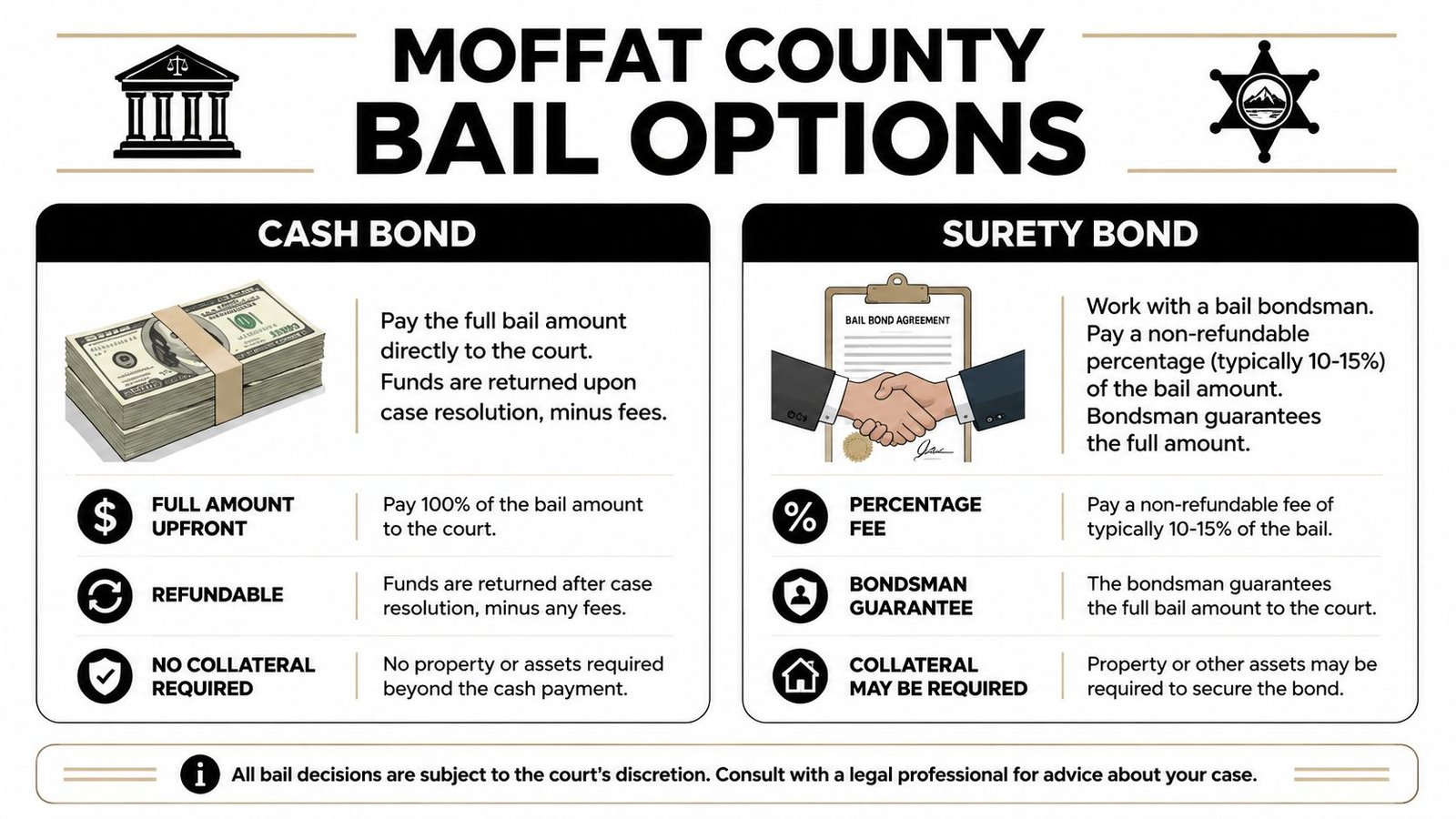
Two basic paths to release
The first path is a cash bond. That means the full bond amount is paid directly as required by the court or jail. The advantage is simplicity. The drawback is obvious. You have to come up with the entire amount.
The second path is a surety bond through a licensed bail bond agency. Instead of tying up the full bond amount yourself, you pay the bond premium and complete the underwriting process with the agency, which posts the bond.
If you want a plain-language walkthrough of the mechanics, this article on how to post bail for someone explains the sequence from bond setting to release.
Cash bond versus surety bond in real life
Families sometimes assume cash is always faster. It isn't always. Cash can be straightforward if you already have the funds available, know exactly where to pay, and the bond type allows it.
Surety is often easier on the family side because it preserves cash for rent, travel, legal fees, missed work, and the dozens of expenses that tend to show up right after an arrest.
Here's the practical comparison:
- Cash bond works best when you already have immediate access to the full amount and want to post it directly.
- Surety bond works best when paying the entire amount would strain the household or delay action while everyone scrambles for funds.
- Both options still depend on processing, jail workflow, and confirmation that there are no other holds.
The six-hour release rule matters
This is one of the most important details in Colorado, and families often hear about it too late. The sheriff's office states that Colorado law requires the sheriff to release a defendant within six hours after a PR bond is set and the person returns to jail, or within six hours after a cash bond is set and the jail is notified that the bond is ready to be posted, unless extraordinary circumstances exist. The same guidance also notes that bond payments must be made out to the holding county, not to the incarcerated person, and that if the delay goes beyond that time, the surety and defendant have a right to know the reason (Moffat County inmate services and bond information).
That rule doesn't mean every person walks out instantly after paperwork starts. It does mean there is a legal timeline, and details matter. The timing starts from specific events, not from when a family member first decided they were ready.
What slows release down
Some delays are avoidable. Some aren't.
Avoidable problems include:
- Wrong person information on bond paperwork
- Confusion about whether bond is cash, PR, or surety
- Payment prepared incorrectly
- Family relying on outdated online status instead of current jail confirmation
Harder problems include incomplete custody records, delayed release-event posting, or mismatched identifiers between systems. Those aren't always visible to a family from the outside, which is why careful confirmation beats guesswork.
If release seems delayed, start with one question. "What event is the jail treating as the start of the release timeline?"
What families should do while waiting
Once the bond path is set, don't keep changing direction. That creates duplicate calls, mixed instructions, and unnecessary delays.
Do this instead:
- Confirm the bond type
- Confirm the payment or bond paperwork is accepted
- Track the time from the legally relevant event
- Stay reachable for follow-up questions
- Prepare a ride and clean clothes for pickup if needed
A steady hand helps here. The release window often feels longer than it is, especially late at night, but organized families usually get through it faster than families who keep restarting the process.
After Release Court Dates and Next Steps
Getting out of moffat county jail is relief, not the end of the matter. The primary risk after release is thinking the urgent part is over and letting deadlines slide.
What the defendant must do right away
The defendant needs to know three things as soon as they're released:
- Read every release paper
- Track every court date
- Follow every condition attached to release
Court isn't optional. Missing a hearing can trigger serious problems, including losing the bond and creating a new arrest problem. Families get into trouble when they treat the court date as something flexible or assume a lawyer will handle everything without the defendant's active participation.
If your loved one needs help understanding what to do before appearing, this guide on how to prepare for a court hearing is a solid next read.
What the cosigner needs to remember
A cosigner's role doesn't end at pickup. If you signed bail paperwork, you took on real responsibility.
Keep track of:
| Responsibility | Why it matters |
|---|---|
| Current contact information | Missed communication creates avoidable problems |
| Court dates and reminders | The defendant needs backup, not assumptions |
| Compliance with release terms | Small violations can snowball |
| Any change in address or phone | Silence is one of the fastest ways to make a simple case harder |
Don't become a monitor in every part of the person's life. Do stay organized enough to help them avoid preventable mistakes.
Know the cost structure before you agree
In Colorado, the standard premium for a bail bond is 15% of the total bond amount, and for bonds over $5,000, agencies such as Express Bail Bonds can often obtain a 10% rate with an approved cosigner (Express Bail Bonds Colorado rates and service information). Families should understand that difference before signing anything because the financial terms affect what is manageable in the first few days after arrest.
What works best after release is a simple routine. Put every date in the calendar. Save every document. Keep one folder for the case. Make sure the defendant has transportation, reminders, and a plan for showing up on time.
The families who do best after release aren't the ones with the least stress. They're the ones who turn stress into a checklist.
The process gets less overwhelming once everyone understands their role. The defendant shows up. The cosigner stays reachable. The paperwork stays organized. That's how people get through this chapter without turning one arrest into a longer chain of problems.
If you need fast help with a Colorado surety bond, Express Bail Bonds is available statewide and can handle much of the process electronically. Families in metro areas often find it helpful to review local pages like Jefferson County bail bond help in Golden and Centennial bail bond services to see how the process works in practice. When you're ready for direct guidance, call or text the agency through the contact information on their site and get a clear answer on the next step.