
Bail processing in Colorado can take anywhere from 2 to 24 hours after a surety bond is posted, especially in high-volume facilities. The good news is that families can often aim for the lower end of that range by acting early, choosing an electronic process, and avoiding the common delays that slow release down.
If you're reading this, you're probably waiting on a call, refreshing an inmate search, or trying to figure out whether there's any activity behind the scenes. That uncertainty is the hardest part.
As a Colorado bail bonds agent, I can tell you that the question usually isn't just how long does bail take to process. The better question is: what part of this timeline can we control right now? Some delays sit with the jail. Others can be reduced if the family moves quickly, has the right information ready, and uses a bond process that doesn't require everyone to drive around town in the middle of a stressful night.
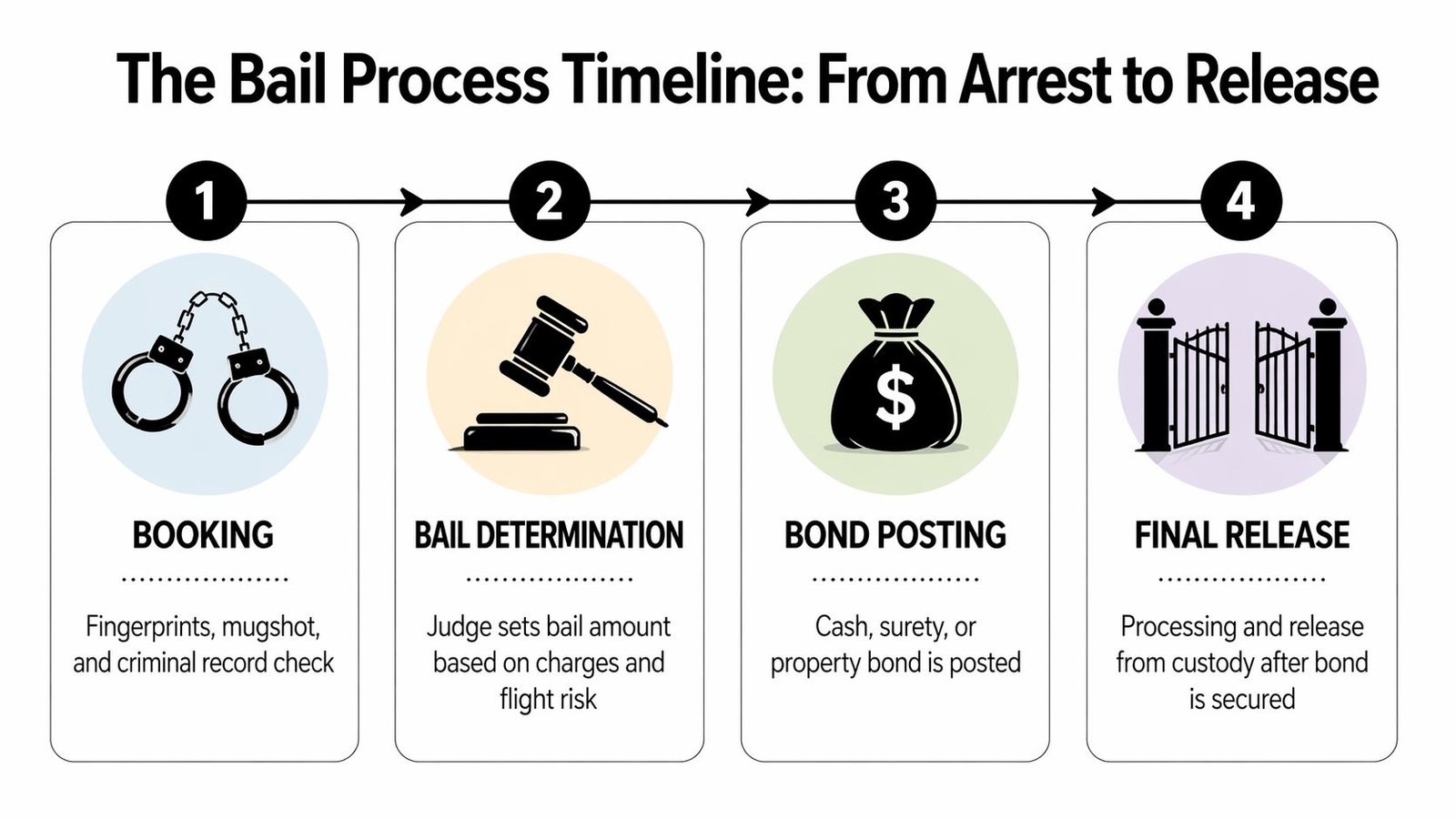
The Bail Process Timeline from Arrest to Release
The process feels chaotic from the outside, but it usually moves through a sequence. It operates like a production line. One stage has to be completed before the next can start, and a slowdown at any point affects everything after it.
For families, that matters because it helps explain why someone isn't released the minute money changes hands.
Booking starts the clock
Booking is the first major step after arrest. Staff record personal information, take fingerprints and a mugshot, and check for other holds or warrants. Until that work is done, the rest of the release process may not move very far.
If you want a closer look at that first phase, this jail booking guide helps explain what happens before bail is even posted.
Bail has to be set or confirmed
Next comes bail determination. In some cases, the amount is already tied to a schedule. In others, a judge has to set bond conditions first. Families often think the delay is with the bondsman when the actual issue is that the case hasn't reached the point where a bond can be posted.
Once bail is available, the bond process itself often breaks into three phases. According to Mr. Nice Guy Bail Bonds on bail processing time, approval usually takes 15 to 30 minutes, submission to the jail generally takes 30 minutes to one hour, and the final release phase varies the most. In small local jails, release can take 30 to 60 minutes, while in large county facilities it can take 4 to 12 hours.
Practical rule: the bond transaction can move quickly, but the jail's internal release queue usually decides how soon your loved one walks out.
Bond posting is only one part of the job
The process often leads families to feel misled by the system. They hear that the bond has been posted and assume release is immediate. It isn't.
Posting the bond means the financial guarantee has been accepted. The jail still has to verify the payment record, update the inmate file, clear any additional holds, and move the person through discharge procedures.
Final release is where the biggest waits happen
The last phase is the least predictable because it's controlled by jail operations, not by the family. Staffing issues, emergency incidents, high inmate volume, and the order in which multiple people are released all affect timing.
That doesn't mean the process is random. It means you should expect a handoff from the bonding side to the jail side. Once you understand that shift, the timeline becomes less mysterious and a lot less frustrating.
Key Factors That Can Slow Down Bail Processing
The bond may be posted, the paperwork may be complete, and you still may wait. That's usually because the jail is dealing with one or more bottlenecks at the same time.
A lot of families think of bail delay as a single problem. In reality, it's more like traffic. One lane closure may not stop everything, but a lane closure plus heavy volume plus a shift change can turn a short trip into a very long one.
Time of day changes everything
The same case can move very differently depending on when the bond is posted. According to Power Bail Bonds on post-bond release timing, the internal jail release process after bond posting can take 2 to 8 hours. That same source notes that posting during regular business hours usually speeds things up, while late-night and weekend submissions often move slower because staffing is limited.
That's why a Tuesday morning release often feels smoother than a Saturday night release, even when the charges are similar.
Administrative problems cause hidden delays
Some delays are visible. Others aren't. A family may be told the bond is posted, but the jail still has to work through internal checks.
A few common slowdowns:
- Outstanding warrants: If another warrant appears during clearance, release can stop until that issue is addressed.
- Additional holds: A hold from another court, county, or agency can block discharge even after a valid bond is posted.
- Record updates: Staff have to confirm that the release paperwork, payment verification, and inmate file all match.
- Staff workload: If the jail is processing many releases at once, your loved one goes into a queue.
If you're trying to understand what happens before and during court review, this explanation of the bail hearing process gives useful context.
The most frustrating delays are often the ones no one sees from the lobby. Verification checks happen in the background, and families usually don't get step-by-step updates while they happen.
What works and what doesn't
A few approaches help. Others usually don't.
| Situation | Usually helps | Usually doesn't |
|---|---|---|
| Late-night arrest | Start the bond process immediately and prepare cosigner information | Waiting until morning to begin paperwork |
| Busy jail release queue | Stay available for calls and signatures | Calling the jail every few minutes for updates |
| Possible hold or warrant issue | Ask directly whether any other holds exist | Assuming a posted bond guarantees release |
| Weekend processing | Use a process that allows remote completion | Planning around in-person office visits only |
Families can't control jail staffing. They can control how quickly they respond, how complete their paperwork is, and whether they create extra delay on their own side.
Bail Timelines in Denver and Colorado Counties
Colorado families usually want a local answer, not a generic one. That's fair. Denver doesn't move like every county, and different facilities have different workloads, staffing patterns, and systems.
In the metro area, I tell people to think in county-specific terms. The same bond amount can move faster in one facility than another because the release process on the jail side isn't identical.

Denver moves differently during peak periods
High-volume detention facilities tend to show the widest range. According to Free At Last Bail Bonds on Denver bail processing, bail processing after a surety bond is posted typically spans 2 to 24 hours in facilities like those in Denver. That same source notes that delays often come from intake backlogs and staffing during peak arrest periods from Friday through Sunday, while electronic surety posting during non-peak hours can reduce the process to 2 to 6 hours.
That lines up with what families experience on the ground. Weekend volume changes expectations.
If your loved one is in Denver and you're trying to confirm facility details quickly, this Denver County Jail contact resource can help you get oriented.
Jefferson and Arapahoe often feel more manageable
Jefferson County in Golden and Arapahoe County in Centennial still have delays, but families often report a more predictable experience when paperwork is complete and the jail isn't buried in bookings.
For local facility information, these county pages are useful:
The difference isn't just location. It can be operational flow. Some counties process releases more smoothly because the queue is lighter or the handoff between systems is cleaner.
A simple way to think about county differences
Rather than asking which county is "fast," ask three questions:
- Is this a high-volume jail today? Weekend arrest volume matters.
- Was the bond posted during a crowded time? Timing affects how quickly staff can work the release queue.
- Can the bond be handled electronically? Remote submission helps reduce avoidable delay on the family side.
In Colorado, the county often determines the pace more than the bond amount does. Families should plan around the jail's workload, not just the court paperwork.
How Families Can Actively Speed Up the Bail Process
This is the part families can influence most. You can't force the jail to release someone faster, but you can remove the delays that happen before the file ever reaches the release desk.
The fastest cases usually have one thing in common. Someone on the outside took action right away instead of waiting for more certainty.
Start gathering the right information immediately
Before you call a bondsman or try to coordinate payment, collect the basics. Even partial information helps.
Have these ready if possible:
- Full legal name: Spell it exactly as it appears in booking records.
- Date of birth: This helps separate your loved one from similar names.
- Jail location: County matters.
- Booking number or case number: If available, it speeds identification.
- Your role: Parent, spouse, sibling, friend, or attorney.
- Cosigner details: Name, contact information, and availability to sign.
If you need a practical walk-through of the release process, this guide on how to get someone out of jail is a solid place to start.
Why a surety bond often moves faster
According to D&D Bail on bond speed and electronic paperwork, surety bonds using a 10 to 15% premium outperform cash bail by 50% in speed because the agency guarantee is already recognized in the process. That same source says electronic platforms can cut paperwork from 45 minutes to under 10, and remote indemnity agreements allow 24/7 posting without in-person waits.
That matters most when the family is under pressure, the cosigner is out of town, or nobody can spend half the night driving between an office and a detention center.
A practical next step is to watch how the process works in plain terms:
A checklist that actually helps
Some actions save time. Some don't.
- Call before bail is fully set if possible: Early contact lets the bondsman prepare for the moment the bond becomes available.
- Keep your phone close: Delays often happen because the cosigner misses a verification call or signature request.
- Use remote signing when available: Electronic forms eliminate travel and waiting-room delay.
- Ask about holds early: If there's another warrant or no-bond hold, you'll want to know before assuming release is close.
- Don't wait for everyone in the family to agree: One available cosigner who can act now is often better than a group decision that takes hours.
One Colorado option for families who need remote processing is Express Bail Bonds, which handles applications, payments, and contract documents electronically for surety bonds.
The Express Bail Bonds Advantage Electronic Processing
Families lose time in two places. First, they wait too long to start. Second, they use an old in-person process that adds driving, scheduling, and paperwork delays before the bond ever reaches the jail.
Electronic processing solves a practical problem. The family may be in Denver, Golden, Centennial, another Colorado county, or out of state entirely. If documents can be reviewed, signed, and returned remotely, the case can move without requiring everyone to meet in one room first.
Why remote processing matters in real cases
According to Balboa Bail Bonds on jail-specific delays and digital bond processing, one of the least discussed issues in bail content is how much release times vary from jail to jail because of overcrowding, staffing shortages, and operational differences. That same source points out that digital bond processing can reduce delays by bypassing in-person verification and is especially useful for out-of-state cosigners who need a 24/7 remote option.
That observation matches what families deal with every day. If a mother is at home with children, a spouse is working nights, or a cosigner lives in another state, requiring an office visit creates a delay that has nothing to do with the court or the jail.
What the electronic path changes
The old approach usually looks like this:
- Wait for information
- Drive to an office
- Fill out paperwork in person
- Arrange payment
- Send documents back through the chain
- Hope nothing is missing
The electronic approach removes several of those handoffs. Online bail bond processing lets families complete the signing side faster and with fewer moving parts.
A remote process doesn't guarantee an immediate jail release. It does remove the family's own paperwork bottleneck, and that's often the part you can control.
For stressed families, that difference is more than convenience. It reduces confusion, keeps communication tighter, and helps the case get to the jail without unnecessary delay.
Frequently Asked Questions About Bail Timelines
Is there a legal deadline for release after bail is posted
Not a strict one based on the verified guidance used here. Jails are expected to release people promptly after bond posting, but the available information says there isn't a strict legal time limit currently governing how long the holding period may last once processing begins. In practice, release still depends on verification, record updates, staffing, and whether any holds appear.
Why does it still take hours after the bond is posted
Because posting bail and releasing a person are not the same event. The bond handles the financial side. The jail still has to complete internal clearance, confirm there are no additional issues blocking release, and work through the discharge queue in the order the facility operates.
What if there's a hold from another county or a no-bond issue
That usually changes the entire timeline. A valid bond on one case does not override another hold. If another county, court, or agency has placed a hold, the person may remain in custody until that separate issue is addressed. This is one of the first things families should ask about when release seems stalled.
Is paying cash always faster than using a bondsman
Not necessarily. In many cases, a surety bond is more efficient because the agency process is built to move quickly, especially when documents can be handled remotely. Cash sounds simple, but families often lose time gathering funds, traveling, and working through the jail's own intake of payment and verification.
What should we do right after release
Keep the next steps simple:
- Confirm court dates: Missing court creates a much bigger problem than the original delay.
- Review bond conditions: Travel limits, check-ins, or no-contact terms matter immediately.
- Save documents: Keep copies of all bond paperwork and release information.
- Plan transportation and medication needs: Many people come out tired, stressed, and disoriented.
- Ask questions early: If anything in the paperwork is unclear, get clarification right away.
If your family works with an agency and the service was helpful, leaving feedback can help the next stressed family know where to turn. These review pages make that easy: leave a review here or share your experience here.
If you need help moving a Colorado bond forward right now, contact Express Bail Bonds. They handle surety bail bonds statewide, offer electronic paperwork for faster remote processing, and can help families understand the next step without adding more confusion to an already stressful night.