
When a loved one gets arrested, the first question racing through your mind is always the same: "How long will they be in there?" There's no single, simple answer, but you can generally expect the jail booking process to take anywhere from two to twelve hours.
The exact time hinges on a lot of different factors, but if you understand the steps involved, you can get a much more realistic picture of the timeline. That knowledge can give you a small sense of control during what is, without a doubt, a confusing and stressful time. If you need immediate help, contact Express Bail Bonds for fast, 24/7 service.
What to Expect During the Jail Booking Process
It helps to think of the booking process like a hospital check-in. Before a patient can be moved to a room (or discharged), there’s a whole sequence of administrative tasks that have to be completed. For families stuck waiting for news, this period can feel like an eternity. Knowing what’s actually happening on the other side can make that wait a little more bearable.
From the moment of arrest, a person is on a path that involves several mandatory stages. Every step is there for a reason—to officially process the individual into the detention system, ensure the safety of both staff and other inmates, and create a formal record of the arrest.
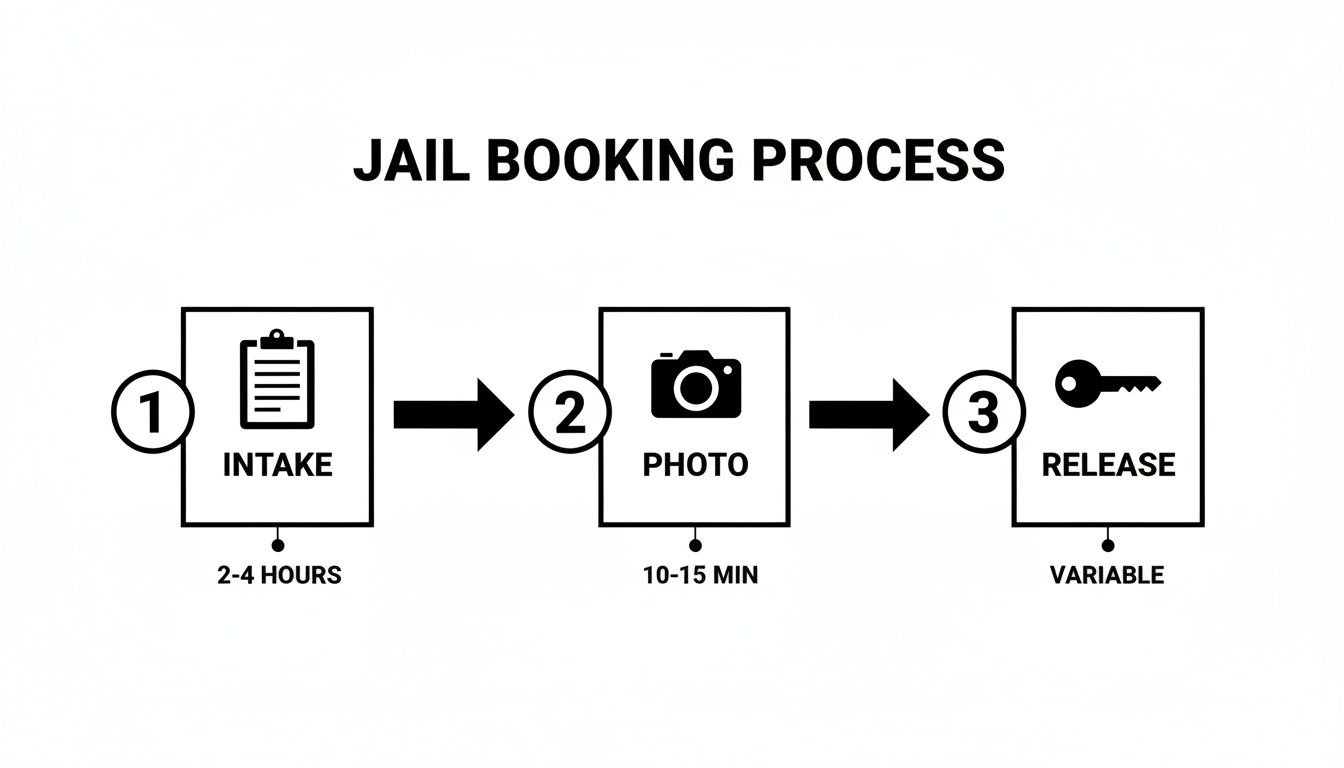
Here’s a look at the key stages of the booking process and a realistic estimate for how long each one typically takes.
Typical Jail Booking Stages and Estimated Timelines
This table breaks down what's happening behind the scenes while you wait. Keep in mind these are just estimates, as delays at any point can extend the total time significantly.
| Booking Stage | What Happens During This Stage | Estimated Time |
|---|---|---|
| Intake & Property Collection | The arrestee’s personal belongings (like their phone, wallet, and keys) are collected, itemized in an inventory list, and stored away for safekeeping until their release. | 1–2 hours |
| Information Gathering | An officer takes down the person's basic identifying information, including their full legal name, date of birth, and physical characteristics (height, weight, etc.). | 30–60 minutes |
| Photos & Fingerprints | A mugshot is taken for official records. The individual's fingerprints are scanned and run through state (CBI) and national (FBI) databases to check for any outstanding warrants or a prior criminal history. | 1–3 hours |
| Health Screening | A basic medical and mental health screening is performed. This is done to identify any urgent health issues, note required medications, or determine if the person needs to be housed in a specific unit. | 30–60 minutes |
As you can see, the fingerprint and background check is often the biggest bottleneck. If the system is slow or if there are potential matches that need to be manually verified, this step alone can add hours to the process.
Once these steps are finally done, the person is officially "in the system," and the process of arranging bail can begin. This is where we at Express Bail Bonds come in. Whether your loved one is in the Jefferson County Jail in Golden or has been taken to a facility in the Centennial area, our team is on standby, ready to act the moment we get the green light. You can see reviews from our past clients in Denver and the surrounding areas.
The Bottom Line: Booking is an administrative requirement that can’t be skipped or hurried along by anyone on the outside. It has to run its course before you can post bail. While you have to be patient, you don't have to be passive.
You can use this waiting time productively. Start gathering the information you'll need to post bond so you’re ready to move the second booking is complete. If you’re not even sure where your loved one was taken, our guide on how to find someone who has been arrested is the best place to start. Being prepared is the single most effective way to shorten the total time your friend or family member spends behind bars.
Why Booking Times Vary So Much
Even though the booking process follows a standard set of steps, the actual time it takes is all over the map. This is one of the most frustrating things for families. You might hear about one person being processed and ready for bail in a couple of hours, while someone else arrested on the same day is stuck waiting all night.
This huge difference isn't just random luck. It's a result of several moving parts that can either grease the wheels or bring everything to a grinding halt. If you know what these factors are, you can set more realistic expectations and get a better handle on a very stressful situation. For a family anxiously waiting by the phone, just understanding why it's taking so long can make a world of difference.
The Jail's Current Workload
The single biggest variable is simply how busy the jail is at that moment. A large, urban jail runs at a completely different speed than a small-town detention center. The best way to think about it is like a hospital emergency room—you’ll have a much shorter wait on a quiet Tuesday afternoon than you will on a chaotic Saturday night.
Big facilities like the Denver County Jail, for example, are constantly dealing with a high volume of new arrivals, especially on weekends and holidays. When you have dozens of arrests happening in a short time frame, a backlog forms instantly. From the initial intake to fingerprinting and photos, every single step gets backed up. An officer can only process one person at a time, creating delays that are completely out of anyone's control.
The Arrestee's Condition and Cooperation
The physical and mental state of the person being arrested also plays a massive role in how quickly things move. It's a simple fact: someone who is cooperative, sober, and healthy will fly through the process compared to someone who isn't.
Several common issues can throw a wrench in the works:
- Intoxication: If a person is significantly under the influence of drugs or alcohol, they can't be booked right away. For everyone's safety, they're often put in a holding cell to sober up first, which can add many hours to the clock.
- Medical Needs: Any injuries, whether from the arrest itself or from before, have to be addressed by a medical professional. The booking process is put on hold until that person is medically cleared.
- Uncooperative Behavior: Someone who is combative, resistant, or refuses to answer basic questions will slow everything down. Officers have to follow specific procedures for uncooperative individuals, which takes more time and manpower.
The bottom line is that safety and procedure come first. If an arrestee requires medical clearance or is unable to safely participate in the booking steps, everything is put on hold. This is a primary reason why booking can extend from a few hours to an entire day.
Staffing Levels and Alleged Offense
Finally, a couple of internal factors can really affect the timeline: how many staff are on duty and how serious the alleged crime is. A jail running on a skeleton crew, especially overnight or on a holiday, is going to process people much slower than one that's fully staffed. It’s just simple math.
The nature of the charge also matters quite a bit. Booking someone for a minor misdemeanor is mostly a paperwork drill. But when it's a serious felony, the process gets much more complicated. It often involves more detailed reports, potential interviews with detectives, and deeper background checks. These cases demand more time and scrutiny, adding another layer of delay.
This is where having an experienced bail bonds agent can really help. At Express Bail Bonds, we’ve seen it all and know how to anticipate these kinds of delays. We also help our clients understand all their options, which you can learn more about by reading our guide on what pretrial release is.
Navigating the Booking Process in Colorado Jails

While every arrest in Colorado follows the same basic booking steps, the actual experience can feel completely different from one jail to the next. The time it takes to get processed in Jefferson County, for example, can be worlds apart from the wait in Denver or Arapahoe County—even for the exact same charge.
Think of it this way: every jail has its own personality. It’s a mix of their technology, how many deputies are on duty, and what time of day it is. A brand-new facility might have digital fingerprint scanners that are supposed to be lightning-fast, but that advantage disappears on a busy Friday night when arrests pile up. Meanwhile, an older, smaller jail might process people surprisingly quickly just because they have fewer inmates to handle. Knowing these details is the key to setting realistic expectations for how long your loved one will be held.
Why Local Expertise Matters
This is where having a team with real, on-the-ground experience makes all the difference. At Express Bail Bonds, we don’t just know the general rules; we know the specific jails. Our agents have spent years building relationships and learning the ins and outs of facilities across the state, from the Jefferson County Jail in Golden to the detention centers serving communities like Centennial.
This firsthand knowledge lets us see around corners. We know which facilities get bogged down after a big concert or sporting event and which ones are known for processing release paperwork faster than others. That kind of insider perspective replaces the stressful guesswork with a clear, manageable plan.
Having a partner who understands the specific landscape of the jail you're dealing with can make a tangible difference. It transforms a confusing, opaque process into a manageable one with clear, actionable steps.
It also helps to understand what jail staff are up against. A recent report analyzing jail data from 2021-2023 gives a good snapshot of their daily workload. The analysis found that:
- 31% of bookings were for public order offenses
- 26% involved violent crimes
- 19% were for property crimes
- 24% were for drug or DUI charges
These numbers show just how varied and demanding the environment is, and why a simple-sounding process can have so many delays.
Ultimately, hiring a bail bondsman who knows the local system is like bringing a trail guide on a difficult hike. We can't make the mountain smaller, but we can show you the fastest and safest path to the other side. You don't have to navigate this alone; get in touch with the local experts at Express Bail Bonds for the support you need. We're proud of the help we've provided, and you can see what our clients in Denver and the surrounding areas have to say.
How a Bail Bond Unlocks the Jail Door Faster
Getting through the booking process is just the first major hurdle. The real goal is getting your loved one out, and this is where the focus shifts from waiting on the system to taking decisive action. Once the booking paperwork, photos, and fingerprints are all done, a judge will set a bail amount, either from a standard schedule or after a quick hearing.
That’s the moment a professional bail bond agent can step in. You can think of a bail bond as the key that opens the jail door. But here's the catch: you can't use that key until all the administrative locks—the intake, photos, and fingerprinting—are officially in place.
Preparing the Key in Advance
A huge source of frustration and delay comes after bail is set. It’s a scramble to gather the right paperwork, figure out payment, and get everything signed and delivered to the right person. An experienced bail bondsman gets rid of that delay by getting everything ready ahead of time. At Express Bail Bonds, we've built our entire process around preparing this "key" while you wait.
While your loved one is still being processed, our team can be working with you on the necessary paperwork. We use a secure online system, which means you can fill out applications and sign contracts from your phone or computer. This saves you a stressful trip to the jail and hours of waiting around.
The moment bail is officially set and posted in the system, we are ready to post the bond. This proactive approach turns what could be hours of post-booking delays into immediate action. Our goal is simple: get your loved one released as quickly as the law allows.
The sheer volume of people moving through the justice system shows just how critical this is. Between mid-2021 and mid-2023, U.S. jails handled an incredible 7.6 million bookings each year, involving about 5.6 million different individuals. You can see just how frequently people are booked into jail by looking at the latest data source analysis. That's a staggering number of families needing a fast, reliable way to get someone home.
The Role of a Bail Bond Agent
So what is it that a bail agent actually does to make things happen faster? A bail bond agent acts as a surety for the court. This means we guarantee that the defendant will show up for all their future court dates. In exchange for this guarantee, you pay a non-refundable fee, which is typically 10-15% of the full bail amount, and we post the entire bond for you.
Here’s why that’s so helpful:
- Financial Accessibility: Most people don't have thousands or tens of thousands of dollars sitting around. You won't have to drain your savings or sell assets to come up with the full cash bail.
- Procedural Expertise: Every jail has its own way of doing things. An agent who works in the area knows the specific procedures for facilities from the Jefferson County Jail in Golden to the detention centers in Centennial. We know who to call and exactly what paperwork they need.
- Speed and Efficiency: Because we prepare everything in advance, we can often post the bond within minutes of it being set. This triggers the release process immediately, cutting out the logistical nightmare.
It's important to understand the agent's role in the process, and you can dive deeper into our guide on what a bail bond agent is. Working with an experienced team isn't just a transaction; it's the fastest and most straightforward path to bringing someone home. Our clients in Denver and the surrounding areas will tell you the same.
Practical Steps You Can Take Right Now

It’s completely understandable to feel helpless when a loved one is in jail. The good news is, you aren't powerless. By taking a few organized, proactive steps right now, you can make a huge difference in how quickly they’re released once booking is finally over. The key is being ready to act the moment bail is set.
First things first: you need to gather some basic information. This is the foundation for everything else.
- Arrestee's Full Legal Name: Get the exact spelling, including any middle names or suffixes.
- Date of Birth: This is a crucial identifier the jail staff will use.
- City or County of Arrest: This tells you which facility you’ll be dealing with.
Once you have these details, you can make the most important move: contact a reputable bail bond agency right away. There's no need to wait until the booking process is finished. When you reach out to Express Bail Bonds early, our agents can start prepping paperwork, walk you through the process, and answer all your questions about what comes next.
Assembling Your Release Toolkit
Think of this part as putting together a "release toolkit." Getting everything organized ahead of time means that as soon as the judge sets a bail amount, you won't face any delays on your end. While we handle the procedural stuff, you can focus on two key pieces.
The first is arranging the funds for the bond premium. In Colorado, this fee is typically 10-15% of the total bail amount. Figuring out how you'll cover this now prevents a last-minute scramble later. The second piece is finding a qualified cosigner—someone who agrees to be financially responsible for making sure the defendant shows up for their court dates.
Getting these elements ready is critical. Our team at Express Bail Bonds can guide you through this, and you can even get a head start with our secure online forms, whether your loved one is in the Jefferson County jail or a facility in Centennial. You can see what our past clients in Denver and the surrounding areas have said about our process.
Considering Your Legal Strategy
To get a handle on the booking timeline and the overall legal situation, hiring a criminal defense lawyer is a practical step that can be vital for a faster release. A good attorney can often communicate directly with officials and advocate on the arrestee's behalf, potentially speeding things along.
Your proactivity directly impacts how long someone spends in jail. While the booking time itself is fixed, preparing the bond paperwork and payment method in parallel ensures an immediate response once bail is set. This preparation is the most powerful tool you have.
This readiness has never been more important. Recent data from the Bureau of Justice Statistics (July 2022 to June 2023) shows the average time people spend in jail before release has climbed to 32 days, a significant jump from just 25 days in 2015. You can dig into the numbers yourself in the full report on jail inmate statistics.
By taking these steps, you’re turning helpless waiting time into productive preparation. For a deeper dive, take a look at our complete guide on how to bail someone out of jail.
Common Questions About the Booking and Bail Process
When a loved one is arrested, your mind is flooded with questions. It’s a stressful, confusing time, and the unknown is often the worst part. Getting clear answers can make all the difference and help you regain a sense of control.
One of the first things families want to do is call the jail for updates. It seems like the most direct approach, but it's almost always a dead end. Jail staff are juggling a huge number of inmates and simply don't have the time or resources to give real-time updates to the public. This is where an experienced bail bondsman from Express Bail Bonds becomes your best advocate; we have established channels and know how to get information that you can't.
What if There Is an Outstanding Warrant?
One of the biggest wrenches that can be thrown into the works is an outstanding warrant. During the background check, if a warrant pops up from another county or even another state, the entire booking process grinds to a halt.
The jail now has to contact that other jurisdiction to find out if they plan to extradite the person. This back-and-forth communication can take hours, and in some cases, it can add days to the stay.
Another big question, of course, revolves around the money. People often wonder if they get their money back after the case is over. This is a critical point to understand, and this article explains it well: Do you get bail money back? Your answer will determine whether you should pay cash directly to the court or use a bail bond.
For most families, using a bail bond is the smarter financial move. Instead of tying up thousands of your own dollars for months on end, you only pay a non-refundable premium—typically 10-15% of the total bail amount—to a bondsman.
How Long Does Release Take After Bail Is Posted?
This is a huge point of frustration for families. You've posted the bond, and you expect the jail doors to swing open immediately. That's just not how it works. Once the bond is officially accepted, the jail begins its own internal release process.
This final step involves a lot of paperwork and "out-processing" procedures that have to be completed before the person can walk out.
Key Takeaway: The release process itself can take anywhere from 1 to 6 hours after the bail bond has been posted and accepted. How long it takes really depends on the jail's staffing, the shift, and how busy they are at that moment.
Knowing to expect this final wait can save you a lot of anxiety. It's a standard procedure, even if it feels agonizingly slow. For more in-depth answers, we've compiled a list of Frequently Asked Questions about Bail Bonds that you might find helpful.
Navigating the bail process takes experience and a deep understanding of how local jails operate. Express Bail Bonds has been helping families across Colorado, from Jefferson County to Centennial, since 1988. Our clients in Denver and the surrounding areas know they can count on us for fast, professional help. If you need assistance, we're here for you 24/7.