
When you get that call—the one telling you a friend or family member is in jail—your world can feel like it's spinning. But here's the good news: getting them out comes down to a few clear, manageable actions. First, you need to pinpoint their location. Then, you'll need to find out the bail amount. After that, it's a matter of deciding whether to pay the full cash amount yourself or work with a bail bondsman for a fraction of the cost. Taking a deep breath and focusing on these first steps will make everything that follows much easier. If you're ready to get started now, call or text Express Bail Bonds at 720-984-2245 for immediate help.
What to Do When You Get the Call
It’s almost always a late-night call, and it’s always jarring. Hearing that someone you care about is in jail can send anyone into a panic. But what they need from you right now is a clear head. Your first few moves are critical for getting them released as quickly as possible, and that starts with gathering some very specific information.

Before you can do anything else, you absolutely have to know where they are. In major Colorado metro areas, an arrest doesn't automatically mean they're in one central jail. Someone arrested around Denver, for instance, could be in the Denver County Jail, the Arapahoe County Detention Center, or even the Jefferson County Jail. You can't help if you don't know where to start.
Locating Your Loved One
The fastest way to track someone down is to use the online inmate locators that county sheriff's departments provide. It sounds complicated, but it's usually a simple search form.
You'll almost always need two pieces of information:
- The person’s full legal name (no nicknames)
- Their date of birth
With just those two details, you can usually pinpoint their exact location and, just as importantly, find their booking number. That number is the key to unlocking the entire bail process.
Key Takeaway: Having the correct jail location and the exact bail amount are the two most critical pieces of information you need before you can take the next step. Without them, the process stalls.
Understanding Your Payment Options
Once you know the bail amount, you’ve hit a fork in the road. You have two main choices: pay the full cash amount directly to the jail or court, or work with a bail bond agency.
Paying the full amount in cash is an option, and you get that money back once the case is over (minus any court fees). The problem is, that can mean tying up thousands of dollars for months, or even longer.
For most families, a surety bond through an agency like Express Bail Bonds is a much more practical solution. You pay a non-refundable percentage of the total bail, and the bondsman guarantees the full amount to the court. It's a system that keeps the justice system moving; an estimated 15,000 bail bond agents post bail for over 2 million people every year in the U.S.
For a deeper dive into the initial moments after an arrest, check out our guide on what to do when someone gets arrested.
If you're feeling stuck or just need help finding someone, don't try to figure it all out alone. Contact Express Bail Bonds 24/7. We’re here to help you through it.
Decoding the Costs of Getting Someone Out
The financial side of getting someone out of jail is almost always the most stressful part of the whole ordeal. When a judge sets bail at a high amount—say, $10,000—the first reaction is usually panic. Where are you supposed to find that much cash on a moment's notice?
The good news is, you probably don't have to. While you can pay the full cash amount directly to the court, it’s rarely the best option. Going this route means tying up a huge chunk of your money that you won't see again until the case is completely over, which could take months or even years.
The Role of a Bail Bond Agency
A much more practical path for most people is to work with a bail bond agency like ours. Instead of fronting the entire bail amount, you pay a much smaller, non-refundable fee known as a premium.
This premium is our fee for taking on the full financial risk and guaranteeing the entire bail amount to the court. It gets your loved one out of jail without you having to drain your savings.
In Colorado, the standard premium is usually 15% of the total bail amount. Let’s stick with that $10,000 example:
- Paying Cash Bail to the Court: You’d have to pay the full $10,000.
- Using a Surety Bond: You pay a $1,500 premium to the bail bond agent.
That's a massive difference, and it’s what makes getting someone released possible for the average family. This premium system is what the bail bond industry is built on, and it's a vital service for people navigating the pretrial process. You can learn more about the growth of the bail bond services industry and how it fits into the justice system.
The table below breaks down exactly how much you can save by using a surety bond instead of paying the full cash bail.
Bail Amount vs. Bond Premium: A Cost Comparison
This table illustrates the financial difference between paying the full cash bail amount to the court versus paying a non-refundable premium to a bail bond agency for various bail amounts.
| Total Bail Amount Set by Court | Cash Bail (Paid to Court) | Surety Bond Premium (Paid to Agent at 15%) | Your Upfront Savings |
|---|---|---|---|
| $5,000 | $5,000 | $750 | $4,250 |
| $10,000 | $10,000 | $1,500 | $8,500 |
| $25,000 | $25,000 | $3,750 | $21,250 |
| $50,000 | $50,000 | $7,500 | $42,500 |
As you can see, the savings are significant. You keep thousands of dollars in your pocket that can be used for other critical expenses, like hiring a good attorney.
When you work with a bondsman, you are essentially paying a service fee to avoid liquidating your own assets or savings. This allows the defendant to get out of jail quickly while you keep your finances intact for other pressing needs.
Understanding Collateral and Other Fees
For larger bail amounts or cases that seem a bit riskier, a bail agent might also require collateral. Don’t let the term scare you. Collateral isn’t another fee; it’s a form of security—like the title to a car or a deed to a property—that you pledge to back up the bond.
Unlike the premium, collateral is fully returned to you once the defendant shows up for all their court dates and the case is officially closed. Its main purpose is to give the cosigner a strong reason to make sure the defendant doesn’t skip court.
It’s also important to ask about any other potential costs, like jail fees or processing charges, which can differ from county to county. Any reputable agent will be completely transparent about all costs before you sign anything. For a more detailed breakdown of what to expect, check out our guide on how much bail can cost.
We believe in total transparency. Before you make any commitment, we’ll walk you through every single cost so you can make a clear-headed decision. To get an idea of the numbers for your specific situation, try our free online bail bond calculator and see exactly what to expect.
Posting Bail From Your Living Room
Think you have to rush down to a cold, unfamiliar jail lobby in the middle of the night with a pocket full of cash? Think again. The days of that stressful, chaotic scramble are largely behind us. Technology has completely changed the game, and now you can arrange everything right from your own home.
This is a massive relief for anyone, but especially if you live out of state or can’t easily get to the jail. You can use your computer or even your phone to handle the entire process, from that first call with an agent to signing the final documents. It saves a ton of time and, more importantly, cuts down on the anxiety that comes with these situations.
This visual guide shows just how much simpler the journey is when you work with a bail bond agency. We take a complex, expensive problem and boil it down to just a few clear steps.
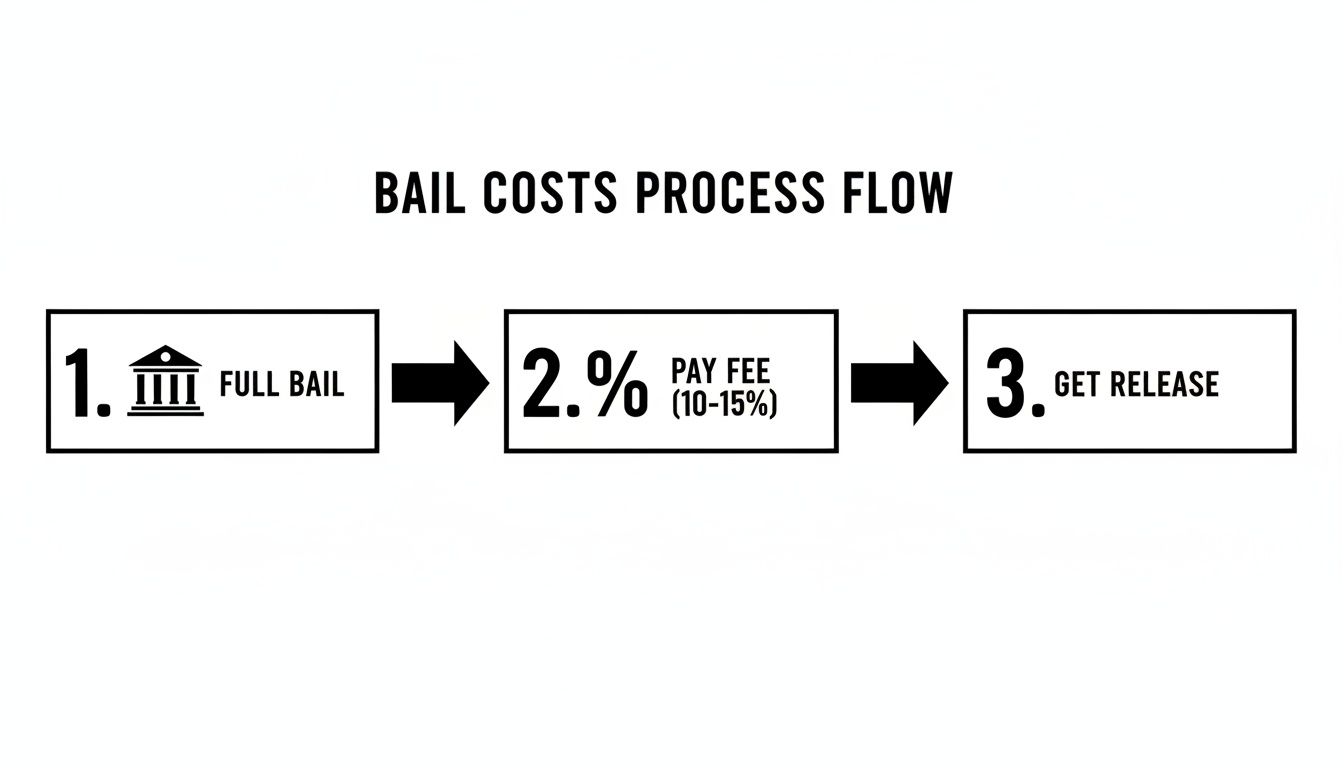
As you can see, instead of having to come up with the entire bail amount yourself, you only need to cover our fee to get your loved one released. This keeps your personal finances intact and gets them home faster.
What You Will Need for the Online Process
Getting started with our remote bail bond process is pretty simple. To make sure everything moves quickly and securely, it helps to have a few things ready before you call. A little preparation on your end helps us get the bond posted without any delays.
Here’s what you should have on hand:
- A Valid, Government-Issued ID: A driver’s license, state ID, or passport works perfectly. We just need this to confirm your identity as the person cosigning the bond.
- Payment Information: You can use a credit card, debit card, or have your bank account info ready for an electronic transfer. Our payment system is fully secure.
- Basic Information About the Defendant: We’ll need their full legal name, date of birth, and the name of the jail where they’re being held.
From our experience, families who use our online system feel much more in control and a lot less overwhelmed. Being able to review documents and ask questions from a familiar place makes a tough situation just a little easier to manage.
How We Keep Your Information Safe
When you’re dealing with sensitive documents and financial information online, security is everything. We get that. Our online portal uses industry-standard encryption to protect every single piece of information you share. From your ID to your payment details, it’s all transmitted through a secure connection.
This secure, digital process is what allows us to help families all across Colorado—and even the country—with the same speed and care. It’s the fastest way to get someone out of jail without piling travel and other logistical headaches onto your shoulders.
If you want to see exactly how it works, you can learn more about our online bail bonds process and see how simple and safe we’ve made it.
Understanding Your Role as a Cosigner
When you agree to cosign a bail bond, you’re doing more than just helping someone out—you’re making a serious financial promise. In the industry, we call the cosigner an “indemnitor.” That’s a formal way of saying you are the one legally and financially guaranteeing the defendant will show up for all their court dates. No exceptions.
It’s a huge responsibility, and it’s why we have to be sure a cosigner is on solid ground before we can move forward.
This isn’t just a signature on a piece of paper. It’s a binding agreement with us and the court, so it’s critical that you understand exactly what you’re committing to before you sign. Let us answer your questions—contact us anytime.
What Makes a Strong Cosigner
From a bail agent’s perspective, we’re looking for stability. We’re taking on a big financial risk by posting the full bail amount, and we need to know the person guaranteeing it is reliable. While every case has its own unique details, we generally look for a few key things.
Typically, a strong cosigner will have:
- A steady job: Consistent employment is a great indicator of financial reliability.
- Local roots: Having a verifiable, stable address shows you have ties to the community.
- Good character: We usually run a basic background check as part of the process.
We’ll ask for some documents to confirm this, like a valid ID and proof of your address and employment. It might feel a little personal, but it’s a standard step for underwriting a bond. If you want to dive deeper into the nuts and bolts of the process, our guide on how bail bonds work is a great resource.
Here’s the bottom line: If the defendant skips court and the bond is forfeited, you, the cosigner, are on the hook for the full bail amount. That’s the most critical part of the agreement.
When a Court Date Is Missed
Okay, let’s talk about the scenario everyone worries about: a missed court date. It’s a stressful thought, but it doesn’t automatically mean disaster. The key is to act fast.
If the defendant doesn’t appear, the judge will issue a warrant and the court will start the process of forfeiting the bond. This is the moment your partnership with your bail agent truly matters.
The second you find out about a missed court date, call us. Immediately. We don’t just wait around for things to get worse. We jump into action to figure out why the court date was missed and work with you to get the defendant back on the court’s calendar. In many cases, we can get the bond reinstated and prevent forfeiture altogether.
Working together proactively protects you from having to pay the full bail amount and keeps an honest mistake from spiraling into a financial nightmare. If you have any questions at all about what it means to be a cosigner, please contact us for a completely confidential chat. We’re here to help.
Life After Release: What Comes Next
That phone call saying your loved one is out of jail is a moment of pure relief. The doors have swung open, and they’re finally coming home. It’s a huge win, but it’s also the start of the next chapter in their legal journey. The focus shifts from getting them out to keeping them out.
Right after they walk out, the first thing they need to do is give us a call. It’s usually just a quick check-in to confirm they’ve been released and to touch base on what to do next. This simple step is crucial because it keeps the lines of communication open, which is essential as the case moves forward.
Understanding the Conditions of Release
When a judge agrees to release someone before their trial, it almost always comes with a strict set of rules. These aren’t just suggestions—they are direct court orders. If any of these conditions are broken, the judge can revoke the bond, and your loved one could land right back in jail.
Some of the most common conditions you’ll see are:
- No-Contact Orders: A judge will almost always issue one of these in domestic violence cases, ordering the defendant to have absolutely no contact with the alleged victim.
- Travel Restrictions: They might be ordered to stay within the county or state lines unless they get explicit permission from the court to travel.
- Regular Check-ins: Sometimes, they’ll be required to check in with a pretrial services officer or their bail agent on a set schedule.
It is absolutely vital that both the defendant and you, the cosigner, know these rules inside and out and stick to them without exception.
The Single Most Important Responsibility: Attending Court
Out of everything, this is the one thing that cannot be missed: the defendant must show up for every single court date. No exceptions. Missing a court appearance is the quickest way to have the bond forfeited, which means a new warrant for their arrest will be issued. It also puts you, the cosigner, on the hook for the entire bail amount.
This is where having a solid support system—the defendant, their attorney, and us—really makes a difference. We make it a point to remind our clients about their upcoming court dates so there’s no confusion about where to be and when. Successfully getting through this pretrial period means they can keep their job, be with their family, and, most importantly, work with their lawyer to build a solid defense.
Getting out on bail is more than just freedom; it’s an opportunity. It’s the chance to keep working, stay with family, and actively help an attorney prepare the strongest possible defense. It truly makes a huge difference in how a case turns out.
The data backs this up. Research from The Bail Project shows that their clients have a remarkable 92% court appearance rate. Their work has also prevented over 1.3 million days of people being stuck in jail before trial, which not only saves taxpayers a ton of money but has also led to a 28% case dismissal rate because people were actually able to help with their own defense. You can discover more about these positive outcomes and see just how critical pretrial release is.
Our job doesn’t stop when the jail doors open. We’re your partners until the case is completely finished. If you’re ever unsure about a court date or have a question about the release conditions, don’t hesitate to call or text Express Bail Bonds at 720-984-2245. We’re here to help you get through this.
Common Questions About Posting Bail
Going through the bail process, especially for the first time, can feel like you’re trying to navigate a maze in the dark. It’s completely normal to have a lot of questions. We’ve been doing this for a long time, so we’ve put together some straightforward answers to the questions we hear most often to help you feel more prepared.
Is the Bail Bond Premium Refundable?
The short answer is no. The premium you pay to a bail bond agency is a non-refundable fee for our service. The best way to think about it is like an insurance premium—it’s the cost for us to take on the full financial risk of the entire bail amount with the court.
That fee compensates us for the work involved in getting your loved one released and for guaranteeing to the court that they will show up for all their future hearings.
However, any collateral you might put up—like a car title or a deed to a property—is absolutely refundable. As soon as the case is completely resolved and all court obligations are met, we return your collateral in full.
How Long Does Release Take After Bail Is Posted?
This is probably the number one question we get, and the honest answer is: it really depends on how busy the jail is. Once our agent has officially posted the bond, the timeline is out of our hands and depends entirely on the detention center staff.
- Smaller County Jails: In less populated counties, we’ve seen releases happen in under an hour.
- Larger Metro Jails: For busier facilities, like the ones in Denver or Arapahoe County, it’s not uncommon for the release process to take several hours simply due to the volume of people they’re handling.
Our agents have years of experience working with every single jail in Colorado, so we can usually give you a pretty solid estimate based on that specific facility. For a deeper dive into the fundamentals, it’s helpful to read about understanding what bail is and the different types of bonds that can be used.
Our Experience: Try not to get discouraged if a release from a large downtown jail takes a few hours. That’s a normal part of the process, and we make sure to stay in constant communication with you and the jail staff until your loved one is safely out.
What Happens if a Court Date Is Missed?
If a defendant misses a court date, the first and most critical thing to do is call us immediately. When someone fails to appear, the court not only issues a warrant for their arrest but also forfeits the bond. This means the cosigner suddenly becomes responsible for paying the full bail amount.
But quick and honest communication can change everything. If you call us right away, we can work with you to figure out what happened—whether it was an honest mistake or a more serious issue—and we can often help get the bond reinstated before the situation gets worse.
Can I Post Bail for Someone in a Different County?
Absolutely. We provide bail bond services for every single county across Colorado. Our secure online system was designed so you can arrange everything from the comfort of your home, whether you’re just in the next town over or even living out of state. No matter where the person is being held, our agents can get the bond posted quickly.
When you need clear answers and fast, decisive action, Express Bail Bonds is here to help. Our experienced agents are on call 24/7 to walk you through everything, step by step.
Call or text us anytime at 720-984-2245 or start the process online at https://expressbailbonds.com.