You're in the jail parking lot, your phone is almost dead, and someone has just told you the bail amount. A relative is asking how fast you can get your brother out. You're trying to work out whether that number is what you must pay tonight, whether you need a cosigner, and whether driving to another facility will help.
Slow down long enough to check the court order. This first time buyer guide to posting bail starts with the questions that matter: what kind of bond the judge authorized, what the premium costs, and who will help the defendant make the next hearing. A fast posting doesn't settle the case or remove the conditions attached to release.
What the Premium Actually Costs
The parking-lot mix-up usually starts with a simple sentence: “His bond is five thousand.” That tells you the court's bond amount, not necessarily the amount you'll pay a bondsman. With a professional surety bond, the premium is the fee for arranging the bond, rather than a payment of the entire court-ordered amount.
Under Colorado's bail-bond premium statute, the premium or commission cannot exceed the greater of $50 or 15% of the bail amount. Applying that statutory formula produces the ceilings below.
Colorado Surety Premium Ceiling by Bail Amount
| Bail amount | Maximum premium | Watch for |
|---|---|---|
| $200 | $50 | 15 percent would be $30, but the $50 floor applies |
| $5,000 | $750 | Ask whether any filing fee is listed separately |
| $10,000 | $1,500 | Collateral is not the same charge as the premium |
The same formula puts the maximum premium on a hypothetical $1,000 bond at $150, and on a hypothetical $25,000 bond at $3,750. These are ceilings calculated from the statute, not promises about what your particular quote will be.
Match the amount to the actual defendant and detention facility before doing the arithmetic. A similar name, an old case, or paperwork from the wrong jail can send the family into a discussion about the wrong bond.
Separate the Fee From the Security
The premium isn't a deposit of the full bail amount. It pays for the surety service and isn't returned because the defendant attends court or the case ends. Don't build your household budget around getting that fee back.
Collateral is separate. If collateral is required, the agreement should identify what you're pledging, who owns it, how it will be held, and the terms for its return. A family member saying “I'll cover it” isn't a substitute for understanding those written obligations.
The statute also generally prohibits additional fees for a bond posted with the court, except for a court or law-enforcement filing fee, the actual cost of storing collateral in a secure self-service public-storage facility, or premium financing. A charge shouldn't become acceptable merely because someone calls it processing or administration.
Before signing, get these items separated on paper:
- Premium: The charge for writing the surety bond.
- Permitted additional charges: Each charge named and explained, rather than bundled into an unexplained total.
- Collateral: The property or money pledged separately from the premium.
- Payment terms: What's due now and any remaining obligation you're accepting.
Practical rule: Don't approve a total you can't break into its parts.
Our explanation of how bond pricing works can help you organize those questions. The useful answer isn't just a dollar amount. It's a written explanation that lets you distinguish the fee you're paying from the security you may be putting at risk.
Bond Types a Colorado Judge Can Order
The judge's order controls the available release route. The Colorado Judicial Branch's guide to bond types distinguishes personal recognizance, cash, professional surety, and property bonds, including the requirement that a property bond have unencumbered real-estate equity equal to 1.5 times the bond amount.
Colorado Bond Types and Who Puts Up What
| Bond type | Money or property | Who arranges it | First-time trap |
|---|---|---|---|
| Personal recognizance | No money or property if the defendant appears | Defendant, sometimes extra signers the judge names | Assuming a signature-only release when the order says secured |
| Cash | Full bond amount paid to the court | Defendant or someone paying the court | Treating the full amount as a bondsman's fee |
| Professional surety | Premium to a licensed bondsman; collateral possible | State-licensed bondsman | Calling a bondsman when the order is cash-only |
| Property | Unencumbered real-estate equity of 1.5 times the bond | Property owner through the court process | Counting a mortgaged house as if it were free and clear |
Say a neighbor has a hypothetical $10,000 bond order. Cash means paying that amount to the court; professional surety means arranging the authorized bond through a licensed bondsman; property means demonstrating $15,000 in qualifying clear equity under the property-bond formula. Personal recognizance follows a different route, with signatures rather than upfront money or property, although the judge may require additional signers.
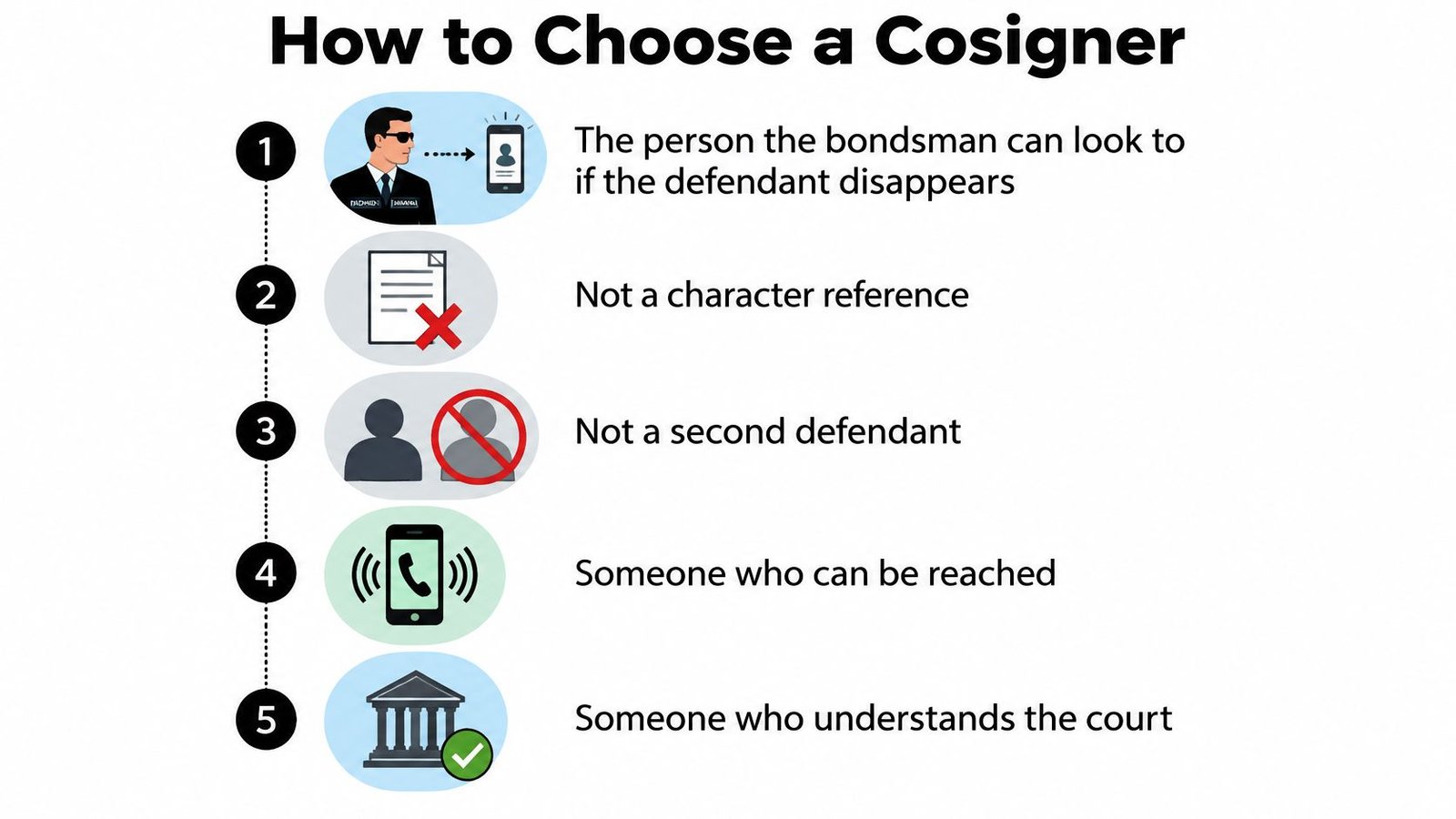
For the surety route, this checklist helps identify who should consider signing.
Read the Order Before Choosing a Route
Look for cash, surety, property, or personal recognizance on the bond order or related commitment paperwork. If the wording is unclear, have the jail or attorney clarify it. A surety company can't substitute a premium payment for a cash-only requirement.
Our guide to types of bail offers additional terminology to keep beside the paperwork. Use the actual order, rather than a relative's description of what happened in another case.
The accompanying video provides another way to review the bail process.
If counsel believes the initial amount or conditions are heavier than necessary, ask about review. A Multnomah County pretrial report documents judges changing secured bail to other release types at later hearings; that's an example from Oregon, not a prediction about a Colorado case. Your attorney should address the options available here.
Conditions also matter when children and family contact are involved. The Law Office of Bryan Fagan, PLLC's explanation of how bond conditions affect custody schedules offers Texas-specific context for that issue, not Colorado legal advice. Don't assume an existing parenting arrangement overrides a release restriction.
How to Choose a Cosigner
A cosigner isn't a character reference, and signing doesn't make that person a second defendant. The cosigner accepts contractual responsibilities that may include financial exposure if the defendant disappears or fails to meet the agreement's requirements.
Choose someone who can be reached, understands the situation, and will read before signing. A parent across town who answers the phone may be a better fit than a roommate who is about to move and won't provide a reliable address.
Choose Reliability, Not Just Willingness
A stressed relative may offer to sign to end an uncomfortable conversation. That isn't enough. The person needs room to ask questions without being pressured by the defendant or the rest of the family.
Review the cosigner requirements together, then discuss the practical responsibilities:
- Stay reachable: Give accurate contact information and respond when the bondsman needs to discuss the agreement.
- Support court attendance: Help the defendant organize transportation and understand where they must be.
- Understand the financial commitment: Read the obligations, including any collateral provisions, before accepting them.
- Speak up about limits: Explain if work, distance, finances, or a strained relationship will prevent reliable involvement.
Good credit can help, but not having a good credit history isn't automatically a deal-breaker. We can review the proposed cosigner rather than having the family rule out a dependable relative before the application is considered.
A useful cosigner can explain what they signed. A reluctant signature doesn't become safer because everyone is in a hurry.
Make Distance Manageable
An out-of-state sister may be able to complete documents electronically, but she still needs accurate information and a working phone. She shouldn't sign while guessing which facility holds her brother or relying on messages passed through several relatives.
This overview shows how a remote family member can organize the practical work.
Give the prospective cosigner time to read in a language they understand and request explanations of unfamiliar terms. Don't treat a verbal assurance from another family member as a change to the written agreement.
If relatives are coordinating from Texas, The Law Office of Bryan Fagan, PLLC's surety guidance for Rockwall families provides jurisdiction-specific context. Approval rules there shouldn't be assumed to apply to a Colorado bond.
If no outside cosigner is available, tell us that directly so we can discuss whether another arrangement is possible. Don't list someone who hasn't agreed or submit a relative's details without permission. Before committing, the proposed signer should be able to explain the premium, the collateral answer, and their own responsibilities without guessing.
How to Complete Paperwork and Arrange Release
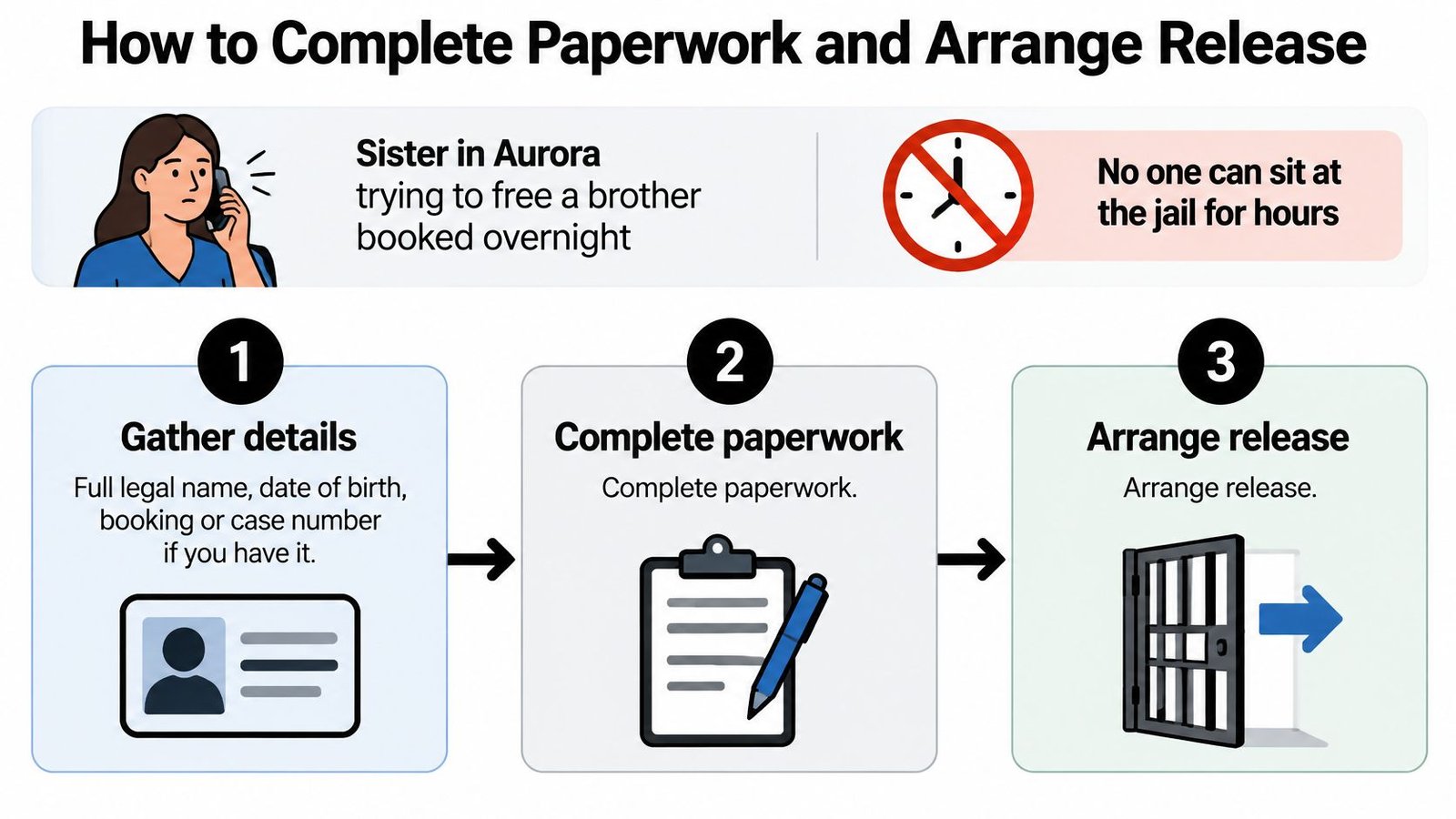
Say a sister in Aurora is trying to help her brother after an overnight booking. She can't leave work to sit at the jail, and the only other willing relative lives outside Colorado. Electronic applications, payment, and contracts let the family handle its part remotely, but accurate information still matters.
The first call with us is the time to ask about costs and what being a cosigner means. You don't need to know the vocabulary before calling, and you shouldn't pretend to understand a term that affects your money or property.
Work Through the Documents in Order
Gather the identifying details. Have the defendant's full legal name, date of birth, detention facility, and booking or case number if available. The avoidable slip is using a nickname or assuming the arresting agency operates the jail where the person is held.
Confirm the authorized bond route. Read the order and establish that a professional surety bond is permitted. Don't arrange payment while someone is still trying to determine whether the order is cash-only.
Complete the application accurately. Provide the defendant's information, your contact details, and the address or employment information requested. Use our bail application example to prepare; don't copy an old address because it appears on an identification card.
Have the agreement explained in plain English. We explain the terms upfront so you know whether collateral is part of the arrangement before agreeing. Stop if you can't tell the difference between what you're paying and what you're pledging.
Sign after the written terms match the discussion. Getting a bond involves completing an application and signing a bail bond agreement with the bail company. Check that the premium, any permitted filing or storage charge, and any collateral are recorded; a rushed signature shouldn't substitute for a missing explanation.
Arrange payment through the supported remote process. Confirm how the payment will be submitted and keep the receipt. Don't assume sending an application also completes payment or authorizes the company to proceed.
Let the bondsman handle posting. Ask for a realistic release window after the bond is submitted. Avoid promising a pickup time to an employer or caregiver, because booking work, another warrant, or a hold may prevent immediate release even after the bond is accepted.
Coordinate the handoff. Confirm the pickup location, who is driving, what identification the jail wants, and where hearing information will be sent. Don't send a driver to the public entrance without checking the facility's release instructions.
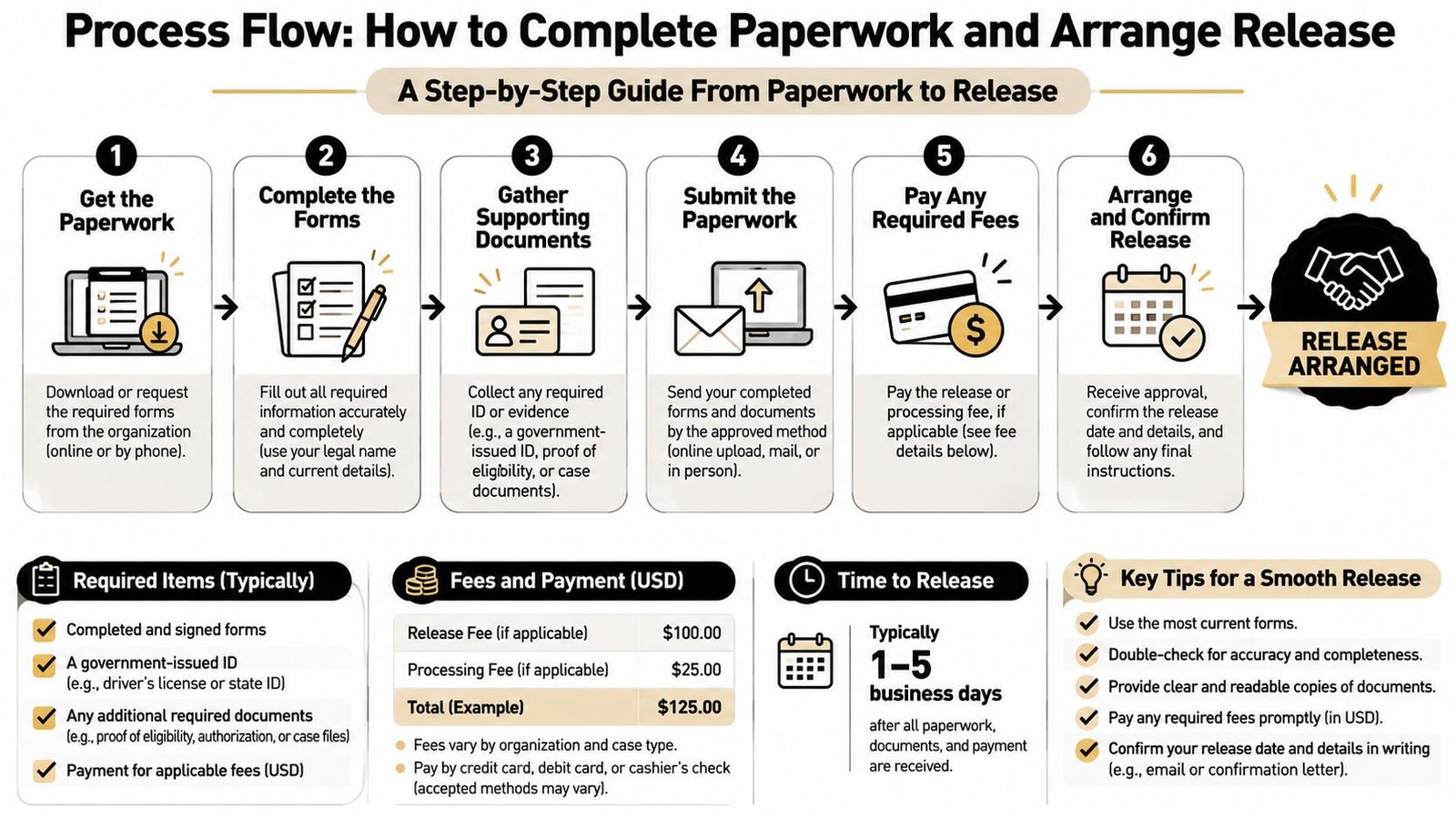
The release-process graphic gives the family a visual reference while handling these tasks.
Keep One Family Contact Responsible
Choose a family member to collect updates and pass along confirmed information. Several relatives calling separately can leave everyone working from a different version of the release plan.
Save the completed agreement and receipts somewhere the signer can access later. If a detail changes during processing, identify the change clearly rather than submitting another application with conflicting information. Remote paperwork removes unnecessary travel, not the need to read carefully and stay reachable.
What to Do After the Jail Door Opens
A fast release can still go wrong at the next hearing. Posting a bond doesn't reduce the charges, erase release conditions, or guarantee that a judge will later loosen them. The immediate job after release is to make compliance practical.
Before the drive home, locate the next hearing date, time, courthouse, and division on the paperwork. If something is missing or unclear, contact counsel or the court rather than trusting a relative's memory. A familiar courthouse isn't necessarily the correct courthouse for this case.
Put the Hearing Into a Working Plan
A court-reminder memorandum published by the California Law Revision Commission reports that independent research found automated reminders reduced missed appearances by 13–37%, and describes Colorado's reminder volume growing from roughly 56,000 to 224,000 in a month after automatic enrollment. Those findings support a practical point: reminders deserve attention alongside the bond paperwork.
Use this checklist while everyone is still together:
- Verify the hearing: Record the date, time, courthouse address, division, and any instructions about appearing remotely or in person.
- Confirm reminders: Enroll where available and check that the court has the defendant's current phone number.
- Assign transportation: Name the driver, confirm the route, and arrange a backup rather than assuming someone will be available.
- Arrange childcare: Resolve who will look after the children before the morning of court.
- Prepare the phone: Keep it charged, able to receive messages, and available to the defendant.
- Update contacts: Tell the attorney and bondsman when the defendant's address or number changes.
Don't assume a bondsman's involvement replaces the defendant's responsibility to appear. A reminder is support, not permission to ignore a hearing because no message arrived.
Before leaving the parking lot: Decide who will check the calendar and who will provide the ride. “We'll figure it out” isn't a transportation plan.
Know What to Do When Something Goes Wrong
Ask counsel in advance what to do if a notice never arrives, a hearing appears to have changed, or an emergency threatens attendance. If a date has already been missed, contact the attorney promptly for case-specific direction. Waiting to see whether a warrant appears can make the situation harder to address.
A missed appearance can lead to another arrest and consequences under the bond agreement. The cosigner may also face demands tied to the contract, so keep that person informed rather than hiding a problem.
Read the actual release paperwork alongside our explanation of conditions of bond. Keep a small folder with the bond receipt, hearing information, attorney's name, and bondsman's phone number. The goal is straightforward: when someone asks where the defendant needs to be, the answer should come from the paperwork, not a chain of text messages.
Get a Clear Quote Before You Sign
Once the court order permits a surety bond, you need a clear quote rather than a hurried promise. We provide a no-obligation quote and walk you through the application, payment, and contract so you can decide with the terms in front of you.
For bonds larger than $5,000, our fee can sometimes be reduced to 10% with an approved cosigner. That isn't automatic approval or a guarantee of a reduced rate. Let us review the situation before you budget around that possibility.
Make the Call With the Paperwork Beside You
Have the defendant's full name, date of birth, detention facility, and the bond type from the order ready. Keep any booking paperwork, case information, and release documents within reach so you can read the wording accurately.
Before ending the conversation, make sure the quote answers these questions:
- What is the premium? Request the amount in writing rather than relying on a verbal estimate.
- Are there separate permitted charges? Have each one identified.
- Is collateral required? Get a direct answer and the applicable terms.
- What must the signer complete? Identify outstanding documents so nobody mistakes an unfinished application for an arranged release.
- What happens after submission? Know who will provide updates and how the pickup contact will be notified.
We write surety bonds only, not cash-only bonds. Confirming that distinction early saves the family from preparing for a route the order doesn't allow. We can explain bail terms, but questions about challenging conditions or defending the criminal case belong with the attorney.
Use the Right Local Contact Information
You can call or text 720-984-2245 at any time, or begin through the Express Bail Bonds website. Electronic processing means a relative doesn't need to drive from jail to jail just to complete the family's paperwork.
For a case near Golden or the Jeffco jail, use our Jefferson County and Golden bail information. For Centennial or Arapahoe County, use our Centennial bail information to start with the appropriate local context.
Leave the call able to state what you're paying, whether collateral is involved, and what remains to be completed. Separately, make sure the defendant and family know who will organize attendance at the next hearing. Paying for a bond and preparing for court are different jobs, and both need a responsible person.
Express Bail Bonds offers a clear, no-obligation quote and plain-English help with the application, agreement, and remote release process. Have the defendant's details and court order ready, then visit Express Bail Bonds to clarify the costs and cosigner responsibilities before you sign.