You got the call after court should've ended. Your son, your partner, or your friend didn't show up, and now you're staring at bond paperwork wondering if you owe the full amount today. That panic is understandable, but a missed date doesn't work like an instant bill. It starts a formal clock, and what you do while that clock runs often decides the outcome.
What a Surety Bond Claim Really Is
Say court opens, the judge calls the defendant's name, and no one answers. Many families assume the full bond amount is due that afternoon. That's not how the surety bond claim process works.
A claim generally starts with a breach of a bond condition, most often a failure to appear. The court then declares the bond forfeited. Think of forfeiture as a dashboard warning light, not the engine failing. It's a serious legal step, but it isn't the same as a final judgment ordering payment.

Who Is Involved
Four roles matter, and mixing them up causes most confusion.
- Defendant, or principal: The person who must appear and follow release conditions.
- Surety: The bail agency and the insurance company backing it, which guarantee the defendant's appearance to the court.
- Court: The judge and clerk who declare forfeiture, send notice, hold hearings, and decide on judgment or relief.
- Cosigner, or indemnitor: The person who promises to repay the surety for losses if the defendant doesn't comply.
If you're new to how this guarantee is structured, our explanation of what a surety bond for jail is lays out the basic arrangement.
The sequence that follows is jurisdiction specific, but the Florida forfeiture statute shows the core pattern: notice to the surety, an opportunity to cure or contest the forfeiture, and payment or judgment if the matter isn't resolved. That pattern matters because you usually have a window to act, not a same day deadline to pay everything.
Premium Versus Face Amount
The bondsman charges a non-refundable fee based on the total bail amount. That fee, often called the premium, is what you pay for the service. It isn't the amount at risk in a claim.
The exposure in a claim is the bond's face amount, the full figure the surety promised the court. A family might pay a premium measured in hundreds or a few thousand dollars, while the guarantee behind it is much larger.
Practical rule: Ask two separate questions. What premium did we pay, and what face amount could the court pursue if forfeiture becomes judgment?
That distinction explains why agencies call quickly after a missed date. They're not trying to collect the premium again. They're trying to cure the breach before the court turns a warning stage into an enforceable debt.
Claim Deadlines Stage by Stage
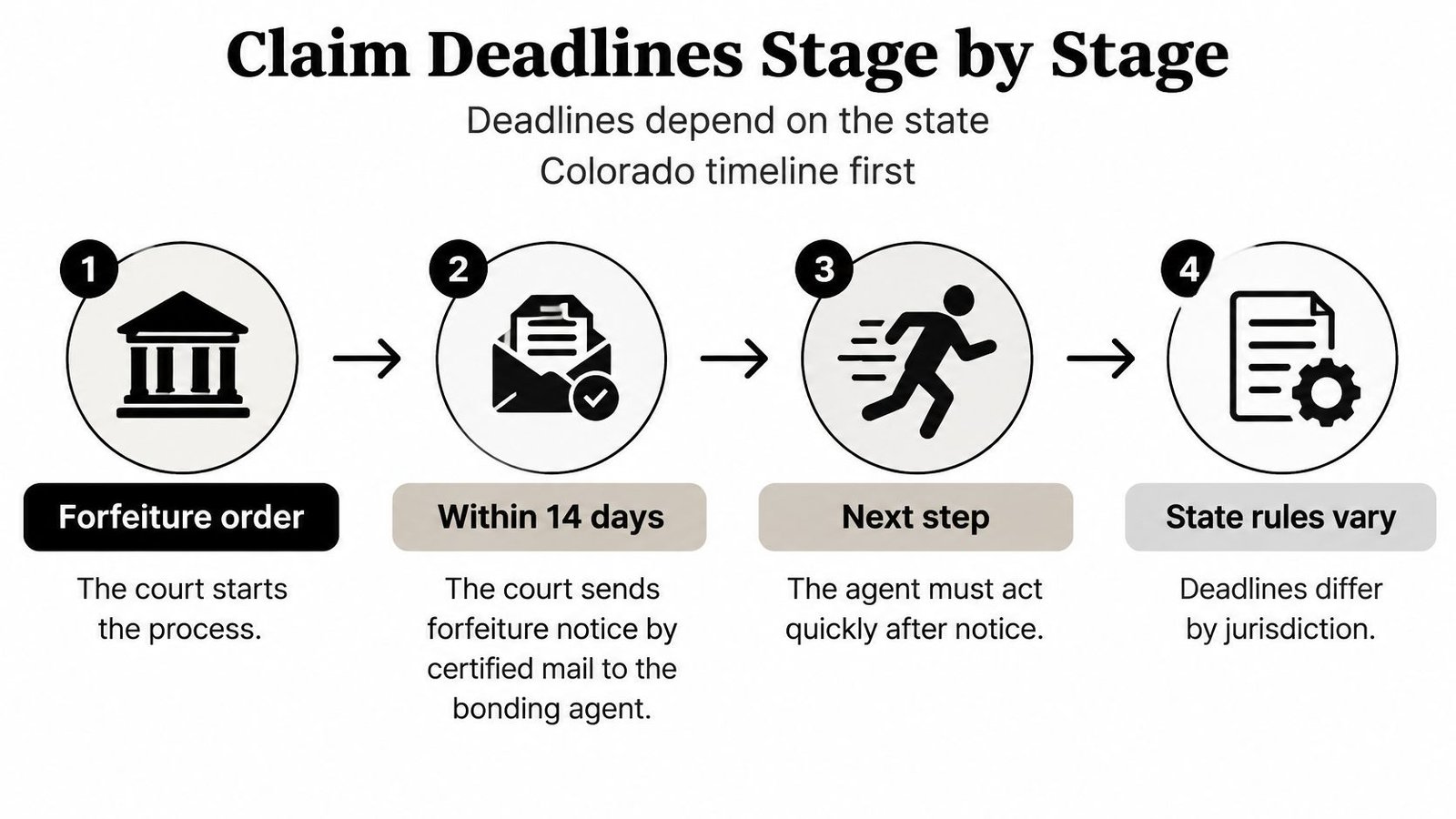
A missed court date starts a formal legal process, not an instant debt. The notice, response, and judgment stages each have their own clock, and the rules depend on where the bond was issued. Colorado's deadlines show why it matters to read the notice carefully and act on its dates.
The Colorado Clock
Under Colorado's forfeiture statute, after a forfeiture order, the bonding agent receives notice by certified mail and the bail insurance company by regular mail within 14 days after the order is entered. A compensated surety then has 14 days after receiving notice to request a show-cause hearing.
The court must set the hearing within 35 days after entry of forfeiture, or at the earliest available opportunity. Colorado also allows a 35-day period from forfeiture for the defendant to appear and surrender, or show that appearing was impossible and not the defendant's fault, before the court may enter judgment for the bond amount and court costs.
The dates measure different steps. The notice period starts from the order, the hearing-request period starts when notice arrives, and the surrender period runs from forfeiture. Missing one date does not mean a debt is instantly due, but waiting can remove an opportunity to ask the court to consider the circumstances. Read the notice and confirm the deadline with the court or a qualified professional. For a plain-language explanation of what bond forfeiture means, see our guide.
How Other States Compare
Deadlines differ by state and may depend on local court procedures. A relative's experience in another state may not apply to your case, and the notice itself may set out the next required action. Confirm the current rules with the court that issued the bond before relying on a deadline.
| Jurisdiction | Notice to surety | Surety response window | Payment or judgment window |
|---|---|---|---|
| Colorado | Within 14 days of forfeiture order, bonding agent by certified mail, insurer by regular mail | 14 days after receiving notice to request a show-cause hearing | Hearing within 35 days of forfeiture; judgment for bond amount and costs possible if there is no surrender or accepted excuse |
| Other states | Varies by state and local procedure | Varies by state and local procedure | Varies by state and local procedure |
Use the table to see what must be checked, not as a substitute for the governing rules. Calendar from the date specified in the actual notice, since using the wrong start date can shorten an already limited response window.
Cosigner Indemnity and Collateral Recovery
A missed court date does not turn immediately into a debt for the cosigner. It starts a formal process: the court may forfeit the bond, send notice, and set deadlines to respond. In Colorado, the notice and response windows described above make prompt communication important, because unresolved forfeiture can lead to judgment for the bond amount.
When you cosign, you sign an indemnity agreement promising to repay the agency for losses tied to the bond. Using a bail bondsman typically requires collateral, such as property or a cash deposit, and a co-signer with a stable income may be needed. If the defendant skips court and the cosigner cannot pay the forfeited bond amount, the agency can take possession of pledged collateral to cover its loss.
Why Approval Isn't Automatic
A cosigner's financial and contact details help the bail bond company assess whether the agreement can be honored if a claim arises. Approval typically involves a credit and background check. Companies may look for stable employment, established local residency, such as homeownership or a long-term rental history, and a decent credit score.
Those checks also matter during a short response window. A reachable cosigner can communicate promptly if the defendant misses court, while the agreement and pledged collateral define who may be responsible if the bond is forfeited and the loss is not paid.
A Worked Example
For a $20,000 bond in Colorado, the premium is typically 10% to 15%, or $2,000 to $3,000. Colorado's premium statute provides the relevant rules for premiums. The premium is the cost of arranging the bond; it is separate from the face amount at risk in a claim.
If the court forfeits the $20,000 bond and the amount remains unpaid, the exposure is the $20,000 face amount, plus any costs the court or agreement allows. The premium does not cap that potential loss.
Colorado law permits disclosed collateral to secure compliance with the bond, unpaid premium, commission or fee, and actual costs incurred from issuing the bond. Before signing, ask which specific property or deposit is pledged, what event releases it, and who confirms the release in writing. Clear answers help cosigners understand what is at stake before a claim arises.
How a Bond Ends and Gets Exonerated
A bond usually ends when the defendant attends the required court dates, follows the release conditions, and the case concludes. The court then exonerates the bond, releasing the surety from further liability under it.
Exoneration is not the same as release from jail. The bond can remain active while the court requires future appearances, and supervision conditions may continue after release. Express Bail Bonds follows up after release to confirm the defendant is out and provide guidance on court dates and bond conditions.
Other Ways a Bond Can End
Under Colorado's exoneration rules, surrender before a forfeiture judgment can release bond liability, although costs may still apply. If no judgment or court-approved extension applies, unresolved bond liability may expire after three years.
Pretrial monitoring is common in cases involving arrest warrants. That supervision is separate from financial bond liability: paying a premium does not cancel check-ins, travel limits, or other conditions set by the court. A bond and its conditions work like two tracks, one financial and one focused on the defendant's obligations.
Federal practice follows a similar principle. A court may set aside or remit all or part of a forfeiture. The surety must be exonerated when the bond condition is satisfied or the forfeiture is set aside or remitted.
| Outcome | What triggers it | Effect on the surety |
|---|---|---|
| Defendant attends every court date | Case concludes or bond condition is satisfied | Exoneration under bond terms |
| Surrender before judgment | Defendant surrenders in open court | Exoneration; costs may still apply |
| Forfeiture set aside | Surrender or justice does not require forfeiture | Forfeiture is set aside in full or in part |
| Forfeiture remitted | Court applies remission standards after judgment | All or part of the amount is reduced |
| Liability unresolved | No judgment or approved extension | May expire after three years in Colorado |
A Simple Lifecycle Checklist
- Confirm every return date: Record each date in both the defendant's and cosigner's calendars. A missed date can start a formal forfeiture process.
- Get written exoneration: Ask for confirmation that the bond is closed rather than relying on a verbal assurance.
- Ask about collateral at each outcome: Completion, surrender, and a set-aside ruling can affect when collateral is released and whether costs remain.
Why Recovery Often Falls Short and How to Document a Claim
A forfeiture order starts a legal collection process, but it does not put the full bond amount in the court's hands. Recovery can fall short, so clear records matter: a judge considering whether to set aside or remit a forfeiture needs details of what happened and what steps followed.
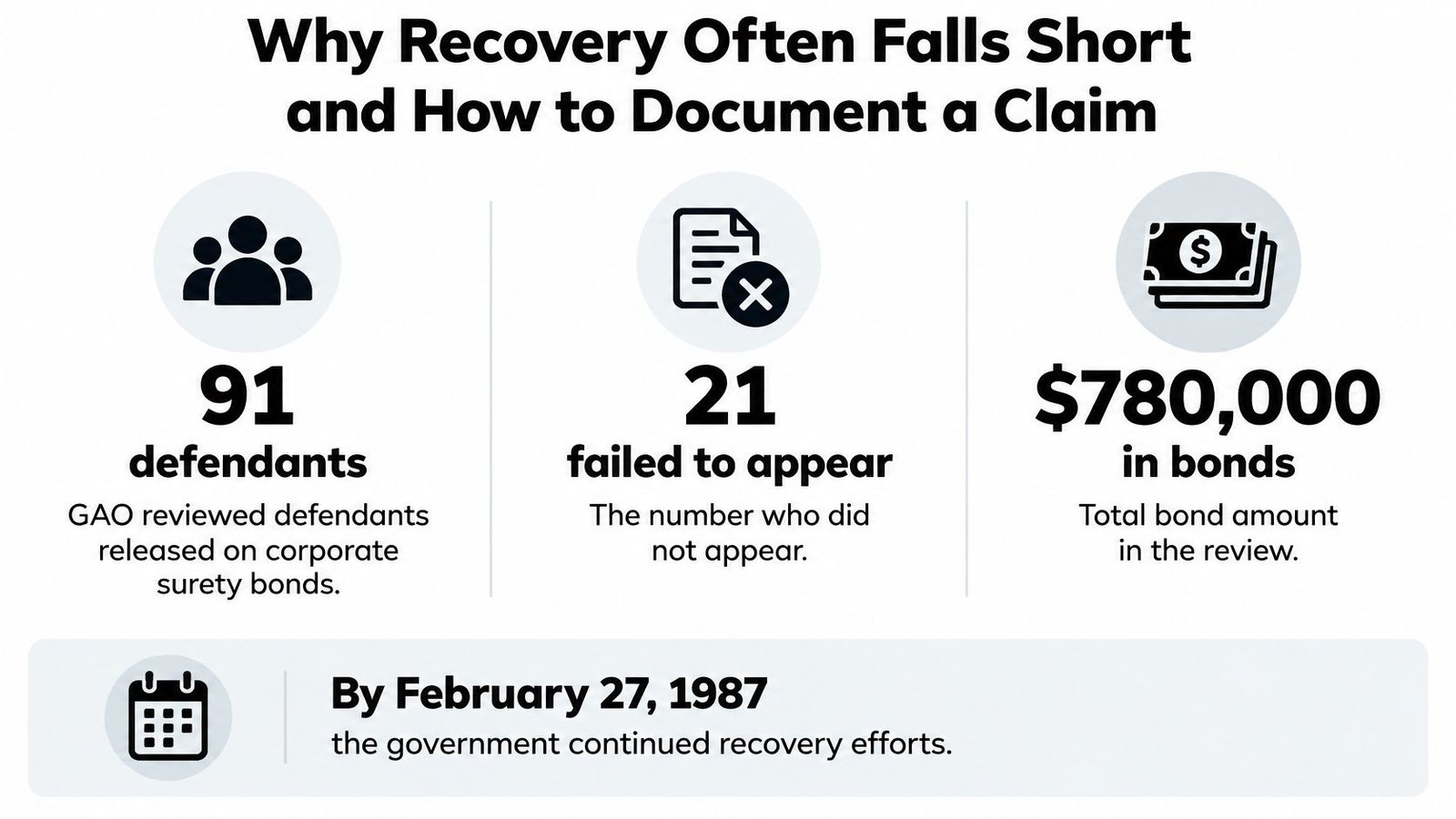
A U.S. Government Accountability Office review examined 91 defendants released on corporate surety bail bonds. 21 failed to appear, and their bonds totaled $780,000. By February 27, 1987, the government had collected only $99,500, well below the full amount associated with those forfeitures.
The figures are older, but they illustrate why an order and a completed recovery are different things. People may be difficult to locate, disputes about bail bond collateral may take time, and a defendant's return may support a request for relief that reduces the amount ultimately paid.
A missed court date also does not by itself establish that the defendant will never return. The court can consider what happened after the missed appearance, including whether the defendant is brought back. That is why a dated record of communications and events is more useful than a broad statement that efforts were made.
Build the Claim File Early
Start a paper or digital folder when you learn of the missed appearance. Keep the details together so the timeline is easy to follow.
- Identity and bond identifiers: Record the defendant's full legal name, bond number, court, and case number.
- Appearance history: List each court date, whether the defendant appeared, and any continuances.
- Communications log: Note calls and texts, including dates, times, who you reached, and what they said.
- Surrender details: If surrender occurs, record the date, location, transporting agency, and booking confirmation.
- Circumstances affecting culpability: Keep records such as hospital documents, proof of jail custody, or evidence that notice went to the wrong address.
These records can help counsel explain the timeline and support a request for a set-aside or remission hearing. They also clarify what loss occurred, if any, which may matter when collateral is involved.
A prompt, documented effort gives the court specific facts to consider, unlike weeks of silence followed by an explanation without supporting records.
Share copies rather than originals. If a detail cannot be confirmed with a record, write down who provided it and when, while the information is fresh.
How Express Bail Bonds Prevents and Handles Claims
A surety bond begins with a few clear steps: initial contact, paperwork with details about the detained person and charges, and posting bail with the court. After the paperwork is signed and the premium is paid, a licensed agent goes to the jail and posts the bond with the court clerk.
Before posting, Express Bail Bonds typically reviews a cosigner's employment, residency, and credit. A cosigner with stable contact details can help keep important updates from being missed. The review also clarifies who can be reached if a court date changes.
Once the defendant is released, the team follows up to confirm release and explain court-date requirements and bond conditions. Express Bail Bonds can also help clients compile information for a bail hearing, so relevant names, dates, and conditions are organized.
Habits That Prevent Most Claims
- Calendar reminders in two places: Set alerts one week before, one day before, and on the morning of court.
- Current contact details: Report a new phone number, address, or employer to the bond agency promptly.
- Cosigner visibility: Make sure the cosigner knows each court date, not only the release date.
- Early warning calls: If illness, transportation, or a work conflict could affect attendance, contact the appropriate people before court.
If a claim does arise, defense counsel is the right contact for surrender options and the show cause timeline, and the cosigner should be ready to share current contact details and court information. Local procedures can differ by facility and court. Families near Golden can consult the Jefferson County, Golden, Colorado service page, while families in the Arapahoe County area can visit the bail bonds in Centennial page. For statewide help, contact Express Bail Bonds with the court, case number, and next date being tracked.
Good records and working contact details make it easier to respond when plans change. They also help families act promptly when a court notice starts a formal response period.
Act Within 14 Days of a Forfeiture Notice
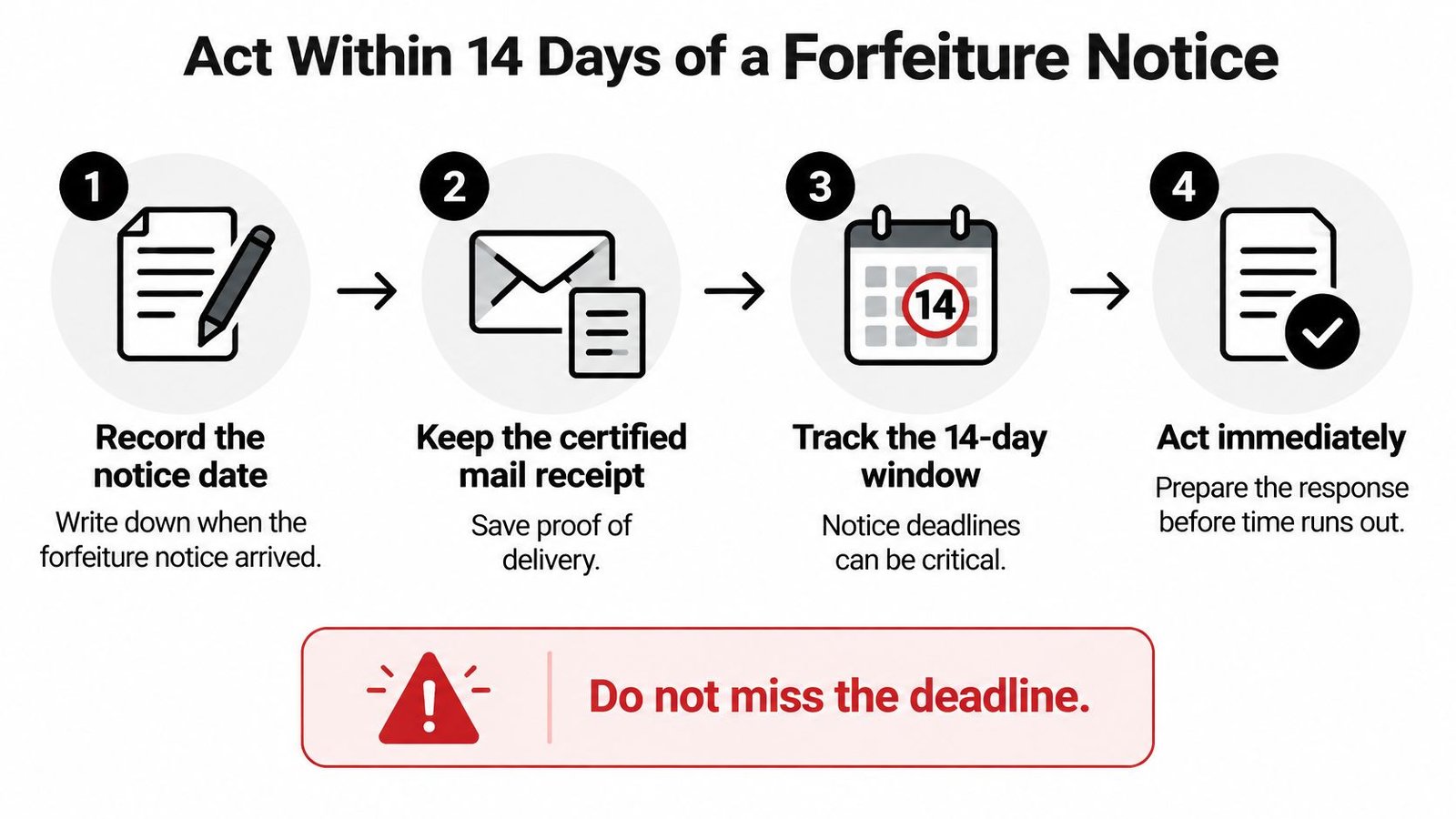
If a forfeiture notice arrives after a missed court date, the legal clock has started, but the bond does not become an instant debt. The notice creates a short window for the compensated surety, usually the bail agent, to ask the court for a show cause hearing. Families should act promptly and contact the agent rather than assume they can file that request themselves.
Your First 14 Days, Step by Step
- Record when the notice arrived. Keep the notice and any delivery receipt. The date matters because it starts the surety's hearing-request period, and clear records help everyone track the same deadline.
- Find the case and bond details. Have the forfeiture order, case number, and bond number ready when speaking with the court, defense counsel, or bail agent.
- Contact the defendant and cosigner promptly. Confirm the defendant's location and learn why the court date was missed. Those facts help the people involved decide what to do next.
- Speak with defense counsel about possible filings or surrender. Counsel can assess whether a voluntary surrender, a motion to set aside a bond forfeiture, or another legal step fits the circumstances.
- Contact your bail agent right away. The compensated surety has 14 days after receiving notice to request the show cause hearing. Also calendar the 35-day mark from forfeiture, so the outer window does not come as a surprise.
- Organize relevant records. Gather identity details, court appearance history, dated communications, surrender information, and any documents that explain why the defendant could not appear.
- Check the bond and collateral terms in writing. Confirm what was pledged, what costs may apply, and what document will show that the bond has been released.
A missed date can involve several separate deadlines, and each serves a different purpose. The agent handles the surety's hearing request; the family can help by sharing accurate information and keeping the paperwork together. Express Bail Bonds handles paperwork and court coordination for customers, and can explain the practical steps tied to the bond.
Act as soon as the notice arrives. Contacting the agent promptly gives the compensated surety time to consider its 14-day hearing request, while tracking the 35-day mark keeps the later window visible. Do not wait for a collection demand before asking what the notice requires.
You can call or text Express Bail Bonds at 720-984-2245, available 24/7, or begin with an online inquiry. For advice about surrender, extradition, or a motion in a particular court, contact defense counsel. This information is general and is not legal advice for a specific case.
If your family has received a forfeiture notice, gather the notice and bond paperwork before contacting an agent. The details help clarify the deadline and the next practical step.