
A late-night call hits, the name is only half remembered, and now you've got a phone in one hand and six browser tabs in the other. One tab shows a jail roster, another shows a court site, and none of them seems to agree with the others. That's usually where families get stuck, not because the record is hidden, but because arrest information is split across agencies and each one shows a different slice of the same situation.
In Colorado, that confusion is normal. A jail page can tell you someone was booked, but the county court index is often where you find charges, hearing dates, and the next practical step. If you're trying to search arrest records for a loved one, the fastest path isn't a broad internet search, it's a county-by-county workflow that starts with the most likely jail and ends with the case record that tells you what happens next.
Why Searching Arrest Records Feels Harder Than It Should
The hardest part usually isn't the search box. It's the fact that arrest records live in pieces, not in one clean national file. The FBI's Crime Data Explorer is an important public reference point for aggregated crime and arrest-related data, but it isn't built as a universal individual arrest lookup, and state systems like Texas DPS and California DOJ public-record channels show how access is often split across state repositories, local agencies, and request systems (FBI Crime Data Explorer).
That fragmentation creates the feeling that every site is saying something slightly different. One page may show a booking, another a court filing, and a third may already have rotated the name off the public view. The mismatch is also why a name-only search so often produces noise, especially when the same surname appears on multiple records.
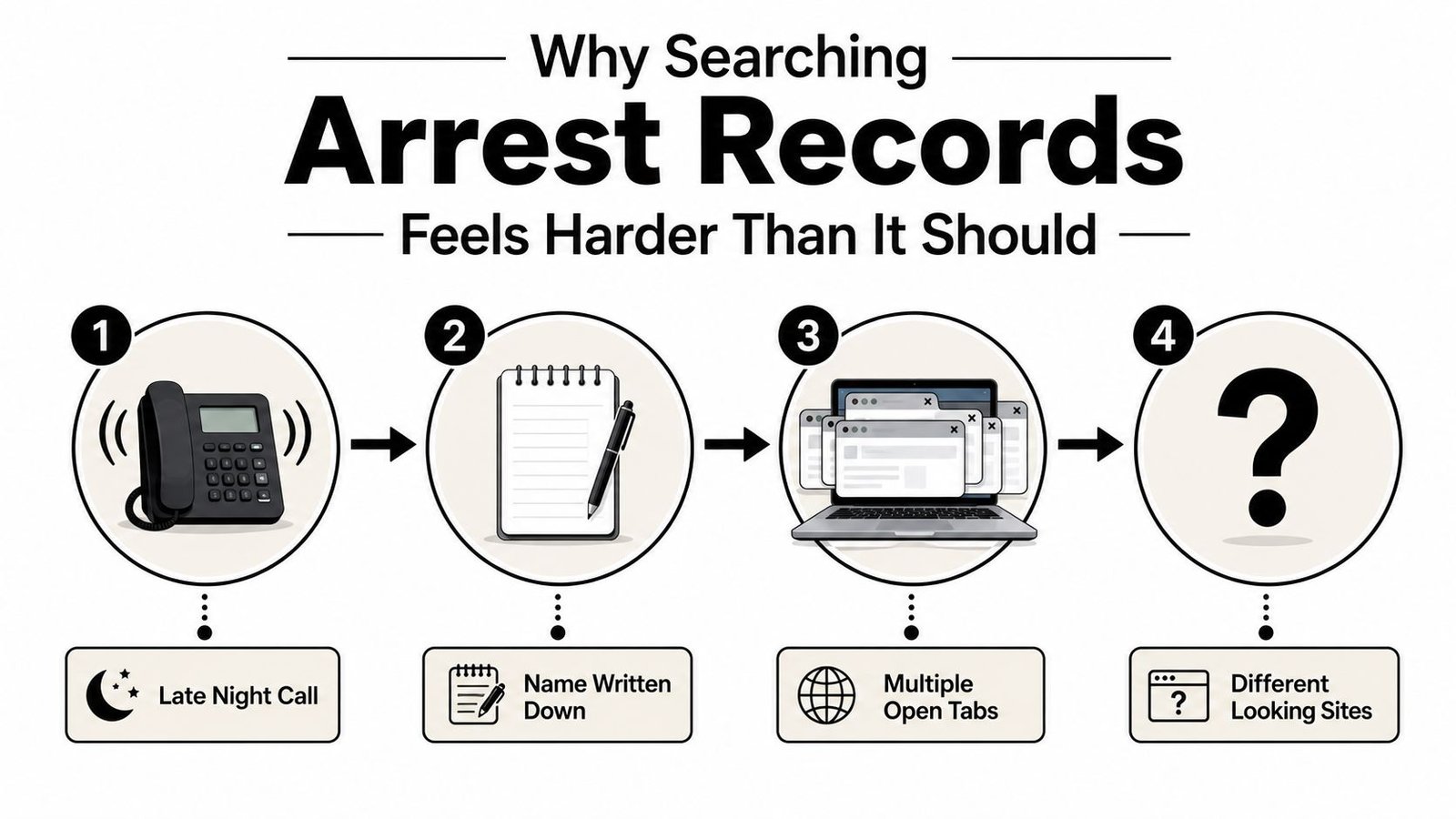
A good rule from the field is simple. Start with the county or state where the arrest likely happened, then move through the jail roster, county court records, and state repository in that order. If you need a starting point for Colorado county contacts, the jail directory can save a lot of dead-end searching, especially when a family member only knows the arrest happened somewhere around Denver or one of the metro counties, county jail phone numbers.
| Stage | Where the record lives | What it shows |
|---|---|---|
| Booking moment | Jail roster or sheriff inmate locator | Current custody, booking status, sometimes a photo and booking number |
| Case follow-up | County court index or clerk portal | Charges, hearing dates, docket entries, disposition |
| Historical or formal record | State repository or request system | Broader criminal history, subject to state access rules |
Identifying the Right County Before You Search
The first move is not typing a name into Google. It's narrowing down which county likely made the arrest. In Colorado, that matters because metro areas don't run on one shared county jail system, and a wrong guess can send you to a dead end fast.
Start with the location of the incident if you know it. If the stop, call, or pickup happened near a specific city, that usually points to the county with booking authority. If a deputy, officer, or dispatcher told the family where the person was taken, that clue is gold, because the jail facility is often tied to the county rather than the city name people remember.
Practical rule: If you can name the county, you've already cut the search time in half. If you can name the jail, you've usually cut it further.
When the county is unclear, work backward from the available details. A booking number, the arresting agency, or even the time of arrest can help you decide between adjacent counties. That's especially useful around the Denver metro, where the difference between one county and the next changes which portal you need to open.
If the arrest happened days or weeks ago and the jail roster isn't obvious, don't waste the whole night on broad searches. Move to the county court side sooner than you think.
That's also where a county-to-facility shortcut helps. A person told to a family member as “being at the county jail” is more useful than a vague city reference, because the facility name often matches the search portal you need. A basic county jail lookup page can help you confirm the right detention center before you start chasing the wrong records, county jail lookup.
When the arrest location is unknown, or the record is older, the state repository can be the better starting point. New York's fingerprint-based process is a good reminder that some official histories aren't designed for casual name searches at all, they're built around identity verification and subject access (New York record review process).
Using Colorado Jail Rosters and Sheriff Inmate Locators
Colorado families usually start here because this is the part that answers the most urgent question, is the person in custody right now? Jail rosters and sheriff locators are the fastest public tools when you already have a name, a county, or a jail name. In Jefferson County, Denver County, Arapahoe County, El Paso County, Douglas County, and Weld County, the search experience is usually built around the same core idea, enter identifying details, then check whether the person appears as an active inmate or a recent booking.
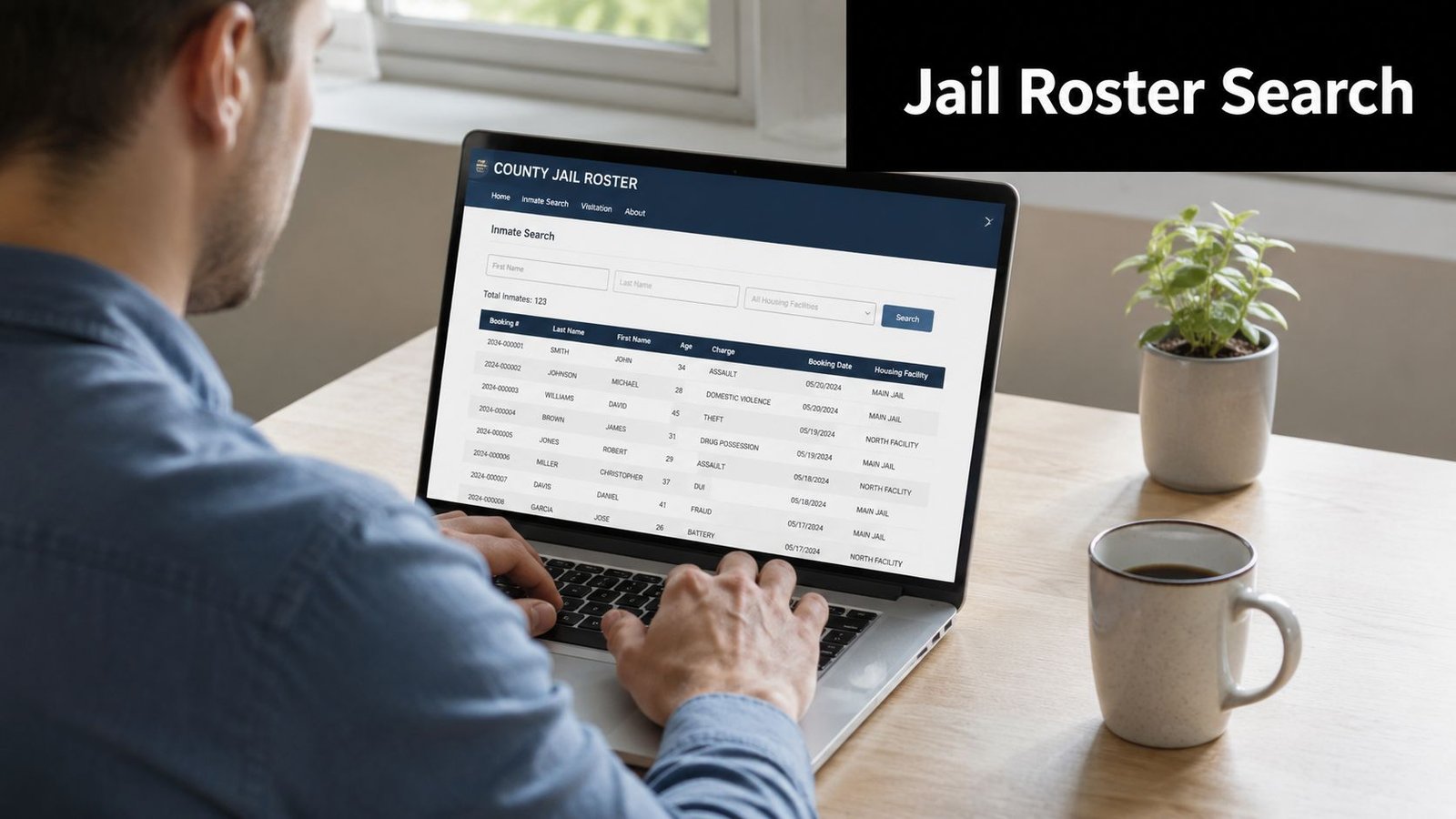
The most useful roster fields are usually the simplest ones. Full legal name, sometimes date of birth, and any booking number or custody note if you have it. A good inmate locator can also show a mugshot, booking date, release status, and sometimes a short custody note, which is enough to tell whether you're dealing with a current inmate or someone who already moved out of the jail system.
If you need a Colorado-specific shortcut, the county pages on Express Bail Bonds track the detention systems families use most often. That matters because a working search in Jefferson County won't help you in Arapahoe, and Denver's county system isn't the same as El Paso's. The portals aren't identical, and that's exactly why a county-specific starting point saves time.
The practical habit that pays off is checking rosters at off-peak hours, then screenshotting the result before it changes. Public inmate pages do rotate, and recent releases often disappear from the most visible view before the family has had time to call back. Avoid guessing on middle names unless you know them, because a bad middle initial can hide the correct result under a pile of near-matches.
A video walkthrough can help when a portal feels clunky or the jail search fields are unfamiliar.
If the roster shows a booking but no clear release update, don't assume that means the person is still sitting in the jail. Sometimes the system lags, and sometimes the public page only shows the booking entry while the release happened later. The roster is a starting point, not the final word.
Search Inputs That Actually Improve Accuracy
A lot of bad search results come from one bad assumption, that a name alone is enough. It isn't. The more exact the identifiers, the less likely you are to confuse two people with the same name, and that's the central reason multi-identifier matching works better than broad searching.
Texas DPS is a useful model here because its criminal-history interface explicitly supports first and last name, plus optional middle or maiden name and complete or partial date of birth (Texas DPS criminal history search). That structure matters because it narrows the candidate list without forcing you to know every detail upfront. In practice, the best searches start broad enough to get a result, then tighten with another identifier before anyone treats the hit as confirmed.
| Input | Reliability | When to use it |
|---|---|---|
| Booking number | Very high | When a jail or officer gave you the number |
| Case number | Very high | When you've moved into court records |
| Full legal name plus date of birth | High | When you know the person well and the system accepts both |
| Full legal name only | Medium to low | When you're just starting, or the system offers no other fields |
| Middle name or maiden name | Helpful | When the first search returns too many similar names |
A common problem in county systems is formatting. Some portals expect surname-first entry, so LASTNAME,FIRSTNAME may work better than a natural-language name order. If the system allows partial birth dates, use them carefully, because they help only when the rest of the data is already strong.
Search rule from the counter: Never treat a single-name hit as confirmed until a second identifier matches, too.
That second identifier can be the booking date, arrest date, or case number. If you're checking whether someone has an active warrant or a custody issue tied to an arrest, matching the person across more than one record is the difference between a real lead and a false positive, how to check if someone has a warrant.
Moving From Jail Records to County Court Records
The jail roster answers one question, where is the person now. The county court record answers the one families usually care about next, what happens next. That's why a booking record by itself is incomplete, even if it looks official.
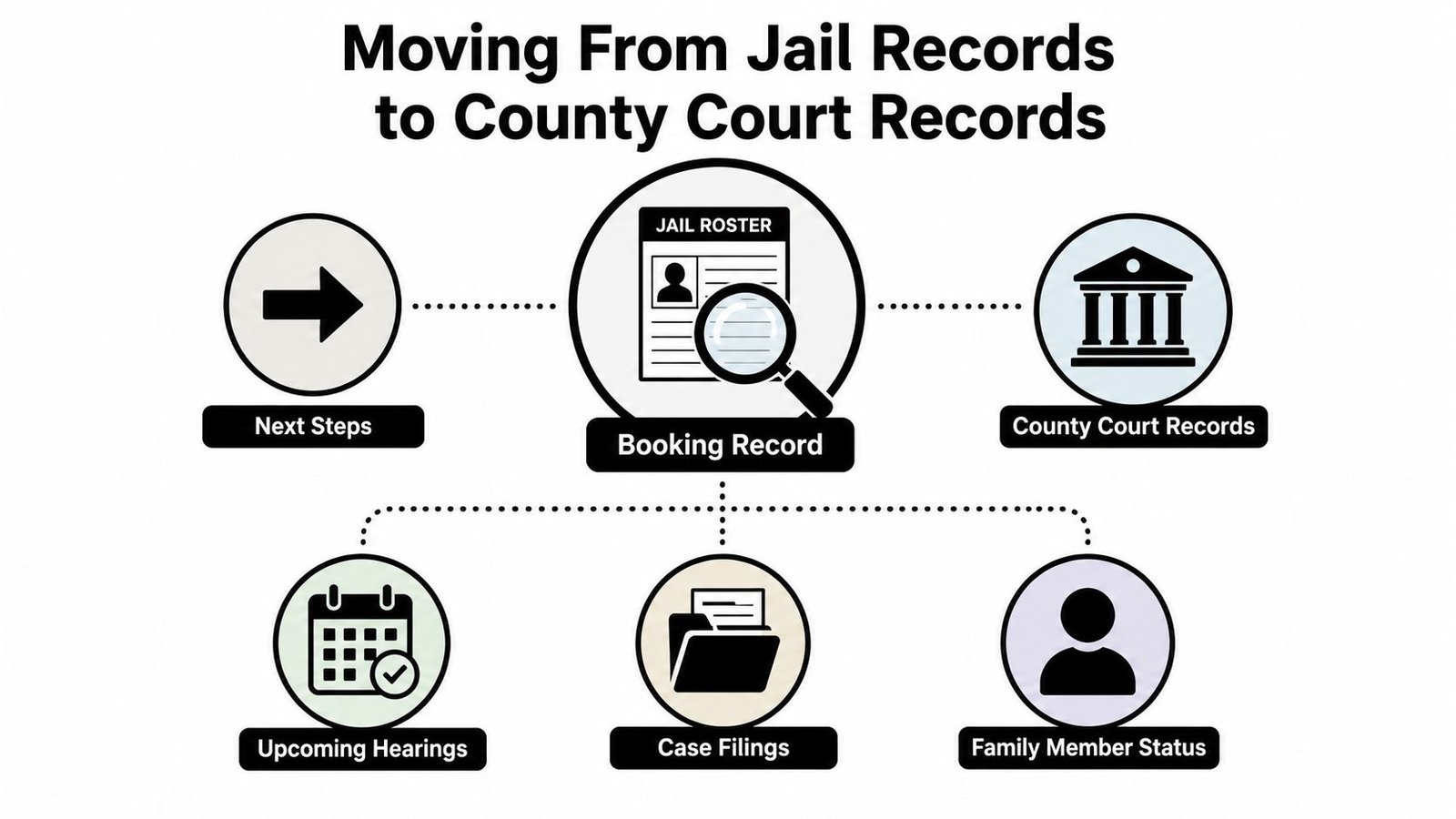
Once you have the name or booking number, move into the county clerk or court portal and search by party name first, then by case number if you have it. The case index usually shows the docket entry, hearing dates, and filing status. That's where you can tell whether the arrest turned into a charge, whether a bond was set, and whether there's a court date coming up.
A booking is not the same as a filed charge, and a filed charge is not the same as a conviction. That distinction matters because people often mistake a jail hit for the final legal outcome. In reality, the court case is often the more authoritative record for what the system has done with the arrest, especially once the person leaves the jail and the booking page goes stale.
If the docket shows a hearing date, that date is the next practical milestone. If it shows a disposition entry, that's the point where you need to read carefully, because the case may have moved, been amended, or resolved in a way the jail page never explained. Families who only stop at the roster often miss this second layer and end up calling the jail for something the clerk's office already has.
A short, reliable habit helps here. Check the case number, confirm the spelling of the name, then compare the booking date against the court filing date. If the numbers and dates line up, you're likely looking at the same person across systems.
Privacy, Sealing, and What an Arrest Record Actually Means
An arrest record is not the same thing as a conviction, and in everyday life that difference gets blurred too often. A booking record can show that someone was taken into custody, but the court outcome may be very different, and that's why public search results should never be treated as the entire story. For Colorado readers who want a broader picture of the state's public-record posture, the overview on Colorado arrest records is a useful starting point.
Colorado also has sealing and expungement paths for certain cases that didn't end in conviction, so the public visibility of a record can change over time. That doesn't mean a record never existed, it means access to it can be limited depending on the outcome and the legal process that followed. The key point is that public arrest data is informational, not a substitute for legal advice.
A public record can tell you what was booked. It can't always tell you what a lawyer can do with that record.
The subject of the record is often the only person who can request a full official history in many states, and New York's fingerprint-based process is a clear example of how identity verification can be required for official review (New York record review process). That's one reason employers, landlords, and background check companies have to follow their own rules when they use arrest data. The Fair Credit Reporting Act can come into play when a consumer report is involved, so how a record is used matters as much as what the record says.
If the arrest touched a job application, housing issue, or a broader background check, the record's legal effect may be more important than the public page itself. In that situation, a lawyer is the right call. A bail agent can help with custody and release questions, but a sealed-record question or a dispute over use of the record belongs with counsel.
Turning a Search Result Into the Right Next Step
When the search works, you usually end up in one of three places. The person is still in custody, the person was released, or the public trail is too thin to confirm the match. Each outcome points to a different next move.
| What you found | What it means | Right next step |
|---|---|---|
| Current inmate on the roster | The person is still booked | Call the jail, confirm bond status, and start release planning |
| Recent release with a court case | Custody may be over, but the case is active | Check the court docket for hearing dates and filing status |
| No match or unclear result | The record may be in another county or not yet posted | Recheck the likely county, then move to the court index or repository |
If the person is in custody and bail is set, a Colorado bail bondsman can help with the release process. If the search shows a court date but no clear custody status, a quick confirmation call to the jail or clerk can save hours. If the record appears to have been published online in a way that's now creating a problem, a practical cleanup resource like step-by-step mugshot removal can help you understand the public-facing side of the issue.
Express Bail Bonds is a Colorado bail bond agency that handles surety bonds statewide, and it's built for families who need to move from a search result to release paperwork without spending all night at the detention center. When the record points to Jefferson County or Centennial, the county-specific pages can help you route the next call faster than starting over from scratch, Jefferson County Golden Colorado, Bail Bonds Centennial.
If you've found a booking, a court date, or nothing at all, don't sit on it overnight. Call Express Bail Bonds, compare the jail and court details you've already collected, and get the next step moving while the information is still fresh. Visit Express Bail Bonds now, then use the county pages to narrow the search and get help with release as quickly as possible.