
That phone call usually comes fast and with very little detail. Someone says they've been arrested, they're at jail, and they need help. Your mind jumps straight to the same questions every family asks. Where are they? What happens next? How do I get them out?
If your loved one is at Montrose County Jail, the best move is to slow the situation down and work in order. Panic causes mistakes. Clear information gets people home faster.
Navigating Your First Steps After an Arrest in Montrose
The first thing to know is that you're dealing with a jail that serves a real working community, not a tiny outpost with no activity. In 2025, approximately 44,600 people lived in Montrose County, CO, making it the 17th-most populous county in Colorado, which gives useful context for the scale of local detention operations, according to USAFacts data on Montrose County population.
That matters because arrests, booking delays, and release timing rarely feel personal from the outside. Families often assume silence means something has gone wrong. Most of the time, it means the system is moving at its own pace.
What to do first
Use this order:
- Confirm the person's full legal name. Nicknames create avoidable confusion.
- Find out where the arrest happened. City police and county deputies can book into different systems before transfer.
- Wait for booking to begin. If the arrest just happened, the person may not appear immediately.
- Write down every detail from the call. Charges mentioned on the phone are often incomplete or wrong.
- Stay reachable. You may get a second call with better information.
A lot of families make the same mistake early. They start calling everyone they know before they've pinned down the basics. That burns time and usually spreads bad information.
Practical rule: Start with identity, location, and booking status. Everything else depends on those three facts.
If you're helping someone for the first time, it also helps to review a plain-language arrest checklist like what to do when arrested. It gives you a usable frame when the details are still coming in.
What helps and what doesn't
What helps: staying organized, keeping your phone close, and preparing for a few hours of uncertainty.
What doesn't: arguing with staff, assuming the first charge description is final, or promising the arrested person an exact release time before you know bond status.
The family member who stays calm becomes the one everyone relies on. Right now, that's your job.
The First 24 Hours What Happens During Booking
Booking is the stage that frustrates families most because it feels slow from the outside and busy from the inside. Montrose County Jail is located at 1200 North Grand Avenue, Montrose, CO 81401, and maintains an average daily inmate population of 155 individuals, as noted by the Montrose County Sheriff's Office information. A jail working at that level has routines, security checks, and intake demands that don't stop just because one family needs answers quickly.
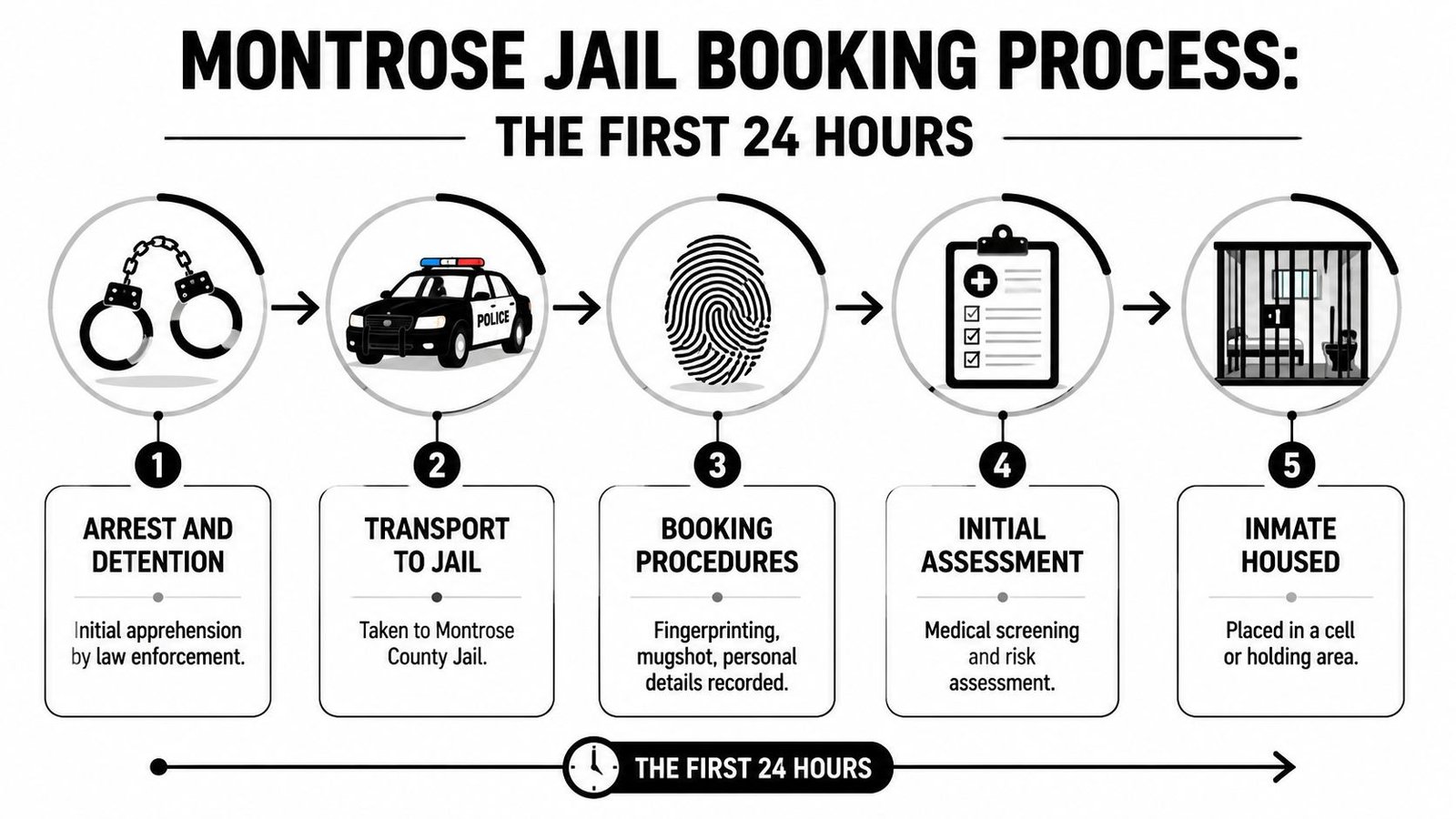
What your loved one usually goes through
After arrest, the person is transported to the jail. Once there, staff begin intake. That usually includes identity confirmation, fingerprints, mugshot, personal property inventory, and screening questions.
The medical and safety screening matters more than most families realize. Staff need to know if the person has health concerns, medication issues, intoxication concerns, or housing risks before placement.
Here's the basic flow:
- Arrival and handoff: The arresting agency transfers custody to jail staff.
- Identification work: Fingerprints, name verification, and photograph are typically completed during intake.
- Property collection: Personal items are logged and stored.
- Initial screening: Staff ask questions about health, safety, and classification.
- Housing assignment: The person is placed in a holding area or housing unit.
Why booking takes longer than people expect
Families often assume jail staff can answer everything right away. They usually can't until intake is complete enough for the person to appear in the system. If several arrests come in close together, the wait can stretch.
A common mistake is calling every few minutes and expecting a different result. A better approach is to check periodically and prepare your next move while intake finishes. This overview of how long booking takes in jail can help you gauge what's normal and what isn't.
Booking delays don't always signal a problem. They often mean staff are still processing the person safely and correctly.
What to do during that waiting window
Use the time well:
- Gather ID details: Full name, date of birth, and spelling.
- Prepare medical information: If they need medication, have that ready to report through proper channels.
- Stop guessing about bond: Bond often isn't clear at the roadside arrest stage.
- Keep one family contact point: Too many callers create confusion.
This part feels endless when you're waiting. In practice, it's the stage where order begins to replace uncertainty.
How to Find an Inmate and Understand Their Charges
Once booking moves far enough along, your next job is simple. Confirm the person is in custody and understand what the jail record is showing. Don't rely on what was said in a rushed phone call.
Start with identification, not assumptions
Use the person's full legal name first. If available, add their date of birth. That helps separate similar names and reduces the chance you follow the wrong record.
If you're checking public listings or need help narrowing results, an inmate locator tool can help you organize the search before you start making calls. That's especially useful when a family is trying to track someone across city and county agencies.
What the listing usually tells you
Most records will answer four practical questions:
- Is the person booked in
- What charges are listed
- Whether a bond amount appears
- What the current custody status looks like
Charge language can be confusing. Jail systems often use abbreviations, short labels, and internal wording that sounds harsher or stranger than plain English. Don't overreact to the formatting. Focus on the category of charge and whether the case appears bondable.
How to read status without overreading it
A status line is not the whole story. It may show the person is held, awaiting court action, or still in processing. Sometimes a bond amount appears quickly. Sometimes it doesn't.
Use this approach:
- Read the charge title carefully. The wording may be abbreviated.
- Look for multiple counts. A person may have more than one listed matter.
- Check whether bond is posted, set, or unavailable.
- Write down the case details exactly as shown.
If the record uses unfamiliar legal shorthand, pause before you interpret it. Families often create unnecessary panic by turning abbreviations into worst-case scenarios.
Common misunderstandings
“No bond shown” doesn't always mean no release is possible. It can mean the court hasn't acted yet, the listing hasn't updated, or the case needs another step.
A listed charge isn't a conviction. At this stage, you're reading an accusation and a custody record.
The first record may change. Charges can be amended, added, reduced, or reorganized as the case moves.
The practical goal here isn't mastering legal theory. It's getting accurate information so you can make the next decision without wasting time.
Posting Bail and Securing a Fast Release
Bail decisions come down to one hard question. Are you going to put up the full amount directly, or are you going to use a surety bond?
For most families, the answer depends on speed, cash flow, and how much risk they can realistically carry in the middle of an emergency.

Paying cash directly
Cash bond sounds straightforward until you're the one trying to do it. You may need the full amount available immediately. You also need to follow the court or jail's accepted process, payment method rules, and timing requirements.
That's where families get stuck. They assume access to the money is the same thing as a practical release plan. It often isn't. If the amount is large, tying up that much cash can create another problem right behind the first one.
Using a surety bond
A surety bond is often the more workable option because it shifts the problem from “Can we cover the full amount today?” to “Can we qualify and complete the bond paperwork correctly?” The process still matters, but it's more realistic for many households.
If you need a plain-language breakdown of the steps, how to bail out of jail lays out the mechanics clearly.
Here's the practical comparison:
| Option | What families usually face |
|---|---|
| Cash bond | Full amount tied up, strict payment logistics, and less flexibility |
| Surety bond | Application process, cosigner responsibility, and release coordination |
| Personal recognizance release | Possible in some cases, but not something a family can force |
A related concept worth understanding is pretrial release. If you want a broader explanation of how courts sometimes allow release without the usual bond structure, this guide on what is pretrial release in Florida is useful because the underlying idea is similar even though procedures vary by jurisdiction.
Why bond decisions vary
Release isn't always about money alone. Courts look at the charge, prior history, community ties, and whether they believe the person will appear.
There's also a broader trend worth noting. Courts across the country are increasingly using lower bonds and personal recognizance releases to reduce jail populations, a trend that may also influence release practices in Montrose County Jail, based on the Montrose County Sheriff's Office post discussing lower bonds and recognizance release trends.
Lower bonds can help, but they don't eliminate the need for fast action. A smaller bond still keeps someone in custody until the release process is actually completed.
What works best in real cases
Families do best when they stop chasing the “perfect” option and choose the one they can execute cleanly. Delays usually come from indecision, missing information, or waiting for someone else to step in.
The strongest release plan usually has these traits:
- One decision-maker: Too many relatives debating the same issue slows everything down.
- Accurate case details: Wrong case numbers and wrong names create avoidable setbacks.
- A realistic payment plan: Don't commit to a path you can't complete that day.
- Immediate attention to paperwork: Fast signatures matter.
The point isn't to win a philosophical argument about bail. It's to get the person released while protecting the family from unnecessary financial strain.
Visitation Mail and Inmate Phone Calls
After the immediate release issue, the next concern is usually contact. Families want to know when they can visit, what they can mail, and how calls work. Small mistakes in these details create big frustration.
Keep communication simple and rule-based
Every jail has procedures for visitation, incoming mail, and phone systems. Those rules can change, and staff expect people to follow the current version, not what a cousin remembers from another county.
The safest approach is to verify details before you act, especially for visits and property-related communication.
| Service | Details |
|---|---|
| Visitation | Confirm scheduling requirements and current approval procedures with the jail before showing up. |
| Use the inmate's full legal name and complete jail address exactly as instructed by the facility. | |
| Phone calls | Expect a controlled system with collect or prepaid calling options, depending on the provider in use. |
| Account setup | If prepaid calls are allowed, follow the provider's account steps carefully and double-check the phone number entered. |
Common communication problems
Mail gets rejected when families add extras the jail doesn't allow. Visits get denied when names don't match approved identification. Calls get missed when relatives ignore unfamiliar numbers or fail to fund the right kind of account.
If you're trying to understand the practical side of jail calling systems, how to receive phone calls from jail gives a useful overview of what to expect.
Important: Never assume another Colorado jail uses the same visitation or mail rules as Montrose County Jail. Verify first.
Best practices for families
- For visits: Bring valid ID, arrive early, and dress conservatively.
- For mail: Keep it plain unless the jail specifically allows more.
- For phone calls: Answer unknown numbers during the first few days after booking.
- For children and older relatives: Explain that call timing can be irregular and short.
A missed jail call is common. A second missed call usually means the inmate may stop trying that number and call someone else.
The families who stay connected do one thing well. They follow directions exactly, even when the rules feel picky.
Understanding the Release Process and Court Dates
Posting bond feels like the finish line. It isn't. It's the point where custody starts to end and legal responsibility starts to matter more.
What happens after bond is posted
Once the bond is accepted, jail staff still have work to do before the person walks out. They must verify the bond, complete release paperwork, clear holds if any exist, and process the inmate out of custody.
That delay is normal. Families often hear “bond posted” and assume pickup should happen immediately. In practice, there can still be a wait while the jail finishes its side of the release.
The first priorities after release
When your loved one gets out, focus on these items right away:
- Confirm the next court date
- Read every release condition
- Store paperwork in one place
- Avoid new arrests or violations
- Make a transportation plan for court
The biggest post-release problem I see in these situations is simple. People relax too much after getting out and miss the obligations attached to their freedom.
Release from jail is temporary freedom under conditions, not the end of the case.
Why compliance matters so much
Families sometimes ask whether it really matters if someone misses one court appearance or ignores a condition they think is minor. Yes, it matters. Small failures become custody problems fast.
That risk is even more serious when families have concerns about jail safety. Gaps in public information regarding inmate mistreatment and excessive force lawsuits at Montrose County Jail, including a recent lawsuit alleging systemic abuse, highlight a critical unreported concern for families seeking to understand real risks and the importance of a swift release, as discussed in this report on the recent lawsuit involving alleged systemic abuse.
That doesn't mean panic is useful. It means prevention is. The smartest move after release is to stay out, stay organized, and show up.
A good post-release routine
Same day: eat, rest, review paperwork.
Next day: call the attorney if there is one, calendar every date, and make sure all phone numbers on file are current.
Ongoing: avoid contact that violates conditions, keep proof of compliance, and treat every court date as mandatory unless the court says otherwise in writing.
Missing court is one of the fastest ways to turn a successful release into a second arrest.
Frequently Asked Questions About Montrose County Jail
What if the inmate has medication or a health condition
Tell the jail promptly through the proper contact channel and be precise. Use the person's full legal name and explain the condition clearly. Don't assume that sending medication with a relative means staff can accept it.
Medical issues should be raised early because intake decisions often turn on what staff know at the time they classify and house the inmate.
Can I drop off clothes, glasses, or personal property
Sometimes families can, sometimes they can't, and the answer often depends on the item and current jail policy. Eyeglasses may be treated differently from clothing. Medication has its own handling rules. Never drive over with a bag of items until you've confirmed what the jail will accept and how.
The practical mistake here is showing up with good intentions and no approval. That usually ends with the property going back home with you.
What if I can't find clear information online
That's common. Jail information online is often fragmented, delayed, or written for internal use rather than families. When records are unclear, work from verified basics. Full name, booking status, charge listing, bond status, and court setting.
Write down what you know instead of trying to hold it all in your head. Good notes beat confident guessing every time.
Does the historic Montrose County Jail affect current inmates
No. Despite the city awarding $34,862 for restoration planning for the historic Montrose County Jail in late 2025, current detention operations remain at the modern facility, and this project does not impact inmate housing or processing, according to the City of Montrose notice about historic jail restoration planning.
That clears up a common point of confusion. Families sometimes hear “historic jail” in local discussion and wonder whether people are being moved or whether visitation is affected. Current detention operations remain at the active modern facility.
What should I keep with me while helping someone through release
Keep a small working file:
- Photo ID
- The inmate's full legal name
- Date of birth
- Case or booking details if available
- A written list of questions
- A court-date calendar entry as soon as one is set
That level of preparation saves time and prevents mistakes when emotions are running high.
If you need fast, professional help with a Colorado surety bond, Express Bail Bonds is available statewide. They've served Colorado detention facilities since 1988 and can help families handle the bond process quickly, including electronic paperwork from anywhere. For nearby county-specific guidance, see their pages for Jefferson County in Golden and bail bonds in Centennial.