
A phone call from jail usually comes with three things at once. Confusion, urgency, and a dozen questions nobody prepared you to answer. If you're reading this because a family member, friend, or client was just arrested in Colorado, the immediate job isn't to solve the whole case tonight. It's to get accurate information, understand your options, and choose a bond company that can move quickly without creating new problems.
That's where people get tripped up. They search for the best bond companies, see a pile of ads, and assume every company does the same thing. They don't. Some are organized and responsive. Some are hard to reach after hours. Some handle remote cosigners smoothly. Some create delays because they can't explain the paperwork, fees, or jail process in plain English.
Colorado families usually need a calm process more than a flashy sales pitch. Fast and professional means someone answers the phone, confirms the jail, explains the bond terms clearly, handles remote documents securely, and posts the bond without wasting time. The sections below walk through how to judge that in real life.
First Steps After an Arrest in Colorado
The first hour after an arrest feels chaotic. People start calling different jails, arguing about charges, or trying to decide which lawyer to hire before they even know the bond amount. Slow down. The cleanest way forward is to gather the facts that let a bail agent act.
Start with the five details that matter
Get these details before you compare bond companies:
- Full legal name: The jail has to identify the correct person. Nicknames slow everything down.
- Date of birth: This helps separate your loved one from anyone else with a similar name.
- Booking number: If you have it, the agent can move faster with the jail.
- Jail or detention location: Procedures vary by county and facility.
- Bond amount and type: This tells you whether a surety bond is possible and what paperwork may be needed.
If you don't have all of that yet, start with the full name and jail location. A professional agent can often help you narrow down the rest.
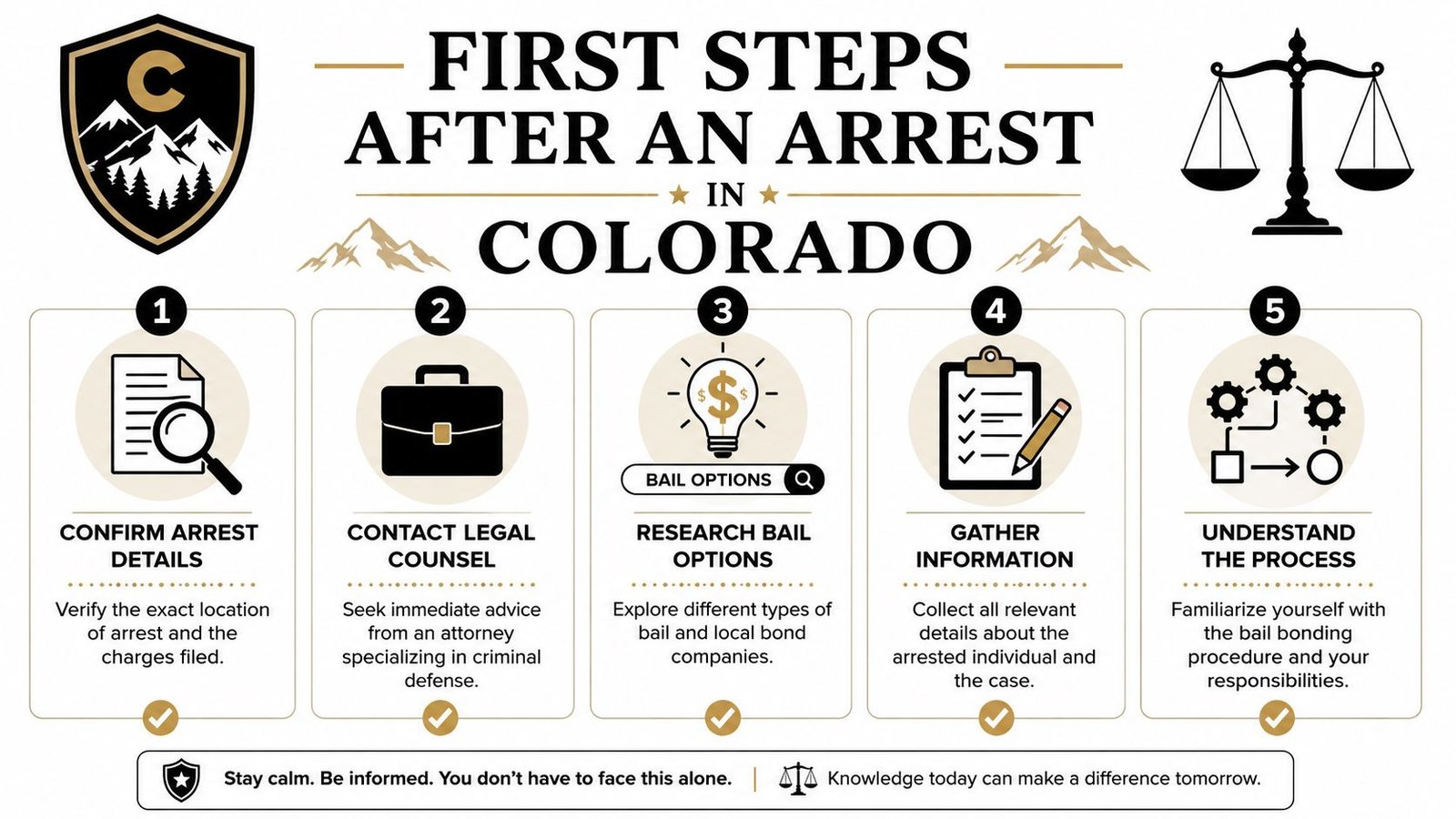
Your immediate goal is release, not trial strategy
Families often mix together three separate issues. Release from custody, defense strategy, and long-term court planning. Those matter, but they are not the same step.
Right now, focus on whether the person can be released and what a bond company needs to post the bond. You can read a plain-language breakdown of what happens after you get arrested if you need the sequence from booking through release.
Practical rule: Don't make the first phone call about who has the cheapest ad. Make it about who can confirm eligibility, paperwork, and timing.
There's also a practical screening test that many people miss. A sound way to evaluate bond providers is to check whether they can handle the right bond class, issue within your time window, and support the required amount without excessive collateral, as discussed in Merchants Bonding's note on market rank and underwriting capability. In plain terms, capability matters more than slogans.
What helps release happen faster
A fast release usually depends on cooperation from both sides. The agent needs complete information. The family or cosigner needs to answer questions directly and return documents quickly.
Useful habits in the first few hours:
- Keep one decision-maker on the phone chain: Too many relatives giving different answers creates confusion.
- Ask whether remote paperwork is available: That matters if the cosigner is at home, at work, or out of state.
- Confirm the jail before sending money or documents: County mistakes waste time.
- Have ID and basic financial details ready: The underwriting review starts there.
If you need immediate statewide help, a round-the-clock agency such as Express Bail Bonds can be useful because arrests don't happen on a business-day schedule.
Core Criteria for Evaluating a Bail Bond Company
Not every company that answers the phone is one you should hire. Under stress, people tend to choose the first person who sounds confident. A better approach is to use a short filter and eliminate weak options quickly.
License, coverage, and real availability
A legitimate Colorado bail agent should be properly licensed. That matters because licensing creates accountability, and accountability matters when someone is handling a legal obligation, money, and sensitive personal information.
Then look at coverage. A company may advertise broadly but only work smoothly in a small set of facilities. If your loved one is in Jefferson County tonight and has a hearing movement tomorrow in another county, you need an agency that understands local procedures and can work across Colorado without scrambling.
Also test after-hours availability in a practical way. Don't just read “24/7” on a webpage. Call. Text. See whether a real person responds and whether they can explain next steps clearly.
A company isn't fast because it says it's fast. It's fast when someone answers, verifies the jail, explains the fee, and sends the documents without delay.
Experience matters when the clock is running
Years in business don't guarantee good service, but in bail they usually tell you something important. Experienced agents know how different county detention facilities operate. They know where paperwork tends to stall. They know which questions to ask before a problem turns into a delay.
That practical knowledge is hard to fake. It shows up in small moments. An experienced agent will ask about the bond type early. They'll clarify who the indemnitor is. They'll explain what happens if the defendant misses court. Newer or disorganized operators often skip those basics until later, when fixing the issue takes longer.
One Colorado option, Express Bail Bonds, notes that it has served the state since 1988. That kind of operating history is worth weighing because repeat jail and court experience often translates into fewer avoidable mistakes.
Don't judge a bond company by price alone
The most defensible way to evaluate surety providers is by financial strength, underwriting capacity, and specialization fit, not by price alone, because the surety is the party promising to absorb claimant losses if the principal defaults under AM Best's rating methodology for balance-sheet strength and risk management. For families using a bail bond company, that means the agency should be backed by a reputable underwriter with the capacity to stand behind the bond.
Here's a simple filter to use on the phone:
- Can they explain the bond process clearly? If not, expect confusion later.
- Do they handle your county regularly? Local familiarity reduces friction.
- Can they process a remote cosigner? This matters more often than people think.
- Are the fees explained before documents are sent? They should be.
- Do they talk only about price? That's usually a warning sign.
The best bond companies usually feel calm, not flashy. They answer direct questions directly. That's what you want when someone is sitting in custody waiting on paperwork.
Understanding Bail Bond Costs in Colorado
Money worries hit fast after an arrest, especially when the family didn't expect this expense. The most important thing to understand is the difference between the total bond amount set by the court and the premium paid to the bail bond company.
What you're actually paying for
In Colorado, the standard premium is 15%, and for bonds over $5,000 a qualified cosigner can often secure a 10% premium through Express Bail Bonds' published business practice. The fee paid to the bondsman is generally non-refundable because it is the charge for posting the surety bond and taking on the risk.
That sounds abstract until you see the math.
Colorado bail bond premium examples
| Total Bond Amount | Standard Premium (15%) | Potential Reduced Premium (10%)* |
|---|---|---|
| $1,000 | $150 | $100 |
| $2,500 | $375 | $250 |
| $5,000 | $750 | $500 |
| $10,000 | $1,500 | $1,000 |
*Potential reduced premium may depend on bond size, approved cosigner, and underwriting review.
If you want a more detailed walkthrough, how much a bail bond costs breaks down the fee structure in plain language.
When collateral enters the conversation
Not every bond requires collateral. But some do, especially when the bond amount is high, the defendant has weak ties to the area, or the underwriting file raises concerns.
Collateral can take different forms depending on the situation. The right response isn't to panic or assume something is wrong. Ask specific questions:
- What risk is driving the collateral request?
- Is the collateral held for the life of the case or under another timeline?
- What documents prove receipt and return conditions?
A professional agency should answer those without hesitation.
For families dealing with an arrest in Arapahoe County, local help can matter because timing and logistics affect stress levels as much as the fee itself. If your matter is centered there, the Centennial bail bond page can help you find county-specific support.
The cleanest financial conversation is one where the agent tells you the premium, explains whether collateral is needed, and puts the terms in writing before you sign.
Payment flexibility also matters. Many families need to ask whether the company accepts cards, remote payment, or payment arrangements. The right company won't make you drag that information out of them.
Key Questions to Ask and Red Flags to Watch For
When you call a bond company, treat that call like an interview. You're not bothering anyone by asking direct questions. You're protecting yourself and the person in custody.
Start with the basics. Ask whether the agent is licensed in Colorado, what the exact fee will be, whether there are any extra charges, how collateral is handled, and what happens if the defendant misses a court date. If the answers are vague, rushed, or inconsistent, keep looking.
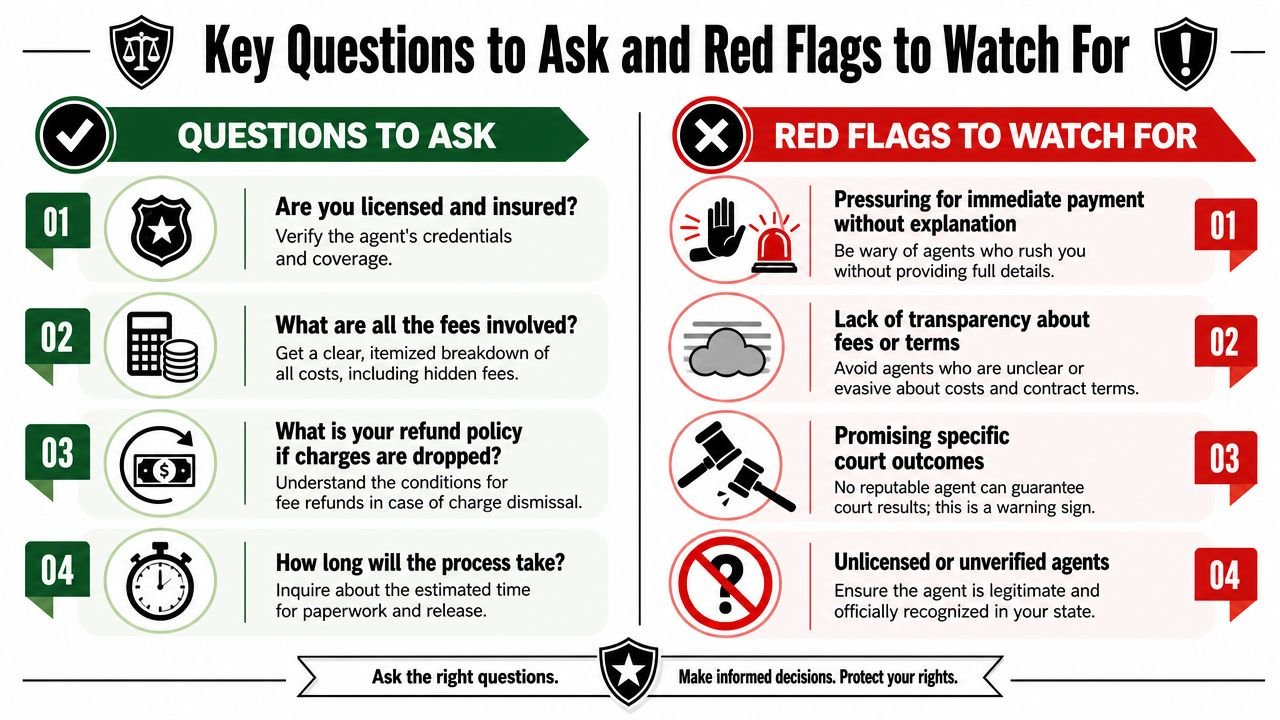
What a good answer sounds like
A reliable agent usually sounds measured, not aggressive. They explain the contract. They don't dodge responsibility. They tell you what they need from the cosigner and what obligations continue after release.
Questions worth asking:
- Are you a licensed Colorado bail agent? You want a direct yes and a willingness to provide identifying details.
- What are all the fees involved? The answer should be clear, itemized, and easy to repeat back.
- How do you handle collateral? They should explain possession, documentation, and return conditions.
- What happens if the defendant misses court? Listen for process, not panic.
- Can you work with first-time or thin-file applicants? That's a smart question because access matters, especially for people with limited credit history.
A useful industry point here is that underwriting access matters, especially for first-time or thin-file applicants. The SBA's surety partner framework reflects that idea by emphasizing approved partner access for small businesses seeking bonds through its list of surety bond partners. In practice, that same principle carries over to bail screening. The better companies can explain approval pathways instead of just talking about brand size.
To understand the paperwork side before you sign, review a sample bail bond contract explanation. It helps to know what obligations continue after the person is released.
A short video can also help if you need a quick visual overview before making calls:
Red flags that should stop the conversation
Some warning signs show up immediately.
- Pressure without explanation: If someone demands payment before answering basic questions, step back.
- Murky terms: If they can't explain fees or contract duties in plain English, that won't improve later.
- Promises about court outcomes: A bail agent cannot guarantee dismissal, reduced charges, or a judge's decision.
- No local fluency: If they sound unsure about the county facility or release process, that's a risk.
- Jail-side solicitation or gimmicky discounts: Those often go with poor transparency.
For Jefferson County cases, local familiarity matters because county workflow affects timing and expectations. If your case is centered there, the Jefferson County and Golden bail bond page gives a county-specific starting point.
Navigating Paperwork Remotely and Securely
Remote cosigning used to be the part that slowed everything down. A spouse was at home with children, a parent was in another county, or a sibling was out of state trying to help from a laptop and a phone. The best bond companies now handle that process in a way that's structured, secure, and much easier to finish under pressure.
How the remote process usually works
A solid remote workflow follows a clear sequence. First comes a short phone consultation. The agent confirms the arrest details, asks who will cosign, and screens for the basic underwriting issues that affect approval.
Next, the documents move electronically. The cosigner receives a link by text or email, fills out the application, uploads any needed identification, and signs the agreement using secure e-signature tools. Payment is handled remotely if the bond is approved, and the agent then posts the bond with the jail.
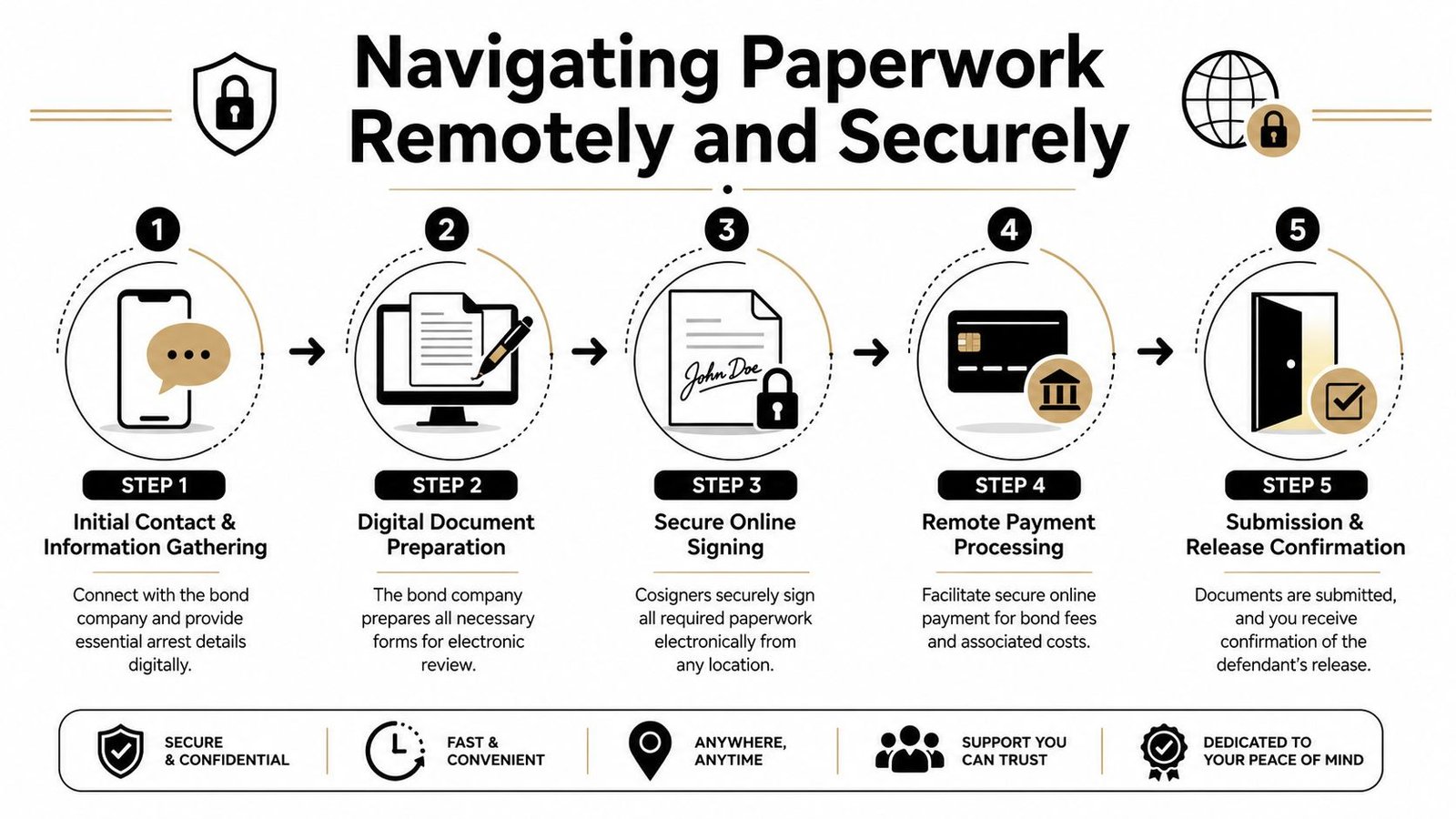
What fast and professional looks like in practice
Many companies claim speed. A key differentiator is whether they combine eligibility screening, underwriting, and document handling into one remote workflow with electronic signature support, as noted in AVLA's discussion of digital surety processing and remote completion. That's what reduces the time between the first phone call and bond posting.
This matters even more for out-of-state families. A mother in another state shouldn't have to drive across town, print forms, scan documents, and wait for office hours just to cosign. A working remote process lets the family focus on accuracy and timing instead of logistics.
If a company says it handles remote cosigners, ask what happens from the first call to the final signature. The answer should sound organized, not improvised.
Security and document handling
People often worry about whether electronic signatures and digital forms are safe. That's a fair concern. A professional agency should explain how documents are delivered, signed, and stored, and should be able to tell you exactly what you'll receive for your records.
If your situation also involves filings, records, or related legal paperwork, it can help to understand broader e-filing and court document options so you know what can be handled remotely and what still requires direct court handling.
For payment and contract processing, electronic payment processing for bail bonds gives a practical example of how families can complete the transaction without sitting for hours at a bail office or detention center.
Your Final Checklist and Next Steps After Posting Bond
Before you sign with any company, stop for one last review. During this review, families catch the details that matter later.
Final check before you commit
Use this list:
- Licensed Colorado agent: You know who is handling the bond.
- Clear fee explanation: You understand the premium and any collateral terms.
- County fit: The company works in the jail and court system involved in your case.
- Real after-hours response: A human answered and explained the process.
- Remote capability: The cosigner can complete forms and signatures without unnecessary travel.
- Written contract clarity: You know what the defendant and cosigner must do after release.
- Backed by a recognized surety: In the U.S. surety market, “best” is often tied to financial strength tracked through organizations such as the SFAA, which matters because the bail agent is backed by a surety that guarantees the bond to the court, as explained in the SFAA's research and statistics resources.
After release, the job isn't over
Posting bond gets the person out of custody. It does not end the obligations. The defendant still has to appear in court, comply with conditions of release, stay in contact when required, and avoid creating new violations.
The cosigner also has responsibilities. If the defendant misses court or disappears, the cosigner can face serious consequences under the contract. That's why a professional agent explains post-release duties before the ink is dry, not after something goes wrong.
A good bond company helps on both sides of the transaction. First with release. Then with clear reminders about what keeps the bond in good standing.
If you need help right now, contact Express Bail Bonds. They provide Colorado surety bail bond service statewide, handle remote applications and signatures, and can walk you through the release process by phone, text, or email. In urgent situations, clear answers matter. Call or text 720-984-2245 to speak with an agent.