When someone misses a court date after being bailed out, the consequences are swift and serious. This is what's known as bond forfeiture. In simple terms, the court seizes the entire bail amount because the defendant broke their promise to appear.
Think of a bail bond as a contract with the court, backed by a significant amount of money. The defendant's freedom is granted on the condition that they will show up for their hearings. If they fail to do so, that contract is broken, and the court collects the financial penalty. This single mistake creates a legal and financial nightmare for everyone involved, especially the person who cosigned the bond. If you need help, don't hesitate to reach out to Express Bail Bonds for immediate assistance.
The Bond Forfeiture Process Explained

The moment a defendant doesn't show up for a scheduled court date, a legal chain reaction kicks off. The judge will immediately issue a "failure to appear" (FTA) notice, which is almost always accompanied by a bench warrant for the defendant's arrest. At the same time, the court declares the bail bond forfeited and demands payment for the full amount.
This action instantly puts the bail bond agency and the cosigner (also known as the indemnitor) on the hook financially. The core of what is bond forfeiture is this very consequence: the court is now calling in the debt that guaranteed the defendant would be there. Before finding yourself in this situation, it’s useful to understand the basics of how to bail someone out of jail.
Who Is Involved When a Bond Is Forfeited?
To really understand what's at stake, you need to know who the key players are. When a defendant skips court, it’s not just their problem—it triggers a set of serious obligations for several other people.
The table below breaks down who is involved and what their role becomes once a bond is in forfeiture.
Key Players in the Bond Forfeiture Process
| Party Involved | Role in the Bail Process | Responsibility in a Forfeiture Scenario |
|---|---|---|
| The Defendant | The person released from jail on the promise they'll return to court for all required appearances. | Faces an immediate bench warrant for their arrest, new potential criminal charges, and must surrender or be caught. |
| The Court | The judicial body that sets the bail amount and the specific conditions for the defendant's release. | Issues the arrest warrant, officially declares the bond forfeited, and demands the full bail amount be paid. |
| Bail Bond Agency | The company (surety) that posted the bond, financially guaranteeing the defendant's court appearances. | Becomes legally responsible for paying the full bond amount to the court unless the defendant is returned to custody. |
| The Cosigner | The friend or family member who signed the contract, promising to ensure the defendant appears and to cover the costs. | Is now legally obligated to repay the entire bond amount to the bail agency and risks losing any collateral they put up. |
As you can see, the financial risk immediately shifts from the defendant to the bail agency and, ultimately, to the cosigner who put their trust and finances on the line. Navigating this process is incredibly stressful, but you don't have to do it alone. If you're looking for help, the experienced team at Express Bail Bonds understands exactly what you're going through. Learn more about how bail bonds work on our site to get started.
When you hear "bond forfeiture," it's easy to picture a dramatic movie scene with a defendant on the run, deliberately trying to escape the law. And sure, that happens sometimes. But in the real world, the most common reasons a bond gets forfeited are far less exciting—and often, completely unintentional.
A simple mistake can snowball into a massive legal and financial headache.
One of the top reasons is just plain human error. Think about it: defendants are often juggling jobs, kids, and the immense stress of a pending court case. It's surprisingly easy to mix up a court date, misread a legal notice, or simply forget to put it on the calendar. Life also gets in the way. A sudden illness, a family emergency, or even a flat tire on the way to the courthouse can cause a defendant to miss their appearance.
The tough part is that the court doesn't necessarily care why you weren't there. If the defendant's name is called and they aren't in the courtroom, the bond forfeiture process kicks into gear, regardless of intent.
Violating Conditions of Pretrial Release
Missing court is the big one, but it's not the only way a bond can be forfeited. When a judge grants pretrial release, they attach a specific set of rules—or conditions—that the defendant must follow to the letter. These rules are designed to protect the community and make sure the defendant stays on the straight and narrow while their case moves forward.
Breaking any of these rules is a serious breach of the court's trust and can trigger an immediate forfeiture. Some common violations include:
- Failing a drug or alcohol test: Many releases require sobriety, so a failed UA (urinalysis) is an instant violation.
- Getting arrested for a new crime: This is a huge red flag for the court and almost always results in the bond being revoked.
- Contacting a protected person: No-contact orders, especially in domestic violence cases, are absolute. Any text, call, or third-party message is a violation.
- Leaving the state or county: The judge may restrict travel, and leaving a specified geographic area without permission is a direct violation.
Think of a bail bond agreement like a contract with a lot of fine print. Showing up for court is the headline clause, but following every single one of the judge's other orders is just as crucial. Breaking any of those terms can void the whole agreement.
Communication is Everything
At the end of the day, most of these problems can be avoided with one simple thing: communication. It's all about taking responsibility and staying in touch.
For families, this means maintaining constant contact with your bail agent. A good agent acts as your partner in this process, sending court date reminders and helping you understand all the complex requirements. Knowing exactly what happens if you miss court is the first and most important step in making sure you never have to deal with a forfeiture.
The Colorado Bond Forfeiture Process Step by Step
When someone misses a court date in Colorado, it kicks off a very specific and time-sensitive chain of events. This isn't just a simple mistake that can be easily fixed later; it's the start of a formal legal process that can get very expensive, very fast, if you don't act immediately.
It all starts with a Failure to Appear, or FTA. The second the defendant’s name is called in court and they aren't there, the judge will almost always issue a bench warrant for their arrest. In that same breath, the judge will also declare the bail bond forfeited. That judicial order is the official starting gun for the entire forfeiture process.
This visual timeline breaks down what typically leads to a bond forfeiture.
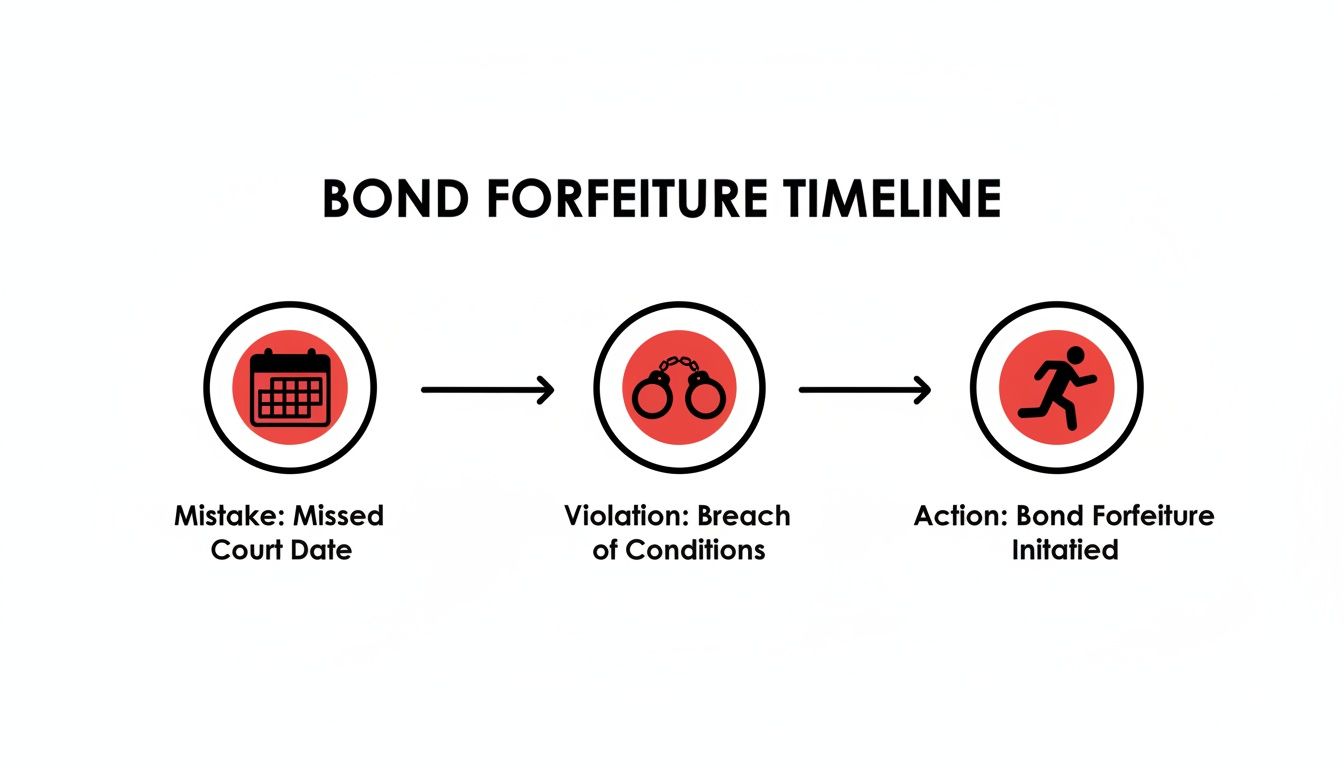
As you can see, it could be an honest mistake, a misunderstanding of release conditions, or someone deliberately skipping court. No matter the reason, the legal result is exactly the same.
The Stay of Execution and Resolution Period
Once a judge forfeits the bond, Colorado law gives everyone a critical window of time to fix the problem. This is called the stay of execution. It's essentially a legal grace period, usually lasting a few months, where the court hits the "pause" button on demanding payment of the full bond amount.
This "stay" is designed to give the bail bond agency time to find the defendant and get them back into custody. If the defendant is surrendered to the jail within this period, the forfeiture can usually be resolved, although some court costs might still be due.
You can think of a stay of execution as the court's way of saying, "We're stopping the clock for a bit. Fix this situation now, or the financial penalty becomes permanent." It is the most important opportunity you have to reverse a forfeiture.
If the defendant is successfully returned to custody, the next step is typically to file a Motion to Set Aside Forfeiture. This is a formal legal request asking the judge to cancel the forfeiture order. For a motion like this to succeed, you generally need a very good, verifiable reason for why the person missed court in the first place—like a documented medical emergency or proof they were already in jail somewhere else.
This isn't just a Colorado problem. In at least 28 states, courts and counties are dealing with the challenges of bond forfeiture. The fact that some areas have historically low collection rates shows just how much financial strain these situations put on the system. It also highlights why professional bail agencies are so crucial for making sure people show up to court.
But if that stay of execution period runs out and the defendant is still nowhere to be found, the forfeiture becomes a final judgment. At that point, the bail agency is legally required to pay the full bond amount to the court. They will then immediately turn to the cosigner to be reimbursed for that full amount. This is precisely why it's so important to work with a team that truly understands the ins and outs of a surety bail bond and can guide you through this complex process to protect your own financial future.
The Serious Consequences for Defendants and Cosigners
When a judge declares a bail bond forfeited, it sets off a chain reaction of legal and financial problems. This isn't just about losing some money; it’s the start of a serious crisis for both the defendant who missed court and the family member or friend who cosigned the bond.
For the defendant, failing to appear in court immediately cancels their pretrial release. The judge issues a bench warrant for their arrest, instantly making them a fugitive from the law. This means they can be arrested on sight—during a simple traffic stop, at their job, or even at home. On top of that, they'll likely face a brand new criminal charge for "failure to appear," which piles more legal trouble onto their original case.
But the defendant isn't the only one in hot water. The situation becomes a potential financial nightmare for the cosigner, also known as the indemnitor. When you cosign a bail bond, you're signing a legally binding contract. A forfeiture is the trigger that activates that contract in the worst possible way.
The Financial Fallout for the Cosigner
Suddenly, the cosigner's role shifts from a supportive helper to the person legally on the hook for the entire bail amount. The bail bond agency has to pay the court, and you can be sure they will come to the cosigner to get that money back.
This can lead to some truly devastating financial outcomes:
- Loss of Collateral: If you put up property—like your house, car, or other valuables—to secure the bond, the agency now has the right to seize and sell it to cover the debt.
- Civil Lawsuits: The bondsman can take you to court and file a lawsuit to get a legal judgment against you for the full bond amount.
- Wage Garnishment: Once the agency has a judgment, they can legally take money directly out of your paycheck. This is known as wage garnishment, and it will continue until the entire debt is paid off. These judgments are serious, and it's worth understanding how bankruptcy can stop wage garnishment to protect your income.
- Damaged Credit: A civil judgment is a major black mark on your credit report. It can crush your credit score for years, making it incredibly difficult to get a loan, a mortgage, or even a credit card.
When a defendant skips bail, the consequences are severe for everyone involved. To help clarify who is responsible for what, let's break down the distinct impacts on both the defendant and their cosigner.
Forfeiture Consequences Defendant vs Cosigner
| Consequence | Impact on Defendant | Impact on Cosigner (Indemnitor) |
|---|---|---|
| Legal Status | A bench warrant is issued for immediate arrest. They become a fugitive. | Not subject to arrest for the forfeiture itself. |
| New Criminal Charges | Charged with "Failure to Appear," a separate crime with its own penalties. | Faces no new criminal charges. |
| Freedom | Pretrial release is revoked. They will be held in jail until their case is resolved. | Freedom is not directly impacted. |
| Financial Liability | May be ordered to pay court fines and fees related to the new charge. | Legally responsible for paying the full bail amount to the bond agency. |
| Future Bail | Will find it extremely difficult, if not impossible, to get another bail bond. | May be unable to cosign for a bond in the future. |
| Asset Seizure | Assets are generally safe from the bond agency. | Collateral is seized and sold. Subject to lawsuits, wage garnishment, and property liens. |
| Credit Score | The failure to appear itself does not directly impact their credit score. | A civil judgment will severely damage their credit score for years. |
As you can see, while the defendant faces the immediate legal heat, the cosigner bears the full weight of the financial disaster. It's a heavy burden that can turn a person's life upside down.
The stakes are incredibly high because once the court demands the money, the bondsman is legally obligated to pay it. This forces them to pursue every available option to recover their losses from the cosigner.
Thinking about the initial cost of a bond is one thing, but understanding the potential fallout is another. If you want to learn more about the upfront costs, you can read about if you get bail money back in our detailed article.
If you are facing this overwhelming situation in Jefferson County, Golden Colorado or need bail bonds in Centennial, don't wait. Contact Express Bail Bonds right away for immediate, expert guidance. Our experienced agents can help you understand your options and navigate this difficult process.
How to Prevent or Fix a Bond Forfeiture
It’s one thing to understand the heavy consequences of a bond forfeiture, but it’s far more powerful to know how to keep it from ever happening—or how to fix things if a mistake has been made. Without a doubt, the best approach is always prevention. It really just comes down to being organized and keeping the lines of communication open.
That old saying, "an ounce of prevention is worth a pound of cure," couldn't be more true, especially when your money and freedom are on the line. Building simple habits can make all the difference and help you avoid a truly damaging forfeiture.

Proactive Steps to Avoid Forfeiture
The single best defense you have against a bond forfeiture is staying one step ahead of the court's schedule and rules. This isn't just about making sure you show up; it's about being fully prepared and aware of what's expected of you at all times.
Here’s a practical checklist that we recommend to all our clients:
- Confirm Every Single Court Date: The moment a hearing ends, immediately confirm the date, time, and location for the next one. Don't just rely on memory—write it down, then double-check it with your attorney or give us a call.
- Set Multiple Reminders: Use every tool you have. Plug the dates into your phone calendar and set several alerts. Mark it on a physical calendar in your home. Even ask a trusted family member or friend to give you a reminder call.
- Maintain Open Communication: Think of your bail agent as your partner in this process. It is critical that you keep us updated with your current address and phone number. Never, ever hesitate to call us if you have a question or are unsure about something.
- Understand All Your Release Conditions: That court order you received is more than just a list of dates. Read it carefully and make sure you understand every single rule, like any travel restrictions or no-contact orders. Violating these, even by accident, can trigger a forfeiture.
Strategies to Remedy a Forfeiture
Look, mistakes happen. If a court date gets missed, the situation becomes urgent, but it's not always a lost cause. The key is to act fast and take the right steps to undo the damage. Your very first call should be to your bail agent at Express Bail Bonds. We are your most important ally and can guide you through this stressful time.
The immediate goal is to get you back in good standing with the court. These are the main ways to handle it:
- Voluntary Surrender: This is where you contact your bail agent and we arrange for you to turn yourself in at the jail. Taking this step shows the court that you're not trying to run and are taking responsibility for the missed date. It can make a huge difference in how the judge handles the situation.
- Motion to Set Aside Forfeiture: Your attorney or bail agent can file a formal motion with the court asking the judge to essentially cancel the forfeiture. To be successful, this almost always requires a legitimate, documented reason for your absence, like a verifiable medical emergency.
- Bond Reinstatement: If the judge grants the motion and you are back in custody, they may agree to reinstate the original bond. This allows the case to move forward without the need to post a brand new, full bond.
Every single one of these remedies depends on taking immediate action. Knowing how to post bail for someone is the starting point, but preventing a forfeiture is what truly protects you and your loved ones. Whether you're in Jefferson County, Golden Colorado or need bail bonds in Centennial, our team is on call 24/7 to help you navigate these crucial steps.
Got Questions About Bond Forfeiture? You're Not Alone.
When a bond is forfeited, it throws an already stressful situation into chaos. It’s a moment filled with anxiety, and families are often hit with a wave of urgent questions. We get it. Below, we’ve laid out clear, practical answers to the questions we hear most often to help you understand what’s happening and what to do next.
I Cosigned a Bond, and Now the Defendant Is Gone. What Happens to Me?
This is one of the toughest calls we get. If you cosigned for someone and they fail to show up for court, you are now legally on the hook for the full bail amount. This isn’t a small problem; it’s a serious financial obligation.
Once the defendant misses court, the clock starts ticking. The bail bond agency has a limited time—often called a 'stay of execution'—to find the defendant and get them back into custody. If that doesn't happen, you will have to pay the debt.
The fallout can be devastating:
- You could lose any collateral you put up, like your house, car, or other property.
- The bail agency can file a civil lawsuit against you to collect the money.
- A court could order your wages to be garnished until the entire bond is paid off.
Your first move? Call your bail agent immediately. The best way to protect yourself and your assets is to cooperate fully and share any information that could help locate the defendant. If you’re in this position, you need to understand every option available. Talk to an expert at Express Bail Bonds right away to figure out your next steps.
Can a Forfeited Bond Be Reversed in Colorado?
Yes, it’s possible to reverse a bond forfeiture in Colorado, but you have to act fast. The legal tool for this is a "Motion to Set Aside Forfeiture." It’s a formal request you file with the court, asking the judge to essentially cancel the forfeiture order.
A Motion to Set Aside isn't a magic wand. It's a formal request that the judge has to approve, and success hinges on having a legitimate reason for the missed court date and following every legal rule within the court's strict deadlines.
This motion is usually filed after the defendant is back in jail. You’ll need to provide a valid, documented reason for why they missed court—for instance, proof of a serious medical emergency or evidence they were locked up in another jail. Ultimately, the judge makes the final call. Having an experienced bail agent who knows the ins and outs of the local courts in every Colorado county is absolutely crucial here.
I Accidentally Missed My Court Date. What Should I Do?
Whatever you do, don't wait. Don't hope it will just go away. It won't. The first few hours after a missed court date are critical, and what you do next will determine everything. Ignoring it guarantees the bond will be forfeited, the warrant for your arrest will stay active, and you'll likely face new criminal charges.
Here’s exactly what you need to do, in this order:
- Call your bail bond agent right now. They are your single most important ally. A good agent will walk you through the best plan, which often involves coordinating a "voluntary surrender" to show the court you’re taking responsibility for the mistake.
- Contact your lawyer immediately. Your attorney needs to know what happened so they can start building a legal strategy to deal with the failure to appear and protect you in court.
Being proactive and communicating openly is the only way to manage the damage and start working to get the bond reinstated.
How Does Express Bail Bonds Help Prevent a Forfeiture?
At Express Bail Bonds, our entire process is built around one thing: a successful outcome for our clients. And that means preventing forfeitures before they ever happen. We stay in close contact with you, sending court date reminders and making sure you understand all the conditions of your release. Our licensed agents are on call 24/7 to answer any question, big or small.
But mistakes happen. If a court date is missed, we jump into action immediately, working with you and your attorney to find a solution. We draw on decades of experience within the Colorado legal system to help get the warrant cleared and the bond put back in place whenever possible. There’s a reason we’re a trusted agency—we stick by our clients through thick and thin. Whether you need bail bonds in Jefferson County, Golden Colorado or help with bail bonds in Centennial, we’re here to provide the expert help you need, right when you need it.
Facing a bond forfeiture is overwhelming, but you don't have to navigate it by yourself. Having the right team in your corner can make all the difference in protecting your freedom and your finances. The team at Express Bail Bonds has been helping Colorado families since 1988 and is ready to take your call 24/7.
Contact Express Bail Bonds today for immediate and confidential help.