When a loved one is arrested, one of the first and most stressful questions is, "How much is this going to cost?" The bail amount set by the court can be intimidatingly high, but the good news is you don't have to pay that full amount. Instead, you pay a much smaller percentage to a bail bondsman.
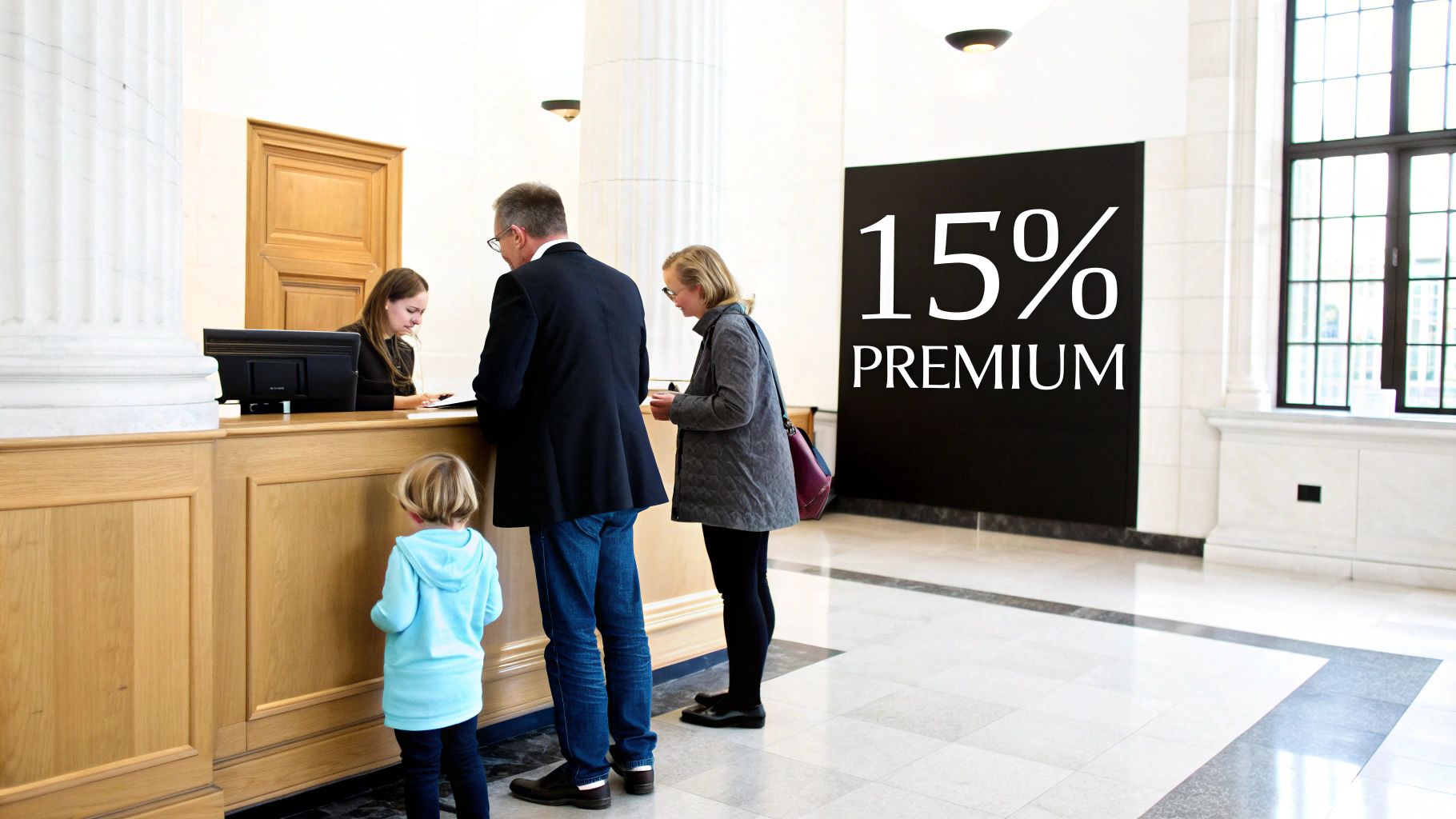
In Colorado, that non-refundable fee, known as a premium, is typically 15% of the total bail. Think of it as the bondsman's service fee for getting your loved one out of jail and taking on the financial risk of guaranteeing the full bail amount to the court.
So, for a $10,000 bond, you would pay a $1,500 premium. This is the cost to secure their freedom while they await their court dates. If you need help now, contact Express Bail Bonds for immediate assistance.
Your Direct Answer to Bail Bond Costs in Colorado
Navigating the bail process can feel overwhelming, especially when you're worried about the financial side of things. Let's break it down simply. You're not expected to come up with the entire bail amount. By working with a bail bond agency, you only need to cover a fraction of that cost.
This premium is regulated by the state of Colorado. While the standard rate is 15%, there's sometimes room for flexibility. For larger bonds (typically over $5,000) with a strong co-signer, we can often offer a reduced 10% premium. That discount can make a huge difference, significantly lowering your upfront cost during an already difficult time.
How The Premium Works
You can think of the bail bond premium like an insurance payment. You're paying our fee, and in return, Express Bail Bonds takes on the full financial risk of guaranteeing the entire bail amount to the court. Our service ensures your loved one can come home, get back to their life, and prepare for their case from outside a jail cell.
Because the premium is earned for the service and risk we provide, it is non-refundable—even if the charges are later dropped. The calculation is straightforward and depends on a few key things:
- The Total Bail Amount: This is the biggest factor. The higher the bail set by the judge, the higher your premium will be.
- The Premium Rate: As mentioned, this is usually 15% in Colorado, but we work to get it down to 10% whenever possible.
- County-Specific Fees: Some counties have small, mandatory filing or administrative fees that get added to the total.
To give you a clearer picture, here’s a quick breakdown of what you can expect to pay upfront for different bail amounts.
Quick Guide to Colorado Bail Bond Costs
This table shows typical upfront costs for bail bonds in Colorado, illustrating the standard 15% premium and potential discounts for larger bonds.
| Total Bail Amount | Standard Premium Paid (15%) | Potential Premium with Discount (10%)* | Your Total Upfront Cost |
|---|---|---|---|
| $2,500 | $375 | N/A | $375 |
| $5,000 | $750 | $500 | $500 – $750 |
| $10,000 | $1,500 | $1,000 | $1,000 – $1,500 |
| $25,000 | $3,750 | $2,500 | $2,500 – $3,750 |
| $50,000 | $7,500 | $5,000 | $5,000 – $7,500 |
*A 10% premium is often available for bonds over $5,000 with a qualified co-signer. This table provides a great starting point, but we can give you an exact quote for your specific situation.
Getting a Clear Quote
A reputable bail bond agent will always be upfront and transparent about the costs. Before you sign anything, you should get a clear, written agreement that breaks down the premium and any other minor fees. There should never be hidden charges or surprises down the road.
Our goal is to give you a clear path forward without adding financial confusion to the mix. To learn more about how we handle payments and financing, check out our guide on bail bond payment options.
For an immediate, no-obligation quote tailored to your situation, give Express Bail Bonds a call today. We’re here to help you understand your options and get your loved one home as quickly as possible. Whether you need help in Jefferson County or Centennial, our team is ready to assist.
Understanding the Bail Bond Premium
When people ask, "How much does a bail bond cost?" the conversation always starts with the premium. Think of the premium as the bail agent's fee for their service—it's the non-refundable amount you pay them to post the full bail amount for you.
It’s a lot like paying for an insurance policy. You pay a smaller, predictable fee to an insurance company to protect you from a massive, unpredictable financial hit. In the same way, you pay a bail bond premium to us at Express Bail Bonds to avoid having to come up with the entire, often staggering, bail amount set by the court.
This fee is how the bail agent gets compensated for taking on a huge financial risk. By posting the bond, they're making a promise to the court that the defendant will show up for every single hearing. If they don't, the agency is on the hook for the full bail amount, which can easily be tens or even hundreds of thousands of dollars.
Why Is The Premium Non-Refundable?
One of the first questions we always get is, "Do I get the premium back when the case is over?" The answer is no, and for a simple reason: the premium is non-refundable because it's the fee earned for the service and risk the bail agency has already provided.
The job is considered done the moment your loved one walks out of jail. It doesn’t matter what happens with the case later—whether charges are dropped, the person is found innocent, or they're convicted. The bondsman did their part. That fee covers all the agency's work, from the late-night phone calls and paperwork to the immense financial liability they took on from the very beginning.
How Premium Rates Are Set In Colorado
Here in Colorado, the state actually regulates what bail agencies can charge for a premium. This is done to keep things fair and transparent for everyone involved. The standard, state-approved rate is typically 15% of the total bail amount. So, for a $10,000 bond, the premium would be $1,500.
But that number isn't always set in stone. For larger bonds—usually anything over $5,000—we can often work with families to offer a reduced rate of just 10%. Whether we can offer this discount usually comes down to the strength of the cosigner, who is the person financially guaranteeing the bond. A lower rate can make a world of difference, and you can see how we've helped families in places like Jefferson County and Centennial manage these exact situations.
The premium is the price of freedom. It's the cost for a professional service that allows someone to return to their family, job, and life while they prepare their legal defense from home instead of from a jail cell.
This regulated system protects you from being overcharged. Any professional, trustworthy agency will be completely upfront about the premium percentage and any small court or county fees that might apply. It's also worth noting that bail costs have been on the rise nationally, increasing by 11.1% over a recent five-year period despite reform efforts. This trend, which you can read about in this analysis of bail bond costs, makes getting professional guidance more important than ever.
At its core, a bail bond is a type of surety bond. This is a three-way agreement between the bail agency (the surety), the court (the obligee), and the defendant (the principal). The agency guarantees the defendant will show up. To get a better handle on this, check out our guide explaining what a surety bond is. Understanding this relationship makes it clear why the premium is so fundamental to the entire process.
If you need a fast, confidential quote for a situation in Golden, Centennial, or anywhere else in Colorado, just give us a call. You can call or text Express Bail Bonds 24/7, and one of our experienced agents will give you a clear, no-nonsense breakdown of the costs so you can make the right decision.
What Goes Into the Final Cost of a Bail Bond?
That 15% premium rate you see in Colorado is the starting point, but it's not the whole story. Think of it as the base price. The final cost and the terms you agree to are shaped by the specific details of the situation.
Bail bond agents are essentially assessing risk. They’re trying to figure out how likely it is that the defendant will show up for their court dates. Let's pull back the curtain on the key factors they look at to determine the final price.
The Total Bail Amount
This one’s straightforward—it's the biggest factor. The judge sets a total bail amount, and the premium you pay is a percentage of that number. A bond for $2,000 will naturally cost much less out-of-pocket than one set at $50,000.
It all comes down to simple math. The higher the bail, the more financial skin the bail agency has in the game. That’s why really large bonds often require extra assurances, like collateral, to get them approved.
The Seriousness of the Criminal Charge
The charge itself says a lot. A misdemeanor for a minor traffic violation is viewed very differently than a serious felony like assault. The nature of the alleged crime heavily influences how both the court and the bail agency approach the case.
Here’s a quick breakdown of how charges affect things:
- Misdemeanors: These usually come with lower bail amounts and are considered lower risk, which keeps the bonding process simple.
- Felonies: These are serious offenses that almost always have high bail amounts. Because the stakes are higher and the defendant faces more severe penalties, the terms for the bond might be a bit stricter.
A bail agent looks at the charge to gauge the defendant's incentive to return to court. More serious charges mean a higher risk of someone skipping town, which increases the risk for everyone involved.
The Defendant's Background and Flight Risk
Both the judge and the bail agent will take a close look at the defendant's personal history. It gives them a sense of reliability and helps them determine if the person is a flight risk—someone who might be tempted to disappear rather than face their court dates.
A few things they'll consider:
- Criminal Record: Is this their first run-in with the law, or is there a history of prior arrests? A clean record helps immensely.
- Court Appearance History: Have they ever been issued a "failure to appear" (FTA) for missing a court date before? That’s a major red flag.
- Community Ties: Does the defendant have a stable job? A family in the area? Do they own a home? Strong ties to the community make it far less likely that someone will flee.
Someone with a clean slate and deep roots in Jefferson County is a much safer bet than a person with a lengthy record and no local connections. This assessment has a direct impact on the terms you’re offered.
The Cosigner’s Financial Standing
The cosigner (also called an indemnitor) is the person who guarantees the bond. By signing the agreement, you’re taking on the legal and financial responsibility to ensure the defendant makes every single court appearance. Because of this, your financial stability is a huge piece of the puzzle.
A strong, reliable cosigner is often the secret to getting the best possible terms. Your stability can sometimes lead to a lower premium or help you avoid putting up collateral because it gives the bail agency confidence that the agreement will be honored.
Bail agents look for cosigners with steady jobs, a decent credit history, and a track record of financial responsibility. A solid cosigner makes the entire process faster and more affordable, which is something our clients in Centennial often tell us they appreciate.
Whether Collateral is Needed
For particularly large bonds or in high-risk situations, the bail agency might ask for collateral. This is a physical asset, like a piece of property or a vehicle title, that you pledge to secure the full bond amount. It’s an extra layer of security for the bondsman.
If the defendant skips bail and the bond is forfeited, the agency can use the collateral to cover what would otherwise be a devastating financial loss. While most smaller bonds don't require it, having collateral available can make it possible to get a bond approved that might otherwise be denied. To get a better handle on the different types of bonds, our guide comparing surety bonds vs. cash bonds is a great resource.
Any County Administrative Fees
Last but not least, some counties tack on small, non-negotiable fees. These are usually filing or administrative charges required by the jail or the local court system. A reputable agency like Express Bail Bonds will always lay these costs out for you upfront so you know exactly what you’re paying for. You can see in our positive Google reviews and Centennial testimonials that transparent pricing is something we take seriously. Don't hesitate to reach out for a clear quote.
Calculating Bail Costs With Real-World Scenarios
It's one thing to read about percentages and legal factors, but it's another thing entirely to see how it all plays out in the real world. To get a practical handle on what you might actually pay for a bail bond, let's walk through a few common situations we see every day.
These examples will help connect the dots between the judge's bail amount and the final check you write to the bondsman.
Scenario 1: A $5,000 DUI Bond In Arapahoe County
Let's start with a situation that's unfortunately quite common: a DUI charge where the judge sets bail at $5,000. That's a significant amount of money for anyone to come up with on a moment's notice, but it's very manageable with a bail bond.
In Colorado, the standard premium is 15%, which would make your cost $750. However, because this bond is $5,000 or more, you might qualify for a better rate. With a strong cosigner on board, we at Express Bail Bonds can often get that rate down to 10%, which drops your out-of-pocket cost to just $500.
- Standard Cost (15%): $5,000 x 0.15 = $750
- Potential Discounted Cost (10%): $5,000 x 0.10 = $500
A good cosigner makes all the difference here. Someone with a steady job and a solid financial history is usually enough to secure that lower premium. For a bond this size, collateral is rarely necessary, especially when you have a reliable person backing the agreement. We see this all the time with our clients in nearby Centennial, and our goal is always to find the most affordable path forward.
The chart below shows the main things that influence the final cost.
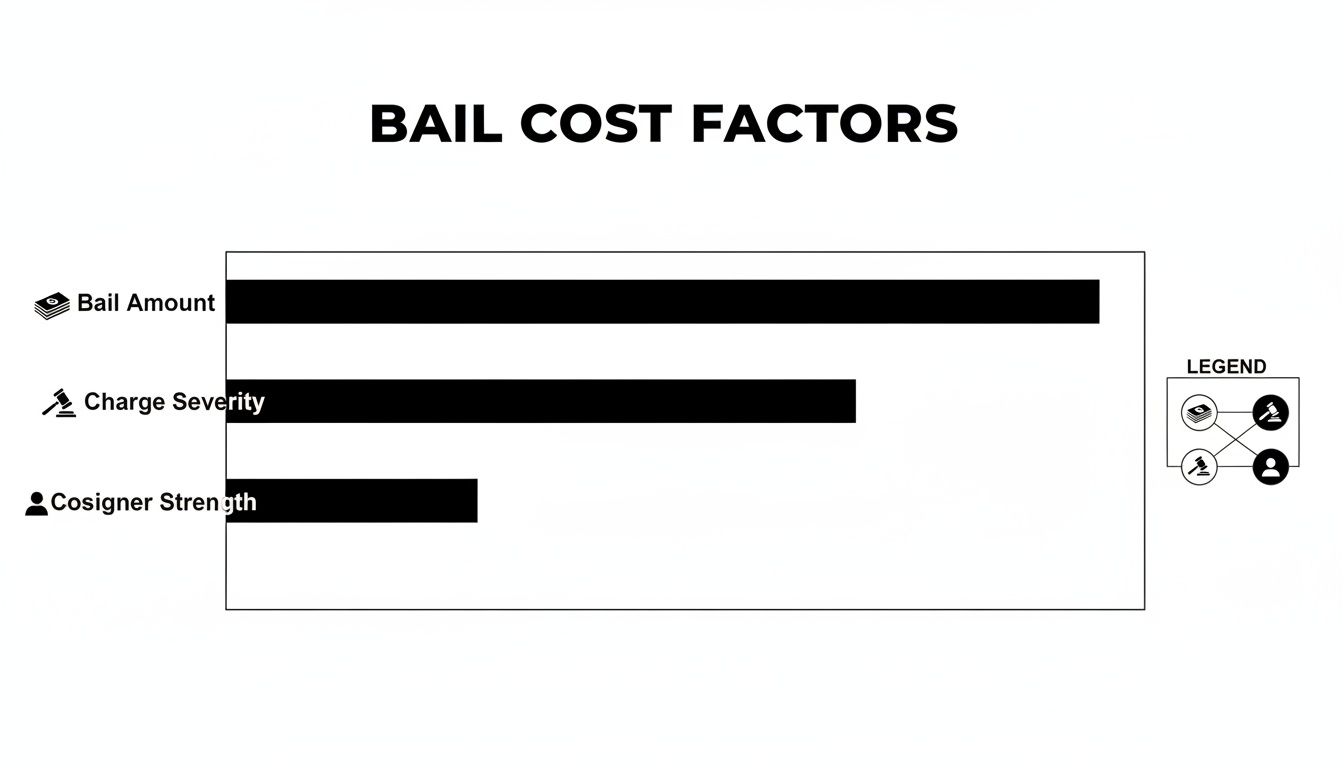
As you can see, the total bail amount sets the baseline, but the seriousness of the charge and the strength of your cosigner play a huge role in the final deal you get.
Scenario 2: A $25,000 Felony Bond In Jefferson County
Now, let's scale things up. For a more serious felony charge, a judge might set bail at $25,000. The stakes are much higher, and that changes the entire conversation for the bail agency.
The standard 15% premium would come out to $3,750. But on a larger bond like this, getting a discounted 10% rate is a game-changer—it brings the cost down to $2,500. That's an immediate savings of $1,250.
- Standard Cost (15%): $25,000 x 0.15 = $3,750
- Potential Discounted Cost (10%): $25,000 x 0.10 = $2,500
For a bond of this size, we're going to look very closely at the cosigner's financial stability. We need to be confident the defendant will show up for court. In some felony cases, we might also ask for collateral, like a vehicle title or a lien on a property, to secure the bond. A very strong cosigner can sometimes avoid this requirement, though. Our work with clients in Jefferson County has taught us that being upfront is everything, which is why our positive reviews often praise our clear communication.
Scenario 3: A $2,000 Misdemeanor Bond
Let's look at a simpler case: a lower-level misdemeanor where bail is set at a more manageable $2,000. These bonds are usually quick and straightforward.
Because the total bail amount is under the $5,000 mark, the standard 15% rate typically applies. The math is simple, and your total cost would be a one-time payment of $300.
- Standard Cost (15%): $2,000 x 0.15 = $300
For smaller bonds, the process is usually fast. You'll still need a qualified cosigner, but collateral is almost never part of the discussion. The main goal is simply to secure the defendant’s release and make sure they get to court without causing a huge financial burden.
To help you get a better idea of how these calculations work, we’ve put together a quick reference table.
Sample Bail Bond Cost Calculations
| Scenario Example | Total Bail Amount | Premium Rate Applied | Final Premium Paid |
|---|---|---|---|
| Minor Misdemeanor | $2,000 | 15% (Standard) | $300 |
| Standard DUI | $5,000 | 15% (Standard) | $750 |
| DUI w/ Strong Cosigner | $5,000 | 10% (Discounted) | $500 |
| Felony w/ Strong Cosigner | $25,000 | 10% (Discounted) | $2,500 |
These examples show how the non-refundable premium you pay is just a fraction of the total bail set by the court.
These scenarios prove just how flexible and accessible the bail bond process can be. If you’re curious about other financial tools, you can explore various online calculators for different needs. For a precise quote based on your specific situation, the best step is to contact Express Bail Bonds for a confidential, no-obligation chat.
Are There Hidden Fees in a Bail Bond?
The last thing you need when trying to get someone out of jail is a surprise bill. It's a common fear: are there hidden fees lurking in the fine print? With a reputable, licensed bail bondsman, the answer is a firm no.
Transparency is the law. The premium we quote—that 15% or 10% of the total bail—is the fee for our service. It covers the risk we take and the work we do to secure the release. Any other costs are not our fees but rather small administrative charges required by the jail or court, and we pass those directly through to you with zero markup.
A professional bondsman will walk you through every single dollar before you sign anything. You'll get a clear, itemized list of the premium and any small county fees. No games, no surprises.
How Can I Pay for the Bail Bond?
We know that when you need to post a bond, time is critical. That's why we make paying the premium as simple and fast as possible.
Here are the most common ways families handle the payment:
- Credit or Debit Cards: This is the quickest and easiest method for most people. We take all major cards, and you can pay securely right over the phone or online.
- Electronic Transfers: Sending a bank transfer or wire is another fast and secure way to get the funds to us so we can act immediately.
- Cash or Certified Funds: If you prefer, we also accept cash, cashier's checks, or money orders at our office.
Our job is to clear the path for you, and that starts with a hassle-free payment process. Our commitment to this level of service is something you'll see echoed in our many positive Google reviews.
What if I Can't Afford the Full Premium Upfront?
This is a situation many families face, so don't panic. Yes, payment plans are absolutely an option in many cases. We understand that even 10% of a large bail amount is a lot of money to come up with on short notice.
Whether we can set up a payment plan depends on a few things, like the total bail amount, the specific charges, and the cosigner's financial stability. A strong, reliable cosigner is often the key to qualifying for a flexible plan with a reasonable down payment.
We regularly work with families in communities like Jefferson County and Centennial to find a solution that works. We don’t believe money should be the only reason someone has to stay in jail.
The bottom line is this: every cost, term, and payment schedule will be laid out in plain English and agreed upon before you sign a single document. A solid bail bond agreement is built on trust and complete clarity.
It’s also important to understand that the premium is non-refundable. It’s the fee we earn for taking on the full financial risk of the bail amount and getting your loved one released. To get a deeper understanding of how this works, check out our article that answers the question, "Do you get bail money back?"
If you're worried about costs or have any questions, just call us. The team at Express Bail Bonds is here 24/7 to give you a free quote with absolutely no obligation. We'll explain exactly what to expect, so you can make your decision with confidence. You can also hear from other clients we've helped in our Centennial-area reviews.
The Cosigner's Role in the Bail Bond Process

When you're working to secure a bail bond, there's almost always another person who steps up to guarantee the whole agreement. We call this person a cosigner, or an indemnitor, and they are the absolute backbone of the entire process. You can think of them as the bail bond company's insurance policy.
By putting their signature on the contract, the cosigner is making a legally binding promise to the bail agency. They agree to take on the full financial and legal responsibility for making sure the defendant shows up to every single court date—no exceptions. It’s their involvement that gives a bondsman the confidence needed to post the bond.
This role isn't just a simple formality; it carries serious weight. If the defendant misses a court appearance, the cosigner is immediately on the hook for the entire bail amount. That could mean paying thousands, or even tens of thousands, of dollars directly to the bail agency.
What Makes a Strong Cosigner?
Having a strong cosigner can directly influence how much a bail bond costs. When a cosigner makes the agreement feel less risky for the bail agency, it often leads to better terms, like a lower premium or even avoiding the need for collateral altogether.
Bail agents are always looking for cosigners who show stability and responsibility. Some key attributes include:
- Steady Employment: A consistent job history is a great sign of financial reliability.
- Property Ownership: Owning a home or other real estate suggests deep ties to the community.
- Good Credit History: A solid credit score is one of the strongest indicators of financial trustworthiness.
- U.S. Citizenship: This is a standard requirement for most bail bond agreements.
When someone has these qualities, it gives the bail agency real confidence that the defendant will meet their court obligations and that the financial side of the agreement is secure.
The cosigner’s commitment is what makes the bail bond system work. By shouldering the risk, they provide the trust needed to secure a defendant's freedom, often turning a stressful situation into a manageable one.
The bail bond industry is a huge part of our justice system, with a market size that hit $3.5 billion in the United States. This sector has seen steady growth of 3.3% each year over the last five years, which really underscores its crucial role. You can learn more about the growth trends in bail bond services to get a sense of the industry's scale.
Making an Informed Decision
Before you ever agree to be a cosigner, it is absolutely vital to understand what you're committing to. You need to trust the defendant completely and be confident they won't miss any of their court dates. To get a solid foundation on the entire process, take a look at our guide on how bail bonds work.
Here at Express Bail Bonds, we make it a point to walk cosigners through every single step, making sure they understand all of their responsibilities. Our clients in places like Jefferson County and Centennial often mention in their reviews how our clear explanations helped them feel comfortable making an informed choice. If you have questions about becoming a cosigner, our team at Express Bail Bonds is here 24/7 to give you the answers you need.
Common Questions About Bail Bond Costs
When you're trying to get someone out of jail, a lot of questions come up fast. It's a stressful time, and the last thing you need is more confusion. To help you get some clarity, we've put together answers to the most common concerns we hear from families about how much a bail bond costs.
Is the Bail Bond Premium Refundable?
No, the premium you pay is a non-refundable fee. Think of it as the service charge for the work the bail bond company does. Once they post the bond and secure your loved one's release from jail, they have fulfilled their end of the agreement.
This holds true even if the case is later dismissed or the charges are dropped. The premium covers the financial risk the bondsman took and the service they provided at that critical moment.
The commercial bail bond system itself is quite rare globally. In fact, the United States and the Philippines are the only two countries where it's the primary method for pretrial release. This unique setup is a big reason why the services are structured and priced the way they are. You can discover more about the global financial stability of such systems to get a better sense of the big picture.
Can I Use a Payment Plan for a Bail Bond?
Absolutely. We understand that most families don't have thousands of dollars set aside for an emergency like this. That's why payment plans are a very common solution when the full premium can't be paid all at once.
Whether you qualify for a payment plan often depends on a few factors, like the total bond amount, the specifics of the criminal charges, and the cosigner's financial stability.
We regularly work with families in communities like Jefferson County and Centennial to find payment options that work. The best first step is to speak directly with one of our licensed agents about your situation. Our flexible and compassionate approach is something our clients often mention in our positive Google reviews.
What Happens if a Court Date Is Missed?
This is a big one, and it's incredibly serious. If the defendant misses a court date, the judge will immediately issue a warrant for their arrest and forfeit the bail bond.
At that moment, the cosigner's responsibility kicks in. You become legally and financially liable for paying the full bail amount to the bail bond company. This is why it is absolutely critical to ensure the defendant appears at every single required court hearing.
Is Collateral Always Required for a Bail Bond?
Not at all. Collateral—like a house, car, or other property—is typically only required as an extra layer of security for the bail agent in high-risk cases or for very large bonds.
For most smaller bonds, all we need is a strong, reliable cosigner to guarantee the agreement. Our agents always look for the simplest, least burdensome way to secure someone's release, a commitment that our Centennial-area clients have praised.
When you need a professional partner to give you clear answers and guide you through the process, turn to Express Bail Bonds. We are available 24/7 to provide a free, no-obligation consultation and help bring your loved one home.
Contact us now at https://expressbailbonds.com/.