So, how does a bail bondsman actually make money? It all comes down to one core concept: the premium.
This is the non-refundable fee you pay a bondsman for their service. The simplest way to think about it is like an insurance policy. When a judge sets bail, you pay the bondsman a small percentage of that total amount. In return, they put up a financial guarantee—the full bail amount—with the court so the defendant can get out of jail.
The Premium: The Engine of the Bail Bond Business
A bail bond agency's entire business model is built on this exchange. Let's say a court sets bail at $20,000. For most families, coming up with that kind of money on the spot is impossible. This is where a bondsman becomes essential.
By paying the bondsman their premium, you’re hiring them to assume the financial risk. If the defendant shows up for all their court dates as required, the bond is dissolved, the court returns the money to the bondsman, and the case is closed. The premium you paid is the bondsman's earned income for a job well done. To really get a handle on the business, it helps to understand how do bail bonds work from start to finish.
Turning Premiums into Profit
This simple fee structure powers a surprisingly large industry. In 2019 alone, bail bond companies underwrote an estimated $15 billion in bonds, which translated into $2 billion to $2.6 billion in revenue from premiums.
The premium isn't an arbitrary number. Here in Colorado, the rate is set by the Division of Insurance, and the standard is typically 15% of the total bail amount. So, on a $20,000 bond, the premium would be $3,000.
However, an experienced agency knows how to find savings for their clients. At Express Bail Bonds, we've been helping families since 1988, and for bonds over $5,000, we can often secure a 10% premium if you have a qualified cosigner. That flexibility can make a world of difference when you're dealing with the stress of a high bail amount. You can see a full breakdown of these costs in our guide on how much a bail bond costs.
To make this crystal clear, here’s a simple comparison of what you would pay versus the full amount the bondsman guarantees.
Bail Amount vs Your Premium Payment (Example)
This table illustrates the typical non-refundable premium you pay compared to the full bail amount the bondsman guarantees to the court.
| Total Bail Amount Set by Court | Typical 15% Premium (Your Cost) | 10% Premium for Qualified Bonds (Your Cost) |
|---|---|---|
| $5,000 | $750 | $750 (10% rate typically applies to bonds over $5,000) |
| $10,000 | $1,500 | $1,000 |
| $25,000 | $3,750 | $2,500 |
| $50,000 | $7,500 | $5,000 |
| $100,000 | $15,000 | $10,000 |
As you can see, the ability to qualify for a lower premium rate can save you thousands of dollars, making the process much more manageable.
The Bottom Line: The premium is the service fee for posting the bond and taking on the court's financial risk. Once the defendant is released, this fee is fully earned and is not returned, no matter how the criminal case turns out.
Understanding this fee structure is the first step toward navigating the bail process, whether you're in Jefferson County or Centennial. It's about more than just money; it's about finding a trustworthy partner who can guide you through a difficult time. We've built our reputation on being that partner, and we’re proud of our commitment to helping families navigate the process with our professional, 24/7 service.
The Hidden Partnership That Powers Every Bail Bond
Most people picture a local bondsman as someone with a safe full of cash, ready to post a massive bond at a moment's notice. But how can a small, local office realistically guarantee a $100,000 bond for a client? The truth is, they don't do it alone.
The entire bail bond industry is built on a crucial partnership between the local bail agent you work with and a massive, national surety insurance company.
Think of it this way: your neighborhood insurance agent sells you a policy, but a giant like State Farm or Allstate actually provides the financial coverage. A bail bondsman operates on the exact same principle. We are the licensed, on-the-ground experts, but the surety company is the silent partner providing the immense financial backing.
The flow of money in this relationship is actually quite simple.
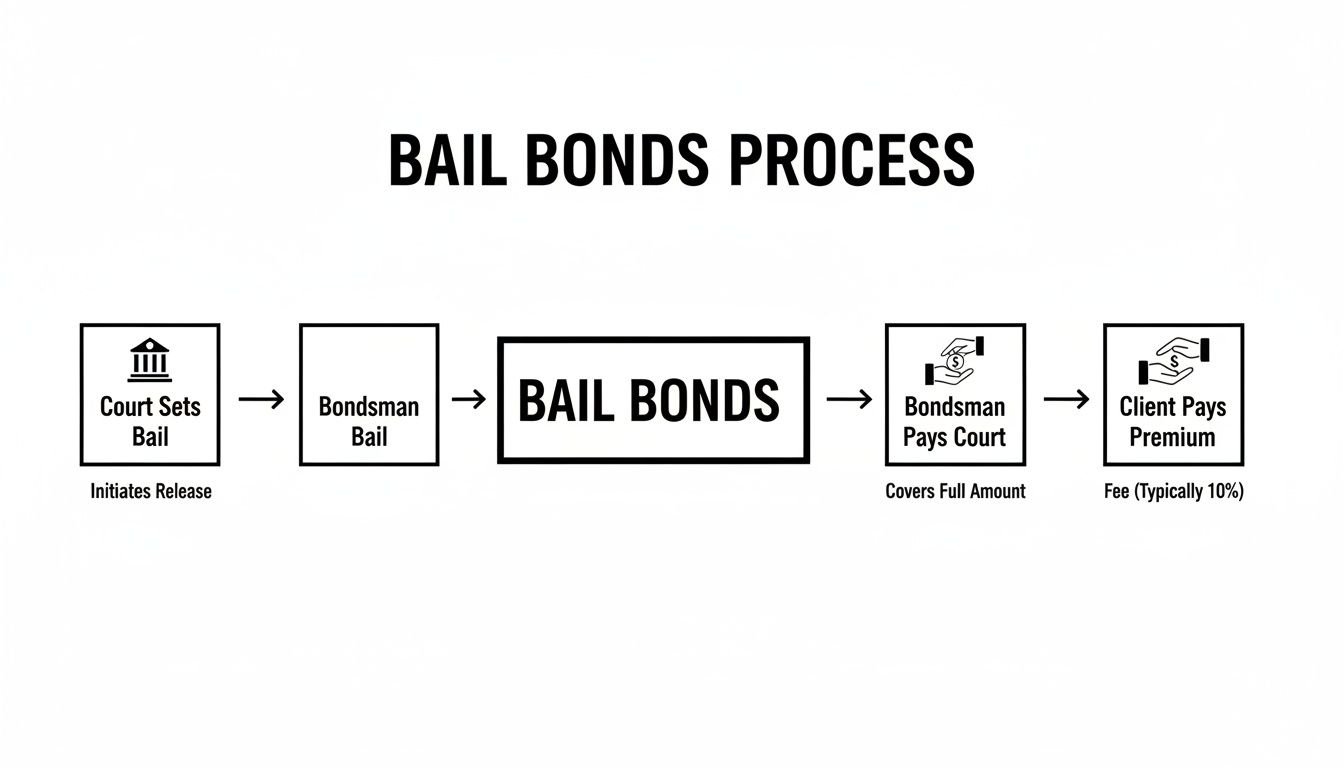
As you can see, the bondsman is the essential go-between. We connect the client who needs help with the court demanding the bond, all while backed by the financial power of the surety.
The Surety's Role in a Bondsman's Business
So, what’s in it for the surety company, and how does this partnership work day-to-day? For every bond a bondsman writes, a small percentage of the premium goes into a special account called a Build-Up Fund (BUF), which is held by the surety company.
Think of the BUF as the bondsman’s own security deposit with their financial backer. It's our skin in the game. If a defendant fails to appear in court and the bond is forfeited, the surety company pays the court the full amount first. Then, they turn to our BUF to cover that loss. This arrangement ensures agents are extremely diligent about who they bond out.
This structure is what allows a bondsman to operate with confidence and secure a client's release from jail quickly, no matter the amount. You can get a more detailed look at this specific type of bond by reading about what is a surety bail bond.
This powerful partnership has turned pretrial release into a major industry, generating around $2 billion in revenue in the U.S. each year. For a Colorado agency like Express Bail Bonds, which has served every county from Jefferson County to Weld since 1988, this model provides the stability needed to help families 24/7.
A bondsman’s primary job isn't just writing bonds; it's managing risk on behalf of their surety partner. Their expertise in vetting clients and ensuring court appearances is what makes the entire system profitable and sustainable.
By partnering with a surety, a local agency gains the power to handle any bond, in any court. It means whether you need help in a major city like Centennial or a small mountain town, professional help is always within reach. We take immense pride in the trust our clients place in us, reflected in our positive client reviews. If you need help now, our team is ready to deliver the fast, professional service we’re known for across Colorado.
How Bondsmen Manage Financial Risk
A bail bondsman's business is all about managing risk. While the premium is how they earn their living, the real question is: how do they avoid losing thousands of dollars if a client decides to skip a court date? It’s not magic; it’s a system of practical safeguards.
They rely on two main tools to protect their investment: collateral and the Indemnity Agreement. These aren't sneaky ways to take your property. Instead, think of them as the standard insurance policy for the bondsman who is putting their own money on the line for you or your loved one.

Understanding Collateral
The easiest way to think about collateral is as a security deposit for the bail bond. It’s a tangible asset—like a car title, jewelry, or a deed to a property—that you temporarily pledge to the bondsman. This isn't a payment; it's a guarantee that the defendant will show up to court.
It's a common misconception that collateral is always part of the deal. The truth is, collateral is not always required. For many smaller bonds, especially when there's a strong and reliable cosigner, a signature is enough. At Express Bail Bonds, we often write bonds without it.
Collateral usually comes into play in specific situations:
- Large Bail Amounts: When the bond is for a very high dollar amount, the financial risk is just too big to go unsecured.
- Higher Flight Risk: If a defendant has a history of missing court or lacks strong ties to the community, collateral helps ensure their return.
- Out-of-State Cosigners: It provides an extra layer of security when the people guaranteeing the bond live far from the court's jurisdiction.
The best part? As soon as the defendant's case is over and all their court obligations have been met, the collateral is returned in full. The bondsman only has a claim to it if the defendant fails to appear, forcing the bond to be forfeited to the court.
The Indemnity Agreement: Your Legal Promise
Every single bail bond transaction involves an Indemnity Agreement. This is the legally binding contract signed by the bondsman and the person financially backing the bond (the cosigner or "indemnitor"). You can't get a bond without signing one.
Think of it as your formal, written promise to the bondsman. By signing, you are legally committing to two very important things:
- You will do everything in your power to make sure the defendant appears at all court dates.
- If the defendant does not appear and the bond is forfeited, you will repay the bondsman for the full bail amount they lose.
This agreement is the bedrock of the bail industry. It transfers the financial risk from the bondsman to the cosigner, ensuring the bondsman can recover losses if a defendant disappears.
This is a serious commitment, which is why understanding the role of a bail bond cosigner is absolutely critical before putting pen to paper. This contract gives the bondsman the legal right to collect the full bond amount from you, the cosigner, if things go wrong. It’s our job to make sure you understand every word before you sign.
What Happens When Someone Skips Bail
This is the situation every bondsman, defendant, and family member hopes to never face. When a defendant fails to appear in court (an “FTA”), it triggers a chain reaction that creates enormous stress and financial risk, especially for the person who cosigned the bond. It’s the moment a bondsman's calculated risk becomes a very real, and very expensive, problem.
The court acts swiftly. A bench warrant is immediately issued for the defendant's arrest. Simultaneously, the judge declares the bail bond forfeited. This is a formal demand for the full bail amount, which the bondsman is now legally obligated to pay the court. A potential profit can instantly flip into a massive loss.
The Race Against The Clock
Once a judge forfeits a bond, a countdown begins. The bondsman has a limited grace period—the exact length varies by state and court—to fix the situation before they have to write a check to the court for the entire bond amount. Their one and only goal becomes getting the defendant back into custody.
This is where bail recovery agents, more commonly known as "bounty hunters," enter the picture. These are professionals hired by the bondsman to track down and apprehend the defendant. As per the indemnity agreement you signed, the cosigner is on the hook for the cost of this recovery effort.
These expenses can pile up fast and often include:
- The recovery agent’s fee, which is typically a percentage of the total bond.
- Costs for travel, surveillance, and other investigative work.
- Any administrative or legal fees tied to the forfeiture process.
Communication Is Your Best Defense
The single best way to prevent this nightmare scenario is open and honest communication. If you even think a defendant might miss a court date, you need to call your bondsman immediately. We've seen simple mix-ups over dates or times escalate into a full-blown warrant and forfeiture simply because no one picked up the phone.
A defendant’s failure to appear in court doesn’t just risk their freedom; it triggers a significant financial liability for the cosigner. The bondsman will use the signed indemnity agreement to recover the full bond amount and all associated recovery costs from the person who guaranteed the bond.
Experienced agents at a trusted firm like Express Bail Bonds work proactively with families to make sure everyone understands their court obligations. We know the system inside and out and can often help resolve small issues before they become huge problems. If you want to dive deeper into this process, our guide on what is a bond forfeiture is a great resource.
We are committed to helping our clients in Jefferson County and Centennial navigate their responsibilities, a promise you can see in our client feedback. Our goal is to make the process clear and manageable, not add to your stress, which our many positive reviews show.
Are There Other Ways a Bondsman Makes Money?
While the non-refundable premium is how a bondsman primarily earns a living, it's not always the only way. Some agencies bring in extra income through other fees and financial setups, which can really add up. Knowing what these are ahead of time is the key to working with a transparent and trustworthy partner.
One of the most common ways a bondsman adds to their bottom line is through payment plans. If a family can't pay the full premium all at once, a bondsman might offer to finance it. This can be a lifesaver, but it almost always comes with interest charges or administrative fees that push the total cost higher.
Looking Out for Fees Beyond the Premium
Beyond financing, some agencies pass along other miscellaneous costs to their clients. It's always a good idea to ask about these directly so you aren't caught off guard later.
Watch out for potential charges like:
- Administrative Fees: Some bondsmen add a flat fee for the time it takes to handle paperwork, processing, or court filings.
- Check-In Fees: For higher-risk bonds, a defendant might need to check in regularly. A few agencies will charge a fee for each check-in.
- Late Payment Fees: If you're on a payment plan, your contract will spell out the penalties for missing a payment, which can add up quickly.
A bail bond agency's profitability really hinges on two things: the margins from premiums and smart risk management. In Colorado, the standard 15% premium provides a solid foundation, which can go as low as 10% with a qualified cosigner at Express Bail Bonds. When you add in interest-bearing payment plans, the effective return can grow significantly. You can learn more about the financial metrics of the bail bond industry if you're interested in the numbers.
Good, reputable companies—like Express Bail Bonds—build their business on volume and efficiency, not by nickel-and-diming families with confusing fees. We focus on giving clear, upfront pricing to our clients, whether they're in Jefferson County or Centennial.
We believe the bail process is stressful enough without hidden costs, and our positive client reviews show that people appreciate that commitment. If you need help, our agents are standing by to deliver the fast, professional service we’re known for across Colorado.
Your Guide to Choosing the Right Bail Bondsman
So, what does all this mean for you? When you're standing at a crossroads, needing to get someone out of jail, understanding how a bondsman makes money is your single greatest advantage. It transforms you from a frantic customer into a savvy consumer.
This knowledge gives you the power to cut through the noise and find a reputable, honest partner in a difficult time. You'll know the right questions to ask, what a fair deal looks like, and how to spot the red flags of a predatory agent.
Your Action Plan for Choosing a Bondsman
With that in mind, you can now take clear, confident steps.
First and foremost, always ask for a complete and simple breakdown of all the fees. A true professional won't hesitate to explain the premium and any other potential costs. Their goal should be clarity, not confusion. If you feel like you're being rushed or your questions are being dodged, that's your cue to walk away.
Next, before you put pen to paper, take a deep breath and carefully read the indemnity agreement. This isn't just paperwork; it's a serious legal contract that makes you financially responsible. Make sure you understand every clause about your responsibilities as a cosigner. If something seems confusing, ask them to explain it in plain English.
Finally, the simplest step is often the most crucial: commit to open communication. Keeping your bondsman in the loop about court dates and the defendant’s status is the best way to prevent misunderstandings and extra costs. It ensures the whole process runs as smoothly as possible.
When your family is in crisis, you don’t just need a service—you need an advisor. The right bondsman is someone who guides you through the system with integrity, not someone just looking to process another transaction.
For families across Colorado, from communities like Golden to Centennial, having that kind of dependable partner makes all the difference. We at Express Bail Bonds have spent decades, since 1988, building our reputation on being that partner. We're available 24/7 and combine modern, easy-to-use online processing with the kind of experience that only comes from years in the trenches, a commitment you can see in our positive client reviews.
If you need fast, professional help from a team known for its integrity, contact Express Bail Bonds. Our agents are here to give you the straightforward guidance and support our clients have come to expect.
Frequently Asked Questions About Bail Bonds

When you're trying to get a loved one out of jail, the process can feel overwhelming, and it's natural to have a lot of questions. We’ve been guiding families through this for years, so let’s clear up some of the most common things people ask.
Is the Bail Bond Premium Refundable?
No, the premium is the fee you pay for the bondsman's service, and it's non-refundable.
Think of it this way: once we post the bond and your loved one is released, our service has been fully delivered. The premium is our compensation for taking on the full financial risk of the bail amount. It's earned the moment that jail door opens, no matter how the court case turns out later.
Do I Always Need to Provide Collateral?
Not always. It really depends on the specifics of the situation. For smaller bail amounts, especially when there's a cosigner with good credit and stable local ties, many agencies like Express Bail Bonds won't require collateral.
Collateral—like a car title or property deed—is typically reserved for larger, riskier bonds. It acts as a secondary layer of security for the bondsman.
The decision to require collateral is based on the bondsman's assessment of risk. A strong cosigner and community ties can often eliminate the need for it.
What If I Cannot Afford the Full Premium at Once?
This is a very common and understandable concern. That’s why many bondsmen offer flexible payment plans. The most important thing is to be upfront about your financial situation.
A reputable agent will work with you to set up a payment schedule that you can actually manage. Just be sure you read the contract carefully and understand any financing fees before you sign anything.
Why Use a Bondsman Instead of Paying Cash Bail?
The biggest advantage of using a bondsman is freeing up your cash. Instead of handing over the entire bail amount to the court, you only pay a fraction of it—typically 10-15% in Colorado—as the premium. This leaves your savings available for attorney fees and other critical expenses while the case is ongoing.
While it’s true that cash bail is returned to you (minus any court fees) after the case concludes, it can tie up thousands of your dollars for months or even years. A bail bond keeps your finances liquid when you need them most.
If you have more questions, we've compiled even more answers on our website—feel free to explore other frequently asked questions about bail bonds. Having an experienced guide makes all the difference.
When you need fast, professional, and clear answers, turn to Express Bail Bonds. We proudly serve every city in Colorado, including communities like Jefferson County and Centennial. Our team is ready to help 24/7, providing the service our clients have come to appreciate and consistently review positively. Contact Express Bail Bonds today.